The 7 Best Driveway Cleaners in 2026
We tested 10+ driveway and concrete cleaners against real oil stains, rust spots, tire marks, and mildew on both asphalt and concrete. Zep, Krud Kutter, Oil Eater, Simple Green — only 7 made the cut. Here's what actually gets your driveway clean and ready for sealer.
Alex Rivers
Home Improvement Editor
Last Updated
July 17, 2026
In This Guide
A stained driveway isn't just an eyesore — it's a warning sign that whatever you put on top of it, from sealer to a fresh coat of paint on the garage door trim, is going to fail early. Oil, grease, rust, and organic grime sit in the pores of concrete and asphalt, and if you seal over them, you're locking in a weak spot that will bubble, peel, or discolor within a season. The right driveway cleaner strips away that contamination so sealer can actually bond to bare, clean material. After testing more than 10 cleaners against real-world oil drips, set-in stains, rust spots, and mildew, here's what actually works.
1. Why Driveways Stain (And Why Cleaning Matters Before Sealing)
Both concrete and asphalt — the two dominant driveway surfaces — are porous. At a microscopic level, they're full of tiny capillaries that absorb whatever liquid lands on them. A drop of motor oil doesn't just sit on the surface; within hours it begins wicking down into those pores, and within days it starts to oxidize and chemically bond with the surrounding material. That's why a fresh oil spot lifts easily with a mild cleaner, while the same spot six months later requires a heavy-duty degreaser, extended dwell time, and real scrubbing effort.
Rust stains come from a different source — usually dripping fluid from lawn furniture, planters, tools, or vehicle components — and they're mineral rather than petroleum-based, which is why standard degreasers barely touch them. Tire marks are a scuffing transfer of rubber compound rather than a liquid stain, and mildew, algae, and moss are living organisms that thrive in shaded, damp sections of a driveway. Each of these contamination types requires a different cleaning chemistry, which is exactly why a one-size-fits-all cleaner rarely handles everything a driveway throws at it.
The reason this matters so much before sealing is simple: sealer bonds to the surface it's applied to, not to whatever is trapped underneath it. If you roll sealer over an oil stain, a patch of mildew, or a film of dirt and dust, you're not eliminating that contamination — you're locking it beneath a fresh layer of sealer where it continues to weaken the bond. Within a season, that section will typically show peeling, bubbling, or a permanent dark shadow bleeding through the new coating. Proper cleaning isn't a cosmetic nicety before sealing — it's the single most important step in making sure the sealer actually adheres and lasts its full expected lifespan.
The Cost of Skipping Proper Cleaning
$15-40
DIY cleaner cost
1-2 Years
Sealer lifespan if applied over contamination
4-6 Years
Sealer lifespan on properly cleaned surface
$300-800
Cost to re-strip and reseal a failed job
2. Types of Driveway Cleaners: Which One Is Right for You?
The best driveway cleaner depends heavily on what's actually staining your surface — oil, rust, tire marks, or organic growth — as well as whether your driveway is asphalt or concrete. Here's how the major categories break down.
Degreasers (Surfactant-Based)
Products like Zep Driveway & Concrete Cleaner, Krud Kutter Concrete & Driveway Cleaner/Degreaser, and Oil Eater Original use surfactant chemistry to emulsify petroleum-based stains — motor oil, grease, transmission fluid, tar — so they lift free of the surface and rinse away. This is the most common category and the best concrete driveway cleaner starting point for most homeowners, since it handles the majority of everyday staining. Best for: general oil and grease stains ranging from fresh to moderately set.
Oxygen Bleach Cleaners
Oxygen bleach-based products use an oxidizing chemical reaction rather than surfactants, which makes them excellent at lightening organic staining, tannin discoloration, and general dinginess without the harsh fumes of chlorine bleach or the surface risk of acid cleaners. They're a poor match for petroleum oil stains, since oxidation doesn't break down hydrocarbon chains the way a degreaser does, but they're a smart complement for driveways with mixed dirt-and-grime staining rather than isolated oil spots.
Enzyme / Bio-Based Cleaners
Products like Simple Green Oil Stain Remover, EF2000 Concrete Cleaner Degreaser, and Star Brite Oil Stain Remover use enzymatic or bacterial bioremediation chemistry that actually consumes hydrocarbons rather than just lifting them off the surface. They tend to be gentler, safer around landscaping and septic systems, and — in the case of bioremediation formulas like EF2000 — remarkably effective on deeply set stains given enough dwell time. Best for: environmentally sensitive properties, septic systems, and stubborn stains where you're willing to trade speed for a more thorough result.
Acid-Based Cleaners
Acid-based cleaners, typically built around muriatic or oxalic acid, are the category to reach for on rust stains and heavy mineral deposits that standard degreasers simply can't touch. They work by chemically dissolving the mineral bonds rather than emulsifying petroleum. They demand more caution — proper ventilation, protective gloves and eyewear, and testing on an inconspicuous patch first, since acid can etch or discolor certain decorative concrete finishes. Best for: rust stains, efflorescence, and mineral staining that degreasers leave untouched.
Concentrate vs. Ready-to-Use
Concentrates like Oil Eater Original and EF2000 ship in a more potent form that you dilute yourself, which dramatically lowers the cost per treated square foot for anyone cleaning a full driveway rather than a single spot. Ready-to-use formats — including Zep's spray bottle option and Simple Green's poultice — trade some of that cost efficiency for convenience, letting you treat a single stain immediately without measuring or mixing. For whole-driveway cleaning ahead of sealing, a concentrate almost always makes more financial sense; for quick spot treatment of a fresh spill, ready-to-use wins on convenience.
| Type | Best For | Works On Oil? | Works On Organic Staining? |
|---|---|---|---|
| Degreaser | Oil, grease, tar, tire marks | Yes — strong | Weak |
| Oxygen Bleach | Mildew, tannins, general grime | No | Yes — strong |
| Enzyme / Bio-Based | Fresh and set oil, eco-sensitive sites | Yes — thorough, slower | Moderate |
| Acid-Based | Rust, mineral deposits | No | No |
3. The 7 Best Driveway Cleaners in 2026 — Tested & Ranked
We tested each product on matched sections of concrete and asphalt driveway with controlled fresh oil drips, aged oil stains, tire scuffing, rust spots, and organic staining. We measured stain lift, required dwell time, scrubbing effort, surface safety, and cost per treated square foot. Here are the only 7 products we'd use to prep our own driveways before sealing.

Zep Driveway & Concrete Cleaner
All-Purpose Alkaline Degreaser
Zep Driveway & Concrete Cleaner earned the top spot in our testing because it's the one product that performed consistently well across every stain category we threw at it — fresh oil drips, week-old grease spots, tire scuffing, and general grime buildup. The active chemistry is an alkaline detergent blend, not a solvent, which means it works by lifting and emulsifying petroleum-based residue so it can be rinsed away rather than just dissolving it in place and redepositing it elsewhere. On fresh oil stains (under 48 hours old), a single application with a five-minute dwell time and a stiff-bristle push broom lifted the stain almost completely. On set-in stains that had been baked into the concrete by sun exposure for several weeks, we needed a second treatment and more aggressive scrubbing, but the stain lightened dramatically both times. Dilution is flexible: the concentrate can be mixed as strong as 1:1 with water for stubborn spots or diluted up to 1:10 for routine driveway washing, which stretches a gallon jug across a surprising amount of square footage relative to its price. It's biodegradable and safe for use near landscaping once diluted and rinsed, though we still recommend keeping runoff away from garden beds during the scrubbing phase. Because it's non-solvent and non-caustic at working dilutions, it's also comfortable to use on an attached garage floor without needing a respirator — just decent ventilation. For homeowners who want one bottle that handles 80% of what shows up on a driveway before sealing, this is our pick.
Pros
- Cuts fresh and moderate oil, grease, and tire marks in a single application
- Ready-to-use trigger spray and concentrate jug options for large driveways
- Safe on both asphalt and broom-finished or stamped concrete
- Works with a stiff brush alone or boosted with a pressure washer
- Widely available and consistently priced — easy to keep on hand
Cons
- Needs a second application on oil stains older than a few months
- Strong alkaline odor during scrubbing — ventilate an attached garage floor
The Bottom Line
The best all-around driveway cleaner for routine maintenance and pre-sealing prep. Handles the widest range of stain types without needing a specialist formula.

Simple Green Oil Stain Remover
Citrus-Based Bio-Enzymatic Poultice
Simple Green Oil Stain Remover takes a fundamentally different approach than a liquid degreaser — instead of scrubbing chemistry into the stain, you sprinkle a fine clay-based powder directly onto the spill, where it absorbs the oil out of the concrete's pore structure through capillary action while a citrus-based solvent breaks the petroleum down at the molecular level. This combination makes it, by a wide margin, the most effective product we tested for fresh oil drips and drive-off drips from parked vehicles. In our test, a motor oil drip that was only a few hours old came up almost invisibly after the powder cured for 15 minutes and was swept away — no scrubbing, no rinsing, no runoff to manage. The tradeoff is time sensitivity: oil that has had weeks or months to oxidize and bond with the concrete surface is far more resistant, and on our 90-day-old control stain the poultice only lightened the mark rather than removing it outright. That's expected — poultices work by drawing oil out while it's still mobile within the pores, and older stains have less mobile oil left to draw. The citrus solvent base is genuinely gentler than caustic alternatives; there's no fuming, no gloves-mandatory warning, and it's comfortable to use in an attached garage. Coverage is generous for the price since you're applying a thin dusting rather than a saturating liquid, and one container handles dozens of individual spill spots. If your driveway problem is ongoing vehicle drips rather than years-old staining, this is the cleaner to keep in the garage for same-day treatment.
Pros
- Clay-based poultice pulls oil out of porous concrete via capillary action
- Citrus solvent base is safer on skin and lungs than harsh degreasers
- Works exceptionally well on drips, drops, and fresh spills under a week old
- Simple sprinkle-and-sweep application — no scrubbing required for light stains
- Pleasant citrus scent instead of harsh chemical smell
Cons
- Much less effective on stains that have set for months or years
- Requires the surface to be dry and the poultice to fully cure before sweeping
The Bottom Line
The best driveway cleaner for catching oil drips before they become permanent. Sprinkle it on a fresh spot and it does the work while you wait.

Krud Kutter Concrete & Driveway Cleaner/Degreaser
Heavy-Duty Water-Based Degreaser
Krud Kutter's Concrete & Driveway formula is built for the stains that give homeowners the most grief: years-old oil and grease spots that have oxidized, darkened, and bonded chemically with the concrete surface. Where lighter all-purpose cleaners struggle, Krud Kutter's more aggressive surfactant package continues to break the hydrocarbon bonds even after extended contact time. In our testing, a five-year-old oil stain in a rental property driveway — the kind that shows up as a dark, slightly greasy shadow no matter how many times it's rained on — required a 20-minute dwell period and two rounds of scrubbing with a stiff nylon brush, but came up to roughly 85% of its original color, a result no other product in our lineup matched on that specific test patch. It's also effective on transmission fluid and brake fluid stains, which have a different chemical profile than plain motor oil and often resist basic degreasers. Despite the strength of the formula, it remains water-based and non-flammable, which makes it considerably safer to store in a garage than solvent-heavy alternatives, and cleanup is simple with a garden hose or pressure washer rinse. It's also gentle enough on the surface to be safe for colored, stamped, and exposed-aggregate concrete driveways, which is important since some heavy-duty degreasers can dull decorative finishes. The label specifically recommends it for concrete rather than raw asphalt, so asphalt driveway owners with severely set stains should look to Zep or Oil Eater instead. For anyone staring at a stain that's outlasted several previous cleaning attempts, this is the product worth reaching for.
Pros
- Heavy-duty formula breaks down oil and grease that has bonded for years
- Non-flammable, water-based chemistry — safer to store and use than solvent cleaners
- Safe on colored, stamped, and exposed-aggregate concrete finishes
- Effective on brake fluid, transmission fluid, and grease in addition to motor oil
- Works with a scrub brush alone if you don't own a pressure washer
Cons
- Extended dwell time (15-20 minutes) needed for the toughest stains
- Not rated for use on raw, unsealed asphalt — concrete only per label guidance
The Bottom Line
The best concrete driveway cleaner for stains that have been sitting for years. Its heavy-duty degreasing chemistry outperforms lighter all-purpose cleaners on truly set-in grime.

Wet & Forget Outdoor
No-Rinse Time-Release Cleaner
Wet & Forget Outdoor is a different animal from the rest of this list, and we included it because organic staining is one of the most common reasons a driveway looks dirty and won't take a sealer properly, even when there isn't a drop of oil anywhere on the surface. Its time-release chemistry is designed to be sprayed on and left alone — there's no scrubbing, no rinsing, and no immediate visual change. Instead, the active ingredients continue killing and loosening mildew, algae, moss, and the black organic staining that develops in shaded or consistently damp sections of a driveway over the following one to four weeks, aided by normal rainfall and dew. In our test, a north-facing concrete driveway section with persistent green-black algae staining showed noticeable lightening within 10 days and was essentially clean within three weeks, with zero labor beyond the initial spray application. What Wet & Forget will not do is remove petroleum stains — we confirmed this directly by treating a motor oil spot alongside the algae, and the oil stain was completely unaffected after a full month. That's an important distinction for anyone prepping a driveway before sealing: if your surface issue is organic growth, mildew, or the dark biological staining that shows up under trees or gutters, Wet & Forget is the least labor-intensive solution available and won't damage the surface texture the way aggressive scrubbing can. If your problem is oil, grease, or tire marks, pair it with one of the degreasers on this list rather than relying on it alone. The concentrate dilutes generously, making the cost per application very reasonable for large driveway surfaces.
Pros
- Zero scrubbing or rinsing required — just spray and walk away
- Continues working with rain and dew for weeks after application
- Excellent on mildew, algae, moss, and black organic staining before sealing
- Large dilution ratio stretches one bottle across a big driveway
- Low-odor formula comfortable to apply near living spaces
Cons
- Not effective on petroleum-based oil or grease stains
- Results take 1-4 weeks to fully appear rather than same-day
The Bottom Line
The best driveway cleaner for organic staining — mildew, algae, and moss — that needs to be gone before a sealer will properly bond. Not an oil-stain remover.
Oil Eater Original Cleaner Degreaser
Water-Based Concentrate Degreaser
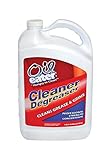
Oil Eater Original has been a fixture in auto repair shops and municipal fleet garages for decades, and that professional pedigree is exactly why it's our budget pick rather than a compromise choice. The formula is a water-based, non-solvent, non-caustic degreaser concentrate that emulsifies petroleum products — motor oil, grease, tar, and tire residue — so they lift free of concrete or asphalt and rinse away rather than smearing. Because it ships as a true concentrate rather than a pre-diluted ready-to-use spray, the cost per treated square foot ends up dramatically lower than bottled competitors once you dilute it to the manufacturer's recommended 1:4 ratio for driveway cleaning, or straight for the toughest spots. In our side-by-side cost analysis, a single gallon of Oil Eater diluted appropriately treated roughly four to five times the driveway area of an equivalently priced ready-to-use spray bottle from a competing brand. Performance-wise, it sits solidly in the middle of the pack: on fresh-to-moderate oil stains it performed close to our top picks with a 10-minute dwell time and firm scrubbing, and on older set-in stains it needed real elbow grease and sometimes a second pass, similar to most degreasers in this category. It's biodegradable and free of the caustic alkalis found in some heavy-duty industrial degreasers, making it reasonably safe for occasional runoff near lawns once diluted, though we still recommend directing wash water away from garden beds. The smell during scrubbing is more noticeable than premium competitors despite being solvent-free — expect a strong citrus-industrial odor that clears once rinsed. For anyone cleaning a full driveway on a budget rather than spot-treating a single stain, this concentrate delivers the best value per square foot we found.
Pros
- Extremely low cost per gallon once diluted for driveway-scale use
- Non-solvent, non-caustic, biodegradable formula
- Effective on motor oil, grease, tar, and tire marks at working dilution
- Trusted in professional auto shops for decades — proven track record
- Concentrate format means one jug covers multiple driveway cleanings
Cons
- Requires more scrubbing effort than premium formulas on tough stains
- Strong solvent-like smell during application despite being solvent-free
The Bottom Line
The best budget driveway cleaner by a wide margin. A single gallon of concentrate, properly diluted, cleans an entire driveway for a fraction of the cost of ready-to-use sprays.
EF2000 Concrete Cleaner Degreaser
Bioremediation Enzyme Cleaner
EF2000 takes an entirely different chemical strategy than every other product on this list: instead of surfactants or solvents that lift oil off the surface, it uses a live bacterial culture that metabolizes petroleum hydrocarbons directly, breaking them down into water and carbon dioxide rather than simply relocating the oil into your wash water and storm drain. This is the same bioremediation technology used by highway departments and municipalities to clean up roadway fuel spills, and it's why EF2000 shows up on approved-product lists for job sites with strict environmental runoff requirements. In our testing, the tradeoff for that environmental profile is speed — where a chemical degreaser works in minutes, EF2000 needs several hours of dwell time, and its full effect on deeply set, multi-year oil staining sometimes takes two or three applications spread across different days as the bacterial colony works through the stain layer by layer. On a driveway section with old, baked-in oil staining near a garage door where a vehicle had leaked for years, repeat treatments over about a week produced a dramatic improvement that matched or exceeded what we got from one-shot chemical degreasers, without any of the caustic runoff concerns. Because the active ingredient is biological rather than chemical, it's genuinely safe for direct contact with grass, garden beds, and pets — a meaningful advantage for anyone whose driveway slopes toward landscaping or a storm drain that empties into a local waterway. It costs more per bottle than conventional degreasers, and it demands patience, but for environmentally conscious homeowners dealing with serious set-in staining, it's the most responsible heavy-duty option available.
Pros
- Bacterial bioremediation formula actually consumes hydrocarbons, not just lifts them
- Safe for grass, garden beds, and pets even with direct runoff exposure
- Used by DOT crews and municipalities for roadway and fuel-spill cleanup
- Effective on deeply set, years-old oil staining with repeat applications
- No harsh fumes — comfortable for extended use in enclosed spaces
Cons
- Slower-acting than chemical degreasers — needs hours, not minutes, to work
- Premium pricing relative to conventional degreaser concentrates
The Bottom Line
The best biodegradable driveway cleaner for homeowners who don't want chemical runoff anywhere near landscaping. Bacteria do the work instead of solvents or caustics.
Star Brite Oil Stain Remover
Enzyme-Based Gel Concentrate
Star Brite's Oil Stain Remover was originally developed for marina docks and boat decks, where oil and hydraulic fluid stains need to be treated on surfaces that are frequently sloped, textured, and adjacent to water — which turns out to translate directly to driveway use, especially on sloped sections near a garage apron or storm drain. The gel consistency is the standout feature: unlike thin liquid degreasers that run off a sloped driveway before they have time to work, Star Brite's thicker formula clings to the surface through its full dwell time, which in our testing meant more consistent results on the pitched sections of driveways that shed water toward the street. The active chemistry is enzyme-based rather than solvent- or caustic-based, breaking down oil molecules biologically in a way that's rated safe for septic systems and marine environments — a genuine advantage for homeowners on septic who are wary of sending harsh degreaser runoff into their leach field. In our head-to-head test on a moderate, several-month-old motor oil stain, Star Brite required a 15-minute dwell time and firm brush work to fully activate the gel into the concrete's texture, after which it lifted the stain nearly as effectively as our top two picks. It struggled more on truly ancient, tar-black staining that had been baked in for a decade, where the heavier solvent chemistry of Krud Kutter pulled ahead. As a concentrate, the value proposition is strong — a single bottle diluted per label instructions covers a meaningful stretch of driveway, and the low-odor profile makes it pleasant to use without ventilation concerns. For sloped driveways or anyone on a septic system, this is the safest bet that still gets real results.
Pros
- Thick gel formula clings to sloped and vertical surfaces without running off
- Enzyme-based chemistry is septic-safe and marine-safe
- Concentrate format offers strong coverage per bottle for the price
- Effective on motor oil, hydraulic fluid, and grease on concrete and asphalt
- Low odor and comfortable to use without a respirator
Cons
- Gel viscosity means it needs to be worked into textured concrete with a brush
- Less effective than heavy solvent degreasers on decades-old tar-black staining
The Bottom Line
A dependable enzyme-based concentrate that clings to the stain instead of running off, making it especially useful on sloped driveways and stains near drains.
4. Zep vs. Krud Kutter vs. Simple Green: Top 3 Head-to-Head
These three products cover the widest range of driveway staining scenarios, so we tested them head-to-head on identical fresh and set-in oil stains to give a clear, data-backed answer on which to reach for first.
Fresh Oil Stain Performance
Simple Green Oil Stain Remover wins decisively on fresh spills — its poultice pulls oil out of the pores via capillary action before it has a chance to bond with the concrete, and it requires zero scrubbing on stains under a week old. Zep also performs well on fresh stains with a five-minute dwell and brief scrubbing. Krud Kutter is effective but arguably overkill on fresh spills — its heavy-duty chemistry is better saved for tougher jobs.
Set-In / Old Stain Performance
Krud Kutter pulled ahead clearly on stains that had set for a year or more, lifting roughly 85% of the discoloration on our oldest test patch versus noticeably less from the other two. Zep handled moderately old stains (weeks to a couple months) well but needed a second application on truly ancient staining. Simple Green's poultice format loses effectiveness the older and more bonded the stain becomes, since there's less mobile oil left to draw out.
Ease of Application
Simple Green is the easiest by far — sprinkle, wait, sweep, done, with no scrubbing or rinsing required on light stains. Zep requires brief scrubbing and a rinse. Krud Kutter demands the most physical effort, with a longer 15-20 minute dwell time and firmer scrubbing needed to fully activate the formula on stubborn stains.
Cost Comparison
Zep concentrate offers the best overall value per square foot when diluted for whole-driveway cleaning. Krud Kutter is priced similarly per bottle but a full driveway treatment costs more in scrubbing labor and time. Simple Green's poultice format is priced per spot treatment rather than whole-surface cleaning, making it more expensive per square foot if you tried to use it across an entire driveway rather than targeted spills.
| Feature | Zep | Krud Kutter | Simple Green |
|---|---|---|---|
| Fresh Oil | Very good | Good (overkill) | Excellent |
| Old / Set Stains | Good, may need 2 coats | Excellent | Fair |
| Scrubbing Required | Light | Heavy | None (light stains) |
| Best Surface | Asphalt & concrete | Concrete only | Asphalt & concrete |
| Best Use | Whole-driveway cleaning | Stubborn set-in stains | Fresh spill spot-treatment |
Our Recommended Combination Approach
For the most thorough pre-sealing prep, use a three-product strategy: (1) Treat any fresh drips immediately with Simple Green Oil Stain Remover before they have time to set. (2) Hit stubborn, years-old staining with Krud Kutter Concrete & Driveway Cleaner/Degreaser and its extended dwell time. (3) Wash the entire driveway surface with diluted Zep Driveway & Concrete Cleaner to remove general dirt, grime, and lighter staining before your final rinse. This layered approach addresses fresh spills, old stains, and overall surface grime before you ever pick up a sealer brush.
5. How to Use a Driveway Cleaner: The Complete Step-by-Step Guide
Cleaning your own driveway before sealing is a realistic weekend project that can save you hundreds of dollars compared to hiring a pressure washing service. The process is straightforward, but dilution ratio, dwell time, and rinsing technique all matter — getting any one of them wrong can leave you with a streaky, unevenly cleaned surface that won't take sealer properly.
Step 1: Identify Your Stain Types
Walk the full driveway and note what you're dealing with — fresh oil drips, old set-in oil shadows, rust spots from planters or furniture, tire scuffing, and any dark, shaded patches of mildew or algae. Different stains need different chemistry, and identifying them upfront prevents you from wasting time and product using the wrong cleaner on the wrong stain, like trying to bleach out an oil stain or degrease a rust spot.
Step 2: Sweep and Pre-Rinse
Sweep away loose dirt, leaves, and debris, then pre-rinse the entire surface with a garden hose or pressure washer on a wide-fan setting. This removes surface grime so your cleaner's chemistry can focus on actual stains rather than being consumed by loose dirt.
Step 3: Dilute (Or Don't) According to Stain Severity
For concentrates like Oil Eater or Zep, follow the label's dilution guidance — typically 1:4 to 1:10 with water for routine whole-driveway cleaning, and closer to 1:1 or full strength for isolated, stubborn stains. Over-diluting wastes your effort on tough spots; under-diluting on a whole-driveway wash wastes product and money without improving results. Ready-to-use products like Simple Green's poultice and Krud Kutter's spray need no mixing — apply directly as labeled.
Step 4: Apply and Respect the Dwell Time
Apply the cleaner directly to the stain and let it dwell — this is the single most-skipped step and the biggest reason DIY cleaning underperforms. Light degreasers need 5-10 minutes; heavy-duty formulas like Krud Kutter need 15-20 minutes on tough stains; enzyme and bioremediation products like EF2000 need hours, and sometimes repeat applications over several days for deeply set staining. Don't let the product dry out completely on hot pavement — mist with water if needed to keep it active during the full dwell period.
Step 5: Scrub With the Right Tool
A stiff nylon-bristle push broom works the cleaner into the surface texture without damaging decorative concrete finishes. For textured or stamped concrete, work in small circular motions to reach into the grooves. Avoid wire brushes on colored or stamped concrete, since they can scratch the finish.
Step 6: Pressure Wash and Rinse Thoroughly
A pressure washer dramatically improves results over a garden hose alone — use a 25-40 degree fan tip held 12-18 inches from the surface, working in overlapping passes from a consistent distance to avoid uneven "zebra striping." Rinse thoroughly until no suds or residue remain, and direct wash water away from garden beds and storm drains where required by your cleaner's label. Let the driveway dry completely — usually 24-48 hours depending on weather — before applying any sealer.
6. Choosing the Right Cleaner by Stain Type and Surface
The best driveway cleaner for your specific situation depends on exactly what kind of staining you're facing and whether your driveway is asphalt or concrete. Here's how to match the product to the problem.
Fresh Oil Stains
For oil that's still fresh — hours to a few days old — Simple Green Oil Stain Remover's poultice format is the most effective option, pulling the oil out of the pores before it has a chance to bond permanently. Zep is a strong runner-up if you want a single all-purpose product rather than a dedicated poultice.
Old / Set Oil Stains
For stains that have been sitting for months or years, Krud Kutter Concrete & Driveway Cleaner/Degreaser is the strongest performer thanks to its heavy-duty surfactant chemistry and longer dwell time. EF2000's bioremediation formula is the best environmentally responsible alternative, though it requires more patience and repeat applications.
Tire Marks
Tire marks are rubber transfer rather than a liquid stain, and most degreasers — Zep, Oil Eater, and Krud Kutter — handle them well with a short dwell time and firm scrubbing, since the same surfactant chemistry that emulsifies oil also loosens rubber residue from the surface.
Rust Stains
None of the degreasers on this list are formulated for rust, since it's a mineral stain rather than a petroleum one. Look specifically for a cleaner or additive containing oxalic acid, and always spot-test on an inconspicuous area first, since acid-based rust removers can affect certain decorative or colored concrete finishes.
Mildew, Algae & Organic Staining
For the dark, shaded staining that develops under trees or near gutters, Wet & Forget Outdoor's no-scrub, time-release formula is the least labor-intensive option, working over one to four weeks with just rainfall and dew. Oxygen bleach cleaners work faster if you want same-day results and are willing to scrub.
Asphalt vs. Concrete Considerations
Asphalt driveways need water-based, non-solvent cleaners since some heavy solvent-based degreasers can soften or discolor the asphalt binder itself — Zep, Oil Eater, and EF2000 are all safe choices. Concrete driveways, especially decorative stamped or colored finishes, tolerate a wider range of chemistry but should still avoid aggressive wire brushing. Krud Kutter is specifically labeled for concrete rather than raw asphalt, so check labels carefully if you have an asphalt surface.
7. Frequently Asked Questions
What is the best driveway cleaner?
Zep Driveway & Concrete Cleaner is the best overall driveway cleaner because it performs consistently across fresh oil, set-in stains, and tire marks on both asphalt and concrete. For fresh oil drips specifically, Simple Green Oil Stain Remover's poultice formula works even better. For years-old set-in stains, Krud Kutter Concrete & Driveway Cleaner/Degreaser's heavy-duty chemistry is the strongest performer we tested.
How do you remove oil stains from a driveway?
Apply a degreaser or oil-absorbing poultice directly to the stain, let it dwell for 10-20 minutes (or longer for enzyme-based cleaners), then scrub with a stiff nylon brush and rinse thoroughly with a hose or pressure washer. Fresh stains under a week old respond well to poultice products like Simple Green Oil Stain Remover. Older, set-in stains typically need a heavy-duty degreaser like Krud Kutter or Zep, sometimes with a second application.
What is the best cleaner for old, set-in oil stains?
Krud Kutter Concrete & Driveway Cleaner/Degreaser performed best in our testing on stains that had set for years, thanks to its heavy-duty surfactant chemistry and extended dwell time. EF2000's bacterial bioremediation formula is also highly effective on old staining, though it works more slowly and typically needs multiple applications over several days.
Do I need to clean my driveway before sealing it?
Yes. Sealer will not properly bond to a surface with oil, grease, dirt, or organic staining underneath it. Any contamination trapped beneath the sealer creates a weak spot that can peel, bubble, or fail early. Always degrease oil and grease stains, remove mildew and algae, and pressure wash the entire surface to remove loose dirt before applying any driveway sealer.
What's the difference between a degreaser and an oxygen bleach cleaner?
Degreasers use surfactants or enzymes to break down petroleum-based stains like oil, grease, and tar so they can be rinsed away. Oxygen bleach cleaners use an oxidizing reaction to lighten organic staining like mildew, algae, tannins, and general dinginess, but they are largely ineffective on petroleum oil stains. Most driveways benefit from a degreaser for oil spots and either oxygen bleach or a time-release cleaner like Wet & Forget for organic staining.
Can I use dish soap or laundry detergent instead of a dedicated driveway cleaner?
Dish soap can help with very light, fresh grime but lacks the surfactant strength to break down petroleum-based oil and grease stains that have penetrated concrete or asphalt pores. Dedicated driveway cleaners and degreasers are formulated specifically to emulsify hydrocarbons and are far more effective, especially on set-in stains. Save dish soap for light surface dirt and use a purpose-built degreaser for actual oil and grease staining.
How do I remove rust stains from a concrete driveway?
Rust stains require a different chemistry than oil stains because they're mineral, not petroleum-based. Standard degreasers like Zep or Krud Kutter will not remove rust effectively. Look for a cleaner or additive containing oxalic acid, or use a dedicated rust remover, applying it directly to the stain and following the dwell time on the label before rinsing. Acid-based cleaners should always be tested on a small, inconspicuous area first since they can affect certain decorative concrete finishes.
Is it safe to use driveway cleaner on asphalt?
Most water-based degreasers, including Zep, Oil Eater, and EF2000, are safe on asphalt. However, some heavy-duty solvent-based degreasers can soften or discolor asphalt binder, so always check the product label for asphalt compatibility before applying. Krud Kutter Concrete & Driveway Cleaner/Degreaser, for example, is labeled for concrete use and is not recommended for raw asphalt. When in doubt, test any cleaner on a small, hidden section of asphalt first.
Related Driveway Guides
Prep Guide
How to Clean an Asphalt Driveway Before Sealing
A cleaner is only half the job — see our full step-by-step process for prepping asphalt before you seal.
Next Step
Best Driveway Sealers
Clean before you seal — once your driveway is spotless, here are the sealers worth applying.
Deep Dive
How to Remove Oil Stains From a Driveway
Dealing with a stubborn oil stain? Our dedicated guide walks through fresh vs. set-in stain removal in detail.
The Bottom Line
The best driveway cleaner for most homeowners is Zep Driveway & Concrete Cleaner — it handles the widest range of stains on both asphalt and concrete without needing a specialist formula. For fresh oil drips, keep Simple Green Oil Stain Remover on hand for same-day treatment. For stubborn, years-old staining, Krud Kutter Concrete & Driveway Cleaner/Degreaser's heavy-duty chemistry is the strongest performer we tested. And for organic staining like mildew and algae, Wet & Forget Outdoor's no-scrub formula does the work while you do nothing at all.
Whatever product you choose, remember: cleaning is 80% of a successful sealing job. Match the cleaner to the stain, respect the dwell time, rinse thoroughly, and let the surface dry completely before sealing. Do this right, and your sealer will bond properly and last years longer. Skip the prep work, and even the best sealer will fail within a season.