What Is a Buzz Cut? The Complete Men's Guide
Everything you need to know about the most iconic men's haircut of all time — what it is, whether you'll look good with one, how to do it yourself, which guard to use, how to style it, and how to grow it out when you're done.
Alex Rivers
Grooming Editor • 12 Years
Last Updated
February 24, 2026
In This Guide
The buzz cut is the single most searched men's haircut on the internet. Over 1,600 people Google "what is a buzz cut" every single month. Yet most guides out there are thin, surface-level, and written by people who have clearly never held a pair of clippers. This is our attempt to fix that.
1. What Is a Buzz Cut?
A buzz cut is any hairstyle where the hair is uniformly clipped very short using electric clippers (also called "buzzers" or "trimmers"). The name literally comes from the buzzing sound the clippers make as they move across the scalp. Unlike a fade or undercut, a traditional buzz cut is the same length all around — no blending, no tapering, no styling required.
The buzz cut has been a cornerstone of men's grooming for over a century. It originated in the military, where standardized short hair served practical purposes: hygiene, uniformity, and helmet compatibility. The U.S. Military's "induction cut" — a #0 or #1 all over — became so culturally embedded that generations of civilian men adopted it as their default haircut.
Today, the buzz cut has evolved far beyond its utilitarian roots. Celebrities like David Beckham, Zayn Malik, Jason Statham, and Michael B. Jordan have turned variations of the buzz cut into genuinely fashionable statements. It's no longer a "lazy" haircut — it's a deliberate stylistic choice that communicates confidence, cleanliness, and self-assurance.
The Classic Buzz Cut
Uniform length, zero maintenance, maximum confidence. The most iconic men's haircut — from military induction to modern fashion statement.
At its core, a buzz cut is defined by three characteristics: (1) it uses clippers instead of scissors, (2) the hair is cut to a uniform or near-uniform short length, and (3) it requires minimal to no daily styling. Beyond that, there are several distinct variations, which we'll break down below.
Quick Facts
1,600+
Monthly searches for "what is a buzz cut"
$0
Cost to maintain at home
5 min
Average DIY session time
100+
Years of cultural history
2. Types of Buzz Cuts & Guard Lengths
Not all buzz cuts are created equal. The term "buzz cut" is actually an umbrella category that covers several distinct styles. The primary variable is the clipper guard number, which determines the hair length left behind. Understanding this is critical before you pick up a pair of clippers — because there's a massive visual difference between a #1 and a #10.
The Complete Clipper Guard Size Chart
Clipper guards are the plastic attachments that snap onto your clippers. Each number corresponds to a specific hair length in both inches and millimeters. Here's the complete haircut number chart from #0 through #20:
| Guard # | Inches | mm | Look | Best For |
|---|---|---|---|---|
| #0 (bare) | 1/16" | 1.5mm | Nearly bald, scalp clearly visible | Military induction, balding men |
| #1 | 1/8" | 3mm | Very short, slight shadow | Clean look, 360 waves base |
| #2 ⭐ Most Popular | 1/4" | 6mm | Short but visible hair | Everyday buzz cut, all face shapes |
| #3 | 3/8" | 10mm | Short with visible texture | Crew cut feel, first-timer safe |
| #4 | 1/2" | 13mm | Butch cut — some styling possible | Transitional, conservative settings |
| #5 | 5/8" | 16mm | Short but fully styleable | Top in taper fades, longer buzz |
| #6 | 3/4" | 19mm | Noticeably short, textured top | Longer crew cut, comb-over fade top |
| #7 | 7/8" | 22mm | Short but full enough to style and brush | Ivy league styles, wave prep |
| #8 | 1" | 25mm | One inch of hair — fully styleable | Wave length haircut base, longer fades |
| #9 | 1-1/8" | 28mm | Longer short hair, blends between 8 & 10 | Blending guard, longer top styles |
| #10 | 1-1/4" | 32mm | Full short hair, easily brushable | Top of comb-over, longer fade styles |
| #16 | 2" | 50mm | Medium-short, plenty of styling room | Top of longer disconnected fades |
| #18 | 2-1/4" | 57mm | Medium length, full styling options | Longer top styles with tight sides |
| #20 | 2-1/2" | 63mm | Full medium hair, wide range of styles | Textured top on high skin fades |
Clipper Sizes in mm — The Rule of Thumb
For standard Wahl and Andis guards, each guard number = approximately 3mm of hair length. So: #1 = 3mm, #2 = 6mm, #3 = 10mm, #4 = 13mm, #5 = 16mm, #6 = 19mm, #7 = 22mm, #8 = 25mm. Note: clipper attachment lengths vary slightly by brand — always confirm the mm from the product packaging if precision matters for fades and blends.
Our recommendation for first-timers: start with a #3 or #4 guard buzz. You can always go shorter, but you can't put hair back. Most men eventually settle on a #2 buzz cut as their go-to, but starting with more length gives you time to adjust mentally and physically.
Buzz Cut Variations
Different types of buzz cuts correspond to different guard ranges. Here's how the main variations stack up:
The Induction Cut
No guard. The shortest possible cut without a razor. Made famous by military boot camps. Ultra-clean but exposes every scalp imperfection.
The Burr Cut
A #1 or #2 guard — the classic "just buzzed" look. Burr cut length sits at 3–6mm: enough hair to see color and texture, but zero styling required.

The Butch Cut
A #3 or #4 guard all over. Slightly longer, giving the hair texture and body. A great middle ground for men wanting short without going full military.
The Buzz with Fade
A modern hybrid: buzz cut length on top (#2–#4) with a skin fade on the sides. Adds structure and style. Requires a barber for the fade portion.
The Comb Over Buzz
A longer top (#6–#10) paired with a tight fade on the sides. Bridges the gap between a buzz cut and a comb over fade hairstyle. Great for professional settings.
The Wave Length Cut
A #7 or #8 guard all over — specifically the wave length haircut base. Long enough to train into 360 waves with a proper brushing and durag routine.
3. Every Clipper Guard Number Explained
Choosing the right guard is the single most important decision when giving yourself a buzz cut. Here's an honest, practical breakdown of each major guard number — what it looks like, who it suits, and real-world tips for using it.
#1 Guard Buzz Cut (3mm)
The number 1 buzz cut is the classic military look. At just 3mm, scalp is visible through the hair. It's the base starting point for 360 waves and the shortest most men go without a razor. Works best on oval and square face shapes. Extremely low maintenance — needs re-buzzing every 1–2 weeks.
#2 Guard Buzz Cut (6mm) — The Most Popular
The 2 guard buzz cut is the single most popular setting in men's grooming. At 6mm, it's short enough to look intentional and clean, but long enough that the scalp doesn't show prominently. It's the "default" buzz cut you see on athletes, soldiers, and executives. Works on virtually every face shape, and most men who buzz their hair eventually land here. The 2 buzz offers the best balance of low maintenance and looking sharp.
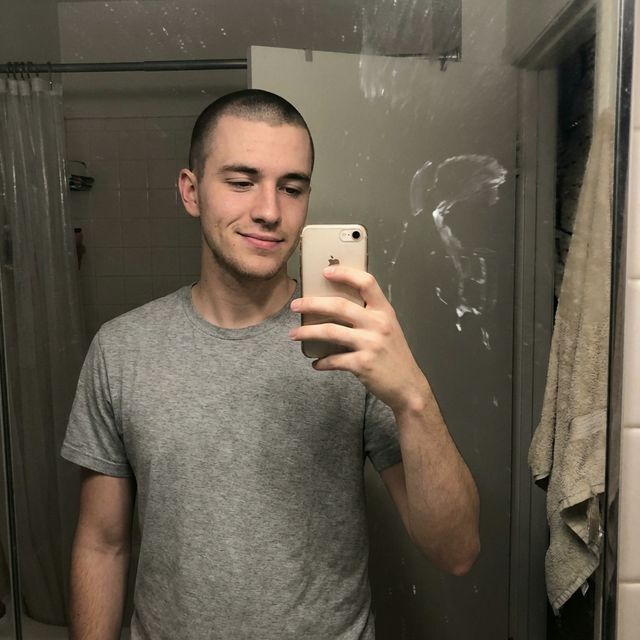
#3 Guard Buzz Cut (10mm)
The 3 guard buzz cut is the safest starting point for first-timers. At 10mm, there's enough hair to see texture and color clearly — this is crew cut territory. Buzz cut with a 3 guard is the most forgiving if you're unsure about going shorter. A number 3 buzz cut gives men with round or oblong faces a better-proportioned look by leaving more bulk. Great for anyone in a professional environment who needs a controlled, neat appearance.
#4 Guard Buzz Cut (13mm)
The 4 guard buzz — also called a number 4 buzz cut — lands in butch cut territory. At 13mm (half an inch), hair is fully visible, has distinct texture, and can even hold a light product. A buzz haircut number 4 is a great choice if you want to look well-groomed but aren't ready to go super short. It's also the top length used in many buzz cut taper fade combinations, where the top is a #4 and sides are faded down. Particularly flattering for men with long or oblong face shapes.

#5 Guard Buzz Cut (16mm)
At 16mm, a 5 guard buzz cut is no longer a true ultra-short buzz — it sits at the longer end of the short-hair spectrum. It's commonly used as the top length in tapered and mid-fade combinations, paired with a skin fade on the sides for a buzz cut mid fade effect. A number 5 buzz cut can still be styled with a small amount of product and begins to show natural hair growth patterns. Good for men wanting to grow out but keep a groomed look.
#6 Guard Buzz Cut (19mm)
A 6 guard buzz cut produces nearly three-quarters of an inch of hair. This length bridges buzz cuts and short hairstyles for men — it's long enough for a textured brush-over or comb over fade haircut style on top, while pairing well with a tight side fade. The 6 guard is increasingly chosen by men who want a style that photographs well and reads as "haircut" rather than "just buzzed." Dansby Swanson's signature shorter hairstyle sits in this range.
#7 Guard Buzz Cut (22mm)
The 7 guard sits at the boundary between buzz cuts and short hairstyles. At 22mm, hair can be easily brushed and styled. The 7 guard buzz is commonly used as the top length on classic ivy league cuts paired with a number 2 fade on the sides. It's also the minimum starting length for men with straight or wavy hair who want to add a classic side part or comb over.
#8 Guard Buzz Cut (25mm)
An 8 buzz cut or number 8 buzz cut gives exactly one inch of hair. This is the classic "wave length haircut" — the precise starting length for men building 360 waves. An 8 guard buzz (black men) specifically refers to its prevalence in texturized, natural, and wave hairstyle communities, where one inch gives enough length to train the wave pattern with a durag and brush routine. A buzz cut 8 guard all over looks like a very full short crop — it's more "short haircut" than "buzz cut" at this point, but allows for a clean, uniform base.
#9 Guard Buzz Cut (28mm)
The 9 guard buzz cut sits at just over an inch. It's primarily used as a blending guard between #8 and #10, helping barbers create seamless transitions in longer fade styles. All-over, a 9 guard is rarely used for a traditional buzz cut — it reads more like a short crew cut. But as a top length on a high skin fade, it creates a stylish, structured look.
#10 Guard Buzz Cut (32mm)
A 10 guard buzz cut leaves 1.25 inches of hair — well beyond what most would define as a true buzz. All over, it's a short crew cut. It's most commonly used as the top section in haircut 5 from top and 1 from side or similar hybrid styles that use a longer top guard with a short to skin fade on the sides. Men growing out a buzz cut often use the #10 as a checkpoint style before moving to scissor cuts.
#16, #18 & #20 Guard Buzz Cuts
Guards #16 (2"), #18 (2.25"), and #20 (2.5") are well beyond traditional buzz cut territory. A 16 guard buzzcut or 20 guard buzz cut is used as the top length for longer disconnected fades, where the sides are shaved tight and the top has 2–2.5 inches of hair for texture or styling. These large guards are stocked in many barber shops but rarely used for an all-over cut — they're specifically for haircut 2 on the sides style constructions. Size clippers haircut decisions at this length are mostly about top styling preference.
4. Buzz Cut Fades — Taper, Mid, Skin & More
The fade is what separates a standard buzz cut from a modern, barbershop-sharp style. Adding a fade to a buzz cut transforms a uniform clip job into a structured haircut with visible contrast and edge. Here are the main buzz cut fade variations:
Buzz Cut Taper Fade
A taper buzz cut gradually shortens the hair from the top down to the neckline and around the ears, stopping just above the skin. Unlike a full skin fade, the taper preserves some hair at the neckline. It's the most conservative of the fade options — professional, subtle, and office-appropriate. Common combo: #3 or #4 on top, tapered down through #2 and #1 to the neckline.

Buzz Cut Mid Fade
The buzz cut mid fade starts fading midway up the sides of the head — halfway between the ear and the temple. This creates a balanced contrast: distinct length on top, clean sides, without the severity of a high fade. The mid taper buzz is one of the most popular fade choices because it works on all face shapes and looks clean without being too dramatic. Typical setup: #4 or #5 on top, skin at the bottom, fading up through the mid section.
Skin Fade Buzz Cut
A faded buzz cut with a skin fade goes all the way down to bare skin at the sideburns and neckline. The contrast between the buzzed top and the skin sides is stark and modern. A high skin fade runs up close to the temples. Best for men with oval or square faces and strong jawlines — the skin sides accentuate the jaw and facial structure. Requires barbershop maintenance every 1–2 weeks.
Buzz Cut with Comb Over Fade
The comb over fade haircut combined with a buzzed length on top creates a stylish hybrid: longer, combable hair on top (#6–#10) with a skin or low fade on the sides. Popular comb over fade hairstyles and comb over style haircuts generally follow this blueprint. It's a great option for men with medium-length hair looking for a structured, fashionable look that reads as a "real hairstyle" while still being easy to maintain.
Taper vs. Fade: What's the Difference?
A taper shortens the hair gradually around the neckline and ears using scissors or clippers, always stopping with visible hair. A fade goes all the way to the skin (or near-skin) at some point in the cut. All fades are tapers, but not all tapers are fades. Most modern "buzz cut taper fade" styles technically involve a fade with a subtle taper, not a traditional barber taper.
5. Buzz Cuts for Boys
A buzz cut for boys is one of the most practical, time-saving haircuts for kids and teenagers. It eliminates morning hair battles, survives sweat and sports, and grows back quickly with zero awkwardness. Here's what parents and boys need to know:
Best guard for boys: #3 or #4
A #3 (10mm) or #4 (13mm) is the sweet spot for most boys — short enough to be low-maintenance, long enough to not look too severe for school. Younger boys often suit a #4 or #5 on top with a natural taper on the sides.
Use the same guard all over for simplicity
For young children, a uniform buzz with one guard all over is the easiest approach. No blending, no fades, no mistakes. For older boys and teens, a fade on the sides with a longer top (#4–#6) looks more stylish.
Buzz cutting long hair — go in stages
If buzz cutting long hair for the first time (on a boy or anyone), start with the highest guard you have and work down gradually. Jumping straight to a #2 from 6 inches can be jarring. Going #6 → #4 → #2 with 10-minute breaks to assess is much easier psychologically.
Maintenance: every 3–4 weeks
Boys' hair grows fast. A #3 or #4 buzz will look grown out within 3–4 weeks. Investing in a good buzz cut hair cutter (quality clippers for home use) pays for itself after 2–3 barber visits saved.
6. Buzz Cuts for Balding Men
Men with round faces and buzz cuts for balding guys is one of the most searched hair topics online — and for good reason. A buzz cut is genuinely one of the best solutions for thinning hair and receding hairlines. Here's the honest guide:
Why Buzz Cuts Work for Thinning Hair
- • Uniform density: When all hair is the same short length, thinning patches and sparse areas become nearly invisible. The eye perceives uniform density, not individual hair count.
- • No combover comparison: Longer hair styled over bald patches draws constant attention. A buzz immediately ends that particular grooming battle — permanently.
- • Confidence signal: Research consistently shows that men who proactively shave or buzz their thinning hair are rated as more dominant and confident than those who try to hide it.
Best Guards for Balding Men
- #0–#1 (1.5–3mm): For men who are mostly bald and want to eliminate the contrast between hair and scalp. The closer the cut, the less visible the thinning.
- #2 (6mm): The most popular choice for men with thinning hair. Looks intentional, not desperate. Any patches blend in at this length.
- #3 (10mm): For men early in the process who aren't ready to go too short. Still covers patches adequately if thinning isn't severe.
Men with Round Faces & Buzz Cuts
For men with round faces considering a buzz cut, the main concern is the haircut emphasizing face roundness. The fix: opt for a #3 or #4 buzz (more length = less exposed scalp = less round appearance) and add a subtle mid fade on the sides to create the illusion of height and length. Pairing with a beard also helps define the jawline.
3. Should I Get a Buzz Cut?
This is the 720-searches-per-month question. And the honest answer is: it depends on your specific situation. A buzz cut isn't universally flattering — but it's universally practical. Let's break down the scenarios where it makes sense and where it doesn't.
You SHOULD Get a Buzz Cut If...
- • Your hair is thinning or receding. A buzz cut is the single best haircut for thinning hair. Instead of clinging to length that exposes sparse patches, a buzz cut creates a uniform density that makes hair loss virtually invisible. It's the reason Jason Statham looks better with a buzz cut than he ever would with a comb-over.
- • You have an active lifestyle. Gym, swimming, running, martial arts — a buzz cut is impervious to sweat, water, and wind. No gel sliding down your forehead mid-workout. No hat hair. No post-shower styling ritual. You towel-dry and go. Pair it with a solid body grooming routine and you're set for any shirtless situation.
- • You want to save money. A single quality clipper ($30-60) pays for itself after two DIY cuts. Assuming $25 per barbershop visit, you'll save $500+ per year cutting your own hair at home.
- • You're in a hot climate. Less hair equals less heat trapped against your scalp. Men in tropical and desert climates have been buzzing their heads for practical thermal regulation since the dawn of clippers.
- • You want a fresh start. Bad dye job? Uneven haircut? Damaged hair from bleaching? A buzz cut is the universal reset button. It clears the slate and lets healthy hair grow back from scratch.

Think Twice If...
- • You have visible scalp scars or bumps. A very short buzz cut will expose any irregularities on your scalp. If this concerns you, a #3 or #4 guard provides enough coverage to minimize visibility.
- • You have a very long or narrow head shape. Without hair to balance proportions, an elongated skull can look more pronounced. A buzz with a fade can help add width perception at the sides.
- • Your identity is deeply tied to your hair. This is psychological, but it's real. If your hair is a major part of how you express yourself, losing it all at once can be jarring. Consider going gradually shorter over several haircuts.
4. What Would I Look Like With a Buzz Cut?
This is the question that stops most men from committing: "What would I look like with a buzz cut?" — and its close cousin, "Would I look good with a buzz cut?" Together, these queries generate over 3,000 searches per month. The anxiety is real. Let's address it methodically.
Face Shape Compatibility
Your face shape is the single biggest predictor of how a buzz cut will look on you. Here's the honest breakdown:
| Face Shape | Buzz Cut Compatibility | Recommended Guard |
|---|---|---|
| Oval | Excellent — balanced proportions suit any length | Any (#0-#4) |
| Square | Excellent — the jawline becomes the hero | #1-#3 |
| Diamond | Great — highlights cheekbones | #2-#3 |
| Round | Good — can emphasize roundness; consider a fade | #2-#4 with fade |
| Oblong | Moderate — can elongate; keep sides longer | #3-#4 |
| Heart | Good — draws attention to the jawline | #2-#3 |
How to Preview a Buzz Cut Before Committing
If you're not ready to commit, there are several ways to preview how you'd look:
- Use a buzz cut filter app. Apps like FaceApp and AI-based hairstyle tools can overlay a buzz cut onto your selfie. The results are approximate but useful for reducing anxiety.
- Go gradually shorter. Instead of jumping from 6 inches to a #2, get a shorter haircut first (like a crew cut), live with it for a week, then decide if you want to go shorter.
- Ask your barber for a temporary test. Many barbers are happy to buzz one small patch near the back of your head (easily hidden) so you can see the length and feel before committing fully.
- Study men with similar features. Find celebrities or public figures with your face shape, skin tone, and build who've worn buzz cuts. This gives you the closest real-world preview.
The Honest Truth
"In 12 years of covering men's grooming, I've never seen someone regret a buzz cut for more than two weeks. The initial shock fades fast, and most men discover they actually prefer the low-maintenance freedom. Hair grows back at roughly half an inch per month — you're never stuck."
— Alex Rivers, Grooming Editor
5. How to Give Yourself a Buzz Cut (Step-by-Step)
Giving yourself a buzz cut at home is one of the easiest grooming skills you can learn. Combined searches for "how to give yourself a buzz cut," "how to do a buzz cut yourself," and "how to buzz cut your own hair" total over 1,100 per month. Here's the definitive, barber-approved method:
What You'll Need
Quality electric clippers
Wahl, Andis, or Philips Norelco. Budget: $30-60. Avoid cheap Amazon no-names. (We tested the Braun 5544 vs Series 7 if you want a multi-use groomer.)
Guard set (#1 through #4)
Most clippers come with a full guard set. Verify before purchasing.
A handheld mirror
For checking the back and sides. A two-mirror setup (wall + handheld) is ideal.
A towel or barber cape
Unless you enjoy vacuuming tiny hair shards out of your shirt for three days.
The 10-Minute Method
The DIY Buzz Cut Kit
Everything you need: quality clippers ($30-60), guard set (#1-#4), handheld mirror, and 10 minutes of your time.
Start with dry, clean hair.
Wet hair clumps and cuts unevenly. Make sure your hair is completely dry. No product, no gel, no oil.
Attach the highest guard you're comfortable with.
If you're a first-timer, start with a #4. You can always go shorter in a second pass. Snap the guard firmly until it clicks — a loose guard will cut unevenly.
Start at the front and move backward.
Place the clippers at your forehead hairline and run them straight back toward the crown. Use slow, even strokes. Don't press hard — let the clippers do the work. The guard controls the length, not your pressure.
Work in sections: top, then sides, then back.
Complete the entire top first (forehead to crown), then do each side (ear to temple, moving upward), then the back (neckline to crown). Going against the grain of hair growth gives the closest cut.
Use the mirror to check the back.
Hold a handheld mirror facing your bathroom mirror to see the back of your head. Run the clippers over any spots you missed. The area behind the ears and the nape of the neck are the most commonly missed zones.
Clean up the neckline and sideburns.
Remove the guard and carefully define your neckline. Use short, gentle strokes. For a natural look, follow your existing hairline. For a cleaner look, create a straight line across the nape. Trim sideburns to match the buzz length.
Rinse, moisturize, done.
Shower to remove loose clippings. Apply a light moisturizer or aftershave balm to your scalp — freshly buzzed skin can be sensitive. If you'll be going outside, apply SPF to your scalp for the first few days.
Pro Tip: The Two-Pass Method
For the most even result, make two passes over your entire head. First pass: go with the grain (front to back, bottom to top on sides). Second pass: go against the grain. This catches any hairs that were lying flat and were missed on the first pass.
6. How to Style a Buzz Cut
"How to style a buzz cut" gets 260 searches per month, which tells us something important: even men with the shortest possible haircut still want to look intentional about their appearance. And they're right to — a buzz cut isn't just "no hairstyle." There are genuine ways to elevate the look. (For more grooming inspiration, see our best men's grooming guides for 2026.)
Scalp Care Is Your New Styling Routine
With a buzz cut, your scalp is your hairstyle. That means scalp health becomes your primary grooming focus:
- Moisturize daily. A dry, flaky scalp is far more visible with short hair. Use a lightweight, non-greasy moisturizer or dedicated scalp serum. CeraVe, Cetaphil, and Brickell make excellent options.
- Wear SPF. Your scalp is now exposed to UV radiation. Apply a broad-spectrum SPF 30+ sunscreen to your head daily, or wear a hat. Scalp sunburns are painful and increase skin cancer risk.
- Exfoliate weekly. A gentle scalp scrub prevents buildup, reduces ingrown hairs, and keeps the scalp looking clean and healthy. A silicone scalp massager in the shower does the job.
- Keep it sharp. A buzz cut looks best when freshly cut. Aim to re-buzz every 1-2 weeks to maintain a crisp, intentional look. Once it starts growing out unevenly, the "just rolled out of bed" vibe kicks in.
Accessories & Complementary Grooming
Without hair to frame your face, other features become the focal point. Smart grooming choices that elevate a buzz cut:
- Facial hair. A well-groomed beard or stubble pairs exceptionally well with a buzz cut. The contrast between a clean scalp and textured facial hair creates visual balance. This is the David Beckham / Jason Statham formula. If you're going full-body grooming, check out our best men's back shavers guide for the complete package.
- Glasses or sunglasses. Bold frames become a statement piece when there's no hair competing for attention. If you wear glasses, consider frames that complement your face shape.
- Earrings or jewelry. With no hair covering your ears or neck, accessories become more visible and impactful.
- Skincare. Clear skin matters more with a buzz cut. A basic routine (cleanser, moisturizer, SPF) goes a long way when your face is the entire focus. A buzz cut is often the gateway to a complete grooming overhaul — if you're ready to level up your entire routine, we cover why neglecting body grooming destroys confidence.
Buzz Cut + Groomed Beard
The modern classic combo: clean scalp contrasted with textured facial hair. Add sunglasses and clear skin for the complete look.
7. How to Grow Out a Buzz Cut
Growing out a buzz cut is an exercise in patience. "How long does a buzz cut take to grow out" and its variations get over 700 searches per month. Here's the realistic timeline and how to navigate the awkward stages:
The Growth Timeline
Human hair grows at approximately half an inch (1.25 cm) per month. This rate is largely genetic and can't be significantly accelerated by supplements or products (despite what marketing claims). Here's what to expect at each stage:
| Timeframe | Approx. Length | What to Expect |
|---|---|---|
| Week 1-2 | 1/4" (6mm) | Still looks like a buzz cut. Slightly fuzzy. No action needed. |
| Month 1 | 1/2" (13mm) | Starting to look "grown out." Still very short. Consider trimming the sides to maintain shape. |
| Month 2-3 (Awkward Phase) | 1-1.5" (25-38mm) | The dreaded "in-between" stage. Too long for a buzz, too short to style. Keep sides trimmed. |
| Month 4-5 | 2-2.5" (50-63mm) | Starting to be styleable. Crew cut territory. Light product can add direction. |
| Month 6+ | 3"+ (75mm+) | Full styling options open up. Visit a barber for a proper shape-up. |
Surviving the Awkward Phase
The month 2-3 window is where most men crack and re-buzz. Here's how to push through:
- Get regular side trims. Visit your barber every 3-4 weeks for a "clean up" — keeping the sides shorter while the top grows out creates a structured look that avoids the "unkempt mushroom" effect.
- Wear hats strategically. Baseball caps, beanies, and bucket hats are your best friends during the awkward phase. They're not "hiding" your hair — they're a legitimate styling accessory.
- Use lightweight product. Once you hit 1-1.5 inches on top, a matte clay or texturizing paste can add direction and prevent the "standing straight up" look. Avoid anything shiny or heavy at this length.
- Be patient. Remind yourself that literally every man who grows out a buzz cut goes through this. It's temporary. Set a calendar reminder for 3 months and resist the urge to re-buzz.
8. Are 360 Waves a Type of Buzz Cut?
This question gets 480 searches per month, and the answer requires some nuance. 360 waves start from a buzz cut foundation — typically a #1 or #1.5 guard — but they are a distinct hairstyle with their own dedicated process.
Waves are created through a combination of brushing technique, durag compression, and product application that trains the hair to form a rippling wave pattern as it grows. The buzz cut is simply the starting canvas. Without the brushing and compression routine, you just have... a buzz cut.
Here's the basic 360 wave process:
- Start with a fresh buzz cut at a #1 or #1.5 guard.
- Brush in one direction from the crown outward using a medium-to-hard bristle brush, 15-30 minutes per day.
- Apply wave grease or pomade before brushing to add moisture and hold.
- Wear a durag or wave cap overnight (and as much as possible during the day) to compress the hair into the wave pattern.
- Maintain with regular wolfing — growing the hair out slightly (2-4 weeks without cutting) then getting a fresh buzz to lock the pattern deeper.
Getting defined 360 waves takes 4-8 weeks of consistent daily brushing for most men, though hair texture plays a major role. Coarser, curlier hair types tend to form waves more readily. The buzz cut is the starting point, but the wave pattern is the result of technique and dedication — not the haircut itself.
9. How to Bleach a Buzz Cut
Bleached buzz cuts have surged in popularity, with over 350 searches per month for "how to bleach a buzz cut." The platinum or blonde buzz cut — made famous by celebrities like Zayn Malik, Justin Bieber, and Machine Gun Kelly — is a bold statement that's actually easier to do on short hair than long.
The Bleached Buzz Cut
Bold, modern, and easier than you think on short hair. Platinum buzz cuts have surged in popularity thanks to Zayn Malik, Justin Bieber, and Machine Gun Kelly.
Why Buzz Cuts Are Easier to Bleach
Short hair is actually ideal for bleaching for several reasons: less product is needed, application is faster and more even, processing time is shorter, and damage is minimized because the hair will be buzzed off again in a few weeks anyway. The biggest risk with bleaching — uneven color and breakage — is dramatically reduced on 1/4-inch hair.
Step-by-Step Bleaching Process
- Buy a quality bleach kit. Salon Care or Arctic Fox bleach kits are popular choices. You'll need bleach powder, 20 or 30 volume developer (20 for lighter hair, 30 for darker), a mixing bowl, and a tinting brush.
- Do a strand/patch test first. Apply a small amount of mixed bleach behind your ear and wait the full processing time. Check for irritation or allergic reaction. Skip this at your own risk.
- Mix the bleach. Follow the product instructions for the powder-to-developer ratio. The consistency should be like thick yogurt — not runny, not dry.
- Apply evenly. Using the tinting brush or gloved hands, coat your entire buzzed head with bleach. Work quickly for even results. Make sure every patch is covered.
- Monitor the lift. Check every 5-10 minutes. For dark hair, you'll likely need 25-40 minutes. For light brown hair, 15-25 minutes. Never exceed the maximum time on the product label. You're aiming for a pale yellow, not white.
- Rinse and tone. Rinse thoroughly with cool water. If the result is orangey or brassy, apply a purple toner (like Wella T18) for 10-20 minutes to achieve a cooler blonde. Rinse again.
- Deep condition. Apply a deep conditioning mask or treatment. Your scalp and hair just went through a chemical process — show them some love.
Warning: Scalp Sensitivity
Bleach on a buzz cut sits directly on your scalp. If you feel burning, tingling, or significant discomfort, rinse immediately. Some mild warmth is normal; pain is not. Never bleach over cuts, sunburns, or irritated skin. If in doubt, have a professional do it — salon bleach jobs cost $50-100 and dramatically reduce the risk of damage.
10. Is a Buzz Cut Professional?
With 140 monthly searches, this question reveals a genuine concern for many men considering the cut. The short answer: yes, a buzz cut is fully professional. It's one of the most universally accepted hairstyles in business settings worldwide.
Consider the evidence: military officers, Fortune 500 executives, surgeons, lawyers, and politicians regularly wear buzz cuts. It projects discipline, cleanliness, and low vanity — all traits associated with professional competence. A well-maintained buzz cut is never going to be the reason you don't get hired or promoted.
The only exceptions where a buzz cut might raise eyebrows:
- High-fashion or creative industries where "expressive" hairstyles are expected (even here, a buzz cut reads as "minimalist cool")
- Very conservative firms that prefer traditional, longer styles (increasingly rare in 2026)
- Bleached or colored buzz cuts may face more scrutiny in formal corporate environments
For 95% of professional environments, a clean, natural-colored buzz cut is not only acceptable — it's admired. It says: "I don't spend 30 minutes on my hair. I have more important things to focus on."
11. Are Buzz Cuts Attractive?
Combined searches for "are buzz cuts attractive," "do buzz cuts look good," and "would I look good with a buzz cut" exceed 1,000 per month. Let's look at what the research actually says.
A widely cited 2012 study from the University of Pennsylvania (Mannes, A.E.) found that men with shaved or very short hair were perceived as more dominant, taller (by an average of 1 inch), and approximately 13% stronger than the same men shown with longer hair. The study used photos of the same individuals digitally altered to show different hair lengths — controlling for all other variables. This mirrors what we've found in our research on body grooming and confidence — taking control of your appearance has measurable psychological benefits.
This aligns with broader psychological research on the "dominance heuristic" — the tendency for humans to associate physical simplicity and clean lines with authority and confidence. A buzz cut removes the "trying too hard" element from your appearance. It signals that you don't need hair to feel secure in yourself.
What the Data Says
+13%
Perceived as stronger (UPenn study)
+1"
Perceived as taller on average
Top 3
Most popular men's haircut globally
Source: Mannes, A.E. (2012). Shorn Scalps and Perceptions of Male Dominance. Social Psychological and Personality Science.
Of course, attractiveness is subjective. Not every person will prefer a buzz cut. But the data overwhelmingly suggests that buzz cuts are perceived as masculine, confident, and authoritative — traits that are broadly considered attractive across cultures.
The most important factor in whether a buzz cut looks good on you isn't the haircut itself — it's the confidence you carry it with. A man who rocks a buzz cut with self-assurance will always look better than one who's constantly touching his head and asking "does it look okay?" Own it, and it owns the room.
12. Frequently Asked Questions
What guard is a buzz cut?
The most popular buzz cut guard is a #2 (1/4 inch or 6mm). This provides a clean, low-maintenance look without showing too much scalp. A #1 is more aggressive, while a #3 or #4 gives slightly more length and texture. For your first buzz cut, start with a #3 or #4 and work your way down.
How long does a buzz cut take to grow out?
Hair grows approximately half an inch per month. A #1 buzz cut takes roughly 3-4 months to reach a short crew cut length, and 6-9 months to reach a fully styleable length of 2-3 inches. The "awkward phase" typically hits around months 2-3, when the hair is too long for a buzz but too short to style.
Can I buzz cut my own hair?
Absolutely. A buzz cut is one of the easiest haircuts to do yourself. All you need is a quality set of electric clippers ($30-60), the right guard, and a handheld mirror. Most men complete a DIY buzz cut in under 10 minutes. See our step-by-step guide in Section 5.
How to make a buzz cut look good?
Three keys: (1) Keep it fresh — re-buzz every 1-2 weeks. (2) Take care of your scalp — moisturize daily, wear SPF. (3) Complement with groomed facial hair, clean skincare, and confident posture. A well-maintained buzz cut looks intentional; a grown-out one looks neglected.
Are 360 waves a type of buzz cut?
360 waves start from a buzz cut foundation (typically a #1 or #1.5 guard), but they are a distinct hairstyle. The wave pattern is created through daily brushing, durag compression, and product application — not by the buzz cut itself. The buzz is simply the starting canvas. See our full breakdown in Section 8.
How to draw a buzz cut?
If you're an artist or barber sketching a buzz cut: draw the head shape first, then add very light, uniform stippling or short dashes across the scalp area. Avoid drawing individual hairs — the key visual of a buzz cut is its uniform texture, not distinct strands. Use a lighter shade than the natural hair color for the illusion of shortness.
Will a buzz cut suit me?
Oval and square face shapes look best with buzz cuts, but most face shapes can pull it off with the right guard length. See our face shape guide in Section 4 for specific recommendations. When in doubt, start with a longer guard (#3 or #4) — you can always go shorter.
Ready to Buzz?
The buzz cut is more than a haircut — it's a lifestyle upgrade. Less time in front of the mirror, less money at the barber, and more confidence in how you present yourself. Whether you're dealing with thinning hair, want a fresh start, or simply value efficiency, the buzz cut delivers.
Still exploring your grooming options? Check out our other guides: