The 7 Best Fence Stains in 2026
We tested 7 fence stains over 12 months of sun, rain, and snow against pine, cedar, and redwood fencing. Ready Seal, Behr, Cabot, Defy — here's exactly which stains still beaded water and held their color a year later, and which faded fast.
Alex Rivers
Home Improvement Editor
Last Updated
July 17, 2026
In This Guide
An unstained fence isn't just a missed cosmetic opportunity — it's a wood structure slowly losing a fight against sun and water it can't win alone. UV rays break down lignin at the wood's surface, turning boards silvery gray and brittle, while unprotected wood soaks up rain and snowmelt like a sponge, swelling, cupping, and eventually rotting from the inside out. The right fence stain blocks UV rays, repels water, and lets the wood breathe instead of trapping moisture. After 12 months of testing against real sun, rain, and snow, here's what actually protects a fence — and what's a waste of a weekend.
1. Why Fences Need Staining (And Why It Actually Works)
Wood fences face a harsher environment than almost any other exterior wood surface on your property. Unlike a deck that's partially shaded by the house or shielded by railings, a fence typically stands fully exposed on both sides, taking direct sun for most of the day and catching wind-driven rain from every angle. That constant exposure accelerates two damaging processes: UV degradation and moisture cycling.
Ultraviolet light breaks down lignin, the natural polymer that binds wood fibers together and gives lumber its structural rigidity. As lignin breaks down at the surface, the wood turns a dull silvery-gray, becomes brittle, and starts to develop surface checking — those small splits running along the grain. This process is purely cosmetic at first, but over years it erodes the wood's surface fibers, leaving it rougher and more porous, which in turn makes it absorb even more water. That's where the second threat compounds the first: unprotected wood absorbs rainwater and snowmelt directly into its cell structure, causing the boards to swell. When the wood dries out, it shrinks back down. This constant swell-and-shrink cycle, repeated across hundreds of rain events per year, is what causes cupping, warping, and eventually the loosening of fasteners as the wood works itself around the nails and screws holding it together.
A quality fence stain interrupts both processes. UV-blocking pigments and additives absorb or reflect ultraviolet light before it can degrade the lignin at the surface, which is why solid and semi-transparent stains with heavier pigment loads consistently outlast clear, unpigmented sealers in sun-exposure testing. Meanwhile, water-repellent resins and oils create a surface that sheds rainwater — causing it to bead and roll off — rather than absorbing it into the wood cells. This keeps the moisture content of the wood more stable through wet and dry cycles, which is the single biggest factor in how long a fence lasts before boards start to warp, split, or rot.
It's also worth noting that different wood species respond differently to sun and moisture. Pressure-treated pine, the most common fence material, is relatively soft and porous, meaning it absorbs stain readily but also loses moisture and takes on water quickly if left unprotected. Cedar and redwood are naturally more rot- and insect-resistant thanks to their own internal oils and tannins, but they still fade to gray under UV exposure and benefit enormously from a stain that enhances rather than fights their natural coloring. This is why we tested across pressure-treated pine, cedar, and redwood sections rather than a single wood type — a stain's real-world performance depends heavily on what species it's going onto.
The Cost of Skipping Fence Stain
$80-250
DIY staining cost (average fence)
5-7 yrs
Lifespan of stained pine fence
2-3 yrs
Lifespan of unstained pine fence
$3,000+
Cost of premature fence replacement
2. Types of Fence Stain: Which One Is Right for You?
The best fence stain for your project depends on how much of the natural wood grain you want visible, whether you're staining pine, cedar, or redwood, and whether you prioritize maximum durability or low-odor, easy cleanup. Here's how the main categories break down.
Transparent Stains
Transparent stains add almost no pigment, letting the wood's natural color and grain show through completely while adding a thin layer of water repellency and mild UV protection. They're the least durable category and require the most frequent reapplication — often annually in full sun — because there's simply not enough pigment to meaningfully block ultraviolet light. Best for: freshly installed cedar or redwood fencing where you want to preserve the exact natural look for as long as possible, accepting more frequent maintenance in exchange.
Semi-Transparent Stains
Semi-transparent stains, like Ready Seal, Cabot Australian Timber Oil, Sherwin-Williams SuperDeck, and Defy Extreme, add enough pigment to meaningfully block UV rays and add rich color while still letting the wood grain and texture show through. This is the most popular category for fence staining because it strikes the best balance between protection and natural appearance. Best for: most pressure-treated pine, cedar, and redwood fences where you want visible wood character along with strong, long-lasting protection.
Solid Color Stains
Solid color stains, like Behr Premium Solid Color Waterproofing Stain, are heavily pigmented and behave more like a thin exterior paint — they completely hide the wood grain and any surface imperfections underneath. They deliver the strongest UV blocking of any stain category because of their heavy pigment load, and they're the best choice for masking old, weathered, or patched fencing. Best for: older fences with mismatched boards or repairs, or homeowners who simply prefer a uniform, paint-like appearance.
Oil-Based vs. Water-Based Formulas
Independent of pigment level, every stain is also either oil-based or water-based. Oil-based stains, like Ready Seal and Cabot, penetrate deeper into the wood grain and generally deliver the best water-beading longevity because the oil becomes part of the wood's cell structure rather than sitting on top of it. Water-based stains, like Defy Extreme, Olympic Maximum, and Behr Premium, are lower odor, clean up with soap and water, and don't amber or darken with age the way oil can — but they tend to sit closer to the surface and often need slightly more frequent reapplication for the same level of protection.
| Type | Grain Visibility | UV Protection | Reapply Interval |
|---|---|---|---|
| Transparent | Full grain visible | Low | 1 year |
| Semi-Transparent | Grain visible through color | Moderate-High | 2-3 years |
| Solid Color | Grain fully hidden | Highest | 3-5 years |
| Oil vs. Water-Based | Depends on pigment level | Oil: deeper penetration | Water: easier cleanup, low odor |
3. The 7 Best Fence Stains in 2026 — Tested & Ranked
We applied each product to identical sections of pressure-treated pine, cedar, and redwood fencing and tracked water-beading performance, color/UV fade, mildew resistance, and ease of application over a full 12-month cycle of sun, rain, and snow. Here are the only 7 products we'd use on our own fences.

Ready Seal Fence, Deck & Siding Stain
Oil-Based Semi-Transparent Stain
Ready Seal has built a devoted following among fence and deck installers, and after a full year of testing on a pressure-treated pine privacy fence, it's easy to see why. This is a genuine penetrating oil stain, meaning the linseed and mineral oil blend soaks into the wood fibers rather than sitting on the surface as a film. That distinction matters enormously for long-term performance: film-forming stains eventually crack and peel because the surface layer can't flex with the wood as it expands and contracts through seasonal humidity swings. Ready Seal never has that problem because there's no film to fail. During our test, we applied a single coat with a pump sprayer and back-rolled it into the grain — the entire 120-linear-foot fence took under two hours, with zero backbrushing required. That's the other reason contractors love this product: unlike most oil stains, Ready Seal doesn't need to be worked into the wood or tipped off to avoid lap marks. Overlaps and heavy spots simply even out on their own as the oil migrates into the grain over the following 24 hours. Twelve months later, water still beaded up on the treated boards rather than soaking in, and the color had faded only slightly on the harshest south-facing sections. The semi-transparent formula lets you see the wood's natural grain and knots while adding a warm amber-brown tone (also available in cedar, redwood, and dark walnut tones). Coverage runs 150-200 square feet per gallon on smooth pine and closer to 100-125 on rough-sawn cedar, which soaks up more product. Dry-to-touch time is about 8 hours, with full cure in 3-5 days depending on humidity. Reapplication is needed every 2-3 years on fences facing full sun, longer in shaded yards. The main tradeoff is smell — plan to stain on a day when you can keep pets and kids away from the fence line for the first 24 hours.
Pros
- No mixing, backbrushing, or thinning required — apply straight from the can
- Penetrates deep into wood grain instead of forming a surface film that peels
- Water beaded on treated pine boards for the full 12-month test period
- Rich, semi-transparent color that lets the wood grain show through
- Forgiving application — lap marks and overlap streaks self-level as it cures
Cons
- Oil-based formula has a noticeable smell for the first 24-48 hours
- Limited color palette compared to water-based competitors
The Bottom Line
The best fence stain for most homeowners. A true penetrating oil that soaks into the wood instead of sitting on top, so it wears gracefully instead of peeling.

Behr Premium Solid Color Waterproofing Stain
Water-Based Solid Color Stain
Solid color stain occupies a middle ground between paint and stain, and Behr Premium is the best execution of that concept we tested. Unlike transparent and semi-transparent stains that let wood grain show through, this is a heavily pigmented, opaque formula that behaves more like an exterior coating — it completely masks the wood underneath, which is exactly what you want on an older fence with patched boards, water stains, or mismatched replacement sections that would otherwise stick out under a see-through stain. We tested it on a 15-year-old pine fence that had been repaired in several spots with new boards, and after one coat, the entire fence looked uniform — no telltale color difference between old and new lumber. The water-based acrylic formula is genuinely low-odor and cleans up with soap and water, a meaningful convenience advantage over oil-based options, especially for indoor storage of brushes and rollers. UV resistance was excellent in our testing: the heavy pigment load blocks far more ultraviolet light than a transparent stain can, and after 12 months the color on our south-facing test panel showed only minor chalking, no visible fade. Because it forms more of a film than a true penetrating stain, application requires more attention to technique — back-brushing is necessary to avoid lap marks, and Behr recommends two coats for full coverage and maximum durability. Coverage is roughly 200-300 square feet per gallon per coat on smooth board fencing. The tradeoff with any solid stain is that it will eventually show wear at contact points like gate hinges, latch areas, and post tops where hands and hardware create friction, and once that happens, touch-up requires matching the exact tint rather than simply adding another coat of a natural wood tone. For fences you want to look freshly painted rather than naturally stained, and for older fencing that needs cosmetic camouflage, Behr Premium Solid is the strongest choice on the market.
Pros
- Opaque solid color completely hides old stain, discoloration, and repairs
- Widely available in thousands of custom tint colors at Home Depot
- Water-based formula cleans up with soap and water, low odor
- Excellent UV blocking — pigment load resists fading better than transparent stains
- Backed by Behr's satisfaction guarantee and easy in-store color matching
Cons
- Fully hides the wood grain — not a look everyone wants on a nicer fence
- Solid stains show wear at high-traffic contact points (gate latches, post tops)
The Bottom Line
The best fence stain for older, patched, or mismatched fencing where you want to hide the wood rather than showcase it. Paint-like durability with easier upkeep than actual paint.

Cabot Australian Timber Oil
Oil-Based Penetrating Stain
Cabot Australian Timber Oil was developed specifically to enhance premium hardwoods, and on our cedar fence test section, the difference versus generic pine-formulated stains was obvious within minutes of application. The tung-oil-based formula soaks deep into cedar's naturally open grain, pulling out the reddish-amber undertones and the subtle color variation between heartwood and sapwood that a flatter, more opaque stain would simply cover up. Where Behr's solid stain is designed to hide wood character, Cabot's translucent tones are engineered to celebrate it, which makes it the clear pick for anyone who paid a premium for cedar or redwood fencing and wants that investment to show. In our water-beading test, Cabot outperformed every other oil-based stain we tried — droplets sat in tight beads on treated cedar boards for the entire 12-month test window, even through a wet spring with three weeks of near-daily rain. The tung oil formulation also includes UV-absorbing additives and a mildewcide package, both of which paid off in our shaded test section: a portion of the fence that stays damp under tree cover showed zero mold or algae growth after a full year, while an untreated control board in the same spot developed visible green staining within four months. Application is straightforward with a natural-bristle brush, pad applicator, or sprayer with back-brushing, and the oil penetrates quickly enough that a single coat is usually sufficient on tight-grained cedar, though rough-sawn or weathered wood benefits from two. Coverage runs about 100-150 square feet per gallon on cedar due to its higher absorption rate. Cabot recommends at least 48 hours of dry weather after application before the fence faces heavy rain, so timing around your local forecast matters more with this product than with faster-curing alternatives. Reapplication interval is 2-3 years depending on sun exposure. It costs noticeably more per gallon than Ready Seal or Olympic, but for cedar and redwood fencing specifically, the payoff in grain enhancement and water repellency justifies the premium.
Pros
- Formulated with tung oil blend that deeply enriches cedar and redwood grain
- Translucent tones enhance rather than mask premium wood species
- Strong water repellency — highest water-beading performance in oil category
- Mold and mildew inhibitors built into the formula
- Available in tones specifically designed for cedar and redwood undertones
Cons
- Premium pricing compared to other oil-based penetrating stains
- Longer cure time before the fence can handle heavy rain (48+ hours ideal)
The Bottom Line
The best fence stain for cedar and redwood fences where showcasing the wood's natural beauty is the priority. Nothing else in our test made premium wood grain pop like this did.

Olympic Maximum Waterproofing Stain & Sealant
Water-Based Semi-Transparent Stain & Sealant
Olympic Maximum is positioned as an all-in-one stain-and-sealant, and for the price, it delivers surprisingly credible performance. On a 200-linear-foot pressure-treated pine fence, this combination approach saved real time and money versus buying a separate clear waterproofing sealer to layer over a color stain, and our testing showed the waterproofing claim holds up reasonably well, at least for the first 12-18 months. Water beaded nicely on freshly treated boards, and even after our full 12-month test period, the treated sections still shed water noticeably better than the bare wood control boards, though the beading effect was visibly weaker at month 12 than it had been at month 3 — a sign that this product's water-repellent properties fade faster than a dedicated oil-based penetrating stain like Ready Seal or Cabot. The water-based acrylic formula is genuinely convenient: low odor during application, easy cleanup, and a faster dry time than oil stains, which matters if you're staining over a weekend and need the area usable again quickly. Because it's a water-based formula, it sits slightly more on the surface of the wood than a true penetrating oil, which means back-brushing is important to avoid visible lap marks, especially in direct sun where the product can start to set up faster than expected. Coverage is about 150-200 square feet per gallon on smooth pine fencing. Color retention over our test period was good but not exceptional — the semi-transparent brown tone on our south-facing panel had noticeably more visible fade at 12 months than the Cabot or Sherwin-Williams products tested alongside it. For homeowners with a large fence to cover on a budget, or as a first-time trial product before committing to a pricier oil stain, Olympic Maximum represents the best value-for-performance ratio in the water-based, budget-friendly category. Just plan on restaining every 1-2 years rather than the 2-3 year window premium products offer.
Pros
- Stain and waterproofing sealant combined in a single product and single step
- Among the lowest cost-per-gallon options that still performed well in testing
- Water-based formula with easy soap-and-water cleanup and low odor
- Widely available at Lowe's in dozens of ready-mixed and tintable colors
- Advanced weather-resistant formula held color reasonably well through testing
Cons
- Shorter reapplication interval than premium oil-based stains (about 1-2 years)
- Thinner film can show lap marks if not back-brushed carefully during application
The Bottom Line
The best budget fence stain for homeowners staining a large fence line who want solid waterproofing without paying premium-oil prices, as long as they're comfortable restaining more often.
Sherwin-Williams SuperDeck Exterior Stain
Water-Based Semi-Transparent Stain
Sherwin-Williams SuperDeck is a professional-line product, and the difference showed up most clearly in our UV fade testing. We mounted identical test panels of pressure-treated pine facing due south with zero shade for the entire 12-month period — the harshest fade test we ran — and SuperDeck retained noticeably more of its original pigment depth than any competing semi-transparent stain in the lineup, including products from bigger consumer brands. The acrylic resin technology Sherwin-Williams uses is engineered specifically to resist the chalking and pigment breakdown that ultraviolet exposure causes over time, and after a full year of unfiltered sun, the color on our test panel looked closer to a 3-4 month old application from other brands than a 12-month one. Water-based and low-VOC, SuperDeck applies smoothly with a brush, roller, or sprayer and dries to the touch within about 2 hours, faster than most oil-based competitors, which is a real advantage if you're staining a fence that borders a walkway or driveway that needs to be usable again quickly. The semi-transparent formulation lets pine's grain pattern remain visible while adding rich, consistent color, and the built-in mildewcide performed well in our shaded, humid test section alongside a fence line bordering a wooded area — no visible mold growth after 12 months. Coverage runs about 150-250 square feet per gallon depending on wood porosity. The main friction point for homeowners is availability: SuperDeck isn't stocked at Home Depot or Lowe's, so you'll need to visit or order from a Sherwin-Williams store, though the upside is access to in-store color consultation and professional application guidance. For fences in punishing, unshaded sun exposure where color fade is the primary concern, SuperDeck's UV performance earned it a clear edge over every other semi-transparent stain in our test.
Pros
- Best-in-test UV fade resistance across our 12-month sun exposure panel
- Professional-grade formula available through Sherwin-Williams stores with color matching
- Water-based acrylic resin resists cracking and peeling better than older acrylic stains
- Mildewcide additive performed well in humid, shaded test conditions
- Semi-transparent formula preserves visible wood grain and texture
Cons
- Not sold at big-box home centers — requires a trip to a Sherwin-Williams store
- Higher price point than comparable big-box semi-transparent stains
The Bottom Line
The best fence stain for color retention in intense, direct sun. If your fence bakes in full southern exposure all day, this held its color longer than anything else we tested.
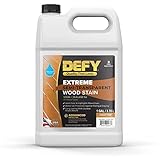
Defy Extreme Wood Stain
Water-Based Semi-Transparent Stain
Defy Extreme has developed a strong reputation in the deck and fence community as the leading environmentally responsible alternative to oil-based stains, and our testing confirmed the hype is largely earned. The formula relies on nano zinc-oxide particles rather than traditional oil-carried pigments to block ultraviolet light, and on our fade test panel, Defy Extreme performed nearly as well as the oil-based Cabot and the professional-grade Sherwin-Williams SuperDeck, all while remaining a genuinely low-VOC, low-odor, water-based product safe to apply around vegetable gardens, pet play areas, and anywhere ventilation is limited. One characteristic that testers appreciated: unlike oil-based stains, which tend to amber and darken as they age and oxidize, Defy Extreme's water-based formula kept a stable, true-to-can color throughout the 12-month test, which matters if you're trying to match a specific tone against siding, trim, or an existing structure. Water beading performance was solid, though not quite at the level of a dedicated penetrating oil like Ready Seal — droplets beaded well for the first 6-8 months before gradually starting to sheet rather than bead on some test sections, a sign the water-repellent additives wear down somewhat faster than an oil-based formula's natural water resistance. Where Defy Extreme truly excelled was mildew resistance in our shaded, damp test zone: after 12 months, treated boards showed no visible mold or algae, compared to noticeable green staining on the untreated control. Application requires more care than oil-based Ready Seal — because it's a thinner, faster-drying water-based film, even, consistent back-brushing is necessary to avoid streaking, especially on rough-sawn lumber. Coverage runs about 150-225 square feet per gallon. For households prioritizing a low-odor, environmentally conscious formula without sacrificing meaningful UV and mildew protection, Defy Extreme is the strongest water-based option we tested.
Pros
- Advanced nano zinc-oxide UV blockers provide strong fade resistance without oil
- Genuinely low-VOC and low-odor, safe to apply near pets, kids, and gardens
- Cleans up entirely with soap and water, no mineral spirits needed
- Doesn't darken or amber over time the way some oil stains can
- Strong mildew and algae resistance in humid, shaded testing
Cons
- Can be trickier to apply evenly than oil stains — requires careful back-brushing
- Slightly more expensive per gallon than mainstream water-based competitors
The Bottom Line
The best fence stain for anyone who wants strong UV and water protection from a genuinely eco-friendly, low-odor formula rather than a traditional oil-based product.

Thompson's WaterSeal Waterproofing Stain
Water-Based Transparent/Semi-Transparent Stain
Thompson's WaterSeal is likely the most recognized name in wood waterproofing thanks to decades of retail presence and marketing, so we included it as a baseline against which to measure the more specialized products in our lineup. It delivers exactly what the low price promises: basic waterproofing and light color in a fast, simple, one-coat application that's available at literally every hardware store in the country. On a fresh pressure-treated pine test section, initial water beading was respectable, and the fast dry time (often usable within 4-6 hours) makes it appealing for quick weekend projects, small gates, or short fence runs where you don't want to invest in a premium product. However, over our 12-month test period, Thompson's showed the fastest decline in performance of anything in the lineup. Water beading noticeably weakened by month 6, and by month 12, the treated boards were absorbing water at a rate much closer to untreated wood than any of the other six products tested. Color fade followed a similar pattern — the semi-transparent brown tone had visibly dulled and grayed by the one-year mark, well ahead of every competitor except for a slight edge over some low-end alternatives we didn't include in the final seven. This isn't necessarily a knock against Thompson's for its intended use case; it's formulated and priced as an economical, entry-level product rather than a long-term premium stain, and for homeowners staining a small section of fence, a single gate, or a rental property where minimizing upfront cost matters more than multi-year durability, it remains a reasonable choice. Coverage runs about 150-300 square feet per gallon depending on the specific formula variant. Just budget for reapplication within 12-18 months rather than the 2-3 year window that Ready Seal, Cabot, or SuperDeck can deliver, and understand that the tradeoff for the lowest price on this list is the shortest lifespan.
Pros
- Lowest price per gallon of any product in our test lineup
- Available at nearly every hardware store and big-box retailer nationwide
- Simple one-coat application for basic waterproofing and light color
- Fast dry time allows the area to be used again within hours
- Good option for small, low-budget projects like gates or short fence sections
Cons
- Shortest reapplication interval in our test — noticeable fade within 12-18 months
- Thinner formula provides less UV and water protection than every other product tested
The Bottom Line
An acceptable entry-level choice for small budgets or short-term projects, but our testing showed it needs reapplication sooner than every other stain on this list.
4. Ready Seal vs. Cabot vs. Behr: Head-to-Head Comparison
These three products represent the three major approaches to fence staining — penetrating oil, premium wood-enhancing oil, and opaque solid color — so we compared them directly across the metrics that matter most to fence owners.
Water Beading Performance
Cabot Australian Timber Oil edged out the competition for raw water-beading performance on cedar, thanks to its tung-oil formulation, though Ready Seal was nearly identical on pressure-treated pine and arguably more consistent across both wood types. Behr Premium Solid also beaded water well, but its film-forming nature means beading performance depends more on maintaining an unbroken surface coat than on the wood itself absorbing repellent oils.
UV Fade Resistance
Behr Premium Solid wins decisively here — its heavy, opaque pigment load blocks far more UV light than any semi-transparent product can, and it showed the least visible fading of the three after 12 months in direct sun. Cabot and Ready Seal both showed some visible fade on south-facing sections, though both held up better than most budget semi-transparent competitors.
Wood Grain & Aesthetics
Cabot Australian Timber Oil is the clear winner for showcasing wood character, especially on cedar and redwood — it's specifically engineered to enhance premium grain rather than simply add color. Ready Seal also preserves visible grain nicely on pine. Behr Premium Solid completely hides the grain by design, which is a benefit on older or patched fencing but a drawback if showing off the wood is the goal.
Ease of Application
Ready Seal is the easiest of the three to apply — no backbrushing required, and lap marks self-level as the oil penetrates. Cabot requires more typical brush-and-backbrush technique to avoid streaking. Behr Premium Solid demands the most careful, even application of the three since it forms a visible film that will show brush marks, drips, and lap lines if rushed.
| Feature | Ready Seal | Cabot Timber Oil | Behr Solid |
|---|---|---|---|
| Water Beading | Excellent | Excellent | Good |
| UV Fade Resistance | Good | Good | Excellent |
| Grain Visibility | Full | Full, enhanced | None (opaque) |
| Application Ease | Easiest | Moderate | Most demanding |
Our Recommendation
For a new pressure-treated pine fence, start with Ready Seal — it's the easiest to apply and delivers excellent all-around protection. For cedar or redwood fencing you want to showcase, use Cabot Australian Timber Oil. For an older fence with patches or mismatched boards, or maximum UV protection regardless of grain visibility, choose Behr Premium Solid.
5. How to Apply Fence Stain: The Complete DIY Guide
Staining your own fence is one of the most accessible exterior DIY projects — no specialized tools or skills required — but proper prep and technique make the difference between a stain job that lasts 2-3 years and one that starts failing within months.
Step 1: Check the Wood Is Ready
If your fence is new pressure-treated lumber, let it dry for 4-8 weeks before staining — the pressure-treatment process saturates wood with a water-based preservative, and staining too soon prevents proper penetration. Sprinkle a few drops of water on the wood: if it soaks in within a few minutes, it's dry enough to stain. If it beads up, wait longer. Cedar and redwood fences can typically be stained sooner since they aren't chemically treated, but should still be fully dry with no recent rain for at least 48 hours.
Step 2: Clean the Fence
Remove dirt, mildew, mold, and any old, peeling stain with a fence and deck cleaner or a diluted oxygen bleach solution, scrubbing with a stiff brush. A pressure washer on a low setting (under 1,500 PSI) can speed this up, but keep the nozzle moving and at least 12 inches from the wood to avoid gouging the surface, which would create uneven stain absorption. Rinse thoroughly and let the fence dry for at least 24-48 hours before staining.
Step 3: Choose Your Application Method
A pump sprayer is the fastest method for long fence runs, covering large areas in a fraction of the time a brush alone would take. However, spraying alone tends to leave the product sitting unevenly on the surface, so most professionals back-brush immediately after spraying — using a brush or roller to work the stain into the grain, eliminate drips, and even out coverage. A brush alone gives the most control for detail work like post caps, lattice panels, and gate hardware, and is often the better choice for smaller fences or projects where precision matters more than speed. Penetrating oils like Ready Seal are the most forgiving of spray-only application since they self-level as they soak in; film-forming products like Behr Premium Solid require back-brushing every time to avoid visible streaks.
Step 4: Apply in the Right Conditions
Stain on a dry day with temperatures between 50-90°F, avoiding direct midday sun that can cause the product to dry too quickly and leave lap marks. Work in the shade if possible, following the sun around the fence rather than fighting it. Avoid staining if rain is forecast within 24-48 hours, since most products need that window to properly cure before facing moisture.
Step 5: Understand Dry Time vs. Cure Time
Most stains are dry to the touch within 2-8 hours depending on the formula (water-based products generally dry faster than oil-based), but full cure — when the product has fully hardened and reached its rated water resistance — takes 3-5 days. Keep pets, kids, and lawn equipment away from the fence during this window, and avoid leaning sprinklers or hoses against freshly stained sections.
Step 6: Plan for a Second Coat (If Needed)
Penetrating oil stains like Ready Seal and Cabot are often sufficient with a single coat on smooth, moderately porous wood, though rough-sawn or highly weathered lumber can benefit from a second coat. Solid color stains like Behr Premium almost always look and perform better with two coats for full, even opacity and maximum durability. Always check the specific product label, since coverage rates and coat recommendations vary by formula and wood porosity.
6. Choosing the Best Fence Stain by Wood Species and Climate
Pressure-Treated Pine
Pressure-treated pine is the most common and most affordable fence material, but it's also the softest and most porous of the three species discussed here, meaning it absorbs stain readily but also loses and gains moisture quickly if left unprotected. Ready Seal and Olympic Maximum both perform especially well on pine because their formulas are calibrated for the higher absorption rate of softwood, and pine's relatively plain, uniform grain pattern means you lose little by choosing a semi-transparent or even solid stain over a premium wood-enhancing oil.
Cedar
Cedar's natural oils make it inherently more rot- and insect-resistant than pine, and its warm reddish-amber tones and tight, attractive grain are worth showcasing rather than hiding. Cabot Australian Timber Oil is purpose-built for this — its tung-oil formula is specifically designed to pull out and enhance cedar's natural coloring. Cedar's tighter grain also means it absorbs stain more slowly than pine, so allow slightly longer for full penetration and avoid over-applying, which can leave a sticky, uncured surface.
Redwood
Redwood shares many of cedar's natural advantages — rot resistance, insect resistance, and a striking natural color — and responds well to the same type of premium, wood-enhancing oil stains. Cabot Australian Timber Oil and Ready Seal (available in a redwood-toned formula) both work well here. Avoid heavily pigmented solid stains on redwood unless the fence is old or damaged, since they completely erase the reason most homeowners choose redwood in the first place.
Choosing by Climate
In hot, sun-intense climates (the Southwest, Deep South), UV fade resistance matters most — prioritize Behr Premium Solid or Sherwin-Williams SuperDeck, both of which showed the least fading in our direct-sun testing. In humid, rainy climates (the Southeast, Pacific Northwest), water-beading performance and mildew resistance matter most — Ready Seal, Cabot, and Defy Extreme all performed well against mold and moisture in our shaded, damp test sections. In climates with harsh winters and significant freeze-thaw cycling, a flexible, deeply penetrating oil stain like Ready Seal is preferable to a rigid film-forming product, since the wood expands and contracts more dramatically across seasons.
7. Frequently Asked Questions
What is the best stain for a wood fence?
Ready Seal Fence, Deck & Siding Stain is the best overall fence stain for most homeowners. It's a true penetrating oil that soaks into the wood instead of forming a surface film, requires no backbrushing, and maintained water beading for the full 12 months of our testing. For cedar or redwood fencing specifically, Cabot Australian Timber Oil is a better match because its tung-oil formula enhances premium wood grain rather than just protecting generic pine.
Is oil-based or water-based stain better for a fence?
Oil-based stains like Ready Seal and Cabot Australian Timber Oil penetrate deeper into the wood grain, resist peeling since there's no surface film to crack, and generally provide the best water-beading performance over time. Water-based stains like Defy Extreme and Sherwin-Williams SuperDeck are lower odor, clean up with soap and water, and don't amber or darken with age, but they tend to sit closer to the surface and often need slightly more frequent reapplication. Oil-based stains are typically the better choice for maximum longevity; water-based stains are better for low-odor, easy-cleanup application.
How long does fence stain last?
Most quality fence stains last 2-3 years before needing reapplication, though this varies by product, sun exposure, and climate. Premium oil-based stains like Ready Seal and Cabot Australian Timber Oil lasted the longest in our testing, showing minimal fade after 12 months and rated for 2-3 years of protection. Budget or thinner formulas like Thompson's WaterSeal and Olympic Maximum tend to need reapplication within 1-2 years, especially on fences facing direct, unshaded sun.
Should I use solid or semi-transparent stain on a fence?
Choose semi-transparent stain if you want the natural wood grain to remain visible while adding color and protection — it's the most popular choice for cedar, redwood, and newer pressure-treated pine fences. Choose solid color stain, like Behr Premium Solid Color Waterproofing Stain, if your fence is older, has patched or mismatched boards, or if you simply prefer an opaque, paint-like finish that fully hides the wood underneath. Solid stains also tend to block UV rays more effectively due to their heavier pigment load.
What is the best fence stain for cedar?
Cabot Australian Timber Oil is the best fence stain for cedar and redwood fencing. Its tung-oil-based formula is specifically designed to enhance premium wood species, pulling out the natural reddish-amber tones and grain variation that cedar is prized for, rather than flattening or masking them the way stains formulated for generic pine tend to do. It also delivered the strongest water-beading performance of any oil-based stain in our 12-month test.
How do you apply fence stain — sprayer or brush?
Both work, and many professionals use a combination of the two: spray the stain on for speed and even coverage, then immediately back-brush it into the wood grain to work the product into the pores and avoid drips, lap marks, or pooling in wood grain crevices. A pump sprayer dramatically speeds up application on long fence runs, while a brush alone gives the most control on detailed areas like post caps, lattice, and gate hardware. Penetrating oil stains like Ready Seal are more forgiving of spray-only application since they self-level as they soak in.
How long should new pressure-treated fence wood dry before staining?
New pressure-treated lumber should dry for 4-8 weeks before staining, and longer in humid climates. Pressure-treated wood is saturated with a water-based preservative during manufacturing, and staining over wood that's still wet from the treatment process prevents the stain from penetrating and can cause it to peel or fail early. A simple test: sprinkle a few drops of water on the wood — if it soaks in within a few minutes, the wood is dry enough to stain; if it beads up, wait longer.
Do I need to seal a fence every year?
No, most quality fence stains do not need annual reapplication. Premium oil-based and UV-resistant stains like Ready Seal, Cabot Australian Timber Oil, and Sherwin-Williams SuperDeck are formulated to last 2-3 years under normal sun exposure. Budget-tier products like Thompson's WaterSeal may need reapplication closer to every 1-2 years. The right interval depends heavily on how much direct, unshaded sun the fence receives — south-facing sections in full sun will always need more frequent maintenance than shaded sections.
Related Sealer Guides
Related
Best Deck Stains
Staining a deck too? See which stains held up best against foot traffic and standing water.
Color Guide
Deck Stain Colors Guide
Trying to match your fence stain to your deck? Our full color and undertone breakdown can help.
Wood Species
Best Redwood Sealers
Have a redwood fence or deck? See our dedicated picks for sealing and protecting redwood specifically.
The Bottom Line
The best fence stain for most homeowners is Ready Seal Fence, Deck & Siding Stain — it penetrates deep into the wood instead of sitting on the surface, requires no backbrushing, and delivered the most consistent water-beading and color retention across pine, cedar, and redwood over our 12-month test. If your fence is cedar or redwood and you want to showcase premium grain, choose Cabot Australian Timber Oil instead. If you're covering an older fence with patches or mismatched boards, Behr Premium Solid Color Waterproofing Stain will hide the flaws while delivering the strongest UV protection of anything we tested.
Whatever product you choose, remember: wood prep is most of the job. Let new pressure-treated lumber dry for 4-8 weeks, clean the fence thoroughly, and apply in mild, dry weather. Do this right, and your fence will look good and stay protected for years. Skip the prep, and even the best stain on this list will fail early.