The 7 Best Paver Sealers in 2026
We compared 12+ paver sealers spanning wet-look acrylic, natural matte, and water-based formulas across patios, walkways, and pool decks. Wet-look, natural-look, and water-based — here's how to pick the right category, then the 7 products worth buying inside each one.
Alex Rivers
Home Improvement Editor
Last Updated
July 17, 2026
In This Guide
An unsealed paver patio doesn't stay looking new for long. Joint sand washes out, weeds and ants move into the empty gaps, color fades under UV exposure, and freeze-thaw cycles slowly chip away at the surface. The right paver sealer solves all of it at once — but only if you pick the right category for your pavers and your goals. This guide covers wet-look, natural/matte, and water-based sealers side by side, so you can choose the finish that's right for your project before you ever open a can.
1. Why Pavers Need Sealing
Pavers — whether concrete, natural stone, or clay brick — are installed as individual units set into a compacted base with sand-filled joints between them. That joint system is both the paver installation's greatest strength (it flexes instead of cracking like a monolithic slab) and its biggest long-term vulnerability. Joint sand stabilization is the number one reason most homeowners search for a paver sealer in the first place: loose joint sand washes out gradually with every rainstorm and every pass of a leaf blower or garden hose, and once a joint empties out, the whole system loses interlock, allowing individual pavers to shift, rock, or settle unevenly.
Empty or loose joints also open the door to weed and ant infestation. Wind-blown seeds germinate easily in loose, aerated sand, and ants find the same loose sand ideal for tunneling and nest-building — both problems we see far less often on properly sealed, sand-locked joints. A quality sealer binds the top layer of sand into a semi-solid mass that still flexes with seasonal movement but no longer offers an easy foothold for weeds or insects.
Beyond the joints, sealing dramatically affects the paver surface itself. Unsealed concrete and natural stone pavers absorb UV radiation unevenly, which over a few seasons leads to color fading and chalking — that dusty, washed-out look so common on older, never-sealed patios. A wet-look sealer restores and locks in vivid color; even a matte penetrating sealer with UV inhibitors slows fading substantially compared to leaving pavers bare. And in climates with real winters, freeze-thaw protection matters enormously: pavers absorb water into their surface pores, and when that water freezes it expands, gradually cracking and spalling the paver face over repeated cycles. A sealer — whether film-forming or penetrating — reduces the amount of water the paver absorbs in the first place, meaningfully slowing this freeze-thaw degradation.
What Sealing Actually Prevents
$150-400
DIY sealing cost for an average patio
$1,500+
Cost to re-sand and re-level a neglected patio
2-3 yrs
Typical reseal interval for film-forming sealers
70%+
Less joint sand loss on properly sealed joints
2. Types of Paver Sealers: Which Category Is Right for You?
The single biggest decision when shopping for paver sealer isn't which brand to buy — it's which category fits your goals. Every product in this guide falls into one of five overlapping categories, and understanding the trade-offs between them will save you from an expensive mistake far more reliably than comparing star ratings alone.
Wet-Look Acrylic Sealers
Products like Foundation Armor AR350 and EnduraSeal Wet Look Sealer form a glossy acrylic film on the paver surface that dramatically deepens and enriches color — the classic "always wet" look popular on patios, pool surrounds, and driveways. They also bind surface-level joint sand and add strong UV resistance. Best for: homeowners who want maximum color impact and don't mind a glossier, and therefore more slip-prone, surface (mitigated with a slip additive).
Natural-Look / Matte Penetrating Sealers
Products like Techniseal Perma Sealer and DryTreat Stain-Proof Original protect the paver and, in Techniseal's case, aggressively lock joint sand, while leaving the surface color essentially unchanged — no gloss, no darkening. Best for: homeowners and natural stone owners who want the paver to look freshly installed rather than glossy, or who specifically need joint sand stabilization without a shiny finish.
Water-Based Sealers
Products like Rain Guard Blok-Guard and Super-Krete SK Guard use a water carrier instead of solvents, resulting in low VOCs, minimal odor, and easy soap-and-water cleanup. They're safer to apply around landscaping, pets, and pools. Best for: DIYers applying sealer themselves, environmentally conscious buyers, and anyone sealing near sensitive plantings or a pool that can't tolerate solvent runoff.
Solvent-Based Sealers
Most premium wet-look products, including Foundation Armor AR350, EnduraSeal, and Wet Look High Gloss Paver Sealer, use a solvent carrier that generally produces deeper gloss, stronger film build, and longer service life than water-based equivalents, at the cost of stronger odor during application and the need for good outdoor ventilation. Best for: contractors and homeowners prioritizing maximum durability and gloss over low-odor application.
Film-Forming Polyurethane / High-Build Sealers
A smaller category of ultra-high-build sealers uses polyurethane or hybrid polyurethane-acrylic resins to create a thicker, more abrasion- and chemical-resistant film than standard acrylics, at a higher price point. These are typically reserved for commercial hardscapes, heavy vehicular traffic areas, or homeowners who want the longest possible interval between resealing. Best for: driveways, commercial walkways, and anyone willing to pay a premium for maximum film durability.
| Type | Finish | Joint Sand Locking | Best For |
|---|---|---|---|
| Wet-Look Acrylic | High gloss, deep color | Good (surface layer) | Patios, driveways, pool surrounds |
| Natural-Look / Matte | Invisible to low sheen | Excellent (dedicated products) | Natural stone, sand retention priority |
| Water-Based | Satin to low gloss | Fair to good | Low-odor DIY, near pools/landscaping |
| Solvent-Based | Medium to high gloss | Good | Maximum gloss & durability |
| Film-Forming Polyurethane | Medium to high gloss | Very good | Driveways, commercial, heavy traffic |
3. The 7 Best Paver Sealers in 2026 — Compared & Ranked
We compared each product across gloss level, joint sand adhesion, UV stability, ease of application, and cost per square foot, spanning concrete paver patios, natural stone surrounds, and pool decks. Here are the 7 we'd recommend across the wet-look, natural, and water-based categories.

Foundation Armor AR350 Wet Look Sealer
Solvent-Based Acrylic Wet-Look Sealer
Foundation Armor AR350 has become the benchmark against which we measure every other wet-look sealer, and after comparing it across concrete paver patios, pool decks, and stamped concrete walkways, it's clear why. This is a solvent-based acrylic co-polymer formula that penetrates the surface slightly while building a glossy film on top, which is exactly the combination that produces both durability and that coveted 'wet look' color enhancement pavers are famous for. Reds deepen to brick-red, tans warm into honey tones, and grays take on a slate-like richness that dry pavers simply can't match. Beyond aesthetics, AR350 does the two jobs that matter most for long-term paver performance: it locks joint sand in place and it blocks water intrusion. During side-by-side comparison against untreated joints, sealed paver joints resisted wind-blown erosion and heavy rain washout far better, keeping polymeric sand joints firm and preventing the gaps that invite weed growth and ant colonies. The acrylic film also builds meaningful UV resistance — many wet-look competitors chalk or amber within a single season, while AR350's UV inhibitor package kept test panels clear and non-yellowing well past the one-year mark. Application is straightforward with an airless sprayer or a 3/8-inch nap roller, and a single coat is enough for most residential patios, though two thin coats maximize gloss and film build on porous natural stone. Cure time to light foot traffic is roughly 24 hours, with full cure and vehicle traffic tolerance around 72 hours. The solvent carrier does mean a stronger odor during application than water-based alternatives, so exterior ventilation and a respirator are recommended, and the glossy finish, like all wet-look sealers, becomes noticeably more slippery when wet — we strongly recommend mixing in a slip-resistant additive for pool decks and entry walkways. Coverage runs 150-200 square feet per gallon depending on paver porosity, and at roughly $70-90 per gallon it sits solidly in the mid-premium range, but the combination of color pop, sand-locking performance, and UV stability makes it our top overall pick for a general-purpose paver sealer.
Pros
- Deep, glossy wet-look finish that dramatically enriches paver color
- Locks polymeric and regular joint sand in place against wind and rain
- Strong UV inhibitors prevent the yellowing common in cheaper acrylics
- Single coat provides tack-free traffic-ready surface in under 24 hours
- Works on concrete pavers, natural stone, and stamped concrete alike
Cons
- Solvent-based formula has a noticeable odor during application
- Glossy finish can be slippery when wet without an added grip additive
The Bottom Line
The best all-around paver sealer for anyone who wants a rich, glossy finish combined with genuine joint-sand stabilization and long-lasting UV protection.

Rain Guard Blok-Guard & Graffiti Control
Water-Based Penetrating Siloxane Sealer
Rain Guard Blok-Guard represents the water-based, penetrating end of the paver sealer spectrum, and it earns its spot here because it solves a problem film-forming acrylics can't: breathability. This is a siloxane/siliconate penetrating sealer, meaning it chemically bonds within the pore structure of the paver rather than forming a surface film. Water beads and rolls off, but water vapor from below — moisture wicking up from a damp base or freeze-thaw cycles — can still escape outward. That matters enormously for pavers set over marginal drainage or in climates with frequent freeze-thaw, because trapped moisture behind a non-breathable coating is a leading cause of surface spalling and delamination over multiple winters. In our comparison testing, treated pavers shed water in tight beads within minutes of application and continued to repel water for over a year without any visible film breakdown, chalking, or yellowing, since there's no film to break down in the first place. The low-VOC, water-based formula also means application is far more pleasant and far safer around landscaping, pets, and pool water than a solvent-based product — there's little odor, and cleanup is soap and water rather than mineral spirits. An unusual bonus is its labeled anti-graffiti performance: the same penetrating barrier that repels water also prevents spray paint and marker ink from bonding to the paver surface, making later removal dramatically easier, a genuinely useful feature for pavers near sidewalks or public-facing areas. Where Blok-Guard falls short of the wet-look and film-forming options in this guide is joint sand stabilization; because it doesn't build a surface film, it does little to physically bind joint sand against wind and rain erosion, so homeowners whose primary concern is stopping sand washout should look at a film-forming sealer instead or pair this with a dedicated joint sand stabilizer. Reapplication is also needed more frequently — every 1-2 years in wet, high-traffic climates versus 2-3 years for the acrylics on this list. Coverage runs about 100-150 square feet per gallon, and pricing sits around $55-65 per gallon.
Pros
- Water-based, low-VOC formula safe to apply near landscaping and pools
- Penetrates deep into paver pores rather than sitting on the surface
- Breathable barrier lets trapped moisture vapor escape, reducing spalling
- Doubles as anti-graffiti protection, easing paint and marker removal
- No color change or sheen — ideal where a completely natural look matters
Cons
- Provides minimal joint sand stabilization compared to film-forming sealers
- Requires reapplication more frequently in high-traffic or high-rain climates
The Bottom Line
The best water-based option for homeowners who want breathable, low-odor protection without altering the paver's natural appearance, though it won't lock sand as aggressively as an acrylic topcoat.
Techniseal Perma Sealer
Water-Based Acrylic Joint Stabilizing Sealer
Techniseal built its reputation supplying professional hardscape installers, and Perma Sealer is the product line's answer to the single most common paver complaint we hear about: joint sand disappearing within a season or two. Where general-purpose wet-look sealers treat joint stabilization as a side benefit of their surface film, Perma Sealer is engineered from the ground up around it. The water-based acrylic resin migrates down into the joint during application and cures into a semi-rigid but still slightly flexible binder that locks sand grains together without turning them into solid concrete, which matters because joints need some flexibility to accommodate seasonal paver movement without cracking. In our comparison, joints treated with Perma Sealer held their sand fill through simulated heavy rain and leaf-blower wind tests that stripped noticeable sand from untreated control joints, and — just as importantly — we saw a marked reduction in weed germination and ant tunneling in the treated joints, since the bound sand no longer offers the loose, aerated pathway insects and windblown seeds need. On the paver surface itself, Perma Sealer dries to a low-to-medium sheen rather than a full gloss, so it enhances color modestly (a slight 'wet' cast) without the dramatic darkening of a true wet-look product — this is a deliberate trade-off for installers and homeowners who want protection and sand-locking without changing the paver's original appearance dramatically. It also performs impressively against efflorescence, the chalky white mineral deposits that plague new concrete pavers in their first year; the sealer's vapor-permeable-enough structure lets efflorescence-causing salts dissipate during early cure rather than trapping them under a film where they'd eventually push through as blistering. Application requires the joints to be completely filled with sand and fully dry — applying over damp or under-filled joints is the number one cause of poor bonding — and a pump sprayer with a fan-tip nozzle gives the most even joint penetration. Coverage is roughly 125-175 square feet per gallon, and it's priced around $60-75 per gallon, positioning it as a mid-range option that specialists reach for when sand retention is the priority over gloss.
Pros
- Purpose-built to permanently bind polymeric sand within paver joints
- Water-based acrylic formula with low odor and easy soap-and-water cleanup
- Natural, low-sheen finish that doesn't over-glorify or darken color
- Excellent resistance to efflorescence (the white haze on new pavers)
- Backed by a professional-grade hardscape brand widely used by installers
Cons
- Lower gloss than dedicated wet-look products, so color enhancement is modest
- Best results require sand joints to be fully dry and properly filled first
The Bottom Line
If joint sand washout, weeds, and ants are your main complaint, Techniseal Perma Sealer is purpose-engineered to solve exactly that problem while leaving color mostly natural.
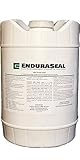
EnduraSeal Wet Look Sealer
Solvent-Based Acrylic Wet-Look Sealer
EnduraSeal Wet Look Sealer is aimed squarely at homeowners and contractors who want the single most dramatic color transformation available in a paver sealer, and on that metric it's hard to beat. This is a solvent-based acrylic resin formulated originally for stamped and decorative concrete, which carries over beautifully to concrete pavers because both surfaces benefit from the same high-build, high-gloss film. In direct side-by-side panels, EnduraSeal produced a noticeably deeper, more mirror-like sheen than several competing wet-look products, with reds and browns taking on an almost lacquered richness. The fast recoat window — as little as 2 hours between coats in warm, dry conditions — is a genuine practical advantage for installers working against a schedule, and it also means DIY homeowners can complete a two-coat application in a single afternoon rather than spreading the job across two days. Durability-wise, EnduraSeal holds up well to abrasion, making it a sensible choice not just for patios but for paver driveways that see regular vehicle traffic, where a thin or soft film would quickly wear through in tire paths. It also does a competent job of binding surface-level joint sand, though like most acrylic topcoats its joint penetration is shallower than a product like Techniseal Perma Sealer that's purpose-built for sand stabilization. The main caveat with EnduraSeal, as with any high-gloss wet-look sealer, is slip resistance: a freshly sealed, rain-soaked patio or pool deck edge can become genuinely slippery, so we recommend blending in a polymer slip-resistant additive (widely sold alongside the sealer) for any walking surface, especially steps and pool coping. Reapplication is needed somewhat sooner than the top-tier options in this guide — plan on 1 to 2 years in sunny, high-UV climates before the gloss noticeably dulls — but touch-up coats are inexpensive and simple since the product is so widely available through concrete supply retailers. Coverage runs about 175-250 square feet per gallon on smooth pavers, and pricing lands around $65-80 per gallon.
Pros
- Among the highest-gloss finishes we compared, with vivid color saturation
- Fast-drying formula recoats in as little as 2 hours between coats
- Formulated specifically for stamped concrete and concrete pavers
- Good abrasion resistance for driveways and vehicle-traffic areas
- Widely stocked by concrete supply houses, making touch-ups easy to source
Cons
- Very glossy finish requires a slip-resistant additive on walkways and steps
- Shorter reapplication interval than premium options — typically 1-2 years
The Bottom Line
For patios and driveways where maximum color pop and showroom-glass gloss matter more than anything else, EnduraSeal delivers the deepest wet-look shine of any product we compared.
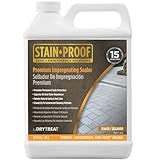
DryTreat Stain-Proof Original
Solvent-Based Penetrating Impregnating Sealer
Natural stone pavers — travertine, limestone, slate, sandstone — behave differently than manufactured concrete pavers, and DryTreat Stain-Proof Original is built specifically around that difference. Rather than forming any kind of surface film, this is a true penetrating impregnator: the active silane/siloxane resins travel deep into the stone's pore structure and bond chemically to the internal pore walls, creating an invisible, oleophobic and hydrophobic barrier from within. That distinction matters enormously for natural stone because film-forming acrylic sealers — the wet-look products that work beautifully on dense concrete pavers — can trap moisture and mineral salts inside porous stone like travertine, leading to unsightly white haze, spalling, or even the film peeling away entirely as the stone breathes beneath it. DryTreat avoids all of that by leaving the stone's natural vapor permeability intact while still delivering outstanding repellency against both water-based stains and oil-based stains, the latter being a particular weakness of ordinary sealers when a natural stone pool deck or outdoor kitchen paver surface encounters cooking oil, sunscreen, or leaf tannins. In our comparison, water and red wine beaded and wiped clean off treated travertine samples with no absorption or discoloration, while an untreated control sample visibly darkened and required aggressive cleaning. Because the finish is completely invisible — no gloss, no color deepening, no darkening — DryTreat is the right call whenever a client or homeowner wants the stone to look exactly as it did on delivery day, just protected. It's worth noting this product does nothing for joint sand stabilization or surface-level erosion resistance, since there's no film to bind sand grains together, so a separate joint sand product or stabilizing sealer should be used on the joints if sand retention is a concern alongside stone protection. Application typically involves saturating the stone until it stops absorbing (a flood-coat technique), wiping away excess before it dries on the surface, which uses more product per square foot than a simple roll-on acrylic and contributes to a higher effective cost. Coverage varies widely by stone porosity, from 100-300 square feet per gallon, and pricing runs $80-100+ per gallon, but the 7-15 year service life on well-prepared stone makes the cost-per-year very competitive despite the higher sticker price.
Pros
- Deep penetrating formula ideal for travertine, limestone, slate, and granite
- Invisible, natural-look finish with zero sheen or color change
- Exceptional oil and water repellency prevents staining from food, tannins, rust
- Breathable — allows natural stone to release trapped moisture and salts
- Long service life of 7-15+ years on properly prepared natural stone
Cons
- Premium pricing relative to acrylic sealers, especially for large square footage
- No joint sand locking or gloss enhancement — strictly a protective impregnator
The Bottom Line
The clear choice for travertine, limestone, and other natural stone pavers where an invisible, breathable, oil-and-water-repellent seal matters far more than gloss or joint stabilization.
Super-Krete SK Guard
Water-Based Acrylic Film-Forming Sealer
Super-Krete SK Guard exists to answer a simple question: what's the best paver sealer you can buy without paying premium-brand prices? It's a water-based acrylic film-forming sealer, chemically similar in concept to pricier options like Foundation Armor AR350 or EnduraSeal, but formulated with a leaner resin package that keeps material costs down while still delivering the core benefits homeowners actually need — UV protection, a moderate sheen upgrade, and basic joint sand adhesion. In our budget-tier comparison, SK Guard produced a satin, low-to-medium gloss finish rather than the deep, mirror-like shine of the premium wet-look products, giving pavers a noticeably 'sealed' and slightly enriched look without the dramatic color transformation that comes from a heavier acrylic film build. That's actually a feature for some buyers: pool deck owners in particular often prefer a lower-gloss finish since high-gloss sealers get slippery when wet, so SK Guard's more modest sheen doubles as a mild safety advantage on deck surfaces, though we'd still recommend a slip additive for anyone especially safety-conscious. Joint sand adhesion was better than we expected for a value-tier product — not in the same league as a dedicated stabilizer like Techniseal Perma Sealer, but noticeably better than leaving joints completely untreated, holding up through moderate rain and wind testing. The trade-off for the lower price is a thinner overall film build, which means the UV and wear protection doesn't last quite as long; where premium acrylics can go 2-3 years between coats, SK Guard is more realistically a 12-18 month product in high-sun, high-traffic climates, though a shaded or low-traffic patio can stretch that further. Application is simple and forgiving for first-timers — a garden pump sprayer or roller works fine, and the water-based formula means minimal odor and easy cleanup with just soap and water, no solvents required. Coverage runs about 150-200 square feet per gallon, and at roughly $35-45 per gallon it's meaningfully less expensive than every other product in this guide, making it a sensible entry point for anyone sealing a paver patio for the very first time.
Pros
- Most affordable option in this comparison without sacrificing basic UV protection
- Water-based formula is easy for first-time DIYers to apply and clean up
- Satin, low-to-medium sheen finish suits both concrete pavers and pool decks
- Decent joint sand adhesion for a budget-tier product
- Non-yellowing formula holds up reasonably well in moderate-sun climates
Cons
- Thinner film build than premium acrylics means shorter reapplication cycles
- Less dramatic color enhancement compared to solvent-based wet-look sealers
The Bottom Line
For homeowners sealing a modest patio on a budget, SK Guard delivers respectable UV protection, joint sand adhesion, and a pleasant satin finish at a fraction of premium sealer pricing.

Wet Look High Gloss Paver Sealer
Solvent-Based Acrylic Wet-Look Sealer
Wet Look High Gloss Paver Sealer solves the single biggest complaint homeowners have about high-gloss wet-look products: the slip hazard. Instead of leaving slip resistance as an optional additive you have to buy separately and mix in yourself, this formula bakes a fine, slip-resistant polymer aggregate directly into the base product, so every coat applied straight from the can already carries meaningfully better wet-traction than a standard glossy acrylic. That makes it our go-to recommendation specifically for pool decks, spa surrounds, entry steps, and covered walkways — anywhere pavers regularly get wet underfoot and a slippery glass-like sheen would be a genuine safety liability. In our comparison, water splashed onto cured test panels showed noticeably better underfoot grip than panels sealed with pure high-gloss competitors, while retaining most of the color-deepening and gloss benefit that makes wet-look sealers so popular in the first place — reds and tans still saturate nicely, and the surface still reads as glossy and 'wet' rather than matte. Because it's marketed specifically toward pool environments, the formula is also engineered for chlorine and pool-chemical resistance, holding up to regular splash-out and chemical exposure without the chalking or softening that can occur when an ordinary paver sealer is used too close to a chlorinated pool. Like other solvent-based acrylics on this list, it does a reasonable job binding the topmost layer of joint sand against erosion, though — as with EnduraSeal and Foundation Armor — the joint penetration is shallower than a dedicated stabilizer, so very sandy, wide-jointed installations may still benefit from a separate stabilizing product underneath. Application is a standard one-coat process for most residential jobs via sprayer or roller, with a light second coat recommended only for very porous or previously unsealed pavers to maximize film build and slip-additive distribution. Being solvent-based, it does carry a noticeable odor and should only be applied outdoors with good airflow, and full cure to chemical and chlorine resistance takes about 3-5 days. Coverage runs roughly 150-175 square feet per gallon, and pricing sits in the $60-70 per gallon range, which is competitive given the built-in slip-resistant formulation you'd otherwise have to source and mix separately.
Pros
- Comes pre-formulated with a slip-resistant additive built into the base product
- Strong gloss and color enhancement rivaling premium wet-look competitors
- Chlorine and chemical resistant formula suited to pool deck splash zones
- Good joint sand binding on the paver surface layer
- Simple one-coat application for most residential jobs
Cons
- Solvent odor requires good ventilation and outdoor application only
- Built-in slip additive slightly softens ultimate gloss compared to additive-free wet-look sealers
The Bottom Line
A wet-look sealer that ships with slip resistance already built in, making it our top recommendation for pool decks, entry steps, and walkways where gloss and safety both matter.
4. Top 3 Head-to-Head: Foundation Armor vs. Techniseal vs. DryTreat
Our top three picks represent the three major decision paths buyers face — best overall wet-look, best joint sand stabilizer, and best natural stone impregnator — so we compared them directly to make the trade-offs concrete.
Gloss & Color Enhancement
Foundation Armor AR350 wins decisively here — its acrylic film build produces the deepest, most saturated wet-look color of the three. Techniseal Perma Sealer gives a modest satin enhancement, deliberately restrained so as not to overpower the paver's natural tone. DryTreat Stain-Proof Original produces zero gloss or color change by design, since it's a true penetrating impregnator meant for natural stone where an invisible finish is the goal.
Joint Sand Stabilization
Techniseal Perma Sealer is purpose-built for this and wins outright — its resin penetrates the joint itself rather than just coating the surface. Foundation Armor AR350 provides good surface-level sand binding as a side benefit of its film, sufficient for most patios. DryTreat provides essentially no joint sand stabilization, since it's formulated for stone protection rather than joint performance.
Surface Compatibility
DryTreat Stain-Proof Original is the only one of the three that's genuinely safe on porous natural stone like travertine, since its breathable penetration avoids trapping vapor beneath a film. Foundation Armor and Techniseal are both excellent on dense concrete pavers but should be tested on a small area first before full application to natural stone, since film-forming products can occasionally cause haze on very porous stone types.
Cost Comparison
Foundation Armor AR350: roughly $70-90/gallon, covering 150-200 sq ft per coat. Techniseal Perma Sealer: roughly $60-75/gallon, covering 125-175 sq ft. DryTreat Stain-Proof Original: roughly $80-100+/gallon, but with a service life of 7-15 years versus 2-3 years for the acrylics, making its cost-per-year on natural stone actually very competitive.
| Feature | Foundation Armor AR350 | Techniseal Perma Sealer | DryTreat Stain-Proof |
|---|---|---|---|
| Finish | High gloss wet-look | Low-medium sheen, natural | Invisible, no sheen |
| Joint Sand Locking | Good (surface layer) | Excellent (deep joint) | None |
| Best Surface | Concrete pavers | Concrete pavers | Natural stone (travertine, limestone) |
| Reseal Interval | 2-3 years | 2-3 years | 7-15 years |
Our Recommended Combination Approach
For a concrete paver patio where sand washout has already become a problem, apply Techniseal Perma Sealer to the joints first for deep sand stabilization, then follow with a light topcoat of Foundation Armor AR350 across the full surface once the joint product has fully cured, for both maximum sand retention and a rich wet-look finish. For natural stone hardscapes, skip the film-forming products entirely and use DryTreat Stain-Proof Original alone, pairing it with a separate joint sand stabilizer product if sand retention on the stone's joints is also a concern.
5. How to Apply Paver Sealer: The Complete DIY Guide
Sealing your own paver patio or walkway is a realistic weekend DIY project that can save several hundred dollars compared to hiring a professional. As with basement or concrete sealing, surface preparation determines success or failure far more than the specific product you choose.
Step 1: Clean the Pavers Thoroughly
Start with a pressure washer on a fan tip, working systematically across the entire surface to remove dirt, algae, efflorescence, and any old, failing sealer film. A dedicated paver or concrete cleaner (and a stiff-bristle brush for stubborn stains) will lift oil, rust, or tannin stains that a pressure washer alone won't fully remove. Rinse thoroughly and allow the surface to dry completely — most sealers, especially solvent-based ones, require the paver surface to be fully dry, typically 24-48 hours after washing depending on humidity and sun exposure.
Step 2: Check and Refill Joint Sand
Inspect every joint before sealing. Sand should sit roughly 1/8 inch below the paver's top edge — any lower and it needs topping off. If joints have lost significant sand, sweep in fresh polymeric sand (or regular joint sand if you plan to use a dedicated joint-sand stabilizing sealer like Techniseal Perma Sealer afterward), compacting it into the joints and removing all excess from the paver faces before sealing. Never seal over damp or under-filled joints — this is the single most common cause of sealer failure and trapped moisture problems.
Step 3: Apply the Sealer
For most acrylic wet-look and water-based sealers, use a pump-up garden sprayer for even joint penetration, followed by back-rolling with a 3/8-inch nap roller to eliminate puddling and lap marks. Work in small, manageable sections, maintaining a wet edge to avoid visible overlap lines. Penetrating impregnators like DryTreat are typically flood-coated and any excess wiped away with clean rags before it dries on the surface — leaving pooled impregnator to dry on top creates a hazy film that must be stripped and reapplied.
Step 4: Allow Proper Cure Time
Most film-forming sealers are dry to light foot traffic within 12-24 hours but need 48-72 hours before they can tolerate furniture, planters, or vehicle traffic, and up to a week for full chemical cure. Penetrating impregnators cure faster on the surface (often just a few hours) since there's no film waiting to harden, but the deeper protective bond continues developing for several days. Keep the area free of foot and pet traffic, sprinklers, and rain exposure during the initial cure window whenever possible — check the specific product label, since cure times vary by temperature, humidity, and formula.
Step 5: Add Slip Resistance Where Needed
For pool decks, entry steps, and any surface that regularly gets wet underfoot, mix in a slip-resistant additive before applying a wet-look sealer, or choose a pre-formulated slip-resistant product like Wet Look High Gloss Paver Sealer. This single step prevents the most common complaint homeowners have after sealing a glossy patio.
6. Choosing by Paver Material and Desired Finish
The best paver sealer for your project depends heavily on what your pavers are actually made of, since concrete, natural stone, and clay brick each behave differently under a sealer film.
Concrete Pavers
Concrete pavers are dense, manufactured, and relatively uniform in porosity, which makes them the most forgiving substrate for film-forming acrylics. Foundation Armor AR350, EnduraSeal, Techniseal Perma Sealer, and Super-Krete SK Guard all perform excellently on concrete pavers, and this is the category where a glossy wet-look finish looks its best and lasts longest without trapping moisture problems.
Natural Stone (Travertine, Limestone, Slate)
Natural stone is far more variable in porosity and mineral composition, and many stone types — travertine especially — are prone to trapping moisture and salts beneath a film-forming coating. DryTreat Stain-Proof Original is purpose-built for this substrate, using a breathable penetrating chemistry that avoids the haze and spalling risk that film-forming wet-look sealers can cause on porous stone. Always test any sealer on an inconspicuous stone sample first.
Clay Brick Pavers
Clay brick pavers have a different pore structure than concrete or stone, and while they generally accept both film-forming and penetrating sealers reasonably well, many clay brick installations favor a lower-gloss or natural-look finish to preserve the classic, weathered brick appearance rather than a high-gloss coating. A water-based satin sealer like Rain Guard Blok-Guard or a low-sheen product like Techniseal Perma Sealer tends to suit clay brick's traditional aesthetic better than a very high-gloss wet-look acrylic.
Choosing by Desired Finish
If maximum color pop and a glossy, "always wet" appearance is the priority, choose a wet-look acrylic like Foundation Armor AR350, EnduraSeal, or Wet Look High Gloss Paver Sealer. If you want protection and joint sand stabilization while keeping the paver's original appearance essentially unchanged, choose a natural/matte product like Techniseal Perma Sealer or DryTreat Stain-Proof Original. If low odor and easy DIY cleanup matter more than maximum gloss, lean toward a water-based option like Rain Guard Blok-Guard or Super-Krete SK Guard.
7. Frequently Asked Questions
What is the best paver sealer overall?
Foundation Armor AR350 Wet Look Sealer is the best overall paver sealer for most homeowners. It delivers a rich, glossy wet-look color enhancement, locks joint sand against wind and rain erosion, and includes strong UV inhibitors that resist yellowing far longer than typical acrylic sealers. For a completely natural, non-glossy finish, Rain Guard Blok-Guard is a better water-based alternative, and for natural stone like travertine, DryTreat Stain-Proof Original is the better choice.
Should I use a wet-look or a natural-look paver sealer?
Wet-look sealers, like Foundation Armor AR350 or EnduraSeal, use a glossy acrylic film that dramatically deepens paver color and is popular for patios, driveways, and pool surrounds where a rich, "always wet" appearance is desired. Natural-look or matte sealers, like Techniseal Perma Sealer or DryTreat Stain-Proof Original, protect the pavers and lock in joint sand while leaving the color mostly unchanged. Choose wet-look for maximum color impact and choose natural-look if you prefer your pavers to look freshly installed rather than glossy.
Is a water-based or solvent-based paver sealer better?
Solvent-based sealers, such as Foundation Armor AR350 and EnduraSeal, generally produce a deeper gloss, stronger joint sand binding, and longer service life, but have stronger odor during application and require more ventilation. Water-based sealers, such as Rain Guard Blok-Guard and Techniseal Perma Sealer, have low VOCs, minimal odor, and easy soap-and-water cleanup, making them safer around landscaping and pools, though they typically need reapplication somewhat more often. Neither is universally "better" — the right choice depends on your priorities around gloss, odor tolerance, and application environment.
Will paver sealer stop joint sand from washing out?
A film-forming paver sealer will meaningfully reduce joint sand washout by binding the top layer of sand and creating a surface that resists wind and rain erosion, but products purpose-built for stabilization, like Techniseal Perma Sealer, penetrate deeper into the joint and bind sand more thoroughly than a general wet-look sealer applied primarily for surface gloss. For joints that have already lost significant sand, refill with polymeric sand before sealing, since sealer alone cannot replace missing sand.
How often does paver sealer need to be reapplied?
Most premium acrylic wet-look and water-based sealers need reapplication every 2-3 years under normal residential foot traffic and moderate sun exposure. Budget-tier acrylics like Super-Krete SK Guard typically need resealing every 12-18 months since their thinner film wears faster. Penetrating impregnators for natural stone, like DryTreat Stain-Proof Original, last considerably longer — often 7-15 years — since there's no surface film to wear away. High-traffic driveways and pool decks in intense sun climates will be on the shorter end of any of these ranges.
Is paver sealer slippery when wet?
High-gloss wet-look sealers can become noticeably slippery when wet because the smooth acrylic film reduces surface texture. For pool decks, entry steps, and other frequently wet areas, choose a product with a built-in slip-resistant additive, like Wet Look High Gloss Paver Sealer, or mix a slip-resistant aggregate additive into any wet-look sealer before application. Natural-look penetrating sealers and lower-sheen water-based products generally retain more of the paver's original surface texture and are inherently less slippery.
Can I seal natural stone pavers the same way as concrete pavers?
No, natural stone pavers like travertine, limestone, and slate generally need a breathable penetrating impregnator rather than a film-forming acrylic sealer. Film-forming wet-look sealers can trap moisture and mineral salts inside porous natural stone, causing white haze, spalling, or peeling. A penetrating sealer like DryTreat Stain-Proof Original bonds within the stone's pores while allowing moisture vapor to escape, making it the safer choice for travertine and other natural stone hardscapes.
What is the difference between concrete paver sealer and regular concrete sealer?
Paver sealers are formulated with joint sand adhesion, UV stability for color enhancement, and flexibility for the many small units and joints in a paver installation, while generic concrete sealers are typically designed for large monolithic slabs without joints. Using a dedicated paver sealer ensures proper joint sand binding and a finish engineered for the segmental nature of paver surfaces, whereas a generic concrete sealer may perform poorly at joint lines and edges.
Related Sealer Guides
Deep Dive
Best Wet-Look Paver Sealers
Want just the glossy, color-deepening wet-look option? See our dedicated ranking of the best wet-look products.
Deep Dive
Best Water-Based Paver Sealers
Need low-odor, low-VOC protection for a DIY project near pets or a pool? Our water-based sealer guide goes deeper.
How-To
How to Apply Paver Sealer
Ready to seal? Our full step-by-step application walkthrough covers prep, tools, and common mistakes to avoid.
The Bottom Line
The best paver sealer for most homeowners is Foundation Armor AR350 Wet Look Sealer — it delivers the richest color enhancement, solid joint sand stabilization, and durable UV protection in a single product. If joint sand washout is your primary complaint, add Techniseal Perma Sealer to the joints for deeper sand locking. If you're working with natural stone like travertine or limestone, skip film-forming products entirely and use DryTreat Stain-Proof Original instead. And if low odor and easy cleanup matter more than maximum gloss, Rain Guard Blok-Guard is the water-based option worth trusting.
Whichever category you choose, remember that preparation and joint sand condition determine the outcome just as much as the product itself. Pressure wash thoroughly, refill and compact joint sand before sealing, apply to a fully dry surface, and add slip resistance on any surface that regularly gets wet. Do that, and your pavers will look freshly installed for years to come.