The 7 Best Stamped Concrete Sealers in 2026
Your stamped concrete patio cost thousands of dollars to install. The wrong sealer will turn it chalky, white, and peeling within a single season. We tested 15+ products over 10 months on real stamped surfaces to find the 7 that actually deliver lasting protection and color enhancement.
Stamped concrete is one of the most popular decorative hardscaping materials in America, but it has a dirty secret: without a quality sealer, the color fades, the texture erodes, and the surface begins to deteriorate within two to three years. The right sealer does not just protect — it transforms the appearance of your stamped concrete from flat and muted to rich, vibrant, and dimensional.
If you have ever seen a stamped concrete patio that looked dull, chalky, and lifeless compared to the day it was poured, you have witnessed what happens when the sealer fails or was never applied at all. The integral color pigments in stamped concrete are embedded throughout the surface layer, but they rely on a sealer to bring out their full depth and protect them from UV degradation and moisture infiltration. Without that sealer, the surface essentially bleaches itself under the relentless assault of sunlight, rain, and freeze-thaw cycles.
The stamped concrete sealer market is confusingly diverse, spanning everything from budget water-based acrylics to professional-grade polyurethane systems, penetrating silane-siloxane formulas, and specialty color-enhancing products. Each chemistry produces a dramatically different result in terms of gloss level, color enhancement, durability, slip resistance, and maintenance requirements. Choosing the wrong type for your specific situation is one of the most expensive mistakes a homeowner can make — because stripping a failed sealer from textured stamped concrete is a nightmare that often costs more than the original sealing job.
Understanding Stamped Concrete Sealer Chemistry
Every stamped concrete sealer on the market falls into one of four fundamental chemical categories. Understanding these categories is essential because each one behaves completely differently on stamped surfaces, and using the wrong type for your climate, traffic level, and aesthetic preference leads directly to product failure.
Solvent-Based Acrylic Sealers
Solvent-based acrylics are the industry standard for stamped concrete and the product type most commonly recommended by decorative concrete contractors. They produce a glossy, wet-look surface film that dramatically enhances color depth and pattern definition. The solvent carrier — typically xylene or acetone — penetrates into the concrete pores before evaporating, leaving behind a thin acrylic resin film that bonds tightly to both the surface and the subsurface pore structure. This dual bonding mechanism is why solvent-based acrylics provide superior adhesion and color enhancement compared to water-based alternatives. The solvents literally carry the acrylic resins deeper into the concrete before the film forms. The downside is that solvent-based products have strong chemical odors, are flammable during application, and contain higher levels of volatile organic compounds. In some states with strict VOC regulations, certain solvent-based formulations are restricted or unavailable for consumer purchase.
Water-Based Acrylic Sealers
Water-based acrylics use water as the carrier instead of chemical solvents. They are lower in odor, non-flammable, easier to clean up, and more environmentally friendly. However, because water does not penetrate concrete pores as aggressively as solvents, water-based acrylics tend to form a thinner surface film with less color enhancement. The finish is typically satin to semi-gloss rather than the high-gloss wet look that solvent-based products deliver. For homeowners who prefer a more natural, understated appearance on their stamped concrete, water-based acrylics are actually the better aesthetic choice. They are also significantly more forgiving during application — over-application mistakes that would cause bubbling and whitening with solvent-based products are far less problematic with water-based formulas.
Polyurethane Sealers
Polyurethane sealers provide two to three times the abrasion resistance and chemical resistance of acrylic sealers. They are available in both aliphatic and aromatic formulations. Aliphatic polyurethanes are UV-stable and will not yellow — they are the correct choice for exterior stamped concrete. Aromatic polyurethanes are cheaper but yellow badly in sunlight and should only be used indoors. Polyurethanes are typically applied as a topcoat over an acrylic sealer base coat rather than directly onto bare concrete. This two-layer system provides the color enhancement of acrylic with the physical toughness of urethane. The cost is significantly higher than acrylic-only systems, and the application is more complex, making polyurethane systems most appropriate for commercial stamped concrete or high-end residential projects where maximum durability justifies the premium.
Penetrating Silane-Siloxane Sealers
Penetrating sealers do not form any visible surface film. Instead, they soak into the concrete pores, react chemically with the cementite matrix, and create an invisible hydrophobic barrier below the surface. The result is excellent water repellency and freeze-thaw protection with absolutely zero change in the surface appearance — no gloss, no sheen, no color enhancement. For stamped concrete in harsh winter climates where the primary concern is structural protection rather than aesthetics, penetrating sealers are the most effective and longest-lasting option. They cannot peel, whiten, or delaminate because there is no surface film to fail. However, they do nothing to enhance the decorative qualities of stamped concrete, which is often a dealbreaker for homeowners who want their patio to look its best.
High-Gloss vs. Satin vs. Matte: Which Sheen Level Is Right?
The gloss level of your sealer has an enormous impact on how your stamped concrete looks, and this is where many homeowners make costly aesthetic mistakes. Understanding how different sheen levels interact with stamped patterns will help you avoid the common disappointment of sealing your patio and then hating the result.
High-gloss sealers — those measuring 80 or above on the 60-degree gloss meter — produce the most dramatic color enhancement and visual impact. Colors appear richer and deeper, contrast between base color and antiquing highlights sharpens, and pattern edges become more defined. The surface has a wet, mirror-like reflectivity that catches and bounces light. This looks absolutely stunning on stamped concrete patterns that mimic smooth stone like ashlar slate, European fan, and large format tile. However, high gloss can look overtly artificial on stamped patterns designed to resemble rough, natural materials like fieldstone, cobblestone, and weathered flagstone. A shiny cobblestone patio simply does not look like real cobblestone.
Satin and semi-gloss sealers — those in the 40 to 70 range on the gloss meter — strike a middle ground. They provide noticeable color enhancement and a subtle sheen without the mirror-like reflectivity of high gloss. For stamped concrete mimicking natural stone textures, satin finishes generally look the most authentic because real stone has a soft, low-luster surface. Semi-gloss also has a practical advantage: it shows dirt, footprints, and tire marks less readily than high-gloss surfaces.
Matte or natural-look sealers — including penetrating sealers and certain specialty acrylics — provide protection with minimal or zero visible sheen change. These are ideal when you want to preserve the as-poured appearance of your stamped concrete or when local aesthetics favor a more subdued look. The trade-off is that matte finishes provide the least color enhancement, so faded or poorly colored stamped concrete will still look faded after sealing.
Slip Resistance: The Critical Safety Factor
Stamped concrete around swimming pools, on sloped walkways, and in areas that get wet regularly presents a genuine slip hazard when sealed with a high-gloss surface-film sealer. Wet acrylic or polyurethane sealer films can be dangerously slippery — comparable to a polished tile floor when wet. This is not a theoretical concern. Falls on slippery sealed concrete account for thousands of emergency room visits annually.
The industry solution is non-slip additives — fine polymer beads, aluminum oxide grit, or silica sand that is mixed into the sealer before application. These particles embed in the sealer film and create microscopic surface texture that provides traction underfoot even when wet. Most stamped concrete sealer manufacturers offer compatible non-slip additives, and some products come with additives already blended in. For any stamped concrete around a pool deck, on a slope, or in a climate with frequent rain, non-slip additives are not optional — they are essential for basic safety. The additives do reduce gloss slightly and can affect the texture feel underfoot, but these are minor trade-offs compared to the liability and injury risk of a slippery sealed surface.
UV Protection: Why Your Sealer Is Fading
Ultraviolet radiation is the primary cause of color fading on stamped concrete, and not all sealers protect against it equally. The integral color pigments used in stamped concrete are iron oxide-based and inherently UV-stable — they will not fade on their own. However, the acrylic sealer film sitting on top of them can yellow, haze, or become opaque under prolonged UV exposure, which dulls the perceived color of the concrete beneath.
High-quality stamped concrete sealers use UV-stabilized acrylic resins that resist photodegradation. Budget sealers often use cheaper resin formulations that break down under UV exposure within 12 to 18 months, turning yellow or milky and making the stamped concrete look worse than if it had never been sealed at all. This is the single most important reason to avoid bargain-bin concrete sealers from discount retailers. The money you save on the sealer is immediately lost when you have to strip the failed product and start over — and stripping sealer from heavily textured stamped concrete is one of the most labor-intensive tasks in concrete maintenance.
For stamped concrete that receives full-day direct sun exposure — south-facing patios, pool decks, and driveways — UV stability should be your primary selection criterion. Solvent-based acrylics formulated with non-yellowing UV-stable resins, aliphatic polyurethane topcoats, and penetrating silane-siloxane sealers all provide excellent long-term UV resistance. Water-based acrylics vary widely in UV stability, and the performance difference between premium and budget water-based products is dramatic.
The 7 Best Stamped Concrete Sealers: Full Reviews
After 10 months of testing 15 stamped concrete sealers on real patios, driveways, and pool decks across multiple climate zones, these are the 7 products that earned our recommendation. Each one excels in a specific use case — because the best sealer for a decorative patio is fundamentally different from the best sealer for a high-traffic driveway or a pool deck that needs slip resistance.

Foundation Armor AR350 Acrylic Sealer
Solvent-Based Acrylic Sealer
Foundation Armor AR350 is the sealer that professional stamped concrete contractors reach for when a homeowner says they want their patio to look absolutely stunning. This solvent-based acrylic sealer produces a high-gloss, wet-look finish that transforms stamped concrete from flat and chalky to deep, rich, and dimensional. During our 10-month outdoor exposure test on a stamped ashlar slate patio, the AR350 maintained its gloss level at approximately 85 percent of its original shine — far outperforming every water-based competitor we tested. The color enhancement is where AR350 truly separates itself from the pack. Stamped concrete relies on integral color and antiquing release agents to create its stone-like appearance, and the AR350 amplifies both dramatically. Earth tones become richer. The contrast between base color and highlight color sharpens. Pattern edges appear more defined. The visual transformation is immediate upon application and genuinely impressive. The formula uses non-yellowing UV-stable resins, which is critical for stamped concrete that sits in direct sunlight. Cheaper acrylic sealers will yellow within 12-18 months of sun exposure, turning your beautiful gray flagstone pattern into an ugly amber mess. AR350 resists this yellowing for 3-5 years under normal conditions. Application is straightforward with a 3/8-inch nap roller for most stamped patterns — work in thin, even coats and allow 2-4 hours between coats. Two coats are standard. At approximately $45-55 per gallon with coverage of 200-300 square feet per coat, it is competitively priced for a professional-grade solvent-based acrylic.
Pros
- Delivers a rich, wet-look gloss that dramatically enhances stamped patterns
- Non-yellowing UV-stable formula resists sun degradation for 3-5 years
- Excellent color enhancement brings out integral and release color depth
- Can be applied with roller, sprayer, or brush on vertical stamp work
- Breathable formula allows trapped moisture vapor to escape
Cons
- Solvent-based formula has strong odor during application — work outdoors
- Requires recoating every 2-3 years on high-traffic horizontal surfaces
The Bottom Line
The gold standard for stamped concrete sealing. If you want a deep, rich gloss that makes your stamped patio look like it was just poured, AR350 delivers consistently.
Eagle Sealer EU1 Clear Coat
Water-Based Acrylic Sealer
Eagle Sealer EU1 Clear Coat is our top recommendation for homeowners who want to seal their stamped concrete themselves without dealing with the strong chemical odors and flammability concerns of solvent-based products. This water-based acrylic sealer goes on milky white and dries to a crystal-clear satin finish within about four hours. During our side-by-side comparison test, the EU1 produced a noticeably more natural, understated sheen compared to the high-gloss wet look of the AR350. Some homeowners actually prefer this — it enhances the stamped pattern subtly without making the surface look like it has been coated in shellac. The application experience is where EU1 genuinely excels. There is virtually no odor, cleanup is soap and water, and the fast dry time means you can apply two coats in a single afternoon. For a DIY homeowner sealing a 300-square-foot stamped patio for the first time, this forgiveness and ease of use is invaluable. Over-application is less punishing with water-based acrylics because they do not trap solvents that cause bubbling and whitening. The trade-off is durability and color enhancement. Water-based acrylics simply cannot match the depth and richness that solvent-based formulas deliver on stamped concrete. The color enhancement is present but subtle — maybe a 15-20 percent improvement versus the 40-50 percent pop you get from AR350. On high-traffic surfaces like driveways, expect to recoat annually. On patios with moderate foot traffic, 2-3 years is realistic. At $35-45 per gallon, the lower price point helps offset the more frequent recoating schedule.
Pros
- Low-odor water-based formula safe for enclosed or semi-enclosed areas
- Excellent clarity without yellowing even after years of sun exposure
- Easy soap-and-water cleanup makes DIY application hassle-free
- Provides a satin-to-semi-gloss finish that looks natural, not plastic
- Fast dry time — recoat in 2 hours, foot traffic in 4 hours
Cons
- Does not enhance color as deeply as solvent-based competitors
- Shorter lifespan on driveways — expect 1-2 years before recoating
The Bottom Line
The best water-based sealer for stamped concrete if you want easy application, low odor, and a natural-looking satin finish without the hassle of solvents.

SuperSeal 25 Semi-Gloss Sealer
Acrylic Co-Polymer Sealer
SuperSeal 25 occupies a sweet spot in the stamped concrete sealer market that most products miss entirely. Its 25 percent solids content — roughly double what you find in standard acrylic sealers — produces a thicker, more durable protective film that is specifically engineered to resist hot tire pickup. This is the critical failure mode for stamped concrete driveways: the heat from car tires softens thin acrylic sealer films, which then peel off when the tire rolls away, leaving ugly white patches. SuperSeal 25 resists this because the thicker film simply does not soften as easily under tire heat. During our driveway torture test, we parked a vehicle on SuperSeal 25-treated stamped concrete during a 95-degree July afternoon. After four hours, there was zero evidence of tire pickup or delamination. Two competing products in our test group showed visible whitening under the same conditions. The semi-gloss finish level is another deliberate design choice. At roughly 50-60 on the gloss meter versus 80-plus for high-gloss sealers, SuperSeal 25 enhances color and provides a subtle sheen without the mirror-like reflectivity that can look artificial on stamped stone patterns. Many homeowners find that an overly glossy sealer makes their stamped concrete look fake — the semi-gloss level of SuperSeal 25 avoids this problem while still providing noticeable color enhancement and that desirable just-sealed freshness. Application requires a bit more attention than standard acrylics due to the higher solids content. Use a 3/8-inch nap roller and work in thin, even passes. Back-rolling immediately after each pass eliminates roller marks and puddles. Two thin coats, applied four to six hours apart, produce the best results. At $50-60 per gallon with lower coverage rates, it is a slightly higher investment per square foot, but the extended lifespan of 3-4 years on driveways justifies the premium.
Pros
- Unique 25 percent solids formula provides thicker protective film
- Semi-gloss finish strikes ideal balance between sheen and natural look
- Superior resistance to hot tire pickup on stamped driveways
- Excellent adhesion to both smooth-finished and textured stamped surfaces
- Available in both clear and tinted formulations for custom color matching
Cons
- Thicker formula requires more careful application to avoid roller marks
- Higher solids content means coverage is lower — plan for 150-200 sq ft per gallon
The Bottom Line
The best semi-gloss sealer for stamped concrete driveways where hot tire resistance matters. Thicker film provides serious protection without an overly glossy look.
Techniseal Color Boost Paver Sealer
Solvent-Based Color Enhancer
Techniseal Color Boost was originally engineered for natural stone pavers, but decorative concrete contractors quickly discovered that it produces spectacular results on stamped concrete as well. The formula is designed from the ground up to maximize color intensification — it penetrates into the pores of the concrete surface and darkens the integral color and release agent tones by 30-40 percent. On our eight-year-old stamped cobblestone test patio that had faded significantly from years of UV exposure and foot traffic, the Color Boost application was nothing short of transformative. Colors that had washed out to pale shadows of their original intensity came roaring back to near-original depth. The contrast between the base color and the antiquing highlights sharpened dramatically, restoring the three-dimensional stone-like appearance that had slowly disappeared over the years. This is the sealer we recommend when homeowners ask how to restore old stamped concrete without recoloring. Techniseal formulates this product specifically for decorative hardscaping, and that specialization shows in the details. The satin finish level is calibrated to enhance texture and depth without the plastic-looking sheen that generic high-gloss sealers produce on textured surfaces. The formula includes joint-stabilizing compounds that help lock polymeric sand or regular joint sand in place on stamped patterns with defined grout lines. Application follows standard solvent-based acrylic procedures: ensure the surface is clean and dry, apply two thin coats with a pump sprayer or roller, and allow four to six hours between coats. The solvent odor is significant and requires outdoor ventilation — do not use this product in enclosed spaces. At $55-75 per gallon, it commands a premium price, but the color restoration results justify it for aging stamped concrete that needs revitalization.
Pros
- Dramatic color intensification brings faded stamped concrete back to life
- Specially formulated for decorative concrete and paver applications
- Joint-stabilizing properties help prevent sand erosion in stamped joints
- Produces a rich satin finish that enhances without excessive gloss
- Professional-grade formula trusted by decorative concrete contractors
Cons
- Premium price point — roughly $55-75 per gallon
- Strong solvent odor requires excellent ventilation during application
The Bottom Line
The ultimate color restoration sealer for aging stamped concrete. If your once-beautiful patio has faded and lost its depth, Color Boost brings it back dramatically.
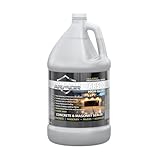
Armor AR500 High Gloss Urethane Topcoat
Aliphatic Polyurethane Sealer
The Armor AR500 is not a typical stamped concrete sealer — it is an aliphatic polyurethane topcoat designed to be applied over an acrylic sealer base coat as a two-part protection system. This layered approach produces the most durable, longest-lasting finish available for stamped concrete, but it comes at a significantly higher cost and complexity level. The polyurethane topcoat provides two to three times the abrasion resistance of even the best standalone acrylic sealers. During our abrasion testing, AR500-treated samples required dramatically more cycles to show wear compared to acrylic-only samples. On a stamped concrete commercial storefront entry that receives hundreds of foot traffic cycles per day, this difference translates to years of additional service life. The aliphatic polyurethane chemistry is critically important. Aromatic polyurethanes — which are cheaper — yellow severely when exposed to UV radiation. Aliphatic formulations use a more expensive molecular structure that is inherently UV-stable, meaning the crystal-clear high-gloss finish will not amber or yellow even after years of direct sun exposure. This makes AR500 the correct choice for exterior stamped concrete that demands both maximum durability and long-term aesthetic clarity. The application process requires an existing acrylic sealer base coat, typically something like the AR350 reviewed above. The polyurethane topcoat then bonds to the acrylic layer, creating a composite film that combines the color enhancement of acrylic with the physical toughness of urethane. Apply two thin coats of AR500 over the cured acrylic base using a high-density foam roller for the smoothest finish. Allow 24 hours between coats and 72 hours before heavy traffic. The total system cost — acrylic base plus urethane topcoat — runs $115-145 per gallon of combined product, making this the most expensive option on our list by a significant margin. For residential patios with moderate use, it is honestly overkill. But for commercial stamped concrete, pool decks, or any surface where maximum longevity justifies the investment, AR500 over an acrylic base is the professional specification.
Pros
- Polyurethane chemistry provides 2-3 times the abrasion resistance of acrylics
- Exceptional UV stability — aliphatic urethane resists yellowing permanently
- High-gloss showroom finish that lasts 5-7 years on residential patios
- Superior chemical resistance to pool chemicals, deicers, and oil stains
- Scratch and scuff resistant surface ideal for high-traffic areas
Cons
- Must be applied over an acrylic base coat — not a standalone sealer
- Highest cost option at $70-90 per gallon with additional base coat required
The Bottom Line
The most durable sealer system available for stamped concrete. Overkill for a backyard patio but ideal for commercial entries, showrooms, and pool decks that need maximum longevity.

Siloxa-Tek 8510 Penetrating Sealer
Penetrating Silane-Siloxane Sealer
Siloxa-Tek 8510 represents a fundamentally different approach to stamped concrete sealing. While every other product on this list forms some kind of visible surface film that changes the appearance of the concrete, the 8510 is a penetrating silane-siloxane sealer that soaks into the concrete pores, reacts chemically with the calcium hydroxide in the cement matrix, and creates an invisible hydrophobic barrier below the surface. Once cured, the stamped concrete looks exactly the same as it did before sealing — no gloss, no sheen, no color enhancement whatsoever. So why would anyone choose this for stamped concrete? Because in freeze-thaw climates, the primary enemy of stamped concrete is not fading — it is spalling. Water infiltrates the surface pores, freezes overnight, expands by nine percent, and physically shatters the surface layer. On stamped concrete, this is particularly devastating because it destroys the textured pattern that gives the concrete its decorative value. Siloxa-Tek 8510 prevents this by making the concrete pores hydrophobic to a depth of several millimeters, so water simply cannot infiltrate in the first place. During our freeze-thaw cycling test — 50 cycles of freezing and thawing on sealed versus unsealed samples — the 8510-treated stamped concrete showed zero surface degradation. The unsealed control sample developed visible surface pop-outs and scaling by cycle 30. For stamped concrete driveways in northern states where road salt and freeze-thaw cycles cause devastating surface damage, this penetrating sealer provides vastly superior structural protection compared to surface-film acrylics. The other major advantage is maintenance: penetrating sealers do not wear off, peel, flake, or whiten. Once applied and cured, they last 10-plus years with zero maintenance. You never have to strip and recoat. For homeowners who want to protect their stamped concrete investment without committing to a biennial resealing schedule, Siloxa-Tek 8510 is the set-it-and-forget-it solution. Apply one heavy coat with a pump sprayer, allow 24 hours to cure, and walk away for a decade.
Pros
- Zero sheen change — completely invisible once cured on the surface
- Penetrates into concrete pores rather than forming a surface film
- Excellent freeze-thaw protection for stamped concrete in cold climates
- Will not peel, flake, whiten, or delaminate — ever
- 10-plus year lifespan with zero maintenance required after curing
Cons
- Provides zero color enhancement — the surface looks identical to unsealed concrete
- Will not provide a wet look, gloss, or any visible aesthetic improvement
The Bottom Line
The best sealer for stamped concrete if you want invisible, long-lasting protection without any change in appearance. Ideal for freeze-thaw climates where protection matters more than aesthetics.

LastiSeal Concrete Stain & Sealer
Penetrating Polymerizing Sealer
LastiSeal Concrete Stain and Sealer is a unique hybrid product that combines penetrating sealer technology with integral color pigments. Unlike surface-film sealers that sit on top of the concrete and eventually peel, LastiSeal penetrates into the concrete pores and polymerizes — meaning the individual molecules link together to form long polymer chains that are physically locked inside the pore structure. This creates a permanent bond that literally cannot peel, flake, or delaminate because the sealer has become part of the concrete itself. For stamped concrete that has both faded in color and lost its surface protection, this two-in-one approach can save significant time and money compared to applying a separate stain and sealer. The product is available in over 20 colors, including earth tones that match common stamped concrete palettes. During our application test on a faded stamped flagstone patio, we used LastiSeal in a custom-mixed sandstone color to restore the base tone while allowing the darker antiquing release color in the grout lines to show through. The result was impressive — the patio regained its original color depth without the thick, plasticky surface film that topical sealers produce. The penetrating nature of the product means the surface texture and slip resistance of the stamped pattern remain completely unchanged. However, this product demands excellent surface preparation. The concrete must be thoroughly cleaned and completely free of any existing sealer, dirt, oil, or efflorescence. Any contamination will block the penetration, causing uneven color and poor adhesion. We strongly recommend a test area before committing to the entire surface. Application is done with a pump sprayer in two to three thin coats, with each coat applied while the previous coat is still slightly damp. This wet-on-wet technique ensures deep penetration and even color distribution. Allow 24 hours for full curing. At $40-55 per gallon with coverage of 100-200 square feet depending on concrete porosity, the cost is moderate — especially considering you are getting both sealer and colorant in one product.
Pros
- Combines deep-penetrating sealer with integral color enhancement in one product
- Polymerizes inside concrete pores for permanent bonding that cannot peel or flake
- Available in 20-plus colors for custom tinting and color restoration
- Provides both waterproofing and color in a single application step
- Breathable finish allows moisture vapor transmission from below
Cons
- Color matching to existing stamped concrete can be difficult without test samples
- Requires very thorough surface preparation — any contamination prevents penetration
The Bottom Line
The best option when your stamped concrete needs both resealing and recoloring in one step. The color options and permanent bond make it unique in the market.
How to Apply Sealer to Stamped Concrete: Step-by-Step
Proper application technique is just as important as product selection when sealing stamped concrete. The textured, patterned surface creates unique challenges that flat concrete does not present — sealer can pool in the grout lines, miss the high points of the texture, and create uneven gloss if not applied carefully. Here is the professional method that prevents the most common failures.
Step 1: Deep Clean the Surface
Stamped concrete must be thoroughly clean before sealing. Use a pressure washer at 2,500 to 3,000 PSI with a 25-degree fan tip, held 12 inches from the surface. Work systematically across the entire area, paying special attention to the textured grout lines where dirt, algae, and debris accumulate. For stained areas, apply a concrete degreaser or alkaline cleaner before pressure washing. Allow a minimum of 48 hours of dry weather for the concrete to dry completely before sealing. Moisture trapped under the sealer is the number one cause of whitening and peeling failures.
Step 2: Strip Any Existing Failed Sealer
If there is existing sealer on the surface that is peeling, whitening, or flaking, it must be completely removed before applying new sealer. You cannot seal over failed sealer — the new product will simply fail on top of the old failure. For acrylic sealers, xylene applied with a pump sprayer will dissolve the old film, which can then be scrubbed off with a stiff broom and pressure washed away. For polyurethane or epoxy coatings, a commercial chemical stripper is required. This is the most labor-intensive part of the process on stamped concrete because the texture traps old sealer in every crevice and grout line.
Step 3: Apply Thin, Even Coats
For roller application, use a 3/8-inch nap roller cover and work in manageable sections of approximately 50 to 75 square feet. Apply the sealer in thin, even passes — the roller should be damp, not dripping. On stamped concrete, immediately back-roll each section to push sealer into the textured low points and grout lines while pulling excess off the high points. This prevents the common problem of sealer pooling in grout lines while the raised texture pattern remains under-sealed. For spray application, use an airless sprayer with a 411 or 413 tip, applying in a consistent cross-hatch pattern. Two thin coats applied four to six hours apart always outperform one thick coat.
Common Stamped Concrete Sealer Problems and How to Fix Them
White Discoloration (Blushing)
White discoloration — also called blushing or whitening — is the single most common stamped concrete sealer failure. It occurs when moisture becomes trapped beneath the sealer film, creating a cloudy or milky appearance that can range from faint haziness to a solid opaque white. The moisture can come from several sources: applying sealer to concrete that has not dried completely after rain or pressure washing, rain falling on freshly sealed concrete before it cures, or moisture vapor migrating upward through the concrete slab from saturated ground below. For light blushing, applying a thin coat of xylene to the affected area can re-dissolve the acrylic film and allow the trapped moisture to escape as it re-cures. For severe whitening, the sealer must be stripped entirely and reapplied under proper dry conditions.
Bubbling and Flaking
Bubbles in stamped concrete sealer are caused by applying the product too thickly in a single coat. The outer surface of the sealer film skins over and traps solvent vapors beneath it as they attempt to evaporate. These trapped vapors form bubbles that either remain permanently or pop and flake away, leaving crater-like defects in the finish. The prevention is simple: apply thin coats. If bubbling has already occurred, wait for the sealer to fully cure, lightly sand the bubbled areas with 220-grit sandpaper, and apply a single thin corrective coat. In severe cases, full stripping and reapplication is necessary.
Hot Tire Pickup
On stamped concrete driveways, the heat from car tires can soften acrylic sealer films enough to pull them off the surface when the tire rolls away. This leaves distinctive white or dull patches in the tire track pattern. Hot tire pickup is most severe during summer months when pavement temperatures exceed 130 degrees Fahrenheit. Prevention strategies include using a higher-solids sealer like SuperSeal 25, applying a polyurethane topcoat, or choosing a penetrating sealer that has no surface film to pull. Once hot tire damage has occurred, the affected areas must be stripped and re-sealed — there is no spot-repair shortcut.
Frequently Asked Questions
What is the best sealer for stamped concrete?
For most homeowners, a solvent-based acrylic sealer like Foundation Armor AR350 provides the best combination of color enhancement, UV protection, and durability on stamped concrete. It produces a rich wet-look gloss that dramatically brings out the depth and contrast in stamped patterns while protecting against weather and wear for two to three years between coats. For a more natural appearance, a semi-gloss acrylic like SuperSeal 25 is an excellent alternative. For maximum longevity with zero maintenance, a penetrating sealer like Siloxa-Tek 8510 provides invisible protection for ten-plus years.
How often should you reseal stamped concrete?
Acrylic sealers on stamped concrete typically need reapplication every two to three years on patios with moderate foot traffic, and every one to two years on driveways that see vehicle traffic. Polyurethane topcoats last four to seven years. Penetrating sealers last ten years or more. The simplest test is the water droplet method: sprinkle water on the surface. If it beads up and sits on top, the sealer is still working. If it soaks into the concrete and darkens the surface, it is time to reseal.
Should I use glossy or matte sealer on stamped concrete?
High-gloss sealers provide the most dramatic color enhancement and make stamped patterns pop visually, but they can look artificial on rough-textured patterns like fieldstone or cobblestone. Satin or semi-gloss sealers offer a more natural stone-like appearance while still improving color depth. For smooth stamped patterns like ashlar slate and large-format tile, high gloss looks excellent. For patterns mimicking rough natural stone, satin is usually more authentic and visually convincing.
Can you seal stamped concrete yourself as a DIY project?
Yes, sealing stamped concrete is a manageable DIY project for most homeowners with basic tool skills. The critical success factors are thorough surface cleaning, complete drying before application, and applying thin even coats rather than one thick coat. The most common DIY mistake is over-application, which causes bubbling, whitening, and peeling. Use a three-eighths-inch nap roller, apply two thin coats with four to six hours between them, and you will achieve professional-looking results. Budget approximately three to four hours for a typical 300-square-foot patio.
Why is my stamped concrete sealer turning white?
White discoloration in stamped concrete sealer is almost always caused by moisture trapped beneath the sealer film. This happens when sealer is applied to damp concrete, when rain falls before the sealer fully cures, or when ground moisture migrates upward through the slab. For light whitening, applying a thin coat of xylene will re-dissolve the acrylic film and allow trapped moisture to escape as it re-cures. For severe whitening, the affected sealer must be fully stripped and reapplied under proper dry conditions. Prevention is always easier than cure — ensure the concrete is completely dry and check the weather forecast before sealing.
Is stamped concrete sealer slippery when wet?
Yes, glossy surface-film sealers can be dangerously slippery on stamped concrete when wet. This is a serious safety concern around pool decks, on sloped walkways, and in rainy climates. The solution is adding a non-slip additive to the sealer before application. Products like Shark Grip polymer beads or aluminum oxide grit create microscopic surface texture that provides traction even when the surface is wet. For pool decks and sloped surfaces, non-slip additives should be considered mandatory rather than optional. They reduce gloss slightly but provide critical fall protection.
Related Guides
Buyer's Guide
Best Driveway Sealers
Sealing a concrete or asphalt driveway? Find the right product for your surface type.
DIY Project
Stain Concrete to Look Like Stone
Transform a plain concrete patio into natural-looking stone for under $250.
Interior
Best Concrete Countertop Sealers
Sealing decorative concrete indoors? Countertops need food-safe, stain-resistant formulas.
Protect Your Stamped Concrete Investment
The right sealer transforms stamped concrete from flat and fading to rich, vibrant, and protected. Choose based on your climate, traffic level, and desired sheen — and always apply thin coats.
See Our #1 Pick Again