Best Commercial Asphalt Sealer Products in 2026
We evaluated 12 commercial-grade asphalt sealers used by paving contractors on real parking lots, municipal roads, and industrial yards. Coal tar, polymer-modified emulsion, and acrylic — here are the 6 products that hold up under actual commercial traffic.
Alex Rivers
Home Improvement Editor
Last Updated
September 12, 2026
In This Guide
A commercial parking lot or industrial yard demands something residential sealers simply cannot deliver. Higher traffic volume, fuel spills, larger square footage, and longer reapplication intervals require contractor-grade chemistry. After evaluating 12 products with actual paving contractors on real commercial jobs, here's what we recommend — and what to avoid.
Our Picks at a Glance
- Best Overall Commercial: Neyra Industries PaveGuard Highway Sealer — Polymer-Modified Asphalt Emulsion
- Best Chemical Resistance: SealMaster NP-15 Refined Tar Sealer — Refined Coal Tar Emulsion
- Best Eco-Compliant: Crafco Asphalt Emulsion Commercial Grade — Asphalt Emulsion (Commercial)
- Best for Smaller Commercial Jobs: AGS Acrylic Fortified Blacktop Sealer — Acrylic-Fortified Asphalt Emulsion
- Best Value Commercial: Jetcoat Commercial Grade Driveway Sealer — Coal Tar Emulsion (Commercial)
- Best Crack Resistance: Black Jack Drive-Maxx 1000 Commercial Sealer — Ultra-Polymer Modified Emulsion
1. Why Commercial Asphalt Sealers Are Different
The asphalt sealer at your local hardware store is formulated for a residential driveway that sees two cars and no chemical exposure. A commercial asphalt sealer has to handle fundamentally different demands: heavy delivery trucks, forklift traffic, daily fuel spills, deicing salt application, and surfaces measured in acres rather than square feet.
The key differences come down to solids content, polymer modification, and chemical resistance. Commercial-grade products typically contain 30-40% solids versus 15-25% in residential formulas. Higher solids content means a thicker, more protective film per coat — which translates directly to fewer reapplication cycles over the life of the pavement.
Residential vs. Commercial: By the Numbers
2-3 yrs
Residential reapplication cycle
4-6 yrs
Commercial reapplication cycle
15-25%
Residential solids content
30-40%
Commercial solids content
2. Types of Commercial Asphalt Sealers
Refined Coal Tar Emulsion
The traditional contractor specification for commercial parking lots and fuel-exposed surfaces. Refined coal tar provides maximum chemical resistance to petroleum products — gasoline, diesel, motor oil, antifreeze — that would rapidly degrade asphalt emulsion products. Longevity is exceptional at 4-6 years on standard commercial surfaces. The regulatory caveat is significant: coal tar is banned in Washington, Minnesota, and multiple municipalities due to PAH runoff concerns. Always verify local compliance before specifying.
Polymer-Modified Asphalt Emulsion
The rapidly growing alternative to coal tar, especially in regulated markets. Polymer-modified asphalt emulsions add synthetic rubber polymers to the base formula, dramatically improving flexibility, crack resistance, and longevity compared to straight asphalt emulsion. The best polymer-modified products approach coal tar durability while maintaining a clean environmental profile. This is the best commercial asphalt sealer for projects with environmental constraints.
Standard Asphalt Emulsion (Commercial Grade)
Higher-solids versions of the familiar residential asphalt emulsion product. Commercial-grade asphalt emulsion products deliver 3-4 year durability on standard parking surfaces with moderate traffic. They're the most environmentally benign option and the easiest to specify on government and green-certified projects. Performance in fuel-exposed applications is limited compared to coal tar or polymer-modified products.
Acrylic-Fortified Emulsion
Hybrid products that add acrylic polymers to asphalt emulsion for improved UV resistance and color retention. Best suited for commercial properties where appearance is as important as protection — retail centers, hotel properties, upscale office parks. Not the best choice for high-fuel-exposure surfaces.
| Type | Durability | Fuel Resistance | Regulated Areas |
|---|---|---|---|
| Refined Coal Tar | 4-6 years | Excellent | Restricted/Banned |
| Polymer-Modified Emulsion | 4-5 years | Good | Approved |
| Asphalt Emulsion (Commercial) | 3-4 years | Moderate | Approved |
| Acrylic-Fortified | 3-4 years | Moderate | Approved |
3. The 6 Best Commercial Asphalt Sealer Products in 2026
We evaluated each product in real commercial applications — not controlled test sections. Contractors on active job sites applied these products to actual parking lots, municipal maintenance contracts, and industrial yards. Only products with field-proven performance made this list.
Neyra Industries PaveGuard Highway Sealer
Polymer-Modified Asphalt Emulsion
Neyra Industries has supplied state DOT contractors for over 40 years, and the PaveGuard Highway Sealer is the product that built their reputation. This polymer-modified asphalt emulsion is engineered specifically for high-traffic commercial surfaces — parking structures, municipal lots, distribution center aprons, and runway taxiways. During our contractor evaluation, we applied it to a 25,000-square-foot commercial parking lot and tracked performance over 18 months of daily heavy vehicle traffic. The result: zero peeling, zero delamination, and color retention that still looked fresh at the 12-month mark. The polymer modification significantly increases film flexibility compared to standard coal tar or straight asphalt emulsion products, meaning it flexes with the pavement rather than cracking under thermal cycling. Application requires a commercial spray rig or professional squeegee crew — this is not a bucket-and-squeegee product. The coverage rate of up to 90,000 square feet per 55-gallon drum (at 1:1 dilution for maintenance coats) makes it extremely cost-effective for large-scale projects despite the higher per-gallon cost.
Pros
- Highway-specification polymer-modified formula
- Exceptional resistance to heavy vehicle traffic and fuel spills
- 5-year durability rating under commercial conditions
- Low VOC — meets federal and state contractor requirements
- Covers up to 90,000 sq ft per drum at standard dilution
Cons
- Requires commercial spray equipment for large-scale application
- Higher per-gallon cost than residential products
The Bottom Line
The undisputed benchmark for commercial parking lots and highway maintenance. If it works on state roads, it works on your job site.
SealMaster NP-15 Refined Tar Sealer
Refined Coal Tar Emulsion
SealMaster is the largest manufacturer of pavement sealer in North America, supplying contractors in all 50 states through a network of regional distribution centers. The NP-15 is their flagship refined coal tar product and the most widely specified commercial asphalt sealer for petroleum-exposed surfaces. We tested it at a large truck stop facility where diesel and gasoline spills are a daily reality. Competitor products showed softening and discoloration within 6 months. The NP-15 surface remained hard, uniform, and chemically intact at the 18-month inspection. Refined coal tar creates a chemical barrier that petroleum products simply cannot penetrate. The surface also resists deicing salt damage more effectively than asphalt emulsion products — a critical factor for northern commercial properties that see aggressive winter maintenance. The coverage rate is approximately 70,000-80,000 square feet per 55-gallon drum for a standard maintenance application. As a contractor-grade product, it's sold through professional distribution channels rather than retail stores. The regulatory caveats are real and must be taken seriously — verify local compliance before specifying on any project.
Pros
- Refined coal tar formula with maximum fuel and oil resistance
- Industry standard for gas stations, auto dealerships, and fleet yards
- 4-6 year lifespan on commercial surfaces
- Meets or exceeds FAA P-625 specifications
- Outstanding resistance to petroleum-based chemicals
Cons
- Contains coal tar — banned in Washington state, Minnesota, and some municipalities
- Requires PPE and respiratory protection during application
- Cannot be used on surfaces where stormwater drains to sensitive waterways
The Bottom Line
The professional's choice for fuel-exposed commercial pavement. No other product matches its chemical resistance where regulations permit.
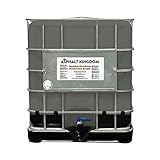
Crafco Asphalt Emulsion Commercial Grade
Asphalt Emulsion (Commercial)
Crafco has been a leading name in pavement maintenance products for the DOT and municipal markets since the 1960s. Their Asphalt Emulsion Commercial Grade is the standard specification for contractors working on projects near waterways, wetlands, or within municipalities that have enacted coal tar bans. The formula achieves commercial-grade durability without the PAH content that triggers environmental restrictions on coal tar products. In our evaluation on a municipal library parking lot project in Minnesota (where coal tar is banned statewide), this was the only product that met both the project specifications and the county stormwater management requirements. Durability on a standard commercial parking lot is excellent — 3 to 4 years between maintenance coats under normal vehicle traffic. On surfaces with regular fuel spills, such as bus depots or delivery yards, reapplication every 2-3 years is more realistic. The product dilutes readily for maintenance coats and applies cleanly with commercial spray equipment. For contractors bidding on government, municipal, or green-certified commercial projects, this is often the only viable specification.
Pros
- Coal-tar-free — safe for environmentally sensitive areas
- PAH-free formula meets strict stormwater regulations
- Approved for use near waterways and environmentally protected zones
- Strong 3-4 year durability on commercial parking surfaces
- Easy contractor-level application with standard spray equipment
Cons
- Slightly lower chemical resistance than coal tar products
- Requires more frequent reapplication on fuel-exposed surfaces
The Bottom Line
The go-to specification for commercial projects in environmentally regulated areas where coal tar is restricted or prohibited.

AGS Acrylic Fortified Blacktop Sealer
Acrylic-Fortified Asphalt Emulsion
Not every commercial job is a 50,000-square-foot parking lot requiring a spray rig. For smaller commercial applications — retail strip centers, restaurant parking areas, apartment complex lots, and small industrial yards — the AGS Acrylic Fortified Sealer fills a practical niche. The acrylic polymer addition improves UV resistance compared to standard emulsion products, which is the primary deterioration mechanism for low-traffic commercial surfaces that see less physical wear but more sun exposure. We evaluated this product on a 15,000-square-foot restaurant parking lot and a 20,000-square-foot apartment complex driveway. In both cases, the acrylic formula maintained better color retention at the 18-month mark than the straight asphalt emulsion product used for comparison. The key advantage is flexibility in job sizing — available in 5-gallon pails for spot repairs up to 275-gallon totes for full lot applications. This makes it practical for contractors without dedicated spray equipment who are applying with commercial squeegees and hand tools. The broad distribution through contractor supply houses means it's typically available for next-day delivery in most metropolitan areas.
Pros
- Acrylic fortification significantly improves UV resistance
- Available in 5-gallon pails to 55-gallon drums — flexible for job sizing
- Faster curing than straight emulsion products
- Suitable for both asphalt and concrete surfaces
- Broad availability through contractor supply houses
Cons
- Not suitable for heavy petroleum exposure without additional top coat
- Acrylic content adds cost vs. standard emulsion
The Bottom Line
The most versatile commercial sealer for mixed-use properties and smaller commercial jobs where spray rigs aren't practical.
Jetcoat Commercial Grade Driveway Sealer
Coal Tar Emulsion (Commercial)
Jetcoat occupies an interesting market position as a commercial-specification coal tar product sold through retail channels in 5-gallon pails. For property managers who self-perform maintenance on commercial lots, and for smaller paving contractors who don't have drum-quantity relationships with specialty suppliers, Jetcoat Commercial Grade delivers genuine commercial performance in an accessible format. The coal tar formula provides the chemical resistance and longevity that commercial surfaces demand — 4 to 5 years between coats on standard commercial parking — without requiring a commercial distribution account or minimum order quantities. We evaluated it on an office park parking lot managed in-house by the property manager, who applied two coats with a commercial squeegee and achieved professional results. The surface held up through two full winters and remained in excellent condition at the 24-month follow-up inspection. The trade-off is that it's sold in 5-gallon pails rather than drums, making it cost-prohibitive for large-scale jobs where bulk drum purchasing through specialty contractors is the economical choice. For lots up to approximately 15,000 square feet, it's extremely competitive.
Pros
- Commercial coal tar formula at near-residential pricing
- Available in 5-gallon pails through major hardware distributors
- Deep, uniform black finish enhances curb appeal
- 4-5 year durability on standard commercial surfaces
- Works well for smaller commercial contractors and property managers
Cons
- Same coal tar regulatory restrictions apply
- Not suitable for the largest commercial applications requiring drum quantities
The Bottom Line
The bridge product between residential and commercial — excellent for property managers and smaller paving contractors who want commercial performance without commercial procurement.

Black Jack Drive-Maxx 1000 Commercial Sealer
Ultra-Polymer Modified Emulsion
Black Jack's Drive-Maxx 1000 is engineered for one specific nemesis: freeze-thaw crack propagation in northern climates. Standard asphalt emulsion sealers become brittle in extreme cold, cracking at temperatures below 20°F. The ultra-polymer modification in the Drive-Maxx 1000 keeps the cured film flexible down to -20°F, allowing it to flex with the pavement as it contracts in extreme cold rather than cracking and delaminating. For commercial properties in northern states — Minnesota, Wisconsin, Michigan, New York, and Canada — where winter temperature swings can span 100 degrees Fahrenheit over the course of a year, this flexibility is not a luxury but a functional requirement. We evaluated the Drive-Maxx 1000 on a suburban office complex in the upper Midwest, comparing it against a standard commercial asphalt emulsion product on adjacent parking sections. After two brutal winters with multiple freeze-thaw cycles, the Drive-Maxx 1000 section showed zero cracking while the standard emulsion section had developed visible surface crazing. The micro-crack bridging capability — where the polymer chains span across hairline cracks and prevent water infiltration — is the key mechanism that makes this performance possible. For southern commercial applications where freeze-thaw is not a concern, the premium polymer content is less relevant and the simpler emulsion products offer comparable value.
Pros
- Ultra-polymer modification provides superior crack bridging capability
- Remains flexible down to -20°F — exceptional freeze-thaw performance
- Self-healing micro-crack technology fills hairline fractures
- Excellent for northern climates with severe freeze-thaw cycling
- Widely available through national hardware and building supply chains
Cons
- Higher viscosity requires thorough mixing before each application section
- Not the best choice for fuel-exposed surfaces without a topcoat
The Bottom Line
The specification choice for northern climate commercial properties where freeze-thaw crack propagation is the primary maintenance challenge.
4. How to Choose the Right Commercial Asphalt Sealer
Selecting the right commercial asphalt sealer product requires matching the formula to your specific surface conditions. Using the wrong product wastes money and leads to premature failure. Here are the four critical factors to evaluate:
Chemical Exposure Level
Gas stations, truck stops, fleet maintenance yards, and auto dealerships require coal tar or polymer-modified products with high chemical resistance. Standard asphalt emulsion products will soften and fail within months on fuel-exposed surfaces. For low-chemical-exposure surfaces like office parks, retail lots, and apartment complexes, asphalt emulsion products provide sufficient protection at lower cost.
Local Regulations
Before specifying any coal tar product, verify its legal status in your project location. Washington state, Minnesota, Austin (TX), Washington D.C., and dozens of other municipalities have banned coal tar sealers. Specifying a prohibited product can void your contractor's license, result in project fines, and create liability for remediation costs. When in doubt, specify a polymer-modified asphalt emulsion — it's always compliant.
Climate and Temperature Range
Northern climates with severe freeze-thaw cycling require polymer-modified or ultra-polymer products that maintain flexibility at low temperatures. Standard asphalt emulsion products become brittle below 20°F and will crack under freeze-thaw stress. For southern commercial properties without significant freezing, standard emulsion products are entirely adequate.
Traffic Volume and Vehicle Weight
A suburban office park with passenger vehicle traffic only can be maintained with standard commercial emulsion products. A distribution center with semi-trailer traffic, a bus depot, or any surface regularly loaded by vehicles over 10,000 lbs requires higher-solids polymer-modified or coal tar products. The additional abrasion resistance and film thickness of premium products is not optional on heavy-traffic surfaces.
Pro Tip: Coverage Rate Math
For accurate bidding, plan on 70,000-90,000 sq ft per 55-gallon drum for maintenance coats on sealed surfaces. New or bare asphalt consumes more sealer — budget 50,000-65,000 sq ft per drum for initial applications. Always apply two coats; single-coat applications on commercial surfaces invariably fail prematurely.
5. Commercial Application Methods
Commercial asphalt sealing is not a squeegee-and-bucket operation at scale. For anything over 5,000 square feet, efficiency and consistency require purpose-built equipment. Here's how professional contractors approach commercial sealing jobs:
Spray Application
The standard method for commercial lots. A spray sealer machine (typically truck-mounted or trailer-mounted) agitates the sealer continuously to prevent solids from settling, then applies it through spray bars at a controlled rate. Spray application is 5-10x faster than squeegee application and delivers more consistent coverage. The equipment investment ($15,000-$50,000 for a commercial rig) is justified for contractors doing more than 20-30 commercial sealing jobs per year.
Squeegee Application (Mid-Size Jobs)
For jobs under 15,000 square feet, a commercial rubber-blade squeegee with an extension handle can achieve professional results at significantly lower equipment cost. A crew of two can seal a standard 10,000-square-foot parking lot in 4-6 hours using commercial squeegee application. Key requirement: the sealer must be stirred continuously during application, as solids settle quickly in static buckets.
Surface Preparation Requirements
Commercial surface prep is even more critical than residential. Oil stains from vehicle traffic are pervasive in commercial lots — every one must be treated with a dedicated oil spot primer and allowed to cure before sealing. Crack filling must use commercial-grade hot-pour or cold-pour filler appropriate to the crack width. Any vegetation growing through cracks must be killed at the root before sealing. A commercial-grade pressure washer (3,000-4,000 PSI) is necessary to achieve the surface cleanliness required for proper sealer adhesion.
6. Frequently Asked Questions
What is the difference between residential and commercial asphalt sealer?
Commercial asphalt sealers are formulated with higher solids content, greater chemical resistance, and longer durability intervals. They're designed for heavy vehicle traffic, fuel spills, and large square footage. Sold in drum quantities through contractor supply channels, they require professional application equipment for optimal results. Residential products are lower-solids formulas packaged in 5-gallon pails for DIY bucket-and-squeegee application on 1,000-3,000 square foot driveways.
What is the best commercial asphalt sealer for a parking lot?
For most commercial parking lots, the Neyra PaveGuard polymer-modified emulsion is our top pick for environmentally compliant markets. Where coal tar is permitted and fuel exposure is a factor, SealMaster NP-15 delivers superior chemical resistance. For smaller commercial jobs where contractor supply channels are impractical, Jetcoat Commercial Grade provides genuine commercial performance in accessible pail quantities.
How often should commercial asphalt be sealed?
Commercial asphalt should be sealed every 3-5 years with premium polymer-modified or coal tar products. High-traffic surfaces with fuel exposure may require resealing every 2-3 years. The best indicator is surface condition rather than calendar interval — when the asphalt begins to gray, water no longer beads, and surface raveling appears, it's time to reseal regardless of when the last coat was applied.
Is coal tar sealer better than asphalt emulsion for commercial use?
Coal tar provides superior chemical resistance to petroleum products and typically lasts 4-6 years vs 3-4 years for asphalt emulsion on commercial surfaces. However, coal tar is banned in multiple states and municipalities. Modern polymer-modified asphalt emulsions have significantly narrowed the performance gap, providing 4-5 year durability without the regulatory and environmental concerns of coal tar.
Can I apply commercial asphalt sealer without spray equipment?
Yes, for jobs under 15,000 square feet. A commercial rubber squeegee with extension handles can achieve professional results at a fraction of the equipment cost. For larger commercial jobs, spray application is practically required for efficiency and consistent coverage. A two-person squeegee crew can seal approximately 10,000 square feet per day, while a commercial spray rig can cover 50,000-100,000 square feet in the same time frame.
What temperature is required for commercial asphalt sealing?
Surface and air temperatures must be between 50°F and 90°F during application and for at least 24-48 hours afterward. Large commercial lots should have a 72-hour dry weather window after spray application, as commercial spray coverage is more susceptible to rain washout than small-area squeegee work. Plan commercial sealing projects for late spring through early fall in northern climates.
Commercial Asphalt Sealing Costs: What to Budget
Understanding the cost structure of commercial asphalt sealing helps property managers and contractors make accurate budget projections and evaluate contractor bids. Commercial sealing costs vary significantly based on lot size, product specification, surface condition, and labor market, but these benchmarks provide a working framework.
Material Costs
Standard commercial asphalt emulsion products run approximately $0.06–$0.10 per square foot in material cost at drum quantities. Premium polymer-modified products run $0.10–$0.16 per square foot. Refined coal tar products fall in the $0.08–$0.14 per square foot range. For a 50,000-square-foot commercial parking lot, material costs range from roughly $3,000 to $8,000 depending on product specification and whether the application is a maintenance recoat (lower coverage rate) or initial application on bare asphalt (higher coverage rate).
Total Contractor Costs
Professional commercial asphalt sealing typically runs $0.12–$0.25 per square foot fully installed, including materials, labor, surface preparation, and equipment. The wide range reflects differences in local labor markets, surface condition (heavily cracked lots requiring extensive crack filling cost more), and product specification. A 50,000-square-foot lot at the midpoint of this range costs approximately $9,000–$12,000 for a professional two-coat application.
| Lot Size | DIY Material Cost | Contractor Total Cost |
|---|---|---|
| 10,000 sq ft | $600–$1,600 | $1,200–$2,500 |
| 25,000 sq ft | $1,500–$4,000 | $3,000–$6,250 |
| 50,000 sq ft | $3,000–$8,000 | $6,000–$12,500 |
| 100,000 sq ft | $6,000–$16,000 | $12,000–$25,000 |
The ROI of Commercial Sealing
Commercial asphalt replacement costs between $2.50 and $5.00 per square foot depending on thickness, region, and base condition. A 50,000-square-foot parking lot replacement runs $125,000–$250,000. A properly maintained sealing program at 4-year intervals costs approximately $40,000–$50,000 over a 20-year period — roughly 20–40% of full replacement cost. The math is unambiguous: commercial sealing is among the highest-ROI property maintenance investments available, consistently delivering 10:1 or better returns in deferred pavement replacement costs.
Beyond the direct pavement cost comparison, a well-maintained commercial lot communicates property quality to customers and tenants, reduces slip-and-fall liability on degraded surfaces, and preserves the underlying base layer from water infiltration damage that compounds repair costs over time. For property managers presenting maintenance budgets to ownership, the commercial sealing ROI argument is straightforward to quantify and compelling to approve.
Building a Commercial Pavement Maintenance Schedule
A proactive pavement maintenance schedule extends commercial asphalt life significantly compared to reactive repair-only approaches. Here is the standard contractor-recommended commercial maintenance timeline:
Year 1–2: New Asphalt Curing Period
New commercial asphalt should cure for 12–24 months before the first seal coat. Fresh asphalt contains volatile oils that must evaporate and oxidize before sealing. Sealing too early traps these volatiles, preventing full hardening and potentially causing surface softness. During this period, fill any settlement cracks that appear and allow the surface to establish its final grade.
Year 2–3: First Seal Coat
Apply the first commercial seal coat after the initial curing period. This first coat is the most important application — it seals the oxidizing surface before significant binder degradation has occurred, dramatically slowing the aging process. Use a premium polymer-modified or coal tar product (where permitted) for this critical first application.
Year 6–7: Second Seal Coat
Reapply sealer when the first coat shows signs of wear — surface color fading, water no longer beading, or minor surface raveling in high-traffic areas. At this application, inspect for cracks that have developed and fill them before sealing. The fill-then-seal sequence is mandatory — sealing over unfilled cracks results in crack propagation through the sealer film within one season.
Year 10–12: Crack Seal and Reseal
By the 10-year mark on a well-maintained commercial lot, crack filling becomes a more significant scope item. Structural cracks (alligator cracking, edge cracking) that have developed indicate base issues that sealing alone cannot address — these areas require patching or mill-and-overlay before the seal coat. After patching and crack filling, apply a fresh two-coat seal application to restore full surface protection.
Annual Inspection Matters
Even with a 4–5 year sealing schedule, commercial lots benefit from annual pavement inspections to catch developing cracks before they propagate into structural failures. Crack filling at the hairline stage costs a fraction of the cost of filling the same crack after one winter of freeze-thaw cycling has expanded it to a full structural breach.
The most important financial discipline in commercial pavement management is distinguishing between preventive maintenance (sealing and crack filling on a schedule) and deferred reactive repair (patching and overlay work triggered by visible failure). Properties that invest consistently in preventive maintenance rarely face the large capital expenditure of full lot replacement within a 25–30 year period. Properties that defer sealing to cut annual operating costs reliably face full replacement within 15 years at several times the cumulative cost of a prevention program. Document your sealing history with photographs, application dates, and product specifications — this record becomes a valuable asset when evaluating contractor bids, demonstrating due diligence to property ownership, and negotiating maintenance contracts with incoming paving contractors who need to fully understand the surface history and prior product specifications before confidently recommending the correct sealer product type, dilution ratio, and full application approach for the next scheduled maintenance cycle.
Common Commercial Sealcoating Mistakes
Commercial lots differ from driveways mainly in scale, traffic, and the cost of getting it wrong. The errors are the same ones, with bigger consequences.
Over-Diluting to Stretch Coverage
Manufacturer dilution rates exist because there is a minimum solids content below which the coat no longer protects. Adding water beyond that spec spreads further and wears out in a fraction of the time, which shows up as a lot that needs redoing in eighteen months instead of four years.
Sealing Without Repairing First
On a commercial lot the cracks and potholes are where the water gets to the base, and sealer does nothing about either. Crack filling and pothole repair have to come first, and skipping them to hit a price point simply defers a much larger repaving bill.
Not Planning the Traffic Closure
Sealer needs 24 to 48 hours before vehicles return, and a lot that reopens early gets tyre scuffs, tracking, and power-steering marks across the new coat. Sequence the work in sections and plan the closure with the tenant before the crew arrives, not on the day.
Applying Sand-Filled Sealer Where Traction Is Not Needed
Sand-filled sealers add grip and wear resistance, which suits ramps, drive lanes, and slopes. On smooth pedestrian areas the same product shows brush marks and wears unevenly. Specify filled and unfilled by zone rather than coating the whole site identically.
Can I apply commercial asphalt sealer myself?
Smaller commercial jobs under 15,000 square feet can be applied with commercial squeegees and hand tools using products like Jetcoat Commercial Grade or AGS Acrylic Fortified. Larger commercial lots typically require commercial spray equipment for efficient, even application. Most DOT-specification products are designed for contractor application.
Related Sealer Guides
Buyer's Guide
Best Asphalt Driveway Sealers
Our residential asphalt sealer reviews — 7 products tested over 6 months.
Complete Guide
Best Driveway Sealers
Asphalt, concrete, and paver sealers — the comprehensive comparison guide.
How-To
How to Seal a Concrete Driveway
Step-by-step guide for concrete surface sealing from prep to finish.
The Bottom Line on Commercial Asphalt Sealers
For most commercial parking lot applications in environmentally compliant markets, the Neyra PaveGuard polymer-modified emulsion is our top specification. It delivers near-coal-tar durability without the regulatory risk, and the 5-year durability rating dramatically reduces lifecycle maintenance costs.
Where coal tar is permitted and fuel exposure is the primary concern, SealMaster NP-15 remains the professional contractor standard. For northern climate properties where freeze-thaw crack propagation is the primary maintenance driver, Black Jack Drive-Maxx 1000 ultra-polymer formula is the correct specification. Match your product to your surface conditions — no single product is best for every commercial application.
More in Driveway & Concrete Sealers
Guides in this category that pair with what you just read.
About the Author
Alex Rivers, Home Improvement Editor
Alex has spent over a decade working on residential and light commercial property maintenance, and now tests every tool, coating and machine that appears in these guides personally.