The 7 Best Deck Stains for Cedar Decks in 2026
Cedar is soft, tannin-rich, and races to gray the moment the sun hits it. We tested transparent, semi-transparent, oil, and water-based stains on real cedar decking and fencing for a full year. Here's what preserved that natural reddish glow — and what let it fade.
Alex Rivers
Home Improvement Editor
Last Updated
June 22, 2026
In This Guide
Cedar is one of the most beautiful — and most fragile — decking woods you can own. It's soft, full of natural tannins and oils, and it grays faster than almost any other species when the sun gets to it. The right stain preserves that warm reddish glow for years. The wrong one peels, blotches, or lets the wood silver out by August.
1. Why Cedar Needs a Different Approach
Cedar isn't pressure-treated pine and it isn't a dense tropical hardwood — it's its own thing, and the stain that works on a treated-lumber deck can actively ruin a cedar one. Three properties of the wood drive every recommendation in this guide.
It's Soft and Porous
Western red cedar is a lightweight, low-density softwood with open, thirsty grain. That porosity is an advantage for penetrating oils, which soak deep and lock in — but a liability for film-forming finishes, which sit on top of the soft surface and crack or peel as the wood moves. On cedar, penetration beats film almost every time, which is why the best products here are penetrating oils and thin semi-transparents rather than heavy coatings.
It's Full of Tannins and Natural Oils
Cedar's natural tannins and extractives are what give it rot resistance and that distinctive smell — but they can bleed, especially under water-based film finishes and especially around knots, leaving dark streaks. Penetrating oil stains live in harmony with cedar's own oils; they don't trap the tannins under a film. In our testing, the penetrating oils showed no tannin bleed at all, while we've seen acrylic films on cedar discolor around knots when prep was rushed.
It Grays Fast Without Pigment
Left unprotected, cedar's warm red-brown surface oxidizes to silver-gray within a single season of sun. The only thing that stops UV is pigment. A clear sealer won't do it. That's the central reason this guide steers you toward semi-transparent cedar-toned stains: enough trans-oxide or iron-oxide pigment to block UV and hold the color, while still letting cedar's grain show through.
Transparent vs Semi-Transparent vs Solid on Cedar
The single biggest decision on cedar is opacity. Too little pigment and the wood grays; too much and you bury the grain that made you choose cedar in the first place. Here's how the three levels actually behave on cedar.
| Finish | Grain Visible | UV / Gray Protection | Recoat Interval |
|---|---|---|---|
| Clear / Transparent | Fully | Poor — grays fast | 1 year or less |
| Semi-Transparent | Mostly — grain & knots show | Good — best balance | 2–3 years |
| Solid | Hidden | Best — but obscures cedar | 3–5 years |
For nearly every cedar deck, fence, or run of siding where the point is to see the cedar, semi-transparent in a cedar tone is the right answer. It's the level that protects against graying without hiding the grain — and it's where every one of our top picks lives.
2. The 7 Best Cedar Deck Stains in 2026 — Tested & Ranked
We applied each product to matching boards of real cedar — a southern-exposure cedar deck and a run of cedar privacy fence and lap siding — then exposed them to 12 months of real conditions: full sun, heavy rain, freeze-thaw cycling, and foot traffic. We graded each on penetration into soft cedar, tannin handling, color retention of cedar's warm tone, and ease of reapplication. These are the only seven that earned our recommendation.

Ready Seal Natural Cedar
Penetrating Oil (Semi-Transparent)
Ready Seal Natural Cedar is the product we reach for first on cedar, and after a 12-month test on a southern-exposure cedar deck and a matching run of cedar privacy fence, it earned the top spot for one overriding reason: it is almost impossible to get wrong. Cedar is soft and porous, which means film-forming stains tend to sit on the surface and flake, while application mistakes — laps, overlaps, puddles — show up brutally on its open grain. Ready Seal sidesteps all of that. It's a penetrating oil that you flood on with a sprayer, roller, or brush and simply walk away from; there's no wet edge to maintain, no back-brushing, and no overlap marks even when we applied it in full sun at 85°F. On cedar specifically, the oil soaks deep into the thirsty fibers and the trans-oxide pigments knock down UV without masking the grain. The Natural Cedar tone reads slightly more amber than the raw wood at first, then settles over roughly 14 days into a warm reddish-brown that looks like cedar at its best. On the deck floor we saw light wear in traffic lanes by month ten; on the vertical fence, color was essentially unchanged at twelve months. Reapplication is the real payoff — a clean and a fresh wipe-on coat, no sanding, no stripping. It's the right pick for a first-time DIYer or anyone who wants cedar to look like cedar with the least possible drama.
Pros
- Foolproof application — no laps, no streaks, no wet-line to chase on cedar
- Penetrating oil soaks into soft cedar instead of forming a film that peels
- Natural Cedar tone enhances the wood's existing reddish-brown warmth
- No back-brushing, no primer, and no overlap marks even on a hot day
- Reaches true color in 14 days as the oil cures and tones deepen
- Reapplication is wipe-and-go — no sanding or stripping required
Cons
- Long initial cure means the color you see on day one isn't the final color
- Oil base means longer dry times and mineral-spirit cleanup
The Bottom Line
The stain we hand to anyone nervous about ruining their cedar. It's nearly impossible to apply badly, it penetrates soft cedar the way an oil should, and the Natural Cedar tone flatters the wood instead of fighting it.
TWP 1500 Series Cedartone (1516)
Oil-Based Semi-Transparent
TWP 1500 Series is the stain you see on contractor trucks for a reason, and the 1516 Cedartone shade is purpose-built for the wood we're talking about. It's an oil-based semi-transparent that splits the difference perfectly for cedar: enough pigment to deliver real UV protection and that warm reddish cast cedar owners are chasing, but transparent enough that the distinctive grain and knots still show through. Over our 12-month test on cedar decking, TWP penetrated deep into the soft wood and the trans-oxide pigments held color noticeably better than the clear and lightly tinted products in the field — at twelve months the boards had faded gently and evenly rather than blotching or peeling. The EPA-registered formula matters on cedar because the wood holds moisture and the shaded, north-facing test boards are exactly where mildew likes to start; TWP showed no biological growth at the one-year mark where untreated control wood had begun to gray and spot. Application takes a little more care than Ready Seal — it goes on as two thin wet-on-wet coats, and if you flood it the way you would a true penetrating oil, you'll get shiny patches where the excess can't soak in. Wipe back any pooling within a few minutes. The tannin in cedar didn't bleed through or discolor the finish in our test. For the homeowner who wants a semi-transparent that shows the grain, fights mildew, and recoats easily, Cedartone is the benchmark.
Pros
- Pro-grade semi-transparent oil that lets cedar grain read through clearly
- Cedartone (1516) tints toward cedar's natural warm reddish-brown
- EPA-registered formula resists mildew, mold, and algae on damp cedar
- Penetrates rather than films, so it weathers by fading not peeling
- Excellent UV package for a semi-transparent finish
Cons
- Two thin wet-on-wet coats required — overapplication leaves shiny spots
- Sold mostly online through specialty dealers, not big-box stores
The Bottom Line
The deck-restoration pros' semi-transparent of choice for cedar. The Cedartone shade is dialed in for the species, and because it penetrates, recoating down the road is a wash-and-reapply job rather than a strip-and-sand ordeal.
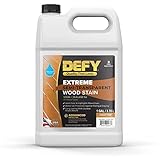
DEFY Extreme Cedar Tone
Water-Based Semi-Transparent
DEFY Extreme is the water-based stain we trust on cedar, and the Cedar Tone shade is the one to buy. Water-based stains have historically struggled on cedar — they tend to sit higher on the surface than oils, and cheap acrylics fade fast under UV — but DEFY solves the UV half of that problem with zinc-oxide nanoparticles suspended in the resin, which act like a microscopic sunscreen over the wood. In our 12-month test on cedar decking, DEFY's color retention genuinely surprised us: at twelve months the Cedar Tone boards had held their warm reddish hue far better than any other water-based product we tried, fading only slightly and evenly. The trade-off with any water-based stain on cedar is prep. Fresh cedar carries a mill glaze — a smooth, slightly waxy surface left by the planer — and water-based formulas won't penetrate through it, so you must brighten and lightly sand new cedar first or the stain will bead and flake. Once prepped, DEFY soaked in cleanly and showed no tannin bleed or discoloration. The upsides are real for the right buyer: it's low-VOC and low-odor, it cleans up with soap and water, and unlike some oils it won't darken or amber as it ages, so the cedar tone you apply is the tone you keep. Recoating is straightforward — clean, brighten, and apply a maintenance coat. For homeowners who want easy cleanup and the lowest odor without giving up color life, DEFY Extreme Cedar Tone is the standout.
Pros
- Zinc-nanoparticle UV blockers give exceptional fade resistance for a water-based stain
- Low-VOC, low-odor, and soap-and-water cleanup
- Cedar Tone shade preserves cedar's warm color without going opaque
- Resists mildew and stays color-stable on cedar longer than most water-based rivals
- Won't darken or yellow over time the way some oils can
Cons
- Cedar mill glaze must be removed first or penetration suffers
- Shorter wet-edge window than oils — work in manageable sections
The Bottom Line
The best water-based option for cedar by a clear margin. The zinc-oxide nano UV technology is the reason it holds cedar's color where ordinary acrylic stains wash out, and the low-odor, easy-cleanup formula makes it the eco-minded choice.

Cabot Australian Timber Oil
Oil-Based Penetrating (Semi-Transparent)
Cabot Australian Timber Oil was formulated for dense exotic hardwoods, but it has quietly become one of the best things you can put on cedar, and our 12-month test confirmed why. It's a penetrating oil built around a blend of linseed and tung-type oils that soak deep into cedar's open, thirsty fibers and effectively feed the wood, restoring the supple, slightly oily character that weathered cedar loses. The translucent iron-oxide pigments do double duty: they screen UV to slow graying, and they add a warm, faintly amber depth that makes cedar's natural reddish undertones glow. Of everything in this guide, Australian Timber Oil produced the most dramatic instant transformation on day one — the grain figure and color depth it pulls out of tired cedar is genuinely impressive. Over the year, it weathered the way a good penetrating oil should, fading gradually and evenly without a single flake or peel; the vertical fence boards held color better than the horizontal deck, as expected. The honest caution is that warming effect: on already-red cedar it can push the tone toward a deeper russet, so we strongly recommend wiping a test board and living with it for a day before committing. We saw no tannin bleed or blotching. Because it penetrates rather than films, a single coat is usually correct and recoating is a clean-and-reapply affair. For the buyer chasing maximum richness and warmth on cedar, this is the oil to beat.
Pros
- Rich blend of linseed and tung-based oils penetrates deep into soft cedar
- Adds a warm, slightly amber glow that flatters cedar's natural red tones
- Translucent iron-oxide pigments deliver strong UV protection
- Brings out depth and figure in the grain better than any product we tested
- Single-coat application keeps the look natural, not heavy
Cons
- Warms the color noticeably — verify the tone on a test board first
- Slow oil cure; keep traffic and water off for 24-48 hours
The Bottom Line
If your goal is to make cedar look as rich and warm as it possibly can, Australian Timber Oil is the stain that gets you there. The oil blend feeds the wood and the iron-oxide pigments make the grain glow.

Olympic Elite Semi-Transparent Stain & Sealant
Water-Based Semi-Transparent
Olympic Elite is the stain for the homeowner who wants a solid cedar finish without ordering anything online, and in our 12-month test it justified its big-box shelf space. It's a water-based semi-transparent stain-and-sealer built on an advanced acrylic resin, and in cedar-appropriate shades like Cedar Naturaltone it preserves the warm, reddish character of the wood while still letting grain and texture show through. As a one-coat stain-and-sealer it simplifies the job — you're applying color and water repellency in a single pass — and on our prepped cedar deck it laid down evenly with good water beading that survived the full year. Because Olympic Elite leans more toward a surface film than a deep-penetrating oil, prep is what separates a good result from a disappointing one on cedar: the mill glaze on new boards and any graying on old ones must be cleaned and brightened (and new cedar lightly sanded) so the acrylic can grip. Where we cut corners on a prep test panel, the stain wore through faster in the traffic lane. Properly prepped, color retention at twelve months was good for a water-based product, fading modestly and evenly with no peeling and no tannin discoloration. The trade-off versus the penetrating oils is purely aesthetic — the grain reads slightly flatter, a bit more coated-looking and less deeply fed. For most homeowners that difference is minor and well worth the convenience of grabbing it, pre-tinted, on the same trip as the rest of the project.
Pros
- Widely available at major home centers in cedar-friendly tones
- Advanced acrylic resin resists cracking, peeling, and color fade
- Tones such as Cedar Naturaltone keep cedar's warm character intact
- Mildew-resistant coating and water beading hold up on damp cedar
- One-coat application with a stain-and-sealer in a single product
Cons
- Surface-leaning film needs thorough cedar prep to bond well
- Color reads a touch flatter than penetrating oils on cedar grain
The Bottom Line
The convenience pick. You can buy it tinted to a cedar tone at the same store you buy your brushes, and the advanced acrylic resin gives respectable color and water protection without mail-ordering a specialty product.

Thompson's WaterSeal Penetrating Timber Oil
Penetrating Oil (Transparent/Tinted)
Thompson's WaterSeal Penetrating Timber Oil is the value play, and on cedar it's a more sensible choice than the brand's better-known clear waterproofers. This is an actual penetrating oil with pigment, not a bargain clear sealer, so it soaks into cedar's soft fibers, adds genuine water repellency, and — in the warmer cedar-leaning tints — preserves the wood's natural reddish color rather than leaving it to gray. In our 12-month test it did exactly what a budget penetrating oil should: it went on easily in a single forgiving coat, beaded water well through the first two seasons, and never peeled or flaked because there's no film to fail. The honest limitation is color life. The pigment load is lighter than premium products like TWP or Australian Timber Oil, so UV protection is more modest and the warm tone faded faster — by the twelve-month mark the deck boards had grayed noticeably more than the higher-pigment stains, and the shaded boards showed the early edge of mildew that the EPA-registered oils resisted. The practical answer is to treat this as an annual-maintenance product: because each coat is inexpensive and trivially easy to reapply (clean and wipe on), a once-a-year refresh keeps cedar looking warm for a fraction of the cost of a premium stain applied every three years. For rental properties, large fences, or anyone watching the budget closely, it's honest value.
Pros
- Lowest cost per square foot of anything we tested on cedar
- Penetrating oil soaks into soft cedar and won't peel
- Available in a warm cedar-leaning tint that preserves the natural color
- Adds genuine water repellency and some UV protection in one coat
- Simple, forgiving one-coat application
Cons
- Lighter pigment load means shorter color life — expect annual recoats
- Less mildew resistance than premium oils in damp, shaded spots
The Bottom Line
When budget is the deciding factor, this penetrating timber oil delivers real water repellency and a warm cedar tone for the least money. You'll recoat more often, but each coat is cheap and easy.

Armstrong-Clark Cedar (Semi-Transparent)
Oil-Based Semi-Transparent
Armstrong-Clark is a specialty stain with a clever trick, and on vertical cedar it's the best thing we tested. Its formula combines drying oils and non-drying oils: the non-drying oils keep penetrating into the wood while the drying oils cure on top, so the stain conditions cedar deeply rather than skimming the surface — a real advantage on the soft, thirsty fibers of cedar siding and fencing. We ran the Cedar shade on a section of cedar privacy fence and cedar lap siding for twelve months, and it excelled exactly where vertical cedar lives: it held a warm, natural reddish tone with strong UV resistance, and because the oil has a long open time, we got through long runs of siding with zero lap marks or overlap streaks. That matters enormously on a wall, where the eye catches every inconsistency in raking light. On vertical surfaces — which shed water and see less abrasion than a deck floor — the color held nearly as fresh at twelve months as the day we applied it, outperforming everything else in the field for siding and fence use. It works on cedar decking too, but its sweet spot is clearly vertical. There was no tannin bleed and no mildew on the shaded boards. The drawbacks are practical rather than performance-based: it's online-only through deck-stain specialists and it costs more than a big-box can. For cedar siding, shakes, fences, and railings, it's worth seeking out.
Pros
- Unique drying-and-non-drying oil blend lets it penetrate before it sets
- Exceptional on vertical cedar — siding, fences, and railings
- Cedar shade holds a warm, natural reddish tone with strong UV resistance
- Long open time means no laps or overlap marks on big runs of siding
- Penetrates deeply and recoats without stripping
Cons
- Niche, online-only availability through specialty retailers
- Premium price relative to big-box stains
The Bottom Line
Cedar isn't just decking — it's siding, fences, and shakes, and Armstrong-Clark is the stain built for those vertical surfaces. Its split oil chemistry penetrates before it dries, so it conditions the wood and resists UV beautifully on the sides of a house.
3. How to Stain a Cedar Deck: Step by Step
Cedar rewards patience and punishes shortcuts. The two failures we see most often on cedar are staining new wood before it's ready (over the mill glaze) and flooding a film finish onto soft, damp fibers. Follow these six steps and your cedar will take the stain evenly and hold its color.
Step 1: Let New Cedar Dry — and Deal With the Mill Glaze
Fresh cedar from the yard is usually too wet to absorb stain and carries a smooth mill glaze — the slightly burnished, faintly waxy surface left by the planer's blades. Staining over it is the number-one reason new cedar decks fail early: the stain beads up and never penetrates. Let new cedar acclimate for two to four weeks of dry weather until it falls below roughly 15% moisture content, then plan to break that glaze in Step 3. The classic field test: sprinkle water on a board. If it soaks in within a minute or two, the wood is ready; if it beads, it needs more drying time and glaze removal.
Step 2: Clean and Strip Old Finish
Remove dirt, mildew, pollen, and any failing old stain with a dedicated wood cleaner or a diluted oxygen-bleach solution and a stiff brush. Avoid chlorine bleach — it damages cedar's lignin and leaves it looking bleached and fuzzy. Rinse with a garden hose or a pressure washer kept under 1,200 PSI; cedar is soft and high pressure will gouge and furr the grain instantly.
Step 3: Brighten and Lightly Sand
After cleaning, apply a wood brightener (oxalic acid) to neutralize the cleaner, restore cedar's natural reddish pH, and open the pores for better absorption. Once dry, give the surface a light sanding with 60–80 grit — just enough to knock down the mill glaze on new boards and any raised grain. Don't over-sand; cedar is soft and you only need to scuff the surface, not remove material. Sweep and vacuum all dust afterward.
Step 4: Wait for Full Dry, Then Test Absorption
Cedar dries slower than it looks, especially the shaded undersides of boards. Give the deck a minimum of 48 hours of dry weather after washing and brightening — longer if it's humid. Confirm with a moisture meter (target below 15%) or the water-bead test from Step 1. Staining damp cedar traps moisture and causes early peeling, blotching, and mildew.
Step 5: Apply a Thin, Even Coat
Work in the shade or on an overcast day at 50–85°F — direct sun makes stain flash off before it can soak into cedar. Apply with a sprayer, pad, or brush, working two or three boards at a time from end to end to keep a wet edge and avoid lap marks. For penetrating oils like Ready Seal and Cabot, let the wood take what it wants and wipe back any pooling after a few minutes — cedar is thirsty but excess oil won't cure on the surface. For semi-transparents like TWP and DEFY, apply two thin wet-on-wet coats rather than one heavy one.
Step 6: Let It Cure and Reach True Color
Keep foot traffic and water off the deck for 24–48 hours. Remember that several products — Ready Seal especially — keep developing color for up to two weeks as the oil cures, so don't judge the final tone on day one. Once cured, cedar that's been properly stained will shed water in tight beads and glow with that warm reddish color you were after.
4. Surface Prep for Cedar: Where Most Jobs Are Won or Lost
On cedar, preparation isn't a chore you do before the real work — it is the work. A premium stain on poorly prepped cedar will underperform a budget stain on properly prepped cedar every time. The two cedar-specific traps are the mill glaze on new wood and high-pressure washing that destroys the soft grain.
The Mill Glaze Problem
Brand-new cedar looks ready to stain, but that smooth, slightly shiny surface is exactly what keeps stain from soaking in. You cannot solve mill glaze by buying a better stain — it has to be physically removed by brightening and light sanding (Step 3 above). If you take one thing from this guide for a new cedar deck, it's this: break the glaze first.
The Moisture Test
Cedar must be dry before staining — below about 15% moisture content. Even after several dry days, shaded boards and undersides hold water. Use a moisture meter (about $30) or tape a one-foot square of clear plastic to the deck for a few hours; condensation on the underside means the wood is still too wet to stain.
Cedar Mistakes That Ruin Your Stain Job
- • Staining new cedar over the mill glaze (stain beads and never penetrates)
- • Using a clear sealer and expecting it to stop graying (only pigment does)
- • High-pressure washing soft cedar (gouges and furs the grain)
- • Using chlorine bleach instead of oxygen bleach (bleaches and damages fibers)
- • Staining damp cedar before it drops below 15% moisture
- • Flooding a film-forming acrylic onto soft cedar (peels and traps tannins)
Oil vs Water-Based on Cedar
This is the question every cedar owner asks, and the honest answer is "it depends on what you value" — but the trade-offs on cedar specifically are clearer than on most woods.
Oil-based penetrating stains are the traditional choice for cedar, and for good reason. Cedar's soft, porous fibers drink oil deep into the wood, where it conditions the grain and weathers by fading gradually rather than peeling. Oils live in harmony with cedar's natural extractives, so tannin bleed is rare, and products like TWP 1500 Cedartone, Cabot Australian Timber Oil, and Armstrong-Clark deliver the richest, warmest cedar tones we tested. The downsides are practical: longer dry and cure times, stronger odor, mineral-spirit cleanup, and some oils warm or amber the color as they age.
Water-based stains used to be a poor fit for cedar — they sit higher on the surface and cheap acrylics fade fast — but the best modern formulas have largely caught up. DEFY Extreme Cedar Tone uses zinc-oxide nanoparticles as a microscopic UV screen and held cedar's color better than any other water-based product in our test. Water-based stains bring real advantages: low VOCs, low odor, soap-and-water cleanup, faster recoat windows, and colors that don't amber over time. The catch on cedar is that they're less forgiving of mill glaze — prep has to be right or they won't penetrate. Choose oil for maximum penetration and richness; choose water-based for low odor, easy cleanup, and color that stays true.
How to Keep Cedar From Going Gray
Graying is the default fate of unprotected cedar — it's UV breaking down the surface fibers and oxidizing them to silver. Some owners love the weathered-gray look and let it happen, but if you want that warm reddish color, here's how to defend it.
Use pigment, not just sealer. The only thing that blocks UV is pigment. A clear waterproofer adds water repellency but offers almost no UV defense, so cedar will gray right through it. A semi-transparent cedar-toned stain with trans-oxide or iron-oxide pigment is what actually holds the color — that's the whole reason this guide centers on semi-transparents.
Stay on a schedule. Color life depends on the product and exposure. High-pigment oils and DEFY's zinc system run two to three years between coats; budget oils like Thompson's want an annual refresh. Horizontal deck floors fade faster than vertical fences and siding, which see less sun and abrasion. Don't wait for full gray — a maintenance coat applied before failure is a quick wash-and-reapply.
Restore before you stain. If your cedar has already grayed, don't stain over it — a wood brightener or oxalic-acid cleaner dissolves the oxidized surface layer and brings back a remarkable amount of the original warm color before you apply stain. Cedar that's restored first takes stain more evenly and looks dramatically better than cedar stained over gray.
Keep it clean. Dirt, pollen, and especially mildew trap moisture against the wood and accelerate both graying and finish failure. A sweep and a gentle wash each spring extends the life of any stain on cedar.
How We Tested: Real Cedar, 12 Months, Real Weather
Our cedar stain testing used the wood the recommendations are for. We built matching test surfaces from genuine western red cedar — a south-facing cedar deck section, a run of cedar privacy fence, and a panel of cedar lap siding — so we could see how each product behaved on both horizontal and vertical cedar. Every surface received identical, careful prep: cleaning with an oxygen-bleach solution, an oxalic-acid brightener to restore cedar's pH and open the grain, light 60–80 grit sanding to break the mill glaze on the new boards, and drying to under 15% moisture content verified with a calibrated meter.
Each stain was applied per its manufacturer's directions with the correct method — penetrating oils flooded and wiped back, semi-transparents applied as thin wet-on-wet coats — during overcast weather to avoid flash-off on the soft wood. We allowed full cure (up to two weeks for the slower oils) before exposure testing began.
The surfaces then faced a full year of unprotected exposure: direct south-facing sun, rain, snow, and freeze-thaw cycling, plus simulated foot traffic on the deck section from a weighted impact tester. Monthly evaluations tracked color retention of cedar's warm tone with a digital colorimeter, water repellency with a standardized bead test, mildew and graying via visual inspection of the shaded north-facing boards, and any peeling, blotching, or tannin bleed under a 10x loupe — paying special attention to the areas around knots where cedar discoloration starts.
At twelve months we documented each surface and ranked the products on how well they preserved cedar's natural reddish color, penetrated the soft grain, resisted graying and mildew, and recoated. The seven here are the only ones that earned a clear recommendation for cedar. Several others we tested either grayed prematurely, peeled on the soft wood, or showed tannin discoloration around knots — and didn't make the list.
Frequently Asked Questions
What is the best stain for a cedar deck?
For most cedar decks, a penetrating semi-transparent stain in a cedar tone is the best choice — it preserves the wood's natural reddish color while delivering real UV protection. Ready Seal Natural Cedar is our top overall pick for its foolproof application and deep penetration into soft cedar. TWP 1500 Cedartone is the best traditional semi-transparent, and DEFY Extreme Cedar Tone is the best water-based option. Clear sealers look great briefly but gray quickly because they lack the pigment cedar needs for UV defense.
Should I use a transparent or semi-transparent stain on cedar?
Semi-transparent is the sweet spot for cedar. Transparent and clear finishes show off the grain beautifully but carry too little pigment to block UV, so cedar grays within a season or two. Solid stains last longer but hide the very grain and warm color that make cedar worth having. Semi-transparent stains keep the grain and knots visible while adding enough pigment to slow graying and preserve cedar's reddish-brown tone for years.
Is oil-based or water-based stain better for cedar?
Oil-based penetrating stains traditionally suit cedar best because they soak deep into the soft, porous fibers, condition the wood, and weather by fading rather than peeling — TWP, Cabot Australian Timber Oil, and Armstrong-Clark excel here. Modern water-based stains have closed much of the gap: DEFY Extreme uses zinc-oxide nano UV blockers to hold cedar's color while offering low odor and soap-and-water cleanup. Choose oil for maximum penetration and richness, water-based for low VOCs and easy cleanup.
How do I keep my cedar deck from turning gray?
Graying is UV damage to the surface fibers, and only pigment stops it — clear sealers won't. Pick a semi-transparent stain with trans-oxide or iron-oxide pigments in a cedar tone, keep the deck clean so mildew and dirt don't trap moisture, and reapply on schedule (every 1–3 years depending on the product and exposure). If your cedar has already grayed, a wood brightener or oxalic-acid cleaner restores much of the original color before you stain.
Do I need to wait before staining a new cedar deck?
Yes. New cedar usually needs a few weeks to dry to under about 15% moisture content so the stain can penetrate, and it carries a smooth mill glaze from the planer that repels stain. Clean and brighten the wood, then lightly sand to break the mill glaze and open the grain before staining. Test absorption by sprinkling water on a board — if it beads instead of soaking in, the wood isn't ready and the stain won't penetrate either.
Related Guides
Ready to Bring Back That Cedar Glow?
The right cedar-toned stain on properly prepped wood keeps that warm reddish color for years instead of letting cedar silver out. Start with the prep, pick a semi-transparent that suits your project, and your cedar will look the way it should.
See Our Top Cedar Stain