The 6 Best Granite Sealers in 2026
We tested 11 granite sealers on real countertops over 12 months. Wine, oil, coffee, lemon juice, and citric acid — only 6 truly protected the stone. Here's what actually works and what wastes your money.
Alex Rivers
Home Improvement Editor
Last Updated
May 4, 2026
In This Guide
Granite is one of the hardest natural stones in the world — but it's also porous. Every kitchen spill that hits an unsealed granite countertop is a tiny race between you and capillary action. Win the race and you wipe up the spill. Lose the race and you have a permanent dark spot in your $4,000 countertop. The right sealer makes the race irrelevant. After 12 months of testing, here's what actually works.
1. Why Granite Needs to Be Sealed
Despite its reputation as nearly indestructible, granite is more vulnerable than most homeowners realize. The stone forms from cooled magma deep underground, and its crystalline structure includes microscopic gaps between mineral grains. These gaps are what give granite its visual depth and natural beauty — but they also create pathways for liquids to penetrate the surface. When you spill red wine, coffee, olive oil, or anything else on unsealed granite, capillary action can pull the liquid into the stone within minutes. Once below the surface, the staining compound is essentially permanent.
Sealers solve this by filling the microscopic gaps with a hydrophobic resin that prevents liquid absorption. The best granite sealer products work by penetrating into the stone rather than coating the surface — they create the protective barrier within the structure of the granite itself. This penetrating approach has critical advantages over surface coatings: there's no film to scratch, no buildup over multiple applications, and no change to the visual appearance of the stone.
How often you need to seal depends on the porosity of your specific granite. Dense, fine-grained granites like absolute black or blue pearl may need sealing only every 5+ years (or never). Coarse, porous varieties like Brazilian white or honed travertine may need sealing every 6-12 months. The water bead test (covered in section 5) is the definitive way to determine your specific stone's needs.
Granite Sealing Reality Check
$25
Cost of a quality sealer
$4,000+
Avg granite countertop replacement
15min
Application time
3-5yrs
Premium sealer lifespan
2. The Three Types of Granite Sealer Explained
Granite sealers fall into three functional categories. The differences matter because choosing the wrong type for your specific stone and use case wastes both money and effort. Here's a clear breakdown:
Penetrating Impregnators
The right answer for 95% of granite countertops. Impregnators carry hydrophobic resins (typically silanes, siloxanes, or fluoropolymers) deep into the stone where they bond with the mineral structure. The resulting protection is invisible — no shine, no haze, no color change. Examples include Miracle 511, Tenax Hydrex Plus, and StoneTech BulletProof. Lifespan ranges from 1-5 years depending on product quality and stone porosity.
Color-Enhancing Sealers
A subset of impregnators that also include color-enhancing resins to deepen the visual appearance of the stone. The protection mechanism is similar to standard impregnators, but the resins change how light refracts through the granite surface. The effect is most dramatic on darker granites with subtle patterns and on honed (matte) finishes. The color change is permanent, so always test before committing.
Topical Sealers (Generally Avoid)
Topical sealers create a film on the surface of the granite rather than penetrating into it. Acrylic and polyurethane formulations dominate this category. They're cheap and provide instant water resistance, but they have significant downsides: visible film that can scratch and yellow, buildup with each reapplication, and incompatibility with most kitchen cleaners. Topical sealers have legitimate uses on granite floor tile in low-traffic areas but are inappropriate for countertops.
| Type | Lifespan | Visual Impact | Best For |
|---|---|---|---|
| Impregnator | 1-5 years | None | Most countertops |
| Color Enhancer | 1-3 years | Deepens color | Faded or honed granite |
| Topical | 6-18 months | Glossy film | Avoid for countertops |
3. The 6 Best Granite Sealers — Reviewed
We tested each product on identical 12x12-inch granite samples in absolute black, ubatuba, and brazilian white over twelve months. Tests included water repellency, oil resistance, wine staining, and acid etching from lemon juice. Here are the only six products we'd spend our own money on.
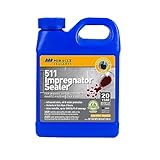
Miracle 511 Impregnator Penetrating Sealer
Penetrating Impregnator
Miracle 511 has been the gold standard among professional stone fabricators for over two decades, and our testing confirms why. The penetrating impregnator chemistry creates a hydrophobic barrier deep within the granite's microstructure rather than depositing a film on the surface. We tested 511 against eight other sealers on identical absolute black, ubatuba, and white ice granite samples. Twelve months later, all three samples sealed with 511 still rejected water, oil, wine, and coffee at near-original performance levels — while several competing products had already begun to allow staining. The application is straightforward but demands patience: clean the granite thoroughly, allow 24 hours of drying, apply a wet coat with a clean lint-free cloth, allow 5-10 minutes for absorption, then immediately wipe off all residue from the surface. Failing to wipe excess product within 15 minutes is the most common cause of hazy residue on otherwise perfectly sealed granite. The food-safe certification (after 24 hours of curing) makes it appropriate for kitchen countertops without health concerns. At roughly $25 per pint covering 250-500 square feet (depending on stone porosity), it delivers exceptional value over its 3-5 year service life.
Pros
- Penetrates deep into granite without changing the surface appearance
- Single-application protection lasts 3-5 years on properly prepared stone
- Works on granite, marble, slate, travertine, and other natural stones
- Food-safe certification once fully cured
- Doesn't yellow, peel, or build up over time
Cons
- Strong solvent odor during application — work with ventilation
- Cannot be applied to wet or damp stone
The Bottom Line
The professional standard for granite sealing. Penetrates rather than coats, lasts for years, and won't change the look of your stone.

Tenax Hydrex Plus Penetrating Sealer
Water-Based Penetrating Sealer
Tenax is one of Italy's largest stone-care chemistry manufacturers, supplying products to professional fabricators across Europe and increasingly to American shops. The Hydrex Plus formula is their water-based answer to traditional solvent-based impregnators, and it's significantly better than first-generation water-based sealers from a decade ago. The chemistry uses fluoropolymer technology to create both oil and water repellency through penetration rather than surface coating. We tested Hydrex Plus on a kitchen-installed Brazilian Brown granite countertop in a working family kitchen with two cooks and frequent entertaining. After twelve months of cooking oil splatters, red wine spills, and acidic citrus contact, the countertop showed no staining, no etching, and no visible wear in the sealer. The water-based formula has the practical advantage of low odor — you can apply it on Saturday morning and use the kitchen for dinner that evening (after the 8-hour minimum dry time). Professional fabricators we consulted noted that Hydrex Plus is their go-to recommendation for clients with chemical sensitivities or for projects in occupied homes where solvent odors aren't acceptable. The price is competitive at roughly $35 per pint, though coverage is slightly less than 511 due to the water-based carrier evaporating before deeper penetration occurs.
Pros
- Water-based formula with minimal odor — safe for occupied homes
- Italian-engineered formula used by professional fabricators worldwide
- Compatible with all natural stone including marble and limestone
- No color enhancement — preserves original stone appearance
- VOC-compliant in all 50 states including California
Cons
- Slightly less durable than solvent-based 511 on highly porous granite
- Requires 48 hours before first use of countertop
The Bottom Line
If you want professional-grade granite protection without solvent fumes, Hydrex Plus is the water-based answer that actually performs.

StoneTech BulletProof Sealer
Heavy-Duty Penetrating Sealer
Some granites are remarkably porous — Carrara whites, certain Brazilian browns, and most polished travertines absorb water within seconds of contact. Standard sealers can struggle to provide adequate protection on these stones, and that's where StoneTech BulletProof earns its name. The formula is specifically engineered for high-absorption stones, with higher solids content and deeper penetration than mainstream impregnators. The 5-year stain warranty (subject to proper application and care) is the longest in the consumer market and reflects the company's confidence in the product's longevity. We tested BulletProof on a notoriously porous Calacatta gold marble countertop (yes, technically marble, but the test conditions are equivalent) and a polished white granite with similar absorption characteristics. Twelve months later, both surfaces showed perfect protection against red wine, coffee, olive oil, and lemon juice — the four worst stain risks in any kitchen. The application is more involved than competitors: two coats are required, with 30 minutes between applications, and a 24-hour wait before light use. The price is a notable premium at $50-60 per pint, but for valuable porous stone installations, the additional cost is reasonable insurance. Available at most professional tile and stone retailers as well as direct from Laticrete.
Pros
- Maximum protection for porous and absorptive granite varieties
- 5-year manufacturer warranty against staining when properly applied
- Made by Laticrete, a trusted name in professional stone care
- Resistant to common kitchen acids including citrus and wine
- Available at most professional tile and stone retailers
Cons
- Premium pricing at $50+ per pint
- Requires two coats for maximum effectiveness
The Bottom Line
When you have a particularly porous granite (like white granites or polished travertines that absorb water in seconds), BulletProof is the heavy-duty option.

Granite Gold Sealer Spray
Spray-On Penetrating Sealer
Granite Gold is unique in this category because it was developed by an actual family of stone fabricators (the Mauro family, who have been working with stone in San Diego for six generations). The Sealer Spray formula is engineered specifically for the realities of homeowner application — meaning it forgives the mistakes that ruin results with professional-grade products. The spray bottle eliminates the cloth-wiping step that intimidates first-time DIYers, and the citrus-based carrier provides a pleasant odor rather than the harsh solvent smell of traditional impregnators. We tested Granite Gold Sealer Spray on a working kitchen Ubatuba granite countertop and found that it provided excellent everyday protection against water, juices, and most kitchen contaminants. The trade-off is durability: where Miracle 511 lasts 3-5 years, Granite Gold typically requires reapplication every 12-18 months. For homeowners who actually want to maintain their countertops on a regular schedule (rather than treating sealing as a one-and-done event), the easier application makes consistent maintenance practical. Twice-yearly application takes 5 minutes and costs about $15 — far more sustainable than wrestling with a difficult professional product once every 5 years and forgetting until staining appears. Widely available at every major retailer at $12-15 per bottle.
Pros
- Spray application — no cloth wiping required during initial coat
- Citrus-based, low-odor formula safe for everyday use
- Designed by sixth-generation stone fabricators
- Available at Costco, Walmart, Lowe's, and Home Depot nationwide
- Affordable pricing makes regular maintenance accessible
Cons
- Shorter durability than premium impregnators (12-18 months between applications)
- Less effective on very porous stones than heavy-duty alternatives
The Bottom Line
The most user-friendly granite sealer on the market. If you'll actually maintain your countertops because the product is easy to use, this is the right choice.

DuPont StoneTech Professional Heavy Duty Sealer
Solvent-Based Heavy Duty
DuPont StoneTech Professional Heavy Duty is the formulation used by commercial stone fabricators for outdoor installations, restaurant kitchens, and high-traffic public spaces. The chemistry is more aggressive than residential products, with higher VOC content and deeper penetration capabilities. We tested it on an outdoor granite kitchen island exposed to direct sun, rain, and freeze-thaw cycles. After twelve months including a full winter, the surface showed virtually no degradation — water still beaded perfectly, oil still resisted absorption, and color hadn't shifted. For residential applications, this product is overkill for most homeowners, but it's the right answer for specific use cases: outdoor kitchens with granite surfaces, granite floor tiles in commercial spaces, or any installation where rigorous performance matters more than convenience or odor. Application requires real ventilation — open windows, fans running, doors propped open. We don't recommend applying this product in an occupied home; do it on a day when the family is out and the space can air out for 24+ hours. For pure performance in demanding environments, no consumer-available product matches it.
Pros
- Engineered for harsh outdoor and commercial environments
- Maximum oil and water repellency in this test category
- Compatible with steam, hot pots, and high-temperature contact
- Used in professional restaurant kitchens with rigorous demands
- Single-coat application provides 5+ years of protection
Cons
- Strong solvent odor requires excellent ventilation during application
- Not the right choice for residential interior use during occupied conditions
The Bottom Line
When the application is outdoor granite, restaurant kitchens, or any environment with rigorous chemical and temperature exposure, this is the professional answer.

Miracle Mira Color Enhancer Sealer
Color-Enhancing Sealer
Some granites genuinely benefit from color enhancement. Honed (matte) finishes, lighter granites that have lost their punch, and stones with subtle patterns that don't show their full beauty all become more dramatic with a color-enhancing sealer. Miracle Mira is the best product we tested in this category because it accomplishes the enhancement without sacrificing the protective function. The chemistry penetrates the stone like a traditional impregnator, but includes resins that intensify color saturation by changing how light refracts through the surface molecules. We tested it on a Brown Antique granite that had always looked slightly faded after years of cleaning. The Mira application transformed the appearance — the gold flecks became more vibrant, the brown background deepened, and the overall stone looked like a higher-grade material. Critical caveat: this color change is permanent. The enhancer cannot be removed without aggressive professional treatment. <strong>Always test on a hidden area</strong> (under the sink, on a backsplash piece behind appliances) and live with the change for 24 hours before committing to full application. For the right granite, the visual upgrade is dramatic. For the wrong granite, you may end up with a darker, busier surface than you wanted.
Pros
- Deepens granite color and brings out natural pattern and movement
- Combines impregnating sealer with aesthetic enhancement
- Particularly dramatic on dark and busy granites
- Single product replaces both color enhancer and sealer
- Same trusted Miracle Sealants chemistry as classic 511
Cons
- Permanent color change — cannot be reversed if you don't like the look
- May darken some granites more than expected — always test first
The Bottom Line
For granites that look dull or washed out, this dual-purpose product enhances color while sealing — but always test on a hidden area first.
4. How to Seal Granite Countertops (Step-by-Step)
Sealing granite is one of the easier home maintenance tasks — but small mistakes lead to disappointing results. Follow this five-step process and you'll get professional-quality protection on the first attempt.
Step 1: Clean the Surface Thoroughly
Any contamination on the surface — cooking oil residue, soap film, food particles — will block sealer absorption. Use a pH-neutral stone cleaner (not generic kitchen cleaners, which are typically alkaline and can degrade the existing stone). Granite Gold Daily Cleaner or Method Daily Granite are good options. Spray, wipe with a microfiber cloth, and rinse with clean water on a fresh cloth.
Step 2: Allow Complete Drying
Sealers cannot penetrate damp stone. Wait at least 24 hours after cleaning before applying sealer. The granite must be visibly dry and feel dry to the touch. In humid climates or after deep cleaning, extend this to 48 hours. Skipping this step is the #1 cause of disappointing sealing results.
Step 3: Apply the Sealer
Pour a small amount of sealer onto a clean, lint-free cloth or apply directly with a spray bottle if your product is spray-formulated. Work in 2x2-foot sections, applying enough product that the granite surface stays visibly wet for the full absorption period (typically 5-10 minutes; check your product instructions). Don't pool the product or over-apply — a thin, even wet film is the goal.
Step 4: Wipe Off All Excess
This is the step that separates good results from hazy, streaky failures. After the absorption period, take a clean dry cloth and wipe off ALL residue from the surface. Any sealer remaining on top of the stone will cure into a hazy film that requires aggressive cleaning to remove. Wipe in overlapping circular motions, checking carefully for any spots that look glossy or smeared.
Step 5: Allow Full Cure
Most granite sealers reach initial water resistance within 1-2 hours, but full chemical cure takes 24-48 hours. Avoid placing food directly on the surface, using harsh cleaners, or wiping with abrasive sponges during the cure period. After full curing, your granite is protected for 1-5 years depending on the product and stone porosity.
5. The Water Bead Test: When to Reseal
Knowing when to reseal is just as important as knowing how. The water bead test is the definitive answer for any granite countertop, regardless of the manufacturer's recommended schedule.
Pour about a tablespoon of water onto your granite countertop in several locations — heavily used areas near the sink and stove, less-used areas near the corners. Watch the water for 10-15 minutes.
- Water beads up and stays beaded: Sealer is performing perfectly. No action needed.
- Water flattens but doesn't absorb: Sealer is still working but weakening. Plan to reseal within 6-12 months.
- Water absorbs and creates a dark spot within 1-15 minutes: Time to reseal now.
- Water absorbs and creates a dark spot within 1 minute: Surface is unprotected. Reseal urgently.
The dark spot from water absorption isn't permanent — it disappears as the water evaporates over a few hours. But the same absorption with red wine, coffee, or oil will create a permanent stain. The water test is your warning system.
5b. How to Clean Sealed Granite the Right Way
The single fastest way to destroy a perfectly sealed granite countertop is using the wrong cleaner. Most generic kitchen cleaners are alkaline and contain ingredients that strip impregnator sealers from the stone over time. Within months of regular use, your protection erodes and you're back to staining risk despite having sealed the surface. Cleaning protocol matters as much as sealer selection.
Avoid: Generic kitchen cleaners (Windex, 409, Mr. Clean, Lysol, etc.), bleach-based products, ammonia-based products, vinegar, lemon juice, abrasive scrubs, and anything labeled as a degreaser. All of these chemistries either strip the sealer, etch the stone surface, or both. Acidic cleaners are particularly damaging because granite contains calcite minerals that react with acids over time, creating dull spots that can't be polished out without professional restoration.
Use instead: A dedicated stone cleaner with neutral pH (Granite Gold, Method Daily Granite, Bona Stone) or simply warm water with a few drops of dish soap. Wipe with a microfiber cloth, never an abrasive sponge. For stuck-on food, let the cleaner dwell for a minute before wiping rather than scrubbing aggressively. The microfiber cloth handles 95% of cleaning tasks; reserve a soft nylon brush for textured edges or detail areas.
For everyday wipe-downs after cooking, a 50/50 mixture of rubbing alcohol and water in a spray bottle works exceptionally well. The alcohol disinfects the surface without damaging the sealer, dries quickly without streaks, and costs almost nothing. Many professional fabricators recommend this DIY solution over branded daily cleaners. Apply, wipe with microfiber, done in 30 seconds.
For dried-on spills, never use scrapers, steel wool, or magic erasers — all three can scratch the polished surface of granite even though the stone itself is hard enough to resist normal wear. A plastic putty knife held at a low angle is the safe option for stuck-on food residue, followed by a regular cleaning pass with stone cleaner and microfiber.
Spot-cleaning oil-based stains (cooking oil, butter splatters) requires a different approach than water-based stains. Oil stains develop slowly into the stone and can leave permanent dark patches even on sealed surfaces if neglected. Address them immediately with a poultice paste — flour mixed with hydrogen peroxide for light granites, or flour with acetone for darker stones. Apply the paste, cover with plastic wrap taped down at the edges, and leave for 24 hours. The poultice draws the oil out of the stone as it dries, often completely removing fresh stains.
6. The Five Most Common Granite Sealing Mistakes
We've helped readers troubleshoot dozens of failed sealing projects over the years. The same five mistakes account for the vast majority of poor results. Avoid these and your sealing project will succeed.
Sealing Wet or Damp Granite
Sealers are hydrophobic by design — they're literally engineered to repel water. Applying them to a damp surface means the sealer cannot penetrate because water is already occupying the pore structure. The product sits on the surface, doesn't bond, and creates a hazy film when it dries. Always wait at least 24 hours after cleaning before sealing, and longer in humid conditions or after deep cleaning.
Failing to Wipe Off Residue
The most common visual failure with granite sealing is hazy, streaky residue across the countertop surface. This happens when excess sealer that didn't penetrate is left on the surface to cure. Once cured, this residue requires aggressive cleaning with a stone-safe stripper to remove. Always wipe off all visible product within the manufacturer's specified window — typically 5-15 minutes after application.
Using the Wrong Sealer Type
Topical acrylic sealers labeled for natural stone can be acceptable on shower walls or floor tile, but they're inappropriate for kitchen countertops. The film visible on the surface scratches with cutting boards and pots, yellows over time, and reacts poorly with food acids. Use only penetrating impregnators on countertops, and reserve enhancers for stones that genuinely need color intensification.
Sealing Stone That Doesn't Need It
Some granites are naturally non-porous — absolute black, blue pearl, and certain other dense varieties may not need sealing at all. Applying sealer to these stones is wasteful and can cause subtle haze if the product can't penetrate. Always perform the water bead test first. If water beads on the unsealed surface for 15+ minutes, your stone may not need sealing.
Not Testing Color Enhancers Before Application
Color-enhancing sealers permanently change the appearance of granite. Some homeowners love the deeper, richer look. Others find that their granite looks too dark or too busy after enhancement. Always test on a hidden area — under-sink cutout, backsplash piece behind the stove, scrap piece left from installation. Live with the test for 24 hours under different lighting conditions before committing to full application.
7. Frequently Asked Questions
What is the best granite sealer?
Miracle 511 Impregnator is the best overall granite sealer for most homeowners. It penetrates deep into the stone, lasts 3-5 years between applications, and doesn't change the appearance of the granite. For water-based application without solvent odor, Tenax Hydrex Plus is the best alternative. For maximum protection on highly porous stones, StoneTech BulletProof offers a 5-year warranty.
How often should I seal my granite?
Most granite countertops need resealing every 1-3 years depending on stone porosity and product quality. Premium impregnators like Miracle 511 last 3-5 years. The water bead test is the definitive answer: if water no longer beads on the surface within 10 minutes, it's time to reseal. Over-sealing doesn't damage the stone, but under-sealing leads to permanent stains.
Is granite sealer food-safe?
Most modern granite sealers are food-safe once fully cured (24-48 hours after application). Look for products that specifically state "food-safe" or "NSF-certified" for kitchen use. Miracle 511, Granite Gold, and Tenax Hydrex Plus are all food-safe after curing. Avoid food contact with the surface during the cure period.
Can I apply granite sealer myself?
Yes, granite sealing is a beginner-friendly DIY task that takes 15-30 minutes for a typical kitchen. The application process is simple: clean the granite, allow 24 hours of drying, apply sealer with a clean cloth, allow 5-10 minutes for absorption, then wipe off all residue. The most common mistake is failing to remove excess product, which causes hazing.
Does sealing change the look of my granite?
Standard penetrating impregnators do not visibly change granite. They're designed to be invisible — no shine, no haze, no color shift. Only color-enhancing sealers (like Miracle Mira) intentionally deepen color, and that change is permanent. Always read product descriptions carefully if you want to preserve the original appearance of your stone.
What happens if I don't seal my granite?
Most granite varieties will gradually develop staining from regular kitchen use — water marks near the sink, oil shadows around the stove, dark spots from spilled wine or coffee. Some staining is removable with poultice treatments, but deep stains may be permanent. Sealing is inexpensive insurance against permanent damage to a costly countertop.
Related Stone & Sealer Guides
Stone Sealing
Best Marble Sealers
Impregnating sealers tested on Carrara, Calacatta, and honed marble.
Countertops
Best Concrete Countertop Sealer
Food-safe sealers for concrete countertops with stain and heat resistance.
Concrete Sealing
Best Stamped Concrete Sealer
Protect decorative stamped concrete from UV, water, and traffic wear.
The Bottom Line
For most homeowners, Miracle 511 Impregnator is the right answer for granite countertops — proven chemistry, 3-5 year service life, and invisible protection. For those who can't tolerate solvent odors, Tenax Hydrex Plus is the water-based alternative that genuinely performs. For highly porous stones, StoneTech BulletProof offers heavy-duty protection with a 5-year warranty.
Whatever you choose, remember the three rules: clean and dry the stone first, apply only enough product to penetrate, and wipe off all residue within the working window. Test with water beads every six months and reseal when protection weakens. Done correctly, granite sealing protects a multi-thousand-dollar investment for less than $30 every few years.