The 7 Best Paint Brushes in 2026
We brushed 14 paint brushes across walls, trim, cabinets, and outdoor work for six months. Synthetic angled sash, flat wall, natural bristle, and detail brushes — here's what actually produces clean lines and what wastes a weekend.
Alex Rivers
Home Improvement Editor
Last Updated
May 27, 2026
In This Guide
A great paint brush is the difference between professional and amateur results. The same paint, applied with a cheap throwaway brush, leaves visible brush marks, dropped bristles in the finish, and uneven lines. Applied with a quality brush, it lays down smooth, clean, and finished. The brush matters more than the paint.
1. Paint Brush Types: The Choices That Matter
Paint brushes vary along three dimensions that determine how the brush will perform: bristle material, brush shape, and brush size. Understanding each dimension helps you choose the right brush for your specific work.
Bristle Material: Synthetic vs Natural
Synthetic bristles (nylon, polyester, or blends) work with water-based paints, modern oil-based paints, stains, and most coatings. The synthetic materials don't absorb water like natural bristles do, so they maintain shape and stiffness in water-based products where natural brushes would go limp. The best synthetic brushes (Purdy Clearcut Glide, Wooster Silver Tip) are also fully capable on oil-based products.
Natural bristles (China bristle from pig hair, ox hair, badger hair) are optimized for oil-based products. The keratin structure of natural hair interacts with oil-based paints to produce smoother release than synthetic bristles can achieve. Natural bristles cannot be used with water-based products — the water makes them swell, lose shape, and become permanently ruined for future work. Natural-bristle brushes are specialty tools for users who apply oil-based polyurethane, varnish, marine paint, or oil enamel regularly.
Brush Shape: Flat vs Angled vs Round
Flat brushes have bristles that meet at a straight edge across the entire width. They're best for broad surfaces — large trim, doors, and walls where you don't need to follow a precise edge. The standard 3-inch flat is the workhorse for wide cut-in applications.
Angled sash brushes have bristles cut at a diagonal so that one corner of the brush comes to a sharp point. The angled tip allows precision cut-in along corners, edges, and tight spaces. The 2.5-inch angled sash is the single most versatile brush shape — appropriate for almost any cut-in, trim, or detail work.
Round brushes are specialty tools for spindles, decorative profiles, and fine artistic work. They're not commonly used in residential painting but have specific applications in furniture refinishing and detailed trim work.
Brush Size: Matching Width to Work
Brush width affects paint capacity, coverage rate, and precision. Wider brushes carry more paint and cover faster but offer less precision. Narrower brushes offer better precision and control but slow coverage. The general rule is to use the largest brush that maintains adequate precision for the work — a 3-inch flat on broad walls, 2.5-inch angled sash for general cut-in and trim, 1-inch detail brush for window mullions and narrow profiles.
| Brush Type | Best For | Common Size |
|---|---|---|
| Angled Sash (synthetic) | Cut-in, trim, doors, general | 2.5" |
| Short-Handle Sash | Cabinets, tight spaces | 2" |
| Flat (synthetic) | Walls, broad surfaces | 3" |
| Detail | Mullions, narrow trim | 1" |
| Natural Bristle | Oil-based, polyurethane | 2.5" |
2. The 7 Best Paint Brushes in 2026 — Tested & Ranked
We tested each brush across multiple project types: interior wall cut-in (testing precision and paint capacity), baseboard and crown molding (testing edge holding and control), cabinet doors (testing finish quality on enamel), window sashes (testing precision in tight spaces), and stained trim work (testing performance on penetrating stains). Each brush was used for at least 8 hours of actual painting work to evaluate durability and finish quality.

Purdy Clearcut Glide 2.5" Angled Sash
Synthetic Angled Sash
The Purdy Clearcut Glide is the brush that every professional painter has owned a copy of. The 2.5-inch angled sash configuration is the most versatile size and shape in the entire painting world — cuts in along walls and ceilings, paints baseboard and crown molding, works on doors and trim, and handles cabinet rails and stiles with equal ease. The Tynex/Orel synthetic bristle blend is engineered for paint pickup and release: the polyester filaments hold a large reservoir of paint while the nylon filaments give the brush enough stiffness to release paint cleanly without flagging or shedding. The result is a brush that loads heavily, paints cleanly, and produces an impeccable cut-in line without dragging streaks or leaving brush marks. During our 6-month test, we used a single Clearcut Glide for over 40 hours of work — interior walls, baseboard, crown molding, doors, window casings, and cabinet doors — and at the end of the test the brush still held a razor-sharp angle and produced cut-in lines indistinguishable from when it was new. The chisel-tipped angled brush is the format that lets you trace fine lines along trim edges without using painter's tape — a skilled painter using a good angled sash brush can produce a paint-to-trim line so clean that tape isn't necessary. The honest cost is real: a quality Purdy brush is $18-22, versus $3-5 for a cheap brush. The performance and longevity difference more than justify the cost. A Purdy Clearcut Glide treated properly (washed thoroughly after each use, dried with bristles aligned, stored in original keeper or wrapped) will last five to ten years of regular use. The cheap brush lasts one or two projects before the bristles bend, flag, and shed.
Pros
- Tynex/Orel synthetic blend holds an enormous amount of paint
- Razor-sharp angled tip cuts impeccably clean edges
- Stiff enough to release paint consistently, soft enough to leave no brush marks
- Holds shape through hundreds of washes — a 5-year brush, not a one-project brush
- Compatible with water-based and oil-based paints
Cons
- Premium pricing for a single brush ($18–22)
- Requires proper cleaning to maintain performance
The Bottom Line
The brush professional painters reach for first. Nothing else cuts in this cleanly or holds this much paint per dip. The single best general-purpose brush you can buy.

Wooster Shortcut 2" Angled Sash
Synthetic Angled Sash (Short Handle)
The Wooster Shortcut takes a different approach than traditional sash brushes: instead of a 9-10 inch wooden handle, the Shortcut has a 4-inch handle designed for paw-grip control rather than full-arm motion. The result is dramatically better control in tight spaces — behind toilets, in closets, between cabinet rails, and on door panels where the standard long handle bumps into walls and hardware. The 2-inch angled brush head is configured for fine cut-in work and detail painting on cabinetry. The synthetic bristles are slightly softer than the Purdy Clearcut Glide, which produces a smoother finish on enamels and trim paints but slightly less paint capacity per dip. For cabinet work specifically, this is often the right trade-off: cabinet refinishing benefits from a smoother brush mark pattern than wall painting, and the softer bristles deposit paint with less drag. The honest limitation is the short handle itself — for traditional cut-in work along walls and ceilings, the long handle of a standard sash brush is more comfortable because it lets you keep the brush parallel to the wall while standing or sitting comfortably. The Wooster Shortcut is a specialty tool that's exceptional for the work it's designed for, but it's not a complete replacement for a full-handle brush. Most serious DIY painters end up owning both — a Purdy Clearcut Glide for general work and a Wooster Shortcut for tight spaces and detail work.
Pros
- Short-handle design allows control in tight spaces and behind toilets
- Soft synthetic bristles produce smooth finish on enamels and trim
- Excellent paint pickup despite smaller brush size
- Comfortable grip for extended detailed work
- Lower price point than Purdy with comparable performance
Cons
- Smaller brush requires more dips on broad surfaces
- Some users find the short handle uncomfortable for traditional cut-in
The Bottom Line
The right brush for cabinets, window sashes, and tight spaces where the standard 9-inch handle gets in the way. Pairs perfectly with a Purdy Clearcut Glide.

Purdy Syntox 3" Flat
Synthetic Flat (Wall Brush)
The Purdy Syntox 3-inch flat is the dedicated wall brush for situations where a roller can't be used: textured walls where roller nap can't reach into the texture, walls with extensive obstacles like stair stringers and railings, and small wall sections in confined spaces. The 3-inch width is significantly wider than a sash brush, allowing you to cover broad areas with each pass while still maintaining brush precision. The Syntox synthetic bristle blend is engineered for high paint capacity and smooth release — at full load, the brush carries roughly twice the paint volume of a standard 2.5-inch brush, dramatically reducing dipping frequency on large walls. During our test, the Syntox painted a 12-by-14 foot wall in approximately 45 minutes versus 75 minutes with a 2.5-inch angled sash, demonstrating the speed advantage on broad surfaces. The flag-free finish is also superior on flat and semi-gloss walls — the soft bristle tips lay down paint smoothly without the slight brush mark texture that's normal on standard sash brushes. The honest limitation is precision: a 3-inch flat brush is too wide for cut-in work along ceilings and trim. You'll still need a 2.5-inch angled sash for edges. The Syntox is a specialty brush that complements the angled sash rather than replacing it. For serious DIY painters who handle whole rooms by themselves and want to minimize project time, owning both a Syntox and a Clearcut Glide is the optimal combination.
Pros
- Holds enormous amount of paint for fast wall application
- Synthetic bristles work with water-based and oil-based paints
- Smooth, flag-free finish on flat and semi-gloss surfaces
- Wide enough to cover broad areas quickly without losing precision
- Excellent durability — lasts hundreds of paint cycles
Cons
- Too large for fine cut-in or detail work
- Requires confident technique to use effectively
The Bottom Line
The right brush for serious wall painting where a roller can't reach. The 3-inch width covers fast while maintaining brush control where roller is impractical.
Wooster Silver Tip 2.5" Angled Sash
Synthetic Angled Sash (Premium)
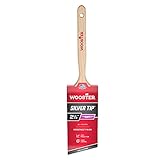
The Wooster Silver Tip is Wooster's premium-tier angled sash brush, positioned as a direct competitor to Purdy Clearcut Glide. The defining feature is the silver-tipped synthetic bristles — the bristle ends are mechanically tipped to a finer point than standard synthetic bristles, which deposits paint with less drag and produces a smoother finish on enamels and fine-finish coatings. For high-gloss work and water-based polyurethane application, this matters significantly. Standard brushes leave subtle brush marks that are invisible on flat paint but become very visible on gloss enamels. The Silver Tip's finer bristle tips substantially reduce this marking, producing a finish that's much closer to spray quality. During our test on cabinet doors using high-gloss enamel, the Silver Tip produced a noticeably smoother finish than the Purdy Clearcut Glide on identical applications. For general wall painting and lower-sheen finishes, the difference is barely perceptible, but on gloss work it's meaningful. The honest trade-off is paint capacity: the finer bristles hold slightly less paint per dip, requiring more frequent dipping on broad surfaces. The Purdy Clearcut Glide remains slightly better for general utility, while the Silver Tip is the right pick when finish quality is the primary concern. For serious DIY painters doing furniture, cabinets, or fine-finish work, the Silver Tip earns its place in the tool kit alongside the Clearcut Glide.
Pros
- Silver-tipped synthetic bristles for ultra-smooth finish on enamels
- Excellent for water-based polyurethane and similar fine finishes
- Soft enough to leave no brush marks on smooth surfaces
- Sharp angle holds for precision cut-in work
- Compatible with all paint types including high-gloss enamels
Cons
- Slightly less paint capacity than Purdy Clearcut Glide
- Premium pricing similar to Purdy
The Bottom Line
The right brush for fine-finish work where brush marks are unforgiving. Especially valuable for water-based polyurethane and high-gloss enamels.

Purdy XL Elite 2" Angled Sash
Synthetic Angled Sash (Value)
The Purdy XL Elite is Purdy's mid-tier angled sash brush, positioned below the Clearcut Glide flagship but well above the disposable hardware-store brushes most homeowners reach for. For a DIYer who paints one or two rooms a year and wants better-than-throwaway quality without paying for the absolute best, the XL Elite is the sweet-spot product. The synthetic bristle blend is similar to the Clearcut Glide but slightly less premium — the bristles are slightly less rigid, hold marginally less paint, and don't maintain their razor edge quite as long through repeated cleanings. For typical residential painting, none of these limitations are significant. The XL Elite produces clean cut-in lines, holds adequate paint for efficient work, and lasts through dozens of projects with proper care. The 2-inch width is well-suited to trim and detail work, slightly narrower than the standard 2.5-inch sash but adequate for most cut-in applications. The honest positioning is that you get about 80% of Clearcut Glide performance for roughly 60% of the price. For homeowners who paint occasionally and want quality without paying for the absolute top tier, this is the right brush. For frequent painters or anyone who values having the best tool for the work, step up to the Clearcut Glide.
Pros
- Excellent value for a Purdy-quality brush
- Acceptable performance approaching the Clearcut Glide
- Available at hardware stores and home centers
- Synthetic bristles work with all paint types
- Smaller 2-inch size suits detail and trim work
Cons
- Slightly less paint capacity than the Clearcut Glide
- Bristle stiffness slightly less consistent over time
The Bottom Line
The right brush when budget matters but cheap is not an option. Purdy quality at a more accessible price point than the Clearcut Glide.

Wooster Pro 1" Detail Brush
Detail Brush
The Wooster Pro 1-inch detail brush addresses the work that larger brushes can't reach: window mullions and muntins, narrow trim profiles, decorative molding details, touch-up work on small damaged areas, and tight corners where a larger brush would smear paint onto adjacent surfaces. For window painting specifically, a 1-inch brush is essentially required — the muntins on a six-pane window simply cannot be painted cleanly with a wider brush. The synthetic bristles are stiff enough to release paint into narrow profiles and chisel-tipped for precision. The brush is inexpensive enough to justify keeping two or three in the tool kit — they wear faster than larger brushes because the smaller bristle count means each individual bristle works harder, and the small size makes them easy to lose between projects. Replacement cost is low enough that this isn't a problem. During our test, we used three 1-inch detail brushes across multiple window painting projects — keeping one in clean condition for water-based paints, one for oil-based paints, and one for stains. The dedicated-by-paint-type approach extends the life of each brush significantly and eliminates cross-contamination between paint types that can cause finish problems. Every DIY paint kit should include a 1-inch detail brush, and it's worth paying for quality even at this small size.
Pros
- Compact 1-inch size for fine detail work and small repairs
- Sharp chisel tip for precision lines
- Synthetic bristles compatible with all paint types
- Comfortable handle for extended detail work
- Inexpensive enough to keep multiple in the tool kit
Cons
- Too small for any significant surface area
- Wears faster than larger brushes due to smaller bristle count
The Bottom Line
Essential for detail work: window mullions, narrow trim, small repairs, and tight corners. Buy at least two — they wear faster than larger brushes.

Purdy Pro-Extra Glide 2.5" Natural Bristle
Natural Bristle (Oil-Based Specialty)
Natural-bristle brushes are a specialty product that retain a significant performance advantage on oil-based products despite the dominance of synthetic brushes for water-based applications. The Purdy Pro-Extra Glide is a premium natural-bristle brush using China bristle (from pig or boar hair) configured for oil-based paints, varnishes, polyurethanes, and shellac. The natural bristles work differently with oil-based products than synthetic bristles do. The natural keratin protein structure of animal hair interacts with the oils in oil-based products to produce smoother, more controlled paint release than synthetic bristles can match. For oil-based polyurethane on stairs, oil-based enamel on cabinets, marine paint on boats, and shellac primer over knotty wood, a natural-bristle brush genuinely produces a better finish than even the best synthetic. The defining limitation is that natural bristles cannot be used with water-based paints. Water makes natural bristles swell, go limp, and lose their shape. A natural brush dipped in water-based paint is ruined for future use and will not perform on oil-based products either. The Purdy Pro-Extra Glide should be used exclusively for oil-based work and stored carefully (clean immediately with mineral spirits after use, dry with bristles aligned, store in original keeper). Treated properly, a natural-bristle brush is a lifetime tool. For DIY painters who never use oil-based products, this brush is unnecessary. For anyone who applies polyurethane, oil enamel, or marine paint regularly, it's an essential investment.
Pros
- China bristle (natural hair) optimized for oil-based paints and varnishes
- Smoother finish on oil-based products than synthetic brushes
- Holds large paint reservoir for efficient application
- Perfect for marine paints, polyurethane, and oil enamels
- Lifetime tool with proper care
Cons
- Should not be used with water-based paints — bristles will go limp
- Requires mineral spirits for cleanup, not soap and water
The Bottom Line
The right brush for oil-based paints, varnishes, and polyurethanes. Natural bristles outperform synthetic on oil-based products.
3. How to Brush Paint Like a Pro
The technique of brushing paint is learnable in an hour of practice but takes years to truly master. The most common amateur mistakes have specific fixes that dramatically improve finish quality immediately.
Step 1: Load the Brush Properly
Dip the brush into paint to about one-third the bristle length — not deeper, and definitely not all the way to the ferrule. Tap (don't drag) the brush gently against the side of the can to remove excess. The goal is a brush that's full but not dripping. Brushes loaded too heavily drip and produce drips; brushes loaded too lightly run out of paint quickly and create lap marks.
Step 2: Cut In with the Angled Tip
For cut-in work along edges, use the chisel-tipped corner of an angled sash brush. Hold the brush like a pencil, with the sharp angle toward the edge you're following. Make a confident, single stroke along the edge — multiple tentative strokes produce wavy lines. With practice, you can cut in along ceiling lines and trim edges without using painter's tape.
Step 3: Lay Down Paint, Then Tip Out
For broader brushed surfaces (doors, large trim, walls), use a two-phase technique: first, load the brush and apply paint to the surface in roughly the right area, using multiple loaded passes to cover the section. Then, with a lightly-loaded brush, make long parallel strokes (called 'tipping out') to smooth the paint and eliminate visible brush marks. The tipping pass is the difference between obvious brush marks and a near-smooth finish.
Step 4: Maintain a Wet Edge
Like rolling, brushing requires maintaining a wet edge throughout the work. Never let one section of paint dry before brushing into it from the next section. Dry edges produce visible lap marks where the dry and wet meet. Plan your work to finish complete sections — entire wall, entire door panel, entire trim run — before stopping.
Step 5: Brush in the Direction of the Grain
For wood surfaces, always brush in the direction of the wood grain on the final pass. Cross-grain brushing leaves visible texture even after the paint dries. On smooth surfaces like drywall, brush direction matters less but consistency still produces a more polished look — pick a direction and stay with it across the entire section.
Step 6: Don't Over-Brush
The single most common amateur mistake is over-brushing — going back over already-tacky paint with the brush in an attempt to 'fix' something. This pulls the partially-cured paint, creating drag marks, brush ridges, and a worse finish than would have resulted from leaving it alone. Once paint starts to skin over (typically 5-10 minutes after application), do not brush it again. Let it dry and address any issues on the next coat.
4. Brush Care: Making Quality Brushes Last
A quality brush ($15-25) cleaned and stored properly will last 5-10 years of regular use. The same brush dried with paint in the bristles or stored badly will be ruined within a single project. Proper care extends the lifetime cost-per-use of a quality brush dramatically below disposable alternatives.
Clean Immediately After Use
The single most important practice is cleaning the brush immediately after finishing the work — not at the end of the day, not after lunch, not 'in a minute.' Paint that starts to cure inside the bristles is extremely difficult to remove, and once it has cured the brush is essentially ruined. Set up a cleaning station before starting the work so the brush can go directly from work into cleaning.
Cleaning Water-Based Paints
Rinse the brush under warm running water while working the bristles with your fingers to release paint. Continue until the water runs completely clear, paying particular attention to the area where the bristles meet the ferrule — paint that accumulates here is the most common reason brushes harden and lose flexibility. Use a brush comb (about $5) to remove paint from deep within the bristles. Spin the brush gently to remove excess water (a brush spinner tool is helpful here).
Cleaning Oil-Based Paints
For oil-based paints, rinse the brush in mineral spirits in a container, working the bristles to release paint. Switch to fresh mineral spirits one or two more times until the spirits stay clear. Wash the brush with warm soapy water to remove the mineral spirits residue. Dispose of used mineral spirits responsibly at a hazardous waste collection site, not down the drain.
Dry with Bristles Aligned
After cleaning, comb the bristles into their original aligned position and let the brush dry hanging by the handle (with bristles pointing down) or laying flat on a clean surface. Never store a brush wet with the bristles compressed or bent — they'll dry in that position and the brush will never recover. The original cardboard keeper that comes with most quality brushes is designed to maintain proper bristle alignment during drying.
Store Properly
Store clean, dry brushes hanging from a peg or in their original keeper. Avoid storing brushes loose in a drawer where the bristles can bend and deform. Never store a wet brush. If you'll use the brush again the next day, you can wrap it in plastic to keep it from drying out, but for any longer break, clean it thoroughly first.
Brush Care Quick Reference
- • Clean immediately after every use — never leave paint to cure in bristles
- • Pay special attention to the ferrule area where paint accumulates
- • Use a brush comb to release paint from deep within bristles
- • Dry with bristles aligned in their original position
- • Store hanging or in original keeper, never compressed in a drawer
The Brush Kit Every DIY Painter Should Own
Rather than buying brushes one at a time as projects come up, most DIY painters benefit from assembling a complete brush kit that covers the typical range of residential painting work. Built thoughtfully, a complete kit costs about $80-100 and serves for years.
The essential five-brush kit: a Purdy Clearcut Glide 2.5-inch angled sash for general work; a Wooster Shortcut 2-inch angled sash for tight spaces and cabinet work; a Purdy Syntox 3-inch flat for wall work and broad trim; a Wooster Pro 1-inch detail brush for windows and fine detail; and a Purdy Pro-Extra Glide 2.5-inch natural bristle for oil-based products and polyurethane.
This five-brush kit handles essentially every residential painting application: walls, ceilings, trim, doors, windows, cabinets, furniture, fences, and outdoor projects. Properly cared for, the kit should last a decade or more before any brush needs replacement. Add specialty brushes as specific projects require them — a 4-inch flat for large exterior work, a 1.5-inch angled for narrow trim, a round brush for spindles — but the five-brush core handles the vast majority of work.
How We Tested: 14 Brushes, 6 Months, Real Projects
Our brush testing was designed to expose real-world performance over time rather than out-of-the-box impressions. Each candidate brush was used for at least 8 hours of actual painting work across multiple project types: interior wall cut-in, baseboard and crown molding, cabinet doors with high-gloss enamel, window sashes with multiple panes, exterior trim painting, and stained or sealed wood trim.
Each brush was evaluated on six dimensions: paint capacity (how much paint a single dip holds), release smoothness (how cleanly the paint releases without skipping or flooding), edge holding (how well the chisel-tipped corner maintains its sharp angle), finish quality (visible brush marks after the paint dries), control (precision when cutting in tight to edges), and durability (performance after dozens of cleanings and weeks of use).
Brushes were cleaned identically after each use following manufacturer recommendations, stored hanging in original keepers, and re-evaluated periodically through the test period. The brushes that ended the test in the best condition — still cutting clean lines, still holding their shape, still releasing paint smoothly — earned the recommendations in this guide. Brushes that lost their edge, shed bristles, or developed bent or flagged bristles within the test period did not make the list regardless of their initial performance.
The clear conclusion from the test: there is a meaningful performance gap between quality brushes ($15-25) and budget brushes ($3-8), and the gap widens with use over time. Budget brushes can produce acceptable results when new but degrade quickly; quality brushes maintain their performance through years of regular use. For any DIY painter doing more than a single project, the higher upfront cost of quality brushes is repaid quickly in better finish quality and longer brush life.
Buying Tips: How to Recognize Brush Quality at the Store
Not all expensive brushes are great, and not every great brush carries a premium price tag. Knowing how to evaluate brush quality at the store helps you avoid paying for marketing rather than performance.
Start by examining the bristles. Premium brushes have bristles of varying lengths within the brush — the technical term is 'tipped and flagged' bristles, where the ends of the bristles are split (flagged) to create more surface area for paint pickup. Cheap brushes have uniform, blunt-cut bristles that hold less paint and release it less smoothly. Run your fingers across the bristle ends; quality brushes feel soft and slightly fluffy at the tip, while cheap brushes feel uniformly stiff.
Pull gently on the bristles. A quality brush should not shed any bristles when you tug — the bristles are firmly set into the ferrule with epoxy or similar adhesive. Cheap brushes will shed bristles immediately, and those bristles will end up in your finish. Watch for any loose bristles falling out as you check.
Examine the ferrule (the metal band that connects the bristles to the handle). Quality brushes use stainless steel or copper-plated ferrules that won't corrode and stain the paint. Cheap brushes use uncoated steel that develops rust over time, especially after exposure to water. The ferrule should also be tightly clamped onto the bristles without any visible gaps where paint could enter and cause early failure.
Check the handle. Wood handles should be smooth, well-finished, and properly shaped for comfort. The handle should fit your grip naturally during the painting motion you'll use. Some painters prefer thicker handles for general work and slimmer handles for detail work; both styles are available in quality brushes.
Finally, check the brush packaging. Most quality brushes come with a cardboard sleeve or 'keeper' that protects the bristles during transport and storage. This is also useful long-term storage equipment, so save it. Cheap brushes typically come without a keeper or with a flimsy plastic wrap that's not useful for storage.
Frequently Asked Questions
Synthetic or natural bristle — which should I use?
Synthetic with water-based paints, natural bristle (China bristle) with oil-based products, varnishes, and polyurethanes. Water makes natural bristles swell and lose shape. The best modern synthetics like Purdy Clearcut Glide handle both water and oil-based products effectively.
What size brush should I buy?
A 2.5-inch angled sash brush is the most versatile size for general work. Add a 1-inch detail brush for windows and tight spaces, and a 3-inch flat for broad work. Cabinet refinishers should also have a 2-inch short-handle brush.
How long should a paint brush last?
A quality brush cared for properly lasts 5-10 years. Cheap brushes typically last 1-2 projects. The lifetime cost-per-use of a quality brush is significantly lower despite the higher upfront cost.
How do I clean a paint brush properly?
Water-based: rinse under warm water working bristles with fingers until clear, then comb with a brush comb. Oil-based: rinse in mineral spirits, repeat with fresh spirits until clean, then wash with soap and water. Always dry with bristles aligned.
Are cheap paint brushes ever worth it?
For one-time disposable applications like applying paint stripper or rough primer, yes. For any finished work where the brush touches the visible surface, quality brushes pay for themselves in finish quality and longevity.
Related Guides
Buy Quality Once
A great brush, cared for properly, will outlast a decade of disposable alternatives. Buy quality once, treat it well, and your painting projects will look professionally done for years to come.
See Our Top Paint Brush