The 6 Best Caulks for Wood Siding & Trim
Wood swells and shrinks with every season. The caulk that works on masonry splits at a trim joint by the second winter — here is what actually moves with the boards.
Alex Rivers
Home Improvement Editor
Last Updated
September 18, 2026
In This Guide
Caulking wood siding is a different problem from caulking anything else, because the substrate will not hold still. A cedar board can move a millimetre across its width between August and February, every year, and a sealant that cannot accommodate that will split — usually down the middle of the bead, usually in year two. Elongation, not weather resistance, is the specification that matters.
Our Picks at a Glance
- Best Overall for Wood: Sashco Big Stretch — Water-Based Elastomeric, 500% Elongation
- Best Value: DAP Dynaflex 230 — Elastomeric Latex, 100% Joint Movement
- Best for Unpainted Siding: OSI QUAD MAX — Hybrid Polymer, Colour-Matched
- Best Clear: Sashco Lexel — Elastomeric Clear, Paintable
- Best Colour Match: Titebond WeatherMaster — Hybrid Polymer, 45+ Colours
- Best for Wet Areas: Gorilla Paintable Silicone Sealant — Siliconised, Paintable, 100% Waterproof
1. Why Wood Siding Is a Different Problem
Most exterior caulk is formulated with masonry, fibre cement and vinyl in mind. Those materials are dimensionally stable — they expand and contract with temperature, modestly and predictably. Wood does something else entirely.
Timber takes on and gives up moisture with the humidity around it, and it moves as it does. That movement is mostly across the grain rather than along it, and it can be substantial: a nominal six-inch cedar board can change width by a millimetre or more between a humid summer and a dry winter, every single year, for the life of the building.
A caulk joint between that board and a fixed trim piece therefore opens and closes seasonally. A sealant that cures hard, or that stretches but does not recover, cannot survive that cycle indefinitely. It splits down the centre of the bead or peels away from one face, and either way water gets in behind the siding — which is worse than no caulk at all, because now it cannot dry out.
That is the whole reason this is a separate question from general exterior caulking. Our general exterior caulk guide covers the broader range across all substrates; this one is specifically about the joints where wood movement is the governing constraint.
The Specification That Decides It
Elongation and recovery, not weather resistance.
Every exterior caulk claims weatherproofing. Very few state how far they stretch and return. On wood, look for 100 percent joint movement as a minimum and 300 percent or more for wide or exposed trim joints — that number predicts survival better than anything else on the tube.
2. Elongation: Reading the Number That Matters
Elongation is how far a cured bead can stretch before it tears, expressed as a percentage of its original dimension. Recovery is whether it returns when the joint closes again. Both matter, and only the first is usually printed.
| Type | Typical Elongation | Suits | On Wood |
|---|---|---|---|
| Acrylic latex (painter's caulk) | 10-25% | Interior trim, nail holes | Fails within 1-2 seasons |
| Siliconised acrylic | 25-50% | General exterior, stable substrates | Marginal on moving joints |
| Elastomeric latex | 100-200% | Exterior trim, siding | Good — the sensible default |
| High-elongation elastomeric | 400-500% | Wide or high-movement joints | Excellent |
| Hybrid polymer | 200-400% | Dissimilar materials, cold weather | Excellent, costs more |
| Pure silicone | 400-800% | Glass, metal, wet areas | Excellent movement, but unpaintable |
The top row is the one that causes most of the failures people ask about. Ordinary painter's caulk is an interior product that happens to be sold in the exterior aisle, and it is what a great many houses are caulked with because it is cheap and tools beautifully. On wood siding it lasts a season or two.
The bottom row explains why pure silicone, despite excellent movement figures, is the wrong choice on trim you intend to paint: nothing sticks to it. Paintable siliconised and hybrid products exist precisely to resolve that conflict, and they are what belong on painted wood.
3. The 6 Best Caulks for Wood Siding and Trim
We judged these on the things that decide whether a bead survives on wood: rated elongation and recovery, adhesion to bare and painted timber, whether paint takes over a cured bead, colour availability for joints that stay unpainted, and how each behaves in the cold and damp conditions real exterior work happens in.

Sashco Big Stretch
Water-Based Elastomeric, 500% Elongation
Wood siding and trim move seasonally, and they move a great deal more than the masonry and fibre cement most exterior caulk is designed around. A board that swells across its width in a humid August and shrinks again in a dry February can open a joint by a millimetre or more, every year, and an ordinary acrylic latex caulk simply is not built to accommodate that repeatedly. Big Stretch is, and the 500 percent elongation figure is the reason it is the default recommendation here. In practice what that means is a bead that is still intact and sealed after five years at a trim-to-siding joint where a standard acrylic would have split down the middle by the second spring. It stays genuinely flexible rather than curing hard, and critically it recovers — it stretches open in winter and closes again in summer without tearing away from either face of the joint. It takes paint properly, including over a fully cured bead, which is not true of every flexible sealant and matters enormously on trim. The trade-offs are about handling rather than performance. It skins slowly, so a windy afternoon leaves dust embedded in the surface, and it is softer to tool than a stiff acrylic — getting a crisp line takes a wet finger and a bit of practice rather than a single confident pass.
Pros
- 500 percent elongation handles the seasonal movement that splits ordinary acrylic caulk at trim joints
- Stays flexible for years rather than curing hard and cracking in the second winter
- Takes paint cleanly, including over a cured bead, which matters on trim you intend to finish
- Adheres to bare, primed and previously painted wood without a separate primer
- Available in colours that cope where a bead will be left unpainted
Cons
- Slow to skin over, so it collects dust and insects if applied on a breezy day
- Tools less crisply than a stiffer acrylic — a wet finger and patience are needed for a neat line
The Bottom Line
The right default for wood siding and trim, because wood moves and this moves with it. Everything else on this list is a specialist by comparison.

DAP Dynaflex 230
Elastomeric Latex, 100% Joint Movement
Most exterior caulking jobs are large — a house has a great deal of trim on it — and the difference between a sealant at eight dollars a tube and one at fourteen becomes real money across forty tubes. Dynaflex 230 is the product that makes that arithmetic work without dropping back to ordinary acrylic latex, which is where people get into trouble on wood. It is rated for 100 percent joint movement, which is well short of Big Stretch's figure but comfortably beyond what standard painter's caulk manages, and on typical trim joints — window casings, corner boards, the gap where siding meets a door surround — that is sufficient. Across several seasons those beads stay intact where plain acrylic would show hairline splitting. Where it genuinely excels is workability. It tools more crisply than any other flexible sealant here, which means a clean, professional-looking line without much technique, and it accepts paint in about thirty minutes, so caulking and painting can happen the same day rather than across a weekend. For a large repaint that scheduling advantage is worth more than it sounds. Reserve the higher-elongation products for the few joints that genuinely move the most, and use this for the other ninety percent of the house.
Pros
- Handles genuine joint movement at a price close to ordinary acrylic caulk
- Tools beautifully — one of the easiest sealants here to finish neatly
- Paintable in about 30 minutes, so caulking and painting fit into one working day
- Excellent adhesion to wood, primed and unprimed, and to most trim materials
- Available almost everywhere, which matters when you run short mid-job
Cons
- Less elongation than Big Stretch, so very wide or fast-moving joints still favour the specialist
- Colour range is limited compared with siding-specific products
The Bottom Line
The best balance of price, workability and movement tolerance for most wood siding jobs, and the one to buy in quantity.

OSI QUAD MAX
Hybrid Polymer, Colour-Matched
Not every caulk joint gets painted. Stained or factory-finished siding, cedar shingles left to weather, and trim in a colour you are not repainting all leave the bead visible, and at that point a caulk that is merely paintable is no help. QUAD MAX exists for that case, with a colour range built specifically to match common siding and trim finishes rather than the generic white, almond and clear most sealants offer. The chemistry is a hybrid polymer rather than a latex, and that brings two practical advantages beyond colour. It bonds well to dissimilar materials, so a joint between wood trim and a fibre cement panel, or wood and a metal flashing, is not a problem — which is exactly where latex products tend to release on one face. And it applies and cures in cold conditions, down toward freezing, which extends the working season by weeks at each end of the year. Latex caulk applied below about 40 degrees F never develops proper adhesion, and a lot of autumn caulking quietly fails for that reason alone. It costs more per tube and it is stiffer to gun and tool, so for a whole-house repaint where everything gets painted anyway, a latex product is the more sensible spend. Buy this for the visible joints and the cold-weather work.
Pros
- Huge colour range designed to match siding and trim, so beads disappear without painting
- Hybrid polymer chemistry bonds to wood, vinyl, fibre cement and metal equally well
- Cures to a genuinely weatherproof seal that tolerates rain within hours of application
- Excellent adhesion in cold conditions, down toward freezing, where latex products fail
- Holds its colour rather than yellowing or chalking after a few seasons
Cons
- More expensive per tube than latex products, which adds up across a whole house
- Stiffer to gun and less forgiving to tool than a latex sealant
The Bottom Line
The pick where the bead will stay unpainted — stained siding, factory-finished trim, or late-season work when it is too cold for latex.
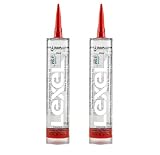
Sashco Lexel
Elastomeric Clear, Paintable
On stained cedar, natural timber or anywhere the wood grain is the finish, a white caulk bead is a permanent visual intrusion and a colour-matched one is an approximation. Lexel is the product for those joints, because it genuinely cures crystal clear and — unlike the cheap clear silicones people reach for instead — stays clear rather than yellowing after a couple of summers. Its other properties are unusually good. Elongation is high enough to handle wood movement in the same league as Big Stretch, so it is not a compromise on performance for the sake of appearance. It adheres to damp surfaces and can be applied in light rain, which is genuinely useful for an emergency repair or a job that has to finish before weather arrives. And it sticks to essentially everything, including glass and metal, making it a good choice for the awkward transitions around a window frame. The honest problem is application. It is solvent-based and it smells accordingly, so ventilation and gloves matter. And it is stringy in a way that makes a neat bead difficult — it pulls threads behind the nozzle and resists tooling. Work in short runs, keep a solvent-dampened rag to hand, and expect the first tube to be a learning exercise.
Pros
- Genuinely crystal clear when cured and stays clear rather than yellowing
- Adheres to damp surfaces and can even be applied in light rain, which no latex will do
- Very high elongation, so it copes with the same seasonal movement as Big Stretch
- Sticks to almost anything — wood, glass, metal, vinyl, painted surfaces
- Can be painted despite being a clear sealant, which is unusual and occasionally useful
Cons
- Solvent-based, so it smells strongly during application and needs ventilation
- Stringy and awkward to tool — the hardest product here to finish neatly
The Bottom Line
The answer when the joint must not be visible on stained or natural wood. Accept that applying it neatly takes practice.

Titebond WeatherMaster
Hybrid Polymer, 45+ Colours
WeatherMaster's case rests on two things that sound like marketing and are not: the colour range, and its willingness to bond to surfaces that other sealants refuse. The colour range runs past forty options matched against common siding manufacturers' palettes, which on a job where the caulk lines will be visible against finished siding is the difference between an invisible repair and a permanent stripe. If you have LP, James Hardie or a stained cedar product with a known colour, there is likely a match, and that saves painting a bead that would otherwise need it. The adhesion claims are the more surprising part. This will bond to damp and even frozen surfaces, which in practice means a late-autumn or early-spring job that would otherwise have to wait for a dry, mild week can proceed. Combined with no shrinkage on cure — the tooled bead keeps its shape rather than sinking into the joint — it is a genuinely capable product for difficult conditions. The limits are commercial. It is mostly a building-supply product rather than a big-box one, so picking up another few tubes on a Sunday is harder, and it carries premium pricing that makes little sense for the large majority of joints that are going to be painted anyway.
Pros
- One of the widest colour ranges available, matched to common siding manufacturers' finishes
- Bonds to wet and frozen surfaces, which is remarkable and occasionally decisive
- Very high movement capability, well suited to wide trim joints
- No shrinkage on curing, so the bead you tool is the bead you keep
- Resists dirt pickup better than latex, so beads stay looking clean on light-coloured trim
Cons
- Sold mostly through building suppliers rather than big-box retail, so availability is patchier
- Premium pricing that is hard to justify for joints that will be painted over
The Bottom Line
Buy it for an exact colour match on visible joints, and for cold or damp conditions that defeat everything else.

Gorilla Paintable Silicone Sealant
Siliconised, Paintable, 100% Waterproof
Most of this list is about accommodating movement, because that is the defining problem with wood. There is a second, narrower problem on many houses: joints that stay wet. The bottom of a wall where siding meets a deck ledger, the shaded north elevation that never dries out, the trim behind a downpipe — these fail from water and mildew rather than from movement, and a flexible latex sealant is not the best answer for them. Gorilla's paintable silicone is. It is genuinely waterproof from the moment it cures, tolerates rain far sooner after application than a latex product, and resists mildew growth in the shaded damp conditions where latex beads go black within two seasons. The paintable formulation solves the historic objection to silicone on trim, which is that nothing would stick to it. Its limitation is the flip side of the same chemistry: elongation is modest compared with the elastomeric products, so on a wide trim joint that opens and closes seasonally it will eventually part from one face. Use it deliberately for the wet, low-movement joints and use an elastomeric for everything else. And where the painted finish must be flawless, prime over the cured bead — paint takes to it adequately rather than perfectly.
Pros
- Genuinely waterproof immediately, so it tolerates rain far sooner than latex
- Paintable, unlike conventional silicone, which is the usual dealbreaker on trim
- Strong adhesion to wood, and resists mildew in shaded, damp locations
- Good for the bottom-of-wall and splash-zone joints where water sits rather than runs
- Widely stocked and inexpensive
Cons
- Lower elongation than the elastomeric products, so it is not the right answer for high-movement trim joints
- Paint adhesion over it is decent rather than excellent — prime if the finish must be perfect
The Bottom Line
A specialist for damp, shaded and splash-zone joints where water exposure matters more than movement.
4. The Siding Joints You Should Not Caulk
This is the part that saves houses, and it runs against instinct. Not every gap in siding is a defect — some are drainage and ventilation paths, and sealing them traps water inside the wall.
The Bottom Edge of Lap Siding
The horizontal gap where each board laps the one below is designed to let any water that gets behind the siding drain out and the assembly dry. Caulking that line seals water in. This is the single most common and most damaging caulking mistake on a wood-sided house.
Weep Holes and Drainage Gaps
Anywhere the wall assembly is designed to breathe or drain — weep holes above windows, gaps at the bottom of a rainscreen, the underside of a window sill. Filling them converts a wall that manages water into one that stores it.
Butt Joints Between Siding Boards, in Some Systems
Whether these should be caulked depends on the siding system and the manufacturer's instructions. Many modern systems use flashing behind the joint and specifically instruct that it be left uncaulked. Check the installation guide rather than assuming.
What Should Be Caulked
Vertical joints where siding meets trim, window and door casings, corner boards, and penetrations for pipes, vents and fittings. These are the places water enters and where there is no drainage path behind. Our guide to where not to caulk covers the full list across the building.
5. Joint Design and Backer Rod
How a bead is shaped decides how much movement it can take, and it is the part of the job nobody is taught.
A sealant bead should adhere to two faces, not three. If it also bonds to the back of the joint, it cannot stretch — it is anchored in the middle and tears when the joint opens. This is called three-sided adhesion and it is why beads in deep joints fail even when the product was right.
The fix is backer rod: a foam cylinder pushed into the joint before caulking, which both fills the depth and gives the bead a non-adhering back face. It is inexpensive, it reduces how much caulk you use, and on any joint deeper than about a quarter of an inch it roughly doubles the useful life of the seal.
The target profile is a bead about twice as wide as it is deep, with an hourglass cross-section — thicker at the edges where it bonds, thinner in the middle where it stretches. Tooling with a wet finger or a caulk tool creates that shape; running a fat bead and leaving it does not.
For joints wider than about half an inch, caulk is the wrong answer entirely. That is a trim or flashing problem, and filling it with sealant produces a bead that will fail regardless of product — no sealant is a structural filler.
6. Painting Over Caulk
On wood trim, almost every bead gets painted, and the interaction between the two is where a good caulk job becomes a visible one.
Respect the paint-ready time. Latex products are usually paintable within 30 minutes to an hour; elastomerics and hybrids often want considerably longer, sometimes a full day. Painting too early traps solvent or water in the bead, and the paint film cracks as it escapes.
Expect movement to show at the paint line. Paint is far less flexible than an elastomeric sealant. A bead that stretches 300 percent will crack its paint film long before it fails itself, which looks like caulk failure and is not. On high-movement joints this is unavoidable, and it is an argument for a colour-matched sealant left unpainted where the aesthetics allow.
Prime bare wood first, then caulk. Caulking before priming lets the bare timber absorb moisture from the sealant and gives poorer adhesion. Prime, caulk, then topcoat — that order produces the longest-lasting joint and it is what every manufacturer specifies.
Do not caulk over paint that is failing. The bead bonds to the old paint, and when that paint lets go the caulk goes with it. Scrape back to sound material first.
7. Application and Weather
Exterior caulking is weather-dependent in ways people routinely underestimate, and most premature failures trace back to conditions rather than product.
| Condition | Latex / Elastomeric | Hybrid Polymer |
|---|---|---|
| Minimum temperature | 40°F and rising | Near freezing, some below |
| Damp surfaces | No — must be dry | Many tolerate damp |
| Rain after application | 24 hours clear needed | Often 2-4 hours |
| Direct hot sun | Skins too fast; work shaded | More tolerant |
| Ideal window | 50-80°F, overcast, dry | Wide |
The temperature row is the one that catches people out every autumn. Latex-based sealants applied below about 40°F never develop proper adhesion, even though they appear to gun and tool normally. The bead looks perfect in October and is peeling away by March, and the product gets blamed for a conditions problem.
The other common error is caulking in mid-summer at the peak of the wood's expansion. A joint caulked when it is at its narrowest has to stretch the furthest come winter. Spring and autumn, when the timber is mid-range, give the bead the easiest life.
Cut the nozzle small and make several passes rather than one large bead. A thick bead looks like thorough work and is actually worse — it has more material to shrink, tools poorly, and is more likely to achieve three-sided adhesion in a deep joint.
8. How Long a Bead Should Last
Realistic expectations help, because caulk is maintenance rather than a permanent repair.
On wood siding, a good elastomeric bead in a properly designed joint should give you eight to fifteen years. A hybrid polymer in the same joint often reaches fifteen or twenty. Ordinary acrylic latex on the same wall gives one to three, which is why so many houses seem to need recaulking constantly.
Inspect annually, ideally in late winter when the joints are at their widest and any failure is most visible. What you are looking for is splitting down the centre of the bead, peeling away from one face, or a bead that has gone hard and chalky. Any of those means water can get in.
Repair by removal rather than by adding. New caulk over old bonds to the old bead, not to the wood, and inherits its failure. Cut the old bead out with a utility knife and a caulk removal tool, clean the joint faces, and start again — it takes longer and it is the only approach that lasts.
And keep the paint film maintained, because on painted trim the paint is the first line of defence and the caulk is the second. A wall whose paint is sound rarely stresses its caulk joints; one that has been left to weather puts everything on the sealant. Our guide to cracking caulk works through the diagnosis when beads fail repeatedly in the same place.
9. Common Mistakes to Avoid
Using Painter's Caulk Outside
Ordinary acrylic latex handles 10 to 25 percent movement and wood siding demands far more. It tools beautifully and costs very little, which is why it is on so many houses — and why those houses need recaulking every two or three years.
Caulking the Bottom Edge of Lap Siding
That gap is a drainage and ventilation path, not a defect. Sealing it traps any water that gets behind the siding inside the wall assembly, which is considerably worse than leaving it open. It is the most damaging caulking mistake on a wood-sided house.
Skipping Backer Rod in Deep Joints
A bead bonded to the back of the joint as well as the two faces cannot stretch — it is anchored in the middle and tears when the joint opens. Backer rod costs very little, uses less caulk, and roughly doubles the life of the seal.
Caulking in Cold Weather
Latex-based sealants applied below about 40°F never develop proper adhesion, even though they gun and tool normally at the time. The bead looks perfect in autumn and is peeling by spring. Use a hybrid polymer if the work cannot wait for warmer weather.
Caulking Over an Old Failing Bead
New caulk bonds to the old bead rather than the wood, and inherits whatever made the old one fail. Cut the old material out with a knife and a removal tool, clean both joint faces, and start from bare material.
10. Frequently Asked Questions
What is the best caulk for wood siding?
Sashco Big Stretch is our overall pick, because its 500 percent elongation accommodates the seasonal movement that splits ordinary caulk at wood trim joints. DAP Dynaflex 230 is the better value for a whole house, and OSI QUAD MAX is the choice where the bead stays unpainted or the weather is cold.
Why does caulk keep cracking on my wood trim?
Almost always because the product cannot handle the movement. Wood swells and shrinks seasonally, and acrylic latex caulk tolerates only 10 to 25 percent movement. Use an elastomeric rated for at least 100 percent, and fit backer rod in deep joints so the bead can stretch instead of being anchored at the back.
Should I caulk the bottom edge of lap siding?
No. That gap lets water which gets behind the siding drain out and the wall dry. Caulking it seals moisture inside the assembly and causes rot. Caulk the vertical joints where siding meets trim, window and door casings, corner boards and penetrations — not the horizontal laps.
What elongation do I need for wood siding?
At least 100 percent joint movement as a minimum, and 300 percent or more for wide or exposed trim joints. Ordinary painter's caulk manages 10 to 25 percent, which is why it fails within a season or two. The figure is on the technical data sheet even when it is not on the tube.
Can I paint over exterior caulk?
Over paintable products, yes — but respect the paint-ready time, which can be a full day for elastomerics rather than the 30 minutes latex needs. Prime bare wood first, then caulk, then topcoat. Pure silicone cannot be painted at all, which is why paintable siliconised and hybrid products exist.
Do I need backer rod?
In any joint deeper than about a quarter of an inch, yes. It prevents the bead bonding to the back of the joint, which would anchor it in the middle and make it tear when the joint opens. It also uses less caulk and helps you achieve the hourglass profile that stretches best.
How long should exterior caulk last on wood?
Eight to fifteen years for a good elastomeric in a well-designed joint, and fifteen to twenty for a hybrid polymer. Ordinary acrylic latex gives one to three. Inspect in late winter when joints are widest, and repair by cutting the old bead out rather than caulking over it.
Related Caulking Guides
The Bottom Line
On wood, elongation is the specification that matters. Sashco Big Stretch for the joints that move most, DAP Dynaflex 230 for the other ninety percent of the house, and OSI QUAD MAX where the bead stays unpainted or the weather turns cold.
Then get the joint right: backer rod in anything deep, two faces of adhesion not three, and never caulk the bottom edge of lap siding. A cheap sealant in a well-designed joint outlasts a premium one in a badly designed one.
More in Home Improvement
Guides in this category that pair with what you just read.
About the Author
Alex Rivers, Home Improvement Editor
Alex has spent over a decade working on residential and light commercial property maintenance, and now tests every tool, coating and machine that appears in these guides personally.