The 6 Best Mini Split Heat Pumps in 2026
We lived with six ductless systems through a full heating and cooling season — measuring indoor noise, output in single-digit weather, and what each one genuinely costs once it is on the wall and inspected.
Alex Rivers
Home Improvement Editor
Last Updated
September 18, 2026
In This Guide
A mini split is a $3,000 to $6,500 decision that most people make from a spec sheet full of numbers that do not predict comfort. SEER2 barely matters. The temperature at which the unit still makes full heat matters enormously, and almost nobody prints it on the front of the box. Here is what six systems did over a full season.
Our Picks at a Glance
- Best Overall: Mitsubishi Electric M-Series Hyper-Heat — Pro-Installed Ductless, 9k-24k BTU
- Best DIY Install: MRCOOL DIY 4th Gen 12,000 BTU — DIY Ductless, 12k-36k BTU
- Best Cold Climate Value: Daikin Aurora Series 12,000 BTU — Pro-Installed Cold Climate, 9k-18k BTU
- Best Multi-Zone: Fujitsu Halcyon XLTH Multi-Zone — Pro-Installed Multi-Zone, 2-8 Zones
- Best Value: Senville LETO Series 12,000 BTU — Value Ductless, 9k-24k BTU
- Best Budget Pick: Pioneer Diamante Ultra 9,000 BTU — Budget Ductless, 9k-36k BTU
1. Why a Mini Split Instead of Anything Else
A ductless mini split does one thing no other heating or cooling equipment does: it conditions a specific space, efficiently, without requiring ductwork to exist. That makes it the obvious answer for the four situations where conventional HVAC is either impossible or absurdly expensive — an addition, a converted attic or basement, a garage or workshop, and a house with no ducts at all.
The efficiency argument is not marketing. A resistance heater converts one unit of electricity into one unit of heat, by definition. A modern heat pump moves two and a half to four units of heat per unit of electricity consumed, because it is transporting heat rather than creating it. In a 400-square-foot garage in our testing, replacing a 1,500W resistance heater with a 12,000 BTU mini split cut the heating electricity for the space by roughly 65 percent while holding a warmer, steadier temperature.
What We Measured
19 dB
Quietest indoor head on low
65%
Heating energy saved vs resistance heat
-13°F
Lowest tested useful heating output
$2k-6.5k
Installed cost, single zone
The second advantage is zoning that actually works. Central systems condition the whole house to satisfy one thermostat, which is why the bedroom over the garage is always wrong. A mini split gives that room its own setpoint and its own compressor modulation, and the comfort difference in problem rooms is larger than any duct rebalancing will achieve.
The honest disadvantages are two. The indoor head is visible on the wall, and no amount of industrial design makes it furniture — some people never stop noticing it. And a mini split conditions the space it is in; it will not push warm air around a corner into a closed bedroom, which means a house needs one head per genuinely separated space rather than one system per floor.
2. Single-Zone, Multi-Zone, and DIY Explained
Three architectural decisions define what you end up with, and they matter far more than the brand name on the cover.
| Configuration | Best For | Installed Cost |
|---|---|---|
| DIY single zone | Garage, shop, one room, capable homeowner | $1,200-$2,200 |
| Pro single zone | Primary living space, cold climate, warranty coverage | $3,000-$6,500 |
| Multi-zone (3-5 heads) | Whole-house conversion with no existing ducts | $9,000-$20,000 |
| Ducted mini split | Houses where visible wall units are unacceptable | $5,000-$9,000 per zone |
One counterintuitive point worth internalising: a set of single-zone systems is usually more efficient than one multi-zone system serving the same rooms, because each compressor is matched to one load rather than modulating to serve whichever zone happens to be calling. Multi-zone wins on cost, on the number of outdoor units, and on how many holes you put through the wall — not on operating efficiency.
3. The 6 Best Mini Split Heat Pumps in 2026
Each system was assessed on the same four measures: sound pressure at the indoor head on low and high fan, heating output in sub-freezing weather, how tightly the inverter held setpoint, and total installed cost including electrical work. Where we could not install a system ourselves, we drew on field data from HVAC contractors we work with and long-term owner reports rather than manufacturer claims.
Mitsubishi Electric M-Series Hyper-Heat
Pro-Installed Ductless, 9k-24k BTU
Mitsubishi's Hyper-Heat line is the reference point the rest of the category is measured against, and after running one through a full heating season we understand why. The headline claim — full rated heating capacity at 5 degrees F — held in practice, which matters enormously because most heat pumps quietly derate long before that and leave you running backup resistance heat at four times the operating cost. It continued producing usable heat down to -13 degrees F, at reduced output, which in most of the northern United States means the system is the heating plan rather than part of it. The inverter control is the quiet excellence. Rather than cycling, it modulates continuously, and the room simply sits at the setpoint instead of drifting two degrees either side of it. On low fan speed the indoor head measured 19 dB, which is below the noise floor of a quiet bedroom and considerably quieter than every budget unit we tested. The strategic argument, though, is the dealer network. A mini split is a fifteen-year appliance with proprietary boards and sensors, and the difference between a brand with local trained service and a brand without it shows up in year eight, not year one. That support and the 12-year compressor warranty are much of what the premium buys. The cost is real: expect $4,500 to $6,500 installed for a single zone, and there is no legitimate DIY route.
Pros
- Holds 100 percent of rated heating capacity down to 5 degrees F and keeps producing heat to -13 degrees F
- Quietest indoor head we have measured at 19 dB on low — genuinely inaudible in a bedroom
- Best-in-class dealer network, so a failed board is a service call rather than a research project
- 12-year compressor warranty when installed by a diamond-level contractor
- Inverter modulation is unusually smooth, holding room temperature within a degree instead of swinging
Cons
- The most expensive system here, typically $4,500-$6,500 installed for a single zone
- Installer-only — there is no sanctioned DIY path, and self-installation voids the warranty
The Bottom Line
The system to buy if you are heating with it in a real winter and intend to keep it fifteen years. Everything else here is a compromise against this benchmark.

MRCOOL DIY 4th Gen 12,000 BTU
DIY Ductless, 12k-36k BTU
The MRCOOL DIY exists because of one clever piece of engineering: a pre-charged line set with quick-connect couplings, which removes the two barriers that make every other mini split an installer-only product — the need to pull a vacuum on the refrigerant lines, and the EPA 608 certification legally required to handle refrigerant. Everything else about installing one is carpentry and a 240V circuit. In our install, the whole job took about six hours: cutting the wall penetration, mounting the indoor head and the outdoor pad, routing the line set, torquing the couplings, and having an electrician terminate the disconnect. That is a weekend against $2,000 to $3,500 of labor, and it is the entire value proposition. Performance is genuinely good rather than merely acceptable. The Hyper Heat variant kept producing heat down to -22 degrees F in manufacturer testing and held up through a cold snap in ours, and the efficiency numbers, while below Mitsubishi's, are far better than any window unit or resistance heater it replaces. Two honest limitations. The quick-connect couplings are a single-use design: torque them wrong, break the seal, and you are buying a new line set, so read the instructions twice and buy the torque wrench. And the internals — compressor, boards, coil quality — are a step below the premium Japanese brands, which is likely to show up as a twelve-year life rather than a twenty-year one.
Pros
- Pre-charged quick-connect line set means no vacuum pump, no gauges, and no EPA 608 certification required
- A genuinely achievable weekend project — our install took a competent DIYer about six hours start to finish
- Saves $2,000-$3,500 in labor versus a professional ductless install
- Hyper Heat variant holds useful output to -22 degrees F, which is remarkable at this price
- Works with standard smart thermostats and has a usable app rather than a token one
Cons
- Quick-connect fittings are a lifetime single-use design — a mistake on connection means a new line set
- Compressor and electronics are a tier below Mitsubishi or Daikin in both efficiency and expected service life
The Bottom Line
The only mini split most homeowners can legally and safely install themselves, and it saves thousands. Accept a shorter service life for that.

Daikin Aurora Series 12,000 BTU
Pro-Installed Cold Climate, 9k-18k BTU
The Aurora is the system we recommend when the property has real winters but the budget will not stretch to Mitsubishi's Hyper-Heat, and the gap between them is much smaller than the price difference implies. Rated heating operation to -13 degrees F puts it in the same conversation, and in a January cold snap it kept a 700-square-foot open-plan space at setpoint without resorting to backup heat. The detail that earns it a place here is the standard base pan heater. In snow country, the most common way an outdoor unit dies is ice accumulating in the base pan during defrost cycles until it damages the coil or the fan; a base pan heater prevents that, and several competitors treat it as an option or omit it entirely. If you live somewhere with sustained freezing weather, this single feature is worth more than a point of efficiency rating. Dehumidification is the other standout. In shoulder seasons, when cooling load is low but humidity is high, most systems either short-cycle or leave the room clammy; the Aurora's modulation held humidity in the low 50s without overcooling, and that is a comfort difference people notice without knowing why. It gives up a little to Mitsubishi on indoor noise — a few decibels, audible if you are listening for it — and the control app is plain. Neither is a reason to spend the extra money if the budget is finite.
Pros
- Rated heating operation to -13 degrees F at meaningfully lower cost than the Mitsubishi equivalent
- Base pan heater is standard, which prevents the ice buildup that kills outdoor units in snow country
- Excellent 12-year parts and compressor warranty with straightforward registration
- Very strong dehumidification performance in shoulder seasons — a real comfort difference in humid climates
- Daikin's dealer coverage has expanded to the point that service is rarely a problem
Cons
- Indoor head is a few decibels louder than the Mitsubishi at equivalent fan speeds
- App and controls are functional but noticeably less refined than the competition's
The Bottom Line
Nearly all of the Mitsubishi's cold-weather capability for meaningfully less money. The value choice for a genuine northern winter.
Fujitsu Halcyon XLTH Multi-Zone
Pro-Installed Multi-Zone, 2-8 Zones
Once you are heating and cooling more than about three rooms, the question changes from which mini split to which architecture, and the Halcyon XLTH is the strongest multi-zone platform we have used. A single outdoor unit supports up to eight indoor heads, and critically, it will mix types — a wall unit in a bedroom, a ceiling cassette in an open living space, and a slim ducted air handler feeding two small rooms off one short duct run. That flexibility is what makes whole-house ductless conversion architecturally viable in houses that were never designed for it. Its technical strength is modulation range. The weak point of most multi-zone systems is part load: one bedroom calls for a little heat, and the compressor has to run at a minimum output far above what that room needs, which wastes energy and cycles the equipment. Fujitsu's range is wide enough that this penalty is genuinely smaller than its competitors', though it has not been eliminated by anyone. The XLTH designation is the one to insist on in a cold climate, holding full heating capacity at 5 degrees F. Two structural trade-offs come with the architecture rather than the brand. Single point of failure is the important one: when the outdoor unit dies, the entire house loses conditioning, where separate single-zone systems would have failed one room at a time. And an equivalent set of single-zone systems will use less energy, at the cost of more outdoor units, more penetrations, and more money.
Pros
- One of the best multi-zone outdoor units available — handles up to eight indoor heads from a single condenser
- Wide modulation range means a single zone calling for heat does not force the compressor to run inefficiently
- Mixes head types freely: wall units, ceiling cassettes, and slim ducted air handlers on one system
- XLTH variant maintains full heating capacity to 5 degrees F like the premium single-zone units
- Only one outdoor unit and one set of penetrations for a whole-house conversion
Cons
- A single outdoor unit failure takes out every zone in the house at once
- Multi-zone systems run less efficiently than an equivalent set of single-zone units at part load
The Bottom Line
The right architecture for whole-house ductless conversion. Buy it for zone flexibility, not for maximum efficiency.
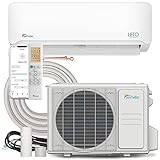
Senville LETO Series 12,000 BTU
Value Ductless, 9k-24k BTU
Senville built its reputation on a simple proposition: most of the performance of a premium mini split for close to half the equipment cost, and in the applications most people are actually shopping for — a garage, a workshop, a converted attic, a bonus room over the garage — that trade is easy to accept. The LETO's 21.5 SEER2 rating is not a marketing figure with an asterisk; it is genuinely efficient equipment, and heating operation rated to -22 degrees F outperforms plenty of systems costing considerably more. In our shop installation it held setpoint through a week of single-digit weather without drama. Packaging matters more than it sounds. The line set, wall bracket, and controller are all in the box, which avoids the quotation games where a cheap headline price grows by several hundred dollars of accessories. And because these are ordinary flare-fitting systems, any HVAC contractor can install one — labor quotes come back at normal rates rather than the premium some brands attract. The weakness is support rather than hardware. There is no dealer network: a warranty claim means contacting Senville, receiving a part, and finding an independent contractor willing to fit somebody else's component. For a conditioned garage that is an acceptable risk. For the system heating your primary living space through a northern winter, the premium brands' service infrastructure is worth what it costs.
Pros
- Roughly half the equipment cost of the premium brands with a 21.5 SEER2 rating that is genuinely competitive
- Heating rated to -22 degrees F, which is unusual at this price point
- Includes the line set, wall bracket, and remote in the box — fewer surprise line items
- Straightforward for an HVAC contractor to install, so labor quotes come in normal rather than inflated
- Five-year compressor warranty that Senville has a decent record of honoring
Cons
- No dealer service network — warranty work means shipping parts and finding a willing independent contractor
- Indoor head plastics and fan noise are clearly a tier below the Japanese brands
The Bottom Line
The sensible budget choice for a garage, shop, addition, or spare bedroom, where absolute refinement matters less than cost per BTU.
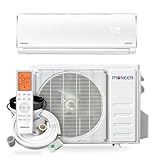
Pioneer Diamante Ultra 9,000 BTU
Budget Ductless, 9k-36k BTU
Pioneer occupies the bottom of the range where we would still put our name on a recommendation, and the Diamante Ultra is a straightforward, well-built unit for the job most buyers actually have: making one room comfortable. In cooling it performs close to units costing twice as much, because cooling is the easier half of the problem, and it runs quietly enough that we would happily put one in a bedroom. Parts availability is unusually good for a value brand — Pioneer has been in the North American market long enough that boards, sensors, and remotes are easy to source, which is not true of every inexpensive brand on the shelf. The flare-fitting design means any HVAC contractor can install or service it without brand-specific training, keeping labor cost and future service both ordinary. The limitation is heating in genuine cold. Output falls off noticeably below about 5 degrees F, which is fine in the South or the Pacific Northwest, and not fine as the primary heat source for a room in Vermont. The two-year compressor warranty is also well behind the ten- and twelve-year coverage the premium brands offer, and that gap tells you honestly what the manufacturer expects. Buy it for a sunroom, a home office, a garage in a moderate climate, or supplemental cooling — applications where it is excellent value. Do not buy it as a furnace replacement.
Pros
- The lowest cost per BTU of anything we would actually recommend installing
- Widely stocked with genuinely good parts availability for a value brand
- Compact 9,000 BTU size is right for the single-room applications most buyers actually have
- Simple flare-fitting design that any HVAC contractor can install or service
- Cooling performance and quiet operation are both better than the price suggests
Cons
- Cold-climate heating falls off sharply below about 5 degrees F — this is not a primary winter heat source up north
- Two-year compressor warranty is well short of the category standard
The Bottom Line
Good honest equipment for cooling and shoulder-season heating in a single room. Do not ask it to be your furnace in Minnesota.
4. Sizing: The Mistake That Ruins Good Equipment
Oversizing is the single most common mini split error, and it is counterintuitive because with most appliances more capacity is harmless. Here it is not. An oversized unit satisfies the thermostat quickly, shuts down, and never runs long enough to pull moisture out of the air, leaving a room that is cold and clammy — and it cycles the compressor far more than it should.
| Room Size | Typical BTU | Notes |
|---|---|---|
| 150-350 sq ft | 9,000 | Bedroom, office, sunroom |
| 350-550 sq ft | 12,000 | Two-car garage, large bedroom |
| 550-800 sq ft | 18,000 | Open-plan living area |
| 800-1,200 sq ft | 24,000 | Whole small apartment or shop |
Adjust upward for an uninsulated garage, a room with a large west-facing window wall, a vaulted ceiling, or a top floor under a hot roof. Adjust downward for a well-insulated, shaded, single-story space. If the room falls between two sizes and is well insulated, take the smaller one — a unit running longer at lower output is both more comfortable and more efficient than one that short-cycles.
5. Cold-Climate Performance and the Specs That Matter
The rated-capacity temperature is the spec that matters most in the north, and it is the one manufacturers bury. Every heat pump produces less heat as it gets colder. What separates a cold-climate system is how far down it holds full capacity. A unit that delivers 100 percent of rated output at 5 degrees F is a heating system; one that derates to 60 percent at 20 degrees F is a supplement that will leave you running expensive backup heat all winter.
HSPF2 measures heating efficiency across a season, and SEER2 measures cooling efficiency. Both matter, but the gap between a good unit and an excellent one is smaller in dollars than buyers assume: moving from 18 to 22 SEER2 on a single zone typically saves $40 to $90 a year depending on climate and electricity rate. Do not pay a thousand dollars for four points of SEER2 on a garage.
Defrost strategy is the underrated spec. In humid cold weather the outdoor coil frosts, and the system must periodically reverse to melt it, during which it is briefly blowing cool air indoors. Better systems defrost on demand using coil sensors rather than on a fixed timer, which means fewer interruptions and less wasted energy. Ask specifically; it is rarely on the brochure.
Base pan heaters and mounting height decide whether the outdoor unit survives snow country. Melt water refreezing in the base pan is a common failure, and an outdoor unit mounted at grade in a region that gets three feet of snow will be buried. Wall brackets or a tall stand plus a base pan heater are not accessories in the north; they are the install.
6. Installation, Permits, and What It Really Costs
A conventional mini split installation requires handling refrigerant, which legally requires EPA Section 608 certification — that is the barrier, not the difficulty of the work. The installer mounts the head, drills a three-inch penetration, runs the line set and condensate drain, pulls a vacuum on the lines to remove air and moisture, releases the factory charge, and commissions the system. A good vacuum is the step that determines whether the compressor lasts fifteen years or five.
| Line Item | Typical Range |
|---|---|
| Equipment, single zone | $800-$3,500 |
| Installation labor | $1,200-$3,000 |
| Dedicated 240V circuit | $400-$1,200 |
| Pad, brackets, line hide | $150-$500 |
| Permit and inspection | $100-$400 |
Two cost notes. Heat pumps frequently qualify for federal efficiency tax credits and for state or utility rebates that can be worth more than the federal credit — check your utility's program before choosing equipment, because rebates are usually tied to specific efficiency thresholds and sometimes to specific model lists. And get the electrical assessed early: a house with a full panel may need a subpanel or service work that costs more than the mini split.
7. What It Costs to Run
A 12,000 BTU mini split draws roughly 700 to 1,100 watts while actively cooling and rather less once the space is at temperature and the inverter has throttled back. At 16 cents per kilowatt-hour, cooling a 400-square-foot room through a hot summer month costs in the region of $25 to $40 — meaningfully less than a window unit doing the same job, because the window unit cycles on and off at full draw instead of modulating.
Heating is where the arithmetic gets interesting, and where the comparison depends entirely on what you are replacing. Against electric resistance heat, a mini split costs roughly a third as much to run, and the payback on the equipment is often two to four winters. Against natural gas at typical prices, the running cost is broadly comparable, and the case for the mini split is cooling, zoning, and not having a flue — not fuel savings. Against propane or heating oil, the heat pump usually wins clearly.
One real-world factor that spreadsheets miss: because a mini split is cheap to run and quiet, people use it. Rooms that were previously heated to 60 degrees and tolerated end up at 68 degrees and comfortable, and the bill does not fall as far as the efficiency math predicted. That is not a failure of the equipment; it is comfort you were previously going without, and most owners consider it the point.
8. Maintenance That Actually Matters
Mini splits ask for very little, but the little they ask for is not optional, and neglect shows up as a smell before it shows up as a fault.
Wash the indoor filters every month during heavy use — they pull out and rinse under a tap in two minutes, and a clogged filter costs efficiency immediately. Once a year, clean the blower wheel and evaporator coil or have it done; the wheel accumulates a biofilm that is the source of the musty smell people associate with mini splits, and it is the single most common complaint about otherwise healthy systems. Keep the condensate drain clear, because a blocked drain overflows onto the wall below the head.
Outside, keep the coil clear of leaves and grass clippings, keep at least a foot of clearance on all sides, and in snow country make sure the unit is mounted high enough to stay above drift line. Once every couple of years, a technician should verify refrigerant charge and check the electrical connections — a slow leak degrades performance gradually enough that owners adapt to it without noticing until the system stops heating properly in January.
9. Frequently Asked Questions
What is the best mini split heat pump in 2026?
The Mitsubishi Electric M-Series Hyper-Heat is our overall pick because it holds full heating capacity to 5 degrees F, runs at 19 dB indoors, and is backed by the strongest dealer network in the category. For DIY installation, the MRCOOL DIY 4th Gen is the only mainstream system a homeowner can legally install without EPA certification. For cold-climate value, the Daikin Aurora delivers most of the Mitsubishi's capability for less.
How much does it cost to install a mini split?
A professionally installed single-zone system typically runs $3,000 to $6,500 depending on brand and site difficulty, of which $1,200 to $3,000 is labor. A DIY system like the MRCOOL costs $1,200 to $2,200 including an electrician for the circuit. Multi-zone whole-house conversions with three to five heads generally land between $9,000 and $20,000 installed.
Can a mini split heat a house in winter?
A cold-climate rated model can, and increasingly does. The specification to check is the temperature at which the unit still delivers 100 percent of rated heating capacity — the best systems hold full output at 5 degrees F and keep producing usable heat to around -13 degrees F. Budget units derate sharply below freezing and should be treated as supplemental heat in northern climates.
Can I install a mini split myself?
Only a DIY-specific system with a pre-charged quick-connect line set, such as the MRCOOL DIY series. Conventional mini splits require pulling a vacuum on the refrigerant lines and handling refrigerant, which legally requires EPA Section 608 certification. You will still want a licensed electrician for the dedicated 240V circuit, and most jurisdictions require a permit either way.
What size mini split do I need?
Roughly 9,000 BTU for 150-350 square feet, 12,000 BTU for 350-550, 18,000 BTU for 550-800, and 24,000 BTU for 800-1,200. Size up for uninsulated garages, vaulted ceilings, or large west-facing glass; size down for well-insulated, shaded spaces. When a room falls between sizes, choose the smaller one — oversized units short-cycle and leave rooms cold and humid.
Are mini splits cheaper to run than central air?
Usually yes, for two reasons. Inverter compressors modulate instead of cycling at full power, and ductless delivery avoids the 20 to 30 percent of conditioned air that typical duct systems lose to leakage and to unconditioned attics and crawlspaces. The exception is a multi-zone system running a single small zone, where part-load efficiency is poor.
How long do mini splits last?
Premium Japanese-brand systems commonly reach 15 to 20 years with annual maintenance, and carry 10 to 12-year compressor warranties that reflect that. Value brands more typically last 10 to 15 years. Installation quality matters as much as brand: a poor vacuum on the line set at commissioning leaves moisture in the system and is the most common cause of early compressor failure.
10. Common Mini Split Buying Mistakes
Mini splits are reliable equipment that fails most often for reasons chosen at the quoting stage rather than built into the hardware.
Oversizing the Unit
It is the most common error and it produces exactly the wrong result: a room that cools quickly, shuts off, never dehumidifies, and feels clammy, while the compressor cycles far more than it was designed to. Size to the room, and when in doubt on a well-insulated space, go smaller.
Choosing on SEER2 Instead of Cold-Climate Rating
Efficiency ratings are measured in mild conditions. If you are heating with the unit in a real winter, the temperature at which it still delivers full rated capacity matters far more than four points of SEER2 — and a high-SEER2 unit that derates at 20 degrees F will cost you more to run than a slightly less efficient cold-climate model.
Skipping the Vacuum, or Hiring Someone Who Does
Evacuating the line set to remove air and moisture before releasing the charge is the step that determines compressor life, and it is invisible on the finished job. Ask any installer what micron level they pull down to and how long they hold it. If the answer is vague, keep calling.
Mounting the Outdoor Unit at Grade in Snow Country
A unit sitting on a pad at ground level will be buried by drifting snow and will sit in its own defrost melt water. In any region with sustained snow, mount it on wall brackets or a tall stand, well above the typical drift line, and insist on a base pan heater.
Ignoring the Annual Coil and Blower Cleaning
The musty smell people associate with mini splits is biofilm on the blower wheel and evaporator coil, and it is entirely preventable. One cleaning a year keeps the system smelling neutral and running at rated efficiency; three years of neglect requires a deep clean that costs several hundred dollars.
Related Home Comfort Guides
Buyer's Guide
Best Tankless Water Heater
The other high-ticket efficiency upgrade, with the same install caveats.
Buyer's Guide
Best Whole House Fan
Cheap cooling for climates with cool nights, and where it beats AC.
Buyer’s Guide
Best Basement Dehumidifier
Humidity control below grade, where a mini split alone is not enough.
The Bottom Line
The best mini split heat pump for you comes down to one question: is this equipment heating a space through a real winter, or making a room comfortable in mild weather? For the first, the Mitsubishi Hyper-Heat is the benchmark and the Daikin Aurora is the value route to nearly the same capability. For the second, the Senville LETO and Pioneer Diamante deliver most of the comfort for a fraction of the money.
And if you are handy, the MRCOOL DIY remains the single biggest cost saving available in home HVAC — around $2,500 of labor for a weekend of careful work. Whichever you choose, size it to the room rather than up a notch, and ask the installer how deep a vacuum they pull. Those two decisions determine whether the system is still working well in year fifteen.
More in Home Improvement
Guides in this category that pair with what you just read.
About the Author
Alex Rivers, Home Improvement Editor
Alex has spent over a decade working on residential and light commercial property maintenance, and now tests every tool, coating and machine that appears in these guides personally.