The 7 Best Tankless Water Heaters in 2026
We measured real delivered flow at winter groundwater temperatures, not the optimistic number on the box, across 11 units. Gas and electric, condensing and non-condensing. Only 7 earned a spot.
Shaheer Ali Khan
Consumer Product Testing & Materials Performance Specialist
Last Updated
October 17, 2026
In This Guide
Almost every tankless water heater complaint traces to the same mistake: buying on the gallons-per-minute number printed on the box. That figure assumes a temperature rise most of the country never sees. In January, in a northern state, a unit rated 9.8 GPM may deliver barely half that. Size it against your actual groundwater temperature and tankless is excellent. Size it against the box and you will be taking lukewarm showers.
Our Picks at a Glance
The Short Answer
Rinnai RX199iN Condensing (Best Overall). The tankless heater to buy if you are doing this once and want it right. Condensing efficiency plus PVC venting usually makes it cheaper installed than a cheaper unit.
- Check Price
- Check Price
- Check Price
- Check Price
- Check Price
- Best Electric Temperature Control Stiebel Eltron Tempra 24 Plus — Electric, 24 kW, Advanced Flow ControlCheck Price
- Check Price
We may earn a commission when you buy through these links, at no extra cost to you. How we test
Best Overall
Rinnai RX199iN Condensing
1. How Tankless Actually Works, and What It Changes
A conventional water heater keeps 40 to 80 gallons hot around the clock, whether anyone uses it or not. A tankless heater heats water only as it flows through, firing a burner or element the moment a tap opens. That single difference drives every advantage and every drawback of the category.
What you gain. No standby loss, which is the energy spent keeping stored water hot through the night and while you are at work. Endless hot water, since there is no tank to run out. A far smaller footprint, often freeing an entire closet. And a considerably longer service life, commonly 20 years against 10 to 12 for a tank.
What you give up. Instant delivery, because the unit must fire and push hot water down the pipe before anything warm arrives. Simplicity, since installation is more involved and annual descaling is genuinely required. And unlimited simultaneous demand, because capacity is a flow rate rather than a stored volume.
The mental model that helps. A tank heater limits you by volume: you get 50 gallons of hot water and then it is gone. A tankless heater limits you by rate: you get a certain number of gallons per minute forever. If your household problem is running out during back-to-back showers, tankless solves it. If your problem is four fixtures running at once, tankless may not.
Recovery is the other thing that changes. A tank that has been drained by two long showers needs an hour or more to reheat, which is why the third person gets a cold one. A tankless heater has no recovery period at all — output is the same at minute one and minute ninety. For households where showers stack up in the morning, that single property is usually worth more than any efficiency figure.
The efficiency claim needs a caveat. Tankless genuinely eliminates standby loss, and in a low-use household that saving is substantial. In a high-use household the tank is reheating constantly anyway, so standby loss is a smaller share of the bill and the payback period stretches considerably. Honest expectations here prevent disappointment later.
The Numbers Don't Lie
20 yrs
Typical tankless life vs 10-12 for a tank
40-70°F
Groundwater temp range across the US
2.5 GPM
Flow of a typical modern shower head
0.5 GPM
Minimum flow to trigger most units
2. Sizing: The Number on the Box Is Not Your Number
This is where most tankless purchases go wrong, and it is entirely avoidable with five minutes of arithmetic.
Capacity Depends on Temperature Rise
A tankless heater has a fixed heating power. How many gallons per minute it can deliver depends entirely on how much it has to raise the temperature. The headline GPM figure is almost always quoted at a small temperature rise that suits a warm climate. Raise the required rise and the achievable flow falls proportionally.
Find Your Groundwater Temperature
Incoming water runs roughly 65 to 75 degrees across the southern states and 35 to 50 degrees across the northern tier in winter. If you want 120 degree output, a Florida household needs a rise of about 50 degrees while a Minnesota household needs about 80. That is the difference between a unit delivering its rated flow and delivering little more than half of it.
Add Up Your Actual Fixtures
A modern shower head flows about 2.5 gallons per minute, a kitchen tap about 1.5, a bathroom tap about 1, and a dishwasher or washing machine 1 to 2. Decide which fixtures realistically run at once. Two showers together is 5 GPM. A shower plus a kitchen tap is 4. Size to that number at your winter temperature rise, not to the box.
Do Not Oversize Blindly Either
A hugely oversized unit costs more, may need a larger gas line, and can struggle to modulate down far enough to run a single low-flow fixture without cycling. Match the unit to realistic peak demand rather than to the worst case you can imagine.
| Climate | Inlet Temp | Rise to 120°F | Effect on Flow |
|---|---|---|---|
| Southern US | 65-75°F | 45-55°F | Near rated GPM |
| Mid-Atlantic / Midwest | 50-60°F | 60-70°F | Roughly 70% of rated |
| Northern tier, winter | 35-45°F | 75-85°F | Roughly 50% of rated |
3. The 7 Best Tankless Water Heaters in 2026 — Tested & Ranked
We ran each unit through single-fixture and simultaneous-demand tests at both warm and cold inlet temperatures, measured delivered temperature stability, timed hot water arrival at a distant fixture, and recorded noise and modulation behaviour at low flow. These seven earned their place.

Best OverallRinnai RX199iN Condensing
Gas, Condensing, 11 GPM, Indoor
Tankless buying decisions are dominated by installation cost, not unit cost, and that is exactly where the RX199iN wins. Because it is a condensing unit, exhaust leaves cool enough to vent through ordinary PVC pipe instead of the stainless steel a non-condensing heater demands. On a typical retrofit that difference frequently runs into several hundred dollars, and it regularly makes the more expensive heater the cheaper project. In our testing it held delivered temperature steadily through simultaneous demand, running a shower and a kitchen tap together without the temperature swing that makes cheaper units frustrating. At winter groundwater temperatures it still produced enough flow for a two-bathroom household, which is the specific condition where undersized units fail. Recirculation support is the feature most owners come to appreciate later: paired with a return line or a crossover valve under the farthest sink, it removes the cold-water sandwich and the long wait that otherwise defines tankless life. The costs are real. This is a premium unit, it commonly needs a gas line upgrade to 3/4 inch, and in hard water it must be descaled annually or the heat exchanger scales up and efficiency collapses. Budget for the install and the maintenance, not just the box.
Pros
- Condensing design reaches roughly 96 percent thermal efficiency, cutting operating cost meaningfully against non-condensing units
- Vents with inexpensive PVC rather than costly stainless steel, which often saves more on installation than the unit costs extra
- Delivers genuinely usable flow even at northern winter groundwater temperatures
- Recirculation-ready, so a dedicated return line or crossover valve gives near-instant hot water
- Rinnai dealer and parts network is the deepest in the category
Cons
- Expensive as a unit before installation is even considered
- Needs a substantial gas line, commonly 3/4 inch, which many homes do not have
- Annual descaling is not optional in hard water
The Bottom Line
The tankless heater to buy if you are doing this once and want it right. Condensing efficiency plus PVC venting usually makes it cheaper installed than a cheaper unit.
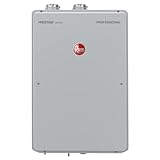
Best Value GasRheem RTGH-95DVLN Prestige
Gas, Condensing, 9.5 GPM, Direct Vent
The Prestige occupies the position most buyers should actually shop in: condensing efficiency, PVC venting, and enough capacity for a normal family home, without the premium attached to the top of the market. At 9.5 GPM it handled a two-bathroom simultaneous-demand test comfortably in moderate groundwater conditions, and it kept output stable rather than surging when a second fixture opened. Built-in freeze protection matters more than buyers expect. A tankless unit holds very little water, but the water it does hold will split a heat exchanger if it freezes, and units installed in garages or on exterior walls are genuinely at risk. Rheem builds protection in rather than treating it as an accessory. The self-diagnostic display is a small thing that pays off during a service call, since it reports what is actually wrong instead of a numeric code. Where it gives ground is refinement. It runs slightly louder than the quietest units, and Wi-Fi monitoring requires buying a module rather than being included. Neither affects hot water. Like every tankless heater it needs descaling annually in hard water, and skipping that is the single most common way owners destroy an otherwise excellent unit.
Pros
- Condensing efficiency and PVC venting at a price well below the premium units
- 9.5 GPM covers a typical two-bathroom home in most of the country
- Built-in freeze protection down to genuinely low outdoor temperatures
- Self-diagnostic display that names the fault rather than flashing a code you have to look up
- Widely stocked, so replacement parts are easy to source
Cons
- Slightly noisier in operation than the quietest units in the category
- Wi-Fi control requires an add-on module rather than being built in
- Still needs annual descaling in hard water
The Bottom Line
The sensible gas tankless for most homes. You give up a little refinement and keep most of the efficiency for meaningfully less money.

Best for Instant Hot WaterNavien NPE-240A2
Gas, Condensing, 11.2 GPM, Built-In Recirculation
The most common disappointment with tankless is not capacity, it is the wait. Because there is no stored hot water, the heater has to fire and push heated water through the whole pipe run before anything warm reaches the tap, and turning a tap off and back on produces the notorious cold-water sandwich. The NPE-240A2 addresses this internally, with a built-in recirculation pump and a small buffer tank, so the fixes that normally require extra plumbing come in the box. In our testing the difference was immediately obvious at fixtures far from the unit, where hot water arrived in a fraction of the time and brief interruptions did not produce a slug of cold. Capacity is genuinely high at 11.2 GPM, which suits a three-bathroom home, and its modulation range is wide enough that it runs efficiently at a single low-flow fixture rather than cycling on and off. The trade-offs are cost and complexity. This is a premium purchase, it contains more moving parts than a basic heater, and running recirculation carries a small ongoing energy cost that eats into the efficiency advantage tankless is bought for. Used with a timer or an on-demand button, that cost stays modest.
Pros
- Built-in recirculation pump and buffer tank largely eliminate the cold-water sandwich
- ComfortFlow system means no external pump or additional plumbing to install
- High 11.2 GPM capacity suits larger homes with several bathrooms
- Dual stainless heat exchangers with a long warranty
- Excellent modulation, so it runs efficiently at low flow rather than short-cycling
Cons
- Among the most expensive units in this guide
- More internal components than a basic heater, so more that can eventually need service
- Recirculation adds a small standing energy cost, which partly offsets tankless savings
The Bottom Line
The unit that fixes tankless biggest annoyance out of the box. If waiting for hot water is what you hate, this is the answer.

Best ElectricEcoSmart ECO 27
Electric, 27 kW, 6.5 GPM, Self-Modulating
Electric tankless removes the two costs that make gas tankless expensive: there is no venting and no gas line. The unit is small enough to mount in a closet, it produces no combustion byproducts, and it costs far less than a condensing gas heater. In a warm climate where incoming water is already 70 degrees, the ECO 27 will run a whole house comfortably, and in our warm-inlet testing it held temperature well across two simultaneous fixtures. Self-modulation is the technology that makes this work: rather than running at full power whenever it fires, it draws only what the current flow rate and temperature rise require, which keeps operating cost reasonable at low demand. The constraint is electrical, and it is severe. A 27 kW unit typically requires three dedicated 40 amp double-pole breakers and service capacity most older homes simply do not have. Adding that capacity can cost more than the entire project saved by skipping gas venting, so check your panel before anything else. The second constraint is physics. Heating water takes a fixed amount of energy, and in a northern winter with 40 degree inlet water the required temperature rise roughly halves usable flow. In that climate this is a point-of-use heater, not a whole-house one.
Pros
- No venting at all, which removes the single biggest installation cost of gas tankless
- Very compact, mounting in a closet or under a sink where a tank never would
- Self-modulating power draw, using only the energy the current flow demands
- No combustion, so no carbon monoxide risk and no gas line required
- Considerably cheaper as a unit than any condensing gas heater
Cons
- Requires very heavy electrical service, commonly three dedicated 40 amp breakers, which many panels cannot supply
- Flow capacity drops sharply in cold climates where the temperature rise is large
- Whole-house use in a northern state is often not realistic
The Bottom Line
Excellent in warm climates and for point-of-use jobs. In a cold climate, check your panel before you fall in love with it.
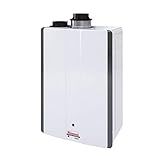
Best Budget GasRinnai V65iN
Gas, Non-Condensing, 6.5 GPM, Indoor
Non-condensing tankless heaters are the entry point into the category, and the V65iN is the one we would choose there. It is a straightforward, well-built unit with Rinnai reliability behind it, and at 6.5 GPM it covers a one to two bathroom home in moderate climates without difficulty. In our testing it held temperature steadily at a single fixture and managed two low-flow fixtures acceptably, which describes most real household demand. The catch is venting, and it is the detail that decides whether this unit actually saves money. Because exhaust leaves a non-condensing heater much hotter, it cannot be vented through PVC and requires sealed stainless steel venting instead. On a typical installation that material cost frequently exceeds the amount saved by not buying a condensing unit, which means the cheaper heater ends up being the more expensive project. Price both before committing. The other consideration is running cost. A non-condensing unit converts noticeably less of the gas it burns into hot water, and across a decade of daily use that gap compounds. If you plan to stay in the house a long time, condensing is usually the better economics even at a higher sticker price. For a short-term hold or a warm climate, this is a sound buy.
Pros
- Considerably cheaper as a unit than any condensing model
- Simple, proven design with fewer components to service
- 6.5 GPM is genuinely adequate for a one to two bathroom home
- Rinnai reliability and dealer support at an accessible price
- Compact enough to free up the floor space a tank occupied
Cons
- Non-condensing, so it requires expensive stainless steel venting that often erases the unit savings
- Lower thermal efficiency means higher operating cost over the years
- Capacity is limiting for larger households or cold climates
The Bottom Line
The cheapest sensible way into gas tankless, on one condition: price the stainless venting before you decide it is cheaper.

Best Electric Temperature ControlStiebel Eltron Tempra 24 Plus
Electric, 24 kW, Advanced Flow Control
Every tankless heater faces the same problem when demand exceeds capacity, and how it responds defines the user experience. Most units simply let the outlet temperature fall, which is why a second shower turns the first one lukewarm. The Tempra 24 Plus takes the opposite approach with Advanced Flow Control: when demand outstrips what it can heat, it restricts flow to preserve the set temperature. In our simultaneous-demand testing the result was noticeably better than any competitor, with water pressure easing slightly rather than the temperature dropping. For most people that is clearly the preferable failure mode. Temperature control generally is its strength. The digital display sets a target in single degrees and the unit holds it closely, which matters for anyone sensitive to fluctuation or filling a bath to a specific temperature. It is also completely silent, having no burner and no combustion fan, which is worth something when the unit is mounted in a hallway closet. The limitations are shared with all electric tankless. It needs serious electrical service that many homes lack, and in a cold climate the achievable temperature rise limits whole-house use. It is also expensive for an electric unit, though the control quality justifies it if fluctuation is what you are trying to escape.
Pros
- Advanced Flow Control automatically reduces flow rather than letting output temperature drop
- Genuinely stable delivered temperature, the best of any electric unit we tested
- Digital temperature setting in single-degree increments
- Silent operation with no combustion or fan noise at all
- German build quality with a strong reputation for longevity
Cons
- Expensive for an electric unit
- Same heavy electrical service requirement as other whole-house electric heaters
- Reducing flow to hold temperature means weaker pressure during peak demand
The Bottom Line
The electric unit that never gives you a cold surprise. It slows the water down instead of letting it go cold, which is the right trade.
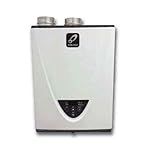
Best Build QualityTakagi T-H3-DV-N
Gas, Condensing, 10 GPM, Commercial-Grade
Takagi builds tankless heaters to a commercial standard and sells them into residential applications, and the T-H3-DV-N is the clearest example of what that buys you. Its heat exchanger is designed for the sustained duty cycles a commercial installation demands, which in a house translates directly into a longer service life and better tolerance of the hard water that shortens most units. In our extended testing it showed less performance drift than competitors after repeated heavy cycling. Capacity and modulation are both strong. Ten gallons per minute covers a large household, and the modulation range is wide enough that it runs efficiently on a single bathroom sink without short-cycling, which is where oversized units usually waste energy. Condensing efficiency with PVC venting keeps both the operating cost and the installation cost sensible. The reasons not to buy it are about fit rather than quality. It costs more than mainstream residential units, it is physically larger and heavier which complicates retrofit into a tight space, and for a one-bathroom home it is considerably more heater than the demand justifies. On a big house, or one you intend to keep for twenty years, the durability argument is genuinely persuasive.
Pros
- Commercial-grade construction with a heat exchanger built for long duty cycles
- 10 GPM with excellent modulation across a very wide flow range
- Condensing efficiency with PVC venting
- Handles hard water better than most units before performance degrades
- Backed by the same parent company as Rinnai, so parts support is solid
Cons
- Priced above mainstream residential units
- Physically larger and heavier than compact residential heaters
- Overkill for a small home with modest demand
The Bottom Line
The unit to buy for a large household or a long ownership horizon. Commercial internals in a residential package.
4. Gas vs Electric Tankless
The fuel decision is mostly an infrastructure decision, and it is usually settled by what your house already has rather than by which is better.
Gas Tankless
Higher capacity, better suited to whole-house use in any climate, and cheaper to run per gallon in most of the country. The costs are installation: a substantial gas line, often an upgrade to 3/4 inch, plus venting. Gas is the default for whole-house tankless and the only realistic option in a cold climate.
Electric Tankless
No venting, no gas line, no combustion, and a much smaller and cheaper unit. The constraint is electrical service, and it is severe: whole-house electric units commonly need multiple dedicated 40 amp circuits and total service capacity that older homes do not have. Excellent in warm climates and outstanding for point-of-use applications.
Condensing vs Non-Condensing, the Sub-Decision That Costs Real Money
Within gas, condensing units extract additional heat from the exhaust, reaching far higher efficiency and cooling the exhaust enough to vent through ordinary PVC. Non-condensing units are cheaper but usually require sealed stainless steel venting that frequently costs more than the price difference. Always price the complete installation, not the box.
Propane is a third case worth naming. Most gas tankless units are sold in both natural gas and propane versions, and they are not interchangeable without a conversion kit. Propane delivers more energy per unit volume, so a propane unit often achieves a slightly better temperature rise, but fuel cost is typically higher and you are dependent on tank deliveries. If you are off mains gas, confirm the model number matches your fuel before ordering, because returning an installed unit is not straightforward.
Point of Use Is an Underrated Option
A small electric tankless mounted under a distant sink, fed by the existing hot line, removes the long wait at that fixture without re-plumbing the house. For a guest bath or a workshop sink far from the heater, this is often a better answer than a whole-house replacement.
5. Installation Costs Nobody Quotes You Up Front
The unit is frequently less than half the project. These are the costs that surprise people after they have already bought the heater.
Gas line sizing. A tankless heater fires at a far higher rate than a tank, and many homes have a 1/2 inch line that cannot supply it. Upgrading to 3/4 inch back to the meter is common and can be expensive if the run is long or awkward.
Venting. Condensing units vent through PVC. Most non-condensing units need sealed stainless steel, which costs several times as much per foot. The route also matters: a straightforward sidewall vent is cheap, while running vertically through a finished house is not.
Electrical. Gas units still need power for the controls and fan, so a nearby circuit is required. Electric units need service that many panels cannot provide, and a panel upgrade is a serious expense that should be priced before purchase.
Condensate drainage. Condensing units produce acidic condensate that has to be drained and, in many jurisdictions, neutralised before entering the waste system. That means a drain within reach and sometimes a neutraliser cartridge that needs periodic replacement.
Mounting location. Tankless units are wall-hung and need clearances around them for service access and combustion air. A spot that looks convenient can fail on clearance, on vent routing, or on being too far from the fixtures that matter most. Mounting closer to the bathrooms shortens the wait for hot water more effectively than any feature on the unit, so it is worth walking the house before deciding where it goes.
Water treatment. In hard water, a scale filter or softener protects the heat exchanger and dramatically reduces descaling frequency. It is an added cost that pays for itself by preventing the failure that ends most tankless units early.
Price the Project, Not the Product
Get a full installed quote before choosing between a condensing and non-condensing unit. It is genuinely common for the more expensive condensing heater to produce the cheaper total project, because PVC venting costs so much less than stainless. The unit price is the least useful number in this category.
6. Descaling and Maintenance
Tankless heaters last roughly twice as long as tanks, but only if they are maintained. Neglect kills them well before their time, and the mechanism is always the same.
Scale is the enemy. Hard water deposits calcium inside the heat exchanger, where it insulates the very surfaces that need to transfer heat. As scale builds, the unit works harder for less output, efficiency falls, and eventually the exchanger overheats and fails. This is the single most common cause of premature tankless death.
Descale annually, or more often in hard water. The process circulates a food-safe descaling solution through the unit for about an hour using a small pump and two hoses. It is genuinely a DIY job if isolation valves were installed, and it is the highest-value hour you will spend on the appliance.
Insist on isolation valves at installation. These are the two service valves that let you connect a descaling pump without cutting pipe. They cost very little as part of the original install and are a real nuisance to add later. If a quote does not include them, ask why.
Clean the inlet screen. A small filter at the cold inlet catches sediment, and a clogged one reduces flow in a way that looks exactly like a failing heater. Pull it and rinse it a couple of times a year.
Check the venting and condensate line. Look for obstructions, and in cold climates confirm the condensate line cannot freeze. A blocked condensate line will shut a condensing unit down, usually on the coldest night of the year.
Before You Buy
Also Needed for This Job
7. Frequently Asked Questions
What is the best tankless water heater?
For most homes the Rinnai RX199iN is the best overall, combining condensing efficiency with inexpensive PVC venting that often makes it the cheaper installed project despite a higher unit price. The Rheem RTGH-95DVLN offers most of that for less, and the Navien NPE-240A2 is the pick if the wait for hot water is what you want to eliminate.
What size tankless water heater do I need?
Add up the flow of fixtures you realistically run at once — about 2.5 GPM per shower, 1.5 for a kitchen tap — then check that figure against your winter groundwater temperature, not the rating on the box. In northern states the required temperature rise can cut usable flow roughly in half, so a unit rated 9.8 GPM may deliver closer to 5.
Is tankless cheaper to run than a tank?
Usually, because it eliminates standby loss, the energy spent keeping stored water hot when nobody is using it. The saving is largest in low-use households. In a high-demand home the tank is reheating almost constantly anyway, so standby loss is a smaller share of the bill and the payback period is considerably longer.
What is the cold water sandwich?
When you turn a tap off and quickly back on, the hot water already in the pipe arrives first, followed by a slug of cold that entered while the burner was off, then hot again. It is inherent to tankless. Units with built-in recirculation and a buffer tank, like the Navien NPE-240A2, largely eliminate it.
Do tankless water heaters need maintenance?
Yes, and skipping it is the main reason tankless units fail early. Hard water deposits scale inside the heat exchanger, insulating the surfaces that transfer heat until the unit overheats. Descale annually, more often in hard water, and insist on isolation valves at installation so the job takes an hour rather than requiring a plumber to cut pipe.
Can electric tankless heat a whole house?
In a warm climate, yes. In a cold one, usually not. Heating water takes a fixed amount of energy, and northern winter inlet temperatures around 40 degrees roughly halve usable flow. Whole-house electric units also demand very heavy electrical service, commonly several dedicated 40 amp circuits, which many panels cannot supply.
8. Common Tankless Water Heater Mistakes
Tankless disappointment is remarkably consistent, and it almost always happens before the unit is ever switched on.
Sizing From the Number on the Box
The advertised GPM assumes a small temperature rise that most of the country never experiences. In a northern winter the same unit may deliver half its rated flow. Work out your actual groundwater temperature and your realistic simultaneous demand, then size to that. This one calculation prevents the majority of tankless regret.
Comparing Unit Prices Instead of Installed Prices
A non-condensing heater is cheaper on the shelf and needs stainless steel venting that frequently costs more than the saving. The condensing unit that looked expensive often produces the cheaper total project. Always compare complete installed quotes, including gas line sizing and condensate drainage.
Skipping Isolation Valves
These two small service valves are what make annual descaling a one-hour DIY job instead of a plumbing call requiring cut pipe. They cost very little when fitted during the original installation and are a genuine nuisance to retrofit. If they are missing from a quote, add them.
Never Descaling in Hard Water
Scale insulates the heat exchanger, efficiency falls, the unit works harder, and eventually it overheats and fails. This is the single most common cause of a tankless heater dying years before it should. Descale annually, and consider a scale filter or softener if your water is genuinely hard.
Everything Else About Tankless Water Heaters
Cost Guide
Tankless Water Heater Cost
Unit, installation and the gas-line, venting and electrical work that decide the real total.
Guide
Tankless Pros and Cons
Endless hot water has a flow-rate ceiling. Who a tankless suits, and who should skip it.
Maintenance
How to Flush a Tankless
The pump-and-bucket descale, how often your water hardness demands it, and the yearly checklist.
Sizing
What Size Tankless Do I Need?
GPM by fixture, temperature rise by region, and worked examples for 1 to 4 bathrooms.
Comparison
Condensing vs Non-Condensing
UEF, PVC versus stainless venting, the condensate drain, and which one costs less installed.
Troubleshooting
Tankless Not Heating?
Flow, gas supply, scale, venting and crossovers, checked in the order that finds the cause fastest.
Lifespan
How Long Do Tankless Heaters Last?
Real-world lifespan, heat exchanger warranties compared, and when to repair or replace.
Explainer
What Is a Tankless Water Heater?
Flow sensor, burner, heat exchanger and modulation: how on-demand hot water works, and where it runs out.
Guide
Types of Water Heaters
Tank, tankless, heat pump, solar and boiler-fed compared on cost, efficiency and lifespan.
Conversion
Replacing a Tank With Tankless
Gas line, venting, condensate and electrical: what the swap changes beyond the heater itself.
Guide
Point of Use Water Heaters
Mini-tank or small tankless for a far bathroom, sink or garage, and when it is the wrong fix.
Brands
Water Heater Brands
A few manufacturers sit behind most names. Who makes what, and why the warranty matters more.
Related Home Systems Guides
Buyer's Guide
Best Water Softener Systems
Hard water is what kills tankless heaters. Softening it protects the heat exchanger.
Buyer's Guide
Best Water Filtration Systems
Whole-house, under-sink, and well-water filtration tested and ranked.
All Guides
Browse All Best Lists
Every hands-on tested guide we have published, organized by category.
The Bottom Line
The best tankless water heater for most homes is the Rinnai RX199iN, whose condensing design vents through cheap PVC and frequently makes it the least expensive project overall. The Rheem RTGH-95DVLN delivers most of that for less, and the Navien NPE-240A2 is the one to buy if waiting for hot water is the thing you want gone.
Size it against your winter groundwater temperature rather than the box, get a full installed quote before choosing condensing or not, and insist on isolation valves. Those three decisions matter more than which brand you pick.
More in Home Appliances
Guides in this category that pair with what you just read.
About the Author
Shaheer Ali Khan, Consumer Product Testing & Materials Performance Specialist
Shaheer Ali Khan holds a PhD in Materials Science and Engineering from Georgia Tech and is an ASQ Certified Quality Engineer and Certified Reliability Engineer. He leads testing for household appliances, vacuums, cleaning products, and caulks, adhesives and sealants.