Best Smokers for Real Backyard Barbecue
Pellet, charcoal bullet, offset and gravity-fed smokers compared on cooking area, fuel and how much babysitting each one asks of you.
Alex Rivers
Home Improvement Editor
Last Updated
October 20, 2026
In This Guide
The best smoker is the one you will actually fire up on a Saturday morning. A pellet grill trades some smoke flavor for set-and-forget convenience, a charcoal bullet gives you deep bark for very little money, and an offset rewards the people who enjoy tending a fire. Pick the fuel and the amount of attention you want to give it first, and the model almost chooses itself.
Our Picks at a Glance
The Short Answer
Weber Smokey Mountain Cooker 22-Inch (731001) (Best Overall). For deep charcoal flavor, big capacity and almost nothing to break, the 22-inch Weber Smokey Mountain is still the smoker to beat.
We may earn a commission when you buy through these links, at no extra cost to you. How we test
Best Overall
Weber Smokey Mountain Cooker 22-Inch (731001)
1. How We Chose
We started with the questions that decide whether a smoker gets used: how much attention it needs, how much it holds, and what kind of flavor it produces. Then we looked for models that have been on the market long enough for owners to report how they hold up, and we checked every figure against the manufacturer's spec sheet or a major retailer listing. Where the numbers disagree, as they often do for cooking area and hopper size, we give both and say where each came from.
We did not lab-test these smokers. What you get here is research: the published capacity, fuel type, temperature range and warranty, plus the trade-offs that owners consistently describe. That is the right foundation for choosing a type, and the type is the decision that matters most. A great pellet grill will disappoint someone who wanted to tend a wood fire, and a great offset will frustrate someone who wanted to set a temperature and go to the pool.
We also kept the list to smokers that fit a normal patio. Commercial reverse-flow pits and trailer rigs are wonderful, but they are a different purchase. Every pick here can be assembled at home, runs on fuel you can buy locally, and costs what most households spend on a serious grill. If you are choosing between a smoker and a grill, read our best charcoal grill guide too, because a kettle with a smoking setup is a capable smoker in its own right.
Finally, we split out electric smokers. They are popular, simple and cheap to run, but they behave differently enough that they deserve their own comparison, which you will find in our best electric smoker guide. This page covers the fuel-burning smokers: pellet, charcoal, offset and gravity-fed.
2. The Five Kinds of Smoker
Pellet grills burn compressed hardwood pellets fed by an auger, with a controller holding the temperature you set. They are the most convenient smoker you can buy and most now offer app control. The trade-off is a cleaner, milder smoke profile than a log or charcoal fire, and the fact that they need power. They suit people who value consistency and want one cooker for smoking, roasting and baking.
Charcoal bullet smokers, like the Weber Smokey Mountain, stack a charcoal ring, a water pan and the cooking grates in a vertical drum. Airflow through the vents sets the temperature. They are cheap, compact and produce excellent bark and smoke ring, but you manage the fire yourself. With a little practice they hold steady for many hours, and they need no electricity.
Offset smokers put the fire in a separate box to the side, so heat and smoke travel across the meat. They give the deepest wood-fired flavor and the most hands-on experience. Entry-level offsets use thinner steel and lose heat in wind and cold; heavier pits hold temperature far better but cost much more. Expect to add fuel every hour or so.
Gravity-fed charcoal smokers load charcoal into a tall hopper that feeds a firebox as it burns, with a fan and controller holding temperature. They give charcoal flavor with pellet-like convenience and can reach searing heat. Kamado grills, the egg-shaped ceramic cookers, are the fifth type: superbly heat-retentive and versatile, though expensive and heavy. Electric smokers round out the field and are covered separately.
| Type | Attention needed | Flavor | Needs power |
|---|---|---|---|
| Pellet | Low | Mild to medium | Yes |
| Charcoal bullet | Medium | Strong | No |
| Offset | High | Strongest | No |
| Gravity-fed charcoal | Low | Strong | Yes |
| Electric | Lowest | Mild | Yes |
3. Our 7 Picks
These picks are researched from manufacturer spec sheets, retailer listings and published owner feedback, not lab-tested by us. Every figure below is attributed to where it came from, and where sources disagree we say so. Electric smokers have their own page: see our best electric smoker picks.
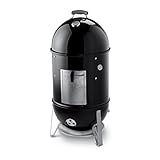
Best OverallWeber Smokey Mountain Cooker 22-Inch (731001)
Charcoal Bullet Smoker
The 22-inch Weber Smokey Mountain is the smoker we would hand most first-time buyers, because it does the core job of low-and-slow barbecue with very little to go wrong. Weber's spec sheet lists 726 square inches of cooking area across two plated-steel grates, which is enough for a couple of full packer briskets or several racks of ribs at once. The design is a simple vertical bullet: charcoal in the bottom ring, a water pan in the middle that buffers temperature swings, and the meat above. Three bottom vents and a lid vent control airflow, and with the minion method a full ring of briquettes will typically hold smoking temperatures for many hours. There is no electronics to fail and no pellets to buy, and replacement parts are widely sold. The trade-off is that you manage the fire yourself, the access door is small, and adding fuel mid-cook means lifting the middle section. Listings give the assembled size at roughly 48.5 inches tall and 23 inches wide, so it fits a small patio.
Pros
- 726 sq in across two grates per Weber's spec sheet
- Water pan buffers temperature for steady low-and-slow cooks
- No electronics, no pellets, simple to maintain
- Small footprint for the capacity
- Long-lived design with easy-to-find parts
Cons
- You manage the charcoal and vents yourself
- Small access door makes refueling awkward
- Lower grate is tight to reach with the upper grate loaded
The Bottom Line
For deep charcoal flavor, big capacity and almost nothing to break, the 22-inch Weber Smokey Mountain is still the smoker to beat.

Best Pellet SmokerTraeger Pro 575
Wi-Fi Pellet Grill
The Traeger Pro 575 is the easiest way to get reliable smoked food without learning fire management. Traeger lists 572 square inches across two porcelain-coated grates (575 in some listings), an 18-pound hopper and a top temperature of 500°F. A D2 controller feeds pellets to hold your set temperature, and WiFIRE lets you check and adjust the grill from the Traeger app, which also holds a large recipe library. A meat probe is included. Because it is a pellet grill, it doubles as an oven-style outdoor cooker for roasts and chicken, but it will not sear like a charcoal grill at full blast. Pellet grills also produce a cleaner, lighter smoke profile than a charcoal or offset pit, which some people prefer and some find mild. The listed weight is about 124 pounds, so it is a fixed patio appliance rather than something you move around. Budget for pellets as a running cost and keep them dry, since wet pellets swell and jam the auger.
Pros
- Set-and-forget temperature control with a D2 controller
- WiFIRE app control and monitoring
- 18 lb hopper per Traeger
- Doubles as an outdoor oven up to 500°F
- Meat probe included
Cons
- Lighter smoke flavor than charcoal or wood
- Needs power and dry pellets
- Not a true searing grill
The Bottom Line
If you want smoked meat with the least effort and like to check your cook from the couch, the Traeger Pro 575 is the safe buy.

Best Large Pellet SmokerRecteq Flagship 1100
Wi-Fi Pellet Grill
The Recteq Flagship 1100 is for households that cook for a crowd. Recteq lists a 40-pound hopper, which means long overnight cooks without refilling, and published spec listings give roughly 1,100 square inches of cooking area (1,109 in total) on stainless steel grates. Those third-party listings put the range at about 180°F to 700°F, which gives it real searing heat for a pellet grill; we could not confirm that range on Recteq's own page, so check it before buying if high-heat cooking matters to you. A Wi-Fi PID controller holds temperature and works with the Recteq app, two temperature probes are included, and a six-year warranty appears in published listings. The size is the main caution: this is a large, heavy cooker that needs a permanent spot and a cover. For two people who smoke a pork butt once a month, it is more grill than you need; for a family that hosts often, the hopper and grate space are the reason to buy it.
Pros
- 40 lb hopper per Recteq for very long cooks
- About 1,100 sq in of cooking area in published listings
- Stainless steel grates
- Wi-Fi PID controller with two probes
- Long warranty in published listings
Cons
- Large and heavy; needs a permanent spot
- Temperature range not confirmed on Recteq's own page
- Overkill for small households
The Bottom Line
For hosts who regularly cook several briskets or a dozen racks at once, the Flagship 1100's hopper and grate space justify its size.

Best Offset SmokerOklahoma Joe's Highland Offset Smoker
Charcoal/Wood Offset Smoker
The Oklahoma Joe's Highland is the most common first offset, and for good reason: it gives you a real stick-burner layout at a price that does not punish you for learning. Oklahoma Joe's lists 619 square inches of primary cooking space in the main chamber plus a 281-square-inch grate over the firebox, and several retailers total it at about 900 square inches. The firebox sits to the side, so smoke and heat travel across the meat before leaving through the chimney, which is where the deep, wood-fired flavor comes from. That layout also means work: you add splits or charcoal every 45 minutes to an hour, manage the intake and chimney dampers, and learn that the end nearest the firebox runs hotter. Owners commonly seal the door and firebox gaps with gasket kits to hold heat better. Its listed assembled size is about 57 inches wide, so measure your patio. Buy it if tending a fire is part of the fun; skip it if you want to set a temperature and walk away.
Pros
- 619 sq in main chamber plus a 281 sq in firebox grate per Oklahoma Joe's
- Authentic wood-fired offset flavor
- Firebox doubles as a small direct grill
- Affordable way into stick burning
Cons
- Needs fuel and damper attention all cook
- Hot spot near the firebox
- Thinner steel loses heat in wind and cold
The Bottom Line
The Highland is the offset to learn on: real smoke flavor and capacity, as long as you enjoy tending the fire.

Best Gravity-FedMasterbuilt Gravity Series 800
Digital Charcoal Smoker and Grill
The Masterbuilt Gravity Series 800 sits between a pellet grill and a charcoal smoker. You load a tall hopper with lump or briquettes, set a temperature on the controller, and a fan feeds the fire as the charcoal drops by gravity. Masterbuilt's international listing gives a 7 kg hopper and a range of about 225°F to 700°F, and one detailed review breaks the cooking space into roughly 450 square inches of main grate and 350 square inches of warming rack. The appeal is charcoal flavor with near-pellet convenience, plus enough heat to sear, and the 800 adds a griddle insert. The trade-offs are that the electronics and fan need power and protection from rain, owners report that ash must be emptied regularly, and the sheet-metal body is not as heat-retentive as a heavy pit. If you like the idea of charcoal taste without vent fiddling, this is the most practical way to get it.
Pros
- Charcoal flavor with a set-and-forget controller
- Range of about 225°F to 700°F per Masterbuilt
- Large hopper for long cooks
- Griddle insert adds flexibility
- Wi-Fi app control
Cons
- Electronics and fan need power and weather protection
- Ash needs regular emptying
- Lighter-gauge body than premium pits
The Bottom Line
For charcoal flavor without babysitting vents, the Gravity Series 800 is the most convenient charcoal smoker you can buy.

Best Pellet FlavorCamp Chef Woodwind Pro 24
Wi-Fi Pellet Grill with Smoke Box
The Camp Chef Woodwind Pro 24 tackles the biggest complaint about pellet grills, which is mild smoke flavor. Its Smoke Box sits beside the fire pot and takes wood chunks, chips or charcoal, so you can add real wood smoke on top of the pellets, and a Fan Only mode allows cold smoking. Retailer listings give a 22 by 19 inch main grid, with one listing citing 429 square inches on the lower rack and 382 on the upper. The grill reaches a listed 500°F, has Wi-Fi control, and Camp Chef offers a three-year warranty on materials and workmanship. The Sidekick attachment port lets you add a propane sear box or griddle. Listings put it at around 182 pounds, so it is a fixed installation. Some sources describe different rack totals for related versions, so check the exact model number. If you want pellet convenience but miss the bark and smoke ring of a wood fire, this is the pellet grill to look at.
Pros
- Smoke Box adds wood chunks or charcoal for stronger flavor
- Cold-smoke Fan Only mode
- Wi-Fi control
- Sidekick port for a sear box or griddle
- Three-year warranty per Camp Chef
Cons
- Heavy at around 182 lb listed
- Rack totals vary by listing and version
- Higher price than basic pellet grills
The Bottom Line
The Woodwind Pro 24 is the pellet grill for people who want convenience without giving up wood-smoke flavor.

Best Budget CharcoalMasterbuilt AutoIgnite Series 545
Digital Charcoal Grill and Smoker
The Masterbuilt AutoIgnite 545 is a smaller, cheaper take on the gravity-fed idea. Masterbuilt lists 545 square inches of cooking space, a 7-pound hopper, a 250°F to 650°F range and a push-button auto-ignition that lights the charcoal for you, with a fold-out warming rack and support for up to four meat probes. Reviewers describe the hopper as good for up to about eight hours of smoking, which covers most pork butts and rib cooks. It weighs about 113.5 pounds per Masterbuilt. The catch is that its listed minimum of 250°F sits above the 225°F that many recipes call for, so it suits hot-and-fast barbecue better than very slow cooks, and reviewers note sparks can escape from the hopper. It carries a one-year warranty. For a buyer who wants charcoal flavor, a thermostat and a grill in one under the price of the bigger Gravity models, it is a sensible start.
Pros
- Push-button auto-ignition
- 545 sq in plus a warming rack per Masterbuilt
- Digital temperature control
- Grills as well as smokes, up to 650°F
Cons
- Listed minimum of 250°F is warm for very slow cooks
- Smaller 7 lb hopper
- One-year warranty; reviewers note hopper sparks
The Bottom Line
The AutoIgnite 545 is the cheapest way to get thermostat-controlled charcoal cooking, best for hot-and-fast barbecue.
4. How Much Smoker You Need
Cooking area is listed in square inches, and it is less useful than it looks. Manufacturers add up every rack, including warming shelves that sit in cooler air and fold-down racks that block the main grate when loaded. The number that matters is the main grate, because that is where large cuts cook evenly. When a listing gives a total, look for the breakdown before comparing models.
As a rough guide, around 400 to 600 square inches of main grate handles a typical family cook: a pork butt and a rack of ribs, or two whole chickens. A full packer brisket is 14 to 18 inches long, so check the grate's depth and width, not just its area. If you regularly cook for 10 or more people, look at 700 square inches or more, or a smoker with two full-size grates like the Smokey Mountain's.
Hopper or fuel capacity matters as much as grate area for long cooks. A brisket can run 12 to 16 hours, and refilling a pellet hopper at 3 a.m. is no fun. A 40-pound hopper like the Recteq Flagship 1100's covers almost any cook; an 18-pound hopper usually covers a long day but may need topping up overnight, depending on the weather and the temperature you hold.
Do not buy more smoker than you need. A big pit takes longer to come up to temperature, burns more fuel to hold it, and is harder to clean and store. Most people cook for four to six, and a mid-size smoker run well beats a large one run badly. If you mostly cook ribs and chicken and only occasionally a brisket, prioritize ease of use over capacity.
5. Fuel, Flavor and Babysitting
Flavor comes from wood smoke, and the cleaner and more controlled the fire, the milder the smoke. That is why pellet grills, which burn small, efficient fires, produce a lighter taste than offsets burning splits. Neither is wrong. Many people prefer the gentler pellet flavor, especially on poultry and fish, and find offset-smoked meat heavy. Taste both if you can before deciding.
You can push a pellet grill toward stronger smoke. Smoke tubes filled with pellets add extra smoke, cooking at lower temperatures for longer increases smoke absorption, and models with a dedicated smoke box, like the Camp Chef Woodwind Pro, let you burn real chunks or charcoal alongside the pellets. These tweaks close much of the flavor gap without giving up the controller.
Babysitting is the hidden cost of flavor. An offset needs a new split every 45 to 60 minutes and constant damper adjustment, especially in wind. A charcoal bullet set up with the minion method, where unlit charcoal sits under a few lit coals, can run 8 to 12 hours with occasional vent tweaks. Pellet and gravity-fed smokers need only a full hopper and a glance at the app.
THE RULE
Pick the attention level first, then the flavor.
If you will not stand by the fire every hour, an offset will produce dry, inconsistent meat no matter how good it is. A smoker you run well beats a better smoker you run badly.
Fuel cost differs too. Pellets typically cost more per cook than charcoal, and premium blends more again. Charcoal bullets are frugal, especially with briquettes. Offsets burn a lot of wood. Over a season, the difference is usually smaller than the purchase-price gap between models, but it adds up if you cook every weekend.
6. Holding 225°F
Most smoking recipes run between 225°F and 275°F, and the job of any smoker is to hold that range steadily for hours. Pellet and gravity-fed smokers do it with a controller and fan. Charcoal and offset smokers do it with airflow: more air through the intake makes a hotter fire, and the chimney or lid vent lets smoke and heat out. Learn to adjust the intake for temperature and leave the exhaust mostly open for clean smoke.
Check the minimum temperature on any smoker with a controller. Some, like the Masterbuilt AutoIgnite 545 with its listed 250°F floor, run warmer than very slow recipes call for. That is fine for hot-and-fast barbecue, which many pitmasters prefer anyway, but it matters if you follow recipes written for 225°F.
Do not trust the dome thermometer. Built-in gauges on charcoal and offset smokers often read well off the temperature at the grate, sometimes by 25°F or more. A dual-probe wireless thermometer, with one probe at grate level and one in the meat, is the single most useful accessory you can buy. Pellet grills with their own probes are more consistent, but a second reading still helps.
Weather changes everything. Wind strips heat from thin steel, rain and cold make a smoker burn more fuel to hold temperature, and direct summer sun can push it higher. Insulated jackets are sold for many pellet and gravity-fed models, and a windbreak helps any smoker. Plan for longer cooks and more fuel in winter.
7. Where to Put It
Every smoker on this list is for outdoor use only. Set it on a level, non-combustible surface, well away from the house, overhangs, fences and anything that can catch an ember. Manufacturer manuals specify minimum clearances, commonly measured in feet rather than inches, and you should follow them. Never use a charcoal or wood smoker in a garage, enclosed porch or tent, because carbon monoxide builds up quickly.
Think about the surface. Grease drips and ash stain concrete and pavers, and smokers leak a little at the seams, especially offsets. A grill mat under the smoker catches most of it. If the patio does get stained, our guides on removing oil stains and the best paver cleaner cover what works, and a pressure washer suited to concrete handles the rest. If you are planning a new patio around an outdoor kitchen, our concrete patio cost guide helps you budget.
Pellet and gravity-fed smokers need power, usually a standard outlet. Use an outdoor-rated, GFCI-protected outlet and keep the cord off the ground in rain. Avoid long, light extension cords; if you must use one, use a heavy outdoor cord and keep the connection dry. The controllers are the most failure-prone part of these smokers, and water is their enemy.
Finally, think about smoke. Your neighbors will smell it. Position the smoker so the prevailing wind carries smoke away from windows and seating, and a clean fire, with thin blue smoke rather than thick white billows, is both better for the food and kinder to the people next door. If you want a social fire for the evening as well, see our best fire pit picks.
8. Cleaning and Upkeep
Empty the ash after every cook on charcoal, offset and gravity-fed smokers. Ash holds moisture, and wet ash against steel causes rust faster than anything else. Pellet grills need the fire pot vacuumed every few cooks, because ash buildup can smother the igniter and, in the worst case, lead to a burnback. Manufacturers give specific intervals in their manuals.
Grease management matters for safety as well as taste. Pellet grills channel grease to a bucket that needs emptying and a drip tray that needs scraping. Built-up grease in the cook chamber can catch fire at high temperatures, which is why manuals recommend regular cleaning and foil or liners on the drip tray. Offsets and bullets collect grease in the water pan or bottom of the chamber.
Do not scrub the inside of a smoker to bare metal. The dark layer of seasoning inside a well-used smoker protects the steel and does no harm to the food. Scrape loose flakes and grease, clean the grates, and leave the rest. Do clean the thermometer probes and the temperature sensor in pellet grills, because a coated sensor reads wrong.
Cover the smoker when it is cool, and store pellets in a sealed, dry container. Pellets that absorb moisture swell into sawdust that jams the auger, which is one of the most common pellet grill failures owners report. Check gaskets, hinges and wheels each season, and keep a spare igniter for a pellet grill in case it fails mid-cook.
9. What It Really Costs
A good charcoal bullet costs a few hundred dollars and almost nothing to run beyond charcoal and wood chunks. Entry offsets cost a similar amount up front but burn more fuel and often need gasket kits and a few upgrades to perform well. Pellet and gravity-fed smokers range from several hundred dollars to well over a thousand, with the price climbing for app control, bigger hoppers and heavier construction.
Add the accessories you will actually need: a dual-probe wireless thermometer, a cover, heat-resistant gloves, a chimney starter for charcoal, and a good knife and cutting board for brisket. For pellet grills, budget for pellets every cook and a sealed bin to store them. These typically add a meaningful amount to the first-year cost, so include them when comparing models.
Warranty and parts support matter more than most buyers think. Pellet grills and gravity-fed smokers have controllers, fans and igniters that can fail, and the brands with long warranties and easy parts ordering save you money and frustration over time. Simple charcoal smokers have little to break, which is part of why the Weber Smokey Mountain remains so popular.
The honest bottom line: spend on the type that suits how you like to cook, not on the biggest grate you can afford. A smaller smoker used every month produces better food than a large one that sits under a cover, and the money you save buys a good thermometer, which will improve your results more than any upgrade to the smoker itself.
10. Common Mistakes to Avoid
Buying an offset when you will not tend the fire
Offsets need fuel and damper attention every 45 to 60 minutes. If you plan to set a temperature and walk away, a pellet or gravity-fed smoker will give you far better results with the time you have.
Comparing total cooking area instead of the main grate
Manufacturers add warming racks and fold-down shelves to the headline number. Compare the main grate's dimensions, and make sure a full brisket fits flat before you buy.
Trusting the lid thermometer
Built-in dome gauges often read well off the grate temperature. A dual-probe wireless thermometer at grate level and in the meat is the most useful thing you can add to any smoker.
Leaving ash and grease to build up
Wet ash rusts steel and grease buildup can catch fire, and a clogged pellet fire pot can cause a burnback. Empty ash after each cook and follow the manual's cleaning schedule.
Storing pellets where they can get damp
Moist pellets swell and jam the auger, one of the most common pellet grill failures. Keep pellets in a sealed bin indoors or in a dry garage.
11. Frequently Asked Questions
What is the best smoker for beginners?
A pellet grill like the Traeger Pro 575 is the easiest way to start, because the controller holds temperature for you. If you want charcoal flavor and do not mind a little vent work, the Weber Smokey Mountain is the classic beginner smoker and teaches good fire management.
Is a pellet smoker or a charcoal smoker better?
Neither is better outright. Pellet smokers are easier and more consistent but produce a milder smoke flavor. Charcoal smokers give stronger flavor and better bark for less money but need more attention. Choose based on how much time you want to spend tending the fire.
How long does a smoker last?
It depends on build and care. Heavy steel and ceramic smokers can last many years, while thin-steel offsets and budget pellet grills often rust or need parts sooner. Emptying ash, covering the smoker and storing it dry extends the life of any model considerably.
Can you use a smoker in the rain?
Charcoal and offset smokers can be used in light rain, but they burn more fuel to hold temperature. Pellet and gravity-fed smokers have electronics that must stay dry, so use a cover designed for operation or a sheltered spot that is still fully open to the air.
What size smoker do I need for a family of four?
Around 400 to 600 square inches of main grate is plenty for a typical family cook, such as a pork butt and a rack of ribs. Check that a full brisket fits the grate's length if you plan to cook one.
Do I need a water pan in my smoker?
Water pans help stabilize temperature and add humidity, which is why bullet smokers like the Weber Smokey Mountain use one. Many pellet and offset cooks skip it. It is a useful tool on charcoal smokers, especially for beginners learning to hold steady heat.
Is an electric smoker as good as a pellet smoker?
Electric smokers are simpler and cheaper but produce less smoke flavor and no real bark at low temperatures. Pellet smokers burn wood and give more flavor. See our best electric smoker guide if simplicity and price are your priorities.
Related Outdoor Cooking Guides
Buyer's Guide
Best Electric Smokers
Plug-in smokers for set-and-forget cooks, compared on capacity, wattage and wood chip loading.
Buyer's Guide
Best Charcoal Grills
Kettles and barrel grills that sear and smoke, picked for build, airflow and ash handling.
Buyer's Guide
Best Fire Pits
Wood-burning and smokeless fire pits for the patio, compared on size, smoke and safety.
The Bottom Line
The best smoker for most people is the 22-inch Weber Smokey Mountain: big capacity, deep charcoal flavor and almost nothing to break. If you would rather set a temperature and walk away, the Traeger Pro 575 is the easy pellet pick, and the Masterbuilt Gravity Series 800 gives you charcoal taste with the same convenience.
Decide how much time you want to spend with the fire before you decide on a model, buy a good dual-probe thermometer, and keep your fuel dry. Those three choices matter more than any spec on the box.
More in Outdoor Living
Guides in this category that pair with what you just read.
About the Author
Alex Rivers, Home Improvement Editor
Alex has spent over a decade working on residential and light commercial property maintenance, and now tests every tool, coating and machine that appears in these guides personally.