Best Charcoal Grills Kettles and Kamados Compared
Seven charcoal grills chosen on how well they hold heat, how easy they are to light and clean, and how long they last, from a classic kettle to a kamado that smokes all day.
Alex Rivers
Home Improvement Editor
Last Updated
October 20, 2026
In This Guide
The best charcoal grill for most people is still a 22-inch Weber kettle. It sears, roasts and smokes well, it is easy to learn on and it costs a fraction of a premium grill. Buy a kamado only if you want to smoke for hours at a time and are happy with the weight and price that come with heavy insulation. Everything else on this page is a variation on those two ideas, and the right choice depends far more on how you cook than on which brand you pick.
Our Picks at a Glance
The Short Answer
Weber Original Kettle Premium 22" Charcoal Grill (Best Overall). If you want one charcoal grill that sears, smokes and roasts without fuss, the Weber Original Kettle Premium is still the default answer.
We may earn a commission when you buy through these links, at no extra cost to you. How we test
Best Overall
Weber Original Kettle Premium 22" Charcoal Grill
1. How We Chose
A charcoal grill is one of the simplest things you can buy for a backyard, which is exactly why the category is full of grills that look the same and cook very differently. A thin, leaky bowl burns through charcoal and swings in temperature every time the wind changes. A well-sealed kettle or kamado holds heat steadily, uses less fuel and gives you real control over whether you are searing at 600 degrees or smoking at 250. So we did not start from a list of bestsellers; we started from what makes charcoal cooking easy or frustrating, and looked for the grills that get those basics right.
Every grill on this page is a real, currently sold model, and every figure we quote comes from the manufacturer's spec sheet or a retailer listing, attributed where we use it. We did not lab-test these grills, and we do not publish scores we did not measure. Where listings disagreed, as they did on weights and some dimensions, we say so on the card. Prices move constantly in this category, especially around spring and holiday sales, so treat any price as a snapshot and check the listing you buy from.
We weighted four things above everything else. First, how well the grill holds and adjusts temperature, which comes down to how it is sealed, insulated and vented. Second, cooking area in practical terms: whether the grate fits the food you cook for the people you cook for. Third, how easy it is to light, add fuel to and clean, because a grill that is a chore gets used less. Fourth, durability and support: the material of the bowl, the warranty and how easy it is to buy parts five years from now.
That left two clear families. Kettles, led by Weber's 22-inch designs, are the most versatile and forgiving way into charcoal cooking. Kamados, ceramic or insulated steel, cost more and weigh more but hold low temperatures for many hours on a single load of fuel. We picked the strongest options in each, plus one budget kamado for people who want to try the style without the investment.
2. Kettle, Kamado or Barrel: The Three Shapes
A kettle grill is a round bowl with a domed lid and adjustable vents top and bottom. The shape reflects heat back onto the food, so it roasts as well as it grills, and the vents give enough control for two-zone cooking: coals banked on one side for searing, food on the other side for gentle indirect heat. Kettles are light, relatively cheap and forgiving, and a 22-inch kettle is big enough for most families. Their limitation is insulation. A thin steel bowl loses heat in wind and cold, so long smokes need more fuel and more attention.
A kamado is a thick-walled egg-shaped cooker, traditionally ceramic, that seals tightly and insulates heavily. That combination means very little air gets in, so the charcoal burns slowly and the temperature barely moves once it settles. Retailers list the Kamado Joe Classic III at up to 12 hours of low-and-slow cooking on one load. The same insulation that holds 225 degrees overnight can also reach 700 degrees and more for searing. The drawbacks are weight, price and patience: a ceramic kamado can weigh 160 to 280 pounds and takes longer to come down if you overshoot your target temperature.
Barrel grills, the long horizontal drums with a chimney, give the most grate area per dollar and suit people who cook large amounts of food at once. They are the least efficient with fuel and the least precise, and many are better thought of as budget smokers. If you mainly want to smoke, our separate guides to the best smokers and best electric smokers cover offset, pellet, charcoal and electric options in more depth.
Which Shape Should You Buy?
If you grill burgers, chicken and steaks most weekends and smoke occasionally, buy a 22-inch kettle. If you want to smoke briskets and pork shoulders regularly and are happy to spend more, buy a kamado. If you cook for crowds and value space over precision, a barrel or a larger grill is worth a look. Most people who own a kamado still say a kettle is the better first grill, because it teaches fire control quickly and costs a fraction as much.
3. Our 7 Picks
These seven cover the two main charcoal grill families, kettles and kamados, at budget, mid-range and premium prices. We chose them from manufacturer specifications, retailer listings and owner reports; we did not lab-test them, and every figure below is attributed to the listing it came from. Weights, dimensions and prices vary between listings for several of these grills, so check the exact model number before you buy.
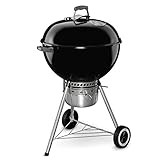
Best OverallWeber Original Kettle Premium 22" Charcoal Grill
Kettle Grill
The Weber Original Kettle Premium is the charcoal grill we would hand to almost anyone, because the kettle shape does nearly everything well and this is the version of it that has had the most decades of refinement. Weber and its retailers list 363 square inches of cooking area on a 22-inch hinged plated-steel grate, enough for roughly 13 burgers by Weber's own count. The lid and bowl are porcelain-enameled steel, the hinged grate lets you add charcoal without lifting the food off, and the Premium trim adds a lid thermometer and a removable aluminum ash catcher under the One-Touch cleaning system. Listed prices have run from about $229 on sale to $279. The weak points are the ones every kettle shares: no side tables to speak of, and a footprint that is happy with two-zone grilling but needs practice for long, low smokes. Check weber.com or the owner's guide for the warranty terms on the exact model you buy.
Pros
- 363 sq in of cooking area on a 22-inch hinged grate, per Weber
- Porcelain-enameled lid and bowl that resist rust and hold heat
- Hinged grate makes adding fuel mid-cook easy
- One-Touch ash system with a removable ash catcher
- Huge parts and accessory ecosystem
Cons
- Very little prep space without a separate table
- Long low-and-slow cooks need practice and a charcoal snake or baskets
- Some retailers list the black version as out of stock new
The Bottom Line
If you want one charcoal grill that sears, smokes and roasts without fuss, the Weber Original Kettle Premium is still the default answer.

Best Upgraded KettleWeber Master-Touch Charcoal Grill 22"
Kettle Grill
The Master-Touch is the kettle for people who already know they will cook on it every weekend. Retailers list 443 square inches of total cooking area, made up of the same 363-square-inch primary grate as the Original plus an 80-square-inch warming rack. The grate is Weber's Gourmet BBQ System design, which has a removable center insert so you can drop in a cast-iron sear grate, griddle or wok from Weber's accessory line. Weber also lists a built-in lid thermometer, a Tuck-Away lid holder so the lid hangs off the side instead of sitting on the ground, charcoal rails, a smoke vent setting and a removable aluminum ash catcher. Weber Canada lists it at CAD $389; US pricing varies by color. It is not a different grill from the Original Kettle so much as a kettle with the accessories you would otherwise buy later.
Pros
- 443 sq in total including an 80 sq in warming rack, per retailers
- Gourmet BBQ System grate accepts sear, griddle and wok inserts
- Tuck-Away lid holder keeps the lid off the ground
- Built-in thermometer and charcoal rails for two-zone cooking
Cons
- No electronic ignition, per the black model's listing
- Costs noticeably more than the Original Kettle for the same bowl size
- Color availability and model numbers vary by retailer
The Bottom Line
Buy the Master-Touch if you know you will want the sear grate and lid holder anyway; it is the Original Kettle with the useful extras already built in.

Easiest to LightWeber Performer Deluxe Charcoal Grill 22"
Kettle Grill on a Cart
The Performer Deluxe takes the 22-inch kettle and builds a proper workstation around it. The headline feature is Weber's Touch-N-Go gas ignition, which uses a disposable LP cylinder (sold separately) to light the charcoal at the push of a button, so there is no chimney starter or lighter fluid in the routine. Listings give the same 363 square inches of cooking area on a Gourmet BBQ System hinged grate, two Char-Basket fuel holders for two-zone cooking, a large work table, a removable high-capacity aluminum ash catcher and a removable backlit LCD cook timer. Retailers list it at roughly 48 inches wide by 30 deep and about 43.5 inches tall. One listing shows a 10-year manufacturer warranty, with the bowl and lid listed separately, so check Weber's current terms. It is the charcoal grill for people who want gas-grill convenience on a weeknight.
Pros
- Touch-N-Go gas ignition lights charcoal without a chimney
- Large cart table and storage turn the kettle into a workstation
- Gourmet BBQ System grate and two Char-Baskets included
- High-capacity removable ash catcher
Cons
- Needs disposable LP cylinders for the igniter
- Big footprint, about 48 x 30 inches per listings
- Same cooking area as the much cheaper Original Kettle
The Bottom Line
If lighting charcoal is the reason you keep reaching for the gas grill, the Performer Deluxe removes that excuse.

Best KamadoKamado Joe Classic Joe III 18"
Ceramic Kamado
The Classic Joe III is the kamado we would buy for someone who wants one grill that can hold 225 degrees all day and still hit searing temperatures for steaks. Retailers list 250 square inches on the included grate and up to 510 square inches when Kamado Joe's three-tier Divide & Conquer system is fully used, a temperature range of about 225 to 750 degrees Fahrenheit and up to 12 hours of low-and-slow cooking on one load of charcoal. The III adds the SloRoller hyperbolic insert, which Kamado Joe says improves smoke and heat circulation. It is heavy: most listings give 282 pounds with the cart and shelves, and one retailer lists about 262. Warranty listings describe a limited lifetime warranty on ceramic components and five years on metal parts. Prices sit well above $1,000 for the full package, so this is a buy-once grill.
Pros
- Holds low temperatures for up to 12 hours on one load, per retailers
- Divide & Conquer racks allow up to 510 sq in across three levels
- SloRoller insert for even smoke circulation
- Cart, side shelves and ash drawer included in most listings
Cons
- About 262 to 282 lb, so it is not moving once it is set up
- Ceramic can crack if dropped or heated too fast from cold
- Premium price compared with steel kamados
The Bottom Line
For serious low-and-slow cooking that also sears, the Classic Joe III is the most complete kamado package for the money.
Best Lifetime KamadoBig Green Egg Large
Ceramic Kamado
The Big Green Egg Large is the kamado that made the category, and its appeal is the dealer network and warranty more than any single feature. Retailer listings give an 18.25-inch grid, about 262 square inches of cooking area and a weight of roughly 161 to 162 pounds for the Egg alone. One retailer's capacity guide puts it at up to 12 burgers, a 20-pound turkey or seven racks of ribs stood vertically. Big Green Egg's own warranty language describes a limited lifetime warranty on ceramic components such as the dome, base and firebox for the original purchaser who bought from an authorized dealer and registered the Egg; other parts have separate terms. The catch is that the Egg is usually sold bare, and the nest or table, plate setter and other accessories add significantly to the price.
Pros
- Limited lifetime warranty on ceramic parts for registered original owners
- Authorized dealer network for parts and service
- About 262 sq in on an 18.25-inch grid, per retailers
- Huge accessory and community ecosystem
Cons
- Usually sold without a stand, table or heat deflector
- Around 162 lb before you add a nest or table
- Smaller grate than a 22-inch kettle
The Bottom Line
Choose the Big Green Egg Large if a dealer-backed lifetime ceramic warranty matters more to you than getting accessories in the box.

Best Budget KamadoChar-Griller AKORN Kamado
Steel Kamado
The AKORN is the way to find out whether you like kamado cooking without spending kamado money. Instead of ceramic, it uses a triple-wall insulated steel shell, which makes it far lighter: listings range from about 85 to 110 pounds depending on version and cart. Retailers list around 445 to 447 square inches of total cooking area, roughly 314 square inches of it on the primary cast-iron grate plus a removable warming rack, and a temperature range of 200 to 700 degrees Fahrenheit. It has dual adjustable dampers and an easy-dump ash pan. The trade-off is longevity: a steel kamado is more prone to rust over the years than ceramic, and owners commonly report needing to keep it covered. Specs vary by model number, so check the exact listing.
Pros
- Kamado-style insulated cooking at a fraction of ceramic prices
- About 445 sq in total cooking area, per retailers
- 200 to 700°F range with dual dampers
- Lighter than ceramic, roughly 85 to 110 lb by listing
Cons
- Steel shell is more rust-prone than ceramic over time
- Gaskets and hardware feel less refined than premium kamados
- Weight and cooking area vary by model number
The Bottom Line
If you are curious about kamado cooking but not ready for a four-figure ceramic grill, the AKORN is the sensible first step.
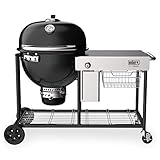
Best SplurgeWeber Summit Kamado S6 Charcoal Grill Center
Insulated Steel Kamado Center
The Summit Kamado S6 is Weber's answer to the ceramic kamado, built from double-walled insulated steel and wrapped in a full grill center. Weber's US spec sheet lists a 24-inch diameter and 452 square inches of total cooking area on stainless-steel Gourmet BBQ System hinged grates, gas ignition that uses a disposable cylinder sold separately, and lid-open dimensions of about 62.2 inches tall by 56.6 wide by 35 deep. Weber lists it at $2,399 in the US. You get a larger grate than an 18-inch kamado, a kettle-style ash system and a proper workstation, at a price that only makes sense if you will cook on it several times a week.
Pros
- 452 sq in on a 24-inch stainless grate, per Weber
- Gas ignition lights the charcoal at the push of a button
- Insulated steel avoids ceramic's cracking risk
- Full grill center with work surfaces
Cons
- $2,399 list price in the US
- Large footprint, about 56.6 inches wide with the lid open
- Ignition needs disposable LP cylinders
The Bottom Line
If budget is not the constraint and you want kamado heat retention with a kettle's convenience, the Summit Kamado S6 is the most capable charcoal grill here.
4. Our 7 Picks
5. How Much Cooking Area You Need
Cooking area is the number manufacturers print largest, and it is the one most easily misread. A total figure often includes a warming rack, which is useful for buns and resting meat but not for direct grilling. The Weber Master-Touch, for example, is listed at 443 square inches in total, of which 363 square inches is the main grate. When comparing grills, compare primary grate area first, then treat any extra racks as a bonus.
As a working guide, a 14- to 18-inch grate suits one or two people, a 22-inch kettle with roughly 360 square inches suits a family of four to six, and a 24-inch grate or larger suits regular entertaining. Remember that two-zone cooking, which you should be doing most of the time, effectively halves the direct-heat area, because half the grate sits over the coals and half does not. That is why a grill that sounds generous can feel cramped when you cook a full rack of chicken pieces indirectly.
Kamados complicate the comparison because their grates are smaller but stackable. Retailers list the Big Green Egg Large at about 262 square inches on an 18.25-inch grid and the Kamado Joe Classic III at 250 square inches on its main grate, rising to around 510 square inches across three levels with its rack system. Multi-level racks are excellent for ribs and wings cooked indirectly, but they do not add searing space. If you often sear for a crowd, a wider grate matters more than racks.
Finally, think about the footprint, not just the grate. A bare kettle needs a small table beside it, while cart models like the Performer Deluxe and the Summit Kamado S6 are listed at roughly 48 and 57 inches wide respectively. Measure your patio, leave room to open the lid fully and stand to one side, and keep the grill well away from walls, railings and anything that can burn.
6. Temperature Control and Fuel Efficiency
Charcoal temperature is controlled by airflow. The bottom vent feeds oxygen to the fire, and the top vent lets heat and smoke escape and draws air through. Open both wide for searing heat; close them down for low-and-slow cooking. The better sealed the grill, the more precisely those vents work, because air is only entering where you want it to. That is the main reason premium grills feel easier to control: there are fewer gaps around the lid and bowl.
Insulation determines how much fuel you burn holding a temperature. A thin steel kettle radiates heat into the air, especially on a cold or windy day, so a long smoke may need a refill partway through. A kamado's thick walls hold heat in, which is why a single load of lump charcoal can last most of a day. The Char-Griller AKORN and the Weber Summit Kamado use insulated steel rather than ceramic to get some of the same benefit with less weight and no risk of cracking.
Technique matters as much as hardware. For long cooks on a kettle, a charcoal snake, a line of unlit briquettes around the edge with a few lit ones at one end, burns slowly around the bowl for hours. Weber's charcoal baskets and rails do a similar job by keeping coals concentrated on one side. On a kamado, light only a small area of charcoal for low temperatures and let the vents settle before adding food, because bringing a heavy ceramic grill back down after overshooting can take a long time.
A good thermometer helps more than any grill upgrade. Lid thermometers measure the air at the top of the dome, which can differ substantially from the temperature at the grate. A probe thermometer clipped to the grate, or a wireless meat probe, tells you what the food is actually experiencing and saves you from guessing.
7. Lighting, Charcoal and Accessories Worth Having
The easiest reliable way to light charcoal is a chimney starter: fill it, light a couple of paper sheets or a fire starter underneath and wait around 15 to 20 minutes until the top coals are ashed over. It avoids the chemical taste that lighter fluid can leave and costs very little. Gas ignition, as on the Performer Deluxe and Summit Kamado S6, does the same job at the push of a button using a disposable propane cylinder, which is genuinely convenient for weeknight cooking.
Briquettes and lump charcoal behave differently. Briquettes are uniform, burn predictably and are cheaper, which makes them easier for beginners and for long cooks on a kettle. Lump charcoal lights faster, burns hotter and leaves less ash, which suits kamados that are built to burn it efficiently. Many kamado makers recommend lump charcoal specifically, so check your grill's manual before buying fuel in bulk.
A few accessories earn their place quickly. Long-handled tongs and a stiff grill brush or scraper are essential. A cast-iron sear grate, which drops into Weber's Gourmet BBQ System grates, gives steakhouse-style marks. A heat deflector or plate setter is necessary for indirect cooking on a kamado. A fitted cover protects any grill from rain and is especially important for steel grills that can rust. Heat-resistant gloves make it much safer to move grates and coals.
If your grill sits on a patio, protect the surface. Hot embers and grease stain concrete and pavers, and a grill mat or a sealed surface makes clean-up far easier. Our guides to the best paver sealers and outdoor concrete stains cover protecting the slab, and a pressure washer for concrete handles the grease spots that build up over a season.
8. Cleaning and Maintenance
Charcoal grills need less maintenance than gas grills, but they do need some. Empty the ash after every cook or two once it is completely cold, because ash absorbs moisture and becomes corrosive when it sits against steel. Kettles with an ash catcher make this a quick job. Kamados typically have an ash drawer or need the ash scooped from the bottom of the firebox.
Clean the cooking grate while it is hot, either straight after cooking or after preheating next time, using a brush or scraper. Once or twice a season, scrape built-up grease and carbon from the inside of the lid and bowl. On a porcelain-enameled kettle, flakes inside the lid are usually carbon rather than paint, and they brush away easily. Check the vents move freely and the handles and legs are tight.
Kamados need a little extra care. Gaskets around the lid wear over time and may need replacing to keep the seal tight. Ceramic should be heated gradually, especially in cold weather, and should never be doused with water to cool it quickly. Steel kamados and kettles benefit most from a cover, as rust is their main long-term enemy.
Store charcoal somewhere dry. Damp charcoal is hard to light and burns poorly. A lidded metal bin keeps it dry and away from pests, and it is a safer place to keep fuel than an open bag in a garage.
9. What a Charcoal Grill Really Costs
A good 22-inch kettle sits in roughly the $200 to $300 range, with listings for the Weber Original Kettle Premium having run from about $229 on sale to $279. Upgraded kettles such as the Master-Touch cost more, and cart models like the Performer Deluxe more again. Steel kamados like the AKORN fall somewhere between kettles and ceramic kamados, while ceramic kamados such as the Kamado Joe Classic III and Big Green Egg Large typically cost well over $1,000 once you include a stand and the accessories you need. Weber lists the Summit Kamado S6 at $2,399.
Running costs are mostly charcoal. A kettle will burn more fuel per cook than a kamado, especially on long smokes, because it loses more heat. Over a season of weekly grilling that difference adds up, which is part of the argument for a kamado if you smoke often. For occasional grilling, a kettle's lower purchase price outweighs its fuel use for many years.
Budget for accessories when comparing. A Big Green Egg is often sold as the Egg alone, so the nest or table and heat deflector add to the bill. A Kamado Joe package often includes a cart, shelves and rack system, which makes the list prices less different than they first appear. Compare complete packages, not headline prices.
Finally, consider longevity. A porcelain-enameled kettle that is kept covered can last many years, and ceramic kamados carry long warranties on their ceramic parts. Cheaper thin-steel grills that rust out in a few seasons are rarely the bargain they appear.
10. Safety and Placement
Charcoal grills belong outdoors only. Burning charcoal produces carbon monoxide, which is why grills should never be used in a garage, porch enclosure, tent or any covered space, even with a door open. Place the grill on a stable, level, non-combustible surface, well away from the house, deck railings, overhanging branches and anything that can catch fire. Many local fire codes restrict open-flame grills on apartment balconies, so check the rules where you live.
Keep children and pets clear of the cooking area, and never leave a lit grill unattended. Use long-handled tools and heat-resistant gloves. If you use lighter fluid, use only charcoal lighter fluid, never petrol or other accelerants, and never add it to coals that are already lit. A chimney starter avoids the problem entirely.
Dispose of ashes only once they are completely cold, which can take a day or more. Put them in a metal container with a lid, away from anything combustible. Many house fires start from warm ashes dumped into plastic bins or onto dry grass.
Kamados carry one extra risk: flashback. Opening the lid of a very hot, oxygen-starved kamado lets air rush in and can cause a sudden flare of flame. Burp the lid by opening it an inch for a few seconds before opening it fully, as kamado makers recommend.
11. Who Should Skip a Charcoal Grill
Charcoal is not for everyone. If you want to cook dinner ten minutes after deciding to, a gas grill or a griddle is more convenient, because even a chimney of charcoal takes 15 to 20 minutes to be ready. If you live in an apartment or a building with strict fire rules, charcoal may simply not be allowed. And if you mainly want to smoke rather than grill, a dedicated smoker makes long cooks easier.
Electric smokers are especially simple for people who want hands-off smoking, and our guide to the best electric smokers covers them. Pellet and offset smokers, compared in our best smokers guide, give more smoke flavor and capacity. If you want a gathering point rather than a cooker, our guide to the best fire pits covers wood, smokeless and propane designs.
For everyone else, charcoal remains the most rewarding way to cook outdoors. A kettle teaches fire control quickly, sears beautifully and smokes well enough for most people, and a kamado opens up all-day cooking with very little fuel. Choose the shape that fits how you cook, buy a good thermometer, and the grill will do the rest.
If you are building out a whole patio, it is worth planning the space around the grill. A level paved area, good lighting and somewhere to set food down make every cook easier. Our concrete patio cost guide and the comparison of pavers versus concrete help if you are starting from grass.
12. Common Mistakes to Avoid
Comparing total cooking area instead of grate area
Many listings add warming racks to the headline figure. Compare the primary grate first, because that is the space you actually grill on, and remember two-zone cooking uses only half of it for direct heat.
Using lighter fluid on every cook
Lighter fluid can leave a chemical taste if the food goes on too soon and is unnecessary with a chimney starter. A chimney lights a full load cleanly in about 15 to 20 minutes with only paper or a fire starter.
Trusting the lid thermometer
A dome thermometer reads the air at the top of the lid, not the grate. Use a probe at grate level or a wireless meat thermometer to know what the food is really experiencing.
Dumping ashes before they are cold
Charcoal ash can hold heat for a day or more. Store it in a lidded metal container away from anything combustible, never in a plastic bin or on dry grass.
Leaving a steel grill uncovered
Rain and wet ash are what rust out kettles and steel kamados. A fitted cover and emptying the ash after cooks add years to the grill's life.
13. Frequently Asked Questions
What is the best charcoal grill for beginners?
A 22-inch kettle such as the Weber Original Kettle Premium is the easiest place to start. It is forgiving, lights easily with a chimney starter, handles both direct and indirect cooking, and costs far less than a kamado. Most people learn two-zone fire control on it within a few cooks.
Is a kamado better than a kettle grill?
A kamado is better at holding low temperatures for many hours with very little fuel, which makes it excellent for smoking. A kettle is lighter, cheaper, faster to adjust and better as an everyday grill. If you mainly grill and occasionally smoke, a kettle is the better value.
How big a charcoal grill do I need?
For a family of four to six, a 22-inch kettle with about 360 square inches of primary grate is enough. Smaller households can use 14 to 18 inches, while frequent entertainers should look at 24 inches or more, remembering that two-zone cooking halves the direct-heat area.
Should I use briquettes or lump charcoal?
Briquettes burn evenly and predictably, which suits kettles and long cooks. Lump charcoal lights faster, burns hotter and leaves less ash, which suits kamados. Check your grill's manual, because many kamado makers recommend lump charcoal specifically.
How long does a charcoal grill last?
A porcelain-enameled kettle kept covered and cleaned can last many years, and ceramic kamados commonly carry limited lifetime warranties on their ceramic parts. Thin, uncoated steel grills left in the rain may rust out in a few seasons.
Can I use a charcoal grill on a balcony or in a garage?
Never use a charcoal grill in a garage or any enclosed space, because it produces carbon monoxide. Many local fire codes also restrict charcoal grills on apartment balconies, so check your building and local rules before buying one.
Is gas ignition on a charcoal grill worth it?
For weeknight cooking it is genuinely convenient, because it lights the coals at the push of a button without a chimney or fluid. It adds cost and needs disposable propane cylinders, so it is a convenience upgrade rather than a necessity.
Related Outdoor Living Guides
Buyer's Guide
Best Smokers
Offset, pellet, charcoal and electric smokers compared for long, low cooks.
Buyer's Guide
Best Electric Smokers
Set-and-forget smoking with steady temperatures and very little fuss.
Buyer's Guide
Best Fire Pits
Smokeless, wood-burning and propane fire pits for gathering around after dinner.
The Bottom Line
The best charcoal grill for most backyards is the Weber Original Kettle Premium: it sears, roasts and smokes well, it is easy to learn on and it lasts. If you want the upgrades built in, the Master-Touch adds the sear-ready grate and lid holder, and the Performer Deluxe makes lighting charcoal as easy as starting a gas grill.
If long, low smoking is the goal, the Kamado Joe Classic Joe III is the most complete kamado package, the Big Green Egg Large carries the strongest ceramic warranty and dealer support, and the Char-Griller AKORN lets you try the style for much less. Whatever you choose, buy a good thermometer and a cover, and keep it away from anything that can burn.
More in Outdoor Living
Guides in this category that pair with what you just read.
About the Author
Alex Rivers, Home Improvement Editor
Alex has spent over a decade working on residential and light commercial property maintenance, and now tests every tool, coating and machine that appears in these guides personally.