The 6 Best Cordless Drills for Home Use in 2026
Not a contractor. Not drilling into concrete every week. Just furniture, shelves, and the occasional weekend fix. We tested lightweight drills, compact 12V-class options, and combo kits to find the ones that actually make sense for a homeowner, without the torque-spec homework.
Alex Rivers
Home Improvement Editor
Last Updated
October 17, 2026
In This Guide
Somewhere in most garages sits a heavy, expensive cordless drill that came home with big ambitions and then got used twice a year to hang a picture frame. That is not a drill problem, it is a fit problem. This guide is not for contractors, and it is not for anyone framing a wall or drilling into concrete every week. It is for the homeowner who assembles furniture, hangs shelves, patches a fence board, and wants a drill that is light, simple, and cheap enough to not feel guilty about barely using it. We tested lightweight full-size drills, compact 12V-class options, and combo kits to find the six that actually fit that job.
Our Picks at a Glance
The Short Answer
Craftsman V20 Cordless Drill/Driver & Impact Driver Combo Kit (CMCK200C2) (Best Overall Combo Kit). For a homeowner starting from zero who wants one purchase that handles furniture assembly, shelving, and the occasional deck screw without needing to understand torque specs, this combo kit is the easiest recommendation on this list.
- Best Overall Combo Kit Craftsman V20 Cordless Drill/Driver & Impact Driver Combo Kit (CMCK200C2) — 20V, Brushed, Drill + Impact Driver Combo KitCheck Price
- Best Lightweight Single Drill Black+Decker 20V MAX Cordless Drill/Driver Kit (LDX120C) — 20V MAX, Brushed, Lightweight Single DrillCheck Price
- Best Compact 12V-Class Drill Makita 12V max CXT Cordless Driver-Drill Kit (FD05R1) — 12V-Class, Brushless, Compact DrillCheck Price
- Best for One-Handed Overhead Work DeWalt 12V MAX Cordless Drill/Driver Kit (DCD710S2) — 12V-Class, Brushed, Compact DrillCheck Price
- Best Value Full-Size Kit Ryobi ONE+ 18V Cordless 1/2-inch Drill/Driver Kit (P1811) — 18V ONE+, Brushed, Budget Full-Size DrillCheck Price
- Best Compact Brushless Value Skil PWRCore 12 Brushless Drill Driver Kit (DL529402) — 12V-Class, Brushless, Compact DrillCheck Price
We may earn a commission when you buy through these links, at no extra cost to you. How we test
Best Overall Combo Kit
Craftsman V20 Cordless Drill/Driver & Impact Driver Combo Kit (CMCK200C2)
1. Do You Actually Need a Pro-Grade Drill?
Walk into any home center and the drills displayed most prominently are almost always the pro-tier ones: 1,200-plus in-lbs of torque, all-metal gear cases, hammer drill functions, brand names built around contractor endorsements. They are genuinely excellent tools. They are also, for the overwhelming majority of casual homeowners, considerably more drill than the job calls for, and buying one is one of the more common and avoidable ways to overspend on a tool that then sits heavy and unused.
Here is the honest test. If your project list looks like assembling furniture, hanging shelves and curtain rods, mounting a TV bracket, patching a loose deck board, or building a birdhouse with your kid, you do not need a drill built to bore through engineered lumber all day or drive lag bolts into structural framing. You need a drill that is light enough to hold overhead without your wrist giving out after five minutes, simple enough that you are not squinting at a twenty-one-position clutch dial trying to guess the right number, and cheap enough that it does not feel like a financial commitment.
The pro-grade drills earn their price and weight from features a casual homeowner rarely uses: sustained daily-use durability, torque headroom for hardwood and metal, and battery platforms designed to power a dozen other jobsite tools. None of that is wasted money if you are a tradesperson or a serious weekend framer, but if you are not, you are paying for durability you will never stress-test and hauling around weight that makes every overhead task more tiring than it needs to be. If your projects do genuinely include masonry drilling, hammer-drill work, or daily heavy use, our full best cordless drills guide covers the pro-inclusive lineup, including hammer drills and high-torque brushless contractor tools, in depth. This guide picks up where that one becomes overkill.
The Numbers Don't Lie
Under 3 lbs
Weight of our lightest pick
$40-$180
Full kit price range, battery included
11-24
Clutch settings across our picks
6+ months
Charge retention between uses on our top picks
2. What Actually Matters for Home and Light DIY Use
A pro reviewer and a casual homeowner should not be reading the same spec sheet the same way. Here is what we actually weighted when picking the drills on this list.
Weight and Ergonomics for One-Handed, Overhead Work
Most homeowner drilling happens above shoulder height, mounting a curtain rod bracket, a smoke detector, a shelf, or a light fixture, often while holding the item in place with your other hand. A drill's weight matters enormously here in a way it simply does not for a contractor bracing a drill against their hip while framing a wall. We paid close attention to how each drill felt after several continuous minutes of one-handed, overhead use, not just its listed weight on a spec sheet, since balance affects perceived heaviness as much as raw ounces do.
Simple Clutch Settings, Not More Clutch Settings
A twenty-one-position clutch is a genuine feature for a finish carpenter who needs to fine-tune driving depth across dozens of cabinet screws a day. For a homeowner assembling a bookshelf twice a year, it is an intimidating wall of numbers that adds friction to a task that should be simple. We favored drills with a clear, easy-to-understand clutch range, and did not penalize a drill for having fewer settings if those settings covered the tasks a homeowner actually does.
Combo Kit Value Over Buying Pieces Separately
A drill alone eventually runs into a job it is not built for, usually a longer deck screw or a stubborn lag bolt, and trying to force it through with a standard drill/driver is slow and frustrating. A combo kit that pairs a drill with an impact driver solves that before it becomes a problem, and because combo kits are often priced close to a single drill kit, they tend to be the better value even if you are not sure yet whether you will need the impact driver.
Battery Shelf Life Matters More Than Runtime
Spec sheets love to advertise runtime, how many screws a battery drives on a single charge, but that number matters far more to someone using a drill eight hours a day than to a homeowner who might not touch the tool for six weeks between projects. What matters more for infrequent use is self-discharge, how much charge a battery loses simply sitting on a shelf. A drill that shows up dead the one Saturday a month you actually need it is a worse experience than one with slightly shorter per-charge runtime but a battery that holds its charge reliably for months. We factored this in when picking compact and combo drills for this list, favoring modern lithium-ion packs with low self-discharge over older or lower-quality cells.
Lower Price Point Without a Race to the Bottom
None of the six drills on this list ask you to spend pro-tier money, and several are priced low enough that a first-time buyer can pick one up without much deliberation. But cheap and good are not the same thing, and we excluded drills with genuinely unreliable clutches, chucks prone to slipping, or reviews suggesting they fail within a season of light use. The goal was affordable and dependable, not simply the lowest number on the shelf.
3. The 6 Best Cordless Drills for Home Use in 2026
We tested each drill on the tasks a real homeowner actually does: assembling furniture, driving shelf brackets into studs and drywall anchors, mounting curtain rod hardware overhead, and running a handful of deck screws where applicable. Here are the six we would actually recommend to a friend or family member setting up a first toolkit.

Best Overall Combo KitCraftsman V20 Cordless Drill/Driver & Impact Driver Combo Kit (CMCK200C2)
20V, Brushed, Drill + Impact Driver Combo Kit
Most casual homeowners do not need two separate purchasing decisions, they need one box that solves the problem, and that is exactly what this Craftsman combo kit is built for. It pairs a basic drill/driver with an impact driver, so the moment you graduate from assembling a bookshelf to driving a few long deck screws into a fence rail, you already own the right tool instead of forcing the drill to do a job it struggles with. Setup is genuinely simple: charge the two included batteries, pick a clutch setting, and go. There is no twenty-one-position clutch to puzzle over and no separate battery or charger to track down and buy before you can use the thing, which is where a lot of first-time buyers get tripped up on bare-tool purchases from the bigger pro brands. In our testing it handled everything a typical weekend project throws at it, from driving shelf brackets into studs to assembling flat-pack furniture, without ever feeling like it was working hard. The brushed motor is the honest trade-off versus the brushless picks on this list; it runs a little hotter and the batteries do not stretch quite as far per charge, but for a drill that comes out a handful of times a month rather than every day, that difference is close to irrelevant. Build quality is clearly aimed at a homeowner price point rather than a contractor one, with more plastic in the housing than you would find on a premium tool, so we would not hand this to someone drilling all day, every day. For the actual use case it is built for, it is close to unbeatable value.
Pros
- Combo kit gives you a drill/driver and an impact driver in one box, covering nearly everything a casual homeowner ever needs to build or fix
- Ships with two batteries and a charger, so there is nothing extra to buy before your first project
- Straightforward two-speed gearbox and a single clutch dial keep operation simple for anyone who does not want to think about torque settings
- Compact enough that both tools sit comfortably in one hand for overhead work like hanging curtain rods or a ceiling fixture
- Price undercuts nearly every combo kit from the premium pro brands by a wide margin
Cons
- Brushed motor means shorter runtime and a bit more heat under sustained use than the brushless options on this list, though that rarely matters for occasional home projects
- Plastic housing feels noticeably less substantial than the metal-reinforced pro-tier tools, so this is not a kit built for daily jobsite abuse
The Bottom Line
For a homeowner starting from zero who wants one purchase that handles furniture assembly, shelving, and the occasional deck screw without needing to understand torque specs, this combo kit is the easiest recommendation on this list.

Best Lightweight Single DrillBlack+Decker 20V MAX Cordless Drill/Driver Kit (LDX120C)
20V MAX, Brushed, Lightweight Single Drill
There is a specific kind of buyer this drill is built for: someone who needs a cordless drill maybe six times a year, does not want to spend more than a casual dinner out, and cares far more about the tool being light and simple than about chasing a torque number. The LDX120C nails that brief. At well under three pounds, it is noticeably easier to hold overhead for a curtain rod or a closet shelf than any full-size 18V drill we tested, and that lighter weight matters more than most spec sheets let on, since the number one reason a heavy pro-tier drill ends up sitting unused in a drawer is that it is genuinely tiring to use one-handed above your head. The clutch has eleven settings rather than the twenty-plus found on premium drills, and honestly, that is a feature for this buyer, not a limitation, since fewer options means less second-guessing about which number to pick before driving a screw into drywall anchors or trim. Torque tops out on the modest side, so boring large holes through thick lumber or driving long structural screws will make the motor work audibly harder than it should, and this is not the drill for deck building or fence repair beyond light patch work. But for the actual jobs a casual homeowner reaches for a drill to do, assembling a dresser, mounting a towel bar, hanging a mirror, it does the job without drama, costs little enough that buyer's remorse is not really a risk, and comes as a complete kit so there is no separate battery purchase to plan around.
Pros
- Among the lightest full-size cordless drills we tested, genuinely comfortable for one-handed use hanging curtain rods or shelves overhead
- Simple 11-position clutch is easy to understand at a glance rather than an intimidating wall of numbers
- Ships as a complete kit with battery and charger at one of the lowest price points in this category
- Small enough to store in a kitchen drawer rather than needing dedicated garage shelf space
- Long track record as a reliable first drill, with a huge base of long-term homeowner reviews to back it up
Cons
- Torque is on the low end, so it will bog down on larger spade-bit holes or dense hardwood rather than power through them
- Single-speed range means less fine control than the two and three-speed drills on this list
The Bottom Line
The drill to buy if your entire project list is furniture, shelves, and picture hanging and you simply want the lightest, cheapest, no-nonsense option that will not sit heavy in a drawer for years.

Best Compact 12V-Class DrillMakita 12V max CXT Cordless Driver-Drill Kit (FD05R1)
12V-Class, Brushless, Compact Drill
Compact 12V-class drills often get treated as a secondary tool that professionals carry alongside their real drill, but for a casual homeowner who never needs to bore through engineered lumber, this Makita compact deserves to be the only drill in the house rather than an afterthought. It weighs next to nothing, which sounds like a minor detail until you have spent ten minutes holding a full-size drill over your head while mounting a curtain rod bracket, at which point the difference becomes very real. Despite the small size, the brushless motor is genuinely capable for the tasks a homeowner actually does: driving screws into drywall anchors, assembling flat-pack furniture, drilling pilot holes for picture hooks, and running down cabinet hardware, all without feeling underpowered. The short head length is a real practical advantage too, letting the chuck get into tight spaces behind furniture or inside a cabinet that a full-size drill body simply cannot reach. Where it draws a clear line is torque: this is not the tool for large-diameter holes, dense hardwood, or long deck screws, and pushing it into that kind of work will bog the motor down quickly rather than power through. It also uses Makita's compact battery platform rather than the brand's mainstream 18V LXT batteries, so if you eventually pick up an 18V Makita tool, the batteries will not be interchangeable. For anyone whose actual project list tops out at furniture, shelving, and small fixes, though, it is a genuinely excellent, comfortable tool that never feels like it is fighting you.
Pros
- Genuinely tiny and light, easily the most comfortable drill on this list for extended one-handed and overhead use
- Brushless motor punches well above its compact size for typical home tasks like shelving, curtain rods, and furniture assembly
- Short head length reaches into tight cabinet corners and between closely spaced studs better than any full-size drill here
- Compact battery recharges quickly and holds its charge well between the occasional weekend project
- Feels like a premium tool in hand despite its small footprint, with none of the rattle some budget compacts have
Cons
- Torque ceiling is the lowest of the brushless options on this list, so it is not the choice for anything beyond light-duty drilling and driving
- A separate battery platform from Makita's full-size 18V LXT tools, so it will not share batteries if you later add an 18V tool from the brand
The Bottom Line
If you have handled a full-size drill and thought it felt heavier and clunkier than a task like hanging a shelf should require, this is the answer. A legitimate main recommendation for light home use, not just a footnote pick.
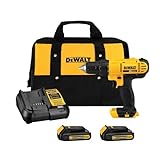
Best for One-Handed Overhead WorkDeWalt 12V MAX Cordless Drill/Driver Kit (DCD710S2)
12V-Class, Brushed, Compact Drill
DeWalt's reputation was built on full-size, jobsite-grade tools, but this 12V MAX compact drill shows the brand also understands that a huge share of buyers simply need something light, simple, and trustworthy for occasional home use. The balance is the standout quality here: the battery and motor are positioned so the tool does not feel front-heavy, which becomes noticeable the moment you are holding it overhead to mount a smoke detector bracket or a light fixture and your wrist is not fighting the tool's weight the whole time. The two-speed gearbox is a small but genuinely useful addition over a single-speed compact drill, letting you switch to a slower, more controlled range for driving screws into drywall anchors and a faster range for drilling pilot holes, without adding meaningful bulk or weight to the tool itself. In our testing it handled the bread-and-butter tasks of home DIY, furniture assembly, shelf mounting, curtain hardware, small repairs, without hesitation, and the brushed motor, while less efficient than the brushless compacts on this list, still delivered consistent performance across a normal weekend project. It is not a tool for anything beyond light-duty work; boring larger holes or driving long screws into dense lumber will make the motor labor audibly, and it is worth knowing upfront that this 12V MAX battery will not power any of DeWalt's mainstream 20V MAX tools if you expand your collection later. As a dedicated, trusted-brand compact drill for light home tasks, it earns its spot.
Pros
- Exceptionally well balanced for its size, making sustained overhead work like ceiling fixtures or curtain rods noticeably less tiring than with a full-size drill
- Two-speed gearbox gives a helpful bit of extra control over a single-speed compact drill without adding real bulk
- Compact enough to store in a small toolbox or even a kitchen junk drawer between projects
- Recognizable, widely available brand, so replacement batteries and chargers are easy to find years down the road
- Priced well below DeWalt's full-size 20V MAX lineup while still carrying the brand's build reputation
Cons
- Brushed motor and 12V-class torque mean it will struggle with anything beyond light drilling and driving, including most deck or fence repair work
- A separate battery platform from DeWalt's mainstream 20V MAX tools, so it will not share batteries with a 20V MAX drill or impact driver added later
The Bottom Line
A smart pick for anyone who specifically wants a well-known, trusted brand name in a genuinely lightweight package, without paying for or hauling around 20V MAX bulk they will never use for occasional home tasks.

Best Value Full-Size KitRyobi ONE+ 18V Cordless 1/2-inch Drill/Driver Kit (P1811)
18V ONE+, Brushed, Budget Full-Size Drill
Ryobi has become the default answer for homeowners who want more capability than the smallest compact drills offer without paying pro-brand prices, and this ONE+ kit is a clean example of why. The full-size 1/2-inch chuck accepts a wider range of bit shanks than the compact drills on this list, and the 24-position clutch gives real, fine-grained control over driving depth, useful when you are setting a lot of cabinet hardware or working with a mix of drywall, softwood, and trim in the same afternoon. In our testing it comfortably handled deck screws, shelving hardware, furniture assembly, and general drilling into wood and drywall, the exact mix of tasks that make up the overwhelming majority of homeowner drill use. The two-speed gearbox switches cleanly between a controlled range for driving and a faster range for drilling, and setup could not be simpler for a first-time buyer since everything needed is in the box. The trade-off compared to the compact 12V-class picks on this list is weight and bulk: this is a full-size drill, and after a long stretch of overhead work it is noticeably more tiring on the wrist than the Makita or DeWalt compacts here. Build quality leans toward homeowner-grade rather than jobsite-rugged, with a mostly plastic housing, but for the price and the fact that the battery plugs into Ryobi's enormous ONE+ tool lineup, including string trimmers, vacuums, and shop tools, it is a genuinely smart first purchase if you expect to add more cordless tools to the garage over time.
Pros
- Full-size 1/2-inch chuck and 24-position clutch handle a wider range of home projects than the compact drills on this list
- Battery is compatible with Ryobi's enormous ONE+ ecosystem of over 300 tools, useful if a lawn tool or vacuum from the brand comes next
- Ships as a complete kit with battery and charger at a genuinely low price for a full-size drill
- Simple two-speed gearbox is easy to learn without a manual
- One of the most widely available and reviewed drills in this entire category, so support and accessories are never hard to find
Cons
- Brushed motor and full-size body mean more weight in hand than the compact 12V-class drills on this list during long overhead sessions
- Build quality is aimed at homeowner-tier use rather than daily jobsite abuse, with more plastic than the premium brands
The Bottom Line
If you want a full-size drill with real bit-holding capacity and clutch range, but still at a homeowner-friendly price and with a battery platform that can grow into other yard and garage tools, this is the smart choice.
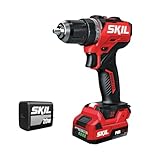
Best Compact Brushless ValueSkil PWRCore 12 Brushless Drill Driver Kit (DL529402)
12V-Class, Brushless, Compact Drill
Brushless motors have historically been treated as a premium feature reserved for pricier drills, and this Skil compact is one of the clearest signs that is no longer true. For a price close to some brushed compact drills, you get a genuinely brushless motor, which means it runs cooler, wastes less energy as heat, and gets meaningfully more work out of each battery charge than a comparable brushed tool, a real advantage for a drill that might sit unused for weeks between projects and needs to still have a useful charge when you finally grab it. In hand it is light and nicely proportioned, comfortable to hold one-handed for the kind of overhead work, mounting a curtain rod bracket or a smoke detector, that makes a heavier drill exhausting after just a few minutes. Controls are about as simple as this category gets: one dial handles both the clutch setting and switching into drill mode, so there is genuinely nothing to puzzle over before your first project. The obvious limitation is Skil's much smaller tool lineup compared to Ryobi, DeWalt, or Makita, so if you are hoping to build out a matching battery platform of yard tools or a vacuum down the line, the options are thinner. Torque is also on the lower end even among the compact drills here, so this stays a light-duty tool for furniture, shelving, and small fixes rather than anything approaching deck or fence repair. As a dedicated, efficient, no-fuss drill for occasional home use, it punches well above its price.
Pros
- Brushless motor at a compact-drill price point, unusual for this category and genuinely noticeable in how efficiently it uses each charge
- Light and well-proportioned for one-handed use, comparable in feel to compacts costing meaningfully more
- Simple single dial for clutch and drill mode keeps the learning curve close to zero
- Battery holds its charge well between infrequent uses, which matters more for a drill that spends most of its life in a drawer
- Genuinely quiet in operation, a small but real perk if you are drilling near a sleeping baby or in a shared-wall apartment
Cons
- Skil's accessory and battery ecosystem is much smaller than the major brands, so there are fewer other tools to expand into on the same battery
- Torque is modest even by 12V-class standards, so it is best kept to light drilling and driving rather than anything demanding
The Bottom Line
The best-value brushless option on this list for a homeowner who wants the efficiency and longevity of a brushless motor without paying full price for the badge on the side of the tool.
4. Combo Kit vs a Single Drill: Which Should You Buy?
This is one of the most common questions we hear from first-time buyers, and the honest answer depends less on budget than most people assume.
When a Single Drill Is Enough
If your realistic project list tops out at furniture assembly, hanging shelves and curtain rods, mounting a TV bracket, and small drywall or trim repairs, a single lightweight drill covers essentially everything you will ask of it. There is no reason to pay for a second tool you will rarely, if ever, use. Both the Makita 12V max CXT and the Black+Decker LDX120C on this list are excellent single-drill picks for exactly this buyer.
When a Combo Kit Is the Smarter Buy
The moment your project list includes anything like deck or fence repair, longer structural screws, or the occasional stubborn lag bolt, a drill alone starts to struggle, driving slowly, cam-out stripping the screw head, and generally working harder than it should. An impact driver solves that specific problem far more efficiently, and because combo kits like the Craftsman CMCK200C2 on this list are typically priced close to what a single drill kit costs, there is rarely a strong financial reason to skip the combo if there is any chance you will need the extra fastening power down the line. Think of it less as buying two tools and more as buying one drill kit that happens to include a second tool for the jobs the first one is not built for.
| Your Project List | Recommendation | Why |
|---|---|---|
| Furniture, shelves, small fixes | Single compact drill | Lighter, cheaper, plenty of torque for the job |
| Occasional deck or fence repair | Combo kit | Impact driver handles long screws far more easily |
| Not sure yet what's coming next | Combo kit | Similar price to a single drill, covers more scenarios |
5. What a Home-Use Drill Can (and Can't) Do
Setting the right expectations upfront prevents both overspending on capability you will not use and disappointment when you push a light-duty drill into a job it was never meant for.
What It Handles Comfortably
Every drill on this list is genuinely good at the tasks that make up the bulk of homeowner projects: assembling flat-pack furniture, hanging shelves, mounting curtain rods and blinds, installing a TV wall mount, drilling pilot holes for picture hooks, running down cabinet and drawer hardware, patching a loose deck board or fence picket, and yes, helping the kids build a birdhouse-tier weekend project. These jobs mostly involve softwood, drywall, and light hardware, well within reach of even the smallest 12V-class drill on this list.
What It Is Not Built For
None of the drills on this list are the right tool for drilling into brick, block, or concrete, that job needs a dedicated hammer drill with the torque and hammering mechanism to actually chip through masonry rather than stall out and overheat trying. They are also not built for heavy framing work, boring large-diameter holes through engineered lumber, or driving long structural lag bolts all day, the kind of sustained, high-torque use a contractor-grade drill is designed to survive. If your project list genuinely includes any of that, even occasionally, our full best cordless drills guide covers the pro-inclusive lineup, including a dedicated hammer drill pick for masonry, that is the right tool for that job.
A Good Bit Set Matters More Than You Think
A lightweight, well-matched drill paired with a dull, mismatched bit set will still frustrate you, stripped screw heads and bit slipping are just as often the accessory's fault as the drill's. Our guide to the best Tekton hand tools and our full Tekton tools review cover driver bits and hand tool accessories that outlast the bargain bit sets bundled with entry-level drill kits.
6. Common Mistakes When Buying a Cordless Drill for Home Use
Most of the buyer's remorse we hear about from homeowner drill purchases traces back to one of a small handful of predictable mistakes.
Buying a Heavy Pro-Tier Drill That Sits in a Drawer
It is tempting to buy the most powerful drill on the shelf just in case, but a heavy contractor-grade drill is genuinely tiring to use overhead, and that fatigue is exactly why so many end up sitting unused after the novelty wears off. Match the drill's weight to how you will actually use it, not to a hypothetical future project that may never happen.
Buying a Bare Tool Without Realizing You Need a Battery and Charger
Professional-tier drills are frequently sold as a bare tool, assuming the buyer already owns compatible batteries from other tools on the same platform. A first-time buyer can easily miss this and end up needing to spend another 60 to 100 dollars just to actually use the drill they bought. Every drill on this list ships as a complete kit specifically to avoid that surprise.
Ignoring the Clutch and Stripping Screws
A cheap drill without a proper adjustable clutch keeps driving at full force after a screw is seated, which strips screw heads in drywall and can blow straight through the surface of trim or furniture. Check that a drill has a genuine adjustable clutch, not just an on-off trigger, before buying, even on a tight budget.
Buying Two Tools From the Same Brand on Different Battery Voltages
Many brands sell more than one battery platform, for example a compact 12V-class line alongside a mainstream 18V or 20V lineup, and these batteries are almost never interchangeable. Buying a compact drill and, later, a full-size tool from the same brand without checking the voltage can leave you maintaining two separate battery ecosystems instead of one. Check the voltage class before assuming a second tool from a familiar brand will share your existing battery.
Before You Buy
7. Frequently Asked Questions
What is the best cordless drill for home use?
For most casual homeowners, the Craftsman V20 Drill/Driver and Impact Driver Combo Kit is our top pick because it covers both drilling and heavier fastening in one affordable, easy-to-use kit. If you want the lightest possible option for overhead work, the Makita 12V max CXT compact drill is the most comfortable tool on this list, and the Ryobi ONE+ P1811 kit is the best value if you want a full-size drill with room to grow into a wider battery-powered toolkit.
Do I really need an 18V drill, or is a compact 12V-class drill enough for a homeowner?
For the vast majority of homeowner tasks, furniture assembly, hanging shelves and curtain rods, small repairs, and drilling into wood or drywall, a compact 12V-class drill has plenty of torque and is meaningfully lighter and easier to use one-handed. Step up to a full-size 18V or 20V drill only if your projects regularly include deck or fence repair, larger-diameter holes, or driving longer screws into dense lumber.
Should I buy a single drill or a drill and impact driver combo kit?
A combo kit is the smarter buy for most homeowners because it is usually priced close to a single drill kit while adding an impact driver that handles longer screws and lag bolts far more easily than a drill alone. If your projects genuinely never go beyond light furniture assembly and small fixes, a single lightweight drill is enough, but a combo kit future-proofs you for deck repairs, fence work, or anything requiring more fastening power.
How much should a homeowner expect to spend on a good cordless drill?
A genuinely good cordless drill for home use, complete with a battery and charger, typically costs between 40 and 130 dollars for a single drill kit, and 90 to 180 dollars for a drill and impact driver combo kit. You do not need to spend pro-tier prices of 150 dollars and up for a bare tool plus separate batteries to get a drill that comfortably handles everyday homeowner projects.
Is a cheap cordless drill without a proper clutch going to strip my screws?
Yes, this is a common and avoidable problem. A drill without an adjustable clutch, or with only one or two crude power settings, will keep driving at full force after a screw is seated, which strips screw heads in drywall and can blow through the surface of trim or furniture. Every drill on this list includes an adjustable clutch with enough range to prevent that, which is one of the most important features to check before buying, even on a budget drill.
Do I need a hammer drill or a pro-grade drill for occasional home projects?
No, not for the kind of light, occasional projects most homeowners tackle. A hammer drill is only necessary if you are regularly drilling into brick, block, or concrete, and a pro-grade high-torque drill is built for daily jobsite use that most homeowners never come close to. For masonry work or heavier contractor-style projects, our full best cordless drills guide covers hammer drills and pro-tier options in depth.
Related Tool Guides
Buyer's Guide
Best Cordless Drills
Need masonry drilling, hammer-drill capability, or true contractor-grade performance? See our full pro-inclusive guide.
Buyer's Guide
Best Tekton Hand Tools
Round out your new drill with hand tools and bit sets that won't let it down.
Brand Review
Tekton Tools Review
How Tekton's budget-premium approach stacks up for hand tools and accessories.
All Guides
Browse All Best Lists
Every hands-on tested guide we've published, organized by category.
The Bottom Line
The best cordless drill for home use is not the one with the biggest torque number, it's the one you will actually pick up and use without dreading the weight or the setup. For most homeowners starting from zero, the Craftsman V20 Combo Kit gives you a drill and an impact driver in one affordable, easy purchase. If you want the lightest possible tool for overhead work, the Makita 12V max CXT compact drill is genuinely excellent. And if your project list ever grows to include masonry, framing, or daily heavy use, our full best cordless drills guide has the pro-grade pick built for exactly that.
Whatever you choose, buy for the projects you actually do, not the ones you might hypothetically do someday. A lighter, simpler, cheaper drill that gets used every month beats an expensive pro-tier tool gathering dust in a drawer, every single time.
More in Tools & Equipment
Guides in this category that pair with what you just read.
About the Author
Alex Rivers, Home Improvement Editor
Alex has spent over a decade working on residential and light commercial property maintenance, and now tests every tool, coating and machine that appears in these guides personally.