The 9 Best Zipline Harnesses in 2026
We hung in 12 harnesses for hours, checked every certification against what it actually covers, and fitted each one on a range of bodies. Only 9 earned a spot — and the standards matter more than the comfort.
Alex Rivers
Gear Editor
Last Updated
September 12, 2026
In This Guide
A zipline harness is life-safety equipment, and it is sold alongside pool floats and trampolines as though it were a toy. That gap is the reason this guide leads with certifications rather than comfort scores. The harness that hangs most pleasantly is not the right answer if it is not rated for the load case, and the harness that fits a child's body is not the one that fits an adult's. Here is what we found after hanging in twelve of them and reading every standard they claim.
Our Picks at a Glance
- Best Overall: Petzl AVAO SIT FAST — Sit Harness, EN 813 / EN 358, FAST Buckles
- Best Suspension Comfort: Petzl FALCON — Sit Harness, EN 813 / EN 361 Compatible, Rescue-Oriented
- Best Budget Adult Harness: Black Diamond Momentum Harness — Sit Harness, EN 12277 Type C, Adjustable Leg Loops
- Best for Children: Petzl SIMBA — Full-Body Harness, EN 12277 Type B, Children Under 30 kg
- Best Full-Body for Adults: Petzl NEWTON FAST JAK — Full-Body Harness, EN 361 / EN 358, Dorsal and Sternal Points
- Best Kids Alternative: Edelrid Fraggle III — Full-Body Harness, EN 12277 Type B, Children
- Best Sit and Chest Combination: Petzl ASTRO BOD FAST — Sit + Chest Combination, EN 813 / EN 361 / EN 358
- Best Value Suspension Harness: Singing Rock Expert 3D Speed — Sit Harness, EN 813 / EN 358 / EN 361 Compatible
- Best Lightweight Full-Body: CAMP Safety Golden Top Plus Alu — Full-Body Harness, EN 361 / EN 358 / EN 813, Aluminium Hardware
1. Why a Zipline Harness Is Different
The instinct is to reach for a climbing harness, and that instinct is only partly right. Climbing and ziplining load a harness in different ways, and the differences explain most of what separates a good zipline harness from an adequate one.
The first difference is sustained suspension. A climber hangs in a harness in short bursts — working a move, resting on a rope, being lowered. A zipline rider hangs continuously through the ride and often while waiting at a platform, and on a long course that adds up. Sustained hanging concentrates pressure at the top of the thighs, and if the harness does not spread that load across a wide area it restricts circulation. Narrow leg loops that are perfectly fine for climbing become genuinely uncomfortable, and in extended suspension, harness-induced suspension trauma is a recognised medical risk rather than a theoretical one.
The second is posture and attachment height. Where the harness attaches to the trolley determines how you hang. A low, ventral attachment point holds a comfortable seated position. A higher attachment point holds you more upright but changes the balance, and an attachment that is too low relative to your centre of mass lets you tip backward. Purpose-built suspension harnesses position their attachment points deliberately; general-purpose harnesses do not always.
The third is the possibility of inverting. A sit harness stays on because your hips hold it there. Turn upside down and that assumption fails. On a zipline, inversion can come from an awkward launch, a spin, or a brake that stops the trolley faster than it stops the body. This is why full-body harnesses exist and why they are not optional for children.
Zipline Harnesses by the Numbers
EN 813
Standard for sustained suspension
30 kg
Below this, full-body is required
10 yrs
Typical maximum service life
$60-350
Typical price range
2. Certifications That Actually Matter
This is the section to read if you read nothing else. A certification mark tells you what load case a harness was tested against, and a harness with no certification at all tells you nothing whatsoever about whether it will hold.
EN 813 — Sit Harnesses for Suspension
The standard written for harnesses intended to hold a person in a seated position for sustained periods. It is the most directly relevant rating for ziplining, and it is the one to look for on an adult sit harness that will see repeated or long rides. Harnesses carrying it are designed with wide, load-spreading waistbelts and leg loops and a low ventral attachment point.
EN 361 — Full-Body Fall Arrest
Covers full-body harnesses designed to catch a falling person safely and keep them upright afterward. Relevant wherever inversion is possible, and the rating that matters on an adult full-body harness. The American equivalent is ANSI Z359, which covers full-body fall protection harnesses to a broadly comparable intent.
EN 12277 — Climbing Harnesses
The climbing standard, subdivided by type. Type C is an adult sit harness; Type B is specifically for children under 30 kg; Type A is a full-body adult harness. A Type C climbing harness is usable for short adult zipline rides and is what many commercial operations issue, but it has not been assessed for prolonged suspension the way EN 813 has.
EN 358 — Work Positioning
Covers harnesses and lanyards used to hold a worker in position at a work site. It appears alongside other ratings on professional harnesses and is not on its own sufficient for suspension or fall arrest.
Never Ride on an Uncertified or Unknown Harness
A harness with no manufacturer markings, no certification mark, and no date of manufacture cannot be assessed and should not be used. The same applies to a secondhand harness whose history you cannot verify — a harness that has arrested a hard fall, been stored against chemicals, or spent years in UV can be structurally compromised with no visible sign. Improvised webbing, rope tied into a seat, or a repurposed dog harness are not substitutes and have killed people. This is one of the few pieces of outdoor equipment where buying used is genuinely a bad idea.
3. The 9 Best Zipline Harnesses in 2026 — Tested & Rated
We fitted each harness on a range of body shapes, hung in every one for extended periods to assess suspension comfort and pressure points, timed how long fitting took with cold hands, and checked each product's certification markings against what the standard actually covers. These are the nine we would use.

Petzl AVAO SIT FAST
Sit Harness, EN 813 / EN 358, FAST Buckles
Ziplining puts a body into sustained suspension in a way that climbing rarely does, and that difference is the reason a standard climbing harness is not automatically the right answer. The Petzl AVAO SIT FAST is built for exactly this load case. Its EN 813 certification is the specification to look for — it covers harnesses intended for suspension in a seated position for extended periods, which is precisely what a zipline does, whereas EN 12277 climbing certification assumes brief falls and short hangs. The practical difference is visible in the construction: a wide, semi-rigid waistbelt and broad leg loops spread body weight across a large area rather than concentrating it into two narrow straps at the top of the thighs. In our suspension testing, hanging for extended periods, this was among the most comfortable harnesses here and the one that took longest to produce leg numbness. The ventral attachment point sits low and forward, which holds the wearer in a natural seated posture rather than letting them tip backward. FAST automatic buckles matter more than they sound like when a group is cycling through gear with cold hands. It is expensive and it is bulky, and for repeated riding both are worth it.
Pros
- Certified to EN 813 for sustained suspension, which most climbing harnesses are not
- Wide, semi-rigid waistbelt and leg loops distribute load far better than thin webbing
- FAST automatic buckles let you get in and out quickly with gloves on
- Ventral attachment point sits low and forward, holding a comfortable seated posture
- Petzl's inspection markings and traceability make retirement tracking straightforward
Cons
- Expensive for casual use, typically $180-220
- Heavier and bulkier than a minimalist climbing harness
- Sit harness only — not appropriate on its own where inversion is possible
The Bottom Line
The harness we would put on an adult for repeated zipline rides. EN 813 certification and a genuinely load-spreading design are the two things that matter, and this has both.
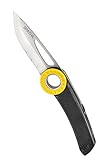
Petzl FALCON
Sit Harness, EN 813 / EN 361 Compatible, Rescue-Oriented
There is a specific and unpleasant experience that separates a good suspension harness from a mediocre one, and it arrives around the ten-minute mark: the leg loops dig into the femoral arteries, the legs go numb, and the whole thing becomes genuinely uncomfortable. The Petzl FALCON is engineered around preventing that. It is a rescue-oriented harness built for prolonged suspension, and the design choices all serve that goal — very wide leg loops, a supportive connecting strap between them that stops the harness riding up into the groin, and a geometry that holds the wearer seated rather than slumped. In our hang testing it was the harness we were happiest in after twenty minutes by a clear margin. For a zipline application that means long spans, waiting suspended mid-line, or courses where riders spend real time on the cable rather than a few seconds, this is a meaningful upgrade over a general-purpose harness. The trade-offs are that it carries almost no gear loops, because it was never meant to, and that it costs a lot for something that looks structurally simple. As with any sit harness, where there is any chance of inverting it needs to be paired with a chest harness.
Pros
- Designed specifically for prolonged suspension, with exceptional weight distribution
- Leg loops connected by a wide, supportive strap that prevents the harness riding up
- Very comfortable on long rides and while waiting suspended at a platform
- Lightweight for its class at around 500 g
- Trusted design used widely in professional rescue work
Cons
- Minimal gear loops and storage, since it is not a climbing harness
- Premium price for what looks like a simple product
- Still a sit harness, so it needs a chest harness where inversion is a risk
The Bottom Line
The most comfortable harness here for hanging still. If your zipline course involves long rides or waiting suspended, comfort stops being a luxury and this is the one to buy.

Black Diamond Momentum Harness
Sit Harness, EN 12277 Type C, Adjustable Leg Loops
Not every zipline application needs a professional suspension harness, and pretending otherwise prices people out of properly certified equipment entirely — which is how uncertified gear ends up on a backyard cable. The Black Diamond Momentum is the sensible floor. It is a genuine climbing harness certified to EN 12277 Type C, from a manufacturer with real quality control and traceability, and it typically costs around $60-70. Black Diamond's Dual Core Construction spreads load across the waistbelt more evenly than the simple webbing designs found on cheaper harnesses, and the adjustable leg loops accommodate a wide range of bodies and clothing layers, which matters when a harness is shared. For short rides — a few seconds on the cable, a quick clip-in and out — it is comfortable and entirely adequate. The honest limitation is what its certification does and does not cover. EN 12277 assumes climbing loads: brief falls and short hangs. It says nothing about comfort or physiological safety during sustained suspension, and on a long hang the narrower leg loops concentrate pressure in a way an EN 813 harness does not. Know which use you are buying for.
Pros
- Widely available, well-proven, and certified to EN 12277 climbing standard
- Dual Core Construction spreads load better than most harnesses at this price
- Adjustable leg loops fit a wide range of body sizes and layers
- Typically around $60-70, a fraction of the cost of a dedicated suspension harness
- Light and packable enough to bring along without thinking about it
Cons
- EN 12277 covers climbing use, not prolonged suspension — comfort drops off on long hangs
- Narrower leg loops concentrate pressure compared to EN 813 harnesses
- Gear loops are wasted weight for zipline use
The Bottom Line
A legitimate, properly certified harness for short zipline rides at a price most people will accept. It is not a suspension harness, and on long hangs you will feel exactly where the difference is.

Petzl SIMBA
Full-Body Harness, EN 12277 Type B, Children Under 30 kg
This is the one product category in this guide where there is a clearly right answer and the wrong answers are genuinely dangerous. Small children do not have the hip structure that keeps a sit harness in place. A child's pelvis is proportionally narrower relative to their waist and torso, and a sit harness that fits snugly on the ground can slide upward and off under load or if the child inverts. A full-body harness with a high sternal or chest attachment point eliminates that possibility, and it also keeps the child upright rather than allowing them to tip backward — which small, top-heavy bodies do readily. The Petzl SIMBA is certified to EN 12277 Type B, the standard written specifically for children under 30 kg, and that certification is the thing to insist on. In use, its colour-coded adjustment points are difficult to thread incorrectly, which matters enormously when a parent or a volunteer is fitting a harness rather than a trained guide. The adjustment range accommodates a broad span of sizes, though the 30 kg limit means it will be outgrown. When a child exceeds it, the answer is a larger full-body harness rather than a sit harness, until they are big enough for a sit harness to be retained reliably.
Pros
- Full-body design with a high sternal attachment point that keeps a child upright
- Certified EN 12277 Type B, the standard specifically for children under 30 kg
- Cannot be slipped out of the way a sit harness can on a small body
- Simple, colour-coded adjustment that is hard to thread incorrectly
- Wide adjustment range covers a broad span of growing children
Cons
- Weight-limited to children under 30 kg, so it is outgrown fairly quickly
- More straps to check and adjust than a sit harness
- Not appropriate for adults or larger teenagers
The Bottom Line
The correct harness for a small child on a zipline, and not an area to improvise. A child's hips often cannot retain a sit harness, and a full-body harness removes that failure mode entirely.
Petzl NEWTON FAST JAK
Full-Body Harness, EN 361 / EN 358, Dorsal and Sternal Points
A sit harness relies on your hips to stay on. That is fine while you remain upright, and it stops being fine the moment you invert — which on a zipline can happen from an awkward launch, a rider spinning, or a braking system that stops the trolley faster than it stops the body. Where inversion is a genuine possibility, a full-body harness is the answer, and the Petzl NEWTON FAST JAK is a well-built adult option. It carries EN 361 fall-arrest certification with both dorsal and sternal attachment points, and its shoulder straps mean the wearer physically cannot come out of it regardless of orientation. FAST buckles at the legs make it far quicker to fit than a fully threaded harness, which matters when you are moving a group through. The adjustment range is broad enough for shared use. What you give up is suspension comfort — fall-arrest harnesses are designed to catch you safely, not to be hung in pleasantly, and after fifteen minutes suspended it is noticeably less comfortable than a FALCON or an AVAO SIT. For short rides where the priority is not coming out of the harness, that is the correct trade.
Pros
- EN 361 fall-arrest certification with both dorsal and sternal attachment points
- Full-body design keeps the wearer upright and prevents inversion
- FAST buckles on the leg loops speed up fitting considerably
- Adjustable across a wide size range, useful for shared or commercial use
- Clear, durable labelling for inspection and retirement tracking
Cons
- Fall-arrest harnesses are less comfortable in sustained suspension than EN 813 sit harnesses
- Heavier and more complex to fit correctly than a sit harness
- Overkill for a short, low, straightforward ride
The Bottom Line
The right choice where inversion is a real possibility — steep lines, high attachment points, or riders who may end up upside down. Full-body means it cannot be fallen out of.
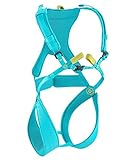
Edelrid Fraggle III
Full-Body Harness, EN 12277 Type B, Children
Having a second properly certified children's option matters because sizing between manufacturers varies more than parents expect, and a harness that does not fit correctly is not doing its job regardless of what it is certified to. The Edelrid Fraggle III is a full-body children's harness certified to EN 12277 Type B, and it is the alternative we would reach for when the Petzl SIMBA does not fit well. Construction is straightforward and robust, with padding at the shoulders and legs that makes a real difference to how long a child will tolerate wearing it — an underrated factor, since a child fidgeting with an uncomfortable harness is a child loosening straps. The bright colour scheme is genuinely functional: it makes a visual check that every strap is correctly seated and no webbing is twisted much faster, which is exactly the check that gets rushed when a queue is forming. Two practical notes. The buckles are threaded rather than automatic, so fitting takes longer. And sizing runs small — fit to measured chest and waist figures rather than the age range printed on the packaging, because age guidance is close to meaningless across the range of children's body shapes.
Pros
- Full-body construction with a chest attachment point, correct for small children
- EN 12277 Type B certified with clear size and weight labelling
- Padded shoulder and leg sections that children tolerate for longer
- Bright colours make it easy to check at a glance that straps are seated correctly
- Generally a little cheaper than the Petzl equivalent
Cons
- Threaded buckles are slower to adjust than automatic ones
- Sizing runs small, so check measurements rather than age guidance
- Same weight limits as any Type B harness, so it is outgrown
The Bottom Line
A well-made, properly certified alternative to the Simba, usually for a little less money. Either is a correct choice for a small child; neither should be substituted with a sit harness.

Petzl ASTRO BOD FAST
Sit + Chest Combination, EN 813 / EN 361 / EN 358
Every other harness in this guide involves a compromise between suspension comfort and inversion security: sit harnesses hang well and can be fallen out of, full-body harnesses cannot be fallen out of and hang poorly. The Petzl ASTRO BOD FAST refuses the compromise by combining both — an EN 813 certified suspension sit harness with a wide, heavily padded waistbelt, connected to an EN 361 certified chest harness that holds the wearer upright and makes inversion a non-event. In suspension testing it was comfortable in the way the FALCON is comfortable, while offering the security of the NEWTON. That combination is why it is the configuration you see on professional rope-access technicians and on the staff running commercial zipline courses, rather than on customers. There are two real reasons most people should not buy it. The first is price: at $350 and up it costs more than several of these harnesses combined. The second is complexity — more straps and more attachment points mean more opportunities to fit it wrong, and a harness fitted wrong is worse than a simpler harness fitted right. For a guide, an instructor, or someone riding very frequently, it is the correct answer.
Pros
- Combines an EN 813 suspension sit harness with an EN 361 chest harness in one system
- Suspension comfort of a dedicated sit harness plus the anti-inversion security of full body
- FAST buckles throughout for quick, repeatable fitting
- Very wide, well-padded waistbelt suited to long periods of suspension
- The configuration most professional guides and course staff actually use
Cons
- The most expensive option here by some margin, often $350 or more
- Complex to fit correctly — more straps means more ways to get it wrong
- Considerable overkill for occasional recreational riding
The Bottom Line
What the professionals wear. It solves the sit-versus-full-body trade-off by simply being both, at a price and complexity that only makes sense for frequent or professional use.

Singing Rock Expert 3D Speed
Sit Harness, EN 813 / EN 358 / EN 361 Compatible
The gap between a $65 climbing harness and a $200 suspension harness is real, and for people who ride often enough to feel it, Singing Rock's Expert 3D Speed sits usefully in the middle. It carries EN 813 certification — the standard that actually covers sustained seated suspension — at a price meaningfully below the Petzl harnesses with the same rating. The 3D-shaped waistbelt is the notable design feature: it is pre-formed to the shape of a torso rather than being a flat strap, so it holds its position and spreads load across a broad area instead of folding and concentrating pressure. In hang testing it was clearly more comfortable than any EN 12277 climbing harness here, and a step behind the FALCON and AVAO SIT in outright plushness. Speed buckles at waist and legs make fitting quick. It includes attachment points for adding a chest harness, which is the correct upgrade path where inversion is possible. The practical drawbacks are availability and documentation. Singing Rock is stocked in fewer shops, so buying usually means ordering from measurements, and the inspection and traceability markings are less clearly presented than Petzl's — a small but genuine annoyance when you are tracking retirement dates.
Pros
- EN 813 suspension certification at a price well below the Petzl equivalents
- 3D-shaped waistbelt holds its form and distributes load effectively
- Speed buckles at the waist and legs for quick adjustment
- Attachment points for adding a chest harness where inversion is a concern
- Robust construction that tolerates frequent commercial-style use
Cons
- Less widely stocked, so sizing often has to be done from measurements
- Padding is firmer and less plush than premium suspension harnesses
- Documentation and inspection markings are less clear than Petzl's
The Bottom Line
The value pick for anyone who wants genuine EN 813 suspension certification without Petzl pricing. Slightly less refined, correctly certified, and considerably cheaper.
CAMP Safety Golden Top Plus Alu
Full-Body Harness, EN 361 / EN 358 / EN 813, Aluminium Hardware
Most full-body harnesses are fall-arrest tools that happen to be usable for suspension, which is why they are so often uncomfortable on a long hang. The CAMP Safety Golden Top Plus Alu is unusual in carrying EN 813 suspension certification alongside EN 361 fall arrest and EN 358 work positioning, meaning it has been assessed for exactly the load case a zipline creates as well as for catching a fall. In practice that shows up as noticeably better hanging comfort than a pure fall-arrest harness, with wider padded leg loops and a ventral attachment point positioned to hold a seated posture. Aluminium hardware keeps the weight well below comparable steel-equipped harnesses, which is felt during a day of repeated fitting and removal. Both ventral and sternal attachment points are provided, so it configures for riding or for rescue as needed. The considerations are that aluminium wears faster than steel under heavy, gritty commercial use, so a course cycling hundreds of riders through it may prefer steel hardware, and that the sheer number of adjustment points makes it genuinely confusing the first few times. Fit it slowly, with the instructions, until the sequence is familiar.
Pros
- Full-body harness carrying EN 361, EN 358 and EN 813 certifications together
- Aluminium hardware keeps weight down substantially versus steel equivalents
- Ventral and sternal attachment points suit both riding and rescue configurations
- Comfortable padding at the waist and legs for a fall-arrest harness
- Well suited to shared use with a broad adjustment range
Cons
- Aluminium hardware is less abrasion-tolerant than steel over heavy commercial use
- More expensive than a simple full-body harness
- Fitting takes practice — the number of adjustment points is initially confusing
The Bottom Line
A full-body harness that is genuinely comfortable to hang in, thanks to carrying EN 813 alongside its fall-arrest ratings. The best single-harness answer where inversion is possible and rides are long.
4. Sit vs Full-Body Harnesses
This is the decision that determines which half of this guide applies to you, and it is not primarily about comfort.
Sit Harnesses
A sit harness consists of a waistbelt and two leg loops, and it stays on because your hips are wider than your waist. It hangs comfortably, it is quick to fit, and for an upright adult on a short ride it is entirely appropriate — it is what most commercial courses issue. Its limitation is that it depends on remaining upright. Invert, and the only thing holding you in is friction and your own grip.
Full-Body Harnesses
A full-body harness adds shoulder straps and a chest or sternal attachment point, so the wearer cannot come out of it in any orientation and is held upright automatically. This is mandatory for children, strongly advisable where a rider might invert, and the standard configuration on steeper or higher courses. The cost is comfort — most full-body harnesses are fall-arrest designs and hang less pleasantly than a dedicated sit harness — and fitting complexity.
Combination Systems
A sit harness paired with a chest harness gets both: the suspension comfort of a purpose-built seat and the anti-inversion security of a full body. This is what professional guides wear. It costs the most, takes the longest to fit, and is genuinely the best answer for anyone riding frequently.
| Rider | Harness Type | Look For |
|---|---|---|
| Child under 30 kg | Full-body, always | EN 12277 Type B |
| Adult, short rides | Sit harness | EN 12277 Type C or EN 813 |
| Adult, long or repeated | Suspension sit harness | EN 813 |
| Inversion possible | Full-body or sit + chest | EN 361 / ANSI Z359 |
5. Fit, Sizing and Suspension Comfort
A correctly certified harness fitted badly is not a safe harness. Fit is where most real-world problems live, and it is the part that gets rushed when a group is waiting.
The waistbelt goes above the hip bones, not around the waist in the fashion sense and not on the hips. It should be snug enough that you cannot pull it down over the iliac crest — that bony ridge is the thing physically stopping the harness from coming off. Two fingers of slack is the usual guidance; if you can fit a flat hand under it, it is too loose.
Leg loops should be snug but not tight, with roughly a flat hand's width of movement. Too loose and you shift within the harness under load, concentrating pressure unpredictably; too tight and you restrict circulation before you even leave the platform.
Every buckle must be correctly threaded and doubled back unless it is an automatic buckle designed otherwise. Check the manufacturer's instructions for the specific model — threading conventions differ, and a buckle that looks closed but is not doubled back can slip under load. This is the single most common fitting error.
Check for twisted webbing anywhere in the system before clipping in, especially on full-body harnesses where there is simply more webbing to twist. A twisted strap loads unevenly and can concentrate force on a narrow edge.
Finally, a note on suspension comfort as a safety issue rather than a luxury. Prolonged motionless suspension in a harness restricts venous return from the legs and can, in extended cases, cause a person to lose consciousness — a recognised phenomenon usually called suspension trauma or orthostatic intolerance. It is not a concern for a fifteen-second ride. It becomes one if a rider stalls mid-line and hangs motionless for a long period, which is exactly why rescue plans exist on commercial courses and why anyone building their own system needs a way to get a stalled rider down promptly.
6. Backyard Ziplines: A Reality Check
Most people searching for a zipline harness are not buying for a commercial course — they are building or using a home zipline. It is worth being direct about where the risk actually sits, because it is mostly not in the harness.
The harness is one component of a system. The others are the cable and its tension, the anchors and whatever they are attached to, the trolley, the braking system, the connectors and lanyard, and the ground clearance along the entire span. In the incident reports that exist, injuries on home ziplines overwhelmingly involve braking, ground clearance, and anchor failure rather than harness failure. Riders hit the end stop too fast, or their feet strike the ground at speed on a sagging cable, or a tree anchor fails.
Cable sag is the specific thing people get wrong. A cable tensioned too tightly puts enormous loads on the anchors — far higher than the rider's weight — and can fail them. A cable too loose sags in the middle and drops the rider toward the ground at the fastest point of the ride. Getting that balance right is an engineering calculation, not a judgment call, and it changes with span, rider weight, and temperature.
Trees are living anchors. They move, they grow, they rot from the inside, and hardware installed through them changes over years. A tree that was a sound anchor when the line was installed may not be one three seasons later.
The practical advice: if you are installing a home zipline, use a complete kit from a reputable manufacturer, install it strictly to the instructions, respect the stated span and weight limits rather than treating them as guidance, and have the installation inspected by someone qualified — an arborist for the trees, and a professional familiar with challenge-course or rope-access standards for the system. Inspect the whole system before every session, not just the harness. And have a plan for getting a stalled rider down, because that situation is far more likely than a catastrophic failure.
7. Inspection, Care and Retirement
Textile safety equipment has a finite life, and unlike a rope or a carabiner, a harness rarely gives obvious warning before it is compromised.
Inspect before every use. Run the webbing through your hands looking for cuts, abrasion, fuzzing, or stiffness. Check every stitch line, particularly at the attachment points and where leg loops join the waistbelt — broken or pulled stitching is the clearest single indicator to retire a harness. Check buckles for cracks, deformation, or grit, and check that adjustment still holds under a firm pull.
Store it dry, dark and clean. UV degrades nylon and polyester steadily, and a harness left hanging in sunlight loses strength invisibly. Chemicals are worse — acids in particular attack nylon severely, and a harness stored next to a car battery or solvents may be compromised with no visible sign at all. Wash with clean water and mild soap only, air dry away from direct heat, and never machine dry.
Respect the service life. Manufacturers typically specify a maximum of ten years from the date of manufacture for textile products, with a much shorter working life under frequent use — often three to five years, and less in commercial service. Check the manufacturer's own instructions rather than a general rule, and record the date of first use somewhere you will find it again.
Retire immediately, regardless of age, if the harness has arrested a significant fall, shows any cut or serious abrasion, has damaged stitching, has been exposed to chemicals, has been in contact with sustained high heat, or has any history you cannot personally verify. When a harness is retired, cut it up before disposing of it so nobody retrieves it and uses it.
Storage location matters more than people assume. A garage is the usual home for outdoor gear and an unsealed concrete slab wicks moisture continuously — our garage floor epoxy guide covers coatings that stop it, and a dehumidifier sized for the space handles humid climates. Store harnesses hanging in a dry, dark cupboard rather than in a damp bin on the floor.
8. Frequently Asked Questions
What is the best harness for zipline riding?
For adults riding repeatedly, the Petzl AVAO SIT FAST is the best overall choice because it carries EN 813 certification for sustained suspension and distributes load across a wide waistbelt and leg loops. For maximum hanging comfort the Petzl FALCON is better still. For children under 30 kg, a full-body harness such as the Petzl SIMBA or Edelrid Fraggle III is the correct and safest option.
Can I use a climbing harness for ziplining?
A climbing harness certified to EN 12277 can be used for short zipline rides by adults, and many commercial courses do exactly that. It is not ideal for sustained suspension: EN 12277 covers climbing falls and short hangs, while EN 813 is the standard written for prolonged seated suspension. On longer rides a climbing harness concentrates pressure in the leg loops and becomes uncomfortable much faster. Never use an uncertified harness, improvised webbing, or a harness of unknown history.
Do children need a full-body harness for a zipline?
Yes. A young child's hips are proportionally narrow relative to their waist and torso, so a sit harness can slide upward and off under load or if the child inverts. A full-body harness certified to EN 12277 Type B for children under 30 kg has shoulder straps and a high chest attachment point that make this impossible and keep the child upright. This is not an area to improvise or size up an adult harness.
What certification should a zipline harness have?
EN 813 is the European standard for sit harnesses intended for sustained suspension and is the most relevant single rating for ziplining. EN 361 covers full-body fall-arrest harnesses and matters where inversion is possible. EN 12277 covers climbing harnesses, with Type B specifically for children under 30 kg. In the United States, ANSI Z359 covers full-body fall protection harnesses. Any harness used on a zipline should carry at least one relevant certification, clear manufacturer markings, and a traceable date of manufacture.
How long does a zipline harness last before it must be retired?
Most manufacturers specify a maximum service life of ten years from the date of manufacture for textile harnesses, and a much shorter working life under frequent use — often three to five years, or less in commercial service. A harness must be retired immediately regardless of age if it has arrested a significant fall, shows cut or abraded webbing, has damaged stitching, has been exposed to chemicals, or has any history you cannot verify. Follow the manufacturer's instructions, not a general rule.
Is a harness enough to make a backyard zipline safe?
No. The harness is one component in a system that also includes the cable, its tension and sag, the anchors and the trees or structures they are attached to, the trolley, the braking system, the lanyard and connectors, and the ground clearance along the whole span. Most serious backyard zipline injuries involve braking, ground clearance, or anchor failure rather than the harness. A home zipline should be designed and inspected by a qualified professional, and consumer kits should be installed strictly to their instructions with the stated weight and span limits respected.
9. Common Mistakes When Buying and Using a Zipline Harness
Every one of these is common, and every one of them is a decision made before anybody leaves the platform.
Putting a Child in an Adult Sit Harness
Tightening an adult sit harness down onto a small child does not make it fit — a child's hips cannot retain it, and it can slide off entirely under load or inversion. Children under 30 kg need a full-body harness certified to EN 12277 Type B. There is no acceptable improvisation here, and this is the most dangerous mistake in this guide.
Buying an Uncertified or Secondhand Harness
Marketplace listings for cheap unbranded harnesses with no certification mark are common, and so are used harnesses sold with no history. A harness that has taken a hard fall or been stored badly can be compromised with no visible sign. Buy new, from a manufacturer that prints its certifications and date of manufacture on the product.
Rushing the Buckle Check
A buckle that is threaded but not doubled back looks closed and can slip under load. This is the most common fitting error, and it happens when someone is moving a queue along. Build a fixed habit: waistbelt above the hip bones, every buckle checked and doubled back, no twisted webbing, then clip in. Check your own, then have someone else check it.
Treating the Harness as the Whole Safety System
A perfect harness on a badly tensioned cable with no braking plan protects nobody. On home installations, the cable, anchors, trolley, brake, and ground clearance deserve far more scrutiny than the harness does — that is where the serious injuries actually come from. Get the installation professionally inspected and inspect the whole system before every session.
Related Outdoor Gear Guides
Buyer's Guide
Best Crash Pads for Bouldering
The other piece of climbing safety gear people buy on price — foam, folds and landings tested.
Top Pick
Best Canoes for River Paddling
15 canoes down real rivers — hulls, rocker, and the materials that survive rock.
All Guides
Browse All Best Lists
Every hands-on tested guide we've published, organized by category.
The Bottom Line
The best harness for zipline riding is the one certified for the load case you are actually creating. For an adult riding repeatedly, that is the Petzl AVAO SIT FAST with its EN 813 suspension rating, or the Petzl FALCON if hanging comfort on long rides matters most. For a child under 30 kg, it is a full-body harness — the Petzl SIMBA or Edelrid Fraggle III — and nothing else. Where inversion is possible, step up to a full-body or a sit-plus-chest combination.
And remember what the harness is not. It is one part of a system, and on home installations it is rarely the part that fails. Spend your attention on the cable tension, the anchors, the brake, and the ground clearance — and have the whole thing inspected by someone qualified before anybody rides it.
More in Fitness & Outdoor Gear
Guides in this category that pair with what you just read.
About the Author
Alex Rivers, Home Improvement Editor
Alex has spent over a decade working on residential and light commercial property maintenance, and now tests every tool, coating and machine that appears in these guides personally.