The Best Pool Deck Sealers in 2026
A pool deck is the one surface where the wrong sealer is a safety problem rather than a cosmetic one. Chlorine, salt, sunscreen and constant wetting all argue for protection — and bare feet on a wet surface rule out most of what makes a deck look glossy.
Alex Rivers
Home Improvement Editor
Last Updated
September 14, 2026
In This Guide
Everywhere else on a property, choosing between a penetrating sealer and a wet-look one is a matter of taste. Around a pool it is a matter of what happens when someone runs across it wet, and that changes the whole shape of the decision.
Our Picks at a Glance
- Best Overall: Foundation Armor SX5000 WB — Water-Based Silane-Siloxane
- Best Budget Pick: Eagle Natural Seal — Water-Based Penetrating Sealer
- Best for Travertine and Stone: Miracle Sealants 511 Impregnator — Solvent-Based Penetrating Sealer
- Only With Anti-Slip Additive: Behr Premium Wet-Look Sealer — Acrylic Wet-Look Sealer
1. Why Pool Decks Are Different
A pool deck takes a combination of abuse that no other surface on a property sees at once.
Constant wetting and drying. Water is splashed onto the deck and evaporates repeatedly through the season, and every one of those cycles carries dissolved minerals into the surface and leaves them there.
Pool chemistry. Chlorinated water is harsher on masonry than rain, and salt water systems are harsher still. Salt crystallising inside the pore structure exerts pressure in the same way ice does, causing spalling over years.
Oils and sunscreen. Every product people put on their skin ends up on the deck. On porous surfaces — travertine especially — those stains soak in and are difficult to remove afterwards.
Bare feet. The one requirement that overrides everything: the surface has to stay grippy when wet and reasonably comfortable underfoot in the sun. That single constraint rules out most film-forming, glossy products regardless of how good they look dry.
What a Pool Deck Sealer Has to Do
0
Change to wet traction
3-5 yr
Realistic life around a pool
24-72 h
Cure before it gets wet
2
Thin coats, not one heavy
2. The Slip Problem
This is the section that should decide your purchase, and it is the one most sealer marketing avoids.
A penetrating sealer lines the pores inside the concrete or stone and leaves nothing on the surface. The deck's texture — the broom finish, the exposed aggregate, the natural roughness of travertine — is completely unchanged, and so is how much grip a wet foot gets. This is why every recommendation on this page defaults to penetrating products around water.
A film-forming sealer, including every wet-look and gloss product, puts a smooth layer over that texture. Dry, it looks superb and the colour depth is genuinely striking. Wet, it is a smooth film with water on it, and the difference in traction is not subtle. Around a pool, where people are wet, barefoot and frequently in a hurry, that is a real hazard rather than a theoretical one.
If a wet look is non-negotiable, the mitigation is a slip-resistant additive — a fine polymer or aggregate grit stirred into the sealer before application, which restores much of the lost traction with only a slight change in appearance. Add it to the whole batch, keep it suspended by stirring regularly during application, and treat it as mandatory rather than optional.
Textured surfaces help but do not solve it. A sealed stamped deck with a deep pattern still has smooth, glossy high points that a foot lands on. The pattern buys you a little; the additive buys you considerably more.
3. The Best Pool Deck Sealers, Reviewed
Three penetrating products for the three common deck materials, and one wet-look sealer included with a clear condition attached, because plenty of people want the look and deserve to know what it costs. We scored each on how much water absorption it stopped, whether it altered the surface underfoot, and how the treated area looked at the end of a full swimming season.

Foundation Armor SX5000 WB
Water-Based Silane-Siloxane
Pool decks fail differently from other concrete: constant wetting and drying, chlorinated or salt water splashing over the edge, sun cream and body oils, and bare feet that make traction a safety issue rather than a preference. A water-based silane-siloxane is the correct answer to all of that, and the SX5000 WB is the best-executed one we have used. It soaks into the pore structure and repels water from within, so nothing sits on the surface to peel, cloud or become slippery, and the deck looks exactly as it did before.
Pros
- Penetrates rather than coating — no change to traction
- Water-based and low odour, safe around a pool area
- Strong resistance to chlorinated and salt water
- Invisible finish; the deck looks untreated
- Long service life, commonly five years or more
Cons
- No colour enhancement at all, by design
- Coverage on porous decks is lower than the label's top figure
The Bottom Line
The right category and the best example of it. A pool deck wants protection that does nothing to the surface underfoot, and this delivers exactly that.

Eagle Natural Seal
Water-Based Penetrating Sealer
Not every pool deck justifies a premium product, and Eagle's Natural Seal covers the budget case competently. It is a water-based penetrating sealer with no gloss and no colour shift, available off the shelf, and it noticeably reduces how much water and staining the deck takes up. The trade-off is duration rather than performance — expect to reapply on a shorter cycle than a premium siloxane, which on a pool deck usually means every couple of years rather than every five.
Pros
- Inexpensive per gallon for the coverage it gives
- Natural finish with no gloss or colour change
- Widely stocked in big-box stores
- Simple roller or sprayer application
- Fine on concrete, pavers and exposed aggregate
Cons
- Shorter interval between coats than premium sealers
- Less effective on very dense, low-absorption decks
The Bottom Line
Good, cheap, invisible protection for a pool deck, provided you accept resealing more often. Easy to buy locally when the season starts.
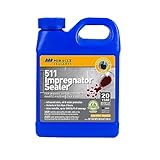
Miracle Sealants 511 Impregnator
Solvent-Based Penetrating Sealer
Travertine and limestone pool surrounds are common precisely because they stay cooler underfoot than concrete, and they are porous, calcium-based and prone to staining from sunscreen and body oils. A stone impregnator handles that far better than a concrete sealer would. 511 penetrates, leaves no film, and does not alter appearance or traction, which is exactly the specification a barefoot surface needs. Ventilate properly and wipe back anything that has not absorbed within a few minutes.
Pros
- Excellent on travertine, limestone and natural stone decks
- No sheen, no darkening, no change to grip
- Strong oil and sunscreen stain resistance
- Long service life on dense stone
- One product covers stone elsewhere on the property
Cons
- Strong solvent odour during application
- Excess must be wiped back before it dries
The Bottom Line
The pick for a travertine or natural stone pool surround, where a general concrete sealer is the wrong chemistry.
Behr Premium Wet-Look Sealer
Acrylic Wet-Look Sealer
Wet-look sealers make stamped and exposed-aggregate decks look spectacular, and around a pool they carry a real safety cost. A glossy acrylic film on a wet surface is slippery in a way that matters when people are running on it in bare feet. If the appearance is the priority, the non-negotiable condition is a slip-resistant additive mixed into the sealer before application. Beyond the traction question, film-forming sealers around pools are more prone to clouding than elsewhere, because water sitting on the surface finds any weakness in the film.
Pros
- Genuinely enhances colour on stamped or exposed aggregate
- Widely available and easy to apply
- Adds a protective film against staining
- Accepts a slip-resistant additive mixed in
- Good value for a decorative finish
Cons
- Dangerously slippery when wet without an additive
- Film-forming — it can cloud, peel and needs stripping eventually
The Bottom Line
Only if the look genuinely matters more than the maintenance, and only with a slip-resistant additive mixed in. On a barefoot deck, tread carefully.
4. By Deck Material
Broom-Finished Concrete
The most common pool deck and the most straightforward. A water-based silane-siloxane penetrating sealer protects against chlorine, salt and staining while leaving the broom texture doing its job. Nothing else is needed, and nothing glossy should go anywhere near it.
Travertine and Natural Stone
Popular around pools because pale stone stays cooler underfoot, and porous enough that sunscreen and body oil staining is a genuine issue. Use a stone impregnator rather than a concrete sealer — the chemistry is matched to calcium-based stone. Our natural stone sealer guide covers the wider category, including the etching that no sealer prevents.
Pavers
A paver pool surround has the added complication of joints. Penetrating sealers leave joint sand alone; film-forming sealers can lock it, which sounds appealing and creates its own problems with trapped moisture and clouding. Our guide to why paver sealer turns white covers that failure, which is more common around pools than anywhere else because the joints are so often damp.
Stamped Concrete
The one material where the wet-look question genuinely bites, because stamped concrete is designed to be seen and the colour is usually protected by a film-forming sealer. Around a pool, the compromise is a matte or satin sealer with a slip-resistant additive rather than a high-gloss one. Our stamped concrete sealer guide covers the range in more depth.
Textured Cool-Deck Coatings
Sprayed acrylic-cement textured coatings are a system rather than a bare surface, and they generally want the manufacturer's own maintenance product rather than a general sealer. Applying a penetrating concrete sealer over one usually achieves nothing, because there is no open concrete to penetrate.
Does the Deck Even Need Sealing?
Worth asking before spending anything, because some pool decks genuinely do not. The test is the same one used on any masonry: spray a little water on several areas and watch. If it soaks in and darkens the surface within about thirty seconds, the deck is absorbing and will take up chlorinated or salt water along with everything else. If it beads, either an existing sealer is still working or the surface is dense enough not to need one.
Test in more than one place. The area nearest the water takes the most splash and wears first, while the far corner under a lounger may still be well protected. It is entirely normal for a deck to need resealing in a band around the pool long before the outer edges do, and treating only the worn zone is a legitimate approach as long as you use the same product.
The other honest answer is that a sealer cannot fix a deck that has already deteriorated. Surface flaking, exposed aggregate where the paste has worn away, or a network of fine cracks all point to resurfacing rather than sealing. Sealing a failing surface preserves the failure, and around a pool the resulting rough patches are unpleasant underfoot as well as unattractive.
5. Salt Water vs Chlorine
Salt water pools are gentler on skin and considerably harder on masonry. Salt carried onto the deck in splashes and on wet feet crystallises inside the pore structure as the water evaporates, and those crystals exert pressure on the surrounding material exactly as ice does. Over years, that shows up as surface flaking and dusting on unsealed concrete — the same spalling pattern seen in freeze-thaw climates, arriving through a different route.
The practical consequences are two. First, sealing matters more around a salt pool than a chlorinated one, because keeping water out of the pores also keeps the salt out. Second, expect a shorter interval between coats: salt exposure wears a sealer faster, and a deck that would go five years in a chlorinated setting may want attention at three.
Rinsing the deck with fresh water occasionally through the season is a genuinely useful habit around a salt pool, particularly on the sides that take the most splash. It costs nothing and removes salt before it dries and crystallises.
One further point specific to salt systems: the chlorinator cell and the associated plumbing occasionally leak a concentrated brine, and where that happens repeatedly on one spot of decking the damage is far worse than general splash. If a single area of the deck is deteriorating much faster than the rest, look at what is above or beside it before assuming the sealer failed — a slow drip of concentrated salt solution will defeat any coating on the market, and no amount of resealing fixes a plumbing fault.
6. Applying It Around a Pool
Clean thoroughly and treat stains first. Sunscreen and oil marks need degreasing individually before the whole deck is washed, or you spread them. Organic staining and algae in shaded corners want a dedicated cleaner rather than a pressure washer alone.
Let it dry completely. A minimum of 24 hours after washing, and longer if the weather is cool or humid. A pool deck holds moisture at the edges and in shaded areas long after the middle looks dry.
Protect the water. Mask the coping edge and keep product out of the pool. Penetrating sealers are applied by sprayer, and overspray drifts more than people expect on a breezy day. Cover nearby planting and any painted metalwork as well, and work on a still morning rather than a windy afternoon.
Two thin coats, not one heavy one. Excess penetrating sealer that cannot absorb dries as a white haze on the surface — the single most common cosmetic failure, and one that takes real work to remove.
Respect the cure before anyone swims. Typically 24 to 72 hours before foot traffic and longer before the deck should get wet. Water landing on a curing sealer is the usual cause of patchy results, and around a pool it is very easy to arrange.
Timing the Job in the Season
The best window is at either end of the swimming season rather than the middle of it. Spring, before the pool is in heavy use, gives a settled dry spell in many climates and means the deck goes into summer protected. Autumn, once swimming has stopped, is equally good and has the advantage that nobody is waiting to get back in the water while the sealer cures.
Whichever end you choose, the constraint is the same: two or three consecutive dry days, mild temperatures, and no swimming during the cure. Mid-season is the hardest time to arrange all of that, which is why so many pool decks get sealed hastily between two hot weekends and end up patchy. Plan it as a distinct job with the pool closed rather than something squeezed around normal use, and the result will look considerably better for the four or five years it lasts.
Common Mistakes
Using a Gloss Sealer Without an Additive
A glossy film on a wet deck walked on by bare feet is a genuine hazard. If the wet look matters, mix a slip-resistant additive into the whole batch and keep stirring during application.
Sealing Over Sunscreen Stains
Oils soak into porous decking and a sealer locks them in permanently. Degrease individual marks first, particularly on travertine, and accept that some may need a poultice and a second attempt.
Flooding It On for Better Protection
More product does not mean more penetration. Anything the deck cannot absorb dries as a white haze on the surface, which is far harder to remove than it was to avoid.
Letting the Deck Get Wet Too Soon
Splashes on a curing sealer leave patches and haze. Keep everyone out of the pool for the full cure window, and pick a settled dry spell — this is not a job for a showery week.
Treating a Salt Pool Deck Like a Chlorinated One
Salt is harder on masonry and wears sealers faster. Around a salt pool, plan on a shorter reseal interval and rinse the splash zones with fresh water occasionally through the season.
Frequently Asked Questions
What is the best pool deck sealer?
For concrete or paver decks, a water-based penetrating silane-siloxane such as Foundation Armor SX5000 WB — it protects without forming a film, so traction is unchanged. For travertine or natural stone surrounds, a stone impregnator like Miracle 511 is the correct chemistry.
Does sealing make it slippery?
A penetrating sealer does not — nothing sits on the surface, so grip is unchanged. A film-forming or wet-look sealer can, and on a barefoot surface that is a safety issue. If you use a topical sealer around a pool, have a slip-resistant additive mixed in.
How often should it be resealed?
Premium penetrating sealers typically give three to five years around a pool — less than elsewhere, because of constant wetting and pool chemistry. Budget products want doing every year or two. Test with water: if it soaks in and darkens the deck rather than beading, it is due.
Does chlorine damage the deck?
Chlorinated splash accelerates surface deterioration and leaves mineral staining as it evaporates. Salt systems are harder still, because salt crystallising in the pores causes spalling much as freeze-thaw does. Sealing slows both by keeping the water out of the pore structure.
Can you do it yourself?
Yes — penetrating sealers go on with a pump sprayer and roller. The demanding parts are cleaning thoroughly, letting the deck dry completely, and choosing a settled dry window so nothing gets splashed or rained on while it cures.
What about travertine?
Use a penetrating stone impregnator, not a concrete sealer. Travertine is porous and calcium-based, so it stains from sunscreen and oils and etches from acids. Never use a topical gloss on it — a wet, filmed travertine deck is exactly the wrong barefoot surface.
Will sealing stop it getting hot?
No. Surface temperature comes from colour and material, not sealer, and a glossy film can make it marginally worse. If heat is the issue, the answers are shade, a lighter surface, or a cool-deck coating designed for the job.
How long before swimming?
Follow the cure time on the product — typically 24 to 72 hours before foot traffic and longer before the deck should get wet. Splashing on a curing sealer is the most common cause of patchy or hazy results around pools.
Related Guides
Review
Best Concrete Sealers
The wider concrete category, penetrating and film-forming compared.
Review
Best Natural Stone Sealers
For travertine and limestone surrounds, where concrete products do not fit.
Guide
Why Paver Sealer Turns White
Blushing and trapped moisture — most common exactly where decks stay damp.
The Bottom Line
Around a pool, choose a penetrating sealer — Foundation Armor SX5000 WB on concrete and pavers, Miracle 511 on travertine and stone. Both protect against chlorine, salt and staining while leaving the surface exactly as grippy as it was, which is the only specification that really matters on a deck people walk on wet and barefoot.
If the wet look is worth having, buy it deliberately: a matte or satin film with a slip-resistant additive mixed through the whole batch, applied in two thin coats with a full cure before anyone swims. And around a salt pool, plan on resealing sooner and rinsing the splash zones through the season — salt does slowly what frost does quickly.
More in Driveway & Concrete Sealers
Guides in this category that pair with what you just read.
About the Author
Alex Rivers, Home Improvement Editor
Alex has spent over a decade working on residential and light commercial property maintenance, and now tests every tool, coating and machine that appears in these guides personally.