The 7 Best Portable Power Stations in 2026
We load-tested 11 power stations with real appliances, timed recharges from empty, and measured how much of the rated capacity you actually get. Only 7 earned a spot.
Alex Rivers
Home Improvement Editor
Last Updated
October 17, 2026
In This Guide
Portable power stations are described with two numbers that sound similar and mean completely different things. Watt-hours tell you how much energy is stored; watts tell you what you can run at once. Buy a unit with enough of one and not the other and it will either shut down the moment you plug in a kettle or die two hours into an outage. Here is how to size one properly and which units earn their price.
Our Picks at a Glance
The Short Answer
EcoFlow Delta 2 (Best Overall). The best-balanced power station available. Fast charging, long-life chemistry, expandable capacity, and enough output for real appliances.
We may earn a commission when you buy through these links, at no extra cost to you. How we test
Best Overall
EcoFlow Delta 2
1. The 7 Best Portable Power Stations in 2026 — Tested & Ranked
We load-tested each unit with a refrigerator, a microwave, a space heater, lights, and laptops, measured usable capacity against the rating, timed AC recharge from empty, checked surge behavior on compressor startup, and recorded fan noise under load. These seven earned their place.

Best OverallEcoFlow Delta 2
1024Wh LiFePO4, 1800W Output, X-Boost
The Delta 2 gets the fundamentals right in a way that makes most comparisons short. Its LiFePO4 battery is rated for over 3,000 charge cycles to 80 percent capacity, which at realistic household use means well over a decade of service rather than the three or four years older lithium chemistries delivered. That single specification changes the value calculation substantially, because a power station is bought as insurance and insurance that degrades quickly is poor insurance. Charging speed is the other standout. In our testing it went from empty to 80 percent in under an hour on AC, which matters enormously in a power outage scenario where you may have a brief window of restored power, or when you realize at 6am that you needed it charged. Most competitors take two to three times as long. The 1800W continuous output runs a refrigerator, a microwave, a coffee maker, or a space heater, and expansion batteries let you triple total capacity later rather than replacing the unit. Two honest cautions. Fast charging and heavy loads both spin the cooling fans audibly, which is noticeable in a quiet room overnight. And X-Boost, which lets it run appliances above its rated wattage, works by reducing output voltage, which is fine for resistive loads like heaters and kettles but should not be used for motors, compressors, or sensitive electronics.
Pros
- LiFePO4 chemistry rated for 3,000+ cycles, roughly four times the life of older NMC packs
- Recharges from empty to 80 percent in under an hour on AC, the fastest in our testing
- X-Boost runs some higher-wattage resistive appliances beyond its nominal output rating
- Expandable with additional batteries to triple total capacity if needs grow
- Well-designed app with genuinely useful monitoring and output control
Cons
- Fan noise is noticeable during fast charging and under heavy load
- X-Boost works by reducing voltage, so it is unsuitable for motor-driven or electronic loads
- Heavier than its capacity suggests at roughly 27 pounds
The Bottom Line
The best-balanced power station available. Fast charging, long-life chemistry, expandable capacity, and enough output for real appliances.

Best ValueJackery Explorer 1000 v2
1070Wh LiFePO4, 1500W Output, Solar Ready
Jackery essentially created the consumer portable power station category, and the Explorer 1000 v2 shows the benefit of that experience in details that are easy to overlook. The interface is genuinely intuitive, with clearly labeled outputs and a display that tells you what you need without interpretation, which matters because a power station is often used under stress during an outage by someone who has not touched it in months. It is also lighter than most competitors at similar capacity, which makes it meaningfully more practical to carry to a campsite or into a vehicle. The move to LiFePO4 chemistry in this generation is the important upgrade, taking expected cycle life from the few hundred cycles of older units to several thousand. Solar input support is strong, and Jackery panel ecosystem is mature and well matched, which makes extended off-grid use straightforward rather than an exercise in adapters and compatibility research. The trade-offs are output ceiling and charging speed. At 1500W continuous it runs refrigerators, laptops, lights, fans, and most kitchen appliances, but it will refuse the largest resistive loads that the 1800W and 2000W units accept. AC charging is slower than the EcoFlow, taking meaningfully longer from empty. Neither matters much for camping or moderate backup use, and both matter if you want maximum flexibility in an outage.
Pros
- LiFePO4 chemistry with a long cycle life at a competitive price
- Lighter than most competitors at similar capacity, genuinely portable for camping
- Simple, intuitive interface that anyone can operate without reading a manual
- Strong solar input support for extended off-grid use
- Excellent build quality and a well-established support track record
Cons
- 1500W output is lower than some competitors, limiting the largest appliances it can run
- AC charging is slower than the fastest units here
- Fewer output ports than similarly priced competitors
The Bottom Line
The easiest power station to recommend to someone buying their first one. Simple, light, well-supported, and priced sensibly.

Best High CapacityBluetti AC200L
2048Wh LiFePO4, 2400W Output, Expandable to ~7.6kWh
There is a clear division in this category between units bought for camping and units bought as home backup, and the AC200L sits firmly in the second camp. At 2048Wh it holds roughly double a typical 1000Wh unit, which in practical terms means running a modern efficient refrigerator for well over a day, powering a CPAP machine for several nights, or keeping a home office running through a full working day. In our testing with a refrigerator, lights, a router, and laptops it comfortably covered an overnight outage with capacity remaining. The 2400W continuous output is the other half of the case. That figure accepts almost any household appliance you would want during an outage, including microwaves, coffee makers, and space heaters, without resorting to voltage-reducing workarounds. A 30A RV outlet extends its usefulness to trailers and campers. And expansion to about 7.6kWh with two B300K packs makes it a genuine platform rather than a fixed-capacity purchase. What you accept is weight and price. At roughly 61 pounds this is not something you carry to a campsite; it is something you wheel to where it is needed and leave there. It is also expensive, and expansion batteries multiply that quickly. If portability matters at all, a smaller unit is the better buy.
Pros
- 2048Wh capacity runs a refrigerator for well over a day, or a CPAP for several nights
- 2400W continuous output handles almost any household appliance short of a well pump
- Expandable to about 7.6kWh with two current B300K packs (8.2kWh with the older B300) for genuine whole-day backup
- Comprehensive port selection including a 30A RV outlet
- LiFePO4 chemistry with a long expected service life
Cons
- Heavy at roughly 61 pounds, which limits real portability to a wheeled cart
- Expensive, particularly once expansion batteries are added
- Large physical footprint requiring dedicated storage space
The Bottom Line
The unit to buy if outage backup rather than portability is the point. It runs a fridge overnight without thinking about it.

Best Fast ChargingAnker SOLIX C1000
1056Wh LiFePO4, 1800W Output, 58-Minute Charge
Charging speed sounds like a minor convenience until you are watching a storm forecast with a power station at 20 percent, or you have a two-hour window of restored power in a multi-day outage. The SOLIX C1000 charges from empty to full in under an hour on AC, which is roughly three times faster than typical units and fast enough to change how you use it. It also means you can top it up opportunistically rather than planning around a long charge cycle. It is unusually compact and dense for its capacity, occupying less shelf space than most 1000Wh units, which is worth something in a garage or closet. The LiFePO4 pack carries a stated 3,000-cycle life and a long warranty, and under moderate loads it runs noticeably quieter than several competitors, which matters if it is powering a CPAP or a fan in a bedroom overnight. Two limitations worth knowing. Anker expansion ecosystem is less developed than EcoFlow and Bluetti, so if you expect to grow capacity substantially later, those platforms offer clearer upgrade paths. And while it is quiet under moderate load, the fastest charging mode spins the fan up loudly, so overnight charging is better done in a slower mode if the unit is near a bedroom.
Pros
- Charges from empty to full in under an hour on AC, among the fastest available
- Compact and dense for its capacity, with a smaller footprint than most 1000Wh units
- LiFePO4 with a stated 3,000-cycle life and a long warranty
- Quiet operation under moderate loads, noticeably better than several competitors
- Well-executed app with clear monitoring and scheduling
Cons
- Expansion options are more limited than EcoFlow and Bluetti ecosystems
- Fan spins up loudly during the fastest charging mode
- Fewer AC outlets than some competitors at similar capacity
The Bottom Line
The best choice when you need it charged now. Under an hour from empty is genuinely useful in an outage.

Best CompactEcoFlow River 3
245Wh LiFePO4, 300W Output, Ultra Compact
Most power station buying advice pushes toward larger capacity, which is correct for home backup and wrong for a lot of actual use cases. Plenty of people want power for a weekend camping trip, a road trip, a tailgate, or a work site, and hauling a 60-pound unit for phone charging and a couple of lights makes no sense. The River 3 is sized for that reality, small and light enough to carry one-handed and cheap enough to buy without much deliberation. Its LiFePO4 chemistry is genuinely notable at this price and size, since small budget units usually use older chemistry with a few hundred cycles of life. Here you get several thousand, meaning it will still hold useful capacity years from now. It charges fully in about an hour, and 245Wh comfortably covers multiple phone charges, several laptop top-ups, camp lighting for a weekend, or a CPAP machine for a night. The limits should be stated bluntly because people do get this wrong. At 245Wh and 300W output, it will not run a refrigerator, a microwave, a coffee maker, or a space heater, and it is not a home outage solution. Buying it expecting backup power for a house is the most common mistake in this category. Buying it as a portable device power source is exactly right.
Pros
- Small and light enough to carry in one hand or pack in a backpack
- LiFePO4 chemistry despite the low price, which is unusual at this size
- Charges fully in about an hour
- Plenty for phones, laptops, cameras, lights, and CPAP machines
- Inexpensive enough to buy as a second unit or a car kit
Cons
- 245Wh will not run a refrigerator or any significant appliance for meaningful time
- 300W output limits it to small electronics and lighting
- Not a home backup solution in any real sense
The Bottom Line
The right size for camping, road trips, and keeping devices alive. Do not mistake it for outage backup for a house.
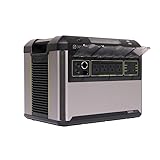
Best for Off-GridGoal Zero Yeti 1500X
1516Wh, 2000W Output, Rugged Build
Goal Zero built its reputation on off-grid and expedition use, and the Yeti 1500X reflects that heritage in ways that matter if the unit will live outside a climate-controlled house. The construction is genuinely rugged, with a case and internals built to tolerate being knocked around a truck bed, a boat, or a remote cabin rather than sitting on a shelf. Its solar ecosystem is the most mature in this guide, with panels, chaining accessories, and mounting hardware that work together without adapter research. At 2000W output with a strong surge rating, it handles motor-driven loads like power tools and pumps better than several competitors with similar continuous ratings, since surge capability is what determines whether a compressor or motor actually starts. It can also be integrated with a home transfer switch, making it a semi-permanent backup source rather than something you run extension cords from. The significant reservation is battery chemistry. It uses NMC lithium rather than the LiFePO4 packs that newer competitors have adopted, which means a cycle life measured in hundreds rather than thousands. For occasional off-grid use that difference is manageable, and for frequent cycling it is a real disadvantage. Combined with a price that reflects the brand rather than the capacity, it is a specialist choice rather than a default one.
Pros
- Exceptionally rugged construction built for genuine outdoor and off-grid use
- 2000W output with a strong surge rating for motor-driven tools and appliances
- Excellent solar charging integration with a mature panel and accessory ecosystem
- Can be integrated with a home transfer switch for semi-permanent backup
- Long-standing brand with strong support and accessory availability
Cons
- Uses NMC lithium rather than LiFePO4, so cycle life is shorter than newer competitors
- Expensive relative to capacity compared to newer entrants
- Heavy at around 46 pounds
The Bottom Line
The most rugged unit here and the best solar ecosystem. The older battery chemistry is the main reason it is not our top pick.
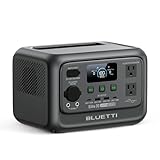
Best UltraportableBluetti EB3A
268Wh LiFePO4, 600W Output, Ultraportable
The EB3A occupies a genuinely useful niche: high enough output to run small appliances, small enough to carry anywhere, and cheap enough to buy as a supplementary unit. At around ten pounds it goes in a car or a backpack easily, and its 600W output is considerably higher than most units in the same capacity class, which means it will actually run a small television, a fan, a blender, or a set of power tool chargers rather than just charging phones. UPS mode is the feature that makes it particularly useful in a home office. Plugged in with equipment running through it, it switches to battery quickly enough to keep a router, a modem, and a desktop computer alive through a brief outage or a voltage sag, which prevents both lost work and the hardware stress of abrupt shutdowns. Fast charging brings it to 80 percent in around half an hour. Its constraints follow from capacity. At 268Wh, drawing 600W depletes it in well under half an hour, so high output and long runtime are mutually exclusive here. The fan is audible whenever significant load is drawn, which is noticeable in a quiet office. And it is not a solution for running anything substantial or for riding out a long outage. Within its size class, it is the most capable unit here.
Pros
- Very light at around 10 pounds while still offering 600W output
- Higher output than most units of similar capacity, running small appliances
- LiFePO4 chemistry with a long cycle life at a low price
- Fast charging, reaching 80 percent in around half an hour
- UPS mode switches over quickly enough to keep a router or PC alive through a blip
Cons
- 268Wh capacity depletes quickly at higher output levels
- Fan is audible whenever meaningful load is drawn
- Not suitable for running anything large or for extended periods
The Bottom Line
Unusually high output for its size and weight. The best pick for keeping a home office or small electronics alive.
2. Portable Power Station Buying Guide: Watt-Hours vs Watts
Two specifications define what a power station can do, they sound almost identical, and confusing them is the single most common reason people buy the wrong unit.
Watt-hours measure stored energy, which determines how long. A 1000Wh power station holds roughly enough energy to run a 100-watt load for ten hours, or a 500-watt load for two. It is the fuel tank. When someone asks how long a power station will run their refrigerator, watt-hours is the number that answers it.
Watts measure output, which determines what. A unit rated at 300W continuous simply cannot run a 1200W microwave, regardless of how much energy it stores. Plug one in and the station shuts down protectively. This is the engine, and it sets the ceiling on which appliances are usable at all.
Surge rating is the third number and matters for motors. Anything with a motor or compressor, refrigerators, pumps, power tools, draws several times its running wattage for a fraction of a second at startup. A unit rated 1800W continuous might have a 2700W surge rating, and it is that surge figure that determines whether a fridge compressor actually starts rather than tripping the protection.
Usable capacity is less than rated capacity. Inverter losses and battery management reserve mean you typically get 85 to 90 percent of the nameplate watt-hours as usable AC output. A 1000Wh unit realistically delivers around 850 to 900Wh at the outlet, and that gap widens at higher loads where inverter efficiency drops.
Sizing in practice. List what you need to run, add up their running wattages to confirm the output rating covers it, then multiply by hours needed to find the watt-hours required. Add roughly 20 percent margin for inverter losses and for the appliance you forgot.
The Numbers Don't Lie
Wh
How long it runs, the fuel tank
W
What it can run, the engine
85-90%
Of rated capacity actually usable
3,000+
LiFePO4 cycles versus ~500 for NMC
3. LiFePO4 vs NMC Power Station Batteries: Why Chemistry Is Worth Paying For
The battery inside determines how many years the unit remains useful, and the industry shifted decisively in the last few product generations. Buying the older chemistry now rarely makes sense.
NMC Lithium
Nickel manganese cobalt cells are energy dense, meaning more capacity per pound, which is why they dominated early power stations. The trade-off is cycle life: typically 500 to 800 full cycles before capacity drops to 80 percent. For a unit cycled weekly that is a few years. They are also less thermally stable, which is a meaningful safety consideration in a large battery.
LiFePO4 (LFP)
Lithium iron phosphate cells are less energy dense, so a LiFePO4 unit is heavier for the same capacity. In exchange they deliver 3,000 to 6,000 cycles, they tolerate heat far better, and they are substantially more thermally stable, which matters in a device you may store indoors and charge unattended. Nearly every serious new power station has moved to LFP.
What the Difference Means in Practice
A power station bought as outage insurance may be cycled only a handful of times a year, in which case either chemistry lasts a long time. One used weekly for camping, as a UPS, or for solar storage will cycle hundreds of times a year, and at that rate an NMC unit degrades noticeably within a few years while an LFP unit is barely started. The heavier weight of LFP is the only real cost.
Calendar Aging Affects Both
Batteries degrade with time as well as cycles, particularly when stored at full charge in heat. Both chemistries benefit from being stored at around 50 to 70 percent charge in a temperate place, and LFP tolerates deviation from that better than NMC does.
| Factor | NMC Lithium | LiFePO4 |
|---|---|---|
| Cycle life | 500-800 | 3,000-6,000 |
| Weight per Wh | Lighter | Heavier |
| Heat tolerance | Moderate | Good |
| Thermal stability | Lower | Higher |
| Best for | Occasional use | Regular cycling |
4. What Size Portable Power Station Do I Need?
Almost every regret in this category comes from buying based on price rather than on a list of what the unit needs to power. Making that list takes ten minutes and prevents most mistakes.
Phones, Laptops, and Lights
A few hundred watt-hours covers this comfortably. Phones need roughly 15Wh per full charge, laptops 50 to 100Wh, and LED lighting almost nothing. A 250 to 300Wh unit runs a weekend of devices, and anything larger is unnecessary weight for this use.
CPAP Machines
A common and important use case. Most CPAP machines draw 30 to 60 watts without a humidifier, so a 500Wh unit covers a night or two comfortably. Running the heated humidifier can triple consumption, so turn it off when running on battery and check whether your machine has a DC input, which avoids inverter losses entirely.
Refrigerators During an Outage
A modern efficient refrigerator uses roughly 1 to 2 kWh per day, but it cycles rather than running constantly, so actual draw averages 100 to 200 watts. A 1000Wh unit typically covers eight to twelve hours; a 2000Wh unit covers a day or more. The critical specification is surge, since the compressor start draw is several times the running wattage.
Kitchen Appliances and Heaters
Microwaves, kettles, toasters, coffee makers, and space heaters all draw 1000 to 1800 watts, which requires a high-output unit and drains capacity fast. Running a 1500W space heater from a 1000Wh station gives you about 35 minutes. These are short-burst loads, not sustained ones.
Power Tools and Job Sites
Corded tools draw heavily and intermittently, and the surge rating matters more than continuous output for anything with a motor. A 1500W or higher unit handles most handheld tools; table saws and compressors need more headroom and a strong surge rating.
5. How to Charge a Portable Power Station: AC, Solar, Car, and Pass-Through
How you refill a power station matters as much as how much it holds, particularly in an outage where the fastest available charging window may be short.
AC charging speed varies enormously. Units range from under an hour to over eight hours from empty. In an outage with intermittent restored power, or when a storm forecast gives you a few hours of warning, that difference is decisive. Fast charging generates heat and spins fans loudly, so most units offer a slower quiet mode for overnight use.
Solar input has two limits that both matter. Maximum solar input wattage determines how fast panels can charge it, and the voltage range determines which panels are compatible at all. A unit accepting 400W of solar input recharges roughly four times faster in good sun than one accepting 100W. Check both figures against any panels you plan to use.
Real solar output is well below panel ratings. A 200W panel produces its rated output only in ideal direct sun at the right angle. In practice, accounting for angle, haze, heat derating, and time of day, expect 50 to 70 percent of nameplate across a day. Plan solar recharging around that reality rather than the sticker.
Car charging is slow but useful. A 12V car outlet typically supplies 100 to 120 watts, which means many hours to fill a large unit. It is best treated as topping up while driving rather than as a primary charging method, though on a long road trip it works well.
Pass-through and UPS mode. Many units can power devices while charging, and some offer a true UPS mode that switches to battery fast enough to keep a computer or router running through an outage. Switchover time matters here: under 20 milliseconds keeps most equipment alive, while slower switching may not.
Keep It Charged, But Not Full
A power station bought for emergencies is useless at 20 percent when the power goes out, but storing lithium batteries at 100 percent accelerates aging. The practical compromise is to store at around 70 to 80 percent, check it every few months, and top it to full when a storm is forecast. Many units offer a storage charge limit setting that does this automatically.
6. Portable Power Station vs Gas Generator
For outage backup, a portable power station and a gas generator solve overlapping problems in very different ways, and neither is universally better.
Power stations win on safety and convenience. They produce no exhaust, so they run indoors safely, which matters enormously because carbon monoxide from generators run in garages and near windows kills people every year during outages. They are silent, require no fuel storage, start instantly, and need essentially no maintenance between uses.
Generators win on sustained output and cost per watt. A generator runs as long as you keep feeding it fuel, which for a multi-day outage is decisive. It also delivers far more power for the money: a generator producing 3500 running watts costs a fraction of a power station capable of similar output, and can run a well pump, a sump pump, and a furnace simultaneously.
Capacity is the fundamental difference. Even a large 2000Wh power station holds roughly the energy in a fifth of a gallon of gasoline. For short outages and essential loads, that is plenty. For heating a house or running a well pump for three days, it is not close.
Many households benefit from both. A power station handles the frequent short outages, keeps devices and a fridge running quietly overnight, and can be used indoors. A generator covers the rare multi-day event. The power station also charges from the generator, which lets you run the generator for a few hours a day rather than continuously.
Solar changes the calculation. A power station paired with panels can be recharged indefinitely without fuel, which is the one scenario where it genuinely competes with a generator on duration. It is slow, weather dependent, and requires meaningful panel capacity, but for a prolonged outage with sun it removes the fuel dependency entirely.
Before You Buy
7. Frequently Asked Questions
What is the best portable power station?
The EcoFlow Delta 2 is the best all-around choice, combining LiFePO4 chemistry rated for over 3,000 cycles with under-an-hour AC charging and 1800W output. For value and simplicity the Jackery Explorer 1000 v2 is easier to recommend to a first-time buyer, and for genuine home backup the Bluetti AC200L at 2048Wh runs a refrigerator for well over a day.
What is the difference between watt-hours and watts?
Watt-hours measure stored energy and determine how long a unit runs, like a fuel tank. Watts measure output and determine what appliances it can run at all, like an engine. A 300W unit cannot run a 1200W microwave regardless of capacity, and a 250Wh unit cannot run a refrigerator for long regardless of output.
How long will a power station run a refrigerator?
A modern efficient refrigerator averages 100 to 200 watts because it cycles rather than running constantly, so a 1000Wh unit typically covers eight to twelve hours and a 2000Wh unit covers a day or more. The critical specification is surge rating, since the compressor draws several times its running wattage for a moment at startup.
Is LiFePO4 worth paying more for?
Yes for most buyers. LiFePO4 cells deliver 3,000 to 6,000 charge cycles against 500 to 800 for older NMC lithium, tolerate heat better, and are more thermally stable. The only cost is weight, since LiFePO4 is less energy dense. For anything cycled regularly, the difference is several years of useful life.
Can a portable power station replace a generator?
For short outages and essential loads, yes, and it runs safely indoors with no exhaust or fuel storage. For multi-day outages or high-draw loads like well pumps and electric heat, no. Even a large 2000Wh unit holds roughly the energy in a fifth of a gallon of gasoline. Many households use a power station for frequent short outages and a generator for rare long ones.
How should I store a power station between uses?
At roughly 70 to 80 percent charge in a temperate place, not fully charged in a hot garage. Storing lithium batteries at full charge accelerates aging. Check it every few months and top it up before a forecast storm. Many units have a storage charge limit setting that maintains this automatically.
8. Common Power Station Buying Mistakes
Nearly all power station disappointment traces to sizing, and specifically to confusing two numbers that sound alike.
Buying Capacity Without Checking Output
A unit with plenty of watt-hours but a low watt output rating will shut down the instant you plug in a microwave or a space heater. List the appliances you need to run, confirm the continuous output rating exceeds their combined running wattage, and check the surge rating separately for anything with a motor or compressor.
Expecting a Small Unit to Back Up a House
A 250 to 300Wh unit is excellent for phones, laptops, camp lighting, and a CPAP machine. It will not run a refrigerator for any useful period and it is not outage backup for a home. This mismatch between expectation and capacity is the most common source of bad reviews in the category.
Ignoring Battery Chemistry
NMC lithium units typically deliver 500 to 800 cycles before meaningful capacity loss, while LiFePO4 delivers several thousand. For a unit cycled weekly, that is the difference between a few years and well over a decade. The only cost of LiFePO4 is weight, and for most buyers it is clearly worth it.
Storing It Fully Charged in a Hot Garage
Heat and a high state of charge are the two things that age lithium batteries fastest, and a garage in summer delivers both. Store at 70 to 80 percent somewhere temperate, use the storage charge limit setting if the unit has one, and top it to full only when you expect to need it.
Everything Else About Portable Power Stations
Comparison
Jackery vs EcoFlow
Model-for-model on capacity, charging, solar input and expandability, and which buyer each suits.
Comparison
Bluetti vs EcoFlow
Tier by tier on capacity, output, charging, expandability and warranty.
Explainer
Can a Power Station Run a Space Heater?
The runtime math, why heaters drain batteries fast, and better ways to stay warm.
Explainer
Can a Power Station Run an Air Conditioner?
Running and startup watts, runtime by capacity, and what solar adds.
Explainer
How Long Does a Power Station Take to Charge?
Wall, car and solar charging times, with the math for your unit.
Explainer
Are Portable Power Stations Worth It?
Who should buy one, who should buy a generator, and the cost per watt-hour.
Related Power & Backup Guides
Buyer's Guide
Best Home Generators
For multi-day outages and high-draw loads a power station cannot cover.
Sizing
What Size Do You Need?
Turning your appliance list into a watt-hour figure that holds up.
Guide
Running a Refrigerator
Duty cycle, startup surge and the real hours you get from a charge.
The Bottom Line
The best portable power station for most people is the EcoFlow Delta 2, which pairs long-life LiFePO4 chemistry with charging fast enough to be genuinely useful in an outage. For a simpler, lighter first purchase the Jackery Explorer 1000 v2 is easy to recommend, and if home backup rather than portability is the point, the Bluetti AC200L runs a refrigerator overnight without thinking about it.
Before you compare prices, write down what you need to run and for how long. Watt-hours answer the how long, watts answer the what, and getting those two straight prevents almost every mistake in this category.
More in Tools & Equipment
Guides in this category that pair with what you just read.
About the Author
Alex Rivers, Home Improvement Editor
Alex has spent over a decade working on residential and light commercial property maintenance, and now tests every tool, coating and machine that appears in these guides personally.