The Best Basement Waterproofing Paint in 2026
Seven coatings tested on block and poured walls through a full wet season. Which ones hold back real hydrostatic pressure, which ones are damp-proofing dressed up as waterproofing, and the one situation where no paint is the answer.
Alex Rivers
Home Improvement Editor
Last Updated
October 20, 2026
In This Guide
Basement waterproofing paint has an unfair reputation, and it comes from a single mismatch: people buy it to solve a drainage problem, and drainage problems are not solved with a brush. Used on the wall it was designed for, prepared the way the label demands, a good masonry waterproofer is one of the highest-value things you can do to a damp basement.
Our Picks at a Glance
The Short Answer
DRYLOK Extreme Masonry Waterproofer (Best Overall). The default answer for a damp block or poured wall. Nothing else here combines the pressure rating, the warranty and the availability.
- Check Price
- Check Price
- Check Price
- Check Price
- Check Price
- Check Price
- Best for Exterior Below-Grade Liquid Rubber Foundation & Basement Sealant — Water-Based Elastomeric MembraneCheck Price
We may earn a commission when you buy through these links, at no extra cost to you. How we test
Best Overall
DRYLOK Extreme Masonry Waterproofer
1. What Basement Waterproofing Paint Actually Does
Concrete and concrete block are porous. Water in the soil outside your foundation migrates through those pores by capillary action, arrives at the inside face, and evaporates into the room — carrying dissolved salts with it, which is what leaves the white chalky bloom known as efflorescence. That process is why a basement smells musty, why the walls feel cold and slightly damp, and why cardboard boxes stored against them go soft. It happens with no visible leak anywhere.
A masonry waterproofer stops that specific mechanism. It penetrates into the open pores of the wall and blocks them, so capillary migration cannot continue. The better products go further: a cementitious formulation actually reacts with the alkaline compounds in the concrete and becomes chemically part of the wall, which is what lets manufacturers publish a hydrostatic pressure rating — a figure for how much water pressure the coating can resist before it is pushed off the substrate.
What it does not do — and cannot do, regardless of price — is hold back water that is arriving in volume. If the perimeter drain is blocked, if the downspouts discharge next to the foundation, or if the water table rises above the slab after heavy rain, water is under real pressure, and pressure finds the weakest point. A coating on the inside face is the last thing in the path and the least able to resist. Read our guide to wet basement solutions if that describes your situation; nothing on this page is the fix.
The Diagnosis in Four Numbers
15 psi
Top hydrostatic rating available
2
Coats required for that rating
75-100
Sq ft per gallon on block
0
Coatings that fix bad drainage
2. The Four Types of Basement Waterproofing Paint
The products sold under this heading use four quite different mechanisms, and matching the mechanism to your wall matters far more than choosing between brands within a type.
Cementitious Latex Waterproofers
Portland cement suspended in a latex binder. Brushed into bare masonry, the cement fraction reacts with the wall and the coating becomes structurally integrated with it. This is the category with real hydrostatic pressure ratings and long warranties, and it is where DRYLOK sits. The finish is slightly textured and gritty, the prep requirements are the strictest of any type, and the performance in return is the best available from the inside of a wall.
Acrylic Masonry Waterproofers
Acrylic resin films that block moisture and resist alkali attack from fresh masonry. They apply far more easily, cover better, tint to a wider range of colours, and leave a smooth, paint-like finish suitable for a finished room. They resist dampness competently and pressure only modestly. KILZ and Behr's basement products are the mainstream examples.
Elastomeric Liquid Rubber
High-solids rubber membranes that cure flexible and stretch rather than crack when the wall moves. They are the only sensible category for a wall with a history of hairline cracking, they tolerate damp substrates, and they can be used below grade on the exterior. They cost more, build thicker, and leave a rubbery surface that will not take ordinary wall paint. Our liquid rubber vs DRYLOK comparison covers the choice in detail.
Penetrating Reactive Sealers
Sodium silicate solutions that soak in and crystallise inside the concrete's capillary structure, sealing it from within with nothing left on the surface. Permanent, invisible, paintable afterwards — and effective only on dense poured concrete or tight block, because coarse porous block does not give the reaction anything to work with.
| Type | Pressure Resistance | Finish | Best For |
|---|---|---|---|
| Cementitious | Highest | Textured | Damp or seeping walls |
| Acrylic | Modest | Smooth, paint-like | Dry-to-damp finished rooms |
| Elastomeric | High | Rubbery, matte | Walls that crack or move |
| Penetrating | High on dense concrete | Invisible | Poured walls, radon control |
3. The 7 Best Basement Waterproofing Paints in 2026
We coated test sections on two walls — hollow concrete block in a basement with a long history of efflorescence, and a poured foundation wall in a garage — and watched them through a full wet season. We scored surface preparation demands, how each coating handled the second-coat build, whether efflorescence returned, and what each one looked like at the end of the winter.

Best OverallDRYLOK Extreme Masonry Waterproofer
Cementitious Latex Waterproofer
DRYLOK Extreme is the product almost every other basement waterproofing paint gets compared against, and after using it on both poured concrete and hollow block we understand why. It is a cementitious-modified latex coating — actual Portland cement suspended in a latex binder — which is the key to how it works. Applied to bare, open masonry, the cement fraction reacts with residual moisture and the calcium compounds in the wall itself, so the coating becomes part of the substrate rather than a film sitting on top of it. That is what allows the 15 psi hydrostatic pressure rating and the ten-year warranty, and it is also why surface preparation dominates the outcome. On a section of block wall that had a thin coat of old latex paint on it, the DRYLOK lifted in sheets within a few months; on the adjacent stripped and wire-brushed section it is still sound. Application is physical work. The first coat has to be worked into the surface with a stiff masonry brush rather than rolled on, because the goal is to force material into every pore and pinhole. The second coat, twenty-four hours later, can be rolled or brushed and is what actually delivers the rated performance — skipping it is the most common way people conclude the product does not work. Coverage runs roughly 75 to 100 square feet per gallon per coat on block, which is far less than a normal paint and worth budgeting for. Where it will not save you is a wall with active running water or a genuine drainage failure; no coating solves that, and DRYLOK does not claim to.
Pros
- Rated to 15 psi of hydrostatic pressure — the highest in this group
- 10-year warranty when applied to properly prepped bare masonry
- Low odour, water-based, and cleans up with soap and water
- Bridges pinholes and pores that thinner coatings run straight through
- Tintable, so a finished basement does not have to be white
Cons
- Two full coats are mandatory — one coat voids the pressure rating
- Unforgiving of poor prep; it will not bond over paint or efflorescence
The Bottom Line
The default answer for a damp block or poured wall. Nothing else here combines the pressure rating, the warranty and the availability.
Best ValueDRYLOK Original Masonry Waterproofer
Cementitious Latex Waterproofer
The Original formula is what DRYLOK sold for decades before the Extreme version arrived, and for a large share of basements it remains the right purchase. The chemistry is the same cementitious latex approach; the difference is in the resin loading and the resulting pressure rating and warranty. If the problem you are solving is a wall that smells musty, feels cool and slightly damp to the touch, and leaves a chalky efflorescence bloom every spring, the Original does that job. If water is visibly beading through the block after heavy rain, spend the extra on Extreme, because the gap between the two ratings is exactly the gap between those two conditions. In practice the application experience is identical: strip everything off the wall, scrub back the efflorescence with a wire brush, vacuum thoroughly, fill any cracks with hydraulic cement, then brush the first coat in hard and roll or brush the second a day later. The Original is slightly thinner and slightly easier to work, which makes a large wall less punishing on the forearms. It is also easier on the budget for a big job — on a full perimeter of a modest basement the price difference across ten or twelve gallons is not trivial. Our advice is straightforward: diagnose the wall honestly first. Damp and musty is Original territory. Wet, seeping, or previously flooded is not.
Pros
- Meaningfully cheaper per gallon than the Extreme formula
- Still rated for real hydrostatic pressure, just less of it
- Same application method and the same forgiving cleanup
- Fine for damp, musty walls with no active seepage
- Stocked in nearly every hardware store in the country
Cons
- Lower pressure rating and a shorter warranty than Extreme
- Slightly thinner build, so coverage per coat is not as generous
The Bottom Line
The sensible buy for a basement that is damp and musty rather than actively wet. Same chemistry, lower rating, noticeably lower price.

Best for a Finished LookKILZ Basement & Masonry Waterproofing Paint
Acrylic Masonry Waterproofer
There is a real difference between waterproofing a utility basement and waterproofing one that will have a sofa in it, and KILZ Basement & Masonry is built for the second case. It is an acrylic-based masonry waterproofer rather than a cementitious one, which costs it some pressure rating and buys it a considerably smoother, more paint-like finish. On a block wall the cementitious products leave a slightly gritty, textured surface that always looks like a coating; the KILZ leaves something much closer to a normal painted wall, which matters if the space is going to be finished. It also carries strong alkali resistance, so it can go onto relatively fresh masonry without the burn-through that ruins ordinary latex paint, and the film includes a mildewcide — genuinely useful in a cool basement where surface mould is a recurring nuisance. Coverage is better than DRYLOK's, in the region of 75 to 125 square feet per gallon depending on how porous the block is, and it rolls on far more easily, which shortens a large job substantially. The limitation is the one that matters most: it is a lower-pressure product. For a dry-to-damp wall being finished as living space it is an excellent choice. For a wall where water has visibly come through in the past, it is the wrong tool, and the fact that it applies so much more pleasantly than DRYLOK is not a good enough reason to use it there.
Pros
- Smoothest finish of anything here — reads as a painted wall, not a coating
- Excellent alkali resistance, so it does not burn through on fresh masonry
- Mildew-resistant film, useful in a basement that stays cool
- Rolls on more easily than the cementitious products
- Good value per gallon with better coverage than DRYLOK
Cons
- Lower hydrostatic pressure rating than the DRYLOK products
- Not the right choice for a wall with real seepage
The Bottom Line
The pick when the basement is going to be lived in. It waterproofs competently and, unlike the cementitious coatings, actually looks like a finished wall.
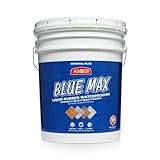
Best for Cracking WallsAmes Blue Max Liquid Rubber
Elastomeric Liquid Rubber
Every rigid waterproofing coating shares one weakness: it is only as intact as the wall underneath it. A block wall that moves seasonally, or a poured wall with a history of hairline cracking, will telegraph that movement straight through a cementitious coating and split it. Ames Blue Max is the standard answer to that specific problem. It is a high-solids elastomeric liquid rubber that cures into a flexible membrane with substantial elongation, so when a hairline crack opens by a fraction of a millimetre the membrane stretches rather than tearing. Applied with a heavy-nap roller or a brush in two thick coats, it builds a genuinely rubbery layer that stays bonded and keeps water out through movement that would have destroyed a rigid film. It also has two practical advantages: it tolerates being applied to slightly damp masonry, which is a real convenience in a basement that never fully dries out, and it works on the exterior of a foundation below grade, so the same product covers both sides of an excavation-based repair. The trade-offs are cost and finish. It is expensive relative to the cementitious products, and the cured surface is rubbery and matte — you cannot simply paint over it with a wall emulsion, so a finished basement needs framing and board over the top rather than paint. Used for what it is good at, though, nothing else on this list comes close.
Pros
- Cures to a genuinely elastic membrane that moves with the wall
- Bridges hairline cracks that rigid coatings simply crack along
- Can be applied to slightly damp masonry, unlike most alternatives
- Works below grade on the exterior as well as inside
- Extremely high build per coat — one gallon goes a long way in depth
Cons
- Rubbery finish cannot be painted over with ordinary wall paint
- Considerably more expensive per square foot than DRYLOK
The Bottom Line
The answer for a wall that keeps cracking. A rigid coating fails at the crack; an elastomeric membrane stretches across it instead.
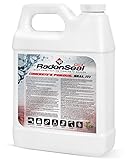
Best Penetrating OptionRadonSeal Deep Penetrating Concrete Sealer
Penetrating Reactive Sealer
RadonSeal is the odd product in this group because it is not a coating in any meaningful sense. It is a reactive sodium silicate solution that soaks into the capillary structure of cured concrete, reacts with free lime and moisture inside the material, and forms crystalline deposits that block the capillaries from within. When it is finished there is nothing on the surface: the wall looks exactly as it did before, and there is no film to peel, blister, or need recoating in five years. That permanence is the strongest argument for it. The critical constraint is substrate. Reactive silicates need a dense, chemically active concrete to work with, so RadonSeal performs well on poured foundation walls and dense block but does very little on porous, open-textured concrete masonry units, where the capillary structure is too coarse for the reaction to seal. Diagnose the wall before buying: if a drop of water disappears instantly into an open, sandy-looking block, this is the wrong product. On poured concrete it is genuinely excellent, and it has a secondary benefit that matters in some houses, reducing both radon entry and water vapour transmission through the slab and walls. The practical annoyance is that you cannot see what you have done. Coverage has to be measured rather than eyeballed, and it pays to work in marked sections so nothing gets missed.
Pros
- Reacts inside the concrete instead of forming a surface film
- Nothing on the surface to peel, blister, or need recoating
- Leaves the wall paintable afterwards with ordinary masonry paint
- Also reduces radon and water vapour transmission through the slab
- Effectively permanent once cured — no maintenance cycle
Cons
- Only works on poured concrete and dense block, not porous CMU
- Invisible when finished, which makes coverage hard to judge
The Bottom Line
Not a paint at all, and that is the point. For poured concrete, sealing the capillaries from within beats coating the surface.

Best for Colour ChoiceBehr Basement & Masonry Waterproofer
Acrylic Masonry Waterproofer
Behr's Basement & Masonry Waterproofer covers a case the specialist products handle badly: a basement or garage wall that needs damp-proofing and also needs to look like a deliberate colour rather than a utility coating. It tints to a wide range of shades, rolls easily, covers well, and is stocked alongside everything else you will be buying for the room, which is a genuine convenience on a project with several trips to the store. Performance-wise it sits with the KILZ product rather than with DRYLOK: an acrylic film that resists moisture and modest pressure competently, and blocks the efflorescence bleed-through that ruins ordinary latex over masonry. On a below-grade garage wall we coated, it went on faster than any cementitious product would have and looked considerably better afterwards, and it has stayed sound through a wet winter with no seepage history. The honest caveat is the same one that applies to every acrylic in this category. If the wall has previously been wet — real water, not just condensation — the acrylics are not the correct category, and choosing one because it applies more pleasantly is a decision you pay for a season later. Confirm the wall is dealing with dampness rather than water under pressure, and this is a good, cost-effective, good-looking choice.
Pros
- Tintable to a wide range of colours, not just white and grey
- Good coverage and an easy roll for a large wall
- Handles interior and exterior above-grade masonry equally well
- Reasonable price and easy to reorder mid-project
- Resists efflorescence bleeding through better than most acrylics
Cons
- Modest hydrostatic rating — a damp-wall product, not a wet-wall one
- Needs a full cure before it reaches its stated performance
The Bottom Line
A solid, easy-to-apply damp-proofing coat when colour matters. Do not ask it to hold back water that a cementitious product should be handling.
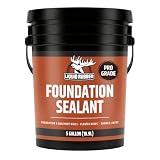
Best for Exterior Below-GradeLiquid Rubber Foundation & Basement Sealant
Water-Based Elastomeric Membrane
Everything else on this page treats the symptom from the inside. This one treats the wall from the side water actually arrives from, which — when it is practical — is the better engineering. Liquid Rubber's foundation sealant is a water-based elastomeric membrane applied to the exterior face of a foundation wall before backfilling: it goes on thick, cures seamlessly with no laps or overlaps for water to track behind, and stays flexible through freeze-thaw movement that would crack a rigid coating. Applied over a properly cleaned wall, with a drainage board and a functioning perimeter drain outside it, this is close to the textbook answer to a wet basement. Being water-based, it is far more pleasant to work with than traditional solvent-borne foundation coatings, and it will bond to concrete, block, and most existing coatings without a specialist primer. The reason it is last on this list is not performance but practicality. Applying it means digging out the foundation, and once an excavator is on site the coating is a small fraction of the total cost — which is exactly why it is only worth considering if you are already excavating for drainage work or a repair. If you are, do not backfill against bare concrete. If you are not, the interior products above are the realistic options, and our interior vs exterior comparison explains where the line falls.
Pros
- Designed for the outside face of a foundation, where waterproofing belongs
- Water-based and low-odour despite being a rubber membrane
- Seamless coverage with no laps for water to track behind
- Sticks to concrete, block, and most existing coatings
- Stays flexible through freeze-thaw cycling
Cons
- Only worth using if you are excavating anyway — that is the real cost
- Needs a proper cure window with no rain in the forecast
The Bottom Line
The right product on the right side of the wall. If the excavator is already booked, this is what should go on before the soil goes back.
4. How to Apply Basement Waterproofing Paint Properly
Preparation is not a preamble to this job — it is the job. Every failure we have seen or been asked about traces back to one of the first three steps below.
Step 1: Get Back to Bare Masonry
Any existing paint has to come off. Cementitious waterproofers bond by reacting with the masonry itself, and a film of old latex between the two prevents that entirely — the coating goes on beautifully and lifts in sheets a few months later. Use a paint stripper suitable for masonry or a grinder with a dust shroud, and accept that this is the slowest part of the project. If a previous owner painted the walls, budget a full day for a modest basement.
Step 2: Kill the Efflorescence
That white powder is mineral salt deposited by evaporating water, and it is not a surface the coating can bond to. Wire-brush it off dry, then vacuum. Do not wash it off with water first — the water dissolves the salts and drives them back into the wall, where they reappear later, often through your new coating. If the wall is heavily contaminated, an efflorescence remover followed by a thorough rinse and a proper drying period is worth the extra day.
Step 3: Fill Cracks and Holes First
Waterproofing paint seals pores, not gaps. Any crack wider than a hairline needs hydraulic cement, chased out into a V-groove first so the repair has something to grip. An actively leaking crack needs a polyurethane injection kit rather than a surface patch. Let the repair cure fully before coating. Our basement crack repair guide covers the technique.
Step 4: Brush the First Coat, Do Not Roll It
The first coat's purpose is to fill the pores, and a roller bridges over them rather than filling them. Use a stiff masonry brush and work the material in with pressure, in overlapping horizontal strokes. It is slower and harder than rolling and it is the difference between a coating that performs and one that leaks through pinholes. Keep a wet edge across each section.
Step 5: Second Coat After a Full Recoat Window
Wait the full time on the label, usually twenty-four hours. Apply the second coat in vertical strokes, crossing the first, which makes missed spots obvious. This coat can be rolled. Every hydrostatic pressure rating published for these products assumes two coats; one coat is a damp-proofer at best.
Pro Tip: Coat the Wall When It Is Coolest
A basement wall in late spring can be warm enough on the surface to flash the coating off before it penetrates, which leaves a weak, chalky layer. Early morning, or a cool spell, gives the material more time to soak into the pores. Ventilate the space while you work and for the full cure period afterwards — even the low-odour water-based products need airflow to cure properly in an enclosed room.
5. When Waterproofing Paint Is the Wrong Answer
Being straight about the limits is the most useful thing this page can do. There are three situations where buying a coating is buying the wrong thing.
Water Arrives After Rain
If the basement is dry most of the time and wet within hours of heavy rain, the problem is surface water reaching the foundation, and it is solved outside: clean gutters, downspouts discharging several feet from the house, and soil graded away from the wall rather than towards it. These fixes cost very little and solve a startling proportion of wet basements. A coating applied before them is money spent on the symptom.
Water Comes Up Through the Floor
Water appearing at the wall-floor joint or through the slab is a rising water table, which no wall coating addresses. The answer is an interior perimeter drain and a sump, or exterior drainage. See water coming through the basement floor for the diagnostic steps.
The Wall Is Structurally Cracked
Horizontal cracking in a block wall, stair-stepping through mortar joints, or a wall that is visibly bowing is a structural matter, not a moisture one. Coating over it hides the evidence of an ongoing problem. Get it looked at before anything goes on the surface.
The corollary is worth stating plainly, because the internet's cynicism about these products has overshot: if your walls are simply damp, musty, and blooming efflorescence, with no standing water and no rain-driven flooding, waterproofing paint is genuinely effective and among the cheapest meaningful improvements available. That describes a large share of older basements.
6. What the Job Actually Costs
Coverage on masonry is much lower than on drywall, and this is where budgets go wrong. A gallon of cementitious waterproofer covers roughly 75 to 100 square feet per coat on block — call it 40 to 50 square feet of finished wall once you account for two coats. A basement with 120 linear feet of wall at seven feet high is around 840 square feet, which means somewhere in the region of 16 to 20 gallons for two coats.
At typical prices that is a materials bill in the several-hundred-dollar range, before the stripper, brushes, hydraulic cement and the shop vac filters you will get through. It is still a fraction of what a contracted interior waterproofing system costs, and our basement waterproofing cost guide puts the numbers side by side. The labour is the real expense if you are not doing it yourself: the preparation, not the painting, is what fills the hours.
One economy worth taking: you do not have to do the entire basement at once. Damp problems are rarely uniform, and treating the two worst walls properly beats treating four walls thinly. One wall, prepped correctly and given two full coats, will outperform a whole basement given one rushed coat over unstripped paint every time.
Common Mistakes With Basement Waterproofing Paint
Five failures account for nearly every disappointed review these products receive.
Applying Over Existing Paint
The single biggest cause of failure. Cementitious waterproofers must bond to bare masonry. Over old paint they peel in sheets, usually within a season, and the product gets the blame for a preparation shortcut.
Stopping at One Coat
Every published pressure rating assumes two full coats. The first fills the pores; the second builds the continuous barrier. One coat looks finished and performs like a damp-proofer.
Washing Efflorescence Off With Water
Water dissolves the salts and carries them back into the wall, where they crystallise again later — sometimes pushing your new coating off from behind. Brush it off dry and vacuum, or use a proper efflorescence remover and allow a real drying period.
Coating Over an Unfilled Crack
These products seal pores, not gaps. Paint spanning an open crack cracks with it. Fill first with hydraulic cement, or inject an active leak with polyurethane, and let the repair cure before coating.
Treating a Drainage Problem With a Brush
Water under pressure from outside will find the weakest point, and an interior coating is the last and weakest thing in its path. Fix gutters, downspouts and grading first. If water still arrives, the answer is drainage, not a better coating.
Before You Buy
Questions to Settle First
Frequently Asked Questions
What is the best basement waterproofing paint?
DRYLOK Extreme for most walls: 15 psi hydrostatic rating, a ten-year warranty on properly prepped masonry, and available everywhere. For a wall that cracks or moves seasonally, an elastomeric such as Ames Blue Max is the better mechanism. For a basement being finished as living space with no seepage history, KILZ Basement & Masonry gives a smoother, more paintable result.
Does basement waterproofing paint actually work?
For the problem it targets, yes. Moisture migrating through porous masonry — damp walls, musty smell, efflorescence — is exactly what these coatings stop, and on properly prepared bare masonry in two coats they stop it reliably for years. What they cannot do is resist water arriving under pressure from failed drainage or a high water table.
How many coats of waterproofing paint do you need?
Two, without exception. The published pressure ratings are based on two full coats. Brush the first in hard to fill the pores, wait the full recoat window — usually 24 hours — then apply the second, crossing the direction of the first so misses show up. A single coat leaves pinholes that water finds.
Can you paint over basement waterproofing paint?
Yes for cementitious and acrylic waterproofers once fully cured, using a masonry-suitable topcoat — although most are tintable, so it is often unnecessary. Elastomeric liquid rubber is the exception: the cured rubbery surface will not hold ordinary wall paint, so finished rooms need framing and board over it instead.
Can you apply waterproofing paint over existing paint?
No — and this is the most common reason these products fail. Cementitious waterproofers bond by reacting with open masonry pores, and any paint film blocks that reaction. Strip or grind the old coating off, wire-brush efflorescence away, vacuum thoroughly, then coat. Acrylic waterproofers are marginally more tolerant but perform far better on bare masonry too.
How long does basement waterproofing paint last?
On bare, properly prepared masonry, a cementitious waterproofer commonly lasts well beyond a decade, and DRYLOK Extreme is warranted for ten years. Acrylics have a shorter life under real moisture load. Preparation dominates the outcome — a coating applied over residue fails within a season no matter what it cost.
Is waterproofing paint enough, or do I need drainage?
If water runs in, pools on the floor, or appears after every heavy rain, no coating fixes it. Start outside: gutters, downspout extensions and grading away from the foundation. If water persists, the answer is a perimeter drain and sump. Paint is the right answer only for damp, musty walls and slow seepage through the masonry itself.
Do you need to seal cracks before waterproofing paint?
Yes. These coatings seal pores rather than bridging gaps, so paint over an unfilled crack simply cracks. Chase the crack into a V-groove and fill with hydraulic cement, or use a polyurethane injection kit if it is actively leaking, and let the repair cure fully before the first coat goes on.
Related Guides
Review
Best Basement Wall Sealers
The wider category, including penetrating sealers and injection systems.
Comparison
DRYLOK vs Flex Seal
Why these two products almost never compete for the same job.
DIY Guide
How to Waterproof a Basement
The full five-step method, from diagnosis through to drainage.
The Bottom Line
For a damp, musty basement with no standing water, DRYLOK Extreme remains the coating to beat — the pressure rating, the warranty and the availability are all real. Choose Ames Blue Max instead if the wall cracks, KILZ Basement & Masonry if the room is being finished and the wall has never been wet, and RadonSeal if the wall is dense poured concrete and you would rather seal it from within than coat it.
Then spend your effort where it actually decides the outcome: strip back to bare masonry, brush efflorescence off dry, fill every crack, and put on two full coats. A mid-priced product applied that way will outlast the most expensive coating on the shelf rolled thinly over old paint — and if water is arriving under pressure rather than seeping through pores, put the brush down and fix the drainage first.
More in Basement Waterproofing
Guides in this category that pair with what you just read.
About the Author
Alex Rivers, Home Improvement Editor
Alex has spent over a decade working on residential and light commercial property maintenance, and now tests every tool, coating and machine that appears in these guides personally.