The 6 Best Leaf Vacuums in 2026
Corded blower-vacs, a cordless vacuum and a standalone mulcher, chosen for suction, mulch ratio and how well each fits the size of your yard.
Alex Rivers
Home Improvement Editor
Last Updated
October 17, 2026
In This Guide
A leaf vacuum is the right tool for beds, patios and small to mid-sized yards, and the wrong one for an acre of oaks. Buy a corded blower-vac with a metal impeller for most yards, go cordless only if you are far from an outlet, and pair a sweeper with a standalone mulcher if you have big trees.
Our Picks at a Glance
The Short Answer
Toro 51621 UltraPlus Leaf Blower Vacuum (Best Overall). The best all-round leaf vacuum for most yards: strong suction, fine mulch and a long track record, as long as you can live with a cord.
- Check Price
- Best Mulch Ratio WORX WG509 TriVac 3-in-1 Blower, Mulcher and Vacuum — 12-Amp Corded Blower-Vac-MulcherCheck Price
- Check Price
- Check Price
- Best Budget Cordless WORX WG583 40V Cordless Blower, Vacuum and Mulcher — 40V (2x20V) Cordless Blower-VacCheck Price
- Check Price
We may earn a commission when you buy through these links, at no extra cost to you. How we test
Best Overall
Toro 51621 UltraPlus Leaf Blower Vacuum
1. How We Picked
A leaf vacuum has to do three things well: pull leaves off the ground, shred them so the bag holds more, and do both without clogging every few minutes. Blowing is a secondary job, and most of the machines here also do it reasonably well, but nobody buys a leaf vacuum for its blower.
We compared the three main kinds of leaf vacuum sold to homeowners, corded blower-vac combos, cordless vacuums and standalone mulchers, and looked for models with long track records and large numbers of owner ratings. For each, we checked the manufacturer's figures for airflow, mulch ratio, impeller material and bag size. We have not run these machines through our own test, and the picks rest on published specifications, owner feedback and how each design fits a particular yard.
We weighed mulch ratio and impeller material heavily, because they decide how many bags you fill and how long the machine lasts. A plastic impeller chips and cracks when it meets acorns and small sticks. Every pick here uses metal blades or, in the WG430's case, replaceable trimmer line. We also flagged where suction in vacuum mode differs from blowing airflow, because that is the number that matters for leaves on grass.
Ratings are Amazon averages with counts rounded down. Where a model is too new to have many ratings, we say so in its card rather than leave it out, because the cordless category is changing fast and the newest machines are the strongest.
2. Blower-Vac, Cordless Vac, Mulcher or Lawn Vacuum
Corded blower-vacs are the classic type and still the best value. A 12-amp motor drives an impeller that either pushes air out of a blower tube or pulls it through a vacuum tube and into a shoulder bag. The Toro, Worx WG509 and Black+Decker here are all this type. They have unlimited run time and strong suction, and the cord is the price you pay.
Cordless leaf vacuums are catching up. Older battery blower-vacs had little suction, but the newest machines like the EGO LV5005 are built around vacuuming and match corded airflow, at least on high. Run time on full power is the limit, so they suit small and mid-sized yards, or owners with spare batteries.
Standalone mulchers like the Worx WG430 do not collect anything. You gather leaves first and then shred them, which is faster than any handheld vacuum when the volume is large. Walk-behind lawn vacuums, such as Billy Goat's 27-inch KV601 with a Briggs and Stratton engine, sit at the top end for large properties, at a price and size most homeowners will never need.
| Type | Best for | Typical mulch | Main drawback |
|---|---|---|---|
| Corded blower-vac | Most suburban yards and beds | 16:1 to 18:1 | Extension cord |
| Cordless leaf vac | Small yards, areas far from outlets | 12:1 to 16:1 | Short run time on high |
| Standalone mulcher | Big trees, composting | 11:1 | Leaves must be gathered first |
| Walk-behind lawn vac | Large lots, commercial use | Varies | Cost, size, gas engine |
For most people, a corded blower-vac is the right first purchase. If your trees drop more than a handheld vacuum can manage, pair a blower or sweeper with a standalone mulcher instead. Our lawn sweeper guide covers the towed and push sweepers that gather leaves on bigger lawns.
3. Our 6 Top Leaf Vacuum Picks
Three corded blower-vacs, two cordless machines and a standalone mulcher. All use metal impellers or replaceable line rather than plastic blades. Ratings are Amazon averages with the rating count rounded down.

Best OverallToro 51621 UltraPlus Leaf Blower Vacuum
12-Amp Corded Blower-Vac-Mulcher
The Toro UltraPlus has been the default corded blower-vac for years, and the reason is suction. Toro rates it at 405 CFM in vacuum mode, which is unusual because most blower-vacs pull less air when vacuuming than they push when blowing. That extra airflow is what lets it lift leaves off a lawn rather than just off a driveway. Debris goes through a metal impeller and what Toro calls a Shredz-All shred ring, which the company says reduces up to 97% of mulched material to less than half an inch. In practice that means a bag that holds a lot more leaves than it looks like it should. As a blower it is respectable, with a variable-speed dial, an oscillating nozzle and a top air speed Toro lists at up to 260 mph. Switching modes uses a quick-release latch. It weighs about 13 pounds and has a two-year warranty. The limits are the ones every handheld vac shares. It is corded, wet matted leaves and twigs will clog it, and it is not a sensible tool for a full acre of oak leaves. For a typical suburban yard, beds and patio, it is the one to buy.
Pros
- Toro rates it at 405 CFM in vacuum mode, more than its 340 CFM blowing
- Metal impeller plus a Shredz-All ring that Toro says reduces up to 97% of debris to under 1/2 inch
- Variable-speed dial and an oscillating nozzle for blowing
- Quick-release latch for switching between blower and vacuum
- About 13 lbs and a 2-year warranty
Cons
- Corded, so range is limited by your extension cord
- Like every handheld vac, it struggles with wet, matted leaves and sticks
The Bottom Line
The best all-round leaf vacuum for most yards: strong suction, fine mulch and a long track record, as long as you can live with a cord.

Best Mulch RatioWORX WG509 TriVac 3-in-1 Blower, Mulcher and Vacuum
12-Amp Corded Blower-Vac-Mulcher
If the reason you want a leaf vacuum is the mulch, the WG509 is the one to look at. Worx rates its two-stage all-metal mulching system at 18:1, meaning 18 bags of loose leaves reduce to roughly one. That is the highest mulch ratio of the handheld machines here, and the output is fine enough to spread straight onto beds or mix into a compost pile. Worx rates the motor at 12 amps and the blower at 350 CFM and 210 mph. The convenience feature that sets it apart is mode switching. Rather than unclipping one tube and fitting another, you flip a lever to go from blowing to vacuuming, which matters when you are clearing a bed edge and want to pull the pile straight into the bag. The 1.2-bushel bag is generous. With nearly 12,000 Amazon ratings it is also very well proven. Its Amazon average is a little below the Toro's, it is corded, and like every fine-shredding vacuum it works best on dry leaves. Use it on dry days and empty the bag before it is packed full.
Pros
- Dual-stage all-metal mulching system rated at 18:1, the highest here
- Worx rates it at 350 CFM and 210 mph
- Switches between blow and vac without changing tubes
- Large 1.2-bushel collection bag
- Nearly 12,000 Amazon ratings
Cons
- Corded, with the same reach limits as the Toro
- Lower Amazon average than the Toro, and like any fine shredder it needs dry leaves
The Bottom Line
Choose it over the Toro if the main goal is the finest mulch for beds and compost, and you mostly vacuum dry leaves.
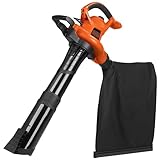
Best ValueBLACK+DECKER BV6600 3-in-1 Blower, Vacuum and Mulcher
12-Amp Corded Blower-Vac-Mulcher
The BV6600 is the budget pick, and it is a real tool rather than a toy. It has a 12-amp motor, Black+Decker rates air speed at up to 250 mph, and the metal fan is rated to grind up to 16 bags of leaves down to one. That 16:1 figure sits between the Toro and the Worx WG509, and it is more than enough to make the difference between dragging several bags to the curb and one. Variable speed control lets you blow gently around flower beds, and Black+Decker lists a noise rating of 68 dBA. Collection is into a reusable EZ-Empty bag, and a built-in cord retainer stops the extension cord pulling out when you swing the tool. Warranty is two years. Where it falls behind the more expensive machines is convenience. Switching from blowing to vacuuming means swapping tubes, which takes a minute and discourages you from switching as often as you should. Its listed weight is also a few pounds more than the Toro's. If you will vacuum a few times each autumn and blow the rest of the year, it is good value.
Pros
- 12-amp motor with air speeds up to 250 mph
- Metal fan rated to grind up to 16 bags of leaves down to one
- Variable speed for blowing around beds and delicate plants
- Black+Decker lists it at 68 dBA, quieter than most gas blowers
- Built-in cord retainer and a 2-year warranty
Cons
- Switching modes means swapping tubes, slower than the Worx lever
- Listed weight is a few pounds more than the Toro's
The Bottom Line
A solid, lower-cost blower-vac with a respectable mulch ratio, best for yards where vacuuming is an occasional job.
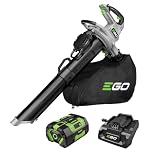
Best CordlessEGO Power+ LV5005 Leaf Vacuum and Mulcher
56V Cordless Leaf Vacuum Kit
Cordless leaf vacuums have mostly been weak, because vacuuming leaves takes a lot of power and batteries have not kept up. The EGO LV5005 is the first we would recommend without big caveats on suction. EGO rates it at 500 CFM, with top air speed of 210 mph when the tapered nozzle is fitted and 145 mph without it. Leaves pass through a six-blade metal impeller that mulches at 16:1 into a 40-liter bag, and a shoulder strap takes some of the weight, which EGO lists at about 12.8 pounds in vacuum mode. The kit comes with a 6.0Ah battery and a 320W rapid charger. EGO rates run time at up to 90 minutes on low and up to 15 minutes on high, and that spread is the key thing to understand. On high, which is where you will want it for lawns, one battery covers a modest yard. A second battery fixes that if you already own EGO tools. It is IPX5 rated and backed by a five-year tool warranty. It is new, so it has very few Amazon ratings, and its score should be read with that in mind.
Pros
- Cordless, with a 56V 6.0Ah battery and 320W charger included
- 500 CFM, and up to 210 mph with the tapered nozzle fitted
- Six-blade metal impeller mulches at 16:1
- EGO rates run time at up to 90 minutes on low and 15 minutes on high
- IPX5 weather rating, 5-year tool and 3-year battery warranty
Cons
- Very few Amazon ratings yet, so there is little owner evidence
- Expensive, and full-power run time is short
The Bottom Line
The cordless leaf vacuum to buy if you want to clean up far from an outlet and are on, or willing to join, EGO's 56V platform.
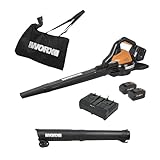
Best Budget CordlessWORX WG583 40V Cordless Blower, Vacuum and Mulcher
40V (2x20V) Cordless Blower-Vac
The WG583 is the budget route to a cordless leaf vacuum, and it is most attractive if you already own Worx's 20V PowerShare batteries, because it runs on two of them together. The kit includes two batteries and a dual charger. Worx rates it at up to 340 CFM and 210 mph, with a brushless motor and two speeds. In vacuum mode the two-stage impeller mulches at 12:1 into a 1-bushel bag, coarser than the corded machines and the EGO, but still a big reduction in bag count. A switch changes between blowing and vacuuming without swapping tubes, and the vacuum tube has a small wheel at the end, so it rolls along the ground and you are not holding the full weight out in front of you. That is a genuinely useful idea on a long session. We rank it below the EGO for a clear reason: at 3.8 stars from around 800 ratings, owners are noticeably less happy with it than with the other picks, and suction is not in the same class as the EGO. For decks, patios and small lawns, it is a sensible lighter option.
Pros
- Runs on Worx 20V PowerShare batteries, two of which come in the kit
- Brushless motor and a 2-stage impeller mulching at 12:1
- Worx rates it at up to 340 CFM and 210 mph
- Tool-free switch between blowing and vacuuming
- Wheeled vacuum tube carries the weight while you vacuum
Cons
- Lowest Amazon rating here at 3.8 stars
- Smaller 1-bushel bag and a coarser 12:1 mulch
The Bottom Line
A lighter, cheaper cordless option for patios, decks and small lawns, especially if you already own Worx 20V batteries.

Best Leaf MulcherWORX WG430 13-Amp Electric Leaf Mulcher
Standalone Leaf Mulcher
A standalone leaf mulcher solves a different problem from a leaf vacuum. It does not pick anything up. You rake, blow or sweep leaves into a pile, then feed them into the hopper, and it shreds them into a bag or bin below. The WG430 is the most popular homeowner version, and for large leaf volumes it is faster than any handheld vacuum. Worx rates it at up to 53 gallons of leaves per minute with an 11:1 reduction, so a pile that would fill many lawn bags ends up in one. Instead of a metal blade, it spins lengths of heavy trimmer line, the way a string trimmer does, which makes it more forgiving if a small stick goes in and less likely to need sharpening. The motor is 13 amps and the cutting diameter is 13 inches. Assembly needs no tools, it folds for storage and it ships with 24 replacement lines and a universal bag holder. The line does wear, especially with dry, gritty leaves, and you need to keep twigs and stones out. Pair it with a sweeper or blower and it is the most efficient setup here for big trees.
Pros
- Worx rates it at up to 53 gallons of leaves per minute
- 11:1 mulch ratio from a line-based system with no metal blades
- 13-amp motor and a 13-inch cutting diameter
- Tool-free assembly and folds for storage
- Comes with 24 replacement lines and a universal bag holder
Cons
- Does not pick anything up, so you still rake or blow leaves into a pile
- Trimmer line wears and needs replacing, and sticks slow it down
The Bottom Line
The right tool if you already gather leaves with a rake, blower or sweeper and want to shrink the pile for bags or compost.
4. What Mulch Ratios Really Mean
A mulch ratio is a manufacturer's claim about volume reduction. A 16:1 rating means 16 bags of loose leaves should shred down to about one. It is a useful comparison between machines from the same era, but it is measured with dry, ideal leaves, so expect less with damp leaves, pine needles and mixed debris.
Higher ratios do two things. They mean fewer bags to haul to the curb or compost, and they produce finer material that breaks down faster and spreads more neatly on beds. The Worx WG509's 18:1 output is fine enough to use as a top dressing. The WG583's 12:1 and the WG430's 11:1 leave larger pieces, still far smaller than whole leaves.
Toro does not quote a ratio for the UltraPlus. It instead says up to 97% of mulched debris is reduced to less than half an inch, which is a different way of describing particle size. Read that as fine mulch in the same league as the 16:1 machines, rather than as a precise number you can compare directly.
Impeller material matters more than the headline ratio over time. Plastic impellers can crack or chip when they hit acorns and small sticks, and their shredding gets worse as the edges wear. Metal impellers last longer and keep cutting. Every vacuum in this guide uses metal, and that should be a minimum requirement for any leaf vacuum you consider.
5. Leaf Vacuum vs Blower, Sweeper or Mulching Mower
A leaf vacuum is not always the right tool. A good blower moves leaves far faster than any vacuum picks them up. If your plan is to blow leaves into the woods, onto a tarp or to the curb for municipal collection, a dedicated blower from our best leaf blower guide will save hours compared with vacuuming.
Lawn sweepers gather leaves across open grass at walking pace or behind a riding mower, with no motor and no noise. On lawns over about a quarter acre with lots of trees, a sweeper plus a mulcher beats a handheld vacuum by a wide margin. The vacuum's advantage is in places a sweeper cannot go: beds, patios, corners against the house and window wells.
A mulching mower may be the cheapest answer of all. Mowing over a light layer of dry leaves chops them small enough to fall into the turf and feed it, and many lawn-care programs now recommend it over bagging. Our best mulching mower guide covers the decks that handle leaves best. It does not work for a thick layer, and it does nothing for beds and hard surfaces.
The combination that works for most yards is a mower for leaves on the lawn, and a blower-vac for beds, patios and the leaves you want as mulch. Bigger lots add a sweeper. A leaf vacuum alone on a large, tree-heavy lot will be slow and frustrating, and that is the most common reason owners give up on them.
6. Corded vs Cordless
Vacuuming leaves is one of the hardest jobs you can ask of a battery. Lifting leaves off grass takes far more power than blowing them across concrete, and the shredding impeller adds load on top. That is why older cordless blower-vacs were so disappointing, and why the best cordless vacuums still quote very different run times on low and high.
Corded machines have no such limit. A 12-amp motor runs all afternoon, and the Toro's 405 CFM in vacuum mode is still a figure most battery vacuums cannot match. The cost is the cord. Use a heavy-gauge outdoor extension cord, loop it through the retainer most machines provide, and plan your route so you work away from the outlet without crossing the cord.
Cordless makes sense when your leaf problem is far from an outlet, when you have small areas to clear often, or when you already own batteries from the same brand. If you are on EGO already, the LV5005 adds a vacuum to your platform without a new charger. The best cordless leaf blower guide covers the blower side, and our cordless battery explainer covers amp-hours and run time.
Gas handheld blower-vacs exist too, but they combine the noise and fumes of a gas blower with the weight of a vacuum. For most homeowners, a corded or cordless electric machine is the better choice, and the walk-behind gas lawn vacuums are a different tool for much larger properties.
7. Wet Leaves, Sticks and Clogs
Every handheld leaf vacuum clogs with wet, matted leaves. Damp leaves stick together, pack into the impeller housing and stop airflow. The single best thing you can do for a leaf vacuum is to use it on dry days, ideally in the afternoon after the dew has gone.
Sticks, pine cones and stones are the other enemy. A small twig usually shreds, but anything the thickness of a pencil or more can jam a metal impeller and chip a plastic one. Walk the area first and pick up obvious sticks, or blow the leaves onto a hard surface where debris is easier to see before vacuuming.
When a vacuum does clog, stop immediately. Unplug it or remove the battery, then open the tube or housing and pull the material out by hand with gloves on. Running it while clogged strains the motor and can damage the impeller. Never reach into the intake of a machine that is still connected to power.
If your leaves are mostly wet by the time you get to them, a vacuum is the wrong tool. Rake or blow them into piles, let them dry for a day, and then mulch them. Or leave them on beds as they are, since a layer of whole leaves is good winter cover for many perennials.
8. Getting the Most From a Leaf Vacuum
Work from the edges in. Vacuum beds, corners and along the house first, then the open areas, because the bag fills fastest on the first passes and you want those passes on the leaves that are hardest to reach any other way. On lawns, sweep the tube in short, overlapping arcs rather than long straight lines.
Empty the bag before it is completely full. Airflow drops sharply as the bag packs, and by the time it is truly full the vacuum has lost much of its suction and is more likely to clog. Most users find the right moment is when the bag starts to feel heavy on the shoulder.
Use the mulch. Shredded leaves are excellent around shrubs and in vegetable beds, and they compost far faster than whole leaves. A bag of 16:1 mulch from a few trees can cover a sizeable bed. If you do not need it, shredded leaves take far less curbside bag space, which matters in towns that charge per bag.
Wear a dust mask on dry, dusty days. Shredding dry leaves throws up fine dust from the bag fabric, and a basic mask makes a long session much more pleasant. Safety glasses help too, especially when switching back to blowing near gravel or mulch beds.
9. Safety and Maintenance
Disconnect power before you touch the impeller, tubes or bag fittings. Leaf vacuums have exposed spinning blades inside the intake, and the most serious injuries happen when someone clears a clog with the machine still plugged in or the battery still fitted.
Check the impeller at the start of each season. Look for chips, cracks or bent blades, and replace a damaged impeller rather than run it, because an unbalanced impeller vibrates badly and wears the motor bearings. On the Worx WG430, replace worn trimmer lines as needed, which is a quick job.
Wash or shake out the collection bag after the season and let it dry fully before storage. Damp leaf residue left in a bag over winter grows mold and weakens the fabric. Inspect zippers and seams, since a split bag leaks dust over your clothes on every use.
Store cordless batteries indoors at a partial charge over winter and keep corded machines somewhere dry. Check the power cord and extension cord for cuts every season, since dragging a cord across a driveway or through a bed edged with a sharp tool from our lawn edger guide is the most common way they get damaged.
10. Who Should Skip a Leaf Vacuum
If you have a large lot with many mature trees, a handheld leaf vacuum will not keep up. You will spend hours filling and emptying bags. A tow-behind sweeper, a mulching mower, a powerful blower and possibly a standalone mulcher will do the job in a fraction of the time.
If your town collects loose leaves from the curb, a good blower is the fastest way to get them there. Vacuuming and bagging is extra work that the collection service makes unnecessary, unless you want the mulch for your own beds and compost.
If your leaves are mainly pine needles, expect a leaf vacuum to struggle. Needles pack tightly and do not shred well, and sweepers and rakes tend to handle them better. The same applies to yards with lots of acorns, gumballs and sticks mixed in with the leaves.
Everyone else, especially owners of small and mid-sized yards with flower beds, patios and a few trees, will find a blower-vac one of the most useful tools in the shed. It turns a weekend of raking and bagging into an hour, and gives you free mulch in the process.
11. Common Mistakes to Avoid
Vacuuming wet leaves
Damp leaves stick together and pack into the impeller housing, killing airflow and clogging the machine every few minutes. Wait for a dry afternoon. If the leaves will not dry, rake them into piles, let them dry for a day, and vacuum or mulch them afterward.
Buying a plastic impeller
Plastic impellers chip and crack when they meet acorns, small sticks and stones, and their shredding gets worse as the edges wear down. Every machine in this guide uses metal blades or replaceable line. Treat a metal impeller as a minimum requirement for any leaf vacuum you buy.
Expecting a handheld vac to clear a big lot
A handheld leaf vacuum is built for beds, patios and modest lawns. On a large lot with mature trees, you will spend hours emptying bags. Use a sweeper, mulching mower or blower for the open lawn, and save the vacuum for areas the other tools cannot reach.
Letting the bag pack full
Suction drops sharply as the collection bag fills, and a packed bag makes clogs far more likely. Empty it when it starts to feel heavy on your shoulder rather than when it is completely full. The machine works noticeably better, and the bag lasts longer.
Clearing a clog with the power connected
The impeller is an exposed spinning blade just inside the intake. Before you reach into a tube or housing to clear a jam, unplug the cord or remove the battery, and wear gloves. Never assume the impeller has stopped just because the motor has gone quiet.
Before You Buy
Also Needed for This Job
12. Frequently Asked Questions
Is a leaf vacuum better than a leaf blower?
They do different jobs. A blower moves leaves much faster across open ground, so it is better for getting leaves to the curb, a tarp or the woods. A vacuum picks leaves up and shreds them, so it is better for beds, patios, corners and producing mulch. Many homeowners use a blower-vac that does both.
What is a good mulch ratio for a leaf vacuum?
Most good blower-vacs are rated between 10:1 and 18:1. Anything from about 12:1 upward makes a big difference to how many bags you fill. Higher ratios also produce finer mulch for beds and compost. Remember the figures assume dry leaves, so expect less reduction with damp material and pine needles.
Can a leaf vacuum pick up wet leaves?
Not well. Every handheld leaf vacuum struggles with wet, matted leaves, which pack into the impeller and block airflow. Some models handle damp leaves better than others, but the practical answer is to vacuum on dry days, or rake wet leaves into piles and let them dry before vacuuming or mulching them.
Are cordless leaf vacuums any good?
The newest ones are. Older battery blower-vacs had weak suction, but machines like the EGO LV5005 are rated for airflow similar to corded models. Run time on high is the limitation, often around 15 minutes per battery, so cordless vacuums suit small and mid-sized yards or owners with spare batteries on the same platform.
What is the difference between a leaf vacuum and a leaf mulcher?
A leaf vacuum sucks leaves up through a tube and shreds them into a bag. A standalone leaf mulcher like the Worx WG430 does not pick anything up. You gather leaves first with a rake, blower or sweeper and feed them in. For large volumes, a mulcher is faster, while a vacuum is better for beds and tight spaces.
Can I vacuum leaves from gravel or mulch beds?
Carefully. A leaf vacuum will pull up small stones and wood mulch along with the leaves, which can chip the impeller and fill the bag with debris. Use a low setting, hold the tube a little above the surface, or blow the leaves onto a hard surface first and vacuum them there.
Should I mulch leaves or bag them?
Mulching is usually better. Shredded leaves make excellent bed mulch and compost, and fine shreds left on the lawn feed the soil. Bagging whole leaves takes far more bags and curb space. If your town composts curbside leaves anyway, shredding still saves on bags and makes the pile much easier to handle.
Related Leaf Cleanup Guides
The Bottom Line
For most yards, the Toro 51621 UltraPlus is the leaf vacuum to buy, with the strongest vacuum airflow among the corded picks and fine mulch. If finer mulch is the priority and your leaves are usually dry, choose the Worx WG509, and if budget matters most, the Black+Decker BV6600 does the job well.
Go cordless with the EGO LV5005 if outlets are far from where the leaves fall, and if you have big trees, gather with a sweeper or blower and shred with the Worx WG430. Whichever you buy, vacuum on dry days and empty the bag early.
More in Lawn & Yard Care
Guides in this category that pair with what you just read.
About the Author
Alex Rivers, Home Improvement Editor
Alex has spent over a decade working on residential and light commercial property maintenance, and now tests every tool, coating and machine that appears in these guides personally.