Best Painter's Tape
Most bad paint lines are not bad tape, they are the wrong tape. Match the adhesion to the surface and the removal window to your schedule, and the line takes care of itself.
Alex Rivers
Home Improvement Editor
Last Updated
September 29, 2026
In This Guide
Painter's tape is sold as one product in five colours, and it is really three different products: medium-adhesion tape for cured trim and glass, low-adhesion tape for fresh paint and wallpaper, and weather-rated tape for the outside of the house. Buy the right one of those three and almost any major brand will give you a clean line. Buy the wrong one and no amount of burnishing will save the wall.
Our Picks at a Glance
- Best Overall: FrogTape Multi-Surface Painter's Tape — Green, Medium Adhesion, 21-Day Removal
- Best Value: ScotchBlue Original Multi-Surface Painter's Tape 2090 — Blue, Medium Adhesion, 14-Day Removal
- Best Edge-Sealing Blue Tape: ScotchBlue Sharp Lines Multi-Surface Painter's Tape with Edge-Lock — Blue, Medium Adhesion, Edge-Lock, 14-Day Removal
- Best for Fresh Paint: FrogTape Delicate Surface Painter's Tape — Yellow, Low Adhesion, 60-Day Removal
- Best for Wallpaper and Floors: ScotchBlue Delicate Surfaces Painter's Tape with Edge-Lock 2080EL — Low Adhesion, Edge-Lock, 60-Day Removal
- Best for Exterior: ScotchBlue Exterior Surface Painter's Tape 2097 — Yellow Poly Tape, UV-Resistant, About 7-Day Removal
- Best Budget Bulk Buy: IPG ProMask Blue Painter's Tape with Bloc-It — Blue Crepe, Medium Adhesion, 14-Day Removal
1. How We Picked and Tested
Painter's tape looks like a commodity, and in one sense it is: the major brands all use crepe paper or thin poly backings with a pressure-sensitive adhesive, and a few pennies of difference per foot does not matter on a single room. What does matter is the adhesion level, the edge treatment and the removal window, and those three numbers vary far more than the colour of the roll suggests.
We started with every tape the major manufacturers publish specifications for, then cut the list to tapes with broad retail and online availability and a clear rating for surface, adhesion and removal days. Tapes that did not state a removal window, or stated one we could not confirm from the manufacturer, were dropped. So were novelty tapes sold mainly for crafts.
Each tape went on the same set of test panels: smooth drywall with a cured eggshell finish, lightly textured drywall, a wall painted 24 hours earlier, primed pine trim, and window glass. We burnished each strip the same way, rolled a contrasting latex colour over the edge, and pulled the tape at a 45-degree angle once the paint was dry to the touch. We then looked for bleed under the edge, lifted base paint, and residue.
Removal windows came from the manufacturers rather than from our own long-duration testing. We did leave several tapes in place for a week on a sunny window wall to see which ones started to bond or tear, but a single week in one house is not a substitute for the rated figures, and we say so where it matters. Ratings and review counts are rounded from what we saw on Amazon.
2. Adhesion Levels, Explained
Every painter's tape is a compromise between two jobs that pull in opposite directions. It has to grip hard enough to seal the edge and stay put through two coats, and it has to let go cleanly without taking paint, finish or wallpaper with it. Manufacturers resolve that compromise differently for different surfaces, and that is what the adhesion level on the label is telling you.
Medium adhesion is the default blue and green tape. It is designed for surfaces that are hard, cured and not easily damaged: trim with old paint, glass, tile, metal, and walls whose paint has been on for weeks. It holds through humidity and brushing, and it is the right choice for most masking. Low adhesion, usually sold in yellow or purple, is designed for surfaces that would be damaged by a stronger bond: paint that went on yesterday, wallpaper, cabinets with a factory finish, and finished wood floors.
| Adhesion | Typical colour | Use it on | Avoid it on |
|---|---|---|---|
| Low | Often yellow | Paint 24 hours or older, wallpaper, cabinets, finished floors | Dusty, greasy or rough surfaces |
| Medium | Blue or green | Cured paint, trim, glass, tile, metal | Paint less than about a week old |
| High or rough-surface | Varies | Brick, stucco, concrete, rough wood | Anything painted or finished |
| Exterior UV-rated | Yellow poly or blue | Outdoor trim, vinyl, metal, glass | Masonry unless specifically rated |
The colours are a guide, not a standard. FrogTape uses green for medium and yellow for low adhesion, 3M sells most of its ScotchBlue range in blue whatever the adhesion, and exterior tapes come in several colours. Read the adhesion level and the surface list on the label rather than buying by colour, especially when you are standing in an aisle with a dozen similar rolls.
The most common mistake is not using too weak a tape, it is using a medium tape on a surface that needed a low one. A medium tape on fresh paint will usually work, which is why people keep doing it, and then one day it pulls a strip of ceiling paint off with it. If you are unsure, go lower: a low-adhesion tape on a cured surface costs you a little hold, while a medium tape on a soft surface can cost you a repaint.
3. Our 7 Top Picks
The seven tapes below cover every job a homeowner is likely to face: cured trim and baseboards, walls painted last weekend, wallpaper and wood floors, stripes and accent walls, and exterior trim that will sit in full sun for days. Two brands dominate the category for good reason, so most picks are FrogTape or ScotchBlue variants; what separates them is adhesion level and removal window rather than brand. One contractor-grade blue tape rounds out the list for anyone buying by the case.
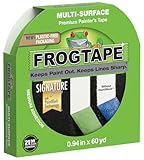
FrogTape Multi-Surface Painter's Tape
Green, Medium Adhesion, 21-Day Removal
FrogTape's green Multi-Surface roll earns the top spot because it solves the problem that ruins most taped lines: paint wicking under the edge. The adhesive carries a polymer the company calls PaintBlock, which reacts with the water in latex paint and forms a thin gel barrier right at the tape edge. You can see the effect when you pull it. Where a plain crepe tape leaves a slightly furry, feathered line on lightly textured drywall, FrogTape leaves a line that looks cut with a blade. It is not magic on heavy orange-peel or knockdown texture, where no tape fully seals the valleys, but on the smooth and lightly textured walls in most homes it is the most reliable edge we have used. The other reason it leads is the schedule. FrogTape rates Multi-Surface for clean removal for up to 21 days indoors and outdoors, and for up to 7 days in direct sunlight. That covers the realistic pace of a DIY paint job, where a room gets taped on Saturday and the second coat happens the following weekend. The medium adhesion suits cured paint, trim, glass, tile and metal. What it is not for is paint that went on a day or two ago; for that, FrogTape's own yellow Delicate Surface tape is the correct choice. Budget a little more per roll than ScotchBlue Original.
Pros
- PaintBlock polymer in the adhesive gels on contact with latex paint and seals the edge against bleed
- 21-day clean removal window, the longest of any medium-adhesion tape here
- Rated UV-resistant for up to 7 days in direct sun, so it handles a sunny window frame or a porch ceiling
- Gave the crispest lines on lightly textured drywall in our side-by-side panels
- Medium adhesion suits cured walls, trim, glass, tile and metal
Cons
- Costs noticeably more per roll than standard blue tape
- Not safe on paint that is only a day or two old; use the yellow Delicate version for that
The Bottom Line
The tape to buy if you only buy one: the sharpest lines on typical walls and the most forgiving removal schedule.

ScotchBlue Original Multi-Surface Painter's Tape 2090
Blue, Medium Adhesion, 14-Day Removal
The 2090 is the tape most people picture when they hear the words painter's tape, and it earns its place on sheer dependability. It is a medium-adhesion crepe paper tape rated by 3M for clean removal for up to 14 days from smooth or lightly textured walls, trim, baseboards, tile and glass. It unrolls without splitting, tears straight by hand, and conforms well enough to go around a door casing without wrinkling. For the huge share of masking work where edge sealing does not matter at all, such as holding plastic sheeting over a floor, masking a window pane, or covering hinges and hardware, it is exactly as good as the premium options and meaningfully cheaper, particularly in the multipacks. Where it falls behind is the paint line itself. The 2090 has no edge-sealing chemistry, so on a textured wall paint can creep into the valleys under the tape and leave a slightly ragged line. In our testing the difference against FrogTape was obvious on knockdown texture and minor on smooth drywall. You can close most of that gap by pressing the edge down firmly and brushing a thin coat of the base colour along the edge first, which seals it. The 14-day window is also shorter than FrogTape's, so do not tape a whole house on day one and paint the last room three weeks later.
Pros
- The benchmark blue tape: predictable, widely stocked and sold in every width and multipack
- 14-day clean removal from walls, trim, baseboards, tile and glass
- Tears cleanly by hand and unrolls without splitting
- Cheaper per foot than FrogTape, especially in contractor packs
- Works well for masking plastic and paper, where edge sealing does not matter
Cons
- No edge-sealing treatment, so bleed is more likely on textured walls unless you seal the edge yourself
- Two weeks is the hard limit; leave it longer and it can leave residue or lift paint
The Bottom Line
The workhorse for masking trim, glass and floors, and the right buy when you need a lot of tape.
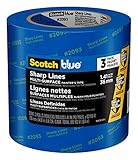
ScotchBlue Sharp Lines Multi-Surface Painter's Tape with Edge-Lock
Blue, Medium Adhesion, Edge-Lock, 14-Day Removal
Sharp Lines is 3M's answer to FrogTape, and it is a genuine improvement over the original blue roll where the line matters. The tape uses the same medium-adhesion crepe backing and carries the same surface recommendations as the 2090, but the edge is treated with what 3M calls Advanced Edge-Lock, a paint line protector designed to stop latex from wicking under the tape. On our smooth and lightly textured panels, lines from Sharp Lines were visibly cleaner than lines from the 2090 and close enough to FrogTape that most people would not tell which was which from across a room. On heavy knockdown texture, all three struggled, which is a limit of taping rather than of any particular brand. The removal window is 14 days, the same as the original. That is the main argument for FrogTape instead: similar money, similar edge, one extra week of forgiveness. The main argument for Sharp Lines is convenience. 3M also sells this tape pre-attached to a folded plastic sheet, and for masking a long run of baseboard and floor at once that product saves a real amount of time. Use plain 2090 for masking that will never be seen, and Sharp Lines for the ceiling line, the accent wall and the cabinet edge, where a ragged line will bother you for years.
Pros
- Advanced Edge-Lock treatment seals the edge against bleed, closing most of the gap with FrogTape
- Same medium adhesion and surface list as the 2090, so it drops into any job the original handles
- 14-day clean removal with no sticky residue
- Also sold pre-attached to plastic sheeting as ScotchBlue Tape plus Plastic, which speeds up masking
- Easy to find in the same aisle and online listings as ScotchBlue Original
Cons
- Priced close to FrogTape while offering a shorter removal window
- Edge-Lock helps on light texture but, like every tape, cannot fully seal heavy knockdown
The Bottom Line
Choose it over plain 2090 wherever the line will actually be seen, such as ceiling lines, accent walls and cabinet edges.

FrogTape Delicate Surface Painter's Tape
Yellow, Low Adhesion, 60-Day Removal
Most painting projects involve taping over paint that is not fully cured, and this is the tape built for that situation. Think of the most common two-colour job: you paint the ceiling on Saturday, then tape the ceiling line on Sunday to cut in the walls. Or you paint an accent wall a base colour and then tape stripes over it the next day. A medium-adhesion tape on paint that fresh can bond to the still-soft film and pull flakes of it off when you remove it. FrogTape Delicate Surface is rated for surfaces painted at least 24 hours earlier, and uses a lower-tack, solvent-free adhesive designed not to damage the finish. Crucially, FrogTape keeps its PaintBlock edge treatment on the yellow roll, so the lower hold does not cost you line quality. Our stripe test on a one-day-old eggshell wall came away clean with a sharp edge and no lifted paint. The 60-day indoor removal window also makes it the best option for long jobs, such as taping off floors and cabinets during a renovation that stretches over weeks, and it is rated for coated wallpaper, laminate and finished floors. The trade-off of low adhesion is that it needs a clean surface. On dusty baseboards or a greasy kitchen wall it can lift before you paint, so wipe the surface first.
Pros
- Rated for walls and trim painted at least 24 hours earlier, the most common real-world taping situation
- Low-adhesion washi-style backing with PaintBlock edge sealing, so lighter hold does not mean worse lines
- Up to 60 days of clean removal from indoor surfaces
- Safe on coated wallpaper, laminate, cabinets and finished floors
- Solvent-free adhesive designed to avoid surface damage on removal
Cons
- Lower tack means it will not hold well on dusty, greasy or textured surfaces without cleaning first
- Indoor-only rating; do not use it on exterior work
The Bottom Line
The tape for stripes, accent walls and any two-colour job where the first colour went on yesterday.

ScotchBlue Delicate Surfaces Painter's Tape with Edge-Lock 2080EL
Low Adhesion, Edge-Lock, 60-Day Removal
3M's low-adhesion tape does the same job as FrogTape Delicate and does it nearly as well, and on a couple of surfaces we would pick it first. The 2080EL version combines a gentle adhesive with the same Advanced Edge-Lock paint line protector used on Sharp Lines, and 3M rates it for walls painted at least 24 hours earlier, wood floors, wallpaper, cabinets and painted drywall, with clean removal for up to 60 days indoors. The long window and gentle hold make it well suited to protecting a finished hardwood floor during a repaint: tape the floor along the baseboard, paint the base, and pull it days later without worrying about lifting finish from the boards. It is also 3M's recommended tape for accent walls, stripes and geometric patterns, where lines need to be crisp and the base coat underneath is often only a day old. In our testing its lines were marginally less crisp than FrogTape Delicate on a lightly textured wall and indistinguishable on smooth drywall and trim. Be aware that there are older ScotchBlue delicate tapes without Edge-Lock still in circulation; look for the EL suffix or the Edge-Lock wording on the label. The main practical nuisance is the one every low-tack tape shares: it lifts if you brush against it, so press the edge again right before you paint.
Pros
- Gentle adhesive rated for freshly painted walls at least 24 hours old
- Advanced Edge-Lock treatment for sharp lines on accent walls, stripes and patterns
- 60-day clean removal from interior surfaces
- Recommended by 3M for wood floors, wallpaper, cabinets and painted drywall
- A useful alternative when FrogTape Delicate is out of stock in the width you need
Cons
- Low tack makes it easy to lift accidentally when you brush against it
- Not designed for exterior surfaces or direct sunlight
The Bottom Line
A near-equal to FrogTape Delicate, and the one to reach for on wood floors and wallpaper.
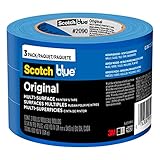
ScotchBlue Exterior Surface Painter's Tape 2097
Yellow Poly Tape, UV-Resistant, About 7-Day Removal
Indoor painter's tape used outdoors fails in two ways. Sunlight cures the adhesive onto the surface so it leaves residue or tears into slivers when you pull it, and dew or rain softens a paper backing until it wrinkles and lets paint through. The ScotchBlue Exterior Surface tape is built to avoid both. It uses a waterproof poly backing rather than crepe paper, and a UV-resistant adhesive that 3M rates to hold in heat, humidity, wind and sun and still remove cleanly after about a week. Some retail listings quote up to 10 days; we would plan on 7 and treat anything beyond that as luck. The backing carries a micro-grid pattern that makes it tear straight by hand, a small detail that matters when you are on a ladder, and it conforms around curved window trim and vinyl profiles better than paper. 3M recommends it for smooth and semi-smooth metal, vinyl, painted wood and glass, which covers the typical exterior job of repainting trim, doors and shutters without getting paint on the glass or the siding. It is not a masonry tape. On brick, stucco and rough concrete it will not seal into the texture, and 3M sells a separate rough-surface tape for that. The practical rule is to tape and paint one elevation of the house at a time rather than masking everything at once.
Pros
- Waterproof poly backing that handles sun, heat, wind, humidity and rain
- UV-resistant adhesive rated to remove cleanly after about a week outdoors
- Micro-grid pattern gives a straight tear by hand, which paper tapes lose when wet
- Conforms to curves on window trim and vinyl profiles
- Recommended for metal, painted wood, vinyl and glass
Cons
- Not meant for brick, stucco or rough masonry, which need a rough-surface tape
- Shorter removal window than indoor tapes, so tape one side of the house at a time
The Bottom Line
The right tape whenever masking will sit outside in the sun for more than a day.

IPG ProMask Blue Painter's Tape with Bloc-It
Blue Crepe, Medium Adhesion, 14-Day Removal
When a job calls for hundreds of feet of tape, the per-roll price of the premium brands starts to add up, and IPG's ProMask Blue is the tape we would buy by the case. Intertape Polymer Group is one of the larger industrial tape makers in North America, and ProMask Blue is its contractor painter's tape: a fine crepe paper backing with a synthetic rubber adhesive and a treatment the company calls Bloc-It clean line technology, intended to reduce bleed at the edge. IPG rates it for 14 days of clean removal and, unusually for a blue paper tape, for exposure to sunlight for up to 14 days, which makes it a reasonable choice for a porch ceiling or a sunny interior window wall. In our testing its lines were cleaner than plain crepe tape and a step behind FrogTape and ScotchBlue Sharp Lines on textured drywall. On smooth trim and glass the difference was hard to see. That profile makes it ideal for high-volume masking: baseboards across a whole floor, window glass in a sunroom, or the long runs of trim in a rental turnover where speed and cost beat perfection. Keep the premium edge-sealing tapes for the lines people will actually look at, such as the ceiling line or an accent wall, and use ProMask for everything else.
Pros
- Bloc-It clean line technology for sharper edges than a basic crepe tape
- 14-day clean removal with no residue
- Rated for up to 14 days of sunlight exposure, better than many indoor tapes
- Usually the lowest cost per foot here, especially in multi-roll packs
- Made by Intertape Polymer Group, a large industrial tape manufacturer
Cons
- Line quality is good rather than FrogTape-sharp on textured walls
- Less consistent retail availability, so you may be buying online by the pack
The Bottom Line
The tape to stock up on for a whole-house repaint or a rental turnover, where footage matters more than perfection.
4. Taping Over Fresh Paint: The 24-Hour and 7-Day Rules
Latex paint is dry to the touch within an hour or two and ready for a second coat within a few hours, but it is nowhere near cured. The film keeps hardening for days as water and coalescing solvents leave it, and full cure takes weeks. During that window the surface is soft enough that a strong adhesive can bond into it, and when you pull the tape the paint comes with it.
The delicate tapes on this list, FrogTape Delicate Surface and ScotchBlue Delicate 2080EL, are rated for paint that has dried for at least 24 hours. That is the number to remember. Taping sooner than a day invites trouble even with a low-tack tape, because the paint is still tacky enough to grab the tape rather than the other way round. If your schedule forces a same-day second colour, it is better to cut in by hand than to tape.
THE RULE
Under 24 hours: do not tape. 1 to 7 days: delicate tape only. Over a week: medium tape is usually fine.
Medium-adhesion tape is not rated for fresh paint, and a week of drying is a sensible margin before using it on a newly painted wall in normal indoor conditions. Cold or humid rooms slow curing, so add time rather than subtract it.
The seven-day guideline for medium tape is a practical margin rather than a manufacturer promise. In a warm, dry room, paint may be hard enough sooner; in a cool basement or a steamy bathroom, it may take longer. The failure is expensive enough that it is worth erring on the safe side, particularly on ceilings, where paint is often a single thin coat and lifts more easily.
The order of work matters too. Paint the ceiling first, let it dry at least a day, then tape the ceiling line with delicate tape before rolling the walls. Paint the walls, then tape them to paint the trim, or better, cut the trim in by hand. If you are choosing a ceiling finish, our guide to the best ceiling paint covers the flat, low-sheen products that make the ceiling line less critical in the first place.
5. Edge-Lock vs PaintBlock: Does Edge Sealing Work?
Paint bleeds under tape because the edge of the tape never sits perfectly flat. Even on smooth drywall there are microscopic gaps, and on textured walls there are obvious valleys. Thin latex paint wicks into those gaps by capillary action, dries there, and leaves a fuzzy line when the tape comes off. Edge sealing is the industry's attempt to close those gaps chemically rather than mechanically.
FrogTape's PaintBlock and 3M's Edge-Lock take slightly different approaches with the same aim. PaintBlock is a super-absorbent polymer in the adhesive that reacts with the water in latex paint and swells into a gel barrier at the edge, sealing the gap at the moment the paint arrives. Edge-Lock is a treatment on the tape edge that 3M describes as a paint line protector. Both are designed for water-based paint; neither is claimed to do much with oil-based paint.
In our testing both worked, and the benefit scaled with texture. On smooth drywall and trim, plain crepe tape that was pressed down firmly gave nearly the same line as the treated tapes. On lightly textured walls, the treated tapes were clearly better. On heavy knockdown texture, every tape bled to some degree, because no edge treatment can fill a valley that deep.
There is a free technique that gets plain tape close to treated tape: seal the edge with the colour underneath. Once the tape is down, brush a thin coat of the base colour, or clear matte medium, along the edge. Any bleed is now the same colour as the surface, and it seals the gap before the new colour arrives. It adds a step, but on an accent wall or stripe it is the most reliable line you can get.
Newer products push the idea further. 3M has introduced ScotchBlue PROSharp with an upgraded Edge-Lock and a longer removal window, but we have kept to the established tapes above, which are easier to find in every width and have a longer track record.
6. The Removal Window Is a Promise, Not a Suggestion
Every tape on this list has a rated number of days for clean removal, and it is the most useful number on the label after adhesion. It tells you how long the adhesive stays stable before it starts to bond permanently, dry out, or leave residue. Past that window, tape becomes a liability: it tears into slivers, leaves a sticky film that attracts dirt, and can lift the surface it was protecting.
RATED CLEAN REMOVAL WINDOWS
7 days
ScotchBlue Exterior 2097, outdoors
14 days
ScotchBlue 2090 and Sharp Lines, IPG ProMask Blue
21 days
FrogTape Multi-Surface
60 days
FrogTape Delicate and ScotchBlue Delicate, indoors
Match the window to how you actually work, not how you plan to work. A weekend room repaint is well within 14 days. A kitchen where you tape off the cabinets, then wait for a countertop install, then paint, can run to a month. A renovation where floors are masked for the whole job may run longer. That is where the 60-day delicate tapes earn their price, even on surfaces that could take a stronger tape.
Sunlight and heat shorten real-world windows. A tape rated for 14 days indoors will not necessarily manage 14 days on a south-facing window where the glass heats up every afternoon. If tape is going to sit in direct sun, use one rated for UV exposure and treat the indoor figure as irrelevant.
The opposite mistake is pulling tape too late in the painting process rather than too many days later. Once the paint over the tape edge is fully dry, it forms a continuous film from wall to tape, and pulling the tape can tear that film and take a jagged edge with it. Pull tape when the last coat is dry to the touch but not hard, usually within an hour or so of finishing. If you missed that window, score the edge lightly with a sharp utility knife before pulling.
7. Exterior Tape, Sun and Weather
Outdoor masking is harder on tape than any indoor job. Direct sun heats the adhesive and accelerates its bond, UV light degrades both adhesive and backing, dew wets paper tapes overnight, and wind catches any loose edge. An indoor tape that behaves perfectly on a bedroom window can bake onto an exterior frame in two days and come off in a dozen pieces, leaving adhesive that needs mineral spirits to remove.
For exterior work, choose a tape that is explicitly rated for UV exposure and read how many days it is rated for in sun. ScotchBlue Exterior Surface 2097 uses a waterproof poly backing and is rated for about a week outdoors. FrogTape Multi-Surface is rated for up to 7 days of direct sun. IPG ProMask Blue is rated for up to 14 days of sunlight. Treat those as ceilings rather than targets.
Surface matters more outdoors, too. The exterior tapes above are designed for smooth and semi-smooth surfaces: metal, vinyl, painted wood and glass. Brick, stucco, split-face block and rough-sawn wood need a high-adhesion rough-surface tape, and even then the line will never be as crisp as on trim. On masonry, many painters skip tape entirely and cut the line in with a brush.
The working method is to mask one elevation of the house at a time, paint it, and pull the tape the same day or the next. Masking the whole house on the first morning and painting the last side a week later is the most reliable way to end up scraping residue off window glass. If you are spraying rather than brushing, masking becomes far more extensive; our guide to the best paint sprayer covers how much prep a sprayer really adds.
8. How to Apply and Pull Tape for a Clean Line
The best tape on this list will still bleed if the surface underneath is poorly prepared. Before taping, fill nail holes and dents, sand the patches flush, and wipe the area with a damp cloth to remove dust. Tape does not stick to dust, it sticks to the dust, and the dust does not stick to the wall. Our guide to the best spackle covers which fillers sand smooth enough to tape and paint over the same day.
Apply tape in short lengths of two to three feet rather than stretching a long piece. Stretched tape tries to recover its length and pulls away from corners and edges within an hour. Lay the tape against the line, then press it down along the paint edge with a putty knife, a plastic card or a fingernail. That burnishing step matters more than which brand you bought, because it is what closes the gaps that cause bleed.
Keep the coat thin at the edge
A heavy, wet coat of paint loaded against the tape edge is the second common cause of bleed. Brush away from the tape rather than into it, and do not flood the edge with a loaded brush. A good angled sash brush makes this far easier; our guide to the best paint brushes explains which bristle and width to use for trim and cutting in.
Pull the tape back over itself at roughly a 45-degree angle, slowly and steadily, while the final coat is dry to the touch but still slightly soft. Pulling straight out from the wall is more likely to lift paint. If the paint has hardened into a bridge across the tape edge, run a sharp blade lightly along the edge first so the film breaks cleanly where you want it to.
Finally, store tape well. Rolls left in a hot garage or a freezing van can lose tack or split on the roll. Keep them in a sealed bag at room temperature, and do not buy more than you will use in a season or two.
9. When Cutting In Beats Taping
Professional painters tape far less than homeowners expect. On a typical repaint, a practised painter will cut in the ceiling line, the baseboards and the door casings by hand with a good brush and tape only glass, hardware, floors and anything that is genuinely hard to cut. The reason is time: taping a room properly can take as long as painting it, and a steady freehand line is often just as clean.
Cutting in wins on textured ceilings, where tape cannot seal and bleed is almost certain. It wins on corners where the wall and ceiling meet at an uneven or wavy line, because tape follows a straight line and the wall does not, so a taped line looks crooked against the corner. It wins on fresh paint less than a day old, where no tape is safe. And it wins when you are painting the same colour or a close tone, where a slightly imperfect line is invisible anyway.
Tape wins on anything geometric: stripes, colour-blocked accent walls, two-tone cabinets and designs that do not follow an architectural edge. It wins on high-contrast lines, such as white trim against a dark wall, where every wobble shows. And it wins for beginners on trim and glass, where a clean line matters and a steady hand takes practice to develop.
A good compromise for most DIY painters is to tape the high-contrast and hard-to-reach lines and cut in the rest. If you are unsure of your freehand line, practise on a closet or a wall that will be behind furniture. The paint itself matters too: a thicker, higher-quality paint levels better and is easier to cut in cleanly. Our guide to the best interior paint compares the lines that brush out best.
10. Common Mistakes to Avoid
Using medium tape on fresh paint
Taping a ceiling line with blue or green multi-surface tape the day after painting the ceiling is the single most common way to pull paint off. The film is still soft and bonds to the adhesive. Use a delicate tape rated for paint at least 24 hours old, and wait a week before using medium tape.
Leaving tape up past its rating
The removal window is the point where the adhesive starts to bond permanently. Tape left for a month when it was rated for 14 days tears into slivers and leaves residue that has to be scrubbed off. Tape one room at a time, and use 60-day delicate tape on long renovations.
Skipping the burnish
Laying tape on and painting straight over it leaves microscopic gaps that paint wicks into. Press the painted edge of the tape down firmly with a putty knife or plastic card before you open the paint can. That thirty-second step does more for the line than paying extra for a premium tape.
Pulling tape after the paint hardens
Once the final coat has fully hardened it bridges from wall to tape, and pulling the tape tears that film into a jagged edge. Pull tape at a 45-degree angle while the paint is dry to the touch but still slightly soft, or score the edge with a blade first.
Using indoor tape outside
An indoor tape on a sunny window frame can bake on within a couple of days and leave adhesive that needs solvent to remove. Choose a tape rated for UV exposure, check how many days it is rated for in sun, and mask one side of the house at a time.
11. Frequently Asked Questions
Is FrogTape better than ScotchBlue?
On textured walls, FrogTape Multi-Surface gave us slightly sharper lines than plain ScotchBlue 2090, and it has a longer 21-day removal window. ScotchBlue Sharp Lines, which has Edge-Lock, closes most of that gap. On smooth trim and glass the difference is small. Choose by adhesion level and removal window first, and brand second; both make excellent tape.
How long should paint dry before I put tape on it?
At least 24 hours, and only with a delicate low-adhesion tape such as FrogTape Delicate Surface or ScotchBlue Delicate 2080EL. For standard medium-adhesion tape, give fresh paint about a week in normal indoor conditions, longer in a cold or humid room. Latex paint feels dry within an hour, but it keeps curing for weeks.
When should I remove painter's tape?
Pull it when the final coat is dry to the touch but not fully hardened, usually within an hour or so of finishing. Pull slowly at about 45 degrees, back over itself. If the paint has hardened across the edge, score it lightly with a sharp blade first so the film breaks along the line instead of tearing.
Why does paint bleed under my tape?
Usually because the tape edge was not pressed down, the wall is textured, or too much paint was loaded against the edge. Burnish the edge firmly, brush away from the tape, and use an edge-sealing tape on textured walls. For critical lines, brush a thin coat of the base colour along the edge first to seal it.
Can I use painter's tape outside?
Yes, but use a tape rated for UV exposure, such as ScotchBlue Exterior Surface 2097, and respect its outdoor removal window, which is typically about a week. Indoor tapes can bake onto sunny surfaces within days. Exterior tapes are designed for smooth surfaces like trim, vinyl, metal and glass, not brick or stucco.
What width of painter's tape should I buy?
For most trim, ceiling lines and baseboards, a width of about 1.4 to 1.5 inches is the most useful all-rounder. Narrow tape of around one inch is easier on curves and window muntins. Wide tape of around two inches gives more margin for roller work along baseboards and is better for holding plastic sheeting.
Is painter's tape the same as masking tape?
No. General masking tape uses a stronger rubber adhesive that is not designed for clean removal and can leave residue or lift paint within a day or two. Painter's tape uses an adhesive tuned for a specific removal window and surface, and many add edge sealing. For painting, the small price difference is always worth it.
Related Painting Guides
Buyer's Guide
Best Interior Paint
Which wall paints hide in two coats, scrub clean and brush out well enough to cut in without tape.
Buyer's Guide
Best Paint Brushes
The angled sash brushes that make cutting in faster than taping for ceiling lines and trim.
Buyer's Guide
Best Ceiling Paint
Flat, spatter-resistant ceiling paints and the order of work that keeps the ceiling line clean.
The Bottom Line
Buy tape by adhesion level and removal window, not by colour or brand. FrogTape Multi-Surface is the best single roll for cured walls and trim, with the sharpest lines on typical textures and a 21-day window. For anything painted in the last week, switch to a delicate tape such as FrogTape Delicate Surface or ScotchBlue Delicate 2080EL, and for anything in the sun, use a UV-rated exterior tape.
Then remember that tape is a tool, not a requirement. Burnish the edge, keep the paint thin against it, and pull it while the last coat is still soft. And on textured ceilings, wavy corners and same-day second colours, a good brush and a steady hand will beat any tape on this list.
More in Home Improvement
Guides in this category that pair with what you just read.
About the Author
Alex Rivers, Home Improvement Editor
Alex has spent over a decade working on residential and light commercial property maintenance, and now tests every tool, coating and machine that appears in these guides personally.