Best Oscillating Tools
An oscillating tool does the awkward cuts nothing else can reach. The difference between a good one and a frustrating one comes down to oscillation angle, blade fit and vibration.
Alex Rivers
Home Improvement Editor
Last Updated
September 29, 2026
In This Guide
Speed is not what separates oscillating tools. Nearly every model tops out around 20,000 oscillations per minute. What matters is how far the blade swings, how securely it is held, and how much of the buzz reaches your hand. Get those three right and put a good blade on it, and the tool will cut door jambs, grout and drywall faster than you expect.
Our Picks at a Glance
- Best Overall: Milwaukee M18 FUEL Oscillating Multi-Tool (2836-20) — 18V Brushless, 4.2° Oscillation
- Best for DeWalt Users: DeWalt 20V MAX XR Brushless 3-Speed Oscillating Multi-Tool (DCS356B) — 20V Brushless, 3-Speed
- Best Blade Interface: Makita 18V LXT Sub-Compact Brushless StarlockMax Oscillating Multi-Tool (XMT04ZB) — 18V LXT Brushless, StarlockMax
- Best Compact: Milwaukee M12 FUEL Oscillating Multi-Tool (2526-20) — 12V Brushless, 3.9° Oscillation
- Best Corded Premium: Fein MultiMaster MM 500 Plus Top Corded Oscillating Multi-Tool — Corded 350W, StarlockPlus
- Best Corded for Heavy Cutting: Bosch GOP55-36 StarlockMax Corded Oscillating Multi-Tool — Corded 5.5A, StarlockMax
- Best Budget: Ryobi ONE+ HP 18V Brushless Multi-Tool (PBLMT50) — 18V Brushless, 3.6° Oscillation
1. How We Picked
Oscillating tools are bought for awkward jobs, so we judged them on awkward jobs. The tasks that matter most are flush-cutting door casing and jambs so new flooring can slide underneath, plunge-cutting openings in drywall and subfloor, removing grout between tiles, trimming nails and pipe in tight spaces, and scraping old caulk and adhesive. A tool that handles those well will handle nearly anything a homeowner throws at it.
We weighted oscillation angle, blade interface and vibration most heavily. These three factors, more than motor power or top speed, decide how fast a tool cuts, how accurately it plunges and how long you can use it before your hand goes numb. Top speed barely varies: almost every tool here peaks around 20,000 oscillations per minute, so it is a poor way to tell them apart.
We included both cordless and corded tools because they suit different people. Cordless tools make sense for most homeowners, particularly those already on a battery platform. Corded tools still make sense for remodelers doing long cutting sessions and for people who use a multi-tool too rarely to keep batteries charged.
We only list tools that are currently sold and widely available, and every spec on this page comes from the manufacturer. Where brands measure oscillation angle differently, as some list the swing to each side and others list the total, we have said so. We left out budget no-name tools because their blade clamps and bearings are the first things to fail, and a multi-tool with a slipping blade is worse than useless on a precision cut.
2. OPM and Oscillation Angle
Oscillations per minute, or OPM, is the number of times the blade swings back and forth each minute. Nearly every tool on the market tops out between about 19,500 and 20,000 OPM, so top speed is not a meaningful differentiator. What matters more is the bottom of the range and how well the tool holds speed under load. A lower minimum, like the 8,000 OPM on the Bosch GOP55-36, gives more control on delicate work such as grout removal or scraping, and electronics that hold speed under load prevent the blade from stalling in dense material.
Oscillation angle is how far the blade swings from side to side, and it has the biggest effect on cutting speed. For years, 3.2 degrees total was the industry standard. Newer tools have pushed that to 3.6, 3.9 and even 4.2 degrees. A larger swing moves the teeth further on each stroke and clears sawdust from the cut more effectively, which means faster cuts and less burning in hardwood.
Be careful comparing angles across brands. Some manufacturers list the total swing, while others list the swing to each side. DeWalt, for example, lists 1.6 degrees for the DCS356, which corresponds to the 3.2-degree total standard. Fein lists 2 x 1.7 degrees for its MM 500 Plus, which is 3.4 degrees total. Always convert to total before comparing.
OSCILLATION ANGLE, TOTAL
3.2°
Long-time standard, DeWalt DCS356
3.6°
Makita, Ryobi HP, Bosch GOP55-36
3.9°
Milwaukee M12 FUEL
4.2°
Milwaukee M18 FUEL
A bigger angle is not always better. Larger swings produce more vibration and are harder to control on delicate work, which is why the best tools pair a large angle with good vibration control. For demolition, flush-cutting and plunge cuts in wood, a 3.6-degree or larger tool saves real time. For precision cuts in finished trim, a smaller angle and a lower speed are often easier to manage.
3. Our 7 Top Picks
The seven tools below cover every realistic buyer: a pro-grade 18V flagship, the best-selling DeWalt, a Makita that takes the heavy-duty StarlockMax blades, a compact 12V for tight spaces, two corded tools for people who would rather never charge a battery, and a budget Ryobi for homeowners already on that platform. Every oscillation angle and speed figure below comes from the manufacturer, and we have noted where a spec is measured differently from brand to brand, because that matters when you compare them.
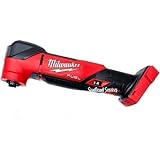
Milwaukee M18 FUEL Oscillating Multi-Tool (2836-20)
18V Brushless, 4.2° Oscillation
The 2836 is the tool that made us stop thinking of oscillating tools as slow. Its 4.2-degree oscillation angle is well above the 3.2-degree figure that was the industry norm for years, and the extra swing clears sawdust from the kerf faster and moves more material per stroke. In practice, that shows up most in plunge cuts into hardwood and in flush-cutting door casing, where older tools bog down and burn. The motor runs from 10,000 to 20,000 OPM on a 10-position dial, and the Auto-Load setting is genuinely useful: the tool idles at lower speed until the blade meets resistance, then ramps up, which makes starting a cut on a marked line far easier and keeps noise down between cuts. Milwaukee's vibration dampening is the other reason it tops this list. On longer grout-removal and sanding sessions the grip stays calmer than on most competitors, and that directly affects how long you can work accurately. The blade change is tool-free and quick, and the interface accepts most universal-fit accessories, though not the heavier StarlockPlus or StarlockMax blades. It is not small: at about 12.2 inches and 2.6 lbs bare, it is a full-size tool. If you mainly work in cabinets and tight corners, look at the M12 version. For everyone else, this is the one to buy.
Pros
- Aggressive 4.2-degree oscillation angle removes material noticeably faster than 3.2-degree tools
- 10,000 to 20,000 OPM on a 10-setting dial, plus an Auto-Load mode that ramps up as the blade engages
- Vibration dampening design keeps hands comfortable on long cuts
- Tool-free blade change accepts most universal-fit accessories
- 180-degree LED light around the head
Cons
- About 2.6 lbs bare and 12.2 inches long, larger than compact models
- Does not accept StarlockPlus or StarlockMax blades
The Bottom Line
The fastest-cutting, best-balanced cordless oscillating tool we would recommend, and worth the premium if you use one more than a few times a year.

DeWalt 20V MAX XR Brushless 3-Speed Oscillating Multi-Tool (DCS356B)
20V Brushless, 3-Speed
The DCS356 is one of the best-selling oscillating tools in North America, and it earns that position by being easy to live with rather than by setting any records. DeWalt lists a 1.6-degree oscillation angle, which is generally understood as the swing to each side and works out to roughly 3.2 degrees total. That is the long-standing industry norm and makes it a smoother but slower cutter than the 4-degree-class tools on this list. The three-speed selector sets the top speed at 13,000, 17,000 or 20,000 OPM, and the variable-speed trigger lets you feather within that range, which is helpful for starting plunge cuts cleanly. The trigger approach is a matter of taste. Some people prefer it for control, while others find a dial easier for holding a steady speed on a long cut. The quick-change lever makes blade swaps fast, and the universal adapter means you are not locked into DeWalt blades. At about 2.3 lbs bare it is lighter than the Milwaukee 2836, and in our experience it is comfortable to hold for extended periods. DeWalt credits the brushless motor with substantially more runtime than a comparable brushed tool. If you are on the DeWalt 20V platform, buy this. If you are choosing between platforms and cutting speed matters most, the Milwaukee is faster.
Pros
- Three speed ranges up to 20,000 OPM with a variable-speed trigger for fine control
- Brushless motor with meaningfully better runtime than DeWalt's older brushed version
- Quick-change lever and universal adapter fit most oscillating accessories
- About 2.3 lbs bare, lighter than the Milwaukee 2836
- Dual-grip trigger works from several hand positions
Cons
- Oscillation angle is the traditional 3.2-degree class, so it cuts slower than 4-degree tools
- Trigger-style control is less precise than a dial for setting a fixed speed
The Bottom Line
A comfortable, dependable oscillating tool with a smaller swing than the Milwaukee, and the clear choice if you already own DeWalt 20V batteries.

Makita 18V LXT Sub-Compact Brushless StarlockMax Oscillating Multi-Tool (XMT04ZB)
18V LXT Brushless, StarlockMax
Makita's XMT04ZB is the cordless tool to buy if you want the strongest, most secure blade interface on the market. It uses StarlockMax, the heaviest of the three Starlock tiers, which means it accepts every Starlock, StarlockPlus and StarlockMax accessory. That is important, because the three-dimensional Starlock mount transfers power far more efficiently than the flat, pin-style universal interfaces, and blades cannot slip under load. In practical terms, a StarlockMax blade plunging into a hardwood jamb or a nail-embedded subfloor feels solid in a way universal-fit blades often do not. Makita rates the oscillation angle at 3.6 degrees, between the old 3.2-degree norm and Milwaukee's 4.2 degrees, and the variable speed dial runs from 10,000 to 20,000 OPM with a soft start that keeps the blade from skating off your line. Makita's Anti-Vibration Technology uses an internal counterbalance, and the small-diameter grip makes the tool comfortable to control with one hand. The trade-offs are cost and choice: StarlockMax blades cost more than universal blades, and while Makita, Bosch, Fein and others make them, you will not find them in every hardware store bargain bin. If you are on Makita LXT, this is an excellent tool. If you are not, it is still worth considering as the most capable blade system available on a cordless tool.
Pros
- StarlockMax interface accepts Starlock, StarlockPlus and StarlockMax accessories
- 3.6-degree oscillation angle for faster cuts than 3.2-degree tools
- Anti-Vibration Technology counterbalance reduces buzz at the grip
- 10,000 to 20,000 OPM with soft start
- Small-diameter grip is comfortable for small and medium hands
Cons
- StarlockMax blades cost more than universal-fit blades
- Oscillation angle is smaller than the Milwaukee 2836
The Bottom Line
The cordless tool with the most secure blade interface and the widest choice of heavy-duty blades, and the best pick for Makita LXT owners.

Milwaukee M12 FUEL Oscillating Multi-Tool (2526-20)
12V Brushless, 3.9° Oscillation
The M12 FUEL multi-tool is the one we reach for when the work is inside a cabinet, behind a toilet or up in a corner of a closet. Milwaukee rates it at 3.9 degrees of oscillation, very close to its bigger M18 sibling, with the same 10,000 to 20,000 OPM range on a 12-setting dial. That combination makes it a surprisingly fast cutter for its size, and at about 2.2 lbs bare it is easy to control with one hand while the other steadies the workpiece. The vibration isolation and tool-free blade change are both carried over from the M18 tool, so it does not feel like a cheap compact. Plumbers and electricians like it for cutting openings in drywall and trimming pipe in tight spaces, and for homeowners doing occasional repairs it is more than capable of flush-cutting trim, undercutting jambs and cutting out a rotted section of baseboard. The limit is runtime. Small 12V packs drain quickly on sustained work like removing grout from a whole shower or sanding a large area, so if those jobs are on your list, buy a larger M12 battery or choose the M18 tool. In thick hardwood the M18 is also noticeably quicker. As a compact tool or as a first oscillating tool for light users, it is the best available.
Pros
- 3.9-degree oscillation angle, remarkable for a 12V tool
- 10,000 to 20,000 OPM on a 12-setting dial
- About 2.2 lbs bare and easy to control one-handed inside cabinets
- Vibration-isolating design and tool-free blade change
- Runs on the same M12 batteries as Milwaukee's compact drills and ratchets
Cons
- Small 12V packs run down quickly on long grout or sanding sessions
- Less power in thick hardwood than the M18 version
The Bottom Line
The best oscillating tool for cabinets, plumbing and tight corners, and a strong primary tool for light-duty users.
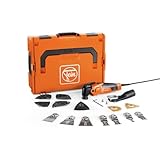
Fein MultiMaster MM 500 Plus Top Corded Oscillating Multi-Tool
Corded 350W, StarlockPlus
Fein invented the oscillating tool, and the MultiMaster remains the reference for build quality and refinement. The MM 500 Plus Top uses a 350-watt motor, runs from 10,000 to 19,500 oscillations per minute and uses the StarlockPlus mount, so it accepts both Starlock and StarlockPlus accessories. Fein lists the oscillation angle as 2 x 1.7 degrees, or 3.4 degrees total, which is a little more than the old 3.2-degree norm but less than the 4-degree tools. What you get for the money is smoothness. In our experience, Fein tools feel calm and precise in the hand, which makes controlled cuts, like plunging a small opening in finished drywall or trimming a single piece of trim in place, noticeably easier. The QuickIN blade change takes a few seconds, and the tool is slim and light for a corded model. Because it runs on a cord, it never slows down as a battery drains, which makes it well suited to long jobs such as removing grout from a full bathroom. The downsides are price and cord management. You are paying a premium for the Fein name and German build, and you can get a cordless tool with similar cutting ability for less. If you already own a battery platform, buy the cordless tool from that brand. If you want one corded tool that will last decades, this is it.
Pros
- Made by the company that invented the oscillating tool, with exceptional build quality
- StarlockPlus mount accepts Starlock and StarlockPlus blades
- QuickIN blade change in a few seconds
- Around 1.4 kg and slim, one of the most comfortable corded tools to hold
- Runs indefinitely with no batteries to manage
Cons
- Premium price well above cordless tools of similar capability
- Oscillation angle of 2 x 1.7 degrees is modest by current standards
The Bottom Line
A refined, long-lived corded tool for people who want the best-built multi-tool and are happy with a cord.
Bosch GOP55-36 StarlockMax Corded Oscillating Multi-Tool
Corded 5.5A, StarlockMax
Bosch developed the Starlock system with Fein, and the GOP55-36 is its no-compromise corded tool. The 5.5-amp motor and Constant Response circuitry hold speed when the blade is buried in a hardwood jamb or a subfloor, which is exactly where cordless tools on smaller batteries start to slow. Bosch rates the oscillating arc at 3.6 degrees, and the speed dial runs from 8,000 to 20,000 OPM. That lower bottom speed is useful for delicate work like cutting ceramic tile grout without chipping the tile edge or scraping adhesive without gouging the surface underneath. The StarlockMax mount accepts every Starlock, StarlockPlus and StarlockMax accessory, and the three-dimensional interface holds blades rigidly, which makes a noticeable difference in plunge-cut accuracy. The 13-foot cord is long enough that you rarely need an extension cord in a typical room. The trade-offs are weight and bulk. At about 3.5 lbs it is the heaviest tool here, which you feel when working overhead or at arm's length. For a remodeler cutting out door jambs, subfloor and old tile every week, this is the most capable tool on the list. For occasional homeowner use, a cordless tool on your existing platform is more convenient.
Pros
- 5.5-amp motor with Constant Response circuitry maintains speed under load
- StarlockMax interface accepts all three Starlock tiers
- 3.6-degree oscillating arc for aggressive cutting
- 8,000 to 20,000 OPM, with a lower bottom speed than most rivals for delicate work
- 13-foot cord reaches most of a room from one outlet
Cons
- About 3.5 lbs, heavier than any cordless tool here
- Kits are priced at the premium end for a corded tool
The Bottom Line
The most powerful tool here for heavy, sustained cutting, and the pick for remodelers who want StarlockMax blades without batteries.

Ryobi ONE+ HP 18V Brushless Multi-Tool (PBLMT50)
18V Brushless, 3.6° Oscillation
Ryobi's HP brushless multi-tool is the best value on this list by a wide margin, and the specs back that up. Ryobi rates it at a 3.6-degree oscillation angle, the same as the Makita and more than the DeWalt, with a speed dial running from 10,000 to 20,000 OPM. That means the PBLMT50 can cut about as quickly as tools that cost much more, and the brushless motor keeps speed up under load better than Ryobi's older brushed multi-tools. The tool-free accessory release is quick, and the built-in LED helps in dark cabinets and under sinks. Where it gives ground to the premium tools is refinement. In our experience vibration at the grip is more noticeable on long jobs like removing grout from a shower, and the tool feels less precise when starting delicate plunge cuts in finished trim. The included blade is basic; swapping in a quality bimetal or carbide blade is the single biggest improvement you can make. For homeowners who use a multi-tool a few times a year to trim a door jamb, cut out damaged drywall or remove old caulk, those compromises are easy to live with. If you are already on Ryobi ONE+, this is the one to buy. If you are not, it is still one of the cheapest ways into a capable brushless multi-tool.
Pros
- Brushless motor at a price far below pro brands
- 3.6-degree oscillation angle, more aggressive than many more expensive tools
- 10,000 to 20,000 OPM with an adjustable speed dial
- Tool-free accessory release
- Runs on the same ONE+ batteries as hundreds of homeowner tools
Cons
- More vibration at the grip than Milwaukee or Makita on long jobs
- Included blade is basic, so budget for better blades
The Bottom Line
The best value oscillating tool for homeowners, especially those who already own Ryobi batteries.
4. Starlock, StarlockPlus, StarlockMax and Universal Fit
Blade interfaces are the most confusing part of buying an oscillating tool, and they matter more than most buyers realize. Older tools used a flat interface with a pattern of pins or holes, clamped by a bolt or lever. Most tools now use a universal-fit design that accepts blades from most brands. Bosch and Fein developed the Starlock system, a three-dimensional star-shaped mount that grips the blade on all sides and transfers far more power without slipping.
Starlock comes in three tiers, and compatibility only runs one way. Standard Starlock blades fit Starlock, StarlockPlus and StarlockMax tools, and many universal-fit tools too. StarlockPlus blades, designed for more powerful tools, fit StarlockPlus and StarlockMax tools only. StarlockMax blades, the heaviest-duty tier, fit only StarlockMax tools. So a StarlockMax tool like the Makita XMT04ZB or the Bosch GOP55-36 accepts every Starlock blade, while a universal-fit tool like the Milwaukee 2836 accepts only standard Starlock blades and universal blades.
| Blade type | Fits these tools | Best for |
|---|---|---|
| Universal fit | Most universal-fit tools, including Milwaukee, DeWalt, Ryobi | General cutting, cheapest blades |
| Starlock | Starlock, StarlockPlus, StarlockMax and many universal tools | Light and medium cutting |
| StarlockPlus | StarlockPlus and StarlockMax tools only | Harder materials, more powerful tools |
| StarlockMax | StarlockMax tools only | Heavy remodeling and demolition |
Does it matter in practice? For occasional homeowner use, universal-fit blades work well and are cheaper and easier to find. For professionals and serious remodelers, a StarlockMax tool is worth it because the blade cannot slip under load, which improves plunge-cut accuracy and blade life. Either way, check the blade packaging before you buy: every Starlock blade is marked with the tier it belongs to.
One practical tip: some universal-fit blades are sold with an adapter for older tools, and a few tools ship with an adapter for OIS-style blades. Use the direct-fit blade where you can. Every adapter adds a bit of play at the blade, and play shows up as wandering cuts.
5. Tool-Free Blade Change
Every tool on this list has tool-free blade change, and you should not buy one that does not. Older multi-tools used a hex key to loosen a clamping bolt, which is slow and easy to lose. Modern tools use a lever or push-button release that lets you swap or reposition a blade in a few seconds. Since most jobs involve at least two different blades, such as a plunge-cut blade and a scraper, a fast change saves a surprising amount of time.
The better systems also let you reposition the blade at different angles without removing it. This matters more than it sounds. Flush-cutting a door jamb, reaching into a corner or cutting behind a pipe often requires the blade to sit at an angle to the tool body. A system with multiple angle positions lets you rotate the blade to suit the cut, rather than twisting your wrist into an awkward position.
Some Starlock tools go a step further with a release that ejects the blade without touching it. This is genuinely useful because blades get very hot during use, particularly when cutting metal or removing grout. Being able to drop a hot blade into a bin without handling it is a safety feature as much as a convenience.
Whatever the system, check that the blade is fully seated before starting a cut. A blade that is not properly locked will vibrate loose, wander off the line and wear the mount. With a Starlock tool you will feel a positive click. With a universal lever clamp, give the blade a firm tug before you start.
6. Vibration and Comfort
Vibration is the part of an oscillating tool that spec sheets tend to skip, and it is what decides how long you can work accurately. A tool that buzzes hard through the grip numbs your fingers within a few minutes, and once your grip loosens, your cuts start to wander. For short jobs like trimming a single jamb this barely matters. For removing grout from a shower or sanding a large area, it matters more than anything else.
The better tools use two approaches to control vibration. Some isolate the motor and head from the grip with rubber mounts, as Milwaukee does on both its M18 and M12 tools. Others add an internal counterbalance that cancels out some of the oscillation, which is how Makita's Anti-Vibration Technology works. Both approaches help, and in our experience the difference between a well-damped tool and a basic one is obvious within a minute of use.
Grip shape matters too. A slim, small-diameter grip gives better control for most people and lets you hold the tool closer to the head, where precision is greatest. Heavy tools, especially corded models with a large motor, can become tiring when held at arm's length or overhead, which is where lighter cordless tools have an advantage.
Whatever tool you buy, you can reduce vibration by using sharp blades, letting the tool do the work without forcing it and choosing the right speed. Pushing too hard increases vibration and slows cutting. For long sessions, anti-vibration gloves and regular breaks help. Hearing protection is also a good idea, as the high-pitched whine of a multi-tool is more tiring than it seems.
7. Cordless vs Corded
For most people, a cordless oscillating tool is the better choice. Multi-tool jobs tend to be short and scattered across the house: trimming a jamb in one room, cutting a hole for an outlet in another, scraping caulk in the bathroom. Not having to find an outlet or drag a cord between rooms makes a real difference, and modern brushless cordless tools match or beat older corded tools for cutting speed.
Corded tools still make sense in three situations. First, if you do long, sustained jobs like removing grout from a large tiled area or cutting out a whole subfloor, a corded tool never slows as the battery drains. Second, if you use a multi-tool only a few times a year, a corded tool avoids the frustration of finding a dead battery. Third, the most powerful StarlockMax tools, like the Bosch GOP55-36, are still corded tools.
Runtime on cordless tools depends heavily on the battery. A compact 2.0Ah pack is fine for a few quick cuts but will not last through a grout-removal job. For heavy use, a 5.0Ah or larger battery is worth the extra weight. The same logic applies to other cordless tools: the batteries you buy for a multi-tool will also run your drill, saw and impact wrench, so it pays to invest in a few good packs.
If you already own a battery platform, buy the cordless multi-tool from that brand. If you do not, and you only need a multi-tool occasionally, a good corded tool will serve you well and costs less than buying into a new platform. If you plan to build a collection of cordless tools, choose the platform first and the multi-tool second.
8. Common Jobs and How to Do Them
Flush-cutting door jambs and casing
The most common reason people buy an oscillating tool is to undercut door jambs and casing so new flooring can slide underneath. Lay a scrap of the new flooring and underlayment against the jamb as a guide, rest a flush-cut wood blade flat on top of it, and cut straight in. The blade removes exactly the right amount of material. Use a medium-high speed and let the blade do the work. Forcing it causes burning and a wandering cut. A larger oscillation angle makes a big difference here, since jamb stock is often dense hardwood.
Removing grout
For grout removal, use a carbide grit or diamond grout blade sized to the width of the joint. Start at a lower speed to avoid chipping tile edges, and keep the blade centered in the joint. A tool with a low minimum speed, good vibration control and a long-lasting battery or cord is ideal. Take your time: grout removal is slow, and rushing it risks cracking tiles. Once the new grout has cured, seal it to prevent staining.
Cutting drywall
Oscillating tools are excellent for cutting openings in drywall for outlets, switches and access panels, especially when working in existing walls. Use a drywall or wood blade and plunge-cut along your marked lines. The shallow cut depth reduces the risk of hitting wires or pipes, but always check before cutting. For finishing repaired drywall, a dedicated sander is faster than a multi-tool sanding pad; our guide to the best drywall sander covers the options.
Other good uses include cutting nails and bolts flush, trimming copper and PVC pipe in tight spaces, scraping old caulk and adhesive, and detail sanding in corners. What an oscillating tool is not good at is long straight cuts or curves in sheet material. For those, a cordless circular saw or a jigsaw is far faster and more accurate.
9. Blades Matter More Than the Tool
The blade makes more difference to cutting performance than the tool itself. A cheap blade on a premium tool will cut slowly and wander, while a good blade on a budget tool will perform surprisingly well. The blades included with most tools are basic, and upgrading them is the single most cost-effective improvement you can make.
Match the blade to the material. High-carbon steel blades are cheap and work well in soft wood, drywall and plastic, but dull quickly on anything harder. Bimetal blades cut wood with embedded nails and thin metal and last much longer. Carbide-tooth blades are the best choice for hardwood, nail-embedded wood, fiberglass and heavy use, and they last many times longer than bimetal. Carbide grit and diamond blades are for grout, tile and masonry.
THE RULE
Spend on blades, not on top speed.
A bimetal or carbide blade on a mid-priced tool will outcut a basic high-carbon blade on the most expensive tool here. Buy a small assortment of quality blades for the jobs you actually do, and replace them when they dull rather than forcing them.
Blade shape matters too. Plunge-cut blades are straight and narrow, ideal for flush-cutting and cutting openings. Segmented or round blades cut in a curve and are good for long cuts in drywall and flush-cutting large areas. Scrapers remove caulk and adhesive. Sanding pads, usually triangular, reach into corners that other sanders cannot.
Replace blades when they dull. A dull blade cuts slowly, generates heat, increases vibration and wears the tool. Forcing a dull blade through material is the most common cause of burned cuts and broken blades. For heavy use, buy blades in multipacks, which are much cheaper per blade.
10. Choosing a Platform
Most people end up with several cordless tools, so the battery platform matters more than any single tool. If you already own Milwaukee, DeWalt, Makita or Ryobi batteries, the best oscillating tool for you is almost certainly the best one on that platform. A bare tool is much cheaper than a kit, and your existing batteries will work.
If you are choosing a platform from scratch, think about the other tools you will need. Milwaukee and DeWalt both have deep ranges for construction and automotive work, and our Milwaukee vs DeWalt comparison covers where each is stronger. Makita is well regarded for woodworking tools and ergonomics, and Ryobi offers the widest range of affordable homeowner tools. Our guide to the best cordless tool brand covers the full picture.
Within a platform, consider whether you want a full-size or compact tool. Full-size 18V or 20V tools cut faster and run longer. Compact 12V tools are lighter and fit into tighter spaces. For most homeowners, a full-size tool is the better choice, but if much of your work is in cabinets, plumbing or tight corners, a compact tool may suit you better.
Finally, buy a few good blades with the tool. Whatever platform you choose, a small set of bimetal and carbide blades will do more for your results than any difference between the tools on this list.
11. Common Mistakes to Avoid
Comparing oscillation angles without converting
Some brands list the total swing and others list the swing to each side, so a 1.6-degree figure can mean the same as a 3.2-degree one. Always convert to the total angle before comparing tools. Otherwise you may think a tool is far less aggressive than it actually is, or pay extra for a difference that does not exist.
Buying StarlockPlus or Max blades for a universal tool
Starlock compatibility only runs one way. Standard Starlock blades fit most tools, but StarlockPlus blades need a StarlockPlus or StarlockMax tool, and StarlockMax blades only fit StarlockMax tools. Check the tier marked on the packaging before buying, or you will end up with blades that simply will not mount.
Using the included blade for everything
The blades bundled with most tools are basic high-carbon steel and dull quickly on hardwood, nails or anything harder. Buy a few bimetal and carbide blades matched to the jobs you do. It is the cheapest way to make any oscillating tool cut faster, straighter and cooler, with less vibration.
Forcing the tool through the cut
Pushing hard slows the blade, increases vibration, burns the wood and shortens blade life. Let the tool do the work with light, steady pressure, and rock the blade slightly on long plunge cuts to clear sawdust. If a cut is slow, the blade is probably dull or wrong for the material.
Using a multi-tool for long cuts
Oscillating tools are built for short, awkward and precise cuts, not long straight cuts or curves in sheet material. Using one to rip plywood or cut a countertop is slow and inaccurate. Use a circular saw or jigsaw for long cuts, and save the multi-tool for the jobs nothing else can reach.
12. Frequently Asked Questions
What is the best oscillating tool for a homeowner?
For most homeowners, the best choice is the cordless oscillating tool from the battery platform you already own. If you are starting from scratch, the Milwaukee M18 FUEL 2836 is the best overall, while the Ryobi ONE+ HP PBLMT50 offers the best value. Both have tool-free blade change and brushless motors, and both accept widely available universal-fit blades.
Does a larger oscillation angle really cut faster?
Yes. A larger oscillation angle moves the blade teeth further on each stroke and clears sawdust from the cut more effectively, which means noticeably faster cuts, especially in hardwood. The trade-off is more vibration and slightly less control on delicate cuts. Tools in the 3.6 to 4.2-degree range are faster than those at the old 3.2-degree standard.
Will Starlock blades fit my oscillating tool?
Standard Starlock blades fit all Starlock tools and many universal-fit tools from other brands. StarlockPlus blades only fit StarlockPlus and StarlockMax tools, and StarlockMax blades only fit StarlockMax tools. Check your tool's manual or the manufacturer's website for its exact interface, and check the tier printed on the blade packaging before you buy.
Can an oscillating tool cut through nails?
Yes, with the right blade. A bimetal or carbide blade will cut through nails, screws and thin metal, which makes an oscillating tool very useful for cutting through nail-embedded wood during remodeling. A high-carbon steel blade will dull almost immediately on metal. Use a moderate speed and let the blade do the work to avoid overheating.
Is an oscillating tool good for removing grout?
It is one of the best tools for the job. Use a carbide grit or diamond grout blade sized to the joint width, start at a low speed and keep the blade centered in the joint. Good vibration control and a long-lasting battery or a corded tool help, because grout removal is slow, sustained work. Take your time to avoid chipping tiles.
Should I buy a corded or cordless oscillating tool?
Most people should buy cordless, especially if they already own a battery platform, because multi-tool jobs are short and scattered around the house. Corded tools make sense for long, sustained jobs like large grout removal, for people who rarely use a multi-tool, and for those who want the most powerful StarlockMax models, which are still corded.
How long do oscillating tool blades last?
It depends on the blade material and what you cut. High-carbon steel blades can dull after a few cuts in hardwood. Bimetal blades last much longer and handle nails. Carbide blades last many times longer than bimetal and are the best value for heavy use. Replace blades as soon as cutting slows or the wood starts to burn.
Related Tool Guides
Buyer's Guide
Best Impact Wrenches
Another tool worth adding to your battery platform, with the torque classes explained and the numbers put in context.
Buyer's Guide
Best Jigsaws
For the curves and long cuts in sheet material an oscillating tool is too slow for.
Buyer's Guide
Best Drywall Sanders
The right tool for finishing the drywall repairs your multi-tool helped you cut out.
The Bottom Line
For most people, the best oscillating tool is the cordless model from the battery platform they already own. If you are starting from scratch, the Milwaukee M18 FUEL 2836 is the fastest, best-balanced tool we would recommend, the Makita XMT04ZB has the best blade interface, and the Ryobi PBLMT50 offers the best value. For long, heavy jobs without batteries, the Bosch GOP55-36 is the most capable corded tool.
Whatever tool you choose, compare oscillation angles on a like-for-like basis, check that your blades match your tool's interface, and invest in a few quality bimetal and carbide blades. Those choices will do more for your results than any difference in top speed on the box.
More in Tools & Equipment
Guides in this category that pair with what you just read.
About the Author
Alex Rivers, Home Improvement Editor
Alex has spent over a decade working on residential and light commercial property maintenance, and now tests every tool, coating and machine that appears in these guides personally.