Best Primers
Primer is not one product. The right can depends on what you are covering — a water stain, a glossy cabinet, raw drywall or smoke-damaged plaster — and picking the wrong type is how paint jobs fail.
Alex Rivers
Home Improvement Editor
Last Updated
September 29, 2026
In This Guide
Most walls do not need a separate primer at all, and the walls that do usually need a specific one. A general-purpose water-based primer will not stop a nicotine stain, and a shellac stain-killer is overkill on new drywall. Match the primer to the problem and the topcoat takes care of itself.
Our Picks at a Glance
- Best Overall: Zinsser Bulls Eye 1-2-3 Primer — Water-Based All-Purpose, Interior/Exterior
- Best Stain & Odor Blocker: Zinsser B-I-N Shellac-Base Primer — Shellac-Base Stain Killer, Interior + Spot Exterior
- Best Low-Odor Stain Blocker: KILZ Restoration Interior Primer — Water-Based Maximum Stain Blocker, Interior
- Best Oil-Based Primer: KILZ Original Oil-Based Interior Primer — Oil-Based Stain Blocker, Interior
- Best for Exterior Wood: Zinsser Cover Stain Oil-Based Primer — Oil-Based Stain Killer, Interior/Exterior
- Best Bonding Primer: INSL-X Stix Waterborne Bonding Primer — Acrylic-Urethane Bonding Primer, Interior/Exterior
- Best for Damaged Drywall: Zinsser Gardz Problem Surface Sealer — Clear Penetrating Sealer, Interior
- Best Budget Primer: KILZ 2 All-Purpose Primer — Water-Based All-Purpose, Interior/Exterior
1. When You Actually Need Primer
The honest answer is: less often than the paint aisle suggests, and more specifically than most people realize. Primer does three jobs. It seals porous surfaces so the topcoat dries evenly, it gives paint something to grip on smooth or difficult surfaces, and it blocks stains and odors that would otherwise bleed through. If none of those problems exist, you probably do not need a separate primer.
Repainting a sound, clean wall in a similar color is the classic case where you can skip it. A quality interior paint sold as paint-and-primer is simply a high-solids paint that covers well; it will handle a same-sheen repaint over existing latex without a dedicated primer coat. The same goes for most ceiling paints going over an existing flat white ceiling that has no stains.
You do need primer in six situations: bare or new drywall, fresh patches and spackle repairs, stains of any kind that have to be hidden, glossy or non-porous surfaces, bare wood (especially knotty pine, cedar and redwood), and big color changes where going dark to light would otherwise take three or four coats of expensive paint. Surfaces that smell of smoke, pets or fire damage also need a primer that seals odor, and paint-and-primer products do not.
Spot-priming deserves a mention because it is where most DIY repaints go wrong. A patch of joint compound or spackle absorbs paint differently from the painted wall around it, and even after two coats it shows as a dull, flat blotch in raking light — a defect called flashing. A quick coat of primer over every patch before painting prevents it. It is the single cheapest improvement to most repaint jobs.
THE QUICK TEST
Sound, clean, same color, no stains? Skip primer. Anything else? Match the primer to the problem.
Paint-and-primer products are good paint, not a replacement for a stain-blocking or bonding primer. They save a coat on easy repaints and do nothing for water rings, glossy trim or raw drywall.
2. Water-Based vs Oil-Based vs Shellac
Almost every primer on the shelf is one of three chemistries, and the choice between them matters more than the brand.
| Type | Best at | Odor / cleanup | Typical recoat |
|---|---|---|---|
| Water-based (acrylic) | New drywall, general priming, exterior trim, low-odor stain blocking | Mild / soap and water | About 1 hour |
| Oil-based (alkyd) | Heavy stains, tannin bleed, chalky and porous surfaces | Strong / mineral spirits | 1-2 hours |
| Shellac | Severe stains, knots, smoke and fire damage, odor sealing | Very strong / denatured alcohol | About 45 minutes |
| Bonding (acrylic-urethane) | Glossy tile, laminate, PVC, glass | Mild / soap and water | 3-4 hours, days to cure |
Water-based primers are the default for most work. They are low odor, dry fast, clean up with water and stay flexible, which makes them the right choice for drywall and most exterior trim. Their weakness is stains. Many common stains, including water marks, tannin and nicotine, are water-soluble, and a water-based primer can re-dissolve them and carry them to the surface. Premium water-based stain blockers like KILZ Restoration have narrowed that gap considerably, but they have not closed it entirely.
Oil-based primers seal porous and chalky surfaces better and stop most stains because the solvent does not dissolve water-soluble contaminants. They are slower, smell strongly and clean up with mineral spirits, and on exterior surfaces they can become brittle over time, so an exterior-rated formula matters.
Shellac is in a category of its own. It dries in minutes, blocks almost everything, and seals odors — but it has strong alcohol fumes, is not designed for whole exterior surfaces, and is overkill for ordinary walls. Keep a quart for problem spots rather than priming whole rooms with it.
3. Our 8 Top Picks
These eight cover every priming job a homeowner is realistically going to meet. Two are general-purpose water-based primers for everyday work, three are dedicated stain-killers in the three chemistries, one is a specialist bonding primer for surfaces paint will not otherwise stick to, and one is a clear sealer for damaged drywall that no pigmented primer can fix. We have ranked them by how many jobs each one handles well, not by how aggressive the label sounds — the strongest primer is rarely the right one for a bedroom wall.

Zinsser Bulls Eye 1-2-3 Primer
Water-Based All-Purpose, Interior/Exterior
If you are only going to own one can of primer, this is the one we would choose. Bulls Eye 1-2-3 is a water-based acrylic that Zinsser rates for interior and exterior use across the surfaces a homeowner actually paints: patched drywall, bare and previously painted wood, masonry, and sound painted surfaces. It dries to the touch in around 30 minutes and is ready for a topcoat in about an hour, so a primer coat and a first finish coat fit comfortably in one afternoon. Coverage lands in the familiar range of roughly 300 to 400 square feet per gallon depending on how porous the surface is. What sets it apart from cheaper all-purpose primers is adhesion and the mildew-resistant film. Zinsser markets it as bonding to glossy surfaces without sanding, and in our experience it grips semi-gloss trim far better than a builder-grade primer does — although we still recommend a light scuff with 220-grit on anything shiny, because it costs two minutes and removes all doubt. It is also tintable, which is useful under deep reds and navies. Where it stops is serious stains. It will lock in pencil, crayon and light water marks, but a ceiling ring from a roof leak or a nicotine-yellow wall needs a shellac or oil-based stain-killer instead.
Pros
- Genuinely multi-surface: drywall, wood, masonry, previously painted surfaces and metal, inside and out
- Dries in about 30 minutes and takes a topcoat in roughly an hour
- Mildew-resistant film makes it a sensible choice for bathrooms and exterior trim
- Tintable, so it can carry a gray or color base under deep topcoats
- Low odor and soap-and-water cleanup, which matters in occupied rooms
Cons
- Handles light and moderate stains only — severe water marks and smoke need a dedicated stain-killer
- Needs about a week to reach full cure, so treat freshly primed trim gently
The Bottom Line
The primer to keep on the shelf: it handles most everyday priming jobs well and only hands off to a specialist when the stain or surface is genuinely difficult.
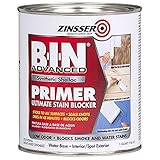
Zinsser B-I-N Shellac-Base Primer
Shellac-Base Stain Killer, Interior + Spot Exterior
Pigmented shellac has been the professional answer to impossible stains for decades, and B-I-N is the version almost every painter reaches for. Shellac works differently from acrylic and oil primers: it is dissolved in alcohol, which evaporates in minutes and leaves a hard film that water-soluble stains simply cannot migrate through. That is why it succeeds on the problems that defeat everything else — the brown ring left by a roof leak, the yellow haze of nicotine, soot and smoke damage after a kitchen fire, and resinous knots in pine that bleed through latex paint for years. The same film seals odor molecules in, which is why restoration contractors use it after fires and in houses that were smoked in. The speed is a genuine bonus. It dries to the touch in about 20 minutes and can take a topcoat in around 45, and it covers roughly 500 square feet per gallon, which offsets its higher price. The trade-offs are real, though. The alcohol fumes are intense, and in a small bathroom or closet you need open windows, a fan and an organic vapor respirator. Cleanup needs denatured alcohol. It is rated for interior use and exterior spot priming only, not whole exterior walls, and the film develops its full adhesion over one to three days.
Pros
- The most reliable blocker we know for severe water stains, smoke, fire damage, nicotine and knots
- Dries to the touch in about 20 minutes and can be recoated in about 45 minutes
- Seals odors from smoke and pets rather than masking them
- High coverage of roughly 500 square feet per gallon at recommended thickness
- Sticks to glossy surfaces, plastic laminate and metal with minimal prep
Cons
- Strong alcohol fumes — needs real ventilation and a respirator in closed rooms
- Not for full exterior use and cleanup needs denatured alcohol, not water
The Bottom Line
When a stain has already bled through two coats of paint, this is what finally stops it.
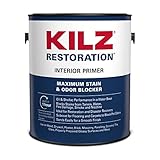
KILZ Restoration Interior Primer
Water-Based Maximum Stain Blocker, Interior
KILZ Restoration is the manufacturer's attempt to deliver oil and shellac stain-blocking performance in a water-based primer, and it gets closer than any other water-based product we have used. KILZ rates it for the difficult list: severe water damage, rust, smoke, nicotine, grease, tannin bleed, ink, marker and pet stains, and for sealing pet and smoke odors. The reason that matters is the working environment. Oil and shellac stain-killers make a house smell for a day and need serious ventilation; Restoration has a mild odor and cleans up with soap and water, which makes it the practical choice for a nursery, a rental between tenants or a bedroom you need to sleep in tonight. It dries to the touch in around 30 minutes and takes a topcoat in about an hour, with coverage in the 300 to 400 square foot per gallon range. Our honest read is that it handles the large majority of heavy interior stains in one coat, and a second coat closes the gap on the rest. On a smoke-blackened ceiling after a fire, or knots that have already bled through latex, we would still use shellac. For water rings, nicotine-yellowed walls and the general grime of a neglected room, Restoration is the easier product to live with.
Pros
- Water-based formula rated for severe water damage, smoke, nicotine, tannin and pet stains
- Low odor compared with oil and shellac stain-killers, so occupied homes are workable
- Recoat in about an hour, with soap-and-water cleanup
- Also rated for sealing pet and smoke odors
- Coverage of roughly 300 to 400 square feet per gallon
Cons
- Interior only, so it is not the answer for exterior stains
- On the very worst stains shellac still has the edge, and a second coat may be needed
The Bottom Line
The best choice for heavy stains in a lived-in house where shellac fumes are not an option.

KILZ Original Oil-Based Interior Primer
Oil-Based Stain Blocker, Interior
Before water-based stain blockers got good, this is what most homeowners bought when a stain would not stay hidden, and it still earns its place. KILZ Original is an oil-based interior primer that the company rates for most heavy interior stains — water, smoke, tannin, ink, pencil, marker and grease — and for sealing persistent pet, food and smoke odors. Oil-based primers have two advantages over acrylics. The solvent carries the resin deeper into porous and chalky surfaces, locking down powdery old paint and bare plaster, and the cured film is a strong barrier against water-soluble stains. It dries to the touch in about 30 minutes and is ready for a topcoat in around an hour on current formulas, with coverage in the 300 to 400 square foot per gallon range. It sits between the other stain-killers here. It is gentler to work with than shellac and less expensive, but it smells like what it is — an oil-based coating — and needs mineral spirits for cleanup. Compared with KILZ Restoration, it seals chalky and porous surfaces better but is far less pleasant indoors. It is labeled for interior use, so for exterior wood that needs an oil primer, look at Zinsser Cover Stain instead. Stir it thoroughly; the pigment settles hard.
Pros
- Classic oil-based stain blocker for water, smoke, tannin, ink, grease and marker stains
- Seals pet, food and smoke odors in addition to stains
- Ready for topcoat in about an hour on current formulas
- Oil film penetrates and seals chalky or porous surfaces well
- Accepts latex or oil topcoats
Cons
- Strong solvent odor and mineral-spirits cleanup
- Rated for interior use; the exterior job belongs to a different product
The Bottom Line
A dependable, widely stocked oil-based stain-killer that costs less than shellac and seals porous surfaces well.

Zinsser Cover Stain Oil-Based Primer
Oil-Based Stain Killer, Interior/Exterior
Cover Stain is Zinsser's oil-based primer-sealer, and its main advantage over KILZ Original is that it is rated for both interior and exterior surfaces. That makes it the natural choice for the most common exterior priming problem: tannin bleed. Cedar and redwood contain water-soluble extractives that migrate through latex paint and leave brown streaks within weeks, and an oil-based primer is the standard fix. Cover Stain is formulated to block that bleed, and it handles the interior stain list too — water, smoke, fire damage and nicotine. It dries to the touch in around 35 minutes and covers roughly 300 to 400 square feet per gallon. Recoat guidance differs between formulas and conditions, so plan on one to two hours before topcoating and longer in cool, damp weather. Zinsser also rates it for adhesion to glossy surfaces, which makes it useful on old alkyd-painted trim, and the film is flexible enough for wood siding that expands and contracts with the seasons. It accepts latex or oil topcoats. The downsides are standard for oil: a noticeable solvent smell and mineral-spirits cleanup. For interior-only jobs in occupied rooms, KILZ Restoration is easier to live with; for exterior cedar trim, this is the better tool.
Pros
- Rated for both interior and exterior use, unlike most oil-based stain killers
- Blocks tannin bleed from cedar and redwood, which is the main exterior priming problem
- Seals water, smoke, fire and nicotine stains
- Bonds to glossy surfaces and dries to the touch in about 35 minutes
- Flexible film suited to wood that moves with the seasons
Cons
- Solvent odor and mineral-spirits cleanup
- Recoat time varies by formula and conditions — plan on one to two hours
The Bottom Line
The oil-based stain killer to buy when the job includes exterior wood, especially cedar or redwood.
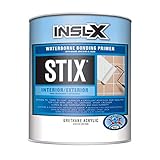
INSL-X Stix Waterborne Bonding Primer
Acrylic-Urethane Bonding Primer, Interior/Exterior
Stix is made by INSL-X, a Benjamin Moore brand, and it is the primer painters use when a surface is too smooth for paint to grip: glazed ceramic tile, PVC, fiberglass, glass, glossy laminate and factory-finished cabinets. It is an acrylic-urethane waterborne formula, so it has low odor and cleans up with water, yet its adhesion on hard, non-porous surfaces is better than most oil-based primers. The data sheet is honest about the one thing people get wrong. Stix dries to the touch in about 30 minutes and can take a topcoat in three to four hours, but it needs approximately three to four days to cure before it reaches maximum resistance to scrape-off. Test it too early with a fingernail and it will come away, which convinces people it failed when it simply was not finished. Coverage is roughly 300 to 400 square feet per gallon, and it levels well, which matters on cabinet doors where brush marks show. Prep still counts: clean with a degreaser, rinse, and scuff-sand gloss. Availability is the catch. It is sold mainly through independent Benjamin Moore retailers, and online listings are often third-party sellers at a premium. If you have a Benjamin Moore store nearby, buy it there.
Pros
- Acrylic-urethane primer made for surfaces paint will not normally stick to: glossy tile, PVC, glass and glazed surfaces
- Water-based, low odor and soap-and-water cleanup
- Smooth leveling and good enamel holdout under cabinet and trim finishes
- Rated for interior and exterior use
- Covers roughly 300 to 400 square feet per gallon
Cons
- Needs three to four days of cure before it reaches full scratch and scrape resistance
- Sold mainly through Benjamin Moore retailers; Amazon listings are often third-party and priced higher
The Bottom Line
The primer to use when a surface is so smooth that normal paint peels off it with a fingernail.

Zinsser Gardz Problem Surface Sealer
Clear Penetrating Sealer, Interior
Gardz solves a problem that ordinary primers make worse. When wallpaper comes off and takes the drywall face paper with it, the exposed brown layer soaks up moisture from joint compound or paint and swells into bubbles. Most people then prime it with a latex primer, which is also water-based, and the bubbles get bigger. Gardz is a thin, clear, water-based sealer that soaks into the torn paper and hardens it, so the surface can then be skim-coated or painted without blistering. It does the same job over the thin layer of wallpaper paste left after stripping — residue that otherwise causes latex paint to crack in a crazed pattern weeks later — and over chalky old paint and fresh skim coats. It dries clear to a matte finish with a low odor and soap-and-water cleanup. It is important to be clear about what it is not. Gardz has no pigment, so it hides nothing and blocks no stains; it is a sealer that fixes the substrate. On a heavily damaged wall the right sequence is Gardz, then skim coat with a quality compound, then a pigmented primer. Apply it with a roller and do not flood vertical surfaces, because the thin consistency runs easily.
Pros
- Soaks into torn drywall face paper and hardens it so joint compound will not bubble
- Seals wallpaper adhesive residue that makes latex paint crack and peel
- Locks down chalky surfaces and skim-coated walls before priming
- Water-based, low odor and dries clear to a matte finish
- Thin consistency penetrates better than a pigmented primer
Cons
- Clear film has no hiding power and blocks no stains, so it is not a replacement for primer
- Easy to over-apply on vertical surfaces, where it runs
The Bottom Line
Not a primer in the usual sense, but the only product here that fixes torn drywall paper and adhesive residue properly.

KILZ 2 All-Purpose Primer
Water-Based All-Purpose, Interior/Exterior
KILZ 2 is the primer most people see first on the shelf, and for straightforward work it is a reasonable buy. It is a water-based, multi-surface primer rated for interior and exterior use, with a mildew-resistant film, mild odor and soap-and-water cleanup. KILZ rates it for medium stains — minor water stains, rust, grease, ink, pencil and marker — which covers most of what you meet on walls that have simply been lived in. It dries to the touch in about 30 minutes and can be painted after an hour, with coverage in the 300 to 400 square foot per gallon range. The main difference from our top pick is body and hiding power. KILZ 2 goes on thinner, and going from a dark color to a light one, or covering a bold accent wall, often takes two coats where Bulls Eye 1-2-3 needs one. That can erase the price advantage on smaller jobs. Where it makes most sense is large areas of new drywall in a finished basement or an addition, where you need coverage at a sensible price and the surface has no stains to hide. Keep expectations realistic on stains: a ceiling ring from a real leak needs KILZ Restoration, KILZ Original or shellac, not this.
Pros
- One of the least expensive name-brand primers and stocked almost everywhere
- Fast: dry to the touch in about 30 minutes and ready for paint in an hour
- Rated for interior and exterior use with a mildew-resistant film
- Blocks medium stains including minor water marks, pencil, ink and marker
- Mild odor and soap-and-water cleanup
Cons
- Thinner and lower-hiding than Bulls Eye 1-2-3; dark colors can need a second coat
- Not suitable for heavy water, smoke or nicotine stains
The Bottom Line
A good value for large areas of new drywall and simple color changes, as long as you do not ask it to hide serious stains.
4. Stain Blocking: Water, Smoke and Knots
Stains are the main reason people buy primer, and the main reason primer jobs fail. The rule is simple: fix the cause first, let the surface dry, and then choose a primer strong enough for the stain.
Water stains on ceilings are the most common. Confirm the leak has been fixed, let the drywall dry for several days, and check it is firm rather than soft; soft drywall needs replacing, not priming. A light brown ring will usually stay hidden under a premium water-based stain blocker, while a dark ring with a tide-mark edge is a job for shellac or oil. Prime a few inches beyond the visible edge, because the stain usually extends further than you can see. If you are then painting the whole ceiling, a flat ceiling paint over the primer gives the most uniform finish.
Smoke and nicotine leave a yellow-brown film that is partly greasy. Wash walls first with a degreasing cleaner, rinse and let dry, otherwise no primer bonds well. Light nicotine staining responds to KILZ Restoration; heavy smoke damage and soot after a fire need B-I-N or an oil-based stain killer.
Knots in pine and other softwoods bleed resin and tannin through latex paint, sometimes months after painting. Oil and acrylic primers often slow this down without stopping it. Shellac is the traditional fix: spot-prime each knot with B-I-N, let it dry, then prime the whole board. Cedar and redwood bleed tannin across the entire surface, so on exterior siding use an oil-based primer rated for tannin blocking, such as Cover Stain.
STAIN-KILLER DRY TIMES FROM MANUFACTURER DATA
20 min
B-I-N dry to touch
45 min
B-I-N recoat
1 hr
KILZ Restoration recoat
35 min
Cover Stain dry to touch
Whatever you use, test it. Prime the stain, wait for the recoat time, and put a coat of the actual finish paint over a small area. If the stain ghosts through, add a second coat of primer before painting the rest of the room.
5. Bonding Primers for Gloss, Tile and Laminate
Paint does not peel from glossy surfaces because the paint is poor; it peels because it never had anything to grip. Glossy enamel trim, ceramic tile, laminate cabinets, PVC and fiberglass are all smooth enough that latex paint sits on top rather than bonding, and a fingernail or a piece of tape will lift it later.
A bonding primer solves that with a resin chemistry designed to adhere to hard, non-porous surfaces. INSL-X Stix is the specialist, using an acrylic-urethane resin that bonds to glazed tile, PVC and glass. Shellac bonds well to most glossy surfaces too, and several multi-purpose primers, including Bulls Eye 1-2-3 and Cover Stain, are rated for gloss adhesion, which is usually enough for painted trim.
Preparation matters as much as the product. Clean the surface with a degreaser to remove kitchen grease, hand oils and soap film, rinse thoroughly, and scuff-sand with 220-grit to dull the sheen. Even bonding primers that say sanding is optional perform better on a scuffed surface. Wipe off dust with a damp cloth before priming.
Cure time is the hidden requirement. Bonding primers take days, not hours, to reach full adhesion. Stix needs three to four days to reach maximum scrape resistance, which is why a scratch test the next morning can make it seem like the primer failed. Build that into your schedule, particularly for cabinet doors that will be handled constantly.
For cabinets and trim, application quality shows more than on walls. A fine-finish paint brush or a sprayer gives the smoothest result, and a bonding primer that levels well reduces the sanding needed between coats.
6. Priming New and Damaged Drywall
New drywall has two very different surfaces: the paper face and the joint compound over seams and screws. They absorb paint at different rates, so without a primer the seams show through the finished wall as dull stripes, especially in raking light from a window. A primer evens out the porosity so the topcoat dries uniformly.
For large areas of new drywall, an inexpensive PVA drywall primer is designed exactly for this job and is what most contractors use. It seals the surface well but does not block stains and has limited adhesion on anything other than drywall. A general-purpose primer like KILZ 2 or Bulls Eye 1-2-3 costs a little more and also handles trim, patches and minor marks, which is useful when a basement or addition includes all of those.
Damaged drywall is a different problem. When wallpaper removal tears the face paper, the brown layer underneath absorbs water from paint or compound and bubbles. A normal water-based primer makes it worse. The fix is Zinsser Gardz or a shellac primer, which seals and hardens the paper before any water-based product touches it. Gardz is also the right first coat over wallpaper paste residue, which otherwise causes latex paint to crack.
After sealing, skim-coat any rough areas, sand smooth, and then prime again with a pigmented primer so the new compound does not flash through the paint. For small holes and dents, a lightweight spackle and a spot of primer is enough; for torn paper over a whole wall, budget for the full sealer, skim coat and primer sequence.
THE DRYWALL RULE
Torn paper gets a sealer before any water touches it.
Gardz or shellac first, joint compound second, pigmented primer third. Reverse that order and the bubbles come back with every coat.
7. Odor Blocking After Smoke, Pets and Fire
Paint does not cover odors; it adds a fresh-paint smell that fades within weeks and leaves the original odor behind. A primer that seals odor works by forming a film that traps odor molecules in the surface, and only certain primers do this well.
Shellac is the benchmark. B-I-N is the product restoration contractors use after house fires, and it is the most reliable choice for severe smoke odor. Oil-based stain killers such as KILZ Original also seal smoke, pet and food odors, and KILZ Restoration is the water-based option rated for smoke and pet odor, which makes it the easiest to use in a home you are living in.
Odor sealing depends on complete coverage. The smell comes from every surface in the room, not only the walls you can see, so prime the ceiling, closet interiors, the backs of doors and the trim. In a house with heavy smoking, ceilings often hold more residue than walls because smoke rises. Missing a closet or a ceiling is the most common reason the smell comes back.
Pet urine needs extra steps. It soaks into subfloors and the bottom of drywall, so clean with an enzyme cleaner, let everything dry completely, then seal the affected subfloor and the bottom of the walls with shellac or an oil-based primer before new flooring goes down. Sealing over damp or contaminated material simply traps the problem.
Ventilation still matters during the work. Shellac and oil primers release strong fumes as they dry, so open windows, use a box fan blowing out, and wear an organic vapor respirator in small rooms. The fumes clear quickly once the film has dried; the sealed odor does not come back.
8. Tinting Primer for Big Color Changes
A big color change is where primer can save the most money. Going from a dark red or navy to a pale color over the old paint can take three or four coats of finish paint, while one coat of primer followed by two coats of paint usually does the job.
Tinting the primer toward the finish color makes that work even better. Most water-based and oil-based primers, including Bulls Eye 1-2-3, can be tinted at the paint counter. The standard advice for light-to-dark changes is to tint primer to about half the strength of the topcoat, or to use a gray primer under deep reds, blues and greens. Deep colors often have poor hiding power on their own, and a white primer under them can take extra coats to cover completely.
For dark-to-light changes, a high-hiding white primer is usually the right choice. Primers are designed to hide, and a white primer covers a dark wall more effectively than a light paint. On a very dark wall, two coats of primer before the finish paint can still be cheaper than extra coats of premium paint.
There is a limit to how much you can tint. Primers can take only a limited amount of colorant before performance drops, so the store will usually not tint primer to the full depth of a deep topcoat. That is normal and is why gray primer exists.
When you are changing colors, keep edges sharp. Use a good-quality painter's tape at ceilings and trim and remove it while the final coat is still slightly wet to avoid peeling dried paint. Our guide to the best painter's tape explains which tapes work on fresh primer.
9. Exterior Priming
Exterior primers face a harder job: sun, rain, temperature swings and wood that expands and contracts throughout the year. The primer must stay flexible, resist mildew and, on many woods, block tannin bleed.
Bare wood is the most important thing to prime outside. New siding, replacement trim and areas scraped back to bare wood all need primer before painting, and exposed wood should be primed promptly because sun-grayed wood loses adhesion. For cedar and redwood, use a primer rated for tannin blocking, such as Cover Stain. For pine and most other trim, an exterior-rated water-based primer like Bulls Eye 1-2-3 or KILZ 2 works well and stays flexible.
Previously painted exterior surfaces that are sound usually need only spot priming. Scrape loose paint, sand the edges smooth, and prime bare spots. If the old paint is chalky — it leaves a white powder on your hand — wash it, and use a primer rated for chalky surfaces, since paint applied directly over chalk will not bond reliably.
Check the temperature guidance on the can. Most primers have a minimum surface and air temperature and need a dry period after application. Avoid priming in direct afternoon sun or when dew is expected before the primer dries, because both can affect adhesion and finish.
Seal gaps before painting. Caulk joints in trim after priming, because caulk bonds better to primed wood than to bare wood. Our guide to exterior caulk covers which products accept paint and stay flexible.
10. How to Apply Primer So It Works
Primer is usually applied the same way as paint, but because it is the base coat, preparation and application mistakes show up in the finish.
Start with a clean, dull and dry surface. Wash grease and grime off walls, especially in kitchens and bathrooms, and let everything dry. Sand glossy surfaces and fill holes, then remove dust. Primer bonds only to what is underneath it; if that is dust or grease, the whole paint job will fail with it.
Choose the right tool. Rollers are fast on walls and ceilings, and brushes are best for cutting in and trim. A good brush matters more with shellac and oil primers, which dry quickly and show brush marks. For whole rooms, cabinets or exterior siding, an airless paint sprayer lays down primer quickly and evenly; thin only as the manufacturer allows, and always back-roll porous surfaces for better penetration.
Use tape where you need sharp lines, and apply it before priming rather than after. A quality painter's tape will not lift fresh primer when removed. With fast-drying shellac, remove the tape as soon as the primer is dry to the touch.
One coat of primer is usually enough on drywall and sound surfaces. Use two coats over severe stains, when changing from very dark to very light, or over very porous surfaces. After priming, lightly sand with fine-grit sandpaper to remove raised grain or dust, wipe clean, and apply the topcoat once the recoat time has passed. Some primers also list a maximum time before topcoating, after which adhesion suffers, so do not leave primed walls unpainted for months.
SAND BETWEEN
A quick pass with 220-grit after priming is the difference between good and great.
Primer raises wood grain and holds dust. Two minutes of light sanding before the topcoat removes both and gives trim and cabinets a much smoother finish.
11. Common Mistakes to Avoid
Priming stains before fixing the cause
A water stain returns if the leak is not repaired and the drywall has not dried. Primer seals a stain; it does not stop fresh water from coming through. Fix the plumbing or roof, wait several days, confirm the surface is firm and dry, and only then prime it with a proper stain-blocking product.
Using a water-based primer on torn drywall paper
Exposed drywall paper absorbs water and bubbles, and a latex primer adds more water. The bubbles often get worse with every coat. Seal torn paper with Gardz or shellac first, let it dry, skim-coat if needed, then use a pigmented primer before painting the wall.
Testing a bonding primer too soon
Bonding primers take days to reach full adhesion. Scratch Stix or a similar primer the morning after applying it and it may lift, making it seem like it failed. Follow the cure time on the data sheet and avoid heavy use or tape on the surface until it has cured.
Priming only the walls after smoke damage
Smoke odor comes from every surface in the room, and ceilings often hold the most residue. Priming only walls leaves the smell in the ceiling, closets and trim. Clean everything, then seal all surfaces with an odor-blocking primer for a lasting result.
Relying on paint-and-primer for problem surfaces
Paint-and-primer products are good paints that hide well on easy repaints. They are not stain blockers, bonding primers or drywall sealers. Use a dedicated primer over stains, gloss, bare wood and new drywall, then use the paint you prefer as the topcoat.
12. Frequently Asked Questions
Do I need primer if I use paint and primer in one?
Not for repainting a sound, clean surface in a similar color, where paint-and-primer products work well. You still need a separate primer over new drywall, patches, stains, glossy surfaces, bare wood and major color changes. Paint-and-primer products do not block stains or improve adhesion the way dedicated primers do, and they cost more per coat than primer.
What is the best primer for water stains on a ceiling?
Fix the leak and let the ceiling dry first. For light stains, a premium water-based stain blocker such as KILZ Restoration works well. For dark rings or stains that have already bled through paint, use a shellac primer like Zinsser B-I-N or an oil-based stain blocker. Prime beyond the stain edge, then paint the ceiling.
Is oil-based primer better than water-based?
Not in general. Oil-based primers are better at blocking tough stains, tannin bleed and sealing chalky surfaces. Water-based primers are better for new drywall, general use and low-odor work, and they stay flexible outside. Premium water-based stain blockers now handle many jobs that once needed oil. Choose based on the problem rather than the chemistry.
Can I paint latex over oil-based primer?
Yes. Most oil-based primers, including KILZ Original and Zinsser Cover Stain, can be topcoated with latex or oil paint once dry. Shellac primers also accept latex and oil topcoats. What you should avoid is applying latex directly over old oil-based gloss paint without priming, because the latex usually cannot bond to it and will peel.
How long should primer dry before painting?
It depends on the type. Shellac primers such as B-I-N can often be recoated in about 45 minutes, while most water-based and oil-based primers need around one to two hours. Bonding primers can be topcoated in a few hours but need several days to fully cure. Humidity and cold slow drying, so check the can.
How many coats of primer do I need?
One coat is enough for most drywall, patches and sound painted surfaces. Use two coats over severe stains, strong odors, very porous surfaces and major dark-to-light color changes. If a stain shows through after one coat and a test patch of paint, add another coat of primer before painting the rest of the surface.
Can I use interior primer outside?
Only if it is rated for exterior use. Primers like Bulls Eye 1-2-3, KILZ 2 and Cover Stain are rated for interior and exterior use, while KILZ Restoration and KILZ Original are interior products. Shellac primers such as B-I-N are for interior and exterior spot priming. Exterior-rated primers stay more flexible and resist mildew better.
Related Painting Guides
Buyer's Guide
Best Interior Paint
The topcoats that cover well over primed walls, compared by hide, washability and sheen.
Buyer's Guide
Best Paint Sprayers
Airless and HVLP sprayers for priming whole rooms, cabinets and siding faster.
Buyer's Guide
Best Garage Door Bottom Seals
Stop drafts, water and mice under the garage door by matching the seal to your retainer.
The Bottom Line
For most homes, one can of Zinsser Bulls Eye 1-2-3 handles new drywall, patches, trim and light stains, and a quart of Zinsser B-I-N handles the stains and odors that nothing else stops. That pair covers the large majority of priming jobs.
Add a specialist only when the job needs one: KILZ Restoration for heavy stains in an occupied home, Cover Stain for cedar and redwood, Stix for tile and laminate, and Gardz for torn drywall paper. Match the primer to the problem, allow the full cure time, and the topcoat will last.
More in Home Improvement
Guides in this category that pair with what you just read.
About the Author
Alex Rivers, Home Improvement Editor
Alex has spent over a decade working on residential and light commercial property maintenance, and now tests every tool, coating and machine that appears in these guides personally.