The 7 Best Snow Blowers in 2026
We cleared light powder, heavy wet snow, and the compacted plow pile at the end of the driveway with 11 machines. Single-stage, two-stage, gas and battery. Only 7 earned a spot.
Alex Rivers
Home Improvement Editor
Last Updated
October 17, 2026
In This Guide
The snow blower decision comes down to one question most buyers never think about: what is your driveway made of, and what does the plow leave at the end of it? A single-stage machine that clears eight inches of powder beautifully will stop dead against a compacted plow pile, and it cannot be used on gravel at all. Get that match right and almost any decent machine will do. Get it wrong and no amount of horsepower helps.
Our Picks at a Glance
The Short Answer
Toro Power Max 826 OHAE (Best Overall). The two-stage machine that solves the actual problem: wet snow clogging the chute. For most snowy-climate homeowners this is the one to buy.
- Check Price
- Check Price
- Check Price
- Check Price
- Best for Slopes & Ice Honda HSS724AAT Track Drive — Two-Stage, 24" Width, 196cc, Hydrostatic Track DriveCheck Price
- Check Price
- Check Price
We may earn a commission when you buy through these links, at no extra cost to you. How we test
Best Overall
Toro Power Max 826 OHAE
1. Single-Stage, Two-Stage, and Three-Stage Explained
The stage count describes how a snow blower moves snow from the ground to the chute, and it determines what surfaces you can use it on, how deep it can go, and how far it throws. This is the first decision and the one that matters most.
Single-Stage
A rubber-paddled auger contacts the ground, scoops snow, and throws it directly out the chute in one motion. Because the paddles touch the pavement, the machine clears to a bare surface and pulls itself forward without a separate drive system. It is light, cheap, and easy to maneuver. The two hard limits: it cannot be used on gravel, since it will throw stones, and it tops out around eight or nine inches of snow.
Two-Stage
A metal auger gathers snow and feeds it to a separate high-speed impeller that throws it out the chute. Because the auger does not touch the ground, adjustable skid shoes let it run safely on gravel, and the taller intake handles deep snow and the compacted plow pile. It throws snow much further. The costs are weight, size, price, and a machine that leaves a thin layer of snow on the pavement.
Three-Stage
Adds an accelerator between the auger and impeller that breaks up and speeds snow toward the impeller, increasing throughput substantially. Genuinely useful for very large properties and severe snowfall, and unnecessary complexity and cost for a typical residential driveway.
Hybrid Designs
Machines like Toro SnowMaster use an in-line auger that accelerates snow more effectively than a paddle while keeping single-stage weight and maneuverability. They clear to pavement and throw further than a conventional single-stage, but they still cannot be used on gravel.
The Numbers Don't Lie
8-9"
Practical depth limit of a single-stage
18-24"
Intake height on a good two-stage
21-28"
Typical residential clearing width
Gravel
Requires two-stage, no exceptions
2. Matching a Machine to Your Driveway and Climate
Two facts about your property determine which machine is correct, and neither is about how much you want to spend.
Surface Type Is an Absolute Constraint
If your driveway is gravel, you need a two-stage machine with adjustable skid shoes, and no single-stage or hybrid machine is acceptable. A single-stage paddle picks up and throws gravel at high velocity, which breaks windows, damages vehicles, and can seriously injure someone. This is not a preference, it is a safety requirement.
The Plow Pile Decides Capability
If your driveway meets a road that gets plowed, you will regularly face a compacted, partly icy ridge across the entrance. That pile stops single-stage machines cold, and clearing it by hand after every storm is the fastest way to resent your snow blower. If you have a plow pile, buy two-stage.
Typical Snowfall Depth Sets the Size
For climates averaging under eight inches per storm on a paved driveway, a single-stage or hybrid machine is genuinely sufficient and far more pleasant to use. Between eight inches and roughly eighteen, a mid-size two-stage at 24 to 26 inches wide is right. Above that, or for a long driveway, step up to 28 inches and a larger engine.
Driveway Size Sets Clearing Width
Clearing width determines passes, and passes determine time. A two-car driveway with a 21-inch machine takes noticeably longer than with a 26-inch one. But wider machines are heavier and harder to maneuver around cars and tight turns, so the widest available is not automatically the fastest in practice.
| Your Situation | Machine Type | Width |
|---|---|---|
| Paved drive, under 8" storms | Single-stage or hybrid | 21-24" |
| Paved drive, 8-18" storms | Two-stage | 24-26" |
| Gravel driveway, any depth | Two-stage only | 24-28" |
| Sloped or icy driveway | Two-stage, track drive | 24-28" |
| Long drive, heavy snow belt | Two or three-stage | 28"+ |
3. The 7 Best Snow Blowers in 2026 — Tested & Ranked
We ran each machine through light powder, heavy wet snow, and the compacted ridge a municipal plow leaves across a driveway entrance, tracking throwing distance, clogging, traction on a packed slope, maneuverability, and cold starting. These seven earned their place.

Best OverallToro Power Max 826 OHAE
Two-Stage, 26" Width, 252cc, Electric Start
Every two-stage snow blower manual warns about clogging, and anyone who has cleared heavy wet snow knows the routine of stopping, shutting the machine down, and clearing the chute with a plastic tool. Toro Anti-Clogging System addresses it mechanically, with an accelerator that actively pushes snow into the impeller rather than relying on the auger to feed it. In our wet-snow testing it went through the worst conditions of the season without a single clog, while two competitors stopped repeatedly. That alone justifies its place at the top of this list. The rest is well executed. A 252cc engine with a 26-inch clearing width covers a two-car driveway in a sensible number of passes, and the intake height handles the compacted plow pile at the end of the driveway that stops single-stage machines. Quick Stick chute control moves direction and pitch with one hand in a single motion, which sounds minor until you compare it against cranking a handle while walking. Power steering makes the turn at the end of each pass genuinely easy rather than a wrestle with a heavy machine. The honest costs are price, size, and gas maintenance. This is a premium machine, it takes up real garage space, and it needs fuel stabilization and annual service like any small engine. For a climate with regular meaningful snowfall, it is worth it.
Pros
- Anti-Clogging System actively pushes snow through the chute, which genuinely prevents the clogs that plague two-stage machines in wet snow
- Quick Stick chute control changes direction and pitch with one hand without stopping
- 252cc engine and 26-inch width clear a two-car driveway efficiently
- Power steering makes turning at the end of each pass genuinely easy
- Electric start means no pull cord in sub-zero temperatures
Cons
- Expensive relative to budget two-stage machines
- Large and heavy, requiring real garage space
- Gas maintenance including fuel stabilization and annual service
The Bottom Line
The two-stage machine that solves the actual problem: wet snow clogging the chute. For most snowy-climate homeowners this is the one to buy.
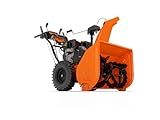
Best PremiumAriens Deluxe 28 SHO
Two-Stage, 28" Width, 306cc, Cast Iron Gear Case
Snow blowers separate into machines built to a price and machines built to last, and the internal gear case is the clearest tell. Consumer machines commonly use aluminum or composite auger gear cases that eventually wear or crack under repeated shock loading from ice and buried objects. The Deluxe 28 SHO uses cast iron, which is heavier, more expensive, and effectively permanent. That difference is why Ariens machines from decades ago are still running while their contemporaries have been scrapped. Performance matches the construction. A 306cc engine driving a 28-inch auger with a high intake handled the deepest snow in our testing without slowing, and the serrated auger blades chewed through the compacted, partially icy plow pile that made lighter machines ride up and over rather than digging in. Heated hand grips are a small luxury that becomes a serious comfort in genuinely cold weather. The reservations are cost, size, and appropriateness. This is expensive, it is heavy enough to be awkward to maneuver in a crowded garage, and in a climate that sees a few inches of snow several times a winter it is far more machine than the job needs. In a snow belt with regular heavy accumulation and a long driveway, it is the machine that stops the conversation.
Pros
- Cast iron auger gear case rather than the aluminum or plastic used on consumer machines
- 306cc engine with a 28-inch width and high intake handles the deepest snow here
- Built for decades of service, with a reputation for outlasting several cheaper machines
- Serrated auger blades chew through packed and icy snow effectively
- Heated hand grips and excellent chute controls
Cons
- Among the most expensive machines in this guide
- Very heavy, which is felt when maneuvering it in a tight garage
- Overkill for climates with occasional light snowfall
The Bottom Line
The machine to buy once. Cast iron internals and a serious engine mean this is still clearing driveways in twenty years.

Best BatteryEGO Power+ SNT2405 24" Two-Stage
Battery, Two-Stage, 24" Width, 56V Dual Battery
Cold weather is where gas engines are least pleasant and battery tools are most appealing, which makes snow removal an obvious application and a technically difficult one. Early battery snow blowers were underpowered single-stage machines suited to a light dusting. The SNT2405 is a genuine two-stage machine with a steel auger and impeller, and in our testing it handled deep snow and the compacted end-of-driveway plow pile that defines whether a snow blower is actually useful. Push-button starting is the daily benefit and it is larger than it sounds. Starting a gas engine at five in the morning at ten degrees, after it has sat for three weeks, is the single most disliked part of owning a snow blower. This starts instantly, every time, with no fuel to stabilize and no carburetor to gum up over an eight-month off season. It is also quiet enough to clear a driveway early without waking the street. The limitations are runtime and cold. Expect 45 to 60 minutes depending on how wet the snow is, which covers most residential driveways but not a long one after a foot of accumulation without swapping batteries. Lithium capacity also drops in severe cold, so plan on less in a deep freeze. And with four batteries and a charger the price sits at the premium end.
Pros
- Genuine two-stage performance from a battery machine, including handling plow piles
- Push-button start every time, with no cold-weather pull starting or fuel to stabilize
- Far quieter than gas, which matters for early morning clearing before work
- Steel auger and impeller rather than the plastic used on lightweight battery machines
- Uses the same 56V batteries as EGO mowers, trimmers, and blowers
Cons
- Runtime is finite, typically 45 to 60 minutes depending on snow conditions
- Battery capacity drops noticeably in very cold temperatures
- Expensive once four batteries and a charger are included
The Bottom Line
The first battery snow blower that genuinely competes with gas two-stage machines. Instant starting in February is worth a lot.

Best HybridToro SnowMaster 824 QXE
Hybrid Single-Stage, 24" Width, 252cc, Personal Pace
The SnowMaster occupies a genuinely useful middle ground that did not exist a decade ago. It is lighter and far more maneuverable than a two-stage machine, close in weight and handling to a single-stage, while clearing a 24-inch path and throwing snow much further than a conventional single-stage manages. Toro achieves that with an in-line auger design that accelerates snow more effectively than a simple paddle. In our testing it cleared a standard two-car driveway noticeably faster than a comparable two-stage machine, simply because it was so much easier to turn and reposition. Personal Pace is the other reason it is pleasant to use. Rather than selecting a speed, the machine senses how fast you are walking and matches it, which on a driveway with turns and obstacles means never thinking about drive speed. It also clears down to the pavement, where two-stage machines deliberately leave a thin layer to protect the auger, so you end up with a cleaner surface. The critical limitation is surface. Because the auger contacts the ground, it cannot be used on a gravel driveway without throwing stones, which is an absolute constraint rather than a caution. It also has a practical depth ceiling around a foot and struggles with the heavy compacted pile a municipal plow leaves.
Pros
- Much lighter and more maneuverable than a two-stage machine while clearing 24 inches wide
- Personal Pace drive matches your walking speed automatically with no speed lever
- In-line two-stage auger design throws snow further than a conventional single-stage
- Clears down to the pavement, unlike two-stage machines that leave a thin layer
- Substantially cheaper and easier to store than a full two-stage machine
Cons
- The auger contacts the ground, so it cannot be used on gravel driveways
- Struggles with the deepest snow and heavy compacted plow piles
- Not suited to snow depths much beyond about a foot
The Bottom Line
The sweet spot for suburban driveways in moderate snow country. Two-stage throwing distance in a machine you can actually maneuver.

Best for Slopes & IceHonda HSS724AAT Track Drive
Two-Stage, 24" Width, 196cc, Hydrostatic Track Drive
Wheeled snow blowers depend on tire grip, and on a sloped driveway with packed snow or an ice layer underneath, that grip is exactly what disappears. The result is a heavy machine that slides rather than climbs, which is both frustrating and genuinely dangerous on an incline. The HSS724AAT uses rubber tracks instead, spreading weight across a much larger contact area and providing traction that wheels cannot match. In our testing on a packed, sloped section it climbed steadily where wheeled machines spun and had to be pushed. The hydrostatic transmission is the other major advantage, providing infinitely variable speed forward and back through a single lever rather than fixed gears. On a driveway that requires frequent reversing and speed changes, that control is far more pleasant than shifting. Adjustable auger height lets you raise the housing for a gravel driveway and lower it for pavement, which is a genuine capability few machines offer. Honda build quality and dealer support round it out. The reservations are price and maneuverability. This is at the top of the residential market in cost, and tracks that excel on slopes and ice are harder to pivot on flat dry pavement than wheels, so turning at the end of a pass takes more effort. On a flat driveway, that trade is not worth making.
Pros
- Track drive provides traction that wheeled machines cannot match on ice and slopes
- Hydrostatic transmission gives infinitely variable speed in both directions
- Adjustable auger height lets you set clearing depth for gravel or pavement
- Honda engine reliability with excellent long-term parts and dealer support
- Exceptional build quality throughout, aimed at decades of service
Cons
- Very expensive, at the top of the residential market
- Tracks make it harder to maneuver on flat pavement than wheels
- Heavy and slow to reposition in tight spaces
The Bottom Line
The machine for a sloped or icy driveway where wheeled blowers slip. Nothing else here has this traction.

Best Value Two-StageCub Cadet 2X 26" HP
Two-Stage, 26" Width, 243cc, Electric Start
Two-stage snow blowers have historically carried a significant price premium, and the Cub Cadet 2X exists to close that gap for buyers who need the capability but not the twenty-year build. It delivers the core two-stage advantages: an auger that feeds an impeller, an intake tall enough to attack a plow pile, and skid shoes that let it run on gravel. In our testing it cleared typical residential snowfall competently and handled the end-of-driveway pile that stops single-stage machines. Feature content is generous for the price. Power steering with trigger controls makes turning a heavy machine manageable, heated grips are genuinely welcome in cold weather, and electric start removes the pull cord problem. Availability at big-box retailers makes both purchase and common parts easier than dealer-only brands. Where it gives ground is durability and wet-snow behavior. Build quality is visibly a step below Ariens and Toro premium machines, with lighter gauge material and an aluminum rather than cast iron gear case, and honest long-term reports suggest a service life measured in years rather than decades. It also clogged more readily than the Toro in heavy wet snow, requiring the shut-down-and-clear routine more often. For a moderate snow climate and a normal driveway, those are reasonable trades.
Pros
- Full two-stage capability at a price well below premium machines
- 26-inch width and 243cc engine handle typical residential snowfall comfortably
- Power steering with trigger control makes turning manageable
- Heated grips and electric start included at this price point
- Widely available at big-box retailers with accessible parts
Cons
- Build quality is a clear step below Ariens and Toro premium machines
- More prone to chute clogging in heavy wet snow than the Toro
- Expected service life is shorter than premium two-stage machines
The Bottom Line
The sensible entry point into two-stage snow blowers. Genuine capability at a price that does not hurt, with a shorter expected life.

Best Single-StageToro Power Clear 721 R-C
Single-Stage, 21" Width, 212cc, Paddle Auger
Single-stage snow blowers get dismissed too readily. For a paved driveway in a climate that gets six to eight inches at a time, a machine like the Power Clear 721 is genuinely the better tool than a two-stage: lighter, far easier to maneuver, cheaper, simpler to store, and it clears right down to the pavement rather than leaving the thin layer a two-stage deliberately skips over. In our testing it handled typical storms comfortably and threw snow much further than single-stage machines historically managed. Its auger-propelled design means the rubber paddles contacting the ground pull the machine forward, so there is no separate drive system to maintain and no drive belt to fail. That same design is why it clears to bare pavement, and why it is easy to steer with one hand around obstacles. Two limitations define its use. It cannot be used on gravel, full stop, because the paddles will pick up and throw stones with enough force to break windows and injure people. And its capability ceiling is roughly eight or nine inches of snow, beyond which it bogs and rides up rather than digging in. The compacted, partly icy pile a municipal plow leaves across the end of a driveway is where it struggles most, and in a climate where that is a regular occurrence, a two-stage machine is the honest recommendation.
Pros
- Light and highly maneuverable, easy to turn and store in a small garage
- Clears right down to the pavement, leaving a genuinely clean surface
- Auger-propelled, so the machine pulls itself forward without a drive system
- 212cc engine throws snow surprisingly far for a single-stage machine
- Much cheaper and simpler than any two-stage machine
Cons
- Cannot be used on gravel driveways because the paddle contacts the ground
- Limited to roughly eight or nine inches of snow depth
- Struggles badly with the compacted pile a plow leaves at the driveway end
The Bottom Line
The right machine for a paved driveway in moderate snow country. Light, simple, and it actually clears to bare pavement.
4. The Features Worth Paying For
Snow blower feature lists are long, and only a handful of items genuinely change the experience of clearing a driveway at six in the morning in the cold.
Electric start. The single most worthwhile feature on any gas snow blower. Pull starting a cold engine that has sat since last February, in sub-zero temperatures with gloves on, is the part of snow blower ownership people hate most. Push-button starting from a wall outlet or an onboard battery removes it entirely.
Chute control quality. You change chute direction constantly to avoid throwing snow into the wind, onto a car, or into a neighbor driveway. A single-hand joystick or quick-stick control does this without stopping; a crank handle means pausing and cranking repeatedly. Over a season this is one of the biggest differences in how pleasant a machine is.
Power steering or trigger steering. On a heavy two-stage machine, turning at the end of every pass means muscling a couple hundred pounds around. Trigger-controlled steering disengages one wheel to let the machine pivot, which turns that wrestle into a light movement.
Heated hand grips. Sounds like a luxury, and in genuinely cold weather it is the difference between finishing the driveway and going inside. Cheap to include, and consistently one of the features owners say they would not go without again.
Headlights. Snow clearing happens before dawn and after dark more often than not, and a headlight on the machine is far more useful than a porch light behind you casting your own shadow across the work.
Anti-clogging systems. Wet snow clogging the chute is the most common two-stage frustration, and mechanical systems that actively push snow through genuinely reduce it. If you get wet coastal snow rather than dry powder, this is worth prioritizing.
Never Clear a Chute With Your Hand
A clogged chute holds stored energy in the auger and impeller, and clearing it by hand is how people lose fingers, including with the engine switched off, because the tension releases as soon as the obstruction moves. Shut the engine off, wait for everything to stop, and use the clearing tool that comes clipped to the machine. Every snow blower includes one for exactly this reason.
5. Gas, Battery, or Corded Electric
Power source affects starting reliability, runtime, and how much off-season maintenance the machine demands, and the calculation is different from other outdoor tools because of cold.
Gas
Still the default for serious snow removal. Unlimited runtime, the highest available power, and the only option in the largest sizes. The costs are real: cold-weather starting, fuel that degrades over an eight-month off season and gums carburetors, annual service, and noise. Electric start mitigates the worst of it.
Battery
Battery snow blowers have improved dramatically, and high-voltage two-stage machines now handle genuine snow removal including plow piles. The daily benefit is enormous: instant starting in any temperature, no fuel to stabilize, and nothing to gum up over the summer. The constraints are runtime of roughly 45 to 60 minutes and reduced battery capacity in severe cold, which is precisely when you need it.
Corded Electric
Cheap, light, and effective for a short paved driveway or a set of steps and walkways. The cord is a genuine nuisance in snow, where it drags through what you just cleared and stiffens in the cold. Range is capped around 100 feet from an outlet. For a small paved area it is a sensible budget choice.
The Cold-Weather Battery Caveat
Lithium batteries lose meaningful capacity in severe cold, so a machine rated for an hour in mild conditions may deliver noticeably less at ten degrees. Storing batteries indoors and installing them just before use recovers most of that, and it is worth building the habit.
6. Maintenance, Storage, and Getting It to Start in December
Snow blowers sit unused for eight months and are then expected to start in freezing weather on the morning they are needed. Nearly every failure traces to how the machine was put away.
Fuel is the enemy. Ethanol-blended gasoline degrades within weeks and gums up small carburetors, and eight months is a long time. Either run the tank completely dry at the end of the season or fill it and add a fuel stabilizer, and consider ethanol-free fuel for seasonal equipment. This single decision accounts for the large majority of snow blowers that will not start in December.
Change the oil before storage, not after. Used oil contains combustion acids that corrode internal components while the engine sits. Changing it in spring rather than fall means the engine spends the off season with clean oil in it.
Check the shear pins and keep spares. Shear pins are designed to break when the auger hits something solid, protecting the gear case. They are cheap, and a snow blower with a broken shear pin will not throw snow. Keep a set in the garage, because they always break during a storm and never when the hardware store is open.
Adjust the skid shoes for your surface. On pavement, set them so the scraper bar is close to the ground for a clean clear. On gravel, raise them substantially so the auger rides above the stones. Getting this wrong on gravel is how a two-stage machine ends up throwing rocks.
Inspect belts before the season. Auger and drive belts stretch and crack, and a belt failure mid-storm means the machine stops working when you need it most. Checking them in the fall and keeping a spare is cheap insurance.
Store it dry and covered. Snow blowers spend their working life wet, and putting one away damp for eight months rusts the auger housing and chute. Run it briefly after the last use to clear snow from the housing, wipe it down, and consider a light spray of silicone in the chute, which also reduces clogging.
Before You Buy
Questions to Settle First
Also Needed for This Job
7. Frequently Asked Questions
What is the best snow blower?
For most homeowners in snow country, the Toro Power Max 826 OHAE is the best choice, with a 26-inch two-stage design and an anti-clogging system that genuinely prevents the wet-snow jams that plague this category. For a machine built to last decades, the Ariens Deluxe 28 SHO has a cast iron gear case, and the EGO SNT2405 is the first battery two-stage that truly competes.
Do I need a single-stage or two-stage snow blower?
Buy two-stage if you have a gravel driveway, if a municipal plow leaves a compacted pile at your driveway entrance, or if you regularly get more than eight or nine inches of snow. Single-stage machines are lighter, cheaper, easier to maneuver, and clear to bare pavement, which makes them the better choice for paved driveways in moderate snow.
Can I use a single-stage snow blower on gravel?
No. A single-stage machine has rubber paddles that contact the ground, and on gravel they pick up and throw stones at high velocity, which breaks windows, damages vehicles, and can cause serious injury. Gravel driveways require a two-stage machine with adjustable skid shoes set to raise the auger above the stones.
What size snow blower do I need?
For a typical two-car driveway, a 24 to 26-inch clearing width balances speed against maneuverability well. Wider machines cover ground faster but are heavier and harder to turn around cars and tight corners. Match intake height and engine size to your typical snowfall depth, stepping up for long driveways or heavy snow belts.
Are battery snow blowers any good?
High-voltage two-stage battery machines now handle real snow removal including plow piles, and the instant starting in cold weather is a genuine daily advantage over gas. The constraints are 45 to 60 minutes of runtime and reduced battery capacity in severe cold. For a typical residential driveway they work well; for a long driveway after a foot of snow, plan on spare batteries.
Why will my snow blower not start after summer?
Almost always degraded fuel gumming up the carburetor. Ethanol-blended gasoline breaks down within weeks, and eight months of storage is far beyond that. Either run the tank dry or add a stabilizer before storage, and use ethanol-free fuel where available. A fresh spark plug and a clean air filter resolve most of the remainder.
8. Common Snow Blower Mistakes
Snow blower problems fall into two categories: buying the wrong machine for the driveway, and one habit that causes serious injuries every winter.
Clearing a Clogged Chute by Hand
A jammed auger and impeller hold stored energy, and it releases the instant the obstruction moves, even with the engine off. This is how people lose fingers every single winter. Shut the machine down, wait for all rotation to stop, and use the clearing tool clipped to the machine, which every snow blower includes for exactly this purpose.
Buying a Single-Stage Machine for a Gravel Driveway
Single-stage paddles contact the ground and will throw gravel with enough force to break windows and injure people. There is no adjustment or technique that makes this safe. Gravel driveways require a two-stage machine with skid shoes raised to keep the auger above the stones.
Storing It With Untreated Fuel
Ethanol-blended gasoline degrades in weeks and gums small carburetors, and a snow blower sits for eight months. This is the single largest cause of machines that will not start on the morning of the first storm. Run the tank dry or stabilize the fuel, and change the oil in the fall rather than the spring.
Underestimating the Plow Pile
The compacted, partly icy ridge a municipal plow leaves across a driveway entrance is far denser than fallen snow, and it stops single-stage and lightweight machines completely. If your driveway meets a plowed road, that pile is a regular event and it should be the deciding factor in your machine choice, not an afterthought.
Everything Else About Snow Blowers
Guide
Self-Propelled Snow Blower
What self-propelled really means on single- and two-stage machines, and who needs it.
Comparison
Electric vs Gas Snow Blower
Snow depth, the plow berm, driveway size and five-year cost compared.
Guide
Snow Removal Tools
The shovels, blowers, ice tools and melt you need, by driveway size.
Top Pick
Best Snow Shovels
Pushers, scoops, ergonomic and wheeled shovels for the jobs a blower skips.
Buyer's Guide
Best Electric Snow Blowers
Battery and corded throwers, including cold-weather runtime reality.
Seasonal
Prepare a Snow Blower for Winter
The October service that stops a failure mid-storm.
Related Winter & Home Guides
Buyer's Guide
Best Electric Snow Blowers
Corded and battery machines compared, including cold-weather runtime reality.
Buyer's Guide
Best Ice Melt for Concrete
Concrete-safe deicers for what the snow blower leaves behind.
Buyer's Guide
Best Home Generators
Winter storms take the power out too. Standby and portable generators compared.
The Bottom Line
The best snow blower for most snowy-climate homeowners is the Toro Power Max 826 OHAE, whose anti-clogging system solves the single most annoying two-stage problem. For a machine built to outlast the house, the Ariens Deluxe 28 SHO and its cast iron gear case is the one, and the EGO Power+ SNT2405 is the first battery two-stage we would genuinely recommend.
Decide by your driveway surface and your plow pile before you compare anything else. And whatever you own, never clear the chute with your hand.
More in Tools & Equipment
Guides in this category that pair with what you just read.
About the Author
Alex Rivers, Home Improvement Editor
Alex has spent over a decade working on residential and light commercial property maintenance, and now tests every tool, coating and machine that appears in these guides personally.