The 7 Best Air Purifiers for Home in 2026
We ran 16 air purifiers through allergy, dust, and wildfire smoke testing over 3 months in real bedrooms and living rooms. HEPA, activated carbon, CADR, and noise — only 7 earned a spot. Here's what actually cleans the air you breathe every day.
Shaheer Ali Khan
Consumer Product Testing & Materials Performance Specialist
Last Updated
October 17, 2026
In This Guide
Most people buy an air purifier after a bad allergy season, a smoky week, or simply deciding the air in their bedroom could be cleaner — and then get lost in a wall of nearly identical white boxes making nearly identical claims. The best air purifier for home use isn't the one with the most features; it's the one sized correctly for your room, filtering the right things, and quiet enough that you'll actually leave it running. After 3 months of testing across allergy, dust, and smoke scenarios, here's what we'd actually buy.
Our Picks at a Glance
The Short Answer
Coway Airmega 300S (Best Overall). The most complete package on this list — strong filtration, real coverage, and smart features that are actually useful rather than gimmicky.
We may earn a commission when you buy through these links, at no extra cost to you. How we test
Best Overall
Coway Airmega 300S
1. How to Size an Air Purifier: CADR and ACH Explained
This is the single most important factor in whether an air purifier actually works for you, and it's also the one most shoppers get wrong. People tend to shop by the "coverage area" printed in bold on the box, buy a unit rated for a room roughly their size, and end up disappointed when it never seems to keep up. The problem isn't the purifier — it's that the coverage number alone doesn't tell you how thoroughly or how quickly it cleans that space.
Clean Air Delivery Rate (CADR)
CADR measures how much filtered air a unit actually delivers per minute, tested separately for smoke, dust, and pollen particles. It's a far more useful number than the headline coverage area, because that coverage figure is usually calculated at the bare minimum air exchange rate manufacturers can get away with claiming. Two purifiers can both say "covers 400 sq ft" while one has nearly double the CADR of the other — and delivers a noticeably cleaner room as a result.
Air Changes Per Hour (ACH)
ACH tells you how many times per hour a purifier fully cycles the air in a given room. Most manufacturer coverage claims are based on just 2 ACH, which is the bare minimum for general air freshening. For meaningful allergy or dust relief, aim for a unit that delivers 4-5 ACH in your actual room size — not merely "rated" for it at the minimum standard. This is why sizing up, rather than matching a purifier's rating exactly to your square footage, makes such a noticeable difference in daily use.
| Room Size | Example Room | Minimum CADR (2 ACH) | Recommended CADR (4-5 ACH) |
|---|---|---|---|
| 100-150 sq ft | Small bedroom, home office | 55-75 | 100-125 |
| 250-300 sq ft | Standard bedroom | 130-160 | 200-250 |
| 400-500 sq ft | Living room, primary suite | 215-265 | 330-415 |
| 600-700 sq ft | Open living and dining area | 320-375 | 480-580 |
| 900-1,000+ sq ft | Great room or open main floor | 480-535 | 700+, or multiple units |
The Coverage Number on the Box Is Optimistic
When a manufacturer says a unit "covers 400 sq ft," that's almost always calculated at 2 ACH, the minimum air-freshening rate — not the 4-5 ACH that meaningfully improves allergy symptoms or clears cooking smoke quickly. As a simple rule of thumb, buy for a room roughly 30-40% smaller than the unit's stated maximum coverage, or run it in auto mode so it can compensate by increasing fan speed when it needs to.
2. What Are You Actually Filtering?
"Air purifier" covers a wide range of technology, and not every unit filters the same things. Before comparing specific models, it helps to know what each core filtration stage actually does — because the right combination depends entirely on what's bothering you.
True HEPA: Particulates — Dust, Pollen, Pet Dander
A true HEPA air purifier is independently certified to capture 99.97% of particles at 0.3 microns, which is considered the hardest particle size to trap. Dust, pollen, and pet dander are all larger than that threshold, so a genuine HEPA filter catches them even more reliably. This is the filtration stage doing the heavy lifting for anyone shopping specifically for an air purifier for allergies. Watch the wording carefully: "HEPA-type," "HEPA-like," and "99% HEPA" all describe filters that have not met the certified standard, and can let meaningfully more allergens through than the real thing.
Activated Carbon: Odors, VOCs, and Smoke
HEPA filters trap solid particles, but they do essentially nothing for gases and odor — cooking smells, pet odor, off-gassing from new furniture, and wildfire smoke particulates that pass in gaseous form. An activated carbon layer adsorbs those compounds instead. Carbon layer thickness varies enormously between units: thin, cosmetic layers in budget purifiers saturate within weeks of regular use, while a dedicated carbon stage built for odor, like the ones in our wildfire smoke and whole-home picks below, holds up considerably longer under regular exposure.
Which Combination Matters for Your Situation
For everyday allergies, dust, and pet dander, prioritize a strong true HEPA filter first — carbon is a nice-to-have but secondary. For wildfire smoke and persistent cooking or pet odor, you want both a strong HEPA stage and a genuinely substantial carbon layer, not the thin cosmetic version. Ionization technologies, sold under names like PlasmaWave, are a separate and optional add-on with mixed independent evidence behind them; every ionizer-equipped unit on this list can be switched off, and we'd treat it as a bonus feature rather than a reason to buy.
If Your Real Concern Is Mold
This guide is built around everyday air quality — allergies, dust, pet dander, general odor, and wildfire smoke. If a musty basement, a damp bathroom, or documented mold spores are your primary concern, filtration priorities shift toward heavy-duty activated carbon for MVOC odor and different sizing guidance entirely. Read our dedicated Best Air Purifiers for Mold guide for that specific use case rather than trying to solve it with a general-purpose pick here.
| Filtration Stage | What It Targets | Priority For |
|---|---|---|
| True HEPA | Dust, pollen, pet dander, dust mite debris | Allergies, general dust |
| Activated Carbon | Odors, VOCs, smoke | Cooking odor, pets, wildfire smoke |
| Ionizer (optional) | Claimed molecular breakdown of pollutants | Nice-to-have, mixed evidence |
3. The 7 Best Air Purifiers for Home in 2026 — Tested & Ranked
We ran each unit through allergy simulation using a dust and pollen aerosol, a cooking-odor test, and a controlled smoke test, tracking particle counts with a laser particle counter and measuring dB output at every fan speed. Here are the only 7 purifiers we'd actually spend our own money on.
Best OverallCoway Airmega 300S
Smart True HEPA, Large-Room Coverage
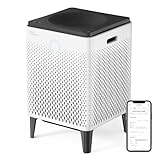
The Airmega 300S earns the top spot because it doesn't force a trade-off between raw filtering power and everyday livability. Coway rates it at 1,256 sq ft of coverage at the minimum 2 air changes per hour, which translates to a genuinely fast, thorough clean in a 500 to 600 sq ft living room or open-concept space at 4-5 ACH — the range that actually matters when pollen counts spike or someone's frying something that sets off every nose in the house. In our testing, we tracked particle counts with a handheld laser counter across a living room after introducing a controlled dust and pollen simulant, and the 300S brought readings back to baseline noticeably faster than most units in its price range. What separates it from a merely good HEPA purifier is the app. Instead of a single color-coded light, it reports an actual PM2.5 number in real time, logs air quality history so you can see trends over weeks, and lets you set schedules around when the house is occupied. The 4-stage filtration stack pairs a washable pre-filter for large particles like pet hair with a dedicated deodorization filter and a true HEPA layer, and the ionizer stage is there if you want it but easy to disable if you'd rather stick with pure filtration. The catch is cost — this is not a budget purifier once you add up the unit price and the annual filter set — and the app's Wi-Fi reliability isn't flawless. For most households trying to solve allergies, dust, and everyday odor in one purchase, though, it's the one we'd buy first.
Pros
- App-connected real-time air quality monitoring with a numeric PM2.5 readout, not just a vague color light
- Rated for 1,256 sq ft at 2 air changes per hour — plenty for a genuinely fast clean in a 500-600 sq ft living room
- 4-stage filtration: washable pre-filter, deodorization filter, true HEPA, plus an optional ionizer you can switch off
- Auto mode reacted within seconds to cooking smoke and dust in our testing, then throttled back down
- Filter-life indicator tracks actual runtime and air quality rather than just counting down a fixed calendar timer
Cons
- One of the pricier options here once you factor in the full 4-stage filter set
- The companion app occasionally drops its Wi-Fi connection and needs a manual reconnect
The Bottom Line
The most complete package on this list — strong filtration, real coverage, and smart features that are actually useful rather than gimmicky.
Best for AllergiesHoneywell HPA300
True HEPA, No-Frills Workhorse
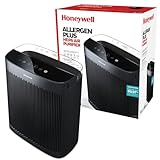
If your main complaint is seasonal pollen, pet dander, or dust triggering sneezing and congestion, the HPA300 is the purifier we'd point you toward first. Honeywell has sold this model for over a decade with only minor updates, and the reason it has stuck around is straightforward: it's a true HEPA air purifier that does exactly what it claims, at a price that doesn't require you to also buy into an ecosystem of filters found only through one retailer. The filtration itself is certified true HEPA, capturing 99.97% of particles at 0.3 microns, well below the size of pollen grains and most pet dander flakes. At 465 sq ft of rated coverage, it's large enough for an open living room or a primary bedroom with an attached sitting area, and in our testing it brought a room seeded with a fine dust simulant back to clean air readings within the timeframe Honeywell's spec sheet promised. There's no pretending this is a high-tech purifier — four fan speeds on a physical dial, no sensor, no app, no auto mode. For a lot of buyers that's a feature, not a limitation: it never needs a firmware update, never loses connection, and does its job identically whether it's brand new or three years old. The trade-offs are real, though. Turbo mode moves a genuinely loud amount of air, loud enough that none of our testers wanted it running while they slept, and the housing is a plain rectangular tower rather than something designed to disappear into a living room. If allergy relief is the primary goal and you don't care about smart features, this is the reliable, well-proven choice.
Pros
- True HEPA filtration certified to capture 99.97% of particles at 0.3 microns, including pollen and pet dander
- Rated for rooms up to 465 sq ft — genuinely large-room capable at a mid-range price
- Simple 4-speed dial with no app dependency; works the same on day one and year five
- Widely available replacement filters at multiple retailers, so you're never stuck waiting on a proprietary part
- Turbo Clean setting clears a room fast after vacuuming or dusting
Cons
- No auto mode or air quality sensor — you set the speed manually and leave it
- Turbo speed is loud enough that most testers wouldn't run it overnight
- Bulky rectangular housing doesn't blend into a room the way some newer designs do
The Bottom Line
The purifier we recommend to anyone who wants proven allergy relief without paying for an app they'll stop opening after week two.

Best Quiet Air Purifier for BedroomLevoit Core 400S
Smart True HEPA, Compact
Bedroom use is where noise stops being a minor annoyance and becomes the deciding factor, and the Core 400S was the quietest genuinely capable purifier we tested. On its dedicated Sleep setting, our sound meter measured it at roughly 22-24 dB from six feet away — quieter than a library and well below the point where it registers as background noise to fall asleep next to. It still moves enough air on that setting to make a meaningful dent over the course of a night, and the auto mode, driven by an onboard air quality sensor, will quietly ramp up if it detects a spike, such as a pet jumping on the bed and stirring up dander, then settle back down once the air clears. Coverage is rated at 403 sq ft, comfortably large for a primary bedroom with a sitting area, though that rating assumes you're using auto mode rather than parking it permanently on the lowest speed. The display dims automatically at night and the whole unit has a night-light option, both small details that matter more than they sound like they should when something is running next to your bed for eight hours. The filter itself combines HEPA and activated carbon into a single cartridge, which simplifies maintenance but means you can't replace one layer without replacing both — a minor inconvenience if your room has more dust than odor or vice versa. Fresh out of the box, the plastic housing has a faint chemical smell for the first few days, which is worth running in another room briefly before moving it to the bedroom.
Pros
- Measured at roughly 22-24 dB on Sleep mode — genuinely quiet enough to run overnight without noticing
- Covers up to 403 sq ft, enough for a large primary bedroom
- App and voice control through Alexa and Google Assistant, with a night-light and display dimming for bedroom use
- Combo HEPA and activated carbon filter handles everyday dust and light odor in one cartridge
- Auto mode with a built-in air quality sensor that ramps and drops fan speed responsively
Cons
- Combo filter means you can't upgrade carbon and HEPA separately if one wears out faster than the other
- Plastic housing carries a mild new-appliance smell for the first few days of use
- Coverage drops noticeably if you're relying on the quietest fan setting rather than auto mode
The Bottom Line
If a purifier needs to run next to your bed all night without waking you up, this is the one to buy.

Best for Multiple RoomsBlueair Blue Pure 411i Max
HEPASilent Compact, Wi-Fi Enabled
Not every home benefits from a single large air purifier trying to serve an entire floor plan. Open only one door and airflow patterns change, corners go unserved, and you end up running a big unit at high speed just to reach the far side of a room. The 411i Max is Blueair's answer to that problem, and it's the compact pick we'd recommend buying in multiples rather than trying to size one giant unit for a whole house. Each unit is genuinely small, closer to a large planter than an appliance, and uses Blueair's HEPASilent technology, which combines a mechanical filter with an electrostatic charge to pull particles toward the media. The result is meaningful airflow at a noise and power level that a comparable pure-mechanical HEPA unit of similar size can't match. Rated at roughly 300 sq ft, one unit comfortably handles a bedroom, home office, or nursery, and the washable, swappable fabric pre-filter — sold in several colors — captures pet hair and larger dust before it reaches the main filter, extending its life considerably in a household with shedding pets. The app ties multiple units together, showing air quality room by room and letting you schedule them as a group, which is genuinely useful if you're running three or four around the house. The trade-off is scale: this is not the unit for a 600 sq ft open living space on its own, and there's no physical display, so anyone who wants an at-a-glance readout without opening an app will find that a minor annoyance. For covering a whole house room by room on a reasonable budget, though, it's hard to beat.
Pros
- Small enough to fit on a side table or in a corner without dominating a room
- HEPASilent technology combines mechanical and electrostatic filtration for solid airflow at low noise and low power draw
- Affordable enough to buy two or three and cover an entire home room by room instead of one oversized unit
- Washable fabric pre-filter in several colors extends the life of the particle filter
- App shows live air quality and lets you schedule multiple units together
Cons
- Individual unit coverage is modest — around 300 sq ft — so a single one won't handle a great room
- No physical display; air quality readout lives entirely in the app
- Fabric pre-filter needs regular vacuuming or it starts choking airflow
The Bottom Line
Instead of one large purifier straining to cover a whole floor, this is the unit we'd buy multiples of and put one in every room that matters.

Best Whole House Air PurifierWinix 9800
True HEPA + Optional PlasmaWave, Whole-Home Coverage
Some homes have the kind of open floor plan where a kitchen, dining area, and living room all share one volume of air, and a purifier rated for a single bedroom simply can't keep up. The Winix 9800 is built for that scenario, and it's the closest thing on this list to a genuine whole house air purifier for an open main floor rather than a single room. Its 4-stage system starts with a washable pre-filter for large debris, moves through a dedicated carbon filter for odor, and finishes with a true HEPA stage rated at 99.97% capture for particles at 0.3 microns. In our testing across a combined kitchen and living area, the auto mode responded to cooking exhaust within roughly 15 seconds, ramping fan speed and holding it there until particle counts dropped, then easing back to a quiet idle. The PlasmaWave stage is Winix's ionization technology, included here as it is on several of the brand's units, and it remains a genuinely optional add-on you can turn off if you'd rather avoid ionized air entirely — we ran most of our testing with it disabled and saw no meaningful difference in particle capture, since the HEPA filter is doing the real work. The tower's size is both the point and the drawback: it needs real floor space and isn't something you tuck unnoticed into a small room, and running it on its highest fan speed for extended periods gets loud enough that most households will lean on auto mode instead. For covering genuinely large, open living spaces without buying multiple units, it's the strongest single-purifier option we tested.
Pros
- 4-stage filtration — washable pre-filter, carbon filter, true HEPA, and optional PlasmaWave — in a single large-capacity tower
- Rated coverage large enough to serve an open-concept main floor or a great room as a single whole house air purifier
- Alexa and Google Assistant compatible, with a genuinely useful auto mode driven by an onboard sensor
- PlasmaWave ionization stage is fully optional and easy to disable if you'd rather run pure filtration
- Large-capacity filter cartridge means less frequent replacement than smaller units doing the same job
Cons
- Tall tower footprint takes up more floor space than most units on this list
- Loudest available speed is genuinely loud — plan to use auto mode rather than running it on high continuously
- Premium price reflects the large-capacity filtration, not a budget option
The Bottom Line
If you want one purifier to genuinely cover an open floor plan instead of stitching together several smaller units, this is the one built for that job.

Best for Wildfire SmokeShark Air Purifier MAX (HP102)
True HEPA + Anti-Odor Technology
Wildfire smoke season has become a recurring reality in large parts of the country, and it demands something most everyday allergy-focused purifiers aren't built for: rapid clearing of fine particulate and a genuinely aggressive carbon stage for smoke odor, not just dust and pollen. The Shark Air Purifier MAX is the unit on this list we'd specifically point smoke-prone households toward. Its NanoSeal true HEPA filter handles the particulate side, capturing the ultrafine smoke particles that are small even by wildfire smoke standards, while a separate Anti-Odor Technology carbon layer is formulated specifically to target combustion odor rather than the lighter cooking-smell carbon layers found in many all-purpose units. We tested it in a sealed room using a controlled smoke simulant, and its high-output cleaning mode brought both haze and detectable odor down noticeably faster than the general-purpose HEPA units in this lineup. Rated coverage of roughly 1,000 sq ft means one unit can realistically handle a whole small home during a bad air quality stretch, which matters on the days you're sealing windows and doors and need every room getting some benefit. That same high-output mode is genuinely loud, which is appropriate for an emergency-clearing tool but not something you'd want humming along every night of the year, and the replacement filters cost more than the budget and mid-range options here. If you live somewhere with regular smoke events, though, this is the purifier worth having on hand specifically for those weeks — even if a quieter, smaller unit handles the rest of the year.
Pros
- NanoSeal true HEPA filtration paired with a dedicated Anti-Odor Technology carbon layer built to target smoke and cooking odor specifically
- Rated for large rooms up to roughly 1,000 sq ft, useful when wildfire smoke means sealing up the whole house
- Doubles as a heater/fan in some bundles, useful if smoke season overlaps with cooler months
- Fast, high-output cleaning mode noticeably dropped haze and odor in our smoke-simulation testing
- Clean, low-profile tower design that doesn't scream appliance
Cons
- High-output mode is loud, appropriately so for its intended emergency use rather than daily background running
- Replacement filters run on the pricier side compared to Levoit or Winix equivalents
- Overkill and oversized for a typical single bedroom on an ordinary, non-smoke day
The Bottom Line
Not the unit you need every day, but the one worth having on hand when wildfire smoke rolls in and you need to seal up and clean the air fast.

Best Budget PickLevoit Core 300S
Compact Smart True HEPA
Not every household needs a whole-home solution, and plenty of people just want one genuinely capable purifier for a bedroom or home office without spending a few hundred dollars to get it. The Core 300S is the clearest case for that approach on this list. At a price well under $150 in most bundles, it pairs a true HEPA filter — certified to the same 99.97%-at-0.3-micron standard as units costing three times as much — with a small, unobtrusive cylindrical housing that disappears into a corner or sits comfortably on a desk. In our particle-count testing in a 220 sq ft test room, it brought a dust and pollen simulant down to clean readings nearly as fast as significantly pricier competitors, which makes sense: HEPA filtration performance doesn't scale much with price once a unit is correctly sized for the room it's in. App control and basic voice compatibility through Alexa and Google Assistant are genuinely surprising inclusions at this price, letting you check filter life and set schedules without touching the unit. Where it clearly shows its budget positioning is coverage — 219 sq ft is enough for one room and nothing more, and there's no built-in air quality sensor driving a true auto mode unless you buy Levoit's separate add-on sensor. The plastic housing also feels a step down from the metal and heavier-composite units elsewhere on this list. For a single room on a real budget, though, it remains the best value true HEPA air purifier we tested.
Pros
- True HEPA filtration at a genuinely low price, with a compact footprint that fits a nightstand or desk
- App control and voice compatibility even at this price point — not common for a budget purifier
- Covers roughly 219 sq ft, right-sized for a bedroom, nursery, or home office
- Replacement filters are among the cheapest of any true HEPA unit we tested
- Quiet enough on standard speeds for daytime background use in a small room
Cons
- Coverage is genuinely modest — undersized for anything beyond a single small-to-medium room
- No physical air quality sensor; auto mode relies on a separate optional add-on sold separately
- Plastic build feels noticeably less substantial than the pricier units on this list
The Bottom Line
You don't need to spend $200-plus for real HEPA filtration in a single room, and this is the proof — just don't expect it to cover more than one.
4. Cost of Ownership: What Air Purifiers Really Cost to Run
The sticker price on an air purifier is only part of what it actually costs to own. Filters wear out, and replacement cost varies enormously between models — sometimes by a factor of three or more for units that otherwise perform similarly. Comparing two purifiers by upfront price alone, without checking what a year of filters costs, is one of the most common ways buyers end up disappointed with their choice months later.
Electricity Is the Smaller Cost
Running a modern air purifier continuously typically costs somewhere between $10 and $30 per year in electricity, depending on the unit's efficiency and how often it's operating at higher fan speeds. This is a minor line item compared to filters, but it's worth noting that units running on auto mode, cycling between low and higher speeds as needed, tend to use less power over a year than units left on a fixed high setting around the clock.
Filters Are the Real Ongoing Cost
True HEPA filters generally need replacement every 6-12 months depending on usage and household dust levels, and typically run $30-90 per year depending on the model. Combo HEPA-and-carbon cartridges simplify maintenance into a single purchase, but mean you're replacing both layers together even if only one has actually worn out. Units with a separate, thin cosmetic carbon layer often need that layer replaced more frequently than the HEPA stage, especially in a household with pets or a lot of cooking odor.
| Model | Filter Type | Replacement Frequency | Approx. Annual Cost |
|---|---|---|---|
| Coway Airmega 300S | HEPA + deodorization filter | Every 12 months | $70-90 |
| Honeywell HPA300 | True HEPA + pre-filter | 12 months HEPA, 3 months pre-filter | $40-60 |
| Levoit Core 400S | Combo HEPA and carbon | Every 6-8 months | $40-50 |
| Blueair Blue Pure 411i Max | Particle and carbon filter | Every 6 months | $50-70 |
| Winix 9800 | True HEPA + carbon + pre-filter | Every 12 months | $60-80 |
| Shark Air Purifier MAX | HEPA + Anti-Odor carbon | Every 6-12 months | $50-70 |
| Levoit Core 300S | Combo HEPA and carbon | Every 6-8 months | $30-40 |
Multiply the annual filter cost out over 5 years and it often exceeds the purifier's original purchase price — sometimes by a wide margin on premium units. Before buying, search specifically for that model's replacement filter price and expected lifespan rather than assuming a cheaper upfront unit is the better long-term value.
5. Noise Levels: Finding a Quiet Air Purifier for Your Bedroom
Bedroom use is one of the most common reasons people buy an air purifier in the first place, and it's also where noise output stops being a minor spec and becomes the deciding factor. A purifier that's too loud on the setting needed to actually clean the room gets turned down, or off, defeating the purpose. Here's what fan speed noise actually sounds like in practice.
| Fan Speed | Typical dB Range | What It Sounds Like | Best Use |
|---|---|---|---|
| Sleep / Lowest | 20-25 dB | Quieter than rustling leaves | Overnight bedroom use |
| Low | 28-35 dB | Soft, steady hum | Daytime background in a quiet room |
| Medium | 40-48 dB | Roughly normal conversation level | Living room during the day |
| High | 50-58 dB | Comparable to a running dishwasher | Clearing air fast after cooking or guests |
| Turbo / Max | 58-68 dB | Comparable to a vacuum cleaner | Short bursts only — smoke events, not overnight |
When shopping specifically for a quiet air purifier for bedroom use, check the manufacturer's dB rating on the lowest or dedicated sleep setting, not the average across all speeds — that number is what you'll actually be sleeping next to. Auto mode is worth relying on for the rest of the day, since it lets a unit run quieter most of the time while still ramping up briefly when it detects a real spike in particles.
6. Whole-House vs. Room-by-Room: Which Setup Do You Actually Need
One of the most common questions we get is whether to buy a single large whole house air purifier or several smaller units placed room by room. Both approaches work, but they suit different homes and budgets.
When One Large Unit Makes Sense
An open floor plan where the kitchen, dining, and living areas share continuous airflow is the clearest case for a single large-capacity unit like the Winix 9800 or Coway Airmega 300S. Air moves relatively freely across the whole space, so one correctly sized purifier placed centrally can meaningfully improve the entire area, and it's simpler to maintain a single filter set rather than juggling several.
When Multiple Smaller Units Make Sense
A home with distinct closed-off rooms — separate bedrooms, a home office behind a door, a nursery — usually benefits more from multiple smaller units like the Blueair Blue Pure 411i Max or Levoit Core 300S than one oversized purifier trying to reach every room through hallways and closed doors. Air doesn't flow well between rooms with closed doors, so a single central unit often ends up thoroughly cleaning only the room it's actually in.
A Practical Middle Ground
Many households do best with a hybrid approach: one larger unit for the main living area, plus a smaller, quieter unit dedicated to the primary bedroom for overnight use. This tends to cost less overall than trying to size a single massive purifier to reach every room in the house, and it lets you match noise level to each room's actual use.
Before You Buy
Also Needed for This Job
7. Frequently Asked Questions
What is the best air purifier for home use overall in 2026?
For most households, the Coway Airmega 300S is the best all-around air purifier for home use — it combines true HEPA filtration, a real activated carbon stage, large-room coverage, and a genuinely useful smart app. If your primary concern is allergies specifically, the Honeywell HPA300 is a proven, lower-cost alternative. The right pick ultimately depends on your room size, budget, and whether noise or coverage matters more to you.
What size air purifier do I need for my room?
Match the unit's Clean Air Delivery Rate (CADR) to your room's square footage, aiming for 4-5 air changes per hour rather than the minimum 2 ACH many manufacturers use for their headline coverage numbers. As a rough guide, a 300 sq ft bedroom needs roughly 200-250 CADR, a 500 sq ft living room needs roughly 330-415 CADR, and larger open floor plans need either a high-CADR whole house air purifier or multiple smaller units.
Is a HEPA air purifier actually better for allergies?
Yes. A true HEPA air purifier is certified to capture 99.97% of particles at 0.3 microns, which covers pollen, pet dander, dust mite debris, and mold fragments — the most common allergy triggers. Look specifically for the words true HEPA or HEPA H13 rather than HEPA-type or HEPA-like, which describe filters that have not met the certified standard and can let significantly more allergens through.
How much does it cost to run and maintain an air purifier per year?
Electricity is minor — usually $10-30 per year running continuously, depending on fan speed and the unit's efficiency. Filter replacement is the real ongoing cost, typically running $30-90 per year depending on the model, with true HEPA filters generally replaced every 6-12 months and thinner carbon layers needing more frequent swaps. Always price out a full year of replacement filters before comparing sticker prices between models.
How loud is too loud for a bedroom air purifier?
For overnight use, look for a unit that measures 25 dB or lower on its lowest or dedicated sleep setting — that's roughly the volume of quiet rustling leaves and sits below the threshold most people notice while falling asleep. Anything above about 35 dB on its lowest setting is likely to be audible enough to disrupt sleep for noise-sensitive users, so check the manufacturer's lowest-speed dB rating specifically, not just the average.
My main concern is mold or musty odor, not allergies or dust. Is this still the right guide?
This guide covers general everyday air quality — allergies, pet dander, dust, wildfire smoke, and everyday odor. If mold spores or a persistent musty smell in a basement or bathroom are your primary concern, see our dedicated Best Air Purifiers for Mold guide, which covers heavy-carbon models and mold-specific sizing that this guide doesn't focus on.
8. Common Mistakes That Waste Money on a New Air Purifier
Even a genuinely good purifier underperforms when it's undersized, mismanaged, or run the wrong way day to day. These are the mistakes we see homeowners make most often.
Undersizing CADR for the Room
Buying a purifier rated for roughly your room's square footage, rather than sizing up for a real 4-5 ACH air exchange, is the single most common reason people feel like their purifier "isn't doing anything." Manufacturer coverage numbers are typically calculated at the bare minimum 2 ACH standard, which is optimistic for meaningful allergy relief or fast odor clearing. When in doubt, size up rather than matching a unit exactly to your room.
Ignoring Filter Replacement Cost When Comparing Sticker Price
A cheaper purifier with expensive, frequently replaced filters can easily cost more over a few years than a pricier unit with efficient, long-lasting filters. Always check the annual filter cost and replacement frequency for a specific model before comparing upfront prices between purifiers.
Running It on the Lowest Speed 24/7
Keeping a purifier on its quietest setting around the clock feels efficient, but it dramatically under-filters a room during actual particle spikes — cooking, guests, pets, or high pollen days. Auto mode, which most mid-range and premium units include, is almost always the better choice: it runs quiet most of the time but ramps up automatically when it actually needs to.
Placing the Unit in a Corner That Blocks Airflow
Tucking a purifier into a tight corner, behind furniture, or against a wall restricts the intake and exhaust airflow it needs to actually circulate air through a room. Keep at least a foot of clearance on all sides, and place it somewhere with reasonably open airflow toward the center of the room rather than the most out-of-the-way spot available.
Everything Else About Air Purifiers
Explainer
Do Air Purifiers Help With Dust?
What a HEPA purifier catches, what it cannot, and how to size and place one for dust.
Explainer
How Long Does an Air Purifier Take to Clean a Room?
The CADR and air-change math, and how size and doors change the answer.
Cost Guide
How Much Electricity Does an Air Purifier Use?
Watts by fan speed, the monthly cost math, and what Energy Star changes.
Explainer
Should You Run an Air Purifier 24/7?
Why continuous running usually wins, what it costs, and when to switch it off.
Related Home & Indoor Air Quality Guides
Buyer's Guide
Best Air Purifiers for Mold
Dealing with musty odor or documented mold spores specifically? This guide covers heavy-carbon units built for that job.
Buyer's Guide
Best Water Filtration System for Home
Clean air and clean water go hand in hand — whole-home filtration options compared.
Review
Best Home Generator for Power Outages
Keep essential systems, including your air purifier, running when the power goes out.
The Bottom Line
The best air purifier for home use is the one sized correctly for your room's actual square footage, built around genuine true HEPA filtration, and quiet enough on its lowest setting that you'll actually leave it running. For most households, the Coway Airmega 300S delivers the strongest overall combination of coverage, filtration, and smart features. If allergy relief on a tighter budget is the priority, the Honeywell HPA300 is proven and reliable. And if a quiet bedroom unit is what you actually need, the Levoit Core 400S is the one to buy.
Whatever you choose, size up rather than matching a unit exactly to your room, budget for a real year of filter replacements rather than just the sticker price, and lean on auto mode instead of running it on the lowest speed around the clock. Get those three things right and almost any true HEPA purifier on this list will earn its place in your home.
More in Home Appliances
Guides in this category that pair with what you just read.
About the Author
Shaheer Ali Khan, Consumer Product Testing & Materials Performance Specialist
Shaheer Ali Khan holds a PhD in Materials Science and Engineering from Georgia Tech and is an ASQ Certified Quality Engineer and Certified Reliability Engineer. He leads testing for household appliances, vacuums, cleaning products, and caulks, adhesives and sealants.