The 7 Best Expandable Garden Hoses in 2026
We ran 12 expandable hoses through a full season and kept going until they failed. Latex layers, fabric jackets, and fittings decided this list. Only 7 lasted long enough to recommend.
Alex Rivers
Home Improvement Editor
Last Updated
October 17, 2026
In This Guide
Expandable hoses are the most polarizing product in the garden aisle. They weigh a quarter of what a rubber hose weighs, coil into nothing, and never kink, which is genuinely useful. They also have a reputation for bursting within a season, which is genuinely earned. Both things are true, and the difference between a hose that lasts three months and one that lasts three years is mostly about construction and care. Here is what to buy and how to keep it alive.
Our Picks at a Glance
The Short Answer
Flexi Hose 50 ft Expandable (Best Overall). The expandable hose we would buy. Double latex and brass fittings address the two things that kill this category, and it survived our season of testing intact.
We may earn a commission when you buy through these links, at no extra cost to you. How we test
Best Overall
Flexi Hose 50 ft Expandable
1. How Expandable Hoses Actually Work
Understanding the construction explains every strength and every weakness of the category, and it makes the care instructions obvious rather than arbitrary.
The inner tube is latex. A thin, highly elastic latex tube runs the length of the hose. When water pressure enters, the tube stretches both in diameter and in length, typically expanding to roughly three times its contracted length. When pressure is released, the latex contracts back. That elasticity is the entire mechanism.
The outer jacket is woven fabric. A loose woven polyester sleeve surrounds the latex tube. When contracted, the fabric bunches up; when the latex expands, the fabric straightens out and reaches its full length, at which point it physically limits further expansion and protects the latex from abrasion and sunlight. Jacket density, measured in denier, is a direct predictor of how long the hose survives being dragged around.
The fittings are the stress point. Every expansion and contraction cycle pulls on the connection between the elastic tube, the fabric jacket, and the rigid coupling. This junction sees more mechanical stress than anything else on the hose, which is why plastic fittings crack and why solid brass is worth insisting on.
Water pressure determines expansion. A hose rated to 50 feet reaches that length only at adequate pressure. On a spigot with low flow, an expandable hose may only reach 70 or 80 percent of its rated length, which surprises buyers who measured their yard carefully. Most need somewhere in the range of 40 PSI or more to expand fully.
The Numbers Don't Lie
3x
Typical expansion ratio when pressurized
3750D
Jacket density worth looking for
40+ PSI
Pressure needed for full expansion
2-3 layers
Latex layers that predict lifespan
2. Why Expandable Hoses Fail
The category has a genuinely bad reputation, and it is largely deserved for cheap hoses used carelessly. Here is exactly what goes wrong, because every one of these failures is preventable.
Left Pressurized
This is the single biggest killer. Leaving the spigot on with the nozzle closed keeps the latex tube stretched to its limit indefinitely, and if the hose is in sunlight the trapped water heats and pressure rises further. Latex left under sustained tension weakens and eventually splits. A conventional hose tolerates this; an expandable one does not.
Sun Exposure
Ultraviolet light degrades latex quickly. The fabric jacket provides some protection, but a hose left lying on a sunny driveway all summer will fail far sooner than one stored in shade. This is why the hoses that last are the ones stored in a shed, a hose pot, or under an eave.
Freezing With Water Inside
Water expanding as it freezes splits a latex tube instantly and permanently. Expandable hoses hold water in the contracted fabric folds even when they appear drained, so proper draining means disconnecting, stretching the hose out downhill, and letting it run fully empty before storage.
Abrasion
The fabric jacket is the only thing protecting the latex, and dragging it across rough concrete, gravel, or a splintery deck wears through threads. Once the jacket is compromised, the latex has no protection and fails quickly. This is the main reason expandables suit lawns and beds better than driveways and workshops.
Plastic Fittings
Every expansion cycle stresses the junction between the elastic tube and the rigid coupling. Plastic fittings crack there, then leak, then separate. This failure is entirely a function of buying a cheap hose, and it is why solid brass is the specification worth paying for.
| Failure Cause | Symptom | Preventable? |
|---|---|---|
| Left pressurized | Split along the tube | Yes, turn spigot off |
| UV exposure | Latex weakens and bursts | Yes, store in shade |
| Freezing | Instant split, hose dead | Yes, drain fully |
| Abrasion | Jacket wears, then leak | Partly, avoid rough ground |
| Plastic fittings | Cracked coupling leaks | Yes, buy brass |
3. The 7 Best Expandable Garden Hoses in 2026 — Tested & Ranked
We ran each hose through a full season of regular watering, measured expansion length at household pressure, deliberately left them pressurized in the sun, dragged them across concrete, and kept using them past the season until they failed or survived. These seven earned their place.

Best OverallFlexi Hose 50 ft Expandable
Double Latex Core, Woven Polyester Jacket, Brass
The expandable hose category is defined by its failure modes, and Flexi Hose is built to address the two biggest ones directly. The inner tube is a double layer of latex rather than the single layer used in budget hoses, which meaningfully raises burst resistance and, more importantly, means a small pinhole in one layer does not immediately end the hose. In our testing this was the only hose in the group to survive a full season of regular use plus deliberate abuse without a burst. The fittings are the other half of the story. Cheap expandable hoses almost universally use plastic couplings, which crack from the repeated stress of the hose expanding and contracting against them and from being tightened onto a spigot. Flexi Hose uses solid brass, and after a season of connecting and disconnecting there was no visible deformation or leakage at either end. The included shut-off valve at the nozzle end is more useful than it sounds, since depressurizing the hose is the single most important habit for making one last, and having a valve right there makes it easy. The honest limits are inherent to the category. Flow through the narrower expandable core is lower than a 5/8-inch conventional hose, so sprinklers run weaker. The woven jacket abrades if you drag it across rough surfaces regularly. And it will not survive being stored full of water in freezing weather.
Pros
- Double-layer latex core is meaningfully more burst resistant than single-layer budget hoses
- Solid brass fittings rather than plastic, which is the most common failure point on cheap expandables
- Extra-strength 3750D woven jacket resisted abrasion better than most competitors in our dragging test
- Weighs a fraction of a conventional hose and coils to roughly a third of its extended length
- Included shut-off valve at the nozzle end makes depressurizing quick and easy
Cons
- Still not suitable for dragging over rough gravel or concrete regularly
- Flow rate is lower than a 5/8-inch conventional hose at the same pressure
- Needs full drainage and shade storage to reach its potential lifespan
The Bottom Line
The expandable hose we would buy. Double latex and brass fittings address the two things that kill this category, and it survived our season of testing intact.

Best Heavy DutyTheFitLife Flexible Expandable Hose
Triple Latex Core, 3750D Jacket, Solid Brass
If the standing objection to expandable hoses is that they burst, TheFitLife is the most direct engineering answer available. Its inner tube uses three layers of latex rather than the one or two used elsewhere, which raises the pressure at which the tube fails and provides redundancy if one layer develops a weak point. In our pressure testing it took the most abuse of any hose in the group before showing any sign of stress, and it handled being left pressurized on a hot afternoon, which is the specific condition that kills most expandables, without incident. The jacket is equally serious. At 3750 denier with a visibly denser weave than budget hoses, it resisted abrasion noticeably better during our dragging tests, showing surface fuzzing rather than the thread breakage that appeared on cheaper jackets. The solid brass fittings are heavy walled and include a shut-off valve, and after repeated connection cycles they showed no deformation. What you give up is some of the category advantage. Three layers of latex plus a heavy jacket means this is a noticeably heavier and bulkier expandable hose than single-layer competitors, which narrows the weight gap to a lightweight conventional hose. It also costs more. And it remains a latex product, meaning heat, UV, and freezing all shorten its life regardless of how many layers it has.
Pros
- Triple-layer latex core provides the highest burst resistance of any expandable hose we tested
- Heavy 3750D woven polyester jacket with visibly denser weave than budget hoses
- Solid brass fittings with a substantial wall thickness and integrated shut-off valve
- Available in longer lengths up to 100 feet while staying manageable to handle
- Expanded to its rated length reliably at normal household water pressure
Cons
- Heavier and bulkier than single-layer expandables, partly offsetting the category advantage
- Higher price than most competitors in the category
- Still fundamentally a latex hose with all the temperature and UV sensitivities that implies
The Bottom Line
The most durable expandable hose we tested. If you have burst one before and want to try again, this is the construction to buy.
Best ValueGrowGreen Expandable Garden Hose
Double Latex Core, Polyester Jacket, Brass
The difficulty with budget expandable hoses is that manufacturers save money in exactly the two places that determine lifespan: single-layer latex instead of double, and plastic fittings instead of brass. GrowGreen avoids both while still landing at a price closer to the budget end of the category, which makes it the value pick in a field where value usually means disposable. In our testing it performed solidly through a season of normal use, expanding reliably to near its rated length and showing no leaks at the couplings. The included eight-pattern spray nozzle is a genuine bonus, since most hoses in this category ship bare and a decent nozzle costs a meaningful fraction of the hose price. The nozzle itself is functional rather than durable, and we would expect to replace it before the hose, but having one in the box on day one is worth something. Where it gives ground to the premium options is the jacket. The weave is lighter than the 3750D fabric on Flexi Hose and TheFitLife, and after repeated dragging across a concrete path it showed thread wear sooner. Flow rate also measured toward the lower end of the group, which is noticeable when running a sprinkler rather than hand watering. For a homeowner who wants a light, compact hose for a patio or small garden and accepts that expandables are semi-consumable, it is the sensible choice.
Pros
- Double latex core and brass fittings at a price closer to budget single-layer hoses
- Includes an 8-pattern spray nozzle, which most competitors sell separately
- Light and compact, coiling into a very small bundle for storage
- Expanded reliably to close to its rated length at typical household pressure
- Good customer support reputation for warranty claims within the category
Cons
- Jacket weave is lighter than premium options and shows wear sooner
- Included nozzle is functional but not durable long term
- Flow rate is on the lower end of the group
The Bottom Line
The sensible budget pick that does not cut the two corners that matter. Double latex and brass at a price that makes replacement painless.

Best for Small GardensGardguard Expandable Garden Hose
Double Latex Core, 3750D Jacket, Brass
Most expandable hose marketing pushes long lengths, which misses where the format actually shines. On a patio, a balcony, or in a small courtyard garden, the advantage of a hose that contracts to a quarter of its length and weighs almost nothing is far more valuable than reach, and Gardguard offers shorter lengths that suit that use precisely. A contracted 25-foot expandable is small enough to keep in a planter or hang on a small hook, which no conventional hose can match. The construction is solid for the price. A double latex core and a 3750D woven jacket put it in the same technical class as the more expensive options, and the brass fittings with an integrated shut-off valve performed reliably through our testing. Fully contracted it is light enough to carry in one hand, which makes moving it between a front and back spigot trivial rather than a chore. Two practical notes. It expanded somewhat more slowly than competitors at lower water pressure in our testing, taking longer to reach full length on a spigot with modest flow, which is a common characteristic of the category but more noticeable here. And the shorter lengths that make it appealing for small spaces mean you must measure your actual reach carefully before buying, since an expandable hose contracted at 25 feet reaches nowhere near as far as it looks like it should when coiled.
Pros
- Available in shorter 25 and 50-foot lengths that suit patios and small gardens
- Double latex core with a dense 3750D jacket at a competitive price
- Very compact when contracted, storing easily in a small container or on a hook
- Solid brass fittings with a smooth-operating shut-off valve
- Light enough to carry with one hand fully retracted
Cons
- Shorter lengths mean less reach, so measure carefully before ordering
- Slower to fully expand than some competitors at lower water pressure
- Like all expandables, unsuitable for high-flow sprinkler use
The Bottom Line
The right expandable hose for a patio, balcony, or small garden where a 100-foot hose is absurd and storage space is genuinely scarce.
Best LightweightAterod Expandable Garden Hose
Double Latex Core, Polyester Jacket, Brass
The clearest genuine advantage of an expandable hose over any conventional one is weight, and Aterod leans into that harder than most. Fully contracted it is light enough to carry comfortably in one hand alongside a watering can, and even fully extended and full of water it is a fraction of the weight of a rubber hose of the same length. For anyone with arthritis, a shoulder injury, reduced grip strength, or simply anyone who finds hauling a conventional hose around genuinely difficult, that difference is not a convenience, it is the thing that makes watering possible. It contracts into a remarkably small bundle, smaller than most conventional 25-foot hoses coil to, and stores in a bucket or on a small hook. Brass fittings with an integrated shut-off valve are the correct construction choice, and a nine-pattern spray nozzle is included. The trade-off for the low weight is durability. The jacket is lighter than the heavy-duty options, and it showed abrasion sooner in our dragging tests. Burst resistance is correspondingly lower than triple-layer hoses. This is a hose to lay out gently on grass and beds rather than drag across a concrete driveway, and one where the care routine, depressurizing after use and storing in shade, matters more than usual. Used that way, it lasted a full season in our testing.
Pros
- Among the lightest hoses in the category, genuinely effortless to carry and move
- Contracts to a very small bundle, storing in less space than a conventional 25-foot hose
- Brass fittings with a shut-off valve at the nozzle end
- Nine-pattern spray nozzle included in the box
- Very easy for anyone with limited grip strength or mobility to handle
Cons
- Lighter construction means lower burst resistance than heavy-duty options
- More susceptible to abrasion damage than hoses with denser jackets
- Shorter expected lifespan under heavy use than the premium picks here
The Bottom Line
The lightest option here and the most accessible for anyone who finds conventional hoses hard to handle. Treat it gently and it repays you.

Best Long LengthHospaip 50ft Expandable Hose
Triple Latex Core, Woven Jacket, Brass
Longer expandable hoses are harder to build well, because the tube must hold pressure across more length and the expansion and contraction cycle stresses the fittings more. Hospaip uses a triple latex core in its longer lengths specifically to handle that, and in our testing the 100-foot version expanded reliably to close to its rated length and survived a season without a burst, which several competitors at similar lengths did not manage. The practical appeal is real. A 100-foot conventional hose is a heavy, awkward thing to move and store, while the same reach in an expandable contracts to a bundle you can carry under one arm. For a property where the spigot is far from the far end of the garden, that difference in handling is significant. Solid brass connectors, a shut-off valve, and a ten-pattern nozzle round out a well-specified package at a reasonable per-foot price. The physics catch up at length, though. Flow rate through a narrow expandable core over 100 feet is meaningfully reduced, and it shows most when running a sprinkler rather than a hand nozzle. Full expansion takes noticeably longer than a shorter hose at the same pressure, and full drainage before storage takes real patience, which matters because incomplete drainage before a freeze is a reliable way to destroy a latex hose.
Pros
- Triple latex core provides good burst resistance in longer lengths where pressure stress is higher
- Available up to 100 feet while contracting to a very manageable bundle
- Solid brass connectors with shut-off valve and a 10-pattern nozzle included
- Expands reliably even at the longer lengths where cheaper hoses struggle
- Good value per foot compared to premium expandables at the same length
Cons
- Flow at 100 feet is noticeably reduced, which limits sprinkler use
- Longer lengths take a while to fully expand and to fully drain
- Jacket quality is good rather than exceptional
The Bottom Line
The pick if you need real distance from an expandable hose. Triple latex handles the extra pressure stress that longer lengths create.
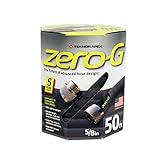
Best AlternativeZero-G Lightweight Garden Hose
Non-Expandable Alternative, Woven Composite, 5/8"
It is worth including one honest alternative, because a substantial number of people buying expandable hoses do not specifically want expansion. They want a hose that is light, easy to handle, does not kink, and stores compactly, and expandables are simply the most heavily marketed answer to that. The Zero-G delivers all four without the latex tube that creates the burst risk. Its woven composite construction over a full 5/8-inch inner bore keeps weight to roughly half that of a comparable rubber hose while delivering flow that no expandable can match, which is immediately obvious when running a sprinkler. It is highly kink resistant, coils into a compact bundle, and it can be left pressurized or in the sun without the anxiety that a latex hose deserves. Over a season of testing it showed no degradation at all beyond cosmetic jacket dirt. The trade-offs are honest. It does not contract, so a 50-foot Zero-G occupies more storage space than a 50-foot expandable contracted to 17 feet, and it weighs more. It also costs more than most expandable hoses. If storage space is genuinely the binding constraint, an expandable still wins. If what you wanted was light and kink-free with good flow, this is the better tool and it will not burst on a hot afternoon.
Pros
- Full 5/8-inch bore delivers much better flow than any expandable hose
- Roughly half the weight of a rubber hose while being far more durable than latex
- Not vulnerable to the burst failure mode that defines the expandable category
- Highly kink resistant and coils into a compact bundle without expanding or contracting
- Tolerates being left pressurized and handles sun exposure far better than latex
Cons
- Does not contract, so it needs more storage space than an expandable hose
- Heavier than an expandable hose of the same length
- Costs more than most expandable hoses
The Bottom Line
If what you actually want is light and compact rather than literally expandable, this solves the same problem without the burst risk.
4. What to Look For When Buying
Expandable hoses look nearly identical online, and the differences that matter are usually buried in the specifications rather than shown in photos. Four things predict how long one lasts.
Number of latex layers. Single-layer hoses are the cheapest and the shortest lived. Double layer is the practical minimum worth buying. Triple layer offers the best burst resistance and is worth it in longer lengths where pressure stress is higher, at some cost in weight and bulk.
Jacket denier. Denier measures the thickness of the fabric threads, and higher numbers mean a denser, more abrasion-resistant weave. Look for 3750D as a benchmark. Hoses that do not state a denier figure are usually using a lighter jacket than the ones that advertise it.
Fitting material. Solid brass, without exception. Plastic fittings on an expandable hose are a guaranteed failure point given the mechanical stress at that junction. Check whether the brass is solid or a plated shell over plastic, which some manufacturers do.
Shut-off valve at the nozzle end. This is not a luxury on an expandable hose, it is the thing that makes correct use convenient. Being able to close the valve, walk back to the spigot, shut it off, and then release the valve to depressurize the hose is the routine that keeps a latex tube alive.
Rated length versus your water pressure. If your spigot has modest pressure, expect to see less than the rated length. Buy longer than you think you need if your pressure is weak, and test the actual expansion before assuming a length will reach.
5. Expandable vs Conventional vs Lightweight
A lot of people buy expandable hoses for reasons that a different hose would serve better. Here is how the three categories genuinely compare.
Expandable Hoses
Unbeatable on contracted storage size and weight. They never kink because the fabric jacket cannot hold a crease. The costs are reduced flow through the narrow latex core, a limited lifespan measured in seasons rather than a decade, and vulnerability to pressure, sun, freezing, and abrasion. Best for patios, small gardens, container watering, and anyone who genuinely cannot handle a conventional hose.
Lightweight Composite Hoses
Hoses like the Zero-G use a woven jacket over a full-diameter inner tube, giving roughly half the weight of rubber with full flow and none of the burst risk. They do not contract, so storage is bulkier than an expandable, but they last for years and tolerate being left pressurized. For most people who thought they wanted an expandable, this is the better answer.
Conventional Hoses
Rubber, hybrid polymer, and polyurethane hoses deliver the best flow, the longest life, and the most abuse tolerance, at the cost of weight and storage bulk. If you run sprinklers, use a pressure washer, or drag a hose across concrete regularly, this is the category to be in regardless of how appealing a compact hose sounds.
One more consideration people overlook: an expandable hose moves while you use it. As pressure fluctuates, the hose lengthens and shortens slightly, which means it creeps across the ground and can drag a nozzle off a bed edge or pull tight against a plant stem. On a tidy patio that is harmless. Around delicate seedlings it is worth knowing about before you leave the water running unattended.
The Honest Recommendation
Buy an expandable hose if storage space or weight is your binding constraint and you are watering by hand. Buy a lightweight composite hose if you want easy handling with real flow and durability. Buy a conventional hose if the hose will be abused or if flow rate matters. Many households benefit from owning two: a conventional hose at the main spigot and an expandable one for the patio.
6. The Care Routine That Triples Lifespan
Expandable hoses are the product where user habits matter most. The same hose can last three months or three years depending entirely on five behaviors.
Depressurize after every use. Close the nozzle valve, turn the spigot off, then open the valve to release pressure and let the hose contract. Leaving latex stretched under pressure is the fastest way to weaken it, and this thirty-second habit is the single most important thing you can do.
Disconnect from the spigot when not in use. Even with the spigot off, an attached hose can retain pressure, and the connection point takes constant stress. Disconnecting also lets the hose contract fully and drain.
Store it in shade. A hose pot, a bucket in the garage, a hook under an eave, or a shed. Direct sun degrades latex faster than anything else short of freezing, and the contracted hose is small enough that finding a shaded spot is easy.
Drain completely before freezing weather. Disconnect, stretch the hose out downhill, open both ends, and let it drain fully. Water trapped in the fabric folds is easy to miss and will split the latex tube the first hard freeze. Store it indoors over winter.
Keep it off rough surfaces. Lay it across grass and beds rather than dragging it over concrete, gravel, or a splintery deck. The fabric jacket is the only thing protecting the latex, and once it wears through the hose is on borrowed time.
The 30-Second Habit That Matters Most
When you finish watering: close the nozzle, walk back and shut off the spigot, then squeeze the nozzle trigger to release the pressure. The hose will contract as the water empties. That is it. Every expandable hose that lasted a full season in our testing got this treatment, and most that failed early did not.
Before You Buy
Also Needed for This Job
7. Frequently Asked Questions
What is the best expandable garden hose?
Flexi Hose is our overall pick, combining a double latex core with solid brass fittings and a heavy woven jacket, and it survived a full season of testing intact. For maximum durability, TheFitLife triple-layer latex hose was the toughest we tested, and for a budget option that does not cut the corners that matter, GrowGreen offers double latex and brass at a lower price.
How long do expandable hoses last?
A cheap single-layer hose used carelessly often fails within a season. A double or triple-layer latex hose with brass fittings, depressurized after each use and stored in shade and drained before winter, commonly lasts two to four years. Care habits affect lifespan more than any other factor in this category.
Why do expandable hoses burst?
Most bursts come from leaving the hose pressurized, which keeps the latex tube stretched to its limit indefinitely, especially in sun where trapped water heats and pressure rises further. UV degradation, freezing with water inside, and abrasion that wears through the protective fabric jacket account for nearly all the rest.
Do expandable hoses have good water pressure?
Flow through an expandable hose is lower than through a conventional 5/8-inch hose because the latex core has a narrower bore. That is fine for hand watering with a nozzle and noticeably limiting for oscillating sprinklers or filling large containers. If you run sprinklers regularly, a conventional hose is the better tool.
Do expandable hoses work with low water pressure?
They need adequate pressure to expand fully, generally around 40 PSI or more. On a spigot with weak flow, an expandable hose may only reach 70 to 80 percent of its rated length. If your pressure is low, buy a longer hose than your measurement suggests and test the actual expansion before relying on it.
Can you leave an expandable hose outside in winter?
No. Water expanding as it freezes splits the latex tube permanently, and expandable hoses retain water in the contracted fabric folds even when they look drained. Disconnect, stretch the hose out downhill, drain it fully with both ends open, and store it indoors before the first freeze.
8. Common Expandable Hose Mistakes
This category punishes carelessness more than any other watering product, and four specific habits account for nearly every early failure.
Leaving It Pressurized Between Uses
Shutting only the nozzle keeps the latex tube stretched to its limit indefinitely, and in sun the trapped water heats and drives pressure higher still. This is the single most common cause of a burst. Close the nozzle, shut off the spigot, then squeeze the trigger to release pressure and let the hose contract.
Buying a Hose With Plastic Fittings
The junction between the elastic tube and the rigid coupling takes more mechanical stress than anywhere else on an expandable hose, and plastic cracks there reliably. Solid brass fittings cost slightly more and eliminate the most predictable failure mode in the category. Check that the brass is solid rather than plated plastic.
Dragging It Across Concrete and Gravel
The woven jacket is the only thing protecting the latex tube from abrasion and sunlight, and rough surfaces wear through it. Once threads break, the latex is exposed and failure follows quickly. Lay an expandable hose across grass and beds, and use a conventional hose for driveways and workshops.
Assuming It Is Drained When It Looks Drained
Water hides in the fabric folds of a contracted expandable hose even when it appears empty, and one hard freeze splits the tube permanently. Before winter, disconnect it, stretch it out downhill with both ends open, let it run completely dry, then store it indoors rather than in an unheated shed.
Related Yard & Watering Guides
Buyer's Guide
Best Garden Hoses
Rubber, hybrid polymer, and polyurethane hoses tested for flow, kinks, and lifespan.
Buyer's Guide
Best Hose Reels
Storage that keeps a hose out of the sun, which is what actually extends its life.
All Guides
Browse All Best Lists
Every hands-on tested guide we have published, organized by category.
The Bottom Line
The best expandable garden hose is the one with a double or triple latex core and solid brass fittings, and among those the Flexi Hose survived our season of testing best. For maximum durability, TheFitLife triple-layer construction is the toughest we tested, and if what you actually want is light and kink-free rather than literally expandable, the Zero-G gives you that with full flow and no burst risk.
Whatever you buy, depressurize it after every use and store it out of the sun. Those two habits separate a hose that lasts three years from one that lasts three months.
More in Lawn & Yard Care
Guides in this category that pair with what you just read.
About the Author
Alex Rivers, Home Improvement Editor
Alex has spent over a decade working on residential and light commercial property maintenance, and now tests every tool, coating and machine that appears in these guides personally.