The 7 Best Grout Sealers in 2026
We sealed 14 grout panels, poured wine, olive oil and coffee on them, and scrubbed with bleach every week for six months. Only 7 were still repelling water at the end.
Alex Rivers
Home Improvement Editor
Last Updated
October 17, 2026
In This Guide
Grout is a porous cement product with thousands of tiny channels running through it, which is why it darkens the moment anything wet touches it and why a shower floor turns grey within a year. A sealer fills or lines those channels. Which type you choose determines whether the grout still repels water in three years or in three months.
Our Picks at a Glance
The Short Answer
Aqua Mix Sealer’s Choice Gold (Best Overall). The sealer that was still working when the others had given up. If you want to do this once, buy this.
- Best Overall Aqua Mix Sealer’s Choice Gold — Water-Based Penetrating, No-Sheen, Interior and ExteriorCheck Price
- Best for Showers StoneTech BulletProof Sealer — Water-Based Penetrating, Maximum Protection, Stone SafeCheck Price
- Best for Porous Stone Miracle Sealants 511 Impregnator — Solvent-Based Penetrating, Deep Penetration, Stone and GroutCheck Price
- Check Price
- Best for Stained Grout Grout Shield Color Seal — Membrane Colour Sealer, Restores and Seals, Multiple ColoursCheck Price
- Check Price
- Check Price
We may earn a commission when you buy through these links, at no extra cost to you. How we test
Best Overall
Aqua Mix Sealer’s Choice Gold
1. Why Grout Needs Sealing At All
Cement grout is porous by nature, which is not a manufacturing shortcoming but a consequence of how it cures. Understanding what that porosity does explains everything about sealing.
Grout Is Full of Capillaries
As cement cures, water leaves the mix and the spaces it occupied become a network of microscopic channels. Those channels draw liquid in by capillary action, which is why a drop of water on unsealed grout disappears rather than sitting on the surface.
Staining Is Absorption, Not Surface Dirt
When wine or coffee darkens grout, the pigment has been drawn into those capillaries. That is why scrubbing the surface achieves so little: the stain is inside the material, not on it, and getting it out requires something that penetrates rather than something abrasive.
Sealer Lines the Channels
A penetrating sealer soaks in and leaves a water-repellent resin coating the inside of the pores. The grout stays breathable and looks unchanged, but liquid can no longer wick in. Spills sit on the surface long enough to be wiped away.
Epoxy Grout Does Not Need It
Epoxy grout is non-porous from the outset and is not sealed. If your grout was installed as epoxy, sealing it does nothing useful and may leave a residue. Check what you have before buying anything, because the two look similar once installed.
It Buys Time, Not Immunity
Sealed grout is not stainproof. A spill left overnight will still mark it. What sealing does is extend the window in which a spill remains recoverable from seconds to hours, which in a real kitchen is the difference that matters.
What Sealing Actually Buys You
2-4 yrs
Typical life of a quality penetrating sealer
72 hrs
Cure time before sealing new grout
2
Coats needed for reliable protection
0
Sealer needed on epoxy grout
2. Penetrating vs Membrane Sealers
Every grout sealer works in one of two ways, and choosing the wrong one for the room is the most consequential mistake in this category.
Penetrating sealers soak in and leave nothing on top. The resin lines the pores from within, so the grout looks exactly as it did before, keeps its texture, and remains breathable. This is what belongs in a shower, on a floor, and anywhere moisture might come from behind or below.
Membrane sealers form a film on the surface. They block staining extremely effectively because nothing reaches the grout at all, and pigmented versions can restore colour to grout that is permanently discoloured. The film is the strength and the weakness simultaneously.
Breathability is the deciding factor. Grout on a shower wall, a slab floor, or an exterior surface has moisture arriving from behind it. A membrane traps that moisture, which lifts the film and can cause worse problems than the staining it prevented. Penetrating sealers let it pass.
Use a membrane only where the grout is beyond saving. Colour sealing is the right answer for a kitchen floor whose grout is permanently blotchy, because the alternative is regrouting. It is the wrong answer for a shower, no matter how bad the shower looks.
Sheen is the other giveaway. Penetrating sealers change nothing about appearance. Anything that adds gloss is sitting on the surface, which tells you what kind of product you have even if the label is vague.
3. The 7 Best Grout Sealers in 2026 — Tested & Ranked
We sealed 14 identical grout panels, then over six months poured red wine, olive oil, coffee and vinegar on them, cleaned weekly with a bleach-based bathroom spray, and tested water beading at monthly intervals. Panels were split between sanded and unsanded grout and between porcelain and natural stone. These seven were still working at the end.
At a Glance: How Our Picks Compare
| Product | Type | Rating | Best For |
|---|---|---|---|
| Aqua Mix Sealer’s Choice Gold | Water-Based Penetrating, No-Sheen, Interior and Exterior | 4.7 | Best Overall |
| StoneTech BulletProof Sealer | Water-Based Penetrating, Maximum Protection, Stone Safe | 4.6 | Best for Showers |
| Miracle Sealants 511 Impregnator | Solvent-Based Penetrating, Deep Penetration, Stone and Grout | 4.5 | Best for Porous Stone |
| Tuff Duck Grout and Granite Sealer | Water-Based Penetrating, Low Odour, 22 oz | 4.5 | Best Value |
| Grout Shield Color Seal | Membrane Colour Sealer, Restores and Seals, Multiple Colours | 4.2 | Best for Stained Grout |
| Black Diamond Ultimate Grout Sealer | Water-Based Penetrating, Budget, Gallon Available | 4.3 | Best Budget |
| Granite Gold Sealer | Water-Based Penetrating, Spray Application, Stone Safe | 4.4 | Easiest to Apply |
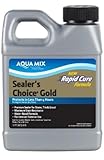
Best OverallAqua Mix Sealer’s Choice Gold
Water-Based Penetrating, No-Sheen, Interior and Exterior
Grout sealers are easy to test badly. Almost all of them bead water impressively on the day they are applied, which is why the reviews are uniformly positive and the disappointment arrives eight months later. What separated the products in our six month test was durability under repeated cleaning, and Aqua Mix Sealer’s Choice Gold was the clear winner. At the end of the test period it was still repelling a poured water bead on a panel that had been scrubbed weekly with a bleach-based cleaner. Several competitors had stopped beading entirely by month three. The chemistry is a water-based penetrating formula, which matters for two practical reasons: it can be used in an unventilated bathroom without the solvent headache that comes with the alternatives, and it leaves absolutely no sheen. On a matte porcelain floor or on natural stone, a sealer that adds gloss is immediately obvious and impossible to reverse. This one changes nothing about the appearance. Coverage is generous, so despite the higher bottle price the cost per bathroom is reasonable. The requirements are the usual ones and they matter more here than with cheaper products because you are paying for longevity: the grout must be completely clean and fully dry, and two coats deliver noticeably better results than one. Cutting either corner wastes the advantage you paid for.
Pros
- Genuinely long service life, still beading water at six months in our testing
- Water-based and low odour, so it can be used in a bathroom without ventilation problems
- Leaves no sheen or colour change on grout or stone
- Safe on natural stone as well as cement grout
- Covers a large area per bottle, keeping the cost per room low
Cons
- Premium price relative to hardware store sealers
- Needs two coats for best results, which doubles the working time
- Requires a genuinely clean, dry surface or performance drops sharply
The Bottom Line
The sealer that was still working when the others had given up. If you want to do this once, buy this.

Best for ShowersStoneTech BulletProof Sealer
Water-Based Penetrating, Maximum Protection, Stone Safe
A shower is a harder environment for grout than most people appreciate. It is not just water: it is soap scum, shampoo residue, conditioner, and body oils, applied daily at temperature, followed by whatever cleaner you use to remove them. A sealer that repels water beautifully and does nothing about oil will still let a shower floor stain, because the staining agents in a shower are largely oily. StoneTech BulletProof is formulated for both, and in our testing it was the standout on the oil panel. Olive oil left on sealed grout for four hours wiped away with no residual darkening, where several water-repellent-only products showed a permanent shadow. Water performance was strong too, though not quite the equal of the Aqua Mix at six months. Because it is rated for natural stone as well as cement grout, a single bottle handles a marble or travertine bathroom completely, which simplifies the shopping considerably. The drawbacks are cost and cure time. It is among the most expensive sealers here per bottle, and it wants a longer cure before the surface goes back into service, which in a single bathroom household means planning around it. If your problem is specifically a shower or a kitchen backsplash, that is a fair trade.
Pros
- Outstanding oil and water repellency, which is the combination showers and kitchens need
- Rated for both natural stone and grout, so one bottle covers a whole bathroom
- Holds up well against the daily assault of soap, shampoo and body oils
- No colour change or sheen on matte surfaces
- Long manufacturer warranty for interior applications
Cons
- Expensive per bottle
- Slower to cure fully than some alternatives, so the shower is out of action longer
- Overkill for a low-traffic floor that never gets oily
The Bottom Line
The best oil repellency here, which is exactly what a shower with soap and body oils demands.
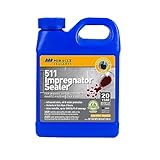
Best for Porous StoneMiracle Sealants 511 Impregnator
Solvent-Based Penetrating, Deep Penetration, Stone and Grout
Water-based sealers have largely taken over on the strength of low odour and easy cleanup, and for most modern installations they are the right choice. There is one situation where the older solvent chemistry still wins decisively, and that is a genuinely porous surface. Unglazed quarry tile, terracotta, honed limestone, and old sanded grout all absorb far more than a water-based carrier can effectively deliver into. Miracle 511 uses a solvent carrier that penetrates deeper before it flashes off, which puts the repellent resin where it needs to be rather than concentrating it near the surface. On our most porous test panel it outperformed every water-based competitor by a wide margin, and it has decades of consistent field results behind it. The cost is entirely in the handling. The solvent odour is strong and genuinely unpleasant in an enclosed bathroom, so you need open windows, a fan, and ideally a respirator rather than a dust mask. It is flammable while wet and curing, which rules out working near a pilot light. It can also slightly deepen the colour of very porous stone, which some people like and some do not, so a test patch in a corner is not optional. On dense modern porcelain and unsanded grout it offers no advantage over the water-based options.
Pros
- Solvent carrier drives the sealer deeper into very porous materials
- Excellent performance on unglazed and highly absorbent surfaces
- Long-established product with an extremely consistent track record
- Works on grout, natural stone, terracotta and unglazed quarry tile
- A little goes a long way on dense surfaces
Cons
- Strong solvent odour requiring genuine ventilation and a respirator
- Can slightly darken very porous stone, so it must be tested first
- Flammable during application and cure
The Bottom Line
The one that gets into materials water-based sealers cannot reach. Ventilate properly and it is superb.

Best ValueTuff Duck Grout and Granite Sealer
Water-Based Penetrating, Low Odour, 22 oz
Grout sealing is not a permanent job under any circumstances, which changes the value calculation. A premium sealer that lasts four years and a mid-priced one that lasts two and a half can work out similarly, and the cheaper option lets you reseal after a renovation without wincing. Tuff Duck sits in exactly that space: clearly better than what the hardware store aisle offers, clearly behind the premium products, and priced accordingly. In our test it was still beading at four months and had faded noticeably by six under weekly bleach cleaning, which puts it roughly midway. Under gentler cleaning it would last considerably longer, and most households do not scrub with bleach every week. The low odour is a real convenience in a small windowless bathroom, and the included brush-tip applicator bottle is genuinely useful because it lets you run sealer along a grout line rather than flooding the tile and wiping the excess. That reduces both waste and cleanup. On a large floor the brush tip becomes the limiting factor and a foam applicator is faster. Two coats are needed for consistent results, as with almost everything here. For a homeowner doing a bathroom and a kitchen backsplash, this is the sealer that makes the most sense.
Pros
- Strong performance for a mid-priced product, comfortably beating hardware store sealers
- Very low odour, comfortable to use in a small bathroom
- Works on grout, granite, marble and other natural stone
- Applicator bottle with a brush tip is included, which reduces waste
- Good coverage for the bottle size
Cons
- Did not last as long as the premium sealers under weekly bleach cleaning
- Brush tip is convenient but slower than a proper applicator on large floors
- Two coats needed for reliable results
The Bottom Line
The best balance of price and durability. Not the longest lasting, but the easiest to justify buying twice.

Best for Stained GroutGrout Shield Color Seal
Membrane Colour Sealer, Restores and Seals, Multiple Colours
There is a point past which no cleaner will recover grout. Once the staining has penetrated deep into the cement, oxygen bleach and steam will lighten it and it will still look grey and blotchy, and the usual advice is to regrout, which is a miserable weekend. Colour sealing is the alternative. Rather than penetrating the grout, it lays a pigmented acrylic membrane over it, restoring a uniform colour and sealing the surface at the same time. On our deliberately stained panel the transformation was dramatic and the stain resistance afterwards was the best of anything tested, simply because nothing reaches the grout at all. It also solves the cosmetic problem of patchy repairs, where a section of new grout never quite matches the old. The limitations are important and frequently ignored. Because it is a membrane rather than a penetrant, it can wear through in a heavily trafficked floor and it can peel where moisture gets underneath, which makes it a poor choice in a shower or anywhere that stays wet. Application is also considerably more demanding: the grout has to be scrupulously clean, the product goes on grout lines only, and any that strays onto the tile has to be removed before it sets. Budget several hours for a bathroom floor.
Pros
- Restores uniform colour to grout that is permanently stained
- Forms a surface membrane that resists staining very effectively
- Available in a wide colour range including whites and greys
- Can change grout colour entirely without regrouting
- Hides patchy repairs and mismatched grout from previous work
Cons
- Sits on the surface, so it can peel or wear in high traffic areas
- Not suitable for showers or constantly wet areas where trapped moisture causes failure
- Application is slower and far less forgiving than a penetrating sealer
The Bottom Line
The only real answer for grout that is stained beyond cleaning. Keep it out of showers.

Best BudgetBlack Diamond Ultimate Grout Sealer
Water-Based Penetrating, Budget, Gallon Available
Sealing a whole house of tile with a premium product is a genuinely expensive proposition, and for the rooms where grout is not under real attack it is hard to justify. A guest bathroom floor, a laundry room, a hallway of ceramic tile — these need protection against the occasional spill, not against daily soap and body oils. Black Diamond exists for exactly that use case, and it is available in a gallon that brings the cost per square foot down to a level where sealing everything is realistic. Performance is honest for the price. It repelled water well on application and was still doing an adequate job at three months, but by six it had clearly faded and the oil panel showed staining that the premium products had prevented entirely. Treated as an annual maintenance product rather than a multi-year investment, that is a perfectly reasonable outcome, and the low price makes annual resealing painless. Application is easy, with no unusual technique required and very little odour. The main risk is patchy coverage, because thin water-based sealers do not visibly indicate where you have already been. Working systematically in small sections and applying a definite second coat solves it. Do not use this in a shower and do not expect it to handle a kitchen floor near a stove.
Pros
- Very low cost per square foot, especially in the gallon size
- Water-based with minimal odour
- Straightforward application with no special technique required
- Adequate water repellency for low-traffic floors
- Gallon size makes whole-house sealing affordable
Cons
- Shortest service life in our test, needing resealing roughly annually
- Weak against oil compared to premium sealers
- Requires careful application to avoid patchy coverage
The Bottom Line
Cheap enough to reseal every year without complaint, which is exactly how you should plan to use it.

Easiest to ApplyGranite Gold Sealer
Water-Based Penetrating, Spray Application, Stone Safe
The reason grout goes unsealed in most houses is not cost, it is tedium. Crawling along a bathroom floor running a small applicator down every joint is slow, uncomfortable work, and the job gets postponed indefinitely. Granite Gold approaches the problem from the other direction: spray the whole surface, let it sit, wipe the excess off the tile. On a 60 square foot bathroom floor that is a twenty minute job rather than a two hour one, and a sealer that actually gets applied outperforms a better one still sitting in the cupboard. The no-drip formula is the detail that makes it work on walls and backsplashes, where a runny spray sealer would streak down the tile before it could soak in. It is safe on natural stone and non-toxic once cured, which is why it appears so often on kitchen counters as well as floors. The compromises are consumption and longevity. Spraying everything means most of the product lands on tile that does not need it, so a bottle covers less grout than a targeted applicator would. Service life was mid-pack in our testing, comfortably ahead of the budget sealer and behind the premium penetrants. The tile does need a proper wipe-down afterwards or you will find a faint residue when the light catches it.
Pros
- Spray application is far faster than brushing on a large floor
- No-drip formula that stays where it is sprayed
- Completely safe on natural stone including marble and granite
- Non-toxic and food-safe once cured, which suits kitchen counters
- Very easy for a first-time user to get an even result
Cons
- Spray application uses more product than a targeted applicator
- Shorter service life than the top penetrating sealers
- Needs the tile wiped down afterwards to avoid residue
The Bottom Line
The fastest way to seal a large area properly. Trades some longevity for a great deal of convenience.
4. Timing: New Grout, Old Grout and Resealing
Sealing at the wrong moment wastes the product entirely, and the timing rules are simple but easy to get wrong.
New grout needs to cure first. Cement grout continues hydrating for days after it looks dry, and sealing it early traps moisture and prevents proper penetration. Three days is the common minimum and a week is safer, particularly in a cool or humid room.
Old grout has to be genuinely clean. Sealer locks in whatever is there, including a stain you were hoping it would hide. Clean thoroughly, let it dry completely, and accept that badly stained grout needs colour sealing or regrouting rather than a penetrating sealer.
Dry means properly dry, not surface dry. Grout that looks dry can still hold moisture in its pores, and a water-based sealer applied onto it will not penetrate. Give it a full day after cleaning, longer in a bathroom with poor ventilation.
Test whether resealing is needed with water. Drop water onto the grout line. If it beads and sits, the sealer is still working. If it soaks in and darkens the grout within a minute or two, it is time to reseal. This takes ten seconds and is more reliable than any calendar.
Expect showers to need it more often. Daily hot water, soap and cleaning products degrade sealer faster than anything else in a house. Annually is realistic in a shower, where a hallway floor might genuinely go four years.
The Ten Second Test
Drop a few beads of water onto a grout line and wait two minutes. If the water sits on top, your sealer is intact. If the grout darkens where the water touched, it is absorbing and needs resealing. Do this in the shower, on the kitchen floor and in the hallway — the answers will differ, and that tells you where to spend your time.
5. Applying Sealer Properly
Application technique separates a sealer that lasts years from the same product failing in months, and the steps that matter are the ones people skip.
Clean first, and let it dry fully. Any residue, soap film or cleaning product left on the grout blocks penetration. Rinse thoroughly after cleaning, because cleaner residue is itself a barrier, then allow a full day of drying.
Apply to the grout, not the whole floor. A brush-tip applicator or a small foam brush run along each joint puts the product where it is needed and dramatically reduces both waste and cleanup. Spray application is faster but uses far more product.
Let it dwell, then wipe the tile. The sealer needs several minutes in the grout to penetrate, but any left sitting on glazed tile will dry to a haze that is unpleasant to remove. Work in small sections so nothing dries before you get back to it.
Two coats, with the recommended wait between. The second coat fills what the first missed, and almost every manufacturer specifies it. Single-coat application is the most common reason a good sealer underperforms.
Ventilate, especially with solvent-based products. Solvent penetrating sealers need open windows and a fan, and a respirator rather than a dust mask. Water-based products are far more pleasant but still benefit from airflow to cure.
Keep the surface dry through the full cure. Most sealers want at least 24 hours before the area gets wet, and showers often need longer. Using a shower the same evening is the fastest way to waste an afternoon of work.
6. Water-Based vs Solvent-Based Chemistry
Within penetrating sealers, the carrier that delivers the resin into the grout splits the category, and each has situations where it is clearly correct.
Water-based sealers are the modern default. Low odour, easy cleanup, no flammability, and safe to use in an unventilated bathroom. Modern formulations perform very well on dense porcelain and standard cement grout, which covers the majority of installations.
Solvent-based sealers penetrate deeper. The solvent carries resin further into the material before evaporating, which matters on genuinely porous surfaces like terracotta, unglazed quarry tile, honed limestone and old sanded grout.
Solvent products demand real ventilation. The odour is strong, the vapour is flammable during application and cure, and a bathroom with the door shut is not an acceptable workspace. Open windows, a fan and a respirator are the minimum.
Colour change is a real risk with solvents. Deep-penetrating solvent sealers can slightly darken porous stone, an effect sometimes marketed as colour enhancement. Whether you want it is a matter of taste, but discovering it after doing the whole floor is not.
Test both in a corner. Whatever the label promises, apply a small patch somewhere inconspicuous and let it cure before committing to a whole room. Ten minutes of testing prevents a floor you dislike looking at.
7. Keeping Sealed Grout Working
Sealer is degraded by cleaning far more than by use, which means the products under your sink largely determine how long the job lasts.
Acidic cleaners strip sealer and attack grout. Vinegar, lemon and many bathroom descalers dissolve cement over time and shorten sealer life considerably. The habit of cleaning tile with vinegar is one of the most common causes of grout deteriorating early.
Bleach degrades sealer too. It is effective against mould and it is hard on the resin, which is why our bleach-cleaned panels lost repellency faster. Use it when you need it rather than as a routine weekly cleaner.
Neutral pH cleaners are the right routine choice. They handle ordinary soil without attacking either the sealer or the grout, and they cost no more than the aggressive alternatives. This single change adds a year or more to a sealer.
Squeegee the shower. Thirty seconds after each shower removes the water that carries soap and minerals into the grout, and it reduces both staining and the frequency of resealing more than any product does.
Ventilate to control mould rather than bleaching it repeatedly. Black spotting in shower grout is mould growing in residual moisture. An extractor fan running for twenty minutes after a shower prevents it far more effectively than bleaching it away every fortnight.
Deal with grout haze before you seal. A faint cement film left behind after grouting looks like nothing until sealer goes over it, at which point it becomes a permanent cloudy patch across the tile. A haze remover used before sealing takes twenty minutes and prevents a problem that cannot be undone afterwards.
Reseal on evidence, not schedule. The water bead test takes seconds and tells you exactly where you stand. Resealing early wastes product, and resealing late means the grout has already absorbed stains that the new sealer will lock in.
Before You Buy
Also Needed for This Job
8. Frequently Asked Questions
What is the best grout sealer?
Aqua Mix Sealer’s Choice Gold was the most durable in our six month test, still repelling water after weekly bleach cleaning. StoneTech BulletProof has the best oil resistance for showers and kitchens, and Tuff Duck offers the best balance of price and performance for a whole bathroom.
How often should grout be resealed?
It depends entirely on the room. A shower may need resealing annually because of daily hot water and soap, while a hallway floor can go three or four years. Rather than guessing, drop water on the grout: if it beads the sealer is intact, and if it soaks in and darkens the grout it is time.
Do I need to seal epoxy grout?
No. Epoxy grout is non-porous from the moment it cures, so there are no capillaries for a sealer to line. Applying sealer to it achieves nothing and can leave a residue on the surface. Check which type you have before buying, because the two look similar once installed.
Can grout sealer remove existing stains?
No, and a penetrating sealer will lock them in permanently. Clean the grout thoroughly first and let it dry completely. If the staining will not come out, a pigmented colour sealer is the only product that will restore uniform appearance, and it should not be used in a shower.
How long after grouting can I seal?
Wait at least 72 hours and preferably a week. Cement grout keeps hydrating after it looks dry, and sealing early both traps moisture and prevents the sealer penetrating properly. In a cool or humid room, give it longer rather than less.
Is penetrating or membrane sealer better?
Penetrating for almost every situation, because it leaves the grout breathable and unchanged in appearance. Membrane sealers block stains more completely but trap moisture, which makes them unsuitable for showers, slab floors and exteriors. Use a membrane only to restore grout that is already permanently discoloured.
9. Common Grout Sealing Mistakes
Grout sealing fails for a small number of reasons, and almost all of them happen before the bottle is opened.
Sealing Grout That Is Not Clean
A penetrating sealer locks in whatever is present, so any remaining stain, soap film or cleaner residue becomes permanent and also blocks penetration. Clean thoroughly, rinse to remove the cleaner itself, and allow a full day of drying. Grout that will not come clean needs colour sealing, not a penetrating product.
Using a Membrane Sealer in a Shower
Colour sealers and other film-forming products trap moisture arriving from behind the tile, which lifts the film and can cause worse damage than the staining they were meant to prevent. Showers, slab floors and exterior tile all need a penetrating sealer that leaves the grout breathable.
Applying Only One Coat
Almost every manufacturer specifies two coats, and the second fills what the first missed. Single-coat application is the most common reason a well-reviewed sealer underperforms, and it is invisible at the time because the first coat beads water perfectly well on day one.
Cleaning Sealed Grout With Vinegar
Acidic cleaners dissolve cement grout and strip sealer, and vinegar is the most commonly recommended one in household cleaning advice. Neutral pH cleaners handle ordinary soil without attacking either, and switching to one adds a year or more to how long a sealing job lasts.
Related Home Improvement Guides
Buyer's Guide
Best Tile Leveling System
Clips, wedges and threaded caps tested across 400 square feet of porcelain.
Buyer's Guide
Best Granite Sealer
Which sealers actually stop oil staining on kitchen countertops.
All Guides
Browse All Best Lists
Every hands-on tested guide we have published, organized by category.
The Bottom Line
The best grout sealer for most people is Aqua Mix Sealer’s Choice Gold, the only product still repelling water after six months of weekly bleach cleaning. StoneTech BulletProof is the shower pick for its oil resistance, and Tuff Duck is the best value.
Clean thoroughly, dry completely, apply two coats, and switch to a neutral pH cleaner afterwards — that last change does more for longevity than spending more on the bottle.
More in Home Improvement
Guides in this category that pair with what you just read.
About the Author
Alex Rivers, Home Improvement Editor
Alex has spent over a decade working on residential and light commercial property maintenance, and now tests every tool, coating and machine that appears in these guides personally.