The 7 Best Underlayments for Vinyl Plank
We tested 10 underlayments beneath rigid core vinyl, measuring impact sound, moisture transmission, and what happens to locking joints when the pad is too soft. Only 7 earned a spot.
Alex Rivers
Home Improvement Editor
Last Updated
October 17, 2026
In This Guide
The most important thing to know about vinyl plank underlayment is that using the wrong one is worse than using none at all. A pad that is too thick or too soft lets rigid planks flex under foot traffic, and the locking joints fail. Before you buy anything, check whether your flooring already has a pad attached, because if it does, the correct answer is usually nothing.
Our Picks at a Glance
The Short Answer
FloorLot Blue 3-in-1 Vapor Barrier (Best Overall). The sensible default beneath rigid core vinyl that has no attached pad. Thin enough to be safe, with the moisture barrier built in.
- Check Price
- Check Price
- Check Price
- Check Price
- Check Price
- Check Price
- Often the Right Answer Attached Pad — No Separate Underlayment — Pre-Attached IXPE or Cork on the PlankCheck Price
We may earn a commission when you buy through these links, at no extra cost to you. How we test
Best Overall
FloorLot Blue 3-in-1 Vapor Barrier
1. Do You Actually Need Underlayment?
This is the first question and it has three possible answers depending on what you bought and what you are laying it on. Getting it wrong is more consequential here than in almost any other flooring decision.
If Your Planks Have an Attached Pad
Do not add a separate underlayment. A large share of rigid core vinyl now ships with IXPE foam or cork bonded to the underside, and stacking another compressible layer beneath it lets the planks flex more than the locking joints tolerate. Most warranties void explicitly for this. Over concrete you still need a vapour barrier, but that is a thin film rather than a cushion.
If Your Planks Have No Attached Pad
You want a thin, firm underlayment. It smooths minor subfloor texture, cushions slightly, reduces the hollow sound rigid core makes over plywood, and over concrete carries the vapour barrier. Two millimetres is a sensible default and three is generally the maximum any manufacturer permits.
Over Concrete, Moisture Handling Is Mandatory Either Way
Slabs release moisture upward continuously. Vinyl planks do not care, but that vapour condenses in the void beneath a floating floor, and mould grows there unseen. Whether it comes as a bonded film on an underlayment or a separate sheet of six mil polyethylene, a barrier is not optional over a slab.
For Glue-Down Vinyl, Use Nothing
Glue-down installations bond directly to the subfloor. Underlayment is not just unnecessary, it prevents the adhesive from doing its job. If you are gluing, the subfloor preparation replaces the underlayment entirely and needs to be correspondingly better.
The Numbers Don't Lie
2mm
Sensible thickness under rigid core
3mm
Typical warranty maximum, check yours
6 mil
Polyethylene thickness for a vapour barrier
0
Underlayments to add over an attached pad
2. Why Thicker Underlayment Breaks Vinyl Floors
Intuition says a thicker, softer pad produces a more comfortable and quieter floor. With rigid core vinyl that intuition is actively wrong, and it causes more failed installations than any other single decision.
Rigid planks do not bend, they lever. A rigid core plank spans across whatever is under it. Where the support is soft, foot traffic pushes the plank down and the movement concentrates at the locking joint on each edge, working it like a hinge with every step.
Locking joints have a fatigue limit. The interlocking profile is precisely machined plastic and stone composite. It tolerates a defined amount of flex. Beyond that, edges gradually deform, then gap, then chip, and eventually the joint releases entirely. Once a joint has failed the plank cannot be re-locked in place.
The failure appears months later. This is what makes it so common. The floor looks perfect on day one and develops gaps, clicking, or visible movement after a season of use, by which point the underlayment is buried and the cause is invisible.
Firmness matters more than thickness. A dense 3mm felt or cork can be safer than a soft 2mm foam, because compression under load is what matters rather than the number on the packaging. Where a manufacturer specifies a maximum, it is generally assuming a firm product.
Check the flooring warranty, not the underlayment marketing. Underlayment packaging frequently advertises comfort and thickness because those sell. The binding document is your flooring warranty, which will state a maximum thickness and often a required density. That is the specification to buy against.
3. The 7 Best Underlayments for Vinyl Plank in 2026 — Tested & Ranked
We laid each underlayment beneath identical rigid core planks over both plywood and concrete, measured impact sound transmission, tested moisture passage over a damp slab, and cycled weighted loads across the joints to see which pads allowed enough flex to work the locking edges. These seven earned their place.
At a Glance: How Our Picks Compare
| Product | Type | Rating | Best For |
|---|---|---|---|
| FloorLot Blue 3-in-1 Vapor Barrier | 2mm Foam, Built-In Vapor Barrier, 200 sq ft | 4.5 | Best Overall |
| QuietWalk LV | Recycled Fibre, 1.5mm, Moisture Barrier | 4.6 | Best Sound Reduction |
| MP Global Insulayment | Recycled Fibre, 1.5mm, Thermal + Acoustic | 4.5 | Best for Concrete Slabs |
| Roberts Super Felt | Felt, 3mm, Premium Acoustic | 4.6 | Best Premium Acoustic |
| AMERIQUE 3-in-1 Silver | 2mm Foam, Vapor Barrier, Budget | 4.3 | Best Budget |
| Natural Cork Underlayment 3mm | Natural Cork, 3mm, Acoustic + Thermal | 4.5 | Best Natural Option |
| Attached Pad — No Separate Underlayment | Pre-Attached IXPE or Cork on the Plank | 4.8 | Often the Right Answer |

Best OverallFloorLot Blue 3-in-1 Vapor Barrier
2mm Foam, Built-In Vapor Barrier, 200 sq ft
Most vinyl plank underlayment failures come from using something too soft, so the first virtue of a product in this category is restraint. FloorLot Blue is 2mm of firm closed-cell foam, which is deliberately thinner than what people instinctively reach for, and that is exactly why it works. In our joint-stress testing, loading rigid core planks repeatedly over each pad, the thin firm foams showed no measurable joint movement while thicker soft pads let the planks flex enough to work the locking edges. The integrated vapour barrier is the second reason to choose it. Over a concrete slab, moisture rising from below will condense under a floating floor and grow mould in the void regardless of the planks being waterproof, and a barrier is the only thing that prevents it. Here the film is bonded to the foam with an adhesive overlap strip, so sealing the seams is a matter of peeling a liner rather than running separate tape. Acoustic performance is decent rather than exceptional. It takes the sharp edge off footfall and improves the hollow sound of rigid core over plywood, but it does not match cork or rubber. It also cannot level a subfloor — at 2mm nothing can, and expecting an underlayment to fix flatness is the second most common mistake in this category.
Pros
- 2mm thickness is firm enough not to compromise rigid core locking joints
- Integrated vapour barrier film with an adhesive overlap strip for sealed seams
- Meaningful impact sound reduction for the price
- Very easy to lay flat with minimal curl at the edges
- Covers a large area per roll, keeping cost per square foot low
Cons
- Not thick enough to level any meaningful subfloor irregularity
- Foam offers less acoustic performance than cork or rubber
- Vapour barrier only works if the seams are actually taped
The Bottom Line
The sensible default beneath rigid core vinyl that has no attached pad. Thin enough to be safe, with the moisture barrier built in.

Best Sound ReductionQuietWalk LV
Recycled Fibre, 1.5mm, Moisture Barrier
Most underlayment marketed for vinyl is generic foam relabelled, and the difference shows in an upstairs installation where footfall transmits to the room below. QuietWalk LV is engineered for the application, using a dense recycled fibre mat rather than closed-cell foam, and in our impact sound testing it was clearly the best performer among the thin products that are safe under rigid core. The reason is structural. Fibre absorbs and dissipates impact energy across the mat rather than simply compressing under it, which is why it reduces the transmitted thud without adding the softness that causes joint failure. At 1.5mm it is thin enough that rigid planks stay properly supported, and in our joint-stress testing it showed none of the flex that thicker cushioning pads allowed. The bonded moisture barrier is appropriate for slab installations, and the fibre structure has a useful secondary property: it lets small amounts of moisture disperse laterally rather than pooling in one place beneath the planks. The costs are price and long-term compression. It is meaningfully more expensive per square foot than basic foam, and under sustained heavy point loads the fibre does compress slightly over years. Neither undermines it for the job it is bought for, which is quieting a floor above a living space.
Pros
- Engineered specifically for luxury vinyl, so the density suits rigid core joints
- Best impact sound reduction of any thin underlayment we tested
- Recycled fibre construction with genuine acoustic performance rather than just cushioning
- Moisture barrier film bonded to the underside
- Fibre structure allows lateral moisture dispersion rather than trapping it in one spot
Cons
- More expensive than basic foam per square foot
- Fibre compresses slightly over years under heavy point loads
- Still cannot compensate for an uneven subfloor
The Bottom Line
The one to buy for an upstairs room or an apartment. Purpose-built for vinyl and genuinely quieter than foam.
Best for Concrete SlabsMP Global Insulayment
Recycled Fibre, 1.5mm, Thermal + Acoustic
Vinyl over a concrete slab is cold, and rigid SPC is the coldest construction in the category because dense stone-plastic conducts heat away from your feet efficiently. Insulayment addresses that specifically, using a dense recycled fibre mat with genuine thermal resistance rather than the negligible R-value of thin foam. In our slab testing the surface temperature difference was small in absolute terms and clearly noticeable barefoot, which is what actually matters in a basement family room. Acoustically it performs well for its thickness, damping the footfall sharpness that rigid core produces over hard substrate, and at 1.5mm it stays within the range that keeps locking joints properly supported. It also lies remarkably flat straight off the roll, with none of the edge curl that makes some underlayments awkward to work with single-handed. The important caveat is moisture. This product has no vapour barrier built in, and over concrete that is not optional — slabs release moisture continuously and it will condense under a floating floor. You need to lay six mil polyethylene first and tape the seams, which adds a step and a material cost that the all-in-one products avoid. Budget for both rather than discovering the omission after the underlayment is down.
Pros
- Genuine thermal resistance, which noticeably warms a floor over a cold slab
- Good acoustic performance from a dense fibre construction
- Thin enough to be safe under rigid core locking systems
- Made from recycled material with low environmental impact
- Lies exceptionally flat with no memory curl from the roll
Cons
- Requires a separate vapour barrier over concrete, as it has none built in
- Costs more than plain foam
- Thermal benefit is modest compared with a properly insulated slab
The Bottom Line
The pick for a cold basement slab. It takes the chill out of the floor in a way plain foam does not.
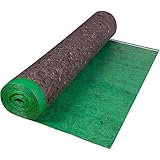
Best Premium AcousticRoberts Super Felt
Felt, 3mm, Premium Acoustic
Felt is what serious acoustic underlayment is made of, and Roberts Super Felt is the reason. Dense compressed felt absorbs impact energy exceptionally well while remaining firm under load, which is a combination foam cannot achieve — foam that absorbs sound well is soft enough to let planks flex. In our testing it produced the largest reduction in transmitted footfall of any product here, meaningfully better than the thin fibre mats. It performs well thermally too, which makes it attractive over a cold slab or an unheated crawl space. The felt is durable enough that it will comfortably outlast the flooring laid on top, and it is available in versions with a vapour barrier bonded on for slab installations. The critical caveat is thickness. At 3mm it sits at the top of what rigid core vinyl manufacturers permit, and a number of warranties specify a maximum underlayment thickness below that. Exceeding the specified thickness is the classic route to failed locking joints, so this is a product to buy only after reading your specific flooring warranty rather than assuming thicker is better. It is also stiffer to handle and cut than foam, and considerably more expensive, so it is worth the money specifically when acoustic isolation is the goal.
Pros
- Excellent sound absorption, among the best available in any underlayment
- Dense felt construction that supports planks rather than cushioning them
- Very good thermal performance over cold subfloors
- Durable enough that it will outlast the flooring above it
- Available with or without an attached vapour barrier
Cons
- At 3mm it is at the upper limit of what rigid core vinyl tolerates
- Heavier and stiffer to handle and cut than foam
- Considerably more expensive than basic underlayment
The Bottom Line
The best acoustic result you can get under vinyl, with one warning: check your flooring warranty allows 3mm before buying it.

Best BudgetAMERIQUE 3-in-1 Silver
2mm Foam, Vapor Barrier, Budget
Not every installation needs acoustic engineering. Over a plywood subfloor on a ground floor, where nobody is below and moisture is not a concern, the underlayment is mostly there to smooth minor surface texture and add a little cushion, and paying premium prices for that is unnecessary. AMERIQUE 3-in-1 covers the basics competently at a price that makes a whole-house job affordable. At 2mm it is the correct thickness for rigid core, firm enough in our joint-stress testing to keep planks properly supported, and the integrated barrier with an adhesive overlap strip makes it usable over concrete without a separate film. Roll coverage is generous, which matters on a large area where several rolls of a premium product adds up quickly. The compromises are acoustic and durability. Sound reduction is modest, taking a little sharpness off footfall without approaching what fibre or felt achieve, so this is the wrong product for an upstairs bedroom over a living room. The barrier film is thinner than heavier products and tears more easily if you drag tools across it during installation, which is worth a little care. And the foam does compress over years in traffic lanes. For a ground-floor installation on a budget, none of that matters much.
Pros
- Among the least expensive underlayments with an integrated vapour barrier
- 2mm thickness is appropriate for rigid core locking systems
- Adhesive overlap strip makes sealing seams straightforward
- Very light and easy to handle over a large area
- Large roll coverage keeps the total cost low on a whole-house job
Cons
- Basic acoustic performance, better than nothing but well behind fibre or felt
- Thin film barrier is easier to tear during installation than heavier products
- Foam compresses somewhat over years under heavy traffic
The Bottom Line
Perfectly adequate where you mainly need a moisture barrier and a little cushioning. Do not expect it to quiet an upstairs room.
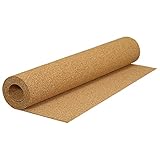
Best Natural OptionNatural Cork Underlayment 3mm
Natural Cork, 3mm, Acoustic + Thermal
Cork has been used under flooring for a very long time because it does several things at once that synthetic materials struggle to combine. It is dense enough to support a rigid plank firmly while still absorbing impact energy, it insulates genuinely well, and it is naturally antimicrobial, which is a meaningful property in a basement where any organic material under a floor is a mould risk. In our testing it performed close to felt acoustically while feeling firmer underfoot. At 3mm it sits at the upper end of what rigid core vinyl warranties permit, so checking the specific flooring documentation matters before buying. The firmness is what makes it acceptable at that thickness where a soft 3mm foam would not be: cork compresses very little under load, so the planks stay supported and the locking joints do not work. The limitation to plan around is moisture. Cork itself resists mould but will degrade if kept wet, and it does not block vapour, so a concrete slab installation needs six mil polyethylene laid and taped underneath it. That is an extra step and cost. On a plywood subfloor above grade, none of that applies and cork is an excellent, environmentally sensible choice.
Pros
- Naturally antimicrobial and resistant to mould, which suits basements
- Excellent acoustic damping from a genuinely dense material
- Good thermal insulation over cold subfloors
- Renewable material harvested without felling trees
- Firm under load so it supports rather than cushions rigid planks
Cons
- No vapour barrier, so concrete installations need a separate film underneath
- Cork degrades if left in persistent standing moisture
- More expensive than foam and heavier to handle
The Bottom Line
Excellent acoustically and naturally mould-resistant. Just remember it needs its own vapour barrier over concrete.
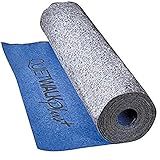
Often the Right AnswerAttached Pad — No Separate Underlayment
Pre-Attached IXPE or Cork on the Plank
This is not a product to buy, and it is here because the single most frequent underlayment question has an answer people do not expect: do nothing. A large proportion of rigid core vinyl now ships with an IXPE foam or cork pad already bonded to the underside, and adding a second underlayment beneath that is not an upgrade. It is the classic route to a failed floor. The mechanism is straightforward. Locking systems on rigid core planks are engineered around a specific amount of support beneath them. Stack two compressible layers and the planks flex further under foot traffic than the joint was designed to tolerate, which works the locking edges until they separate, crack, or develop gaps that will not close. In our joint-stress testing, doubled pads produced measurable movement within a fraction of the cycles the single-pad samples withstood. Manufacturers know this, which is why most warranties explicitly void if an additional underlayment is used beneath an attached pad. The one exception is a vapour barrier over concrete, which is a thin film rather than a cushion and adds no compressibility, so it belongs under everything. Check the underside of a plank before buying anything else in this guide.
Pros
- Costs nothing extra and removes an entire installation step
- Guaranteed compatible with the flooring warranty by definition
- No risk of exceeding the maximum thickness the locking system tolerates
- Manufacturer has matched the pad density to their own joint design
- Eliminates the most common cause of failed vinyl plank installations
Cons
- You cannot upgrade to better acoustic performance without removing the pad
- Still requires a separate vapour barrier over concrete on most products
- Attached pads are generally thin, so sound reduction is modest
The Bottom Line
If your planks have a pad bonded on, adding another underlayment is a mistake. This entry exists because it is the most common error we see.
4. Vapour Barriers and Concrete Slabs
Over a concrete slab, moisture management is the most important function underlayment performs, and it is the one people most often skip because vinyl is waterproof.
Concrete never stops releasing moisture. Even a slab poured decades ago wicks ground moisture upward continuously. In an open room it evaporates unnoticed. Under a floating floor it reaches the cold underside of the planks, condenses, and has nowhere to go.
Waterproof planks make it worse, not better. Because the vinyl blocks the vapour completely, moisture accumulates in the void rather than passing through and evaporating. Mould grows on the underlayment, on the subfloor, and in the joints, entirely out of sight until there is a smell.
Six mil polyethylene is the standard. Either bonded to the underlayment or laid as a separate sheet, with seams overlapped by several inches and taped, and the film turned up the wall behind the trim. Gaps in the barrier defeat the purpose, so the taping matters as much as the film.
Test the slab before you start. Tape a two-foot square of plastic sheet tightly to the concrete and leave it for a couple of days. Condensation underneath, or a darkened patch of slab, means active moisture. Heavy moisture may need a sealer or a professional assessment rather than just a film.
Above-grade plywood does not need one. A wood subfloor over a ventilated space is not a moisture source in the way a slab is, and a barrier there can trap moisture from the wrong side. Use a barrier over concrete and skip it over plywood unless the manufacturer says otherwise.
The Test That Takes Two Days
Before laying anything over concrete, tape a square of clear plastic tightly to the slab and leave it 48 hours. Moisture beading underneath means the slab is actively releasing vapour, and you need a proper barrier and possibly a slab sealer. This costs nothing, takes two minutes to set up, and prevents the single most expensive failure in basement flooring.
5. Getting the Sound Right
Rigid core vinyl over a hard subfloor produces a sharp, hollow report underfoot, and underlayment is the main lever available for improving it. Two different measurements matter and they are frequently confused.
Impact sound is what you hear downstairs. Footsteps, dropped objects, and chair legs transmit through the floor into the room below. This is measured as IIC, and it is the number that matters in an upstairs installation or an apartment. Dense fibre, felt, and cork perform considerably better here than foam.
Airborne sound is the hollowness you hear in the room. That sharp click of rigid planks over plywood is the floor resonating in the void beneath. A firmer, denser pad damps that resonance, which is why felt and cork make a floor sound solid where thin foam only makes it quieter.
Apartments usually have a required rating. Many condo and co-op boards specify a minimum IIC for hard flooring, and installing below it can mean being required to remove the floor. Check the building rules before choosing, because compliant underlayment is often thicker and needs to be reconciled with your flooring warranty.
Softer is not automatically quieter. Beyond a point, a soft pad stops improving sound and starts allowing plank flex, which produces its own creaking and clicking as joints move. The best acoustic underlayments are dense rather than squashy.
The room matters as much as the floor. Hard walls, minimal furnishing, and no rugs make any hard floor sound sharp regardless of what is beneath it. If sound is the goal, an area rug does more for the room you are standing in than any underlayment does.
6. Laying It Correctly
Underlayment is straightforward to install and the errors are all small, repeatable, and easy to avoid once you know them.
Butt the seams, never overlap the foam. Overlapping creates a ridge that the planks bridge, producing a raised line across the floor and a flex point at the joints. Lay the rolls edge to edge and tape the seam. The exception is the vapour barrier film, which is designed to overlap.
Run it perpendicular to the planks. Laying underlayment across the direction of the flooring means plank seams and underlayment seams never coincide, which avoids concentrating a soft spot exactly where a joint sits.
Do not cover the whole floor at once. Unroll and lay only a few rows ahead of the flooring. Underlayment left exposed gets walked on, dragged over, torn by tools, and shifted out of position, and a torn barrier over concrete is worse than none because it channels moisture to one spot.
Turn the barrier up the wall. Over concrete, run the film a couple of inches up the perimeter wall so slab moisture cannot come around the edge. Trim it flush after the trim goes on. This detail is skipped constantly and it is where basement floors fail first.
Keep the expansion gap clear. The underlayment should not be packed tightly into the gap at the walls, because it can transmit pressure back into the floating floor when the planks expand. Trim it to the wall rather than stuffing it in.
Sweep the subfloor first, properly. A single screw head, a lump of dried adhesive, or a stone under the underlayment becomes a permanent high spot that the plank levers over, and it will eventually crack a joint. Vacuum rather than brush, and run a hand over the surface to feel for anything a brush missed.
7. Foam, Fibre, Cork and Rubber Compared
Underlayment is sold by material as much as by thickness, and the four families available behave differently enough that the choice is worth making deliberately rather than taking whatever the flooring aisle stocks.
Closed-cell foam is the default and the cheapest. Polyethylene foam rolls out fast, usually comes with a vapour barrier bonded to one face, and does an adequate job of everything without excelling at anything. It is the right choice when you need a barrier over concrete and a modest amount of cushioning, and it is what most 3-in-1 products use.
Recycled fibre is the acoustic upgrade. Compressed fibre pads are denser than foam at the same thickness, which is exactly the combination rigid vinyl wants: real sound damping without the softness that works the locking joints. They also allow a small amount of airflow beneath the floor, which helps a slab breathe where a sealed foam does not.
Cork is the natural option and it is genuinely good. It damps impact sound well, insulates against a cold slab, resists mould, and holds its thickness over years rather than compressing permanently the way cheap foam does. It costs more, and it needs a separate vapour barrier over concrete because cork itself will absorb moisture.
Rubber is excellent and usually the wrong choice here. Rubber underlayment outperforms everything for sound and is the standard in commercial and multi-family construction. Under residential vinyl it is expensive, heavy to handle, and frequently thicker than a flooring warranty permits. It also stains some vinyl backings, so check compatibility before committing.
Match the material to the failure you are trying to prevent. Cold slab means fibre or cork. Footsteps carrying to the room below means fibre or cork again. Slab moisture means foam with a bonded barrier, or any pad over a separate film. Nothing to prevent, and planks with a pad already attached, means buying nothing at all.
Before You Buy
8. Frequently Asked Questions
What is the best underlayment for vinyl plank flooring?
For rigid core vinyl without an attached pad, FloorLot Blue 3-in-1 is the sensible default at 2mm with a built-in vapour barrier. QuietWalk LV is the best choice for an upstairs room where sound transmission matters, and MP Global Insulayment adds genuine thermal benefit over a cold concrete slab.
Do I need underlayment if my vinyl plank has an attached pad?
No, and adding one is a common cause of failed floors. Stacking a second compressible layer lets rigid planks flex more than the locking joints tolerate, which works the edges until they gap or crack. Most warranties void explicitly for this. Over concrete you still need a vapour barrier, but that is a thin film, not a cushion.
How thick should vinyl plank underlayment be?
Two millimetres is a sensible default and three is typically the maximum any manufacturer permits. Firmness matters more than thickness: a dense 3mm cork can be safer than a soft 2mm foam, because compression under load is what stresses the joints. Always check the specific flooring warranty rather than the underlayment packaging.
Do I need a vapour barrier over concrete?
Yes, always, regardless of the planks being waterproof. Slabs release moisture upward continuously, and because vinyl blocks it completely, that vapour condenses in the void beneath a floating floor and grows mould unseen. Use six mil polyethylene or an underlayment with a bonded barrier, and tape the seams.
Can underlayment level an uneven subfloor?
No. At 2 to 3mm nothing can, and expecting it to is a common misconception. Rigid planks bridge dips rather than following them, so an uneven subfloor produces rocking, creaking, and eventually cracked joints. Manufacturers typically require flatness within about 3/16 inch over 10 feet, achieved with levelling compound or sanding.
Should I use underlayment with glue-down vinyl?
No. Glue-down installations bond the plank directly to the subfloor, and underlayment prevents the adhesive from doing its job. For glue-down, the subfloor preparation replaces the underlayment entirely, which means the surface needs to be cleaner, flatter, and better prepared than a floating installation requires.
9. Common Underlayment Mistakes
Underlayment errors are unusual in that they rarely show up immediately. The floor looks perfect, and the consequences arrive months later.
Adding Underlayment Over an Attached Pad
This is the most common vinyl plank installation failure and it is entirely avoidable. Doubling the cushion lets rigid planks flex beyond what the locking joints tolerate, producing gaps, clicking, and separated seams after a season. Check the underside of a plank before buying anything, and if there is foam or cork bonded on, buy only a vapour barrier if you need one.
Choosing Thicker for Comfort
Softness under a rigid plank is not comfort, it is leverage on the joint. Underlayment marketing sells thickness because it sounds better, while the flooring warranty specifies a maximum because the engineering demands it. When the two conflict, the warranty is the document that matters.
Skipping the Vapour Barrier Over Concrete
Waterproof planks make slab moisture worse rather than better, because the vapour cannot pass through and instead condenses in the void underneath. Mould grows there invisibly until it smells. Six mil polyethylene with taped seams, turned up the wall at the perimeter, prevents it entirely for very little cost.
Overlapping the Foam at the Seams
Overlapping creates a ridge that planks bridge across, producing a visible line and a permanent flex point exactly where the underlayment doubles. Butt the foam edge to edge and tape the joint. Only the vapour barrier film is designed to overlap, and that overlap belongs beneath the pad.
Related Flooring Guides
Buyer's Guide
Best Vinyl Plank Flooring
SPC versus WPC cores, wear layer thickness, and which brands survive real houses.
Buyer's Guide
Best Laminate Flooring
AC ratings explained, plus why cheap laminate sounds hollow underfoot.
All Guides
Browse All Best Lists
Every hands-on tested guide we have published, organized by category.
The Bottom Line
The best underlayment for vinyl plank flooring is often none at all — if your planks have a pad bonded on, adding another is the fastest way to fail the locking joints. Where you do need one, FloorLot Blue 3-in-1 is the sensible default, QuietWalk LV is the pick for an upstairs room, and MP Global Insulayment warms a cold slab.
Check the underside of a plank first, buy against your flooring warranty rather than the underlayment packaging, and never skip the vapour barrier over concrete.
More in Home Improvement
Guides in this category that pair with what you just read.
About the Author
Alex Rivers, Home Improvement Editor
Alex has spent over a decade working on residential and light commercial property maintenance, and now tests every tool, coating and machine that appears in these guides personally.