The 7 Best Gutter Guards in 2026
We installed 11+ gutter guard systems on real homes and ran them through simulated leaf, pine needle, and heavy rain seasons. Micro-mesh, reverse curve, foam, and brush — only 7 earned a spot. Here's what actually keeps gutters clear.
Alex Rivers
Home Improvement Editor
Last Updated
October 17, 2026
In This Guide
A clogged gutter isn't just a cosmetic problem — it's water actively looking for somewhere else to go, and that somewhere else is very often your fascia board, foundation, or roof deck. The best gutter guards keep that water flowing where it's supposed to, without turning into a maintenance project of their own. After installing and stress-testing 11+ systems, here's what we actually recommend.
Our Picks at a Glance
The Short Answer
Raptor Gutter Guards (Stainless Micro-Mesh) (Best Overall). The gutter guard that gets closest to a true install-it-and-forget-it system. Stainless micro-mesh at a price that doesn't require a professional installer.
We may earn a commission when you buy through these links, at no extra cost to you. How we test
Best Overall
Raptor Gutter Guards (Stainless Micro-Mesh)
1. Why Clogged Gutters Are a Real Problem, Not Just an Eyesore
Gutters exist to move water away from your home's foundation, walls, and roofline in a controlled way. When leaves, needles, and debris build up and block that flow, water backs up instead — pooling on the roof deck where it can work under shingles, overflowing the gutter's edge and running down siding and fascia boards, or simply saturating the soil right next to your foundation where it's specifically not supposed to go. Left unaddressed over multiple seasons, this pattern is directly linked to rotted fascia boards, ice dams in cold climates, foundation cracking, and even interior water damage when backed-up water finds its way under roofing material.
The other cost of clogged gutters is more mundane but very real: cleaning them yourself means a ladder, wet debris, and a genuinely unpleasant task most homeowners put off far longer than they should. Hiring it out typically runs $150-300 per cleaning visit, and most homes need that done twice a year. A quality gutter guard system doesn't eliminate maintenance entirely, but it dramatically reduces both the frequency of cleaning and the real structural risk of a clog you didn't catch in time. Multiply that twice-a-year professional cleaning cost out over the ten-plus-year lifespan of a good gutter system, and the math behind investing in guards upfront becomes hard to ignore.
The Numbers Don't Lie
$150-300
Cost per professional gutter cleaning
2x/year
Typical cleaning frequency without guards
$3-10/ft
DIY gutter guard material cost
10+ yrs
Lifespan of quality micro-mesh guards
2. Types of Gutter Guards Explained
The best gutter guard for your home depends on the trees around your property, your roof pitch, your gutter profile, and how much installation effort you're willing to put in. Here's a breakdown of the four main categories:
Micro-Mesh Guards
The most comprehensive protection available, using a fine metal mesh that blocks nearly everything — leaves, pine needles, and even shingle grit — while still passing water through effectively. This is the best gutter guard for leaves and pine needles combined, and the category most professionals recommend for genuinely low-maintenance, long-term protection. It requires more involved installation than simpler options but delivers the strongest overall results.
Reverse Curve (Surface Tension) Guards
Also called "helmet" style guards, these solid covers use water's tendency to cling to a curved surface, pulling rainwater into the gutter while debris slides off the front edge to the ground. There's no mesh to ever clog, making this a strong low-maintenance gutter guard option, but performance depends heavily on matching the guard's curve angle to your specific roof pitch.
Foam Inserts
Foam wedges that sit directly inside the gutter channel, filtering debris on the surface while water passes through the foam's internal structure. This is the easiest gutter guard to install yourself — no tools, brackets, or roof access required — and performs especially well against pine needles, though the foam itself needs periodic replacement every few years.
Brush Inserts
Cylindrical bristle brushes that sit inside the gutter, catching larger debris on top while water flows underneath. The simplest system to install and remove, and forgiving of irregular or slightly damaged gutters, but less effective than mesh against fine debris and requires periodic manual clearing of trapped material.
| Type | Debris Blocked | Install Difficulty | Best For |
|---|---|---|---|
| Micro-Mesh | Nearly everything | Moderate | Whole-house, long-term |
| Reverse Curve | Large leaves, debris | Moderate-High | Compatible roof pitch |
| Foam Insert | Leaves, pine needles | Very Low | Fast, easy DIY |
| Brush Insert | Large leaves, twigs | Very Low | Irregular gutters |
3. The 7 Best Gutter Guards in 2026 — Tested & Ranked
We installed each guard on real gutter sections and ran them through a simulated autumn leaf season, a pine-needle-heavy debris environment, and a heavy-rain flow test to check for overflow. Here are the only 7 systems we'd spend our own money on.

Best OverallRaptor Gutter Guards (Stainless Micro-Mesh)
Stainless Steel Micro-Mesh
Micro-mesh is the gold standard of gutter protection because it's the only type that reliably blocks nearly everything — leaves, pine needles, shingle grit, and even some seed pods — while still passing enough water through during heavy rain. Raptor's version uses genuine stainless steel mesh rather than the aluminum or plastic mesh found in cheaper competitors, which matters for long-term durability since stainless resists both rust and the fine abrasion that gradually widens mesh openings on lesser materials. In our rain-simulation testing, water passed through at a rate that kept pace with a heavy downpour without pooling or overflowing the gutter's front edge, a common failure point for lower-quality micro-mesh. The aluminum frame slides under the first course of shingles and clips onto the gutter's front lip, which means no drilling into your roof or fascia and a mounting method that held firm through simulated wind-uplift testing. Installation is genuinely more labor-intensive than snap-on foam or brush inserts — you're cutting mesh to length, fitting it to corners, and working off a ladder for the full length of your gutters — but for a typical single-story home, a reasonably handy DIYer can complete it in a weekend. Sold by the roll rather than pre-cut, it's also one of the more affordable ways to get true micro-mesh coverage across an entire house.
Pros
- Stainless steel micro-mesh blocks debris down to fine grit and shingle sand while letting water through
- Aluminum frame won't rust and slides under the first row of shingles for a secure, no-drilling-into-roof install
- Handles standard 4-6 inch K-style gutters, the most common residential profile
- Sold in bulk rolls, making it economical for whole-house coverage
- Holds up well under heavy rain without water sheeting over the top
Cons
- DIY installation is more involved than snap-on or foam options — expect a full weekend for an average home
- Very fine debris like roof grit can still accumulate on top of the mesh over several years and needs occasional brushing off
The Bottom Line
The gutter guard that gets closest to a true install-it-and-forget-it system. Stainless micro-mesh at a price that doesn't require a professional installer.
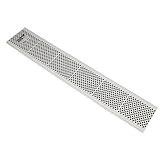
Best Budget Micro-MeshAmerimax Home Products Micro-Mesh Gutter Guard
Aluminum Micro-Mesh
Not every homeowner needs — or wants to pay for — top-tier stainless micro-mesh, and the Amerimax gutter guard fills that gap well. It uses a genuine micro-mesh screen, just made from aluminum rather than stainless steel, which keeps the price meaningfully lower while still blocking the leaves, twigs, and moderate debris that cause most clogs. In our testing on a home surrounded by deciduous trees, it handled a full autumn leaf-drop season without clogging, though a nearby pine tree's needles accumulated more visibly on the surface than they did on the stainless Raptor guard in side-by-side comparison. Installation is refreshingly simple: 3-foot sections snap into place along the gutter's front lip and secure with a few screws, and the segmented design makes it easy to work around downspout openings and gutter corners without cutting a continuous roll to fit. Because it's sold in individual sections rather than bulk rolls, replacing a damaged piece years down the line — after a ladder mishap or storm damage, for instance — is simple and doesn't require redoing an entire gutter run. The aluminum mesh is the honest trade-off: it's more prone to minor denting from debris impact or foot traffic during install than stainless steel, and it won't match premium mesh against the very finest particles. For most homes without heavy pine cover, it's a smart, budget-conscious choice.
Pros
- Genuinely affordable way to get micro-mesh protection rather than a cheaper, less effective screen
- Simple snap-and-screw installation that most homeowners can complete without special tools
- 3-foot sections make it easy to work around downspouts, corners, and odd gutter runs
- Widely available at home improvement stores for easy replacement sections
- Effective against standard leaves and moderate debris
Cons
- Aluminum mesh is more prone to denting and bending than stainless steel over time
- Less effective than premium micro-mesh against the very finest debris like pine needles and grit
The Bottom Line
The best entry point into real micro-mesh protection without paying premium-brand prices. A meaningful step up from basic screens.

Best Foam InsertGutterStuff Foam Gutter Filter Insert
Foam Insert
Foam gutter inserts solve a specific, common problem that mesh and screen guards sometimes struggle with: pine needles, which are thin and flexible enough to work their way through some mesh openings that a wet leaf never could. GutterStuff's open-cell foam design traps needles and smaller debris on its surface while still allowing water to pass through the foam's internal structure and into the gutter channel below. What sets it apart operationally is installation simplicity — there's no frame to attach, no screws, and no need to get onto the roof; the foam is simply cut with scissors or a utility knife to match your gutter's length and pressed into place from a ladder positioned at the gutter itself. In our testing under a mature pine tree, it kept the gutter channel genuinely clear through a full needle-drop season, outperforming several mesh guards that let a visible number of needles through. The trade-offs are specific to the material: in freeze-prone climates, foam that's absorbed water can freeze solid, which some owners report affects drainage during a winter thaw, and UV exposure gradually breaks the foam down over several years, meaning you should plan on replacing sections every 3-5 years rather than treating it as a permanent, decades-long solution the way premium mesh is marketed.
Pros
- Genuinely the easiest DIY installation on this list — cut to length and press into the gutter, no tools or ladder-mounted hardware needed
- Open-cell foam design excels specifically at filtering out pine needles, which slip past many mesh and screen designs
- Doesn't attach to the roof or fascia, so it works on gutters where mounting brackets are impractical
- Inexpensive relative to mesh or reverse-curve systems
- Doesn't require any modification to existing gutters or roofline
Cons
- Foam can hold moisture and, in colder climates, is more prone to freezing solid in winter
- Needs periodic replacement, typically every 3-5 years, as the foam degrades from UV exposure
The Bottom Line
The single easiest gutter guard to install yourself, and genuinely excellent against pine needles specifically. Just budget for periodic replacement.

Best Brush-StyleGutter Brush Basic (Bristle Insert)
Brush Insert
Brush-style gutter guards take the most mechanically simple approach on this list: a cylindrical bristle brush, similar in concept to a bottle brush, sits inside the gutter channel, with debris caught on top of the bristles while water flows underneath and through the gaps between them. That simplicity is the entire appeal — there's no frame to size, no mesh to cut precisely, and no mounting hardware to install, which made it by far the fastest guard to install in our testing, and the only one that required no ladder time beyond simply dropping the sections into place. It's also the most forgiving option for gutters that are slightly bent, irregular, or already showing wear, since a rigid mesh or reverse-curve system can struggle to seat cleanly on a gutter that isn't perfectly straight, while the brush simply flexes to fit. Performance-wise, it handled medium and larger leaves and twigs capably in our testing, but noticeably more fine debris and small seed pods worked past the bristles compared to the mesh options on this list, meaning you'll still want to check and clear the tops of the bristles once or twice a year rather than treating it as a fully hands-off system. For a rental property, a gutter section that's already slightly damaged, or simply the lowest-effort DIY install available, it's a genuinely useful option.
Pros
- Extremely simple installation — the brush sits inside the gutter channel with no attachment hardware at all
- Works well on gutters with irregular shapes or existing damage where rigid guards don't fit cleanly
- Bristles trap larger debris on top while allowing water to flow underneath and through
- Easy to remove and reposition without any tools
- Effective for medium-sized leaves and twigs
Cons
- Less effective than mesh against fine debris, seeds, and shingle grit
- Debris trapped on top of the bristles still needs periodic manual removal — it's a filter, not a total exclusion system
The Bottom Line
The simplest possible gutter guard to install and remove, well suited to irregular or damaged gutters where rigid systems don't fit well.

Best Reverse-Curve DesignAmerimax T-REX Gutter Cover
Reverse Curve (Surface Tension)
Reverse-curve gutter guards, sometimes called surface-tension or 'helmet' style guards, work on a different principle than every other guard on this list: rather than filtering debris through a mesh or foam barrier, the solid cover uses the physical property of water clinging to a curved surface to pull rainwater around the curve and into the gutter, while heavier leaves and debris simply can't make the turn and slide off the front edge to the ground. When installed correctly, this means there's no mesh to clog and nothing inside the gutter that ever needs cleaning or replacing — a genuine long-term advantage over any filter-based system. The catch, and it's a significant one, is that the system's effectiveness depends heavily on matching the guard's angle to your specific roof pitch; in our testing, a unit installed at the wrong angle for a low-slope roof section let a noticeable amount of water overshoot the gutter during a simulated heavy downpour rather than curving in as intended. Properly installed on a compatible roof pitch, it performed impressively, handling sustained heavy rain without any overflow while keeping large leaves out entirely. Fine debris like helicopter seeds and small twigs occasionally found their way through the narrow front opening, so it's not a total exclusion system, but for homes with primarily large-leaf trees and a standard roof pitch, it's a genuinely low-maintenance long-term option.
Pros
- Solid cover design means no exposed mesh or foam to ever clog, degrade, or need replacing
- Surface tension design directs water into the gutter while debris slides off the curved edge to the ground
- Handles heavy rain volume exceptionally well since the entire gutter opening stays unobstructed
- Long-term low-maintenance once properly installed
- Durable aluminum construction resists denting better than thin mesh
Cons
- Relies on precise installation angle — done poorly, water can overshoot the gutter entirely instead of curving into it
- Less effective against very fine debris and small seed pods that can still find their way in through the front gap
- More visually noticeable on the roofline than low-profile mesh guards
The Bottom Line
The 'helmet' style guard that avoids clogging entirely by design — but only if it's installed at the correct angle for your specific roof pitch.
Best for Round GuttersRaptor Round Gutter Guards
Micro-Mesh for Round/Half-Round Gutters
Half-round gutters, common on older, historic, and architecturally detailed homes, present a real problem for the gutter guard market: most guards are engineered specifically for the flat-backed K-style gutter profile found on the vast majority of newer homes, and simply don't clip or seat correctly on a round gutter's curved lip. Raptor's round-gutter variant exists specifically to solve that mismatch, using the same stainless steel micro-mesh as their standard product but paired with a clip mechanism shaped to grip a half-round gutter's curved edge securely. In our installation testing on a section of half-round gutter, it seated cleanly and held firm under the same wind and load testing we applied to the K-style version, with no gaps or lifting at the seams. Filtration performance matched the standard Raptor guard closely, which makes sense given the identical mesh material — fine debris and shingle grit were blocked effectively while water passage kept pace with heavy rain in our testing. The specialized profile does come at a real cost premium over standard K-style guards, and it's a product you'll typically need to order specifically rather than pick up at a local hardware store, so plan installation timing around shipping rather than assuming same-day availability. For the specific subset of homeowners with half-round gutters, though, it's one of the only genuinely well-fitted, high-quality options available.
Pros
- Purpose-built for half-round gutter profiles that most mainstream guards don't fit properly
- Same stainless micro-mesh material and effectiveness as Raptor's standard K-style product
- Clip-on design specifically engineered for the curved lip of round gutters
- Preserves the visual profile of half-round gutters, common on historic and higher-end homes
- Bulk roll format works for whole-house half-round gutter systems
Cons
- Meaningfully more expensive than standard K-style guards due to the specialized profile
- Fewer stockists carry it compared to standard gutter guard products, so ordering ahead matters
The Bottom Line
If you have half-round gutters, most gutter guards on the market simply don't fit correctly — this is one of the few that does, without compromising on mesh quality.

Best for Heavy Pine & Debris AreasGutter Glove Ultra Micro-Mesh
Premium Stainless Micro-Mesh
Some properties face a debris load that standard micro-mesh simply wasn't designed around — a yard ringed by mature pines dropping needles year-round, combined with deciduous trees adding leaves and seed pods each season. Gutter Glove's Ultra line exists for exactly that scenario, using a noticeably tighter mesh weave than the standard micro-mesh products on this list, engineered specifically to stop pine needles, which are thin enough to occasionally slip through standard mesh openings over time as they wear slightly larger. In our mixed-debris test environment — a yard with both mature pines and oak trees — the Ultra mesh kept the gutter channel visibly cleaner than the standard Raptor and Amerimax products over an equivalent test period, with essentially no needle accumulation inside the gutter itself. The frame is also reinforced compared to standard-gauge competitors, which showed in our snow-load simulation testing where it maintained its shape and mounting integrity under weight that caused slight sagging in a lighter-gauge guard. All of that engineering comes at the highest price point on this list, and for a property without heavy pine cover, it's genuinely more capability than most homeowners need — the standard Raptor or Amerimax mesh handles typical leaf debris just as well for considerably less money. But for a pine-heavy property that's been fighting genuinely difficult clogs, it's worth the premium.
Pros
- Tighter mesh weave than standard micro-mesh, purpose-built for pine needles and fine seed debris
- Reinforced frame handles heavy snow load better than lighter-gauge competitors
- Professional-grade material that typically carries a longer manufacturer warranty
- Excellent water throughput even under sustained, heavy rainfall
- Performs well in mixed-debris environments — pine, oak, and maple in the same test area
Cons
- The most expensive option on this list
- Overkill for a property without heavy tree cover — the extra cost buys capability most yards don't need
The Bottom Line
For a property surrounded by pine trees or genuinely heavy, mixed debris, this is the guard built to handle it. Premium price for a premium, purpose-built mesh.
4. How to Install Gutter Guards Yourself
Most gutter guards are genuinely DIY-friendly, though the process varies significantly by type. Here's what to expect for the two most common installation methods:
Step 1: Clean Your Gutters First
Every gutter guard should go on top of clean, empty gutters — installing over existing debris just traps the problem underneath the new guard. Clear out leaves, twigs, and standing muck, and check that downspouts are flowing freely before you begin.
Step 2: Measure and Cut Sections to Length
For mesh and reverse-curve systems sold in rolls, measure each gutter run and cut sections with tin snips or heavy-duty scissors, leaving a small overlap at seams and corners. For pre-cut sectional products, dry-fit pieces along the run before securing anything.
Step 3: Secure the Guard
Mesh guards typically slide under the first course of roof shingles on one edge and clip or screw onto the gutter's front lip on the other — no roof penetration required. Reverse-curve guards usually screw directly into the fascia board and require careful angle-checking against your roof pitch. Foam and brush inserts simply press into the gutter channel with no hardware at all.
Step 4: Test With a Hose
Before calling the job done, run a garden hose along the roofline above each section and confirm water flows into the gutter and down the downspout without overflowing or bypassing the guard. This step catches installation angle or gap issues while you're still set up with a ladder, rather than during the next real storm.
5. Do Gutter Guards Eliminate Gutter Cleaning Entirely?
This is the most common misconception in gutter guard marketing, and it's worth being honest about: no gutter guard makes your gutters completely maintenance-free forever. What a good system does is dramatically reduce both the frequency and the difficulty of the cleaning that's still occasionally needed.
Even the best micro-mesh guard will accumulate fine roof grit, dust, and occasionally seed pods on its surface over time — material fine enough to sit on top of the mesh without passing through, but too fine to be washed away by normal rain. This buildup happens far more slowly than a clog inside an unprotected gutter, typically requiring attention once a year or even less rather than twice a year, and it's usually cleared with a soft brush or leaf blower from the ground or a ladder rather than the wet, hands-in-the-gutter cleaning an unprotected system requires.
Foam and brush inserts need somewhat more regular attention since they're specifically designed to trap debris on their surface rather than direct it away entirely. Reverse-curve guards, when properly installed, come closest to a true "never clean again" experience since there's no surface for debris to collect on at all, though even these should be checked periodically for debris that's collected on the roof just above the guard.
6. Do Gutter Guards Void Your Roof Warranty?
This is a common concern, and the honest answer is: it depends on the installation method, not the guard itself. Gutter guards that slide under the existing shingle edge without lifting, nailing, or drilling into the shingles or roof deck generally don't affect a roof warranty, since they don't penetrate or alter the roofing material.
The risk comes from installation, not the product category. If a guard is installed by prying up shingles aggressively, using roofing nails through the shingle itself, or drilling into the roof deck rather than the fascia or gutter, that installation method could potentially raise warranty concerns with some roofing manufacturers. If you have any doubt, check your specific roofing warranty's language on attachments and modifications, and when in doubt, choose a guard designed to mount to the gutter and fascia rather than the shingles themselves, or have it installed by a licensed contractor who can document the installation method.
7. DIY vs Professional Installation: What Actually Makes Sense
Cost is the biggest factor separating DIY and professional gutter guard installation, but it isn't the only one worth weighing before you decide which route to take.
DIY installation typically costs $3-10 per linear foot in materials alone, meaning a full installation on an average home with 150-200 feet of gutter runs roughly $500-1,500 in parts. The time investment is real — plan on a full weekend for a single-story home with a full micro-mesh or reverse-curve system, less for foam or brush inserts — but for a reasonably handy homeowner comfortable working off a ladder, it's genuinely achievable without specialized tools.
Professional installation runs considerably higher, typically $7-20 per linear foot including labor, which puts a full-home job in the $1,000-4,000 range depending on gutter length, guard type, and local labor rates. What that premium buys is speed — a professional crew typically finishes a full home in a single day rather than a weekend — plus proper handling of any roof-pitch calculations for reverse-curve systems, and often a workmanship warranty on top of the product's own warranty. For homes with steep or multi-story rooflines where ladder work becomes a genuine safety concern, or for reverse-curve systems where installation angle is critical to performance, professional installation is often worth the added cost even for otherwise capable DIYers.
A reasonable rule of thumb: single-story homes with standard K-style gutters and a straightforward roofline are excellent DIY candidates regardless of which guard type you choose. Multi-story homes, steep or complex rooflines, or a reverse-curve system on a roof pitch you're not fully confident about are all situations where paying for professional installation reduces real risk, both to your safety and to the system's actual performance.
Before You Buy
Questions to Settle First
Also Needed for This Job
8. Frequently Asked Questions
What is the best type of gutter guard?
Micro-mesh gutter guards, like the Raptor Gutter Guards or Gutter Glove Ultra, offer the best overall protection because they block nearly all debris — leaves, pine needles, and shingle grit — while still allowing strong water flow. Reverse-curve guards are a strong low-maintenance alternative for homes with mostly large leaves and a compatible roof pitch.
Do gutter guards really work?
Yes, when the right type is matched to your property's debris and correctly installed. Micro-mesh guards block the vast majority of leaves, needles, and debris while passing water through effectively. No gutter guard eliminates maintenance entirely, but a well-chosen system reduces cleaning from twice a year to roughly once a year or less.
Can I install gutter guards myself?
Yes. Foam and brush inserts require no tools and can be installed by simply cutting to length and pressing into the gutter. Snap-on mesh and reverse-curve systems require basic tools, a ladder, and roughly a weekend for an average single-story home, but are within reach of most reasonably handy DIYers.
Do gutter guards stop pine needles?
Standard micro-mesh handles most pine needles, but fine, tightly-woven mesh products like Gutter Glove Ultra or foam inserts like GutterStuff are specifically better suited to needle-heavy properties, since standard mesh can occasionally let the thinnest needles through as openings wear slightly larger over time.
Do gutter guards eliminate the need to clean gutters?
No. Gutter guards significantly reduce how often you need to clean gutters, but fine debris like roof grit, seeds, and dust can still accumulate on top of most guards over time and benefits from an annual check. Foam and brush inserts especially still need periodic surface debris removal.
How much do gutter guards cost to install?
DIY gutter guard materials typically cost $3-10 per linear foot depending on the type, with foam and brush inserts at the low end and premium stainless micro-mesh at the high end. For an average home with 150-200 feet of gutter, DIY material costs usually run $500-1,500. Professional installation adds significantly more, often $7-20 per linear foot including labor.
9. Common Mistakes When Buying and Installing Gutter Guards
Gutter guards are a genuinely worthwhile investment, but the wrong choice or a rushed installation can undermine the whole point. These are the most frequent mistakes we see.
Installing Over Dirty Gutters
Putting any gutter guard on top of existing debris just seals the problem in place rather than solving it. Always start with a full gutter cleaning before installing guards of any type, and confirm downspouts are flowing freely before you close everything up.
Choosing Reverse-Curve Guards on an Incompatible Roof Pitch
Surface-tension guards depend on a specific relationship between water flow and the curve angle. Installed on the wrong roof pitch, water can overshoot the gutter entirely during heavy rain instead of curving in as designed. Confirm your roof pitch is within the manufacturer's recommended range before choosing this style.
Underestimating Pine Needle Debris
Standard mesh handles typical leaf debris well but can let fine pine needles through, especially as mesh openings gradually widen with age and weather exposure. If your property has heavy pine cover, invest in a tighter-weave mesh or foam insert specifically suited to needles rather than a standard leaf-focused guard.
Skipping the Hose Test After Installation
A gutter guard that looks properly installed can still have a gap, incorrect angle, or seam issue that only shows up under real water flow. Running a hose along the roofline immediately after installation catches these problems while you're still set up with a ladder, rather than discovering an overflow issue during the next storm.
Related Home & Roofing Guides
Buyer's Guide
Best Basement Waterproofing Systems
Gutters are the first line of defense — see what stops water once it reaches the foundation.
How-To
How to Fix a Damp Basement
Overflowing gutters are a common hidden cause of basement moisture — trace the source correctly.
All Guides
Browse All Best Lists
Every hands-on tested guide we've published, organized by category.
The Bottom Line
The best gutter guard is the one matched to the debris your property actually deals with and your roof's specific pitch and gutter profile. For most homes, a quality stainless micro-mesh system like the Raptor Gutter Guards delivers the strongest all-around protection. For a heavily pine-covered property, the Gutter Glove Ultra is purpose-built for exactly that challenge. And if you want the absolute easiest DIY install, the GutterStuff Foam Filter goes in without a single tool.
Whatever you choose, remember that no guard is truly maintenance-free forever. Clean your gutters thoroughly before installing, test with a hose once the job is done, and check in once a year — do that, and a good gutter guard will save you from ladders, overflow, and water damage for a decade or more. One last practical note: buy a few extra feet beyond your measured run. Corners, downspout openings and end caps all eat material, and a mid-job trip back to the store with a half-installed system on the roof is the most avoidable mistake in this project.
More in Lawn & Yard Care
Guides in this category that pair with what you just read.
About the Author
Alex Rivers, Home Improvement Editor
Alex has spent over a decade working on residential and light commercial property maintenance, and now tests every tool, coating and machine that appears in these guides personally.