The 7 Best Grass Seeds in 2026
We seeded 15 blends into marked test plots across full sun, dense shade, and bare repair patches, then tracked germination speed, fill-in density, and survival through a hot August. Only 7 earned a spot.
Alex Rivers
Home Improvement Editor
Last Updated
October 17, 2026
In This Guide
Grass seed is the rare product where the most expensive bag is often the wrong one. Buy a premium Kentucky bluegrass blend for a Georgia lawn and it will die in July no matter how carefully you water. The single decision that determines whether new grass survives is climate zone, and it happens before you ever compare brands. Here is how to make that call, and the seven blends that performed best once it is made.
Our Picks at a Glance
The Short Answer
Scotts Turf Builder Grass Seed Sun & Shade Mix (Best Overall). The default recommendation for a typical cool-season lawn with mixed light. Not the specialist in any one condition, and the best all-around choice because of it.
- Best Overall Scotts Turf Builder Grass Seed Sun & Shade Mix — Cool-Season Blend, Fescue + Ryegrass + BluegrassCheck Price
- Check Price
- Check Price
- Check Price
- Check Price
- Fastest Germination GreenView Fairway Formula Perennial Ryegrass — Cool-Season, Perennial Ryegrass BlendCheck Price
- Best Kentucky Bluegrass Barenbrug Turf Blue HGT Kentucky Bluegrass — Cool-Season, Kentucky BluegrassCheck Price
We may earn a commission when you buy through these links, at no extra cost to you. How we test
Best Overall
Scotts Turf Builder Grass Seed Sun & Shade Mix
1. Cool-Season vs Warm-Season: The Only Decision That Really Matters
Before comparing a single brand, you need to know which of two biological categories your climate supports. Getting this wrong guarantees failure regardless of how much you spend or how carefully you water, and it is the reason most bags of grass seed that die were doomed the moment they were purchased.
Cool-Season Grasses
Tall fescue, Kentucky bluegrass, perennial ryegrass, and fine fescue grow most actively when air temperatures sit roughly between 60 and 75 degrees Fahrenheit. That means two growth surges, one in spring and a stronger one in fall, with a summer slowdown where the grass may go dormant and brown in heat. They dominate the northern half of the country, roughly from the Mid-Atlantic and Midwest northward, and they are seeded in late summer to early fall for best results.
Warm-Season Grasses
Bermudagrass, zoysia, centipede, and St. Augustine grow most actively between roughly 80 and 95 degrees Fahrenheit. They thrive through a Southern summer that kills fescue, and they go completely dormant and straw-brown after the first hard frost. They are seeded or sodded in late spring through early summer once soil has genuinely warmed, and they dominate the South and Southwest.
The Transition Zone
A band across the middle of the country, running roughly through Virginia, Tennessee, Arkansas, Oklahoma, and Kansas, is hot enough to stress cool-season grasses and cold enough to damage warm-season ones. Turf-type tall fescue is the most common answer here because its deep roots handle summer heat while it stays green through winter, but it is genuinely the hardest region in the country to grow a lawn in and expectations should be adjusted accordingly.
The Numbers Don't Lie
5-7 days
Ryegrass germination, the fastest here
14-21 days
Kentucky bluegrass germination
4 ft
Root depth of quality tall fescue
65-70°F
Soil temp bermudagrass needs to germinate
2. The Grass Types Explained
Within each climate category, the individual species differ enormously in drought tolerance, wear resistance, shade tolerance, and whether they can repair themselves. Most consumer bags are blends of several species, and knowing what is in the mix tells you far more than the marketing name on the front.
Turf-Type Tall Fescue
The most practical cool-season grass for most homeowners. Deep roots give it the best drought and heat tolerance in its category, it handles moderate shade, and it wears well. Its weakness is that it grows in clumps rather than spreading, so damage needs reseeding. Modern turf-type varieties have a much finer blade than the coarse old pasture fescue people remember.
Kentucky Bluegrass
The best-looking cool-season grass and the only common one that repairs itself by spreading through underground rhizomes. It demands more water and nitrogen than fescue, is slow to germinate, and thins out in shade and summer heat. Ideal for Northern lawns with irrigation.
Perennial Ryegrass
The fastest to germinate by a wide margin and a strong performer under foot traffic. It does not spread and is less heat tolerant than fescue, so it is usually a blend component rather than a standalone lawn, and it is the standard choice for winter overseeding of dormant Southern lawns.
Fine Fescues
Creeping red, chewings, and hard fescue are the most shade-tolerant and lowest-input cool-season grasses available. They use little water and little fertilizer, and their fine, needle-like blade looks distinctly different from the rest of the category. Poor traffic tolerance keeps them out of play areas.
Bermudagrass and Zoysia
The two main warm-season seeding options. Bermuda is faster to establish, more aggressive, more traffic tolerant, and needs full sun. Zoysia is slower to establish and denser, with meaningfully better shade tolerance and a plusher feel, but it is often planted as plugs or sod rather than seed because seeded varieties are limited.
| Grass Type | Best For | Spreads? | Shade |
|---|---|---|---|
| Tall Fescue | Drought, heat, all-around use | No | Moderate |
| Kentucky Bluegrass | Best appearance, self-repair | Yes | Poor |
| Perennial Ryegrass | Fast germination, traffic | No | Moderate |
| Fine Fescue | Deep shade, low input | Some | Excellent |
| Bermudagrass | Southern heat and traffic | Yes | Poor |
3. The 7 Best Grass Seeds in 2026 — Tested & Ranked
We seeded identical prepared plots in full sun, dappled shade beneath a mature oak, and deliberate bare-patch repairs, watered on a consistent schedule, and tracked days to germination, coverage density at six weeks, and survival through a hot, dry August. These seven earned their place.

Best OverallScotts Turf Builder Grass Seed Sun & Shade Mix
Cool-Season Blend, Fescue + Ryegrass + Bluegrass
Most lawn seeding advice assumes you have a uniform lawn, and almost nobody does. Real yards have a sunny front strip, a shaded side under a maple, and a patch by the driveway that bakes all afternoon. Scotts Sun & Shade Mix is built for that reality, combining fescues that tolerate shade and drought with ryegrass that establishes quickly and bluegrass that spreads to fill gaps over time. In our test plots it was never the fastest to germinate and never the densest at the end of the season, but it was the only blend that produced acceptable turf in all three of our light conditions from a single bag. The WaterSmart coating is more useful than it sounds. It is a moisture-absorbing shell around each seed that holds water at the seed surface during the critical germination window, and in our deliberately under-watered test row, coated seed germinated noticeably more evenly than uncoated seed given the same neglect. Since inconsistent watering is the single most common reason home seeding fails, that forgiveness has real practical value. The honest trade-off is that the coating adds weight. A bag sold by total weight contains less actual seed than an uncoated bag of the same size, so compare coverage area in square feet rather than pounds when pricing it against competitors. For most cool-season homeowners, it remains the sensible default.
Pros
- Blended for a mix of sun and shade, which describes almost every real residential lawn
- WaterSmart coating absorbs and holds water around the seed, meaningfully improving germination when watering is imperfect
- Germinated in 8 to 12 days across our test plots, faster than straight bluegrass blends
- Widely available at every hardware and big-box store, so matching a future repair is easy
- Forgiving of homeowner mistakes, which is genuinely the most useful trait in a consumer seed
Cons
- The seed coating adds weight, so a bag covers less actual ground than the raw-seed weight suggests
- Blend composition means it is not the absolute best performer in either full sun or deep shade
- Cool-season only, so it is the wrong product for most of the South
The Bottom Line
The default recommendation for a typical cool-season lawn with mixed light. Not the specialist in any one condition, and the best all-around choice because of it.

Best Premium BlendJonathan Green Black Beauty Ultra
Cool-Season Blend, Deep-Rooting Tall Fescue
The difference between a lawn that struggles in August and one that shrugs it off is almost entirely root depth, and that is what Black Beauty Ultra is engineered around. Its tall fescue varieties send roots down as far as four feet, reaching soil moisture that shallow-rooted bluegrass simply cannot access. In our side-by-side plots, during a three-week stretch with high temperatures and no supplemental irrigation, the Black Beauty plot stayed green and upright while the mass-market blend beside it went dormant and browned. Nothing about the watering differed between them. Endophyte enhancement is the second genuine advantage and one most consumers have never heard of. Endophytes are naturally occurring fungi that live inside the grass plant and produce compounds that deter surface-feeding insects such as chinch bugs and sod webworms. It is not a substitute for pest control in a serious infestation, but it meaningfully reduces routine insect pressure without applying anything. The blend also includes bluegrass and ryegrass so it establishes reasonably quickly and can self-repair small damage, rather than being a pure bunch-type fescue that leaves permanent bare spots where damage occurs. You pay for all of this, and the price gap versus a Scotts bag is real. For a lawn you intend to keep for a decade, it is the better long-term buy.
Pros
- Tall fescue varieties root up to four feet deep, producing dramatically better drought survival
- Contains endophytes, a natural fungus that deters surface-feeding insects without insecticide
- Naturally darker blue-green color than most consumer blends, closer to a sod lawn appearance
- Includes bluegrass and ryegrass for faster establishment and self-repair alongside the fescue
- Held color through a hot, dry August stretch that visibly stressed cheaper blends beside it
Cons
- Costs noticeably more per thousand square feet than mass-market blends
- Slower to establish than pure ryegrass, requiring more patience in the first month
- Cool-season only and not suited to Southern transition-zone summers at the extreme end
The Bottom Line
The blend to buy if you want a lawn that survives the summer rather than one that looks good in May. The deep fescue root system is the entire point.
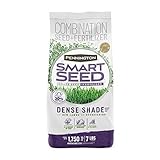
Best for ShadePennington Smart Seed Dense Shade
Cool-Season, Fine Fescue Shade Blend
Shade is where most homeowner seeding attempts fail, and usually the seed is not the reason. Grass under a mature tree competes for light, for water, and for root space simultaneously, and most general-purpose blends are dominated by species that need six or more hours of direct sun. Pennington Dense Shade leans heavily on fine fescues, the most genuinely shade-tolerant cool-season grasses available, and in our test plot beneath a mature oak it produced a dense, even stand where a general sun-and-shade mix came up thin and patchy. Fine fescues also happen to be among the lowest-water and lowest-fertility grasses in common use, which suits the resource-starved conditions under trees. The Smart Seed coating includes a starter fertilizer component, which matters more in shade than in sun because tree roots aggressively strip nutrients from the top few inches of soil where new grass roots are trying to establish. The trade-offs are worth understanding before buying. Fine fescue has a thin, needle-like blade that looks visibly different from the wider blades of tall fescue or bluegrass, so a shaded area seeded with it will never quite blend seamlessly into a sunny area seeded with something else. It also handles foot traffic poorly. And no seed defeats physics: if a spot gets under roughly three hours of dappled light a day, mulch or a shade-tolerant groundcover is the honest answer rather than another bag of seed.
Pros
- Fine fescue varieties genuinely tolerate as little as three hours of direct sun per day
- Produced the densest turf of anything we tested in our deep-shade plot under mature trees
- Uses substantially less water than bluegrass once established
- Fertilizer-coated seed gives seedlings an early nutrient boost in root-competitive shade
- No annual ryegrass filler, which is common in cheap shade mixes and dies off after one season
Cons
- Fine fescues are less traffic-tolerant than tall fescue or bluegrass, so it is a poor choice for play areas
- Finer blade texture looks noticeably different where it meets a sunny bluegrass area
- Even the best shade seed cannot survive under a dense evergreen canopy with almost no light
The Bottom Line
The most effective shade seed we tested, and the honest limit is biology rather than the product. Below about three hours of sun, no grass wins.
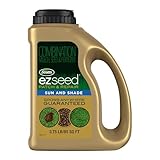
Best for Bare PatchesScotts EZ Seed Patch & Repair
Seed + Mulch + Fertilizer Combination
Repairing a bare patch properly normally means loosening soil, adding topsoil, spreading seed, applying starter fertilizer, and covering with straw. EZ Seed compresses all of that into a single scoop, which is why it has become the default patch repair product in American garages. The mulch component is genuinely clever: it absorbs several times its weight in water, holds it against the seed during germination, and visibly changes color as it dries, so instead of guessing whether the patch needs water you simply look at it. In our dog-spot and walkway-edge repairs, patches treated with EZ Seed and watered on that visual cue filled in reliably within about three weeks. The failures we produced were instructive. Every patch that did not take was one we let dry out completely between days three and eight, which is precisely the window where germinating seed is most vulnerable and where the mulch buys you the least margin. It is also worth being blunt about economics. Priced per square foot, EZ Seed costs many times what plain seed and a bag of topsoil cost, which is entirely reasonable for four bare spots and completely unreasonable for a full lawn renovation. Buy it for what it is, a convenience product for small repairs, and it performs exactly as advertised. Buy it as a lawn-establishment product and the cost becomes indefensible.
Pros
- Combines seed, absorbent mulch, and starter fertilizer so a patch repair needs one product and no topsoil
- Mulch expands and turns a lighter color when it needs water, which removes the guesswork from watering
- By far the easiest product here to use correctly for someone who has never seeded before
- Excellent for dog spots, small bare areas, and damage along walkways
- Available in sun, shade, and dense-shade formulations
Cons
- Dramatically more expensive per square foot than plain seed, so it is impractical for a whole lawn
- Very sensitive to drying out during the first ten days, which is where most failures come from
- The mulch can wash away on a slope without a light covering or erosion netting
The Bottom Line
The right product for patches, and the wrong product for lawns. For a handful of bare spots it is worth every cent of the premium.

Best for Southern LawnsScotts Turf Builder Bermudagrass
Warm-Season, Bermudagrass
Everything in this guide up to this point is a cool-season grass, and none of it belongs in Florida, Texas, or the Deep South. Bermudagrass is the answer for that climate, and it succeeds precisely where fescue and bluegrass collapse. It thrives in sustained high heat, tolerates drought better than almost any common turf grass, and recovers from wear so aggressively that it is the default surface for Southern athletic fields. It spreads by both above-ground stolons and below-ground rhizomes, meaning a bermuda lawn actively repairs its own damage rather than waiting for you to reseed a worn path. Establishment requires warm soil, which is the detail most people get wrong. Bermuda seed germinates when soil temperatures are consistently in the 65 to 70 degree range and above, so a late-spring or early-summer seeding succeeds where an early-spring seeding on the cool-season calendar simply rots in the ground. Two limitations matter. First, bermuda goes completely dormant after the first hard frost and turns a uniform straw brown until spring, which is normal and healthy but surprises people expecting year-round green; many Southern homeowners overseed with ryegrass in fall for winter color. Second, it needs sun. Under trees it thins out badly and is genuinely the wrong choice, where zoysia or a shade-tolerant Southern alternative works better.
Pros
- Thrives in the heat and humidity that kills cool-season grasses through a Southern summer
- Spreads aggressively by both stolons and rhizomes, filling in damage without reseeding
- Exceptional traffic tolerance, making it the standard for Southern lawns with kids and dogs
- Very drought tolerant once established, requiring far less irrigation than fescue in the same climate
- Coated seed improves germination consistency in the hot soil where bermuda is typically planted
Cons
- Goes fully dormant and brown after first frost, staying that way until spring
- Needs full sun and performs poorly with anything more than light shade
- Its aggressive spreading habit makes it a weed in adjacent flower beds and neighboring lawns
The Bottom Line
If you live where summers are long and hot, this is the category to be in. Accept winter dormancy as the cost of a lawn that survives August.

Fastest GerminationGreenView Fairway Formula Perennial Ryegrass
Cool-Season, Perennial Ryegrass Blend
Perennial ryegrass has one standout property that makes it strategically valuable even if it would not be your choice for an entire lawn: it germinates faster than any other common cool-season turf grass. In our plots it was showing green in five to seven days while the bluegrass control had not broken the surface at all. That speed is decisive in two situations. The first is fall overseeding, where the window between when soil is still warm enough to germinate and when frost arrives can be uncomfortably short, and a seed that comes up in a week rather than three has a much better chance of establishing before winter. The second is weed competition, since a fast-establishing grass canopy shades the soil surface and suppresses germinating weed seeds during exactly the period when a new lawn is most vulnerable. The GreenView Fairway Formula blend uses improved turf-type varieties with a fine, dark blade and genuinely good wear tolerance, and our high-traffic test strip held up better under repeated foot traffic than the fescue plots. Its weakness is structural rather than a quality problem. Ryegrass is a bunch-type grass, meaning each plant grows in place and does not send out runners, so a bare spot stays bare until you seed it. It is also less heat tolerant than tall fescue. Most professionals use it as a component in a blend rather than a standalone lawn, and that is how we would use it too.
Pros
- Germinated in 5 to 7 days in our plots, faster than anything else we tested
- Excellent for overseeding an existing lawn in fall when the window before frost is short
- Fine, dark, uniform blade texture that looks close to a golf fairway
- Very good wear tolerance, holding up well in high-traffic areas
- Establishes quickly enough to compete with weeds during the vulnerable seedling stage
Cons
- Bunch-type growth means it does not spread to fill bare spots on its own
- Less heat and drought tolerant than tall fescue, needing more water through summer
- Prone to fungal disease in hot, humid conditions without preventive management
The Bottom Line
The seed to reach for when speed matters, especially for fall overseeding. Pair it with fescue for a lawn that is both fast and durable.

Best Kentucky BluegrassBarenbrug Turf Blue HGT Kentucky Bluegrass
Cool-Season, Kentucky Bluegrass
Kentucky bluegrass is what most people are actually picturing when they imagine a perfect lawn: dense, soft, deep blue-green, and uniform. Its defining functional advantage is that it spreads by rhizomes, underground stems that send up new shoots away from the parent plant, which means a bluegrass lawn slowly fills in its own bare patches without you reseeding. Over a decade, that self-repair is the difference between a lawn that gradually degrades and one that gradually improves. The historical objection to bluegrass has been establishment speed, since traditional varieties can take three weeks or more to germinate and demand consistent moisture throughout. Barenbrug HGT, which stands for healthy grass technology, uses varieties selected specifically for faster establishment, and in our plots it broke the surface meaningfully sooner than a standard bluegrass control, though still behind ryegrass. It also carries excellent cold tolerance, which is why it dominates lawns across the northern tier of the country. The honest limitations are water, shade, and heat. Bluegrass wants more irrigation and more nitrogen than tall fescue to look its best, it thins badly in shade, and in the hotter parts of the transition zone it goes dormant in summer while fescue keeps going. In a Northern climate with reliable irrigation, nothing else looks this good.
Pros
- Spreads by rhizomes, so it genuinely repairs its own bare spots over time
- HGT varieties germinate considerably faster than traditional Kentucky bluegrass
- The classic deep blue-green color and soft texture most people picture as an ideal lawn
- Excellent cold tolerance for Northern climates with real winters
- Self-repairing habit makes it the best long-term choice for lawns with kids and pets in the North
Cons
- Still slower to establish than ryegrass or fescue, needing patience and consistent watering
- Higher water and fertilizer requirements than fescue for the same appearance
- Struggles in shade and in the hotter end of the transition zone
The Bottom Line
The best-looking cool-season lawn you can grow in a Northern climate, and the one that fixes itself. Worth the slower establishment if you can water consistently.
4. How to Read a Grass Seed Label
The label on the back of a seed bag is legally standardized and tells you far more about quality than anything on the front. Four lines matter, and checking them takes about fifteen seconds in the aisle.
Purity and named varieties. Quality seed lists specific named cultivars, not just the species. A bag that says a named tall fescue variety is telling you it contains an improved cultivar bred and tested for turf. A bag that only says tall fescue with no variety name may contain lower-grade seed, and one that lists a species as variety not stated is the clearest low-quality signal on any label.
Germination percentage. This is the share of seed expected to sprout under good conditions. Look for 85 percent or higher on most species. A low germination percentage means a meaningful portion of what you are buying will never come up, which quietly changes the real cost per covered square foot.
Weed seed and other crop seed. Both should be as close to zero as possible. Anything at or above 0.5 percent weed seed means you are literally seeding weeds into your lawn along with the grass. Premium blends often list 0.01 percent or less. This single line is the most reliable quality indicator on the bag.
Coated seed percentage. Many consumer bags now list an inert matter or coating percentage that can run 30 percent or more of total bag weight. Coating genuinely helps germination under imperfect watering, but you are paying for weight that is not seed. Compare bags by the coverage area in square feet printed on the front, never by pounds.
The Line Nobody Reads
Check the test date on the label. Grass seed loses viability over time, and a bag tested two seasons ago will germinate at a lower rate than the printed percentage suggests. Seed stored in a hot garage degrades faster still. Buy seed with a recent test date and store what you do not use somewhere cool and dry.
5. Seeding Timing and Rates
Timing determines success more than product choice does. Seeding at the wrong end of the calendar produces failures that no amount of watering or fertilizer can rescue.
Cool-Season Timing
Late summer through early fall is by a wide margin the best window. Soil is still warm enough for fast germination, air temperatures are moderating, autumn rainfall is more reliable, and weed competition has largely finished for the year. Spring seeding is possible but distinctly second best, because new seedlings face summer heat before their root systems are established and they compete directly with germinating crabgrass.
Warm-Season Timing
Late spring through early summer, once soil temperatures hold consistently in the 65 to 70 degree range. Seeding bermuda too early on the cool-season calendar simply leaves seed sitting in cold soil where it rots rather than germinates.
Getting the Rate Right
New lawn establishment generally calls for roughly double the rate used for overseeding an existing lawn, and both figures are printed on the bag. Resist the temptation to exceed them. Over-seeding sounds like insurance but crowds seedlings into competition with each other for water, light, and nutrients, producing thin, weak grass that is more disease-prone than a properly spaced stand.
Do Not Seed and Apply Crabgrass Preventer Together
Standard pre-emergent herbicides prevent grass seed from germinating just as effectively as they prevent crabgrass. If you are seeding in spring, either skip the pre-emergent that year or use a product specifically labeled as safe at seeding, such as one based on mesotrione. This conflict ruins more spring seeding attempts than any other single error.
6. Seedbed Prep and the Watering Schedule That Decides Everything
Seed needs firm contact with actual soil and consistent moisture for two to three weeks. Nearly every home seeding failure traces to one of those two conditions rather than to the seed itself.
Preparation. Seed broadcast onto compacted soil or into a thatch layer will not establish, because the seed never reaches soil to root into. For bare areas, loosen the top inch of soil with a rake before spreading. For overseeding an existing lawn, mow short, remove clippings, and core aerate or rake vigorously first so a meaningful share of seed reaches the soil surface rather than resting on top of grass blades.
The first ten days. The top quarter inch of soil must stay consistently damp, which in warm weather means light watering two or three times a day rather than one deep soaking. Deep watering at this stage is actively counterproductive: it moves water below the seed while the surface where the seed sits dries out between sessions. Short and frequent is the rule.
Weeks two through four. As seedlings emerge, gradually reduce frequency and increase duration, moving toward deeper, less frequent watering. This trains roots to grow downward chasing moisture instead of staying near the surface where they will be vulnerable to the first hot, dry week of summer.
The first mow. Wait until new grass reaches about three to four inches, then mow with a sharp blade at the highest setting and remove no more than a third of the blade height. A dull blade tears young seedlings out of loose soil by the roots instead of cutting them, which is a common way to undo three weeks of careful work in fifteen minutes.
Starter fertilizer. A starter fertilizer, higher in phosphorus than a standard lawn food, meaningfully accelerates root development in new seedlings. Apply it at seeding rather than a regular high-nitrogen lawn fertilizer, which pushes leaf growth before the root system can support it.
7. Overseeding vs Full Renovation
Not every disappointing lawn needs to be torn out and started over, and knowing which situation you are in saves either a lot of money or a lot of wasted effort.
Overseed When the Lawn Is Thin
If the existing turf is a reasonable grass type for your climate and simply thin, patchy, or tired, overseeding into it is the right call. Mow short, remove clippings, core aerate, spread seed at the overseeding rate, apply starter fertilizer, and water on the seedling schedule. Done in early fall, this thickens a lawn substantially in a single season at a fraction of renovation cost.
Renovate When the Grass Type Is Wrong
If your lawn is dominated by a species poorly suited to your climate, or is more than roughly half weeds and coarse invasive grasses, overseeding just adds good seed to a bad stand and the existing plants outcompete the seedlings. A full renovation, killing off the existing vegetation, preparing the seedbed, and seeding fresh, is the honest answer, and it is a multi-week project best started in late summer.
The Middle Path
Many lawns are best handled by renovating the worst 20 percent and overseeding the rest. Kill and reseed the areas that are truly failed, aerate and overseed everything else, and treat the whole lawn to the same watering schedule. This costs far less than a full renovation and produces most of the benefit.
Before You Buy
8. Frequently Asked Questions
What is the best grass seed?
For a typical cool-season lawn with mixed sun and shade, Scotts Turf Builder Sun & Shade Mix is the most reliable all-around choice. For drought and heat tolerance in the same climate, Jonathan Green Black Beauty Ultra performs better thanks to deep-rooting tall fescue. For Southern lawns, Scotts Turf Builder Bermudagrass is the correct category, since cool-season seed will not survive a Southern summer regardless of brand.
When is the best time to plant grass seed?
For cool-season grasses, late summer through early fall is by far the best window, because soil is still warm, air temperatures are moderating, and weed competition has ended. For warm-season grasses like bermuda, seed in late spring through early summer once soil temperatures hold consistently around 65 to 70 degrees Fahrenheit.
How long does grass seed take to germinate?
Perennial ryegrass germinates fastest at about 5 to 7 days. Tall fescue takes roughly 7 to 12 days, and Kentucky bluegrass is slowest at 14 to 21 days. Bermudagrass needs warm soil and typically germinates in 10 to 14 days once soil temperatures are consistently above 65 degrees Fahrenheit.
How often should I water new grass seed?
Water lightly two to three times a day for the first ten days to keep the top quarter inch of soil consistently damp, since that is where the seed sits. After seedlings emerge, gradually shift to deeper, less frequent watering to train roots to grow downward rather than staying near the surface.
Can I put down grass seed and crabgrass preventer at the same time?
Not with a standard pre-emergent, which blocks grass seed from germinating just as effectively as it blocks crabgrass. Either skip the pre-emergent in a year you are seeding, or use a product specifically labeled as safe at seeding time, such as a mesotrione-based herbicide.
Should I use coated or uncoated grass seed?
Coated seed holds moisture at the seed surface and genuinely improves germination when watering is inconsistent, which describes most homeowners. The trade-off is that coating can account for 30 percent or more of bag weight, so compare products by the coverage area in square feet printed on the bag rather than by pounds of product.
9. Common Grass Seeding Mistakes
Seeding failures are remarkably consistent, and almost none of them are caused by buying a bad bag of seed.
Buying the Wrong Climate Category Entirely
A premium cool-season blend planted in the Deep South will die in its first July, and bermudagrass planted in Minnesota will not survive the winter. No amount of watering, fertilizing, or brand quality overcomes a climate mismatch. Confirm whether you are in cool-season, warm-season, or transition-zone territory before comparing a single product.
Letting the Seedbed Dry Out Between Days Three and Ten
Germinating seed that dries out even once during this window dies, and no subsequent watering brings it back. This is the single most common cause of patchy results, and it happens most often to people who water deeply once a day instead of lightly several times a day. Frequency matters far more than volume during germination.
Seeding in Spring Alongside a Crabgrass Preventer
Pre-emergent herbicides do not distinguish between crabgrass seed and lawn seed. Applying both in the same spring means paying for seed that is chemically prevented from ever sprouting. Either seed in fall, skip the preventer, or use a seeding-safe product specifically labeled for the purpose.
Broadcasting Seed Onto Unprepared Ground
Seed scattered on compacted soil, on top of thatch, or over existing dense grass never makes contact with soil and mostly feeds birds. Raking bare areas, and core aerating or vigorously raking before overseeding, is the difference between a bag of seed that becomes a lawn and one that becomes an expensive lesson.
Everything Else About Grass Seed
Related Lawn & Yard Guides
Buyer's Guide
Best Fertilizer for Grass
New seed needs starter fertilizer, and established turf needs something different. Here is the difference.
Buyer's Guide
Best Weed Killers
Selective, non-selective, and pre-emergent herbicides tested — and which ones are safe near new seed.
All Guides
Browse All Best Lists
Every hands-on tested guide we have published, organized by category.
The Bottom Line
The best grass seed is the one matched to your climate first and your light conditions second. For most cool-season lawns, Scotts Turf Builder Sun & Shade Mix is the sensible default. For a lawn that survives August without irrigation, Jonathan Green Black Beauty Ultra and its deep fescue roots are worth the premium. And for Southern heat, Scotts Turf Builder Bermudagrass is the only category that makes sense.
Whatever you buy, seed in fall if you can, and water lightly several times a day for the first ten days. Those two decisions matter more than the bag you choose.
More in Lawn & Yard Care
Guides in this category that pair with what you just read.
About the Author
Alex Rivers, Home Improvement Editor
Alex has spent over a decade working on residential and light commercial property maintenance, and now tests every tool, coating and machine that appears in these guides personally.