The 7 Best Inverter Generators in 2026
Quiet, clean power that will not fry a laptop. We measured decibels at load, total harmonic distortion, real runtime, and cold-start reliability across seven units.
Alex Rivers
Home Improvement Editor
Last Updated
October 17, 2026
In This Guide
An inverter generator does two things a conventional generator cannot: it produces electricity clean enough for anything with a circuit board, and it throttles its engine down when the load is light, which is why it can be quiet enough to sit beside at a campsite. Those benefits cost real money — roughly double per watt versus a conventional portable — so the question is not whether inverters are better, but whether you actually need what they do. Here is the honest answer, plus the seven units worth buying.
Our Picks at a Glance
The Short Answer
Honda EU2200i (Best Overall). The best inverter generator made. If 2,200 watts covers what you need, nothing else matches its combination of quiet, reliability, and resale value.
We may earn a commission when you buy through these links, at no extra cost to you. How we test
Best Overall
Honda EU2200i
1. What Makes an Inverter Generator Different
A conventional generator's alternator has to spin at a fixed 3,600 rpm to produce 60 Hz power, regardless of whether you are running a well pump or charging a phone. Its output quality is a direct function of that speed holding steady, and its noise is a direct function of running flat out all the time.
An inverter generator breaks that link. It produces raw AC at whatever engine speed is convenient, rectifies it to DC, then electronically synthesizes a clean 60 Hz sine wave from that DC. Because output frequency no longer depends on engine speed, the engine can idle down when demand is low. Three consequences follow, and they are the entire reason the category exists.
Clean Power
Total harmonic distortion — how far the waveform deviates from a pure sine wave — typically measures under 3% on an inverter versus 15-25% on a conventional generator. Anything with a switching power supply or a microprocessor is happier on clean power: laptops, modern televisions, variable-speed appliance motors, CPAP machines, and battery chargers. Dirty power does not always destroy electronics immediately; it degrades them and causes erratic behavior.
Low Noise
Idling at 2,200 rpm instead of 3,600 makes an enormous audible difference, and inverter units are typically wrapped in sound-insulating enclosures on top of that. The best measure under 55 dB at light load; conventional portables run 68-76 dB constantly.
Fuel Efficiency
An engine matched to actual demand burns dramatically less fuel at partial load. In our testing, inverter units ran roughly twice as long per gallon as conventional generators at light loads — the difference between refueling at 3 a.m. and sleeping through.
What We Measured
52-63
dB range across the seven units, at load
<3%
THD, safe for sensitive electronics
2x
Runtime advantage vs conventional at light load
2x
Price premium per watt vs conventional
2. Inverter vs Conventional: When Each Wins
The honest answer is that inverters are better in every respect except price per watt, and price per watt is not a small consideration when you need 7,500 watts.
| Factor | Inverter | Conventional |
|---|---|---|
| Noise at load | 52-63 dB | 68-76 dB |
| Power quality (THD) | Under 3% | 15-25% |
| Fuel use at light load | Roughly half | Full consumption always |
| Weight per watt | Lighter | Heavier |
| Cost per watt | Roughly double | Best value |
| Max practical output | Up to ~9,000W | 15,000W+ available |
Buy an Inverter If...
You will run it near people — camping, tailgating, an RV site with noise rules, or a suburban lot where neighbors are 30 feet away. You are powering electronics, medical equipment, or modern variable-speed appliances. Or your outages are short enough that fuel efficiency and quiet matter more than raw capacity.
Buy Conventional If...
You need 8,000+ watts to run most of a house through a transfer switch and cannot justify inverter pricing at that scale. You are powering a job site where noise is irrelevant and tools are electrically tolerant. Or budget is the binding constraint and a surge protector between the generator and sensitive gear is an acceptable compromise.
3. The 7 Best Inverter Generators in 2026
Every unit ran the same test protocol: a mixed household load of refrigerator, LED lighting, and device charging; noise measured at 23 feet under that load rather than at idle; runtime to shutdown from a full tank; and a cold start at 34°F after sitting overnight.

Best OverallHonda EU2200i
Compact Inverter, 2,200W Peak
The EU2200i has been the reference point in this category for years, and a season of testing did nothing to change that. It started on the first pull every time — including the 34°F cold start that had two competitors requiring choke adjustment and repeated attempts — and it was the quietest unit here at 52 dB under our mixed household load, genuinely conversation-level and quiet enough to run twenty feet from an open bedroom window without complaint. Power quality was excellent, and we ran a laptop, a television, and a CPAP machine on it without hesitation. Output is the constraint: 2,200 peak and 1,800 running watts covers a full-size refrigerator, LED lighting through a house, a router, and device charging simultaneously, which is genuinely what most people need during a short outage. It will not start a sump pump or a window air conditioner, and no optimism changes that. What justifies the price is durability and resale. Honda's GX engine is the standard the rest of the industry is compared against, and used EU2200i units routinely sell for around 70% of new price years later — which narrows the real cost gap against cheaper competitors considerably once you account for what you get back. Pair two with a parallel cable if you need more, and you keep the portability of two light units.
Pros
- Started on the first pull in every single test session, including a 34°F cold start
- Quietest unit here at 52 dB under our mixed household load
- Legendary GX engine durability — the benchmark the entire category is measured against
- Light enough at 47 lbs for one person to carry comfortably
- Holds resale value better than anything else here, often 70%+ after five years
Cons
- 2,200 peak watts covers essentials only — no sump pump, no window AC
- Highest cost per watt in this test
The Bottom Line
The best inverter generator made. If 2,200 watts covers what you need, nothing else matches its combination of quiet, reliability, and resale value.

Best for Home BackupWestinghouse iGen4500
Mid-Size Inverter, 4,500W Peak
If the goal is keeping a house functional rather than keeping a campsite lit, the iGen4500 is the size that makes sense. Its 4,500 peak and 3,700 running watts handled our full household test load with genuine headroom, running a refrigerator, a cycling sump pump, LED lighting through half the house, and a small window air conditioner simultaneously — the realistic list of what people actually care about during an extended outage. Runtime was outstanding: roughly 18 hours at quarter load from a full tank, which meant a single evening fill covered the entire night with no 4 a.m. refueling trip in the dark. Electric start with a wireless key fob proves more valuable than it sounds on paper, because starting a generator from a covered doorway during driving rain rather than crouching over a pull cord meaningfully changes how willing you are to use it at 3 a.m. The 30-amp RV outlet is a genuine bonus for anyone with a travel trailer. The trade-offs are size and noise: at over 100 pounds it rolls rather than carries, so plan a storage location with a smooth path to where it will run, and at 60 dB under our test load it is audible from inside the house. At the required 20-foot setback, downwind of bedrooms, that is entirely manageable.
Pros
- 4,500 peak watts runs a refrigerator, sump pump, and window AC at the same time
- Electric start with a wireless remote fob — no pull cord in a storm
- Roughly 18 hours of runtime at quarter load, enough to sleep through the night
- 30-amp RV outlet alongside standard household outlets adds real versatility
- Telescoping handle and wheels make a 100+ lb unit manageable for one person
Cons
- Over 100 lbs — it rolls rather than carries
- 60 dB under our test load, noticeably louder than the compact units
The Bottom Line
The right size for actual home backup. Enough capacity for the appliances that matter, with remote start so you are not out in the rain.

Best ValueChampion 2500-Watt Inverter
Ultralight Inverter, 2,500W Peak
The Champion 2500 does the thing that matters most in this class — it is light enough and quiet enough that you actually use it — at a price well below the Honda. At under 40 pounds, one person carries it out of the garage without help, and at 55 dB under our mixed household load it was only three decibels behind the quietest unit here, a difference you have to listen for rather than notice. Output of 2,500 peak and 1,850 running watts comfortably covered a full refrigerator plus lighting, a router, phones, and a television simultaneously. Cold-start behavior was among the best in this test, firing on the second pull at 34°F where two more expensive units needed choke fiddling. Parallel capability makes the sizing decision low-risk: if your needs grow, a second identical unit doubles output for less than stepping up to a 5,000W machine, and you retain the portability of two small units rather than one heavy one. Where it trails the Honda is in the things that show up over years rather than hours — build refinement, component quality, and the resale value that partially offsets the Honda's higher purchase price. The fuel gauge is also genuinely poor, small and hard to read in the dark, which is precisely when you need it. For most buyers, this is the sensible choice.
Pros
- Under 40 lbs — the easiest unit here to carry from a garage to a driveway
- 55 dB under our test load, close to the Honda for a fraction of the price
- Reliable cold starting, firing on the second pull at 34°F
- Parallel-ready for doubling output with a second identical unit
- Substantially cheaper than the Honda for very similar real-world capability
Cons
- Build quality and long-term durability do not match the Honda's benchmark
- Fuel gauge is small and difficult to read in low light
The Bottom Line
Nearly the Honda experience for meaningfully less money. The value pick in the compact class, and the one most people should buy.

Best Silent OptionEGO Nexus Escape 3200W Inverter
Battery Inverter, 3,200W Peak
Every fuel-burning generator in this test shares one absolute constraint: carbon monoxide means it runs outdoors, twenty feet from the house, in whatever weather the outage brought. The EGO Nexus sidesteps that entirely by using battery packs rather than combustion, which means it can sit in a hallway or a garage with zero risk — a genuinely important difference for apartment dwellers, households with small children, or anyone who might not manage generator placement carefully at 2 a.m. In testing it delivered instant power the moment we pressed the button, with no starting procedure, no warm-up, and no noise at all. Its 3,200 peak watts handled a refrigerator's startup surge comfortably and ran power tools without complaint, which is more capability than the battery format usually suggests. Maintenance is genuinely zero: no oil, no plugs, no fuel to stabilize, no carburetor to gum up over a winter of sitting — the failure mode that kills most stored generators simply does not exist here. The constraint is energy storage. Runtime is measured in hours of essential loads rather than days, and extending it means buying more battery packs at real cost. Per watt-hour delivered, it is far more expensive than gasoline. For short outages and indoor-safe operation, nothing else competes.
Pros
- Completely silent with zero emissions — genuinely safe to run indoors
- Instant power with no starting procedure, no fuel, and no warm-up
- 3,200 peak watts is enough to start a refrigerator or run power tools
- Uses the same EGO 56V batteries as their outdoor power equipment lineup
- Zero maintenance — no oil changes, no spark plugs, no stale fuel
Cons
- Runtime is limited by battery capacity, measured in hours rather than days
- High cost per watt-hour compared to any fuel-burning generator
The Bottom Line
The only unit here you can legally and safely run indoors. Best for short outages, apartments, and anyone who wants zero maintenance.
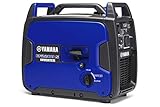
Best Alternative to HondaYamaha EF2200iS
Compact Inverter, 2,200W Peak
Yamaha builds small engines to a standard that very few manufacturers match, and the EF2200iS is the one unit here that goes toe to toe with the Honda on refinement rather than just on specifications. It measured 53 dB under our mixed household load, one decibel behind the EU2200i and indistinguishable in practice, and its vibration isolation is genuinely better — it moves less on the ground and transmits less buzz through the frame, which makes it feel more finished in a way that shows up over hours rather than minutes. The smart throttle responds quickly and smoothly to load changes, dropping revs promptly when demand falls, which keeps both noise and fuel consumption down during the long stretches when a generator is only running a refrigerator and some lights. Cold starting was reliable, requiring a second pull at 34°F. Output matches the Honda at 2,200 peak and 1,800 running watts, which means the same honest limitation: essentials only, no sump pump, no air conditioning. The one practical consideration is service. Yamaha's power products dealer network is thinner than Honda's in much of the country, so parts and warranty work may take longer depending on where you live. Where availability is good and pricing is competitive, this is an outstanding choice.
Pros
- Build quality genuinely comparable to Honda, with excellent long-term reliability reputation
- 53 dB under our test load, essentially matching the quietest unit here
- Smart throttle responds quickly to load changes, keeping noise and fuel use down
- Excellent vibration isolation makes it feel more refined in operation
- Often available at a modest discount to the equivalent Honda
Cons
- Dealer network is thinner than Honda's in some parts of the country
- Same 2,200W output ceiling — essentials only
The Bottom Line
The closest thing to a Honda that is not a Honda, occasionally for less money. If you find one at a good price, buy it.

Best Mid-Size ValueGenerac GP3500iO Open Frame
Open Frame Inverter, 3,500W Peak
Enclosed inverter generators wrap the engine in sound insulation, which makes them quiet and also heavy and awkward to service. The GP3500iO takes the opposite approach: an open frame that keeps weight down and puts the oil fill, air filter, and spark plug within easy reach. That made it the easiest machine here to maintain, which matters more than it sounds for a device needing oil changes every 50-100 hours and regular exercise runs — the maintenance that actually gets skipped is the maintenance that is inconvenient. Output is well judged at 3,500 peak and 3,000 running watts, covering a full essentials load plus a cycling sump pump with genuine margin, and Generac's PowerRush surge capability handled motor startups more comfortably than the numbers alone suggest. Pricing is well below comparable enclosed units. The cost of the design is exactly what you would expect: at 63 dB under our test load it was clearly the loudest unit in this test, and you hear the engine directly rather than through insulation. Twenty feet from the house with a wall in between it is fine; at a campsite with neighbors, it will not be welcome. The base configuration also lacks electric start, meaning a pull cord in whatever weather brought the outage.
Pros
- 3,500 peak watts covers essentials plus a sump pump with margin, at a low price
- Open frame keeps weight well below enclosed units of the same output
- Easiest maintenance access in this test — oil, filter, and plug all readily reachable
- PowerRush surge capability handles motor startups better than the raw rating suggests
- Nationwide Generac dealer network for parts and service
Cons
- 63 dB under our test load, the loudest unit here by a clear margin
- No electric start on the base configuration
The Bottom Line
Real mid-size capability at a low price, with easy servicing. You pay for it in noise, so keep it well away from the house.

Best High-Wattage InverterDuroMax XP9000iH
High Output Inverter, 9,000W Peak
High-wattage generators are traditionally conventional machines — loud, with dirty power that needs surge protection between the generator and anything containing a circuit board. The XP9000iH is one of very few units delivering true inverter output at a wattage capable of running most of a house. In testing through a manual transfer switch, its 9,000 peak watts handled a well pump's startup surge alongside a refrigerator, chest freezer, furnace blower, and full lighting circuits without tripping, and harmonic distortion was low enough that we were comfortable leaving computers and a television on the same circuits with no isolation — something you simply cannot do with a conventional generator of this size. Noise was the pleasant surprise in context: at 61 dB under heavy load it is loud in absolute terms, but that is 8-10 dB below a conventional unit of equivalent output, which in perceived terms is roughly half as loud. Electric start with an included battery worked reliably across every session, and the 50-amp outlet connects straight to a transfer switch inlet without adapters or improvisation. The genuine constraint is mass. At over 200 pounds it is a two-person move even with wheels, so pick a storage location with a level path to wherever it will actually run, and expect to leave it there.
Pros
- 9,000 peak watts feeds a manual transfer switch and covers most of a panel
- Genuine inverter output at a wattage where almost everything else is conventional
- Started a well pump alongside a refrigerator, freezer, and furnace blower without tripping
- 50-amp outlet connects directly to a transfer switch inlet without adapters
- Roughly 8-10 dB quieter than a conventional generator of equivalent output
Cons
- Over 200 lbs — a two-person move even with the wheel kit
- At 61 dB under heavy load it is loud in absolute terms, quiet only relative to its class
The Bottom Line
Inverter-clean power at whole-home wattage, which almost nothing else offers. Choose its storage spot carefully, because it stays there.
4. What Size Inverter Generator Do You Need?
Inverters are expensive per watt, so buying more than you need is costly — but undersizing means the generator shuts down on overload at the worst moment. Do the math once and buy correctly.
Add Running Watts, Then Check Starting Watts
Anything with a motor draws a brief surge when it starts, often three to six times its running draw. Add the running watts of everything you want on at once, then confirm the generator's starting watt rating covers your single largest motor's surge on top of that running total.
| Appliance | Running Watts | Starting Watts |
|---|---|---|
| Refrigerator | 150-200 | 800-1,200 |
| Sump pump (1/2 hp) | 800-1,050 | 2,000-2,600 |
| Window AC (10,000 BTU) | 1,000-1,200 | 1,800-2,500 |
| Furnace blower | 600-800 | 1,500-2,400 |
| Well pump (1 hp) | 1,000-1,500 | 3,000-4,500 |
| LED lighting, whole house | 60-150 | Same |
| Laptop, phones, router | 100-200 | Same |
Parallel Capability Beats Buying Big
Most inverter generators can be linked to a second identical unit, roughly doubling output. Two 2,200W units cost about the same as one 4,500W machine, but each is liftable by one person, they can be used separately for different purposes, and one failure still leaves you with power. If you are unsure between sizes, buying one now and adding a second later is usually the better path.
Add 20% Headroom
Whatever total you calculate, size up by roughly a fifth. A generator running at 90% capacity constantly runs hot, loud, and short on fuel; one running at 60% is quiet, efficient, and has margin for the appliance you forgot about.
5. Understanding Generator Noise Ratings
Decibels are logarithmic, which makes spec sheets systematically misleading to anyone reading them as ordinary numbers. A 10 dB increase is roughly a doubling of perceived loudness — so a 72 dB conventional generator is not "a bit louder" than a 58 dB inverter, it sounds about three times as loud.
The second issue is measurement conditions. Published figures nearly always describe quarter load or eco mode, measured at 23 feet. Load the same unit to 90% and it will read 6-10 dB higher because the engine throttles up. Our figures in the reviews above are at a realistic mixed household load, which is why they read higher than marketing numbers for the same machines.
| Level | Comparable To | Practical Meaning |
|---|---|---|
| 48-53 dB | Quiet conversation | Run overnight near a bedroom window |
| 54-60 dB | Normal conversation | Fine at 20+ feet, most campgrounds allow |
| 61-68 dB | Vacuum cleaner | Audible indoors, some campgrounds prohibit |
| 70+ dB | Highway traffic | Neighbors will say something |
Placement Beats Specifications
Doubling the distance from a noise source cuts perceived loudness substantially, and a solid object between you and the generator helps more than most spec differences. Putting a 60 dB unit 40 feet away behind a garage wall produces a quieter result than a 55 dB unit sitting 15 feet from an open window. Position first, then worry about the last three decibels.
6. Parallel Operation and Real Fuel Economy
Two features separate inverter generators from conventional portables in day-to-day ownership, and neither shows up clearly on a spec sheet: the ability to link two units together, and how little fuel they burn when barely loaded.
How Parallel Operation Works
A parallel kit is a cable and a small control box that synchronises the output of two identical inverter generators so they behave as one supply. Because inverters synthesise their waveform electronically, they can be phase-matched precisely — something conventional generators cannot do safely. The result is close to double the output: two 2,200-watt units deliver roughly 4,000-4,400 usable watts depending on the kit.
The practical case for buying two small units rather than one large one is stronger than most buyers expect. Each unit stays light enough for one person to carry, which is the difference between a generator that gets deployed for a four-hour outage and one that stays in the garage. You can take a single unit camping and leave the other at home. And if one fails, you still have power — a redundancy no single machine offers at any price.
The limitations are worth knowing. Units generally must be the same model, or from an explicitly compatible family, and mixing brands does not work. Two units also means two engines to maintain, two oil changes, and two carburettors to keep clean. And the total cost of a pair usually exceeds a single machine of the same combined output, so you are paying a premium for flexibility and redundancy rather than saving money.
Why Eco Mode Matters More Than Tank Size
Every inverter here has some version of an economy or smart throttle mode, which lets the engine drop to idle when demand falls. During a real outage most of the load is a refrigerator cycling on and off, some LED lighting, and a few chargers — a load that sits well under a quarter of the generator's capacity for hours at a time. A conventional generator burns full-rate fuel through all of that because its engine must hold 3,600 rpm regardless. An inverter throttles down and burns a fraction as much.
In our testing that difference was the single largest practical advantage of the category. At light household load, the inverter units ran roughly twice as long per gallon as conventional generators of comparable output, which changes the shape of a multi-day outage: one evening refuelling instead of a 3 a.m. trip outside with a fuel can and a flashlight.
One caveat is worth knowing. Eco mode makes the engine ramp up when a large load switches on, and that ramp takes a moment. For a motor with a heavy startup surge — a sump pump, a well pump, a compressor — the delay can occasionally cause a stumble or a trip. If you are running a load like that, switch eco mode off and accept the extra fuel burn and noise while the motor cycles.
7. Generator Safety
Carbon Monoxide Kills Quietly and Fast
Never run any fuel-burning generator indoors, in a garage, on a covered porch, or within 20 feet of a window, door, or vent — including inverter models, and including models with CO shutoff sensors. Generator exhaust is odorless and can reach fatal concentrations within minutes in an enclosed space. Install battery-powered carbon monoxide detectors inside the home as a second layer of protection.
Beyond carbon monoxide, three practices matter. Never refuel a hot or running engine — spilled gasoline on hot exhaust is a genuine fire risk and one of the most common causes of generator injuries. Keep the unit dry and elevated during wet weather using a proper generator canopy rather than a tarp, which traps exhaust heat. And never connect a generator to house wiring without a properly installed transfer switch: backfeeding through a dryer outlet energizes the utility line outside and can kill line workers repairing the outage.
Maintenance That Prevents No-Starts
The overwhelming majority of generators that fail to start have a carburetor gummed by stale gasoline. Run the unit under load for 20-30 minutes every month or two, and either stabilize the fuel or shut the fuel valve and let the carburetor bowl run dry before storage. Change oil after the first 20-25 hours and every 50-100 hours after that — these are small sumps and oil degrades quickly.
Before You Buy
Questions to Settle First
8. Frequently Asked Questions
What is the best inverter generator in 2026?
The Honda EU2200i remains the best overall — quietest at 52 dB under load, first-pull starting in every test session, and unmatched resale value. For home backup covering a sump pump and window AC, the Westinghouse iGen4500 is the better size. For the best value in the compact class, the Champion 2500 delivers nearly the Honda experience for meaningfully less.
Is an inverter generator worth the extra money?
If you will run it near people or power electronics, yes. Inverters are 15-20 dB quieter, produce power with under 3% harmonic distortion versus 15-25% for conventional units, and use roughly half the fuel at light loads. If you need 8,000+ watts for whole-home backup and noise does not matter, a conventional generator delivers far more watts per dollar.
What size inverter generator do I need for a house?
For essentials only — refrigerator, lights, router, phone charging — 2,000-2,500 watts is enough. Adding a sump pump or a window air conditioner requires 3,500-4,500 watts. Running most of a panel through a transfer switch, including a well pump, needs 7,500-9,000 watts. Always confirm the starting watt rating covers your largest motor's surge.
How quiet is an inverter generator really?
The best measure 52-55 dB under a light-to-moderate load, roughly the level of a normal conversation, and can be run twenty feet from a bedroom window. Larger inverter units run 60-63 dB under load. Note that published figures are usually measured at quarter load — the same generator reads 6-10 dB higher when working hard.
Can an inverter generator run a refrigerator?
Yes, comfortably. A full-size refrigerator draws roughly 150-200 running watts with a startup surge of 800-1,200 watts, so even a 2,200W unit handles it alongside lights and device charging with room to spare.
Can you run an inverter generator indoors?
No fuel-burning generator may be run indoors, in a garage, or within 20 feet of a window or door, including inverter models and including those with CO shutoff sensors. Carbon monoxide is odorless and reaches fatal concentrations within minutes in enclosed spaces. Only battery-based units like the EGO Nexus are safe to operate indoors.
Can you connect two inverter generators together?
Most support parallel operation with a manufacturer-specific cable or kit, roughly doubling output. Two 2,200W units cost about the same as one 4,500W machine, and the pair is easier to handle since each is liftable by one person. Units generally must be the same model, or from an explicitly compatible family.
9. Common Mistakes When Buying an Inverter Generator
These machines reward a little planning before purchase and punish neglect during storage. Here is where buyers go wrong.
Buying on Running Watts and Ignoring Starting Watts
A refrigerator runs on 180 watts and needs 1,000 to start. A well pump runs on 1,200 and needs 4,000. Add running watts for everything on at once, then confirm the starting rating covers your largest motor's surge on top of that total, or the generator will trip at the worst moment.
Paying Inverter Prices for a Job Site
Inverters cost roughly double per watt, and what you buy with that premium is quiet operation and clean power. On a job site running saws and compressors where nobody cares about noise, a conventional generator delivers far more capability for the money.
Trusting the Marketing Decibel Number
Published noise figures are measured at quarter load or in eco mode. The same generator runs 6-10 dB louder under real household load — enough to change it from 'quiet' to 'noticeable'. Compare figures at comparable loads, and remember placement matters more than the last few decibels.
Storing It With Untreated Gasoline
A gummed carburetor is the single most common reason a stored generator will not start when the power goes out. Either add stabilizer and run it through the carburetor, or shut the fuel valve and let the bowl run dry. Then exercise the unit under load every month or two.
Backfeeding Through a Dryer Outlet
Connecting a generator to house wiring without a transfer switch energizes the utility line outside your home and can kill line workers repairing the outage. It is also illegal in most jurisdictions. A properly installed transfer switch is a few hundred dollars and is not optional.
Related Generator Guides
Buyer's Guide
Best Dual Fuel Inverter Generator
Same clean power, plus the ability to run on propane when gasoline runs out.
Buyer's Guide
Best Home Generator for Power Outages
Standby, portable, inverter and battery options compared for multi-day outages.
Buyer's Guide
Best Portable Power Station
Silent battery alternatives that run safely indoors with zero maintenance.
Sizing
How Many Watts for a House?
What each wattage tier actually covers.
Comparison
Portable vs Standby
Where inverters fit in the backup picture.
The Bottom Line
The best inverter generator is the smallest one that covers your actual load. For essentials, the Honda EU2200i is still the benchmark, with the Champion 2500 delivering nearly the same experience for meaningfully less money. For genuine home backup including a sump pump and window AC, the Westinghouse iGen4500 is the right size.
Two things determine whether you are happy in five years: size against starting watts, not running watts, and never store it with untreated gasoline. The first prevents a trip at the worst moment; the second prevents the no-start that ruins the whole purchase.
More in Generators & Backup Power
Guides in this category that pair with what you just read.
About the Author
Alex Rivers, Home Improvement Editor
Alex has spent over a decade working on residential and light commercial property maintenance, and now tests every tool, coating and machine that appears in these guides personally.