The 8 Best Wood Fillers
Latex for nail holes and trim, two-part for fast exterior fixes, epoxy for rotted wood, and a straight answer on what stainable really means.
Alex Rivers
Home Improvement Editor
Last Updated
October 17, 2026
In This Guide
Pick a wood filler by the job, not the label. A good latex filler like DAP Plastic Wood-X handles nail holes, gouges and trim inside and out. Rotted or broken wood needs a two-part epoxy such as Abatron WoodEpox. And no filler stains exactly like wood, so if a repair must vanish under stain, tint the filler to match before you use it.
Our Picks at a Glance
The Short Answer
DAP Plastic Wood-X with DryDex Wood Filler (7079800540) (Best Overall). The filler we would keep on the shelf for almost every repair: easy to work, tough once cured, and it tells you when it is ready.
- Best Overall DAP Plastic Wood-X with DryDex Wood Filler (7079800540) — Latex, Interior/Exterior, Knife-GradeCheck Price
- Best for Stained Projects Minwax Stainable Wood Filler, 16 oz (42853000) — Latex, Stainable, Interior/ExteriorCheck Price
- Best for Rotted Wood Abatron WoodEpox Two-Part Epoxy Wood Filler Kit, 12 oz — Two-Part Epoxy, Structural, Interior/ExteriorCheck Price
- Best Fast Exterior Repair Minwax High Performance Wood Filler, 6 oz (41600000) — Two-Part, Interior/Exterior, Paint-GradeCheck Price
- Best Quick Epoxy Fix J-B Weld KwikWood Wood Repair Epoxy Putty Stick (8258) — Two-Part Epoxy Putty Stick, TanCheck Price
- Best for Woodworkers Goodfilla Water-Based Wood & Grain Filler, 8 oz — Water-Based, Tintable, InteriorCheck Price
- Best Budget All-Purpose Gorilla All Purpose Wood Filler, 16 oz (107104) — Acrylic, Water Resistant, Interior/ExteriorCheck Price
- Fastest Drying Latex FamoWood Latex Wood Filler, Natural, Pint (40022126) — Latex, Fast-Drying, Interior/ExteriorCheck Price
We may earn a commission when you buy through these links, at no extra cost to you. How we test
Best Overall
DAP Plastic Wood-X with DryDex Wood Filler (7079800540)
1. How We Picked
Wood filler is a category where the product on the shelf is often the wrong one for the job. A latex tub that is perfect for nail holes in trim will crack out of a rotted window sill within a year, and a two-part epoxy that saves that sill is overkill and hard to sand on a dented door. So we organized this list by job: everyday interior and exterior holes, stained work, rotted wood, fast structural fixes and fine furniture.
We weighted four things. Shrinkage, because a filler that sinks as it dries means a second coat and a second round of sanding. Sanding behavior, because a filler much harder or softer than the surrounding wood leaves a bump or a dish after sanding. Exterior durability, because outdoor repairs face water, sun and seasonal movement. And honest stainability, because almost every tub says stainable and very few behave like wood under stain.
We also looked at the practical details that decide whether a product gets used: whether it skins over in the tub, how long you have to work it, whether it can be re-wetted, and how much odor it has indoors. Every product here is currently sold and widely available, all drying times and claims are the manufacturers' own, and rating counts come from Amazon at the time of writing.
We left out a few well-known names. Several popular fillers are perfectly good but did not add anything over a pick already on the list, and two-part polyester fillers from other brands handle much like the Minwax High Performance filler we did include. If a product you trust is missing, the type comparison below will tell you where it fits.
2. Water-Based vs Solvent vs Two-Part vs Epoxy
Water-based fillers, often labeled latex or acrylic, are the most common and the easiest to use. They have low odor, clean up with water, sand easily and take paint well. Their weaknesses are shrinkage on deep fills, slower drying in thick sections, and limited strength. They are the right choice for nail holes, small gouges, cracks in trim and most interior work, and the better ones are rated for exterior use as well.
Solvent-based fillers, like the classic versions of Plastic Wood and FamoWood, dry harder and faster than most water-based fillers and have long been favored by cabinet shops. They also smell strongly, need solvent for cleanup and can dry out in the can. Most brands now offer latex versions that handle similarly, which is why the latex DAP Plastic Wood-X and FamoWood Latex appear on this list rather than their solvent-based siblings.
Two-part polyester fillers, such as Minwax High Performance, cure chemically when you mix in a hardener. They do not shrink, they harden in minutes regardless of depth, and they resist water well, which makes them good for exterior repairs that will be painted. They are hard to sand evenly against soft wood, have a short working time, and do not take stain like wood.
| Type | Strengths | Weaknesses | Best for |
|---|---|---|---|
| Water-based / latex | Easy, low odor, water cleanup, sands well | Shrinks on deep fills, slower in thick layers | Nail holes, trim, small interior and exterior repairs |
| Solvent-based | Hard, fast drying | Strong odor, solvent cleanup | Shop and cabinet work |
| Two-part polyester | No shrink, fast cure, water resistant | Short working time, hard to sand flush, paint-grade | Exterior repairs to be painted |
| Two-part epoxy | Structural, no shrink, rot repair | Costly, slower, temperature sensitive | Rotted sills, broken parts, stripped holes |
Two-part epoxies, such as Abatron WoodEpox and J-B Weld KwikWood, are the strongest and most durable. They bond into the wood fibers, do not shrink, resist water and rot, and can be carved and drilled like wood. They are the only fillers we would trust to rebuild a rotted section or a broken part that carries load. They cost the most, and the slower-curing kind needs reasonable temperatures to cure properly.
3. Our 8 Top Picks
The list covers every type a homeowner or woodworker is likely to need. Latex fillers lead because they handle most everyday repairs, with picks for general use, staining, speed and budget. Two epoxies cover rotted and broken wood, a two-part polyester covers fast exterior repairs, and a tintable water-based filler covers furniture work. Drying times and claims below are the manufacturers' own.

Best OverallDAP Plastic Wood-X with DryDex Wood Filler (7079800540)
Latex, Interior/Exterior, Knife-Grade
Plastic Wood-X is DAP's latex upgrade on its classic solvent-based Plastic Wood, and it is the most forgiving all-round filler we know of. The body is thick, knife-grade and slightly sticky, so it stays put on an outside corner or a vertical door edge instead of sagging out of the repair, and you can mold it to rebuild a chipped profile. The DryDex feature sounds like a gimmick but solves a real problem: the filler goes on pink and turns natural when it is dry, which stops you sanding a repair that is still soft underneath. DAP quotes 3 to 6 hours for repairs up to 1/8 inch deep and 36 hours for fills of 1/4 inch and deeper, so build big repairs in layers. Once cured it can be planed, cut, drilled, screwed, nailed and sanded, and DAP rates it for interior and exterior wood. It is stainable in the sense that it accepts stain, but like every filler it will not match stained wood exactly, so test on scrap first. Cleanup is soap and water and the odor is low. The 5.5 oz tub is small; buy the larger size for trim or siding work.
Pros
- DryDex indicator goes on pink and turns natural when it is dry enough to sand
- Thick knife-grade body holds on corners and vertical surfaces and can be sculpted
- Can be planed, cut, drilled, screwed, nailed, sanded, stained and painted once dry
- Rated for interior and exterior wood
- Low odor with soap-and-water cleanup
Cons
- Deep fills are slow: DAP quotes 36 hours for 1/4 inch and deeper
- Small 5.5 oz tub runs out quickly on bigger jobs
The Bottom Line
The filler we would keep on the shelf for almost every repair: easy to work, tough once cured, and it tells you when it is ready.
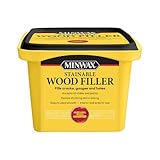
Best for Stained ProjectsMinwax Stainable Wood Filler, 16 oz (42853000)
Latex, Stainable, Interior/Exterior
Minwax's Stainable Wood Filler is a latex formula that the company specifically formulates to accept its own oil- and water-based wood stains, which is why it is our pick for projects that will be stained rather than painted. That matters because many fillers that claim to be stainable simply tolerate stain, leaving a flat, blotchy patch. No filler takes stain exactly like wood, but this one gets closer than most, especially when you sand it flush and then apply the stain with the same technique as the rest of the piece. It handles cracks, small gouges, nail holes and knot holes on unfinished wood indoors and out. Minwax says most shallow repairs dry within 2 hours, and deeper holes should be filled in layers of 1/4 inch, allowing 2 to 6 hours each. The 16 oz tub is a good size for a room of trim or a furniture restoration and costs little. Our advice for the best match is to test on a scrap of the same wood first, and if the filled spot reads too light, darken it with a second coat of stain on the patch only before topcoating.
Pros
- Formulated to accept both oil- and water-based Minwax stains
- Paintable and sandable, for indoor and outdoor unfinished wood
- Shallow repairs dry in about 2 hours
- Generous 16 oz tub at a modest price
- Water cleanup
Cons
- Deep holes must be built in 1/4-inch layers, each taking 2 to 6 hours
- Stained repairs still read lighter or darker than the surrounding grain
The Bottom Line
The sensible choice when you plan to stain, especially if you are already using Minwax stains.
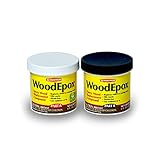
Best for Rotted WoodAbatron WoodEpox Two-Part Epoxy Wood Filler Kit, 12 oz
Two-Part Epoxy, Structural, Interior/Exterior
WoodEpox is the product restoration carpenters reach for when wood has rotted rather than simply cracked. It is a two-part epoxy putty that you mix 1:1 by volume until the color is uniform, then press into the repair. Abatron gives a working time of about 20 minutes and says it hardens in 1 to 2 hours depending on temperature. Because it is 100 percent solids, with no water or solvent to evaporate, it does not shrink, so a deep repair stays flush instead of sinking. The cured putty is light and beige and can be sawed, planed, routed, drilled and sanded much like wood, and it can be tinted with dry pigments. The full system pairs it with Abatron's LiquidWood, a thin epoxy consolidant that soaks into and hardens soft, punky wood before you fill, which is how you rebuild a rotted window sill or door jamb without cutting it out. It is rated for interior and exterior use, Greenguard certified and has virtually no VOCs. The drawbacks are price and temperature: it is expensive, and the standard formula wants 50 to 90 degrees F, though Abatron offers a cold-weather version. For anything structural or exterior, it is worth the money.
Pros
- Mixes 1:1 by volume by hand with a working time of about 20 minutes
- 100 percent solids, so it does not shrink or pull away from the repair
- Can be sawed, planed, routed, drilled and sanded like wood once hardened
- Designed to pair with Abatron LiquidWood consolidant for rotted wood
- Greenguard certified with virtually no VOCs
Cons
- Costs several times more per ounce than latex fillers
- Application temperature range of 50 to 90 degrees F rules out cold-weather work with the standard formula
The Bottom Line
The repair that saves rotted sills, door bottoms and trim instead of replacing them.

Best Fast Exterior RepairMinwax High Performance Wood Filler, 6 oz (41600000)
Two-Part, Interior/Exterior, Paint-Grade
Minwax's High Performance Wood Filler is a two-part product: you knead a small amount of the included hardener into the filler, and it cures chemically instead of drying. That is the big advantage over latex fillers. It hardens in roughly 15 minutes and Minwax says it can be sanded in about 30, regardless of how deep the repair is, so you can fill, shape, sand and prime an exterior repair in a single session. Minwax describes it as super-strength, weather, water and rot resistant, and suitable for fixing split, damaged or rotted wood on decks, window sills, doors, furniture and woodwork. It will not shrink, crack or fall out, and it bonds to almost any rigid surface including ceramics, concrete, metal and fiberglass, which makes it useful for odd jobs beyond wood. It can also anchor screws in stripped holes and secure loose joints. The catch is handling. Once mixed, you have only a few minutes to work it, the odor is strong, and the cured patch is harder and denser than surrounding wood, so it sands unevenly if you are not careful. Treat it as a paint-grade repair. For large rotted sections, Abatron's slower epoxy system is easier to shape.
Pros
- Two-part filler that hardens in about 15 minutes and sands in about 30
- Will not shrink, crack or fall out of the repair
- Weather, water and rot resistant for exterior trim, sills and decks
- Bonds to wood plus ceramics, concrete, metal and fiberglass
- Can anchor screws and secure loose furniture joints
Cons
- Strong odor and a short working window once the hardener is mixed in
- Hard, dense patch is best painted; it does not take stain like wood
The Bottom Line
A fast, hard, weatherproof filler for exterior repairs that will be painted the same day.

Best Quick Epoxy FixJ-B Weld KwikWood Wood Repair Epoxy Putty Stick (8258)
Two-Part Epoxy Putty Stick, Tan
KwikWood is the quickest way to make an epoxy wood repair. It comes as a stick with the resin wrapped around the hardener, so you slice off the amount you need and knead it in your fingers until the color is even, with no measuring or mixing cups. J-B Weld says it sets in 15 to 25 minutes and cures in about an hour, after which it can be machined, drilled, tapped, sanded, filed and painted, and the company rates it at 2,450 psi of tensile strength. That makes it ideal for the repairs latex filler cannot handle: rebuilding a chipped table corner, re-forming a broken piece of molding, filling a stripped hinge-screw hole so the screw bites again, or patching a split in a chair rung. It is water resistant once cured, so it works on outdoor furniture too. The limitations come from the format. A single stick covers small repairs only, and the cured color is a fixed tan that suits light woods such as pine and maple but will stand out on walnut or cherry unless painted. J-B Weld lists it as stainable, but expect a paint-grade result. For bigger or rotted repairs, Abatron's WoodEpox is the better epoxy.
Pros
- Hand-mixable stick: cut off what you need and knead it, no measuring
- Sets in 15 to 25 minutes and cures in about 1 hour
- J-B Weld rates it at 2,450 psi tensile strength
- Can be machined, drilled, tapped, sanded, filed and painted after an hour
- Tan color blends with lighter woods
Cons
- Small stick suits small repairs, not long cracks or siding
- Fixed tan color will not suit dark woods without paint
The Bottom Line
The epoxy repair to keep in the drawer for broken chair legs, stripped screw holes and chipped corners.

Best for WoodworkersGoodfilla Water-Based Wood & Grain Filler, 8 oz
Water-Based, Tintable, Interior
Goodfilla is aimed at woodworkers and furniture refinishers, and it solves two problems that general-purpose fillers do not. The first is color. It is sold in species colors, white oak among them, and the water-based formula can be mixed with pigments, stains or dyes, so you can tint it to match a piece before you fill rather than hoping a stain will take afterward. That is the most reliable way to get an invisible repair on stained furniture. The second is shelf life. Because it reconstitutes with water, a tub that has dried out is simply re-wetted rather than thrown away, and the maker says it is freeze-thaw stable. It is also sold as a grain filler for open-grain woods like oak and ash, packing the pores before a glossy finish. Goodfilla says it does not shrink, sink or crack, it sands smoothly and accepts finishes and stain evenly, and it has zero VOCs. The important limitation is that the listing describes it as not water resistant, so keep it to interior furniture, cabinets, floors and instruments. For exterior trim, use an epoxy or a latex filler rated for outdoor use.
Pros
- Sold in wood-species colors such as white oak, and can be tinted with pigment, stain or dye
- Works as both a hole filler and a grain filler for open-grain woods
- Reconstitutes with water, so a dried-out tub is not wasted
- Freeze-thaw stable with zero VOCs, made in the USA
- Does not shrink, sink or crack, according to the maker
Cons
- Not water resistant, so it is for interior work only
- Smaller containers cost more per ounce than big-box tubs
The Bottom Line
The furniture maker's filler: tint it to match, use it for grain filling, and never throw away a dried tub again.

Best Budget All-PurposeGorilla All Purpose Wood Filler, 16 oz (107104)
Acrylic, Water Resistant, Interior/Exterior
Gorilla's wood filler is the most-rated big tub in the category, sells at a budget price and is a good default for the kind of repairs most homeowners face: nail holes and gouges in trim, dents in doors, and cracks in painted woodwork. The acrylic formula spreads smoothly and feathers out well, which means less sanding on flat surfaces like door skins and baseboard, and Gorilla describes it as water resistant, shrink resistant and suitable for indoor and outdoor projects. Once cured it is paintable, stainable and sandable, and Gorilla says it anchors nails and screws, so you can fill a damaged area and fasten through it. The natural color is light, which is fine under paint but reads pale under medium and dark stains, so for stained work test first or tint it. Like any water-based filler, deep holes should be filled in layers and allowed to dry fully between coats, or the top skins over while the core stays soft. It is not a rot repair or structural filler; for crumbling sills or broken parts, step up to an epoxy. For painted trim around the house, though, it is all most people need.
Pros
- Water resistant and rated for indoor and outdoor use
- Does not shrink or crack, according to Gorilla
- Paintable, stainable and sandable
- Smooth, easy-spreading consistency for fast trim work
- Holds nails and screws driven into the cured repair
Cons
- Natural color is light and reads pale under darker stains
- Not a structural or rot-repair product
The Bottom Line
A low-cost, easy-spreading tub filler for trim, doors and general household repairs.
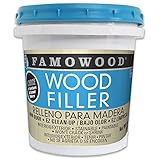
Fastest Drying LatexFamoWood Latex Wood Filler, Natural, Pint (40022126)
Latex, Fast-Drying, Interior/Exterior
FamoWood is a long-established brand among cabinetmakers and trim carpenters, and its latex filler brings the handling of the company's solvent-based filler without the solvent fumes. The headline feature is speed. FamoWood says it dries in 15 minutes, which on shallow nail holes and small gouges means you can fill a run of trim, sand it and move on to priming in a single visit. That is a real advantage over latex fillers that need an hour or more before they can be sanded cleanly. Once dry, it can be sanded, drilled or planed, and it is stainable, paintable and rated for interior and exterior use. Cleanup is water, the odor is low, and it is made in the USA. Owners give it one of the highest ratings in the category. The flip side of fast drying is a shorter working window. On a long crack or a large patch, work in smaller sections and keep the lid on the tub between scoops so it does not skin over. Deep repairs still need to be built in layers. For painted trim and cabinet work where speed matters most, it is an excellent choice.
Pros
- FamoWood says it dries in 15 minutes
- Solvent free, low odor and cleans up with water
- Can be sanded, drilled or planed once dry
- Stainable, paintable, and rated for interior and exterior use
- Made in the USA
Cons
- Fast drying shortens working time on large fills
- Deep repairs still need building in layers
The Bottom Line
The latex filler to grab when you want to fill, sand and paint before lunch.
4. Wood Filler vs Wood Putty vs Spackle vs Caulk
Wood filler and wood putty are not the same thing, and the difference determines when you use each. Filler hardens completely and is applied to bare wood before finishing; you sand it flush and then stain or paint over it. Putty stays slightly pliable, usually comes pre-colored, and is pressed into nail holes after the wood is already stained and finished, because it does not need sanding and would gum up if you tried. Our guide to spackle vs putty goes deeper on where each belongs.
Spackle is for drywall and plaster. It sands beautifully and is the right product for nail holes in painted walls, but it is soft, absorbs water and has no business on exterior wood or in anything that flexes. On painted interior trim, a lightweight spackle can stand in for wood filler on small nail holes, but it will not hold a screw or survive a bump. If you are not sure which compound suits a wall repair, our comparison of joint compound vs spackle and our roundup of the best spackle cover the drywall side.
Caulk is for joints that move. The gap where trim meets a wall, where a window casing meets siding, or between two boards that expand and contract at different rates should be caulked, not filled. Wood filler is rigid, and a rigid filler in a moving joint cracks within a season. The rule is simple: fill holes and defects within a board, caulk the joints between materials.
Where the categories overlap, choose by finish. If the wood will be painted, a paintable latex filler or even a high-quality caulk in a small joint is fine. If it will be stained, use a stainable filler before finishing or a color-matched putty after finishing. If it is outdoors and structural, use epoxy.
5. Stainable vs Paintable: The Honest Truth
Almost every wood filler on the shelf says stainable. In practice, that means the filler accepts stain without repelling it, not that it will look like the surrounding wood afterward. Wood absorbs stain unevenly through its pores and grain, creating the variation that makes it look like wood. Filler is a uniform paste with no grain, so it absorbs stain uniformly and reads as a flat, solid-colored patch, often lighter or darker than the board around it.
There are three ways to get a stained repair that disappears. The first is to start with a filler that is already close to the final color, such as a species-colored filler, or to tint a water-based filler with the same stain or dye before you use it. The second is to fill with a stainable filler, stain the whole piece, and then touch up the patch with a fine brush and a slightly darker stain or a graining pen to fake the grain. The third, for small nail holes, is to finish the wood first and then fill with color-matched putty.
Always test on a scrap of the same wood. Fill a hole in an offcut, let it dry fully, sand it as you will on the project and apply the same stain and topcoat. Five minutes of testing saves you from discovering a pale patch in the middle of a tabletop after the finish is on.
Paint is far more forgiving. Any properly cured filler will disappear under paint, provided the repair is sanded flush and primed. Fillers, especially two-part and epoxy types, absorb paint differently from bare wood, so a coat of primer over the repair keeps the topcoat sheen uniform. Our guide to the best primer explains which primers suit bare wood and filler, and for exterior surfaces such as decks and porches the best deck paint picks cover the topcoat.
THE RULE
Tint first, stain second.
If a repair has to vanish under stain, color the filler to match before you use it. Relying on stain to color a neutral filler afterward almost never produces an invisible repair.
6. Interior vs Exterior Repairs
Exterior wood faces water, sun, freezing and the constant swelling and shrinking of boards as humidity changes. A filler that is rigid, brittle or water-sensitive will crack, pop out or hold water against the wood, which accelerates the very rot you were trying to fix. That is why interior-only fillers, such as Goodfilla, should never go outdoors, and why even exterior-rated latex fillers belong in small holes rather than large structural repairs.
For outdoor nail holes, small dents and minor cracks in trim, siding and fences, an exterior-rated latex filler like DAP Plastic Wood-X or Gorilla is fine, provided it is primed and painted. Paint is what protects the repair; an unpainted latex filler outdoors will weather away. For anything larger, or anywhere water sits, such as window sills, the bottoms of door casings, deck rail caps and the ends of boards, use a two-part polyester or epoxy filler.
Do not use wood filler to close gaps between exterior boards or between trim and siding. Those joints move with the seasons and belong to caulk. Our guides to the best exterior caulk and the best caulk for wood siding cover which sealants flex enough for that job.
Timing matters outdoors. Most fillers need moderate temperatures to dry or cure properly, and epoxies in particular cure slowly in the cold. Abatron's standard WoodEpox wants 50 to 90 degrees F. Plan exterior repairs for dry weather when the wood itself is dry, because filler applied over damp wood will not bond well and can trap moisture.
7. Repairing Rotted Wood with Epoxy
Rot repair is where a good filler saves real money. Replacing a rotted window sill, door jamb or piece of historic molding can mean removing trim, paying a carpenter and repainting a whole wall. An epoxy repair, done properly, can be as durable as new wood for a fraction of the cost, and it preserves original material on older homes.
Start by removing everything that is soft. Dig out rotted wood with a chisel, awl or carbide scraper until you reach firm wood, then let the area dry thoroughly. Epoxy will not bond to wet or rotten fibers, and sealing moisture into the wood guarantees the rot continues underneath. A moisture meter takes the guesswork out of deciding whether the remaining wood is dry enough to repair.
Next, consolidate. A thin, penetrating epoxy such as Abatron's LiquidWood soaks into the slightly soft wood at the edges of the repair and hardens it, giving the filler a solid base to bond to. Brush on several coats until the wood stops absorbing it. Then press in the epoxy filler while the consolidant is still tacky, overfilling slightly, and shape it roughly with a putty knife before it hardens.
Once cured, shape the repair with a rasp, plane or sander to match the original profile, then prime and paint. Epoxy is not UV stable on its own, so paint is not optional outdoors. Finally, fix the cause. Rot almost always comes from water that sits on or runs into the wood, so improve the slope of the sill, caulk the joint above it or redirect the downspout, or the repair will simply outlast the wood around it.
8. How to Apply Wood Filler So It Disappears
Prepare the surface first. Clean out loose fibers, dust, old finish and any wax or oil from the hole, because filler bonds poorly to contaminated wood. On bare wood, a clean, dry surface is enough. On previously finished wood, scuff the area around the repair so the filler has something to grip.
Press the filler in firmly with a flexible putty knife, working it into the hole rather than smearing it over the top. Overfill slightly, so there is material to sand back to flush, but keep the excess confined to the repair; filler smeared onto the surrounding wood seals the pores and shows up as a light halo under stain. For deep holes with water-based filler, build in layers of about 1/4 inch and let each dry fully before adding the next.
Let it dry or cure completely. Water-based fillers dry from the outside in, so a repair can feel hard on top while the core is soft. Follow the drying times on the label, extend them in cool or humid conditions, and use indicators like DAP's DryDex color change when available. Sanding too soon tears the filler out of the hole.
Sand flush with a sanding block, starting at 120 or 150 grit and finishing at 180 or 220 to match the rest of the surface. A block keeps the repair flat; sanding with fingers alone dishes the soft wood around a hard filler. On larger areas, a palm sander speeds things up, but go gently on soft woods. Wipe off the dust, check the repair under raking light, and fill any pinholes before finishing.
9. Grain Filling and Furniture Work
In furniture making, filler does two jobs. The first is fixing defects, such as a knot hole, a tear-out or a gap in a joint. The second is grain filling: packing the open pores of woods like oak, ash, walnut and mahogany so a film finish can build to a smooth, glassy surface. Grain filler is usually thinner than hole filler, applied across the grain and then scraped off, leaving the pores filled.
Water-based products like Goodfilla handle both jobs because they can be thinned and tinted. Tinting the grain filler slightly darker than the wood emphasizes the grain pattern; matching it makes the pores disappear. Either way, test on scrap, because the color of a filler changes once finish goes over it.
For defects on furniture, color matching matters more than strength. Tint the filler to the final finished color before filling, or use an epoxy and plan to paint, or finish first and fill nail holes with a colored putty. For gaps in joints, a filler is a cosmetic fix only; a joint that has opened up because it failed needs re-gluing, not filling.
Accurate cuts reduce how much filler you need in the first place. Tight miters on trim and picture frames hide far better than gaps packed with filler, so if you are fighting open corners on every project, the problem may be the saw. Our new guide to the best miter saw covers the saws that cut clean, tight miters.
10. When Not to Use Wood Filler
Do not use filler on wood that is still moving. Green or wet lumber shrinks as it dries and will push filler out of cracks or pull it apart. Let the wood reach equilibrium with its surroundings first, especially for indoor furniture made from freshly bought boards.
Do not use filler where a structural repair is needed. Latex filler in a cracked stair tread, a split joist or a broken chair leg adds no strength. Glue and clamp splits that can be closed, reinforce broken parts with dowels or screws, and reserve epoxy for situations where it truly bonds and carries load, such as a rebuilt corner or a stripped screw hole.
Do not fill large gaps in floors with wood filler. Gaps between floorboards open and close seasonally, and rigid filler cracks out and ends up in the vacuum. Small nail holes in flooring are fine to fill; wide seasonal gaps are better left alone or fixed with flooring-specific products or wood strips glued to one board.
Finally, if the repair is larger than the board it sits in, replace the board. A deck board, fence picket or length of baseboard is often cheaper and faster to replace than to rebuild with filler, and the result will look better. Filler is for defects; it is not a substitute for new wood when most of the wood is gone.
11. Common Mistakes to Avoid
Trusting the word stainable
Stainable means the filler accepts stain, not that it will match the wood. Filler has no grain, so it stains as a flat patch. Test on a scrap first, and for repairs that must disappear, tint a water-based filler to the finished color or fill after finishing with color-matched putty.
Filling a deep hole in one pass
Water-based fillers dry from the surface inward, so a thick fill skins over while the core stays soft, then shrinks and cracks. Build deep repairs in layers of about 1/4 inch, letting each dry, or use a two-part filler or epoxy that cures chemically regardless of depth.
Using filler in joints that move
Gaps between trim and walls, siding and casings, or neighboring floorboards open and close with the seasons. Rigid filler cracks out of them within months and has to be dug out again. Fill holes and defects inside a board, and seal joints between boards or materials with a flexible caulk instead.
Patching over rot without digging it out
Filler packed over soft, rotted wood traps moisture and lets decay continue underneath, so the patch fails and the damage grows. Remove all soft wood, let the area dry completely, harden the edges with an epoxy consolidant, then fill with epoxy, shape it and paint.
Leaving unpainted filler outdoors
Even exterior-rated latex fillers rely on paint to protect them from water and sun. Left bare, they weather, absorb moisture and loosen. Prime and paint every exterior repair promptly, and use epoxy, which also needs paint for UV protection, wherever water sits on the wood.
Before You Buy
Also Needed for This Job
12. Frequently Asked Questions
What is the best wood filler for exterior use?
For small holes and cracks in painted exterior trim, an exterior-rated latex filler such as DAP Plastic Wood-X works well if it is primed and painted. For window sills, door bottoms and anywhere water sits, use a two-part filler like Minwax High Performance or an epoxy such as Abatron WoodEpox, which do not shrink and resist water and rot.
Is wood filler the same as wood putty?
No. Wood filler hardens fully and is applied to bare wood before finishing, then sanded flush and stained or painted. Wood putty stays slightly soft, usually comes pre-colored, and is pressed into nail holes after the wood has been stained and finished. Use filler during the build and putty for touch-ups on finished surfaces.
Can you stain wood filler?
Most fillers labeled stainable will accept stain, but none will look exactly like wood, because filler has no grain and absorbs stain evenly. The result is usually a flat patch that is lighter or darker than the board. For the best match, tint the filler before use, test on scrap, or fill finished wood with color-matched putty.
How long does wood filler take to dry?
It varies widely. Fast latex fillers like FamoWood can dry in about 15 minutes on shallow repairs, while DAP Plastic Wood-X quotes 3 to 6 hours for fills up to 1/8 inch and 36 hours for deeper ones. Two-part fillers and epoxies cure chemically, often sandable within 30 minutes to a couple of hours regardless of depth.
What should I use to fill large holes in wood?
For large holes, use a two-part epoxy or polyester filler, which cures without shrinking regardless of depth. Water-based fillers can work if you build the repair in thin layers and let each dry, but they shrink and take far longer. If the damaged area is bigger than the board itself, replacing the board is usually the better fix.
Can I screw into wood filler?
Into most cured epoxy, yes. J-B Weld says KwikWood can be drilled and tapped after an hour, and Minwax High Performance filler can anchor screws. Some latex fillers, including DAP Plastic Wood-X and Gorilla, also claim to hold screws or nails, but for a hinge or anything under load, an epoxy repair or a glued-in wood plug is far more reliable.
Should I use wood filler or caulk on trim?
Use wood filler for nail holes, dents and gouges within the trim itself, and caulk for the joints where trim meets the wall, ceiling or another piece of trim. Those joints move slightly with temperature and humidity, and only a flexible caulk will stay sealed. Rigid filler in a moving joint cracks out within a season.
Everything Else About Wood Filler
Related Repair & Finishing Guides
The Bottom Line
For most repairs, DAP Plastic Wood-X is the filler to keep on the shelf: it stays put on corners, tells you when it is dry, and works inside and out. If you will be staining, start with Minwax Stainable Wood Filler or tint Goodfilla to match, and test on scrap. For fast painted trim work, FamoWood Latex and Gorilla are easy, inexpensive choices.
When the wood is rotted or broken, stop reaching for a latex tub. Abatron WoodEpox with its LiquidWood consolidant rebuilds sills and jambs that would otherwise be replaced, Minwax High Performance handles quick exterior repairs, and a J-B Weld KwikWood stick fixes stripped holes and chipped corners in an hour. Whatever you use, prime and paint exterior repairs, and caulk the joints instead of filling them.
More in Home Improvement
Guides in this category that pair with what you just read.
About the Author
Alex Rivers, Home Improvement Editor
Alex has spent over a decade working on residential and light commercial property maintenance, and now tests every tool, coating and machine that appears in these guides personally.