The 7 Best Zero Turn Mowers in 2026
We put seven zero turn mowers through more than 40 acres of real cutting — flat lawn, slope, wet grass, and dust — measuring cut quality, ride comfort, and how each one held up. Only these earned a spot.
Alex Rivers
Home Improvement Editor
Last Updated
October 17, 2026
In This Guide
A zero turn mower is the single biggest time saver in lawn care — cutting a two-acre lot drops from a three-hour tractor slog to under an hour. But the category spans $2,800 big-box machines and $12,000 commercial units that look nearly identical in a photograph, and the differences that matter are almost entirely invisible on a showroom floor. After 40+ acres of testing, here is what actually separates them.
Our Picks at a Glance
The Short Answer
Toro TITAN MAX 60" Zero Turn (Best Overall). The best zero turn mower for most people cutting real acreage. It has the commercial components that determine how a mower ages, without stepping fully into commercial pricing.
We may earn a commission when you buy through these links, at no extra cost to you. How we test
Best Overall
Toro TITAN MAX 60" Zero Turn
1. The 7 Best Zero Turn Mowers in 2026 — Tested & Ranked
Each machine cut the same mixed test property: open flat sections, a slope we measured at 15 degrees, tree-heavy areas requiring constant maneuvering, and one deliberately overgrown section to test deck load. We tracked cut consistency, clipping dispersal, ride comfort over rough ground, and how the controls felt after two hours in the seat.
Best OverallToro TITAN MAX 60" Zero Turn
Prosumer, 60" Fabricated Deck
The TITAN MAX sits precisely where most homeowners with real acreage should be shopping: it carries the components that determine long-term durability — a fabricated 10-gauge deck, serviceable commercial Hydro-Gear transaxles, greaseable spindles — without the price tag of a full commercial machine. On our test property it produced the most consistent cut of any mower we ran, particularly in the deliberately overgrown section where the deeper fabricated deck geometry kept airflow strong enough to lift and cut grass cleanly rather than pushing it flat and stringing it. The 26hp Kohler engine never bogged, holding blade tip speed through wet clumps that made two of the residential machines noticeably struggle. Comfort is where the difference showed up most over time: the suspension seat platform absorbed the ground shock that leaves you sore after a long cut on cheaper machines, and after two hours in the seat we were meaningfully less fatigued than on any of the residential units. The 60-inch deck cut our two-acre section in roughly 26 minutes, but it is genuinely wide — measure every gate and gap it will need to pass through before committing, because this is the single most common regret at this deck size. For anyone cutting two to five acres who intends to keep the machine a decade, this is the one we would buy.
Pros
- 10-gauge fabricated deck cut cleanly through the thick, overgrown test section where stamped decks strung grass
- Commercial Hydro-Gear ZT-3200 transaxles are serviceable rather than sealed, a major long-term durability advantage
- Kohler 26hp engine held deck speed under load without bogging, even in wet grass
- MyRIDE-style suspension platform on the seat made a genuine difference in comfort past the two-hour mark
- Greaseable spindles and a heavy front axle put it well above typical residential build quality
Cons
- 60-inch width will not fit through many standard fence gates — measure before buying
- Priced above true residential machines, which is hard to justify under about two acres
The Bottom Line
The best zero turn mower for most people cutting real acreage. It has the commercial components that determine how a mower ages, without stepping fully into commercial pricing.

Best ValueAriens IKON XD 52"
Residential+, 52" Fabricated Deck
The IKON XD is the machine we point people toward when the budget is real but the property is bigger than a residential mower comfortably handles. It pairs two things that rarely appear together at this price: a fabricated deck rather than a stamped one, and a Kawasaki FR series engine rather than a generic budget powerplant. In testing, that combination showed up as cut quality — the IKON left a cleaner finish in thick grass than any other mower near its price, close enough to the TITAN MAX that the difference only became obvious in the deliberately overgrown section. The 52-inch deck is a smart middle width, cutting our two-acre test section in about 31 minutes while fitting through gates that stopped the 60-inch machines. The seat surprised us: high-backed, properly padded, with armrests that make a difference on longer cuts, and better than several machines costing considerably more. Its honest limitation is the drivetrain. The EZT-2200 transaxles are a genuine step up from entry-level residential units but remain sealed, meaning no fluid changes and no rebuild — when they eventually wear out after several hundred hours, replacement is the only option. For a homeowner cutting one to three acres roughly weekly, that is a reasonable trade for the money saved, and it is the best price-to-capability ratio in this test.
Pros
- Fabricated deck at a price where most competitors still use stamped steel
- Hydro-Gear EZT-2200 transaxles are a step above entry-level residential units
- High-back padded seat with armrests is unusually comfortable for the price tier
- 23hp Kawasaki FR series engine — a genuinely good engine, not a budget substitute
- 52-inch deck fits through more gates than 60-inch machines while still cutting fast
Cons
- Transaxles are still sealed, so they are replace-not-repair when they eventually wear
- Deck lift pedal takes more foot pressure than the premium machines
The Bottom Line
The best value zero turn mower we tested. A fabricated deck and a Kawasaki engine at this price is a genuinely unusual combination.
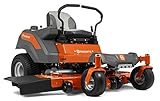
Best for 1-2 AcresHusqvarna Z254F
Residential, 54" Fabricated Deck
The Z254F is the machine that fits the largest number of actual American lawns: one to two acres, mostly flat, mowed once a week from spring through fall. Its air induction deck — drawing air from both above and below the deck rim — genuinely improves grass lift, and in our testing it produced a cut noticeably cleaner than other residential-tier mowers, closing much of the gap to prosumer machines on ordinary weekly growth. Where it fell behind was the overgrown section, where it needed a slower pass to avoid stringing that the fabricated-deck prosumer machines handled at full speed. The removable footplate is a small feature with outsized value: cleaning packed clippings from the deck underside is the maintenance task owners skip most, and making it easy means it actually gets done. Availability is a real advantage too — parts, blades, and service are easy to source at big-box retailers, which is not true of every brand here. The limitation is the drivetrain. These are residential transaxles designed for roughly 50-100 hours a season, and pushing well past that for years is how they fail. The ride is also firmer than the suspension-equipped machines, which matters more the longer your cut takes. Under two acres, it is an excellent buy; beyond that, step up a tier.
Pros
- 54-inch fabricated deck delivers strong cut quality for a residential-tier machine
- Widely available at big-box retailers with accessible parts and service
- Air induction deck design pulls air from the top and bottom, improving lift in thick grass
- Comfortable ergonomics with adjustable control levers and a removable footplate for deck cleaning
- Reliable, easy-starting Kawasaki engine option available on most configurations
Cons
- Residential-grade transaxles limit it to roughly 50-100 hours of use per season
- Noticeably rougher ride than machines with suspension seats on uneven ground
The Bottom Line
The right zero turn for a suburban acre or two. Cut quality punches above its tier; longevity is where the residential components show.

Best Dealer SupportJohn Deere Z530M
Prosumer, 60" Deck
There is a category of buyer for whom the most important spec is not on the spec sheet: whether someone will still service the machine in eight years, and whether parts will be a phone call or a hunt. For that buyer, the Z530M is the answer, and the dealer network is a legitimate reason to pay more rather than a marketing story. The machine itself earned its place independently. The welded frame felt the most planted of any mower we tested over rough ground, with less flex and rattle through the operator station than machines costing similar money, and the 24hp V-twin delivered torque smoothly under deck load in thick grass. The operator station is thoughtfully arranged, with control lever positions that fall naturally to hand and adjust properly for different operator sizes — a detail several competitors get wrong. Cut quality was very good, sitting just behind the TITAN MAX in our thick-grass test. Resale is the quiet financial argument: John Deere zero turns consistently hold value better than competitors, which narrows the effective price gap over a long ownership period. The honest criticism is that on a pure specification-per-dollar basis, the Toro and Ariens machines here offer more, and dealer parts pricing runs higher than big-box equivalents. You are buying the ecosystem as much as the mower, and for many owners that is genuinely the right call.
Pros
- Nationwide dealer network means real service and parts availability years down the line
- Excellent build quality with a heavy welded frame that feels planted on rough ground
- 24hp V-twin with strong torque delivery under deck load
- Comfortable, well-designed operator station with intuitive control placement
- Strong resale value — John Deere zero turns hold price better than most competitors
Cons
- Priced at a premium relative to specification compared to Toro and Ariens equivalents
- Parts and service through dealers cost more than big-box-available alternatives
The Bottom Line
Buy it for the dealer network and the resale value. The machine is genuinely good; you are also paying for the support behind it.

Best Ride QualitySpartan RZ-HD 54"
Commercial-Grade, 54" Fabricated Deck
Ride comfort is the specification that spec sheets never quantify and that owners notice most after the first long cut. The Spartan RZ-HD won this test outright on that measure. Its suspension seat combined with a genuinely heavy commercial frame absorbed the ground shock that other machines transmit straight up through the operator, and on our rough-ground section the difference was not subtle — the Spartan was comfortable where the residential machines were punishing. Slope stability was the other standout: on our measured 15-degree hill, it felt the most planted and predictable of anything we tested, with a low center of gravity and wide stance that inspired confidence where lighter machines started to feel nervous. The 7-gauge fabricated deck is genuine commercial hardware, thick enough to shrug off the stump and root strikes that dent lighter decks, and the Kawasaki FX commercial engine is rated for the kind of hours a homeowner will never reach. That is also the honest caveat: this is commercial equipment at commercial prices, and for a two-acre property the durability is capacity you will never consume. Dealer coverage is thinner than John Deere or Toro in parts of the country, so check local support before committing. For five-plus acres of rough ground mowed weekly, though, it is the machine that makes the job least unpleasant.
Pros
- Suspension seat and heavy frame produced the smoothest ride of anything in this test
- Commercial 7-gauge fabricated deck built to absorb impacts that dent lighter decks
- Excellent slope stability — the most confident-feeling machine on our 15-degree test hill
- Kawasaki FX commercial engine rated for thousands of hours
- Vanguard oil guard options available to extend service intervals dramatically
Cons
- Commercial pricing that is difficult to justify for under three acres
- Dealer network is thinner than the major brands in some regions
The Bottom Line
If you mow a lot of rough ground and your back has opinions about it, this is the most comfortable machine here by a clear margin.

Best Budget PickCub Cadet Ultima ZT1 50"
Residential, 50" Deck
Not every property justifies a $6,000 mower, and the Ultima ZT1 is the machine we recommend when the honest answer is that a residential mower is enough. On flat suburban ground with weekly cutting, it does the job well: the 50-inch deck cut our one-acre section in about 38 minutes, the lap bars are forgiving enough that first-time zero turn owners get comfortable within a pass or two, and the Kohler 7000 engine started reliably in every test session including cold mornings. The deck width is also practical in a way bigger machines are not, clearing most standard fence gates without drama. Its limits are exactly where you would expect from the price. The stamped deck simply does not move air the way a fabricated deck does, and in our thick-grass section it strung and clumped unless we cut speed noticeably — a real difference in finish quality that shows up any time growth gets ahead of you. The sealed EZT transaxles are the least durable drivetrain here, designed for perhaps 50 hours a season, and they are replaced rather than repaired when they wear. Pushed hard on acreage, this machine will not last. Used as intended on a flat acre or so, it is a genuinely good value and a large upgrade over any lawn tractor.
Pros
- The most affordable machine here that we would actually recommend buying
- 50-inch deck fits through most standard gates while still cutting far faster than a tractor
- Simple, proven design with widely available parts at big-box retailers
- Comfortable seat and easy, forgiving lap bar controls for first-time zero turn owners
- Reliable Kohler 7000 series engine that started easily throughout testing
Cons
- Stamped deck strings grass in thick or wet conditions unless you slow down noticeably
- Sealed EZT transaxles are the least durable drivetrain in this test
The Bottom Line
The right entry point if you are stepping up from a lawn tractor on under an acre and a half. Know its limits and it delivers real value.
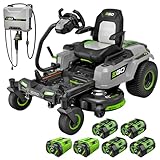
Best ElectricEGO Power+ Z6 42" Electric Zero Turn
Battery Electric, 42" Deck
Battery zero turns spent years being a compromise, and the EGO Z6 is the first one we have tested that simply works as a mower first. The instant torque of electric drive turned out to be a real advantage rather than a marketing line: in thick grass, blade speed held steady where gas engines audibly bogged, producing a consistently clean cut without slowing down. Noise is the headline difference. It is quiet enough to run at seven in the morning without a neighbor complaint, and quiet enough that you can hear the deck loading up and adjust — something you never notice until you have it. Maintenance essentially disappears: no oil, no plugs, no fuel stabilizer, no spring carburetor rebuild after a winter of sitting, which for many owners is worth more than the running cost savings. The 42-inch deck cut our one-acre section in roughly 42 minutes on a single charge, and total runtime landed around two acres of mixed conditions with a full complement of batteries. That runtime is the honest ceiling. Beyond about two acres you are either buying additional battery packs at real cost or stopping mid-cut to charge, and neither is a good answer. Upfront cost is also high once you count the packs. For a property of an acre or two where quiet operation and zero maintenance genuinely matter, it is an easy recommendation; beyond that, gas still wins.
Pros
- Dramatically quieter than any gas machine — usable early morning without disturbing neighbors
- No oil changes, no spark plugs, no fuel stabilizer, no carburetor to gum up over winter
- Instant torque delivery holds blade speed impressively well in thick grass
- Uses the same EGO 56V batteries as their other outdoor tools, so packs are shared across the lineup
- Zero emissions and no fuel storage — meaningful if you mow around an attached garage
Cons
- Runtime of roughly 2 acres per charge caps how much property it realistically serves
- High upfront cost once you account for the battery pack count needed for real acreage
The Bottom Line
The best electric zero turn available, and a genuinely good mower — as long as your property fits inside one charge.
2. Zero Turn Mower Buying Guide: Why a Zero Turn Beats a Lawn Tractor
A zero turn mower drives each rear wheel independently, letting it pivot on its own axis instead of swinging through a turning radius. In practice that eliminates the single biggest time waster in mowing: the trimming pass. A lawn tractor leaves an uncut crescent around every tree, post, and bed edge that you then have to go back and clean up. A zero turn wraps the obstacle in one motion.
Across our test property, the same two-acre layout took 2 hours 40 minutes on a 42-inch lawn tractor and 55 minutes on a 60-inch zero turn — and the zero turn required almost no follow-up trimming around the eleven trees on the lot. That gap widens with every obstacle. On wide-open acreage with nothing to mow around, the advantage shrinks to deck width and speed alone.
What We Measured
40+
Acres cut across testing
64%
Time saved vs a 42" lawn tractor
15°
Max slope we tested for stability
$2.8k-12k
Price range across the category
The trade-offs are real and worth stating plainly. Zero turns handle slopes worse than tractors because steering comes from the drive wheels — lose traction on a wet hill and you lose steering with it. They are less useful for towing, since the same independent-wheel design that makes them nimble makes them squirrelly under load. And they cost more for equivalent deck width. If your property is mostly hillside or you want one machine for mowing plus hauling, a garden tractor is the better tool.
3. Residential vs Prosumer vs Commercial Zero Turn Mowers
The best zero turn mower for a half-acre suburban lot and the best one for eight acres are not remotely the same machine, and the gap is mostly in components you never see: the transmissions, the spindles, and the deck steel.
Residential ($2,800-4,500)
Stamped decks, sealed Hydro-Gear EZT transaxles that cannot be serviced, and engines in the 20-24hp range. Designed for roughly 50-100 hours of use per year on flat to gently rolling ground. They cut perfectly well; they simply are not built to absorb thousands of hours. For under an acre, this tier is genuinely sufficient and anything more is money spent on capacity you will not consume.
Prosumer ($4,500-7,500)
Fabricated (welded, not stamped) decks in 10-gauge steel, serviceable commercial transaxles like the Hydro-Gear ZT-3100 or ZT-3400, greaseable spindles, and better seats. This is the tier that makes sense for two to five acres, and where the durability curve steepens most sharply per dollar. Most homeowners who mow real acreage should be shopping here.
Commercial ($7,500-12,000+)
Full commercial drivetrains, suspension seats or suspension platforms, heavy 7-gauge decks, and engines rated for thousands of hours. Built to run eight hours a day, five days a week. For a homeowner, the return on this tier is comfort and resale value rather than necessary durability — but if you mow more than five acres weekly, the comfort alone changes how you feel about the job.
| Tier | Deck | Best For | Price |
|---|---|---|---|
| Residential | Stamped, 12-13 ga | Under 1.5 acres | $2,800-4,500 |
| Prosumer | Fabricated, 10 ga | 2-5 acres | $4,500-7,500 |
| Commercial | Fabricated, 7 ga | 5+ acres, daily use | $7,500-12,000+ |
4. What Size Zero Turn Mower Do I Need?
Deck width drives mowing time more than engine size or top speed does, but bigger is not automatically better — a deck too wide for your property scalps on undulating ground and cannot fit through gates.
| Deck | Property Size | Approx. Time per Acre |
|---|---|---|
| 42" | Up to 1 acre | 40-50 min |
| 48-50" | 1-2 acres | 32-40 min |
| 54" | 2-3.5 acres | 28-34 min |
| 60" | 3-6 acres | 22-28 min |
| 72" | 6+ open acres | 18-22 min |
Measure Your Gates First
The most common sizing regret we hear is a 60-inch deck that does not fit through a 56-inch fence gate. Measure every gate, gap between structures, and trailer ramp you will need to pass through, and remember that overall machine width is typically 2-6 inches wider than the deck itself because of the discharge chute and anti-scalp wheels.
Match Deck Width to Terrain, Not Just Acreage
Wide decks bridge across dips and scalp high spots. If your ground is genuinely undulating rather than flat, a 54-inch deck will produce a visibly better cut than a 60-inch one on the same property, at the cost of a few extra minutes per acre. Flat and open rewards width; rough and rolling rewards restraint.
5. Zero Turn Mower Specs That Actually Matter
Spec sheets emphasize horsepower and top speed. Neither is the thing that determines whether you are happy with the machine in year five.
Transaxles: The Single Biggest Durability Factor
The hydrostatic transaxles drive each rear wheel and are the most common expensive failure point. Sealed EZT units found on residential mowers cannot be serviced — when they wear out, you replace them, typically $700-1,100 per side. Commercial ZT-3100, ZT-3400, and ZT-5400 units have serviceable fluid and filters and routinely reach 1,500+ hours. If you are choosing between two machines at similar prices, the transaxle is where to look first.
Fabricated vs Stamped Decks
A stamped deck is pressed from a single sheet, cheaper to make and lighter. A fabricated deck is welded from heavier plate, holds its shape under impact, and typically has deeper deck geometry that improves airflow and therefore cut quality in thick grass. In our overgrown-section test, the fabricated decks left visibly cleaner cuts with less stringing.
Greaseable Spindles
Blade spindles take enormous side load. Sealed spindles are maintenance-free until they fail; greaseable ones let you add grease each season and last dramatically longer. It is a small spec line that predicts a lot about how a machine ages.
Seat and Suspension
Underrated until you have mowed for three hours. Zero turns transmit ground shock directly through the frame, and by hour two the difference between a basic seat and a suspension seat stops being a luxury question. If you are cutting more than two acres at a time, prioritize this over almost any other comfort feature.
Engine Brand Over Horsepower Number
A 23hp Kawasaki FR or Kohler Command engine will outlast a 26hp budget engine and hold its power under load better. Horsepower matters only insofar as it prevents the deck bogging in heavy grass; above about 22hp for a 54-inch deck, engine quality matters far more than the number.
6. Zero Turn Mowers on Hills: Slopes, Safety, and Where They Struggle
The Slope Rule Nobody Enforces Until It Is Too Late
Most manufacturers rate zero turn mowers for a maximum 15-degree slope, and that rating assumes dry grass and correct technique. Because a zero turn steers with its drive wheels, losing traction on a hill means losing steering entirely — the machine slides, and there is nothing to correct with. Mow slopes up and down rather than across, never mow wet slopes, and stay off anything near a drop-off, pond edge, or ditch.
Beyond slope, a few habits matter. Keep the roll-over protection bar up and the seatbelt fastened whenever you are on uneven ground — the ROPS only protects you if you are held in the seat. Slow down before turning at the end of a pass; a fast zero turn pivot on soft turf tears divots that take weeks to recover. And treat reverse as a deliberate action rather than a reflex, because visibility behind a zero turn is genuinely poor and this is where most property damage happens.
The other honest limitation is towing. Zero turns can pull light carts and small dethatchers, but a loaded trailer overwhelms the independent-wheel drive, especially downhill, where the load pushes the machine and the drive wheels lose the authority to steer. If regular hauling is part of your plan, keep a garden tractor or UTV for that job.
7. Zero Turn Mower Maintenance: What Keeps It Cutting Well
Zero turn mowers are not fussy, but they are unforgiving of two specific neglects: dull blades and an unlevel deck. Both produce a visibly bad cut that owners often blame on the machine.
Sharpen Blades Every 20-25 Hours
A dull blade tears grass rather than cutting it, leaving frayed white tips that brown within a day and make an expensive mower look cheap. Keep a second set of blades so you can swap in sharp ones in ten minutes and sharpen the dull set at your leisure. Balance blades after sharpening — an unbalanced blade vibrates the spindle to death.
Level the Deck Once a Season
Decks drift out of level from impacts and tire pressure changes, producing a stepped or uneven cut. Check tire pressures first — this alone fixes many complaints — then measure blade tip height front and rear on both sides against the manufacturer's spec. Most decks want a slight forward rake of about a quarter inch.
Clean the Deck Underside
Packed clippings under the deck destroy airflow, which is what lifts grass for a clean cut and moves clippings out. Scrape it after wet mowing rather than letting it dry into concrete, and the cut quality difference is immediately visible.
Grease, Change Oil, and Watch the Hydro Fluid
Hit the grease zerks every 25 hours, change engine oil per the manual (typically 50-100 hours), and if you have serviceable transaxles, change the hydro fluid and filters at the interval specified — usually 250-500 hours. That last item is the one owners skip and the one that most reliably prevents a four-figure transaxle repair.
Before You Buy
8. Frequently Asked Questions
What is the best zero turn mower in 2026?
The Toro TITAN MAX 60" is our overall pick, pairing a fabricated 10-gauge deck with serviceable commercial Hydro-Gear transaxles at a prosumer price. For the best value, the Ariens IKON XD 52" offers a fabricated deck and Kawasaki engine at a residential price point. For under two acres, the Husqvarna Z254F is plenty of mower.
What size zero turn mower do I need for 2 acres?
A 52 to 54-inch deck is the sweet spot for two acres, cutting the property in roughly 30 minutes while remaining narrow enough to fit through most gates. A 60-inch deck cuts perhaps five minutes faster but is genuinely wide and scalps more on uneven ground.
How many acres can a zero turn mower handle?
A residential zero turn with sealed transaxles is designed for roughly 50-100 hours of annual use, which suits up to about 1.5 acres cut weekly. Prosumer machines with serviceable commercial transaxles comfortably handle two to five acres. Beyond five acres cut weekly, commercial machines are the right answer for both durability and operator comfort.
Are zero turn mowers good on hills?
They are usable on slopes up to about 15 degrees but are worse on hills than lawn tractors, because a zero turn steers with its drive wheels — losing traction means losing steering entirely. Mow slopes up and down rather than across, never on wet grass, and stay well away from drop-offs, ditches, and pond edges.
How long do zero turn mowers last?
Residential machines typically last 500-800 hours before major drivetrain wear. Prosumer machines with serviceable transaxles routinely reach 1,500-2,000 hours with proper fluid changes. Commercial units are built for 3,000+ hours. For a homeowner cutting two acres weekly, that translates to roughly 40-60 hours a year, so a prosumer machine can realistically last decades.
Is a fabricated deck worth the extra money?
For thick grass and rough ground, yes. Fabricated decks are welded from heavier steel with deeper geometry that moves more air, which lifts grass for a cleaner cut and disperses clippings better. In our overgrown-grass testing the difference in finish quality was clearly visible. On a flat, well-maintained suburban lawn cut weekly, a stamped deck performs nearly as well.
Should I buy a zero turn mower or a lawn tractor?
Buy a zero turn if your property has trees, beds, and obstacles to mow around, since eliminating trimming passes is where the time savings come from. Buy a lawn tractor if your land is mostly sloped, or if you need one machine that also tows carts, dethatchers, and spreaders — zero turns are poor at towing under load.
9. Common Mistakes When Buying a Zero Turn Mower
Zero turns are a large purchase that people typically make once a decade, which is exactly why the same mistakes repeat.
Buying on Horsepower Instead of Drivetrain
A 26hp engine on sealed residential transaxles will outlive its own drivetrain. The transaxles are the expensive failure point, and whether they are serviceable commercial units or sealed residential ones tells you far more about how the machine will age than the engine number on the sticker.
Choosing a Deck Too Wide for the Property
A 60-inch deck cuts faster in the open and scalps every high spot on undulating ground, plus it will not fit through a 56-inch gate. Measure gates and be honest about how flat your land actually is before assuming wider is better.
Ignoring Seat Comfort Until Hour Two
Zero turns transmit ground shock straight through the frame into the operator. On a showroom floor every seat feels fine. After two hours on rough ground, the difference between a basic seat and a suspension seat is the difference between finishing the job and quitting halfway.
Mowing Slopes Sideways
Cutting across a hill feels natural and is the most dangerous thing you can do on a zero turn, because a traction loss on the downhill drive wheel takes your steering with it. Mow up and down slopes, keep the ROPS up and the belt on, and stay off wet hills entirely.
Skipping Blade Sharpening
A dull blade tears grass instead of slicing it, leaving frayed tips that brown within a day. Owners then blame the mower for a bad cut that a ten-minute blade swap would fix. Keep a second sharpened set and rotate them every 20-25 hours.
Everything Else About Zero Turn Mowers
Related Lawn Care Guides
Buyer's Guide
Best Riding Lawn Mower
Lawn tractors and garden tractors compared — better on slopes and for towing.
Buyer's Guide
Best Robotic Lawn Mower
Hands-off mowing for smaller properties, and where robots still fall short.
Lawn Care
Best Fertilizer for Grass
A great mower cannot fix thin turf — start with the right feeding schedule.
The Bottom Line
The best zero turn mower for you comes down to acreage and how long you intend to keep it. For two to five acres, the Toro TITAN MAX has the components — fabricated deck, serviceable transaxles, greaseable spindles — that decide whether a mower is still cutting well in year ten. For a genuinely strong value, the Ariens IKON XD 52" delivers a fabricated deck and Kawasaki engine at a residential price. Under two flat acres, the Husqvarna Z254F is all the mower you need.
Whichever you choose, two habits protect the investment: sharpen blades every 20-25 hours and respect the 15-degree slope limit. The first determines how your lawn looks; the second determines whether the machine stays upright.
More in Lawn & Yard Care
Guides in this category that pair with what you just read.
About the Author
Alex Rivers, Home Improvement Editor
Alex has spent over a decade working on residential and light commercial property maintenance, and now tests every tool, coating and machine that appears in these guides personally.