The 7 Best Benchtop Planers in 2026
We surfaced 300 board feet of maple, oak and figured pine, measured snipe at both ends of every board, and checked thickness consistency across the width. Seven planers earned a place.
Alex Rivers
Home Improvement Editor
Last Updated
October 17, 2026
In This Guide
A thickness planer takes a board that is already flat on one face and makes the other face parallel to it at a dimension you choose. What it cannot do is flatten a twisted board, which is the single most common misunderstanding in the category and the reason people are disappointed by machines that are working perfectly.
Our Picks at a Glance
The Short Answer
DEWALT DW735X (Best Overall). The benchmark benchtop planer. Two speeds and fan chip ejection are the features that matter, and it has both.
We may earn a commission when you buy through these links, at no extra cost to you. How we test
Best Overall
DEWALT DW735X
1. What a Planer Does and Does Not Do
The most common disappointment with thickness planers comes from expecting them to do a job they physically cannot.
It Makes One Face Parallel to Another
The bed presses the board upward against the cutterhead. Whatever shape the bottom face has, the top face becomes parallel to it. That is the entire operation, and it is not the same as making the board flat.
It Cannot Flatten a Twisted Board
Feed a cupped or twisted board through and the rollers press it flat against the bed, the cutter takes a parallel surface, and the board springs back to its original shape as it exits. It is now thinner and still twisted.
A Jointer Comes First
Flattening one face is a jointer's job, or a hand plane's, or a router sled's. Once one face is genuinely flat, the planer makes the other parallel to it and the board is properly dimensioned.
You Can Work Around It Without a Jointer
A planer sled — a flat board with the workpiece shimmed and hot glued so it cannot rock — lets a planer flatten a face. It is slower than a jointer and it works, and it is how many small workshops manage.
It Does Not Straighten an Edge Either
Edge jointing is also a jointer or a table saw job. A planer references off the bed and has no way to reference an edge.
Planer Fundamentals
1/32 in
Sensible maximum cut per pass
13 in
Standard benchtop capacity
1/8 in
Minimum safe board thickness
12 in
Minimum safe board length
2. Helical vs Straight Knives
Cutterhead type is the biggest single difference between planers and it changes finish, noise and running cost.
Straight knives chop across the full width at once. Two or three long blades hit the board simultaneously, which is efficient and violent. On straight grained timber the result is excellent; on figured or interlocked grain it lifts and tears fibres.
Helical heads present small inserts at a shear angle. Dozens of square carbide cutters arranged in a spiral each take a small slice, cutting rather than chopping. On figured maple, curly grain and interlocked tropical species the difference is dramatic.
Helical heads are much quieter. Replacing a full width chop with many small slices removes most of the impact noise, and the reduction is substantial enough to change how unpleasant the machine is to be near.
Inserts rotate instead of being sharpened. A nicked carbide insert is loosened, turned ninety degrees and retightened, which restores a fresh edge. Straight knives must be replaced or sent for sharpening, and a nick anywhere leaves a ridge along every board.
Straight knives are cheaper to buy and to replace. A set of knives costs far less than a set of carbide inserts, and the initial machine cost is lower. Over a long life the economics favour helical, and up front they do not.
Retrofit heads exist and are expensive. Most popular planers can be fitted with an aftermarket helical head, often for a substantial fraction of the machine price. Buying a planer with one fitted is usually better value.
3. The 7 Best Benchtop Planers in 2026 — Tested & Ranked
We surfaced roughly 300 board feet of maple, red oak and figured pine through every machine, measuring snipe depth at both ends of each board with a dial indicator, checking thickness consistency across the full width, and assessing tear-out on deliberately difficult grain. We also measured noise and tested each with and without dust collection. These seven earned their place.
At a Glance: How Our Picks Compare
| Product | Type | Rating | Best For |
|---|---|---|---|
| DEWALT DW735X | 13 in, Three Knife, Two Speed, Fan Chip Ejection | 4.7 | Best Overall |
| WEN PL1326 Helical Planer | 13 in, Helical Cutterhead, Carbide Inserts | 4.5 | Best Helical Value |
| Makita 2012NB | 12 in, Two Knife, Interna-Lok Head, Quiet | 4.6 | Quietest Straight Knife |
| RIDGID R4331 Planer | 13 in, Three Knife, Indicator, Sturdy Base | 4.4 | Best Value |
| Cutech 40200H-CT Spiral | 13 in, Spiral Cutterhead, HSS Inserts, Light | 4.4 | Best Lightweight Spiral |
| Delta 22-555 Portable Planer | 13 in, Two Knife, Four Column, Cutterhead Lock | 4.4 | Best Snipe Control |
| JET JWP-13BT | 13 in, Two Knife, Helical Option, Cast Housing | 4.5 | Best Build Quality |

Best OverallDEWALT DW735X
13 in, Three Knife, Two Speed, Fan Chip Ejection
Benchtop planers converged on a fairly similar design years ago, and the DEWALT DW735 pulled ahead with two features that competitors mostly still lack. The first is a two speed gearbox, which changes the feed rate rather than the cutterhead speed, so a slower feed means more cuts per inch and a noticeably better surface. On figured maple, where tear-out is the usual problem, running the finishing pass at the slow setting produced a surface that needed only light sanding, where single speed machines left ridges requiring real work. The second is fan assisted chip ejection. Most planers rely on a dust collector to clear shavings, and without one they clog and the shavings get pressed into the board by the rollers, leaving marks. The DEWALT blows them clear under its own power, which means it works properly connected to nothing more than a bin. In practice that is the difference between a usable machine and one that needs the collector running. Three knives rather than two also improves finish. The costs are weight and noise. It is heavy enough that moving it is a deliberate act, and it is genuinely loud. Snipe is well controlled but still requires the extension tables to be set correctly.
Pros
- Two speed gearbox allowing a genuinely fine finishing pass
- Built in fan assisted chip ejection that clears shavings without a dust collector
- Three knife cutterhead giving a better finish than two knife machines
- Very consistent thickness across the width
- Comes with spare knives and infeed and outfeed tables in the X package
Cons
- Heavy, at the limit of what one person moves comfortably
- Loud, even by planer standards
- Snipe still occurs without careful table setup
The Bottom Line
The benchmark benchtop planer. Two speeds and fan chip ejection are the features that matter, and it has both.
Best Helical ValueWEN PL1326 Helical Planer
13 in, Helical Cutterhead, Carbide Inserts
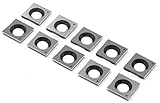
Helical cutterheads used to be a several hundred dollar upgrade to a machine that already cost a lot, which put them out of reach for most home workshops. The WEN PL1326 arrives with one fitted at a price competitive with good straight knife planers, and on the material where it matters the difference is dramatic. Figured maple and interlocked grain species tear out badly under a straight knife because the whole width of the blade hits the grain at once. A helical head presents small carbide inserts at a shear angle, slicing rather than chopping, and in our figured maple test the surface came off the WEN needing almost no remedial sanding. Noise is the other immediate difference. A straight knife planer produces a violent chopping sound; a helical head is a much lower hum, and the reduction is enough to change how unpleasant the machine is to run. Inserts are four sided, so a nicked one is rotated rather than replaced. The compromises are the feed and the bulk. There is only one feed speed, so the fine finishing pass available on the DEWALT is not an option here, though the helical head largely compensates. It is heavy and bulky, and eventually replacing a full set of inserts is a fiddly job.
Pros
- Helical cutterhead with carbide inserts at a mainstream price
- Dramatically quieter than straight knife planers
- Excellent finish on figured and interlocked grain
- Inserts rotate rather than needing sharpening or replacement
- Good thickness consistency
Cons
- Single speed feed, so no slow finishing pass
- Heavy and bulky
- Insert replacement, when eventually needed, is fiddly
The Bottom Line
Helical cutting at a price that used to buy straight knives. On figured wood it is not close.

Quietest Straight KnifeMakita 2012NB
12 in, Two Knife, Interna-Lok Head, Quiet
Benchtop planers are among the loudest tools in a workshop, loud enough that people plan their use around neighbours and household schedules. The Makita 2012NB is markedly quieter than its straight knife competitors, and while it is by no means quiet in absolute terms, the difference changes how willingly it gets used. It is also considerably lighter than most, at a weight one person can genuinely reposition. The Interna-Lok cutterhead is the technical highlight. Snipe — the slightly deeper cut taken at the leading and trailing ends of a board — is the characteristic flaw of benchtop planers, and this design reduces it more effectively than any other machine here without extension table fiddling. For anyone planing short pieces, where snipe wastes a larger proportion of the board, that matters a great deal. Surface finish is very good for a two knife machine. The limitations are capacity and features. Twelve inches is narrower than the thirteen inch standard, which occasionally matters for wide boards. Two knives rather than three means fewer cuts per inch. And without fan assisted chip ejection, a dust collector is required rather than optional, because shavings left in the machine get pressed into the workpiece.
Pros
- Substantially quieter than other straight knife benchtop planers
- Interna-Lok cutterhead design that reduces snipe considerably
- Light enough to move around a workshop easily
- Excellent surface finish for a two knife machine
- Compact footprint
Cons
- 12 inch capacity, narrower than 13 inch competitors
- Two knives rather than three
- No fan chip ejection, so a dust collector is needed
The Bottom Line
The one you can run without hating it. Quiet, light, and its cutterhead design genuinely reduces snipe.
Best ValueRIDGID R4331 Planer
13 in, Three Knife, Indicator, Sturdy Base
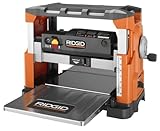
Not every tool needs a differentiating feature, and a thickness planer that reliably produces a flat parallel surface at a repeatable dimension is doing its job regardless of how it does it. The RIDGID R4331 is a conventional three knife benchtop planer built to a good standard at a sensible price, and across our 300 board feet it produced consistent results without incident. Thickness repeatability was good, meaning boards run through in separate batches came out matching, which is more than some machines manage. The three knife head gives a better finish than two knife machines at the same feed rate, the feed rollers grip reliably on wide boards without slipping, and the depth scale is clear enough to trust. Infeed and outfeed tables are included, which is not universal. What it lacks is the two features that distinguish the DEWALT: a second feed speed for a fine finishing pass, and fan assisted chip ejection. Without the latter, a dust collector is necessary. It is louder than the Makita, though no worse than most. Snipe control depends on setting the extension tables carefully, which is true of most machines but more so here. As a straightforward, well built machine at a fair price, it is easy to recommend.
Pros
- Three knife cutterhead at a competitive price
- Good thickness repeatability and a clear depth scale
- Solid base and infeed and outfeed tables included
- Reliable feed rollers that do not slip on wide boards
- Widely available with good parts support
Cons
- Single speed feed
- Louder than the Makita
- Snipe requires careful table adjustment to control
The Bottom Line
Three knives and solid build at a fair price. Nothing clever, nothing wrong with it.
Best Lightweight SpiralCutech 40200H-CT Spiral
13 in, Spiral Cutterhead, HSS Inserts, Light
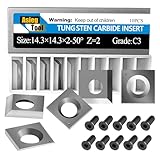
The weight of a benchtop planer is a real constraint in a small workshop, where the machine may need to come out for a project and go away afterwards. Most thirteen inch planers are heavy enough that this is a chore. The Cutech 40200H is noticeably lighter while still offering a spiral cutterhead, which is an unusual and useful combination. On difficult grain it produced a clearly better surface than straight knife machines at the price, and it is much quieter in the same way all segmented heads are. The inserts are high speed steel rather than carbide, which is the compromise that makes the price possible. HSS dulls faster than carbide, particularly in abrasive or resinous timber, so the rotation and replacement cycle is shorter. Inserts are two sided rather than four, and they are inexpensive. For a hobbyist working modest volumes that is a reasonable trade; for someone surfacing hundreds of board feet a month it is not. The lighter build shows as more vibration under load, and the smaller feed rollers can slip on wide boards, particularly if the surface is rough or oily. Keeping the rollers clean matters more on this machine than on the heavier ones.
Pros
- Spiral cutterhead with indexable inserts at a low price
- Considerably lighter than most 13 inch planers
- Much quieter than straight knife machines
- Good finish on difficult grain
- Inserts are two sided and inexpensive to replace
Cons
- HSS inserts rather than carbide, so they dull faster
- Lighter build means more vibration under load
- Smaller feed rollers can slip on very wide stock
The Bottom Line
Spiral cutting in a machine one person can carry. HSS inserts are the compromise that makes the price work.

Best Snipe ControlDelta 22-555 Portable Planer
13 in, Two Knife, Four Column, Cutterhead Lock
Snipe happens because the cutterhead can rock very slightly when only one feed roller is engaged, at the start and end of a board, letting it dip and take a deeper cut. Most benchtop planers use two or four posts and rely on tight tolerances. The Delta 22-555 adds a cutterhead lock that clamps the head rigidly in position once the depth is set, and in our measurements it produced the smallest snipe of any machine here without needing extension table adjustment. For anyone planing short pieces, where snipe eats a significant fraction of the board, that is the most valuable feature on offer. The rest of the machine is conventional and well made: rigid construction, a clear depth scale, a reliable feed system, and straightforward knife changes. The limitations are the cutterhead and the feed. Two knives rather than three means fewer cuts per inch and a slightly coarser surface at the same feed rate, and there is no second feed speed for a finishing pass. Combined, that puts the finish behind the three knife and helical machines on difficult grain, though a light final pass and some sanding closes the gap. It is heavy, as all of these are.
Pros
- Four column design with a cutterhead lock that markedly reduces snipe
- Solid, rigid construction
- Good depth adjustment with a clear scale
- Reliable feed system
- Straightforward knife changes
Cons
- Two knife cutterhead limits finish quality
- Single speed feed
- Heavy
The Bottom Line
The four column head lock is the best mechanical answer to snipe here. Everything else is conventional.

Best Build QualityJET JWP-13BT
13 in, Two Knife, Helical Option, Cast Housing
Benchtop planers are mostly sheet steel and plastic around a motor, which keeps weight and cost down and allows the machine to vibrate. Vibration shows up in the surface as fine chatter, particularly noticeable on close grained hardwoods. The JET JWP-13BT uses considerably more substantial construction, and the additional mass damps that vibration, which in our testing produced a measurably more consistent surface across the width of wide boards. Depth adjustment has fine resolution, so hitting an exact target thickness takes fewer test passes than on machines with coarser scales. A helical cutterhead is available as an option, which combined with the heavier build makes for a very capable machine on difficult timber. Parts support is good and these machines have a long service reputation. The objections are money and mass. It is expensive in base form and considerably more with the helical head, and it is very heavy, which makes it a permanent installation rather than something stored between projects. The base configuration ships with a two knife head, so the finish advantage over three knife competitors comes from the build rather than the cutterhead unless you pay for the upgrade.
Pros
- Substantial cast construction that damps vibration well
- Available with a helical cutterhead option
- Very consistent thickness across the width
- Excellent depth adjustment with fine resolution
- Strong parts support and long service life
Cons
- Expensive, particularly with the helical head
- Very heavy
- Two knife head on the base configuration
The Bottom Line
Built heavier than the rest. Vibration damping shows in the finish, and it will still be working in twenty years.
4. Snipe and How to Stop It
Snipe is the shallow depression cut into the first and last few inches of a board, and it is the defining flaw of benchtop planers.
It happens when only one roller is engaged. With both feed rollers gripping, the board is held firmly. At entry and exit only one is engaged, letting the board tip very slightly and the cutter take a deeper bite.
Support the board level, in and out. Infeed and outfeed tables set exactly level with the bed, or roller stands adjusted carefully, remove most of the tipping. A board sagging as it leaves is the most common cause.
Lift the trailing end slightly on entry. A gentle upward pressure on the end of the board as it enters, and on the leading end as it exits, counteracts the tip. It sounds crude and it works.
Lock the cutterhead if the machine allows. Four column machines with a head lock clamp the cutterhead rigidly once depth is set, which prevents the rocking that causes snipe in the first place.
Run boards butted end to end. Feeding a continuous train of boards means each one is supported by the next, so snipe occurs only on the first and last board of the run. This is the standard workshop technique.
Plan for it and cut it off. Leaving a few extra inches at each end and trimming after planing is the simplest, most reliable solution, and it costs a little material rather than a lot of frustration.
Leave Boards Long, Then Trim
Every technique for eliminating snipe reduces it rather than removing it entirely. Cutting your stock four to six inches longer than needed, planing, and then trimming the ends off is the only method that works every time on every machine. Experienced woodworkers do this automatically and rarely mention it, which is why beginners think their planer is faulty.
5. Getting Good Results
A planer is simple to operate and the difference between an acceptable surface and a good one is a handful of habits.
Take light passes. A thirty second of an inch is a sensible maximum in hardwood, less on wide boards. Heavy cuts strain the motor, cause tear-out, and produce a worse surface that then needs more sanding than the passes you saved.
Read the grain and feed accordingly. Grain that rises toward the trailing end of the board tears out. Turning the board end for end so the cutter works with the grain rather than against it removes most tear-out without any other change.
Alternate faces to keep the board balanced. Removing material from one side only releases internal stresses unevenly and can cause the board to cup. Taking passes from both faces alternately keeps it stable.
Let it acclimatise before final dimensioning. Timber moves as its moisture content equilibrates with your workshop. Planing to final thickness immediately after bringing wood in means the parts will move afterwards. Rough it close, wait a week, then finish.
Never plane below the minimum thickness. Below roughly an eighth of an inch the board can be caught by the cutterhead and destroyed, taking your hands toward the machine. Glue thin stock to a carrier board instead.
Check for metal before every board. A nail, a staple or grit embedded in reclaimed timber will nick a knife or destroy inserts across the whole width. A metal detector is cheap compared with a set of knives.
6. Knives, Inserts and Keeping the Edge
A planer is only as good as the edge it presents, and a dull or nicked cutter shows on every board that follows.
A nick shows as a ridge on every board. Because a straight knife spans the whole width, a single chip in the edge leaves a raised line down the length of everything you plane afterwards. It is the most visible failure in the category and it is caused almost entirely by embedded grit and fasteners.
Double edged knives can be flipped once. Most benchtop planer knives are reversible, giving a second life for the cost of a knife change. Note which edge has been used, because it is very easy to reinstall a dull edge and conclude the machine has a problem.
Carbide inserts rotate four times. A helical head insert is square and indexed, so a nicked one is loosened, turned and retightened. Only the damaged insert needs attention rather than a whole set, which is the real running cost advantage of the format.
Set knives with the supplied gauge, not by eye. Knives sitting at different heights produce an uneven cut and increase chatter. Every machine ships with a setting jig, and using it properly is what separates a good change from a frustrating one.
Torque the knife screws in the specified sequence. Tightening from one end can shift the knife as you go. Working from the centre outwards, in stages, keeps it seated where the gauge put it.
Keep the bed waxed and the rollers clean. Friction on the bed makes the feed rollers work harder and can cause stalling or slipping mid-board. A coat of paste wax on the bed and a wipe of the rollers takes five minutes and removes most feed problems.
7. Dust, Noise and Workshop Practicalities
Planers produce more waste per minute than any other workshop machine, and that has practical consequences beyond tidiness.
Shavings arrive in enormous volume. A single wide board can fill a bin, and a machine without a collector attached will fill its own housing within a few passes. This is not comparable to sawdust from a saw.
Blocked shavings damage the workpiece. Shavings that cannot escape get pressed between the feed roller and the board, denting the freshly cut surface. This is the most common cause of mysterious marks on planed timber.
Fan assisted ejection makes a collector optional. Machines with a built in impeller blow shavings clear under their own power, which means a bin and a hose is sufficient. Machines without one need a proper dust collector, not a shop vacuum.
A shop vacuum is the wrong tool. Vacuums provide high suction at low volume, and planer shavings need high volume at low suction. A vacuum clogs almost immediately and its filter blinds.
Hearing protection is not optional. Straight knife planers are among the loudest tools in any workshop, well into the range that causes cumulative damage. Muffs rather than plugs, and worn for the entire run.
Think about where it lives. A planer needs clear space in front and behind equal to the length of the longest board you will run. In a small workshop that usually means positioning it near a door or a window that can be opened.
Before You Buy
Also Needed for This Job
8. Frequently Asked Questions
What is the best benchtop planer?
DEWALT DW735X for most workshops, thanks to a two speed gearbox that allows a genuinely fine finishing pass and fan assisted chip ejection that works without a dust collector. WEN PL1326 is the pick if you work figured wood, with a helical head at a mainstream price.
Can a planer flatten a warped board?
No. The feed rollers press the board flat against the bed, the cutter takes a parallel surface, and the board springs back to its original shape as it exits, now thinner and still warped. Flattening one face is a jointer, hand plane or router sled job.
Is a helical cutterhead worth it?
On figured, curly or interlocked grain, yes, and the difference is dramatic rather than marginal. It is also much quieter and the inserts rotate rather than needing sharpening. On straight grained timber a good straight knife head produces a comparable surface for less money.
What causes snipe and how do I stop it?
It occurs when only one feed roller is engaged at the start and end of a board, letting it tip so the cutter takes a deeper bite. Support the board level in and out, lift the trailing end slightly on entry, and cut stock a few inches long so the snipe can be trimmed off.
How much can I take off in one pass?
About a thirty second of an inch in hardwood and less on wide boards. Heavy cuts strain the motor, cause tear-out and produce a worse surface that needs more sanding than the extra passes would have taken. Several light passes is always faster overall.
Do I need a dust collector for a planer?
Unless the machine has fan assisted chip ejection, yes, and it needs to be a proper collector rather than a shop vacuum. Planers produce a huge volume of shavings that need high airflow to move, and shavings trapped in the machine get pressed into the board and dent it.
9. Common Planer Mistakes
Most planer disappointment comes from asking the machine to do a job it cannot, or from rushing the job it can.
Expecting It to Flatten Warped Stock
The rollers press a cupped or twisted board flat against the bed, the cutter takes a parallel surface, and the board springs back on exit — thinner and still warped. One face has to be flattened first, on a jointer, with a hand plane, or with a planer sled that stops the board rocking.
Taking Too Heavy a Cut
Deep passes strain the motor, tear out the grain and leave a surface that needs far more sanding than the passes you thought you were saving. A thirty second of an inch is a sensible maximum in hardwood, and less on wide boards where the cutter is working across more material.
Not Planning for Snipe
Every technique reduces snipe rather than eliminating it. Cutting stock four to six inches longer than the finished part, then trimming the ends after planing, is the only approach that works every time. Beginners who skip this conclude their machine is faulty when it is behaving normally.
Running Reclaimed Timber Without Checking It
A nail, a staple, or embedded grit will nick a straight knife or shatter carbide inserts across the entire width, leaving a ridge on every board planed afterwards. A cheap metal detector costs a fraction of a set of knives and takes seconds per board.
Related Tool Guides
Buyer's Guide
Best Drill Press
Runout, quill rigidity and what makes a hole land where you intended.
Buyer's Guide
Best Belt Sander
The other way to flatten stock, and when it is the better answer.
All Guides
Browse All Best Lists
Every hands-on tested guide we have published, organized by category.
The Bottom Line
The best benchtop planer for most workshops is the DEWALT DW735X, whose two feed speeds and fan chip ejection are the features that actually change results. WEN PL1326 is the pick for figured wood, and Makita 2012NB if noise matters.
Flatten one face before you plane, take light passes, cut your stock long and trim the snipe off, and check reclaimed timber for metal every single time.
More in Tools & Equipment
Guides in this category that pair with what you just read.
About the Author
Alex Rivers, Home Improvement Editor
Alex has spent over a decade working on residential and light commercial property maintenance, and now tests every tool, coating and machine that appears in these guides personally.