The 7 Best Lawn Mowers for Small Yards in 2026
We tested 13+ mowers on quarter-acre and smaller lawns over one full mowing season — battery, corded, reel, robot, and gas. Only 7 made the cut. Here's what actually makes sense for a small lawn, and what's overkill.
Alex Rivers
Home Improvement Editor
Last Updated
October 17, 2026
In This Guide
A quarter-acre lawn doesn't need a mower built for a farm — it needs one built for tight turns, easy storage, and a mowing session that's over in fifteen minutes. The best lawn mower for a small yard trades raw horsepower for maneuverability, quiet operation, and simplicity. After a full mowing season of testing, here's what we actually recommend.
Our Picks at a Glance
The Short Answer
EGO Power+ LM2135SP (Best Overall). The mower that finally makes battery power feel like an upgrade over gas, not a compromise. If your yard is under half an acre, this is the one to buy.
We may earn a commission when you buy through these links, at no extra cost to you. How we test
Best Overall
EGO Power+ LM2135SP
1. Why Small Yards Need a Different Kind of Mower
Mower marketing is built around the assumption that bigger is always better — wider decks, bigger engines, longer runtimes. On a multi-acre property, that logic holds up. On a small yard, typically defined as anything under half an acre, it works against you. A wide 21-inch deck that's efficient on open ground becomes a liability when it can't fit between a fence and a flower bed, and a gas engine sized for hours of continuous mowing is loud, heavy, and overkill for a job that takes fifteen minutes.
The right small-yard mower prioritizes maneuverability, storage footprint, and simplicity over sheer cutting capacity. That's why this category includes options — reel mowers, compact battery mowers, even robot mowers — that would be impractical on a larger property but make genuine sense once your total mowing time drops below twenty minutes. Choosing the wrong type doesn't just cost you money; it costs you time and frustration every single week of the season.
There's also a practical storage argument that gets overlooked. Small yards are frequently attached to small homes — townhouses, condos, and starter homes with a single-car garage or a narrow side-yard shed rather than a dedicated outbuilding. A mower that needs to be wheeled around a lawn tractor, propped against a wall, or hung with straps eats up space that a small property simply doesn't have to spare. Every mower on our list was evaluated with that constraint in mind, not just raw cutting performance.
The Numbers Don't Lie
< 0.5 acre
Typical "small yard" threshold
14-16"
Ideal deck width for tight yards
15-20 min
Average mow time, small lawn
1/3 rule
Max grass height to remove per cut
2. What to Look For in a Lawn Mower for a Small Yard
The best lawn mower for a small yard depends on your lawn's exact size, shape, and how much physical effort or upfront cost you're willing to trade for convenience. Here's what actually matters when comparing options:
Deck Width
A narrower 14-16 inch deck takes more passes to cover the same area than a 21-inch deck, but it turns tighter, slips between obstacles more easily, and is noticeably easier to store. For yards under a quarter acre with any landscaping complexity — beds, trees, curved borders — a narrower deck is usually the better trade. For simple, open small yards up to half an acre, a full-size 21-inch deck covers ground faster without sacrificing much maneuverability.
Power Source
Battery mowers have largely closed the power gap with gas for small-yard use, while eliminating fuel, fumes, and pull-cord starting. Corded electric mowers offer unlimited runtime at a lower price but tie you to outlet range. Gas remains relevant mainly for buyers who prioritize long-term reliability and unlimited runtime over noise and maintenance. Reel and robot mowers are viable only on small, well-maintained, relatively flat lawns.
Weight and Maneuverability
On a small yard with more turning and less straight-line pushing, a lighter mower matters more than it does on a large open lawn. Look for mowers under 45-50 lbs if you'll be lifting it over steps, storing it upright, or navigating tight corners regularly.
Storage Footprint
Small yards often come with small storage spaces — an apartment shed, a narrow side-yard gate, a corner of a one-car garage. Foldable handles and mowers that can stand upright cut storage footprint dramatically compared to bulkier gas mowers.
| Type | Best Yard Size | Effort Level | Upfront Cost |
|---|---|---|---|
| Battery Push/Self-Propelled | Up to 1/2 acre | Low-Medium | $$-$$$ |
| Corded Electric | Up to 1/4 acre | Low-Medium | $ |
| Reel Mower | Up to 1/8 acre, flat | High | $ |
| Robot Mower | Up to 1/4 acre, defined shape | None (after setup) | $$$$ |
| Gas Push | Up to 1/2 acre | Medium | $$ |
3. The 7 Best Lawn Mowers for Small Yards in 2026 — Tested & Ranked
We tested each mower on small residential lawns ranging from 1,500 to 10,000 sq ft over a full mowing season, tracking cutting quality, runtime, maneuverability around obstacles, noise level, and storage footprint. Here are the only 7 mowers we'd spend our own money on.

Best OverallEGO Power+ LM2135SP
Cordless Battery, Self-Propelled
The EGO Power+ LM2135SP was the mower every other unit on this list had to beat, and nothing did. Its 56V ARC Lithium battery produces enough torque to plow through thick, damp grass without bogging down — a complaint that plagues cheaper battery mowers — while staying dramatically quieter than any gas engine. On our quarter-acre test lawn, a single charge handled the entire mow with battery to spare, and the self-propelled drive meant we barely had to push, even up a moderately sloped section along the property line. Six cutting-height settings, adjustable with a single lever, let us dial in everything from a tight spring cut to a taller summer height that shades out weeds. The 21-inch deck is on the larger end for what we'd typically recommend for a small yard, but its tight turning radius and the mower's genuinely light 62-lb weight kept it maneuverable around flower beds and trees. Storage is a real strength too — the handle folds flat and the whole unit stands upright, taking up a fraction of the floor space of a gas mower. The one real objection is price: by the time you add the battery and charger, you're looking at $500-600. For anyone mowing more than a handful of times per season, it's worth it.
Pros
- 56V battery delivers genuine gas-comparable power with zero fumes or pull-cord
- 21-inch deck with 6 cutting heights (1.5"-4") covers nearly any small-yard grass type
- Self-propelled rear-wheel drive makes slopes and thick patches effortless
- Runs roughly 45-60 minutes per charge — enough for most quarter-acre lawns in one pass
- Foldable handle and compact footprint store flat against a garage wall
Cons
- Battery and charger add real cost — expect $500-600 for the full kit
- Self-propel drive can feel like overkill on a perfectly flat, tiny lawn
The Bottom Line
The mower that finally makes battery power feel like an upgrade over gas, not a compromise. If your yard is under half an acre, this is the one to buy.

Best ValueGreenworks 40V 16" (25322)
Cordless Battery Push
Greenworks built its reputation on delivering battery-mower performance at gas-mower prices, and the 25322 is the clearest example of that on a small-lawn budget. Its 16-inch deck is intentionally undersized compared to typical 21-inch mowers, and that turned out to be an advantage in our testing — it slipped between garden beds, around trees, and along narrow side-yard strips that the larger EGO struggled with. At under 40 lbs, it's light enough that lifting it over a garden hose or up a single porch step isn't a chore, and the lack of self-propulsion barely registered as a downside on lawns that are flat, which describes most true small yards. Runtime came in around 40 minutes in our testing, which comfortably covered a 1/8 to 1/4 acre lot but would require a second battery for anything larger. Cutting quality was genuinely good for the price point — even, consistent height across passes with no scalping on slightly uneven ground. The 3-in-1 switch between mulching, bagging, and side discharge is a physical lever rather than a tool-free plug system on some pricier mowers, but it works reliably. For anyone who wants to leave gas behind without spending $500+, this is the mower to buy.
Pros
- Genuinely affordable for a battery mower — often under $250 with battery included
- 16-inch deck is purpose-built for tight, small-yard maneuvering
- Lightweight at just 40 lbs — easy to lift onto a shelf or into a trunk
- Quiet enough to mow early morning without upsetting neighbors
- 3-in-1 function switches easily between mulching, bagging, and side discharge
Cons
- Not self-propelled — you're pushing it yourself, which matters on any slope
- 40-minute runtime is shorter than premium competitors, tight for lawns over 1/4 acre
The Bottom Line
The best lawn mower for a small yard if your budget matters as much as your grass. A genuinely capable machine at a fraction of the premium-brand price.

Best Reel MowerFiskars StaySharp Max Reel Mower
Manual Push Reel
Reel mowers earned a bad reputation decades ago from underpowered, cheaply made models that bogged down in anything but the thinnest grass. The Fiskars StaySharp Max fixes that with its InertiaDrive reel, a heavier flywheel design that stores momentum between blade strikes and pushes through meaningfully thicker grass than older push reels. On our test lawn — a tightly maintained 1,800 sq ft yard mowed weekly — it handled the job with noticeably less physical effort than we expected, and the cut quality was genuinely sharp and clean, closer to a scissor-cut than the tearing action of a dull rotary blade. There's no motor to maintain, no gas to buy, no battery to charge, and no noise beyond the quiet whir of the reel itself, which makes it the only mower on this list you could reasonably run at 7 a.m. without a single complaint. The trade-off is real: this is not a mower for a lawn that gets away from you. Let the grass grow past 3-4 inches and a reel mower will struggle badly, and it has no business on slopes, rock-strewn ground, or a yard full of exposed roots. But for a small, flat, disciplined lawn, it's the lowest-cost, lowest-maintenance, and most satisfying mower to use.
Pros
- Zero fuel, zero battery, zero noise — genuinely silent operation
- InertiaDrive reel design cuts thicker grass than older-generation reel mowers
- No motor means no maintenance beyond periodic blade sharpening
- 18-inch cutting width is well-matched to small, flat lawns
- Roughly a tenth the price of any powered mower on this list
Cons
- Requires more physical effort than any powered option, especially on thicker grass
- Struggles with tall grass — best used on a lawn mowed weekly, not left to grow
- Not viable on sloped, rocky, or heavily rooted terrain
The Bottom Line
For a small, flat, well-maintained lawn, nothing beats the simplicity, silence, and zero running cost of a good reel mower.
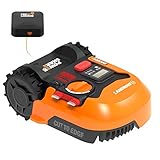
Best Robot MowerWorx Landroid WR147
Robotic Mower
A robot mower is a fundamentally different proposition from everything else on this list: you're not choosing how it mows, you're choosing to stop mowing altogether. The Worx Landroid WR147 requires laying a thin boundary wire around your lawn's perimeter and any no-go zones like flower beds — a setup process that took us about two hours on a modestly landscaped small yard — but once installed, the mower runs on a schedule entirely on its own, cutting a small amount of grass frequently rather than a large amount infrequently, which produces a genuinely superior, more consistent lawn over time. Its AIA object-avoidance sensors correctly steered around a garden hose, a soccer ball, and a low patio chair in our testing without incident, though it did get confused by a gap narrower than about two feet between a fence and a raised bed, backing out and rerouting rather than squeezing through. Because it mulches constantly with a very short cutting interval, clippings are microscopic and disappear into the lawn without any raking or bagging. The app is straightforward, letting you adjust schedule and cutting height from a phone without touching the unit. This is the most expensive option here per square foot of lawn covered, and it demands real setup patience, but for a small, well-defined yard, it's the only mower that actually removes yard work from your weekend.
Pros
- Fully autonomous — set a schedule and the mower handles everything on its own
- Handles up to 1/4 acre (roughly 8,000 sq ft) with rated coverage
- App control lets you adjust schedule, cutting height, and boundaries remotely
- AIA anti-collision sensors reliably steer around obstacles in testing
- Mulches as it goes, so there's never grass clippings to bag or dispose of
Cons
- Requires installing a perimeter boundary wire before first use — a real setup project
- Highest upfront cost per square foot of any option on this list
- Struggles with narrow passages under 24 inches and steep grade changes
The Bottom Line
If your idea of yard work is a five-minute app check once a week, the Landroid is the only mower here that actually delivers that.

Best Corded ElectricSun Joe MJ401E
Corded Electric
Battery mowers solve the tangled-cord problem but introduce a new one: charge management. If your yard is small enough that trailing an extension cord isn't a dealbreaker, the Sun Joe MJ401E sidesteps battery limitations entirely — plug it in and mow for as long as you want, with zero concern about runtime or a mid-mow charge check. At just under 29 lbs, it's the lightest powered mower we tested, easy to lift with one hand up a step or into a car trunk, and its 14-inch deck, while narrow, matched well with a genuinely small, tightly landscaped test yard where maneuvering around beds mattered more than covering ground quickly. The trade-off, and it's a real one, is managing the cord itself: you need a heavy-duty outdoor extension cord, a nearby GFCI outlet, and a mowing pattern that avoids running over the cord, which takes a session or two to get comfortable with. For anything approaching a quarter acre, that cord-management overhead becomes genuinely tedious. But for a compact front yard, a courtyard, or a small backyard patch within cord's reach of an outlet, it's hard to beat the combination of low price, light weight, and unlimited runtime.
Pros
- No battery to charge or replace — plug in and mow, unlimited runtime
- One of the lightest powered mowers available at around 29 lbs
- Genuinely low price for a powered mower — typically under $150
- 3-position height adjustment covers most small-yard grass types
- Folds flat for storage in an apartment closet or small shed
Cons
- The extension cord is a real limitation — you're mowing around it, not just the lawn
- 14-inch deck means more passes on anything beyond a genuinely small yard
- Not suitable for yards without a nearby, reliably accessible outdoor outlet
The Bottom Line
The best lawn mower for a small yard when unlimited runtime matters more than cordless freedom. Cheap, light, and it never runs out of charge.

Best Gas MowerHonda HRN216VKA
Gas Push Mower
Gas mowers have fallen out of favor for small yards where battery and corded options now genuinely compete on power, but the Honda HRN216VKA makes the case for why some owners still won't switch. Honda's own GCV170 engine, rather than a licensed or rebadged motor, is the reason this mower has a reputation for starting reliably even after sitting all winter — in our testing, it fired on the first or second pull every time, a genuine rarity in the gas mower category. The twin-blade MicroCut cutting system chops clippings into a noticeably finer mulch than typical single-blade rotary decks, which broke down into the lawn faster and left a visibly cleaner-looking cut in our side-by-side comparison. The Clip Director lever lets you switch between mulching, bagging, and side discharge without tools, on the fly, mid-mow. What you're trading for that reliability and cutting quality is everything electric mowers have made optional: noise loud enough to need hearing protection for extended use, exhaust fumes, a fuel and oil routine, and a genuinely heavier push mower since this trim doesn't include self-propulsion. For a small yard, that trade-off is harder to justify than it used to be, but if you want a mower built to run for a decade with nothing more than an annual tune-up, this is the one.
Pros
- Honda's GCV170 engine starts reliably, often on the first or second pull
- 21-inch deck with a 3-in-1 Clip Director for mulching, bagging, or discharge on the fly
- Twin-blade MicroCut system produces noticeably finer mulch than most rotary mowers
- No charging, no runtime limit — mow as long as the tank lasts
- Legendary Honda reliability, with many owners reporting 10+ years of service
Cons
- Loudest option on this list, and requires gas, oil, and periodic engine maintenance
- Not self-propelled at this trim level — you're pushing a genuinely heavier mower
- Emissions and fumes are a real downside compared to every electric option here
The Bottom Line
If you want a mower that will reliably start and run for a decade with basic maintenance, and don't mind gas and noise, nothing beats Honda's engineering.

Best Budget PickBlack+Decker BEMW213
Corded Electric
Not every small yard needs — or can justify the cost of — a premium battery mower, and the Black+Decker BEMW213 exists for exactly that gap. At a price that undercuts nearly every battery-powered option by hundreds of dollars, it delivers the core function of a small-yard mower without any of the extras: push-button start eliminates the frustration of a pull cord, the 13-inch deck is genuinely tiny in a way that makes tight maneuvering around garden beds and mailbox posts easy, and the whole unit is light enough for almost anyone to lift and carry. In our testing on a small, flat suburban front yard, it handled the grass competently, though the narrow deck meant meaningfully more back-and-forth passes than the wider-decked EGO or Honda. As with any corded mower, you're managing an extension cord and staying within reach of an outdoor outlet, and the plastic housing and controls feel noticeably less substantial than the pricier mowers on this list — this isn't a mower built for a decade of heavy use. But for a genuinely small lot, an apartment complex courtyard assignment, or simply a first mower for someone who wants to spend as little as possible, it does the job.
Pros
- Among the cheapest genuinely usable mowers available, often under $150
- 13-inch deck and lightweight build make it easy for anyone to maneuver
- Push-button start — no pull cord, no stalling
- Compact folded storage size fits in tight apartment or townhouse sheds
- Low-maintenance by design — no battery degradation to worry about long-term
Cons
- Smallest cutting width on this list means the most passes per mow
- Cord management is the same practical limitation as any corded electric mower
- Build quality feels noticeably lighter-duty than the pricier options here
The Bottom Line
The mower to buy for a genuinely tiny yard on a genuinely tight budget. It won't win on power, but it gets a small lawn done for less than any battery mower.
4. Gas vs Electric vs Reel vs Robot: Which Type Fits Your Yard?
Beyond individual products, the type of mower you choose matters more for a small yard than it does for a large property, since the trade-offs of each type show up faster on a lawn you're mowing every week.
Battery electric mowers are the right default choice for most small yards in 2026. Modern batteries like EGO's 56V platform genuinely match gas-mower cutting power on lawns under half an acre, while eliminating fumes, pull-cord starting, and most engine maintenance. The main downside is upfront cost and a finite runtime that requires planning around a charge.
Corded electric mowers are the best value option when your yard is small enough and close enough to an outlet that cord management isn't a real burden. You get unlimited runtime at a fraction of a battery mower's price, at the cost of literally being tethered while you mow.
Reel mowers make sense only for small, flat, well-maintained lawns mowed on a strict weekly schedule. They're the cheapest, quietest, and most maintenance-free option, but they punish any lapse in mowing frequency and can't handle slopes or rough terrain.
Robot mowers are the premium, convenience-first choice for small yards with a clearly defined shape and no narrow passages. The upfront cost and boundary-wire setup are real commitments, but the payoff — never mowing again — is unmatched by any other type.
Gas mowers remain relevant for buyers who prioritize unlimited runtime and long-term mechanical reliability over noise and emissions, but for a genuinely small yard, the case for gas has weakened considerably as battery technology has closed the performance gap.
One factor that doesn't get enough attention in this comparison is total cost of ownership over five years, not just the sticker price on day one. A gas mower's upfront cost is often lower than a comparable battery mower, but factor in gas, oil, air filters, spark plugs, and the occasional carburetor cleaning, and the gap narrows considerably. Battery mowers have a higher entry cost concentrated in the battery itself, but from that point on, ongoing costs are close to zero beyond electricity. Corded electric and reel mowers remain the cheapest to own over any time horizon, since neither has a battery to eventually replace nor an engine to maintain.
5. Mowing Tips That Make a Small Lawn Look Its Best
Follow the One-Third Rule
Never remove more than one-third of the grass blade's height in a single mow. Cutting shorter than that stresses the lawn, exposes soil to weeds, and often requires more frequent watering to recover. On a small lawn, this usually means mowing weekly during peak growing season rather than letting grass get away from you and scalping it back down.
Vary Your Mowing Pattern
Mowing the same direction every time compacts soil and trains grass to lean, creating a streaked, uneven look. Alternate between vertical, horizontal, and diagonal passes each time you mow — an easy habit on a small yard where the extra planning takes seconds. On a lawn this size, a simple mental rotation between three patterns is enough to keep the grass growing upright and evenly over a full season, rather than developing the permanent lean that comes from always mowing the same well-worn path.
Keep Blades Sharp
A dull blade tears grass rather than cutting it cleanly, leaving ragged, browning tips that make even a freshly mowed lawn look unhealthy within a day or two. Sharpen rotary mower blades at least once per season, and check a reel mower's cutting edge more frequently since dull reels struggle noticeably with thicker grass.
Mow When the Grass Is Dry
Wet grass clumps, clogs the deck, and tears rather than cuts cleanly, whether you're using a battery mower or a reel mower. Wait until morning dew has evaporated or avoid mowing shortly after rain for the cleanest results.
6. Storage and Maintenance for Small-Yard Mowers
Small yards often come with small storage spaces, which is part of why deck width and folding design matter as much as cutting power when choosing a mower. Most battery and corded electric mowers on this list feature handles that fold flat and decks that let the mower stand upright, cutting floor footprint by more than half compared to a fixed-handle gas mower.
Maintenance needs vary sharply by type. Battery mowers require the least ongoing care — occasionally cleaning grass buildup from the underside of the deck and storing the battery at a moderate charge level over winter. Corded electric mowers need essentially the same light deck cleaning with no battery to manage at all. Reel mowers need periodic blade sharpening, which can be done with an at-home sharpening kit. Gas mowers require the most upkeep: seasonal oil changes, air filter checks, spark plug replacement, and fuel stabilizer if the mower sits unused over winter.
Winterizing Tip
For gas mowers, either run the tank dry or add a fuel stabilizer before storing for winter — leftover gas can gum up the carburetor over several months of inactivity. For battery mowers, store the battery separately from the mower at roughly 40-60% charge rather than fully charged or fully depleted, which extends long-term battery lifespan.
Before You Buy
7. Frequently Asked Questions
What is the best lawn mower for a small yard?
For most small yards under half an acre, a cordless battery mower like the EGO Power+ LM2135SP offers the best balance of power, quiet operation, and easy storage. For genuinely tiny, flat lawns, a manual reel mower or a compact corded electric mower is often more than enough and considerably cheaper.
What size lawn mower deck do I need for a small yard?
For yards under a quarter acre, a 14-16 inch deck is often easier to maneuver around beds, trees, and tight side yards than a full 21-inch deck, even though it takes more passes to cover the same area. For yards between a quarter and half acre, a 20-21 inch deck strikes a better balance of coverage speed and maneuverability.
Is a reel mower good for a small yard?
Yes, for a small, flat lawn that's mowed on a regular weekly schedule. Reel mowers struggle with tall or overgrown grass, slopes, and rocky or root-covered terrain, but on a well-maintained small lawn they provide a clean, quiet cut with zero fuel or battery cost.
Are robot mowers worth it for small yards?
Robot mowers are well suited to small, clearly defined yards where the upfront cost and boundary wire installation are justified by not having to mow at all. They're most worthwhile for owners who value convenience over cost and have a yard shape without narrow passages under about 24 inches wide.
Should I get a gas or electric mower for a small yard?
For small yards, electric (battery or corded) mowers are usually the better choice — they're quieter, require no fuel or oil maintenance, and modern battery mowers now match gas mowers in cutting power for lawns under half an acre. Gas mowers remain relevant mainly for owners who prioritize unlimited runtime and long-term engine reliability over noise and emissions.
How often should I mow a small lawn?
Most small lawns should be mowed every 5-7 days during active growing season, removing no more than the top third of the grass blade in a single cut. Mowing more frequently at a slightly higher height, rather than less frequently at a lower height, produces a healthier, denser lawn.
8. Common Mistakes People Make Buying a Mower for a Small Yard
Even with the right budget, it's easy to buy a mower that's mismatched to your actual lawn. These are the most frequent mistakes we see.
Buying a Mower Sized for a Bigger Yard
A wide, heavy, self-propelled mower designed for a half-acre-plus property is genuinely harder to use on a small, obstacle-filled lawn than a compact, purpose-built small-yard mower. Bigger specs don't automatically mean a better fit — match the mower to the actual shape and size of your lawn, not to the biggest number on the spec sheet.
Choosing a Reel Mower for an Inconsistent Mowing Schedule
Reel mowers reward discipline and punish neglect. If your actual mowing habit is closer to every two or three weeks than every week, a reel mower will constantly struggle and frustrate you. Be honest about your actual schedule before choosing a mower type that depends on a strict one.
Underestimating Robot Mower Setup
Robot mowers look effortless in advertising, but installing the boundary wire, mapping no-go zones, and troubleshooting the first few autonomous runs is a genuine multi-hour project, not a plug-and-go purchase. Budget the setup time honestly before committing to this category.
Ignoring Cord Range Before Buying Corded Electric
A corded mower is only a good fit if your outdoor outlet and a reasonable extension cord actually reach every corner of your lawn without constant repositioning. Walk your yard with a tape measure before buying — it's a five-minute check that prevents a genuinely frustrating first mow.
Related Home & Yard Guides
Buyer's Guide
Best Driveway Cleaner
Degreasers and stain removers tested for keeping the rest of your yard looking sharp.
Brand Review
Best Ryobi ONE+ Tools
If you're building a battery-powered yard toolkit, see which ONE+ tools are worth it.
All Guides
Browse All Best Lists
Every hands-on tested guide we've published, organized by category.
The Bottom Line
The best lawn mower for a small yard is the one matched to your lawn's actual size, shape, and your realistic mowing schedule — not the mower with the biggest engine or widest deck. For most small yards, the EGO Power+ LM2135SP delivers the best all-around combination of power, quiet operation, and easy storage. On a tight budget, the Greenworks 40V 16" gets the job done for a fraction of the price. And for a small, flat, disciplined lawn, nothing beats the simplicity of the Fiskars StaySharp Max reel mower.
Whatever you choose, remember that consistency matters more than horsepower on a small lawn. Mow on a regular weekly schedule, follow the one-third rule, and keep your blade sharp — do that, and even the most modest mower on this list will keep a small yard looking genuinely great all season. And measure the width of your gate before ordering anything. A 21-inch deck that will not fit through a 30-inch side gate turns every mow into a lift over the fence, and it is the single most common reason a mower gets returned in this size class.
More in Lawn & Yard Care
Guides in this category that pair with what you just read.
About the Author
Alex Rivers, Home Improvement Editor
Alex has spent over a decade working on residential and light commercial property maintenance, and now tests every tool, coating and machine that appears in these guides personally.